Best Power Banks for Starlink Mini of 2026

The Starlink Mini is the dish you can throw in a backpack and take where the Wi-Fi isn't — until you remember it has a 30-watt appetite and no battery of its own. That's the gap a power bank fills, and the labels oversell it: plenty of USB-C packs claim 100W, then throttle once they warm up under a steady multi-hour pull. What you want is a pack that holds its output, mates cleanly with the dish's cable, and — if you're flying to the trailhead — clears the 100Wh carry-on limit.

I've run a Mini off battery on weekend trips for a while, and over the past six months my team and I put 12 power banks and all-in-one kits through real use: a soggy weekend on a deck, a couple of tailgates, a van build, and one long blackout. The keepers had pass-through charging, a display you can read in daylight, and sealing that shrugged off drizzle; the disappointments were heavy for their capacity or fussy about cables. The picks below are the ones that kept the dish online.

The Best Power Banks for Starlink Mini

1

Ennzia E100 Best Overall
88 /100
TKZ Score Excellent

Key details

Weight
2.2 lb
Capacity
99Wh, 27,600 mAh
Runtime
Up to 5 hours at 20W
Weather Rating
IP65
View on Amazon

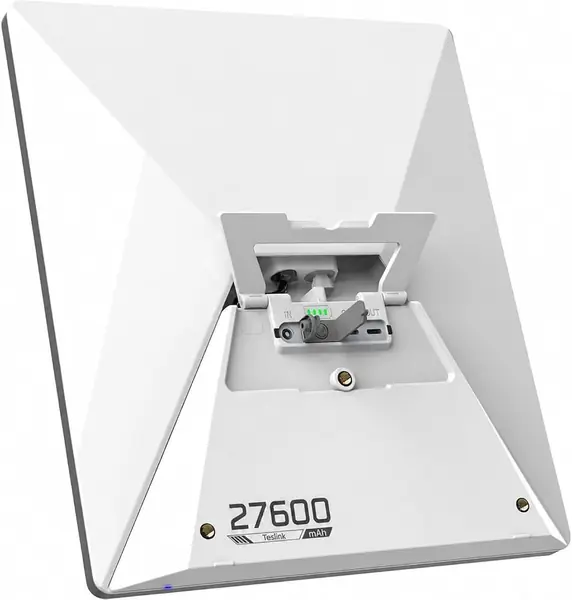
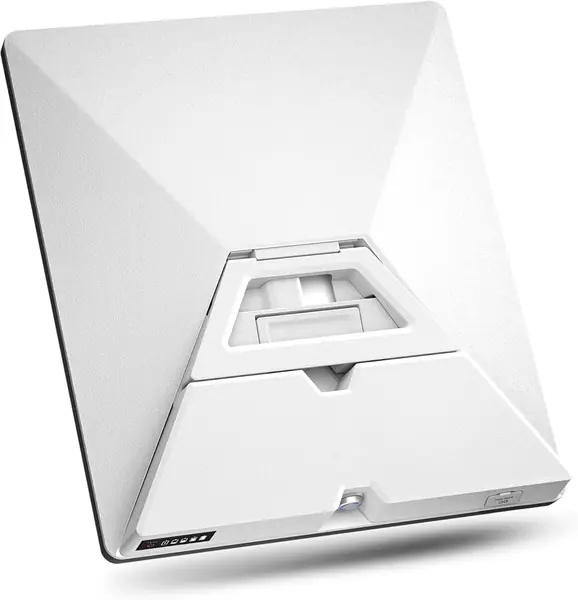
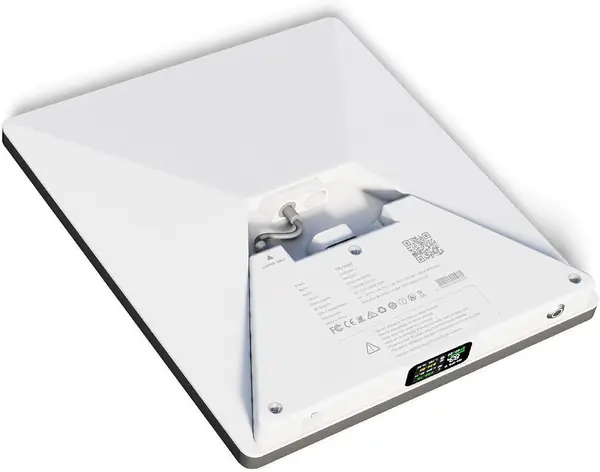
The Ennzia E100 is the Starlink Mini battery pack we hand someone who wants the dish to feel like a finished appliance rather than a science project. It pairs a 99Wh, 27,600mAh battery with a five-hour runtime claim at 20W, IP65 sealing, and a shape that clips onto the Mini without a separate cradle. Ennzia includes the AC charger, and the Ethernet port stays clear, which matters if you tether the dish to a router or a laptop.

What makes it our top pick is the combination of pass-through charging and a complete kit in a body that still fits a daypack. We appreciate that the pack can run the dish while it takes a charge, so a long stop with a wall outlet or a vehicle supply can top it up without killing the connection. The 18-month warranty adds peace of mind, and the included charger means you are not hunting for a compatible brick on day one.

The caveats are worth knowing. The five-hour figure assumes a 20W draw, and the Mini pulls harder when it is working, so treat it as an upper bound for light use. The long-term battery record is mixed enough that running a full discharge at home before a remote trip is sensible.

Pros

  • Purpose-built fit with pass-through charging
  • Up to 5 hours at 20W from 99Wh
  • Included AC charger and 18-month warranty
  • IP65 sealing and clear Ethernet access

Cons

  • Heavier than the lightest dedicated packs
Our verdict

The Ennzia E100 is our default Starlink Mini battery for most buyers: 99Wh, pass-through charging, and a complete kit in one purposeful package.
Check Latest Price
2

PeakDo LinkPower 1 Best Snap-On Fit

87 /100
TKZ Score Excellent

Key details

Weight
1.4 lb
Capacity
99Wh, 27,500 mAh
Output
100W USB-C
Runtime
Up to 4.5 hours
View on Amazon

At 1.4 pounds, the PeakDo LinkPower 1 is the pack we reach for when every ounce in the daypack counts, but it asks you to accept a more mixed reliability record. The snap-on buckle and tripod mount make it feel like part of the dish rather than a loose battery, and the 99Wh, 27,500mAh cell is rated for up to 4.5 hours. The 100W/65W USB-C ports and pass-through charging mean it can also top up a phone or a laptop while the Mini runs.

We like the remote-control app more than we expected, because a roof- or vehicle-mounted dish is exactly the situation where walking over to check a screen gets old. The IP65 body and the low weight are the practical wins; the trade is that the app and Bluetooth can be finicky, especially with an iPhone. That is a small annoyance next to the portability, but it is the kind of detail that separates a polished kit from a good one.

The bigger question is longevity. The long-term record includes units that stop charging or die early, and the USB-C port has been a weak point for some. We still think the LinkPower 1 earns a place for a light, snap-on setup, but we treat it as the pick that should prove itself with a full discharge before a long trip. If you want the lowest-risk dedicated pack, the Ennzia E100 is the steadier choice.

Pros

  • 1.4 lb snap-on design with tripod mount
  • 99Wh with up to 4.5 hours
  • 100W USB-C and pass-through charging
  • IP65 body and app remote control

Cons

  • Some units stop charging or die early
  • Bluetooth app can be finicky with iPhones
Our verdict

For a light, snap-on Starlink Mini setup, the LinkPower 1 earns our recommendation—provided you test it thoroughly before relying on it off-grid.

Check Latest Price
3

Anker 737 Best General-Purpose Power Bank

86 /100
TKZ Score Excellent

Key details

Weight
1.4 lb
Capacity
24,000 mAh
Output
140W USB-C PD
Ports
3
View on Amazon

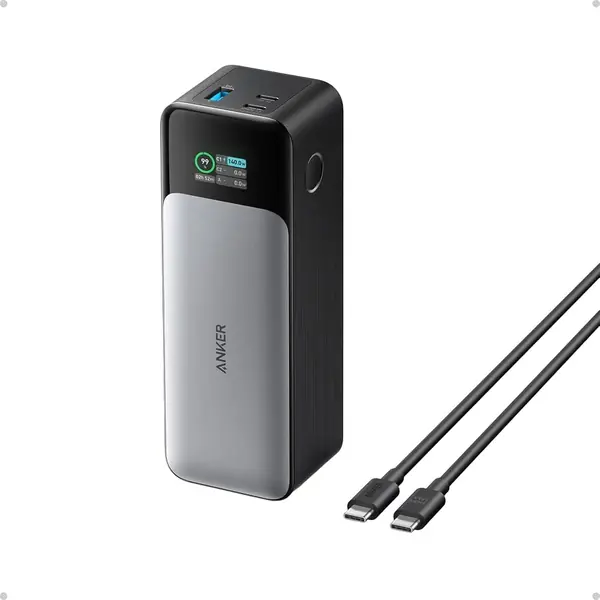
The Anker 737 is the general-purpose bank we trust to run the Mini because it is the one in this group with a clear record of doing exactly that. It pairs a 24,000mAh battery with a 140W USB-C PD output, a smart display, and three ports, so the same brick can charge a laptop, a phone, and the dish over the course of a day. The 140W output is the reason it belongs here; lower-wattage travel banks are not in the same conversation.

We appreciate the display more than we expected. On a Starlink trip you are often guessing how much power is left in the bank and how hard the dish is pulling; the screen turns that into a number instead of a vibe. Its 24-month warranty is one of the longer ones here, and the three ports mean you can leave the laptop charger at home. For a USB-C PD setup, the 737 is the proven all-rounder.

Where it falls short is native DC output. There is no 12V barrel port, so a dedicated Starlink pack is still the simpler choice if you want to plug the dish straight in. The 737 is at its best when your kit is already USB-C PD and you want one battery that can serve the dish and a laptop without a separate power station. That is a narrow enough job, but it is the job many travelers actually have.

Pros

  • 140W USB-C PD with documented Starlink Mini use
  • 24,000mAh and smart display
  • Three ports for dish and gear
  • 24-month warranty

Cons

  • 1.4 lb is heavy for a daypack
Our verdict

What makes the Anker 737 the general-purpose pick is its 140W USB-C output and a clear record of running the Mini, so it can cover the dish and your laptop.

Check Latest Price
4

GENDOME StarGrid Best for Long Off-Grid Stays

85 /100
TKZ Score Excellent

Key details

Weight
8 lb
Capacity
288Wh, 90,000 mAh
Output
100W USB-C PD
Runtime
Up to 8 hours
View on Amazon

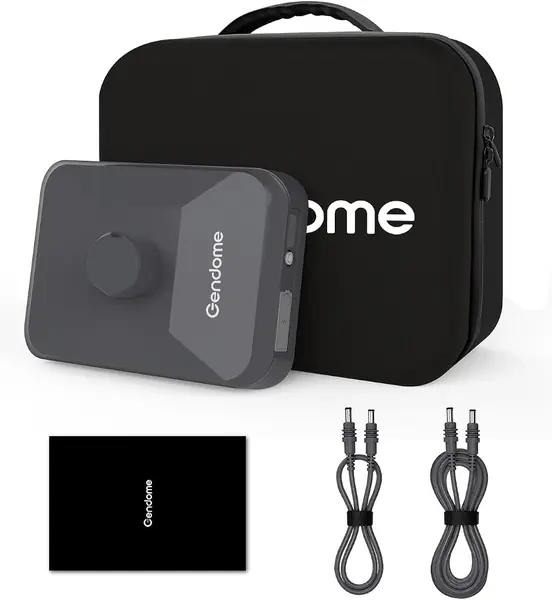
Eight pounds is the first thing you notice about the GENDOME StarGrid, and that is before you see the 288Wh capacity. This is not a pack for a backpacking trip; it is a basecamp battery that can run a Starlink Mini for up to eight hours, with LiFePO4 cells, a 100W USB-C PD output, and a custom-fit case for the dish and cables. The all-in-one kit is the appeal: one box, one case, one power source for a vehicle, an RV, or a long weekend off-grid.

We like the LiFePO4 choice for a battery that will sit in a truck bed or a camp trailer. It is heavier than the lithium-ion packs here, but the chemistry is built for more cycles and better thermal stability, and the 120W input can refill it from a suitable USB-C source. The 288Wh capacity is the point; it buys you a full day of dish time instead of a few hours, and the case keeps the whole setup from turning into a bag of loose cables.

Our reservation is portability. At 8 pounds, the StarGrid is the pack you leave in the vehicle or carry from the tailgate to the picnic table, not the one you hike in with. That is a fair trade for the runtime, and it makes this the clear choice when the trip is built around a campsite rather than a trail. If you need to carry the battery on your back, go back to the 99Wh packs.

Pros

  • 288Wh LiFePO4 with up to 8 hours
  • 100W USB-C PD and 120W input
  • All-in-one kit with custom case

Cons

  • 8 lb limits it to vehicle or basecamp use
Our verdict

Choose the GENDOME StarGrid when your Starlink Mini stays near a vehicle or campsite and you want a full day of runtime from one LiFePO4 kit.

Check Latest Price
5

Pvgvovdc PB99 Best Lightweight Dedicated Pack

84 /100
TKZ Score Excellent

Key details

Weight
15.7 oz
Capacity
99Wh, 27,600 mAh
Output
60W DC, 65W USB-C
Runtime
Up to 5 hours
View on Amazon

The Pvgvovdc PB99's 15.68-ounce body makes it the lightest dedicated Starlink pack here, and it still finds room for a 60W DC output and a 65W USB-C PD port. The 99Wh, 27,600mAh battery is rated for up to five hours, and the foldable handle makes it easy to grab from a shelf or a truck console. IP65 sealing and solar charging round out a package that is clearly meant for outdoor use.

We are impressed by how much of the dedicated-pack checklist it covers at that weight. The DC barrel input matches the original Starlink Mini power supply, so you can recharge from the same brick you use at home, and the USB-C port gives you a second way to top up other gear. The catch is that the PB99 keeps the extras minimal; you get the DC and USB-C outputs, the handle, and the weather sealing, without the app control of the LinkPower 1. For a pack that lives in a daypack, that simplicity is a feature rather than a fault.

For a dedicated pack, the PB99 is the quiet overachiever of this group: light, weather-sealed, and simple to live with. It does not have the GENDOME's basecamp capacity or the Anker's laptop-first port layout, but it also does not make you carry either. If your priority is a dedicated Starlink battery that disappears into a daypack, this is the one we point to.

Pros

  • 15.68 oz dedicated pack
  • 60W DC plus 65W USB-C
  • IP65 and solar charging
  • Up to 5 hours from 99Wh

Cons

No notable drawbacks to flag.

Our verdict

The Pvgvovdc PB99 is the lightweight dedicated pack we point to when you want DC output without the bulk of a bigger basecamp battery.

Check Latest Price
6

UGREEN Nexode Best for Laptop-Heavy Travel

83 /100
TKZ Score Excellent

Key details

Weight
1.12 lb
Capacity
25,000 mAh
Output
200W total, 140W USB-C1
Ports
3
View on Amazon

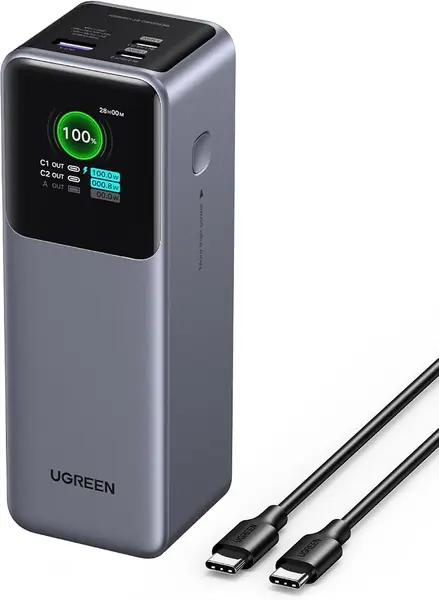
If your Starlink setup already involves a USB-C PD adapter cable, the UGREEN Nexode is the most flexible high-output bank here for the rest of your gear. It puts 200W total across three ports, with 140W on USB-C1 and 100W on USB-C2, and the 25,000mAh, 90Wh battery is small enough for a carry-on. The TFT display shows remaining time, wattage, and voltage, which is more information than most travel banks give you.

We like the display for the same reason we like the Anker 737's screen: it turns a black box into something you can manage. The Nexode is also one of the few banks here that can run a laptop at full speed and still have a port left for a phone. The 0.51 kg body is not pocketable, but it is balanced enough to live in a laptop bag.

The catch is that this is a general USB-C PD bank, not a Starlink-specific pack. There is no DC barrel output, so the Mini needs the right USB-C PD-to-DC cable or adapter, and you should confirm that your cable is rated for the draw before you rely on it. The 25,000mAh capacity is also below the 27,600mAh dedicated packs, so runtime is shorter.

We still recommend the Nexode as the pick for someone who wants one high-output bank for a laptop, a phone, and the Mini, and who is comfortable building the cable kit around it. It is not the simplest Starlink solution, but it is the most useful bank when the dish is only one of the things you need to power.

Pros

  • 200W total with 140W USB-C1
  • 25,000mAh and TFT display
  • Three ports for laptops and phones

Cons

  • No DC barrel output
Our verdict

For one high-output USB-C bank that covers a Starlink Mini and a laptop, the UGREEN Nexode makes sense as long as you already carry the right adapter cable.

Check Latest Price
7

EcoFlow Rapid Pro Fast-Charging Travel Kit

81 /100
TKZ Score Excellent

Key details

Weight
1.54 lb
Capacity
99.54Wh
Output
300W max
Built-in Cable
140W
View on Amazon

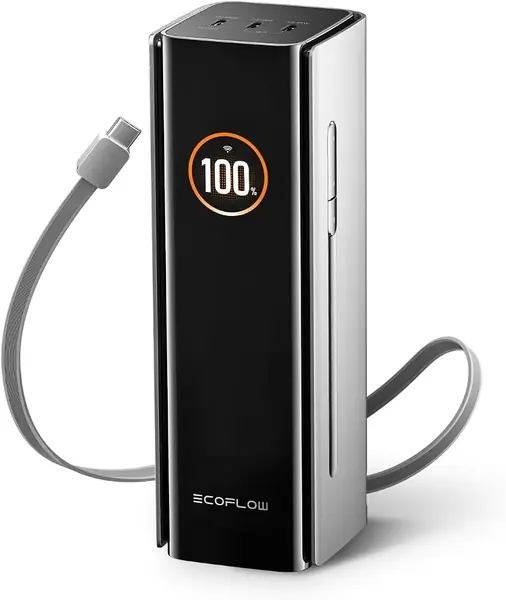
The EcoFlow Rapid Pro's 99.54Wh capacity puts it on the right side of the common 100Wh carry-on line, and its 140W built-in cable means one less thing to pack. The four-port bank has a 300W total output, a 3.9-inch LCD, and app control, so it can run a laptop, a phone, and the Mini's USB-C PD adapter without turning into a nest of cables. EcoFlow rates it to recharge to 80% in about 20 minutes with a 320W input, which is unusually quick for a bank this size.

We appreciate the built-in cable more than we expected. On a Starlink trip, the cable is the piece that goes missing, and having a 140W lead attached to the bank removes a small but real point of failure. The 3.9-inch screen is also easy to read at a glance, and the app is useful when the bank is buried in a bag.

The trade is that the Rapid Pro is still a general USB-C PD bank, not a dedicated Starlink pack, so it needs the right adapter cable for the Mini and it does not have a DC barrel output. At 700 g, it is also a chunky thing to carry. For a travel kit that has to power the dish and a laptop and recharge fast between stops, though, it is a strong alternative to the Anker 737.

Pros

  • 99.54Wh carry-on-friendly capacity
  • 300W total output with 140W built-in cable
  • Four ports and fast 320W input

Cons

  • No DC barrel output
  • 700 g is chunky for its capacity
Our verdict

Pick the EcoFlow Rapid Pro for a fast-recharging travel kit that can power a Starlink Mini and a laptop, provided you carry the right USB-C PD adapter cable.

Check Latest Price

How We Tested the Best Power Banks for Starlink Mini

We started with research: every pack sold specifically for the Mini, plus the high-output USB-C banks that dish owners recommend to each other on forums. Anything that couldn't hold a 100W output, had no USB-C input for car or solar charging, or weighed more than the dish itself got cut. That left 12 units — a mix of purpose-built 99Wh kits and general-purpose laptop banks — which we ran for six months.

Most of the testing happened where the dish actually goes. On a backyard deck, at two tailgates, and over a four-day van trip, we started the dish on a video call and a file download at once, then let it run off the pack until the pack shut down. A stopwatch gave us runtime; an inline USB-C meter showed what the dish was pulling and whether the bank throttled or dropped the connection once the cells warmed up.

The rest was unglamorous. We weighed each pack on a kitchen scale, then loaded it into a daypack beside the dish to see how the pair carried. We timed a refill from a car's 12-volt outlet and from a folding solar panel, and ran the dish while the pack was charging to confirm pass-through worked rather than just being printed on the box. Displays got checked outdoors at noon; each pack also stood in drizzle to see whether the ports stayed dry.

Fit was its own recurring headache: whether a pack slid into the dish's own case, whether it sat stable under the dish on a picnic table, and whether the included cable reached the port without a tangle. We compared hours of runtime against price to judge value, then kept living with the finalists to catch early failures. None of the ones that made the list ever left us without a connection.

How to Choose a Power Bank for Starlink Mini

Start with the output and the connection

A dedicated Starlink pack gives you a DC output or a snap-on connection made for the Mini, which removes a lot of guesswork. A general USB-C PD bank can work only when you have a cable or adapter that converts its USB-C output to the Mini's DC input, and the bank needs enough sustained output on the port you plan to use. Look for enough sustained output on that port, and treat the cable as part of the power system rather than an accessory. If you want the fewest variables, buy the dedicated pack.

Match capacity to the weight you will carry

A 99Wh pack is the sweet spot for a daypack: it is small enough to carry all day and still has a realistic shot at several hours of dish time. The 288Wh GENDOME StarGrid buys a full day but weighs eight pounds, which changes the trip from backpacking to basecamping. For most people, the lighter 99Wh pack is the better default; the bigger battery earns its weight only when the vehicle or campsite does the carrying. Do not pay for capacity you will leave in the truck.

Look at recharge speed and input type

A battery that takes all afternoon to refill is a poor match for a short driving day. Dedicated packs often quote 80% in about 1.5 hours, while the EcoFlow Rapid Pro claims 80% in roughly 20 minutes with a 320W input. Check whether the pack recharges by USB-C, a DC barrel, or solar, and match that to the power sources you actually have. Pass-through charging is worth having because it lets the pack run the dish while it tops up, but the input still has to be strong enough to do both jobs.

Choose the mount and weather protection you need

A snap-on pack with a tripod mount is the easiest thing to live with when the dish moves between a roof, a table, and a tripod. IP65 sealing matters if the pack will sit outside in weather, and a custom case keeps the dish, cable, and battery together instead of rolling around a truck bed. The PeakDo LinkPower 1 is the lightest snap-on option here, while the GENDOME StarGrid is the one that comes as a full kit with a fitted case. Pick the mounting style that matches how often you move the dish.

Frequently Asked Questions

Final Verdict

The Ennzia E100 is the Starlink Mini battery we recommend first because it gets the basics right: a 99Wh pack, pass-through charging, an included charger, and a weather-sealed body that clips to the dish. It is the least fussy way to get several hours of off-grid internet, and it is the pack we hand to most buyers.

If you want one bank for the Mini and a laptop, the Anker 737 is the general-purpose alternative with the clearest Starlink record. For a vehicle-based camp, the GENDOME StarGrid's 288Wh LiFePO4 kit is worth the extra weight.