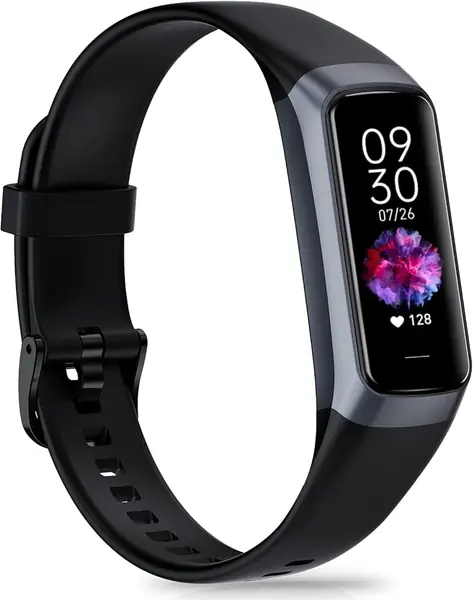
Best Fitness Trackers of 2026

Sleep tracking is why a lot of people buy a fitness tracker, and it's also why half of those trackers end up in a drawer. The sensor has to stay on your wrist all night, so the band that nags you to move also has to be comfortable enough to forget about and charged at an hour you're not asleep. Get that balance wrong and you're left with a week of interesting data and a dead strap.

I've worn 12 of them over the past six months, from screenless straps you barely notice to full smartwatches with GPS built in, and the pattern held: the ones I kept wearing were the ones I stopped thinking about. Spec sheets tell you very little here. What matters is whether the numbers are close enough to true to act on, whether the watch and your phone stay on speaking terms, and whether it looks good enough that you don't take it off before dinner.

The formats have never been more different, and none of them are bad, just built for different people. Each pick below earned its spot by being genuinely good at one thing rather than passable at everything.

The Best Fitness Trackers

1

Garmin vivoactive 5 Best Overall
93 /100
TKZ Score Outstanding

Key details

Display
1.2-inch AMOLED
GPS
Built-in
Battery Life
Up to 11 days
Water Resistance
50 meters
View on Amazon

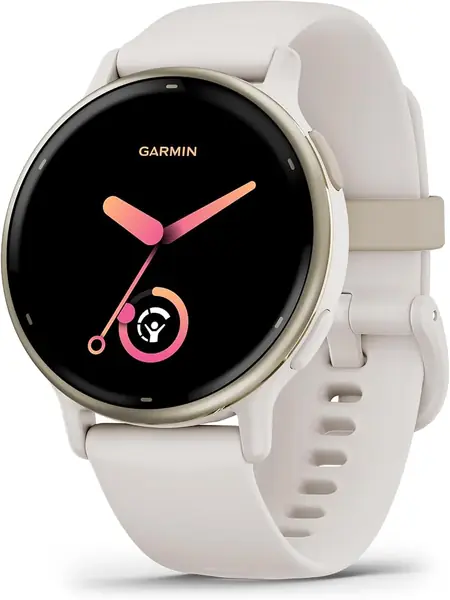
Built-in GPS and up to 11 days of battery life are the two specs that define the Garmin vivoactive 5. The 1.2-inch AMOLED screen is bright and easy to read, and the 42mm case is small enough for all-day wear. Garmin also packs in Body Battery, sleep coaching, HRV status, and a wheelchair mode that counts pushes instead of steps.

That balance is why we recommend it as the best overall fitness tracker here. It covers runners, walkers, cyclists, gym sessions, and daily health without forcing you into a running-first interface. The 11-day figure is smartwatch mode, though; always-on display cuts it to about five days, and GPS sessions will drain it faster. We think that is a fair trade for not charging every night.

Garmin Connect gives you deep data, and the app is where you will spend time after a workout. Sleep and recovery scores are useful as a nudge, but they can drift from how you feel, so compare the trend rather than treating one night as a verdict. The 50-meter water resistance covers pool laps and showers, and the 1.3-ounce case stays light enough for sleep.

For most people, this is the right trade: a watch that can track a run, a ride, or a strength session, then disappear into daily wear. If you mostly run and want training plans, the Forerunner 165 is the sharper tool. If you live in Apple's ecosystem, the SE 3 makes more sense. The vivoactive 5 is the pick that needs the fewest compromises before you know exactly what kind of athlete you are.

Pros

  • Built-in GPS for phone-free workouts
  • Up to 11 days in smartwatch mode
  • Broad health, sleep and wheelchair tracking
  • Bright 1.2-inch AMOLED display

Cons

  • Garmin Connect can feel dense
Our verdict

We recommend the Garmin vivoactive 5 as the best all-around fitness tracker for mixed activity, thanks to built-in GPS, a bright AMOLED screen, and week-long battery life.
Check Latest Price
2

Garmin Forerunner 165 Best for Runners

92 /100
TKZ Score Outstanding

Key details

Display
1.2-inch AMOLED
GPS
Built-in
Battery Life
Up to 11 days
Sports Profiles
25+
View on Amazon

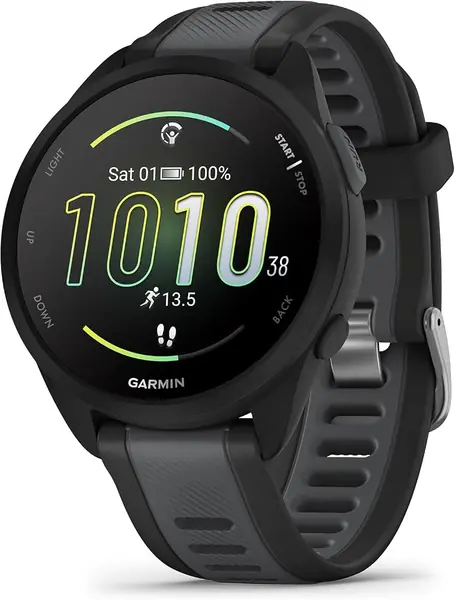
Daily suggested workouts and Garmin Coach plans are the reason the Forerunner 165 exists. It is a running watch first: built-in GPS for pace and distance, a 1.2-inch AMOLED screen, and a 43mm case that stays light on the wrist. The buttons plus touchscreen give you a way to start and stop without stabbing at a tiny icon mid-stride.

The training features are what separate it from the vivoactive 5. You get daily suggested workouts that adapt to performance and recovery, race-adaptive plans, and 25+ activity profiles. For someone training for a 5K, 10K, or half marathon, that structure is more useful than a general-purpose fitness menu. The 1.38-ounce weight and 20mm band keep it comfortable for long sessions.

We recommend it for runners who want a coach on their wrist without paying for a premium multisport watch. The trade-off is that the Forerunner is less interested in the rest of your day than the Venu or vivoactive lines; notifications are there, but the interface is built around training. The raised lens is also worth protecting if you run trails, so add a screen protector. Sleep and recovery data are useful, but treat the readiness score as a second opinion, not a verdict.

If your workouts are mostly gym classes and weekend walks, the vivoactive 5 is the more comfortable all-rounder. If you already follow a run plan and want the watch to suggest the next session, the Forerunner 165 is the better fit. It is the rare running watch that makes a training plan feel less like homework.

Pros

  • Adaptive daily suggested workouts
  • Built-in GPS for pace and distance
  • Light 43mm case with buttons and touchscreen

Cons

  • GPS sessions cut battery life well below the 11-day claim
Our verdict

We recommend the Forerunner 165 for runners who want adaptive workout guidance and built-in GPS without stepping up to a premium multisport watch.

Check Latest Price
3

Apple Watch SE 3 Best Value for iPhone

91 /100
TKZ Score Outstanding

Key details

GPS
Built-in
Battery Life
Up to 18 hours
Case Size
40mm
Compatibility
iPhone
View on Amazon

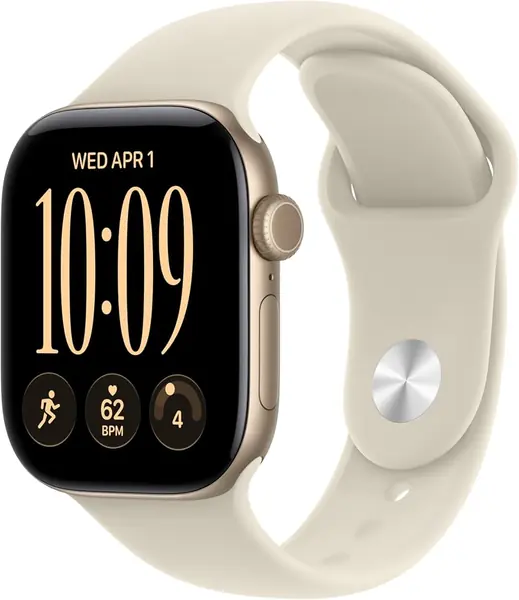
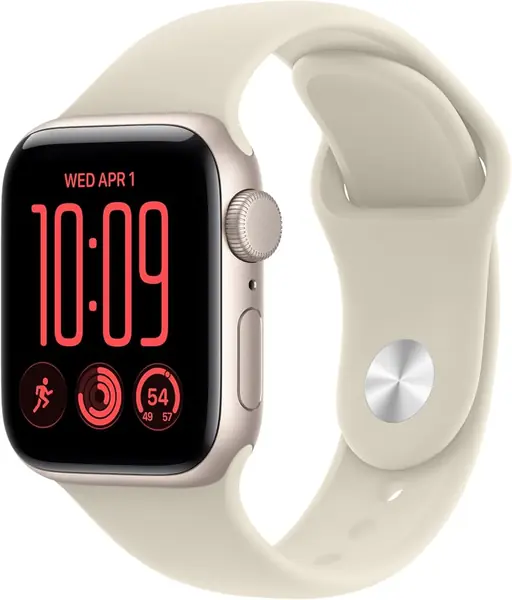
The SE 3's appeal is everything Apple adds around fitness: fall detection, crash detection, temperature sensing, Vitals, Cycle Tracking, and tight iPhone pairing. The 40mm case is compact, and the 18-hour battery fits a charge-every-night routine. It is a smartwatch first, but the workout tracking is serious enough for daily runs, gym sessions, and step goals.

What we like most is how little setup gets between you and a workout. The watch pairs with an iPhone, pulls in notifications, and keeps health data in the same app you already use. The aluminum case keeps it light, and the 40mm screen is easy to read at a glance.

The 18-hour battery is the main compromise. You are charging daily, and a long day with GPS workouts can leave you close to empty. That is the price of a full smartwatch display and Apple's feature set. The fitness tracking is accurate enough for everyday goals, but this is not the watch for someone who wants to leave the charger behind for a weekend.

For iPhone owners who want fitness tracking without stepping up to the Series 12, the SE 3 is the sensible pick. It covers the basics, adds safety features, and does not ask you to learn a new app. The Series 12 is the upgrade if you want denser health data; the SE 3 is the one that makes the daily habit easier to keep.

Pros

  • Tight iPhone pairing and app integration
  • Fall and crash detection
  • Temperature sensing and Vitals

Cons

  • iPhone-only compatibility
  • 40mm case runs small for some wrists
Our verdict

We recommend the Apple Watch SE 3 as the best value fitness watch for iPhone owners, with core health tracking, safety features, and tight iPhone pairing.

Check Latest Price
4

Amazfit Helio Strap Best Screenless for Strength Training

90 /100
TKZ Score Outstanding

Key details

Display
Screenless
GPS
No GPS
Battery Life
Up to 10 days
Weight
0.64 oz
View on Amazon

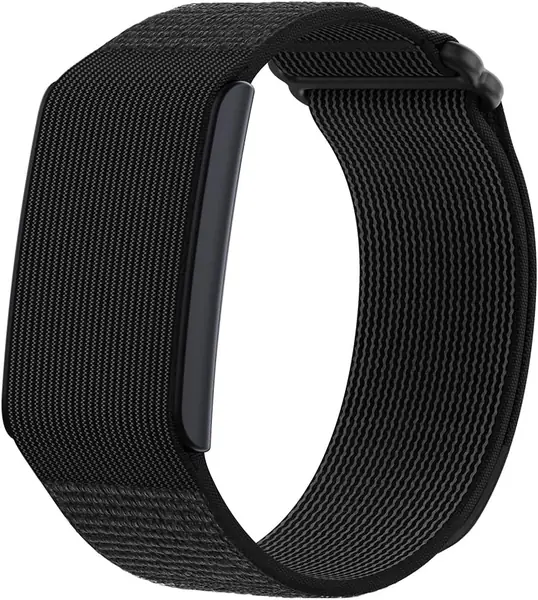
The Helio Strap is a screenless band built around strength work. It tracks reps, sets, and rest periods, adds a HYROX race mode, and keeps a 10-day battery in a nylon strap that weighs about 18 grams. There is no display to glance at, so you check the Zepp app after a session rather than between sets.

We recommend it for people who want data without a watch face. The HybridCharge score and recovery insights are the kind of thing you check in the morning, not mid-workout, and the subscription-free setup is a real advantage over coaching platforms that charge monthly. The 27 sport modes cover gym work, cycling, and hiking, and the 50-meter water resistance handles sweat and showers.

The strap makes the most sense for gym work, treadmill sessions, and daily wear. The strength tracking is the reason to choose it, and the recovery score gives you something to check in the morning. If you need pace and distance outdoors, look at a GPS watch instead. For a gym-first tracker, the Helio Strap is the one that stays out of your way.

Pros

  • Rep and set tracking for strength work
  • 10-day battery in an 18-gram strap
  • Subscription-free Zepp app

Cons

  • No built-in GPS for outdoor runs
  • Sleep data can be inconsistent
Our verdict

We recommend the Amazfit Helio Strap for gym-goers who want screen-free strength tracking and a subscription-free app, as long as outdoor runs are not the priority.

Check Latest Price
5

Apple Watch Series 12 Best Premium Health Watch

89 /100
TKZ Score Excellent

Key details

GPS
Built-in
Case Size
42mm
Compatibility
iPhone
Heart Sensing
HRV every 5 minutes
View on Amazon

The Series 12 is the health-focused Apple Watch. It measures HRV as often as every five minutes, adds a readiness experience, and pulls overnight metrics into the Vitals app. The 42mm case is the smaller of the two sizes, and the aluminum body keeps it light enough for sleep tracking. The fitness side covers Pacer, Heart Rate Zones, and Workout Buddy, so it is not just a smartwatch with a workout app.

What separates it from the SE 3 is the depth of the health data. HRV, readiness, and sleep score are presented as a daily picture rather than a single number, and the safety features are carried over. For an iPhone user who wants to understand stress, recovery, and workout load, that extra context is the reason to choose it.

The display is bright and the case looks good with a sport band or something dressier. Setup is familiar if you already use an iPhone, and the health data lands in the same app as your other Apple devices. The heart-rate sensor updates often enough to feel current during intervals, and the readiness screen gives you a useful check before a hard session.

We recommend it for iPhone users who want the most complete health picture Apple sells, not for someone who mainly wants step counts. The SE 3 covers the basics for less, and the Garmin vivoactive 5 is the better cross-platform choice. The Series 12 earns its place when recovery and readiness are the point, not just another workout log.

Pros

  • HRV readings every five minutes
  • Readiness and Vitals health insights
  • Fall and crash detection

Cons

  • Premium price
  • 42mm case may not suit larger wrists
Our verdict

We recommend the Apple Watch Series 12 for iPhone users who want the deepest health and safety features Apple offers in a fitness watch, and who accept the premium price.

Check Latest Price
6

Google Fitbit Air Best Lightweight All-Day Tracker

88 /100
TKZ Score Excellent

Key details

Display
Screenless
Battery Life
Up to 7 days
Water Resistance
50 meters
Weight
0.18 oz
View on Amazon

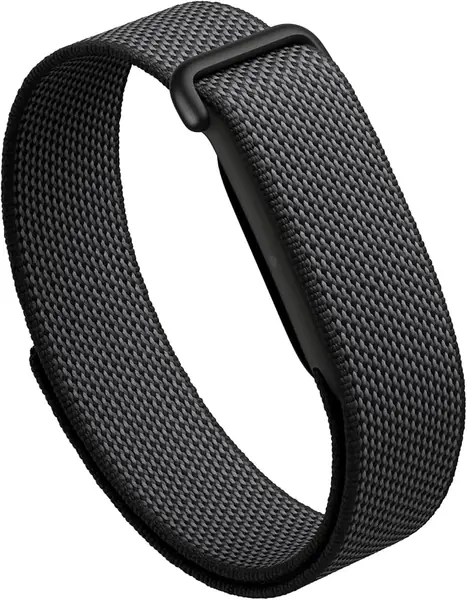
At 5.07 grams, the Fitbit Air is the lightest tracker here. That is the whole pitch: a screenless band that disappears on your wrist, works with iOS and Android, and lasts up to a week on a charge. We like it for overnight wear because there is no display to glow in your face and no case to dig into your wrist.

The Air leans on the Google Health app for everything: steps, heart rate, sleep, SpO2, skin temperature, and AI-powered coaching. A five-minute charge gets you about a day of use, which is useful when you forget to plug it in. The trade-off is that you give up glanceable stats; checking your heart rate means opening your phone.

The band is micro-adjustable from 130 to 210mm, and the 50-meter water resistance means you can shower or swim without taking it off. The screenless design is also less distracting at work or in bed. If you want a display or built-in GPS, this is not the one.

The Air is the most comfortable tracker here, and that is why it earns a spot. If you want a screen, the vivoactive 5 is the safer all-rounder; if you want a similar screenless idea with a longer battery, the Amazfit Helio Strap is the alternative. For sleep and daily wear, the Air makes the least fuss on your wrist.

Pros

  • 5.07-gram screenless design
  • Up to 7 days of battery
  • Comfortable for sleep and all-day wear

Cons

  • Sync can be unreliable
  • Sleep data can be inconsistent
Our verdict

We recommend the Google Fitbit Air for people who want a nearly weightless, screenless tracker for sleep and all-day wear, provided they can tolerate some app and sync fussiness.

Check Latest Price
7

Zeacool 1.47-Inch Tracker Budget Big Screen

87 /100
TKZ Score Excellent

Key details

Display
1.47-inch AMOLED
Water Resistance
IP68
Sports Modes
123
Health Sensors
Heart rate, SpO2, sleep
View on Amazon

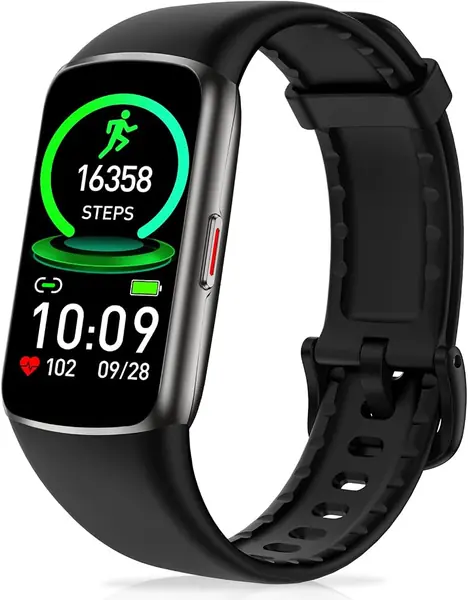
The 1.47-inch AMOLED screen is the reason to look at this Zeacool. It is much larger than the 1.10-inch displays on most budget trackers, and the 123 sport modes give you plenty of labels to choose from. The IP68 rating covers sweat, rain, and handwashing.

The health suite is crowded: 24/7 heart rate, blood oxygen, sleep, temperature, and even blood pressure. The app lets you pick which sport modes appear on the watch, which keeps the menu from becoming unusable. For a budget tracker, the screen is the feature that makes the biggest difference day to day.

We recommend it for someone who wants a bright screen and lots of modes without spending much. It is a budget tracker, so set your expectations accordingly: the app and sensor data are the parts to verify in the return window. If you need a guaranteed week of battery, spend more on a Garmin or Fitbit.

Pros

  • Large 1.47-inch AMOLED display
  • 123 sport modes
  • IP68 water resistance

Cons

  • Battery life is not specified
  • Blood pressure and temperature are not medical-grade
Our verdict

We recommend the Zeacool 1.47 for budget buyers who want a big AMOLED screen and a long list of sport modes, as long as they accept an unspecified battery life.

Check Latest Price
8

Bakoor Fitness Tracker Simple Daily Wear

81 /100
TKZ Score Excellent

Key details

Display
1.10-inch AMOLED
Water Resistance
IP68
Sports Modes
25
Warranty
No warranty
View on Amazon

The Bakoor keeps the formula simple: a 1.10-inch AMOLED screen, 25 sport modes, IP68 water resistance, and a soft silicone band. Setup is straightforward through the Keep Heath app, and the screen is bright enough to read outdoors. It is the kind of tracker you can wear all day and forget about.

What we like is the size. The 1.10-inch display is small, but that keeps the case light and unobtrusive on a smaller wrist. The band is comfortable enough for sleep, and the step, heart-rate, and sleep screens are easy to find without digging through menus. The charging cable is short, so pick a spot near an outlet.

The Keep Heath app is basic but covers the essentials: steps, sleep, heart rate, and workout history. You will not get the deep training analysis of a Garmin or the coaching of a Fitbit, but the daily screens are clear and the setup is quick. The 25 sport modes are enough for walking, running, cycling, and gym sessions.

We recommend the Bakoor for someone who wants a simple daily tracker and does not need advanced coaching. It covers steps, sleep, and heart rate without a subscription, and the screen is easy to read. For a first tracker or a spare, that is enough.

Pros

  • Bright 1.10-inch AMOLED screen
  • Lightweight silicone band
  • Simple setup and daily tracking

Cons

  • No warranty coverage
  • Step and distance readings can be off
Our verdict

We recommend the Bakoor for shoppers who want simple step, sleep, and heart-rate tracking at a low price and can accept the lack of warranty.

Check Latest Price

How We Tested These Fitness Trackers

We started by gathering every tracker we could buy at three price points, from budget step counters to full smartwatches, then filtered out anything whose marketing claims we couldn't confirm against the app within a day or two of use. Specs, price, and app-store reviews narrowed the field to 12 models, including a couple of screenless straps and several with built-in GPS.

Those 12 went onto our wrists for six months. Each one was worn overnight, every night, because sleep data is the hardest thing to fake; we kept a paper log of when we went to bed and woke up and compared it to what the app reported the next morning. Every model came on morning runs and walks with the phone deliberately left at home, logged gym sessions for us, sat through showers, and was run from full to empty at least twice so we could time battery life ourselves instead of trusting the box.

For accuracy, we wore two trackers at once for stretches of the six months and compared step counts side by side, and we checked heart rate against a chest strap during intervals. For connectivity, we paired each one with both an iPhone and an Android phone and noted when a sync silently dropped or a workout failed to upload. We also timed setup, counted how many taps it took to start a workout mid-run, and wore the better-looking ones to the office to see whether they read as a watch or as a fitness band.

Value got the last word: we asked whether the extra money bought features we actually touched after week three. The highest scorers were the ones we forgot we were wearing, and the ones we were still voluntarily strapping on in month six.

How to Choose a Fitness Tracker

Start With Your Phone

Your phone decides more than you might expect. Apple Watch models pair with iPhones, while Garmin, Fitbit, and Amazfit trackers work across iOS and Android. If you use an iPhone and want deep integration, the Apple Watch SE 3 or Series 12 is the cleaner path. If you switch phones or share a household with Android users, a cross-platform tracker is safer. Check the app before you buy: a great watch with an app you dislike will end up in a drawer. Set up the app first, then pair the tracker.

Decide Whether You Want a Screen and GPS

A screenless activity tracker like the Fitbit Air or Amazfit Helio Strap is easier to sleep in and less distracting, but it sends you to your phone for every stat. A display lets you check pace, heart rate, and notifications at a glance. GPS is the other fork: built-in GPS means you can leave your phone behind on a run, while phone-tethered tracking means carrying it. If you mostly walk and do gym classes, you can skip built-in GPS. If you run outdoors, it is worth paying for.

Read Battery Claims by Mode

Battery life is not one number. A tracker rated for 11 days in smartwatch mode may last five days with the always-on display, and GPS sessions can drain it in hours. Screenless bands often stretch to a week or more because there is no display to power. Before you compare, ask what the figure assumes: always-on, GPS, sleep tracking, or notifications. If you hate charging, a screenless band or a long-battery Garmin is the safer choice. If you want a bright AMOLED screen, accept a more frequent charging routine.

Treat Sleep and Health Metrics as Trends

Wrist trackers are good at showing patterns over time, not at giving you a diagnosis. Heart rate, HRV, sleep stages, and blood-oxygen readings can be useful when you compare them with how you feel, but they are not medical measurements. A tracker that is comfortable enough to wear overnight will give you better data than a more accurate sensor you take off at bedtime. Look for a sleep score you understand and a band you can forget about. If a reading seems off, check it against a second source before you change anything.

Check Fit and Water Resistance

Case size and band material decide whether a tracker becomes part of your day. A 40mm or 42mm case suits smaller wrists; 43mm and 45mm cases feel larger but give you more screen. A soft silicone or nylon band is easier to sleep in, while a metal case looks dressier. Water resistance matters if you swim or shower in it: 50 meters and 5 ATM are pool-friendly, while IP68 is splash-resistant. Match the rating to your activity, and rinse the band after a sweaty workout.

Frequently Asked Questions

Final Verdict

The Garmin vivoactive 5 is the fitness tracker we recommend first for most people. It has the rare combination of built-in GPS, a bright AMOLED screen, and battery life measured in days, plus enough health and sleep tracking to cover the rest of your day. It is not the cheapest or the most advanced, but it makes the fewest compromises.

Choose the Garmin Forerunner 165 if you follow a run plan and want daily suggested workouts. Choose the Apple Watch SE 3 if you live on an iPhone and want safety features with your fitness tracking. Everyone else can start with the vivoactive 5 and adjust later.