Best Fitbits for Women of 2026

A fitness tracker only earns its place on your wrist if two things hold true: it's still there at bedtime, and it still has a charge on Thursday. I've worn the pretty ones that spent more time on the charger than on my arm, and the capable ones that looked like a calculator strapped to a bracelet. The right one disappears — reads your heart rate without pinching, tracks your sleep without waking you, and looks like something you'd wear to dinner.

That balance is harder to find than spec sheets suggest, so we wore 12 trackers for six months to sort it out. Two things mattered more than I expected: the band, since most ship with small and large sizes and the fit decides whether the heart rate sensor reads anything at all, and the app, where you'll spend more time than on the device itself.

A few months of the brand's premium tier usually come bundled, which is worth knowing before you pay for it separately. What follows are the ones that survived, sorted by who they actually suit.

The Best Fitbits for Women

1

Fitbit Inspire 3 Best Overall
89 /100
TKZ Score Excellent

Key details

Display
0.76 in.
Bands In Box
Small and large
Battery Life
10 days
Water Resistance
50 meters
View on Amazon

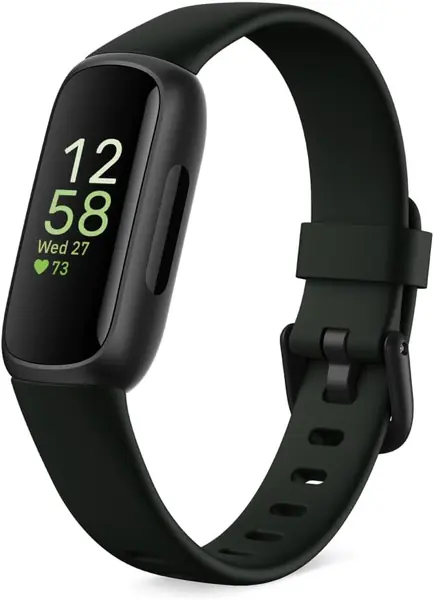
The first thing we noticed about the Inspire 3 is how little there is of it. The screen measures 0.76 inches across, the case is resin, and the whole thing sits flat against the wrist, with both the small and large silicone bands in the box so a narrow wrist gets a strap that actually cinches instead of one that slides. That is the whole reason it is our default pick. A tracker only works if you keep it on, and this is the one here we forget about overnight, which is exactly when the sleep data gets collected.

Battery life backs that up. Fitbit rates it at 10 days and about two hours to charge, so a top-up every week or so covers it, with no nightly ritual and no second charger on the nightstand. In exchange you get 24/7 heart rate, a daily readiness score, sleep stages with a nightly sleep score, a stress management score with guided breathing sessions, SpO2, and menstrual cycle logging, all squeezed onto a display small enough that you check it rather than scroll it.

Where it lands in the lineup matters too. It costs less than any of the smartwatches here, and the one feature it gives up is built-in GPS, so runs and rides track through your phone instead. If the phone comes with you anyway, that is not a loss, and everything else, from the sleep score to the cycle log, stays intact.

Pros

  • Rated for 10 days, charges in about two hours
  • Smallest, flattest case here for slim wrists
  • Small and large bands both included
  • Sleep score, stress tools, and cycle logging for less than the smartwatches

Cons

  • A 0.76-inch screen keeps notifications to a line or two
  • Bluetooth syncing can drop and need re-pairing
Our verdict

For most women this is the Fitbit to buy: it disappears on a narrow wrist, runs about 10 days a charge, and covers sleep, stress, and cycles without smartwatch bulk.
Check Latest Price
2

Fitbit Luxe Special Edition Best Jewelry-Style

88 /100
TKZ Score Excellent

Key details

Display
Color display
Bands In Box
Gorjana gold link bracelet plus peony bands (small and large)
Sleep Tracking
Sleep Score
Premium Trial
6 months of Fitbit Premium
View on Amazon

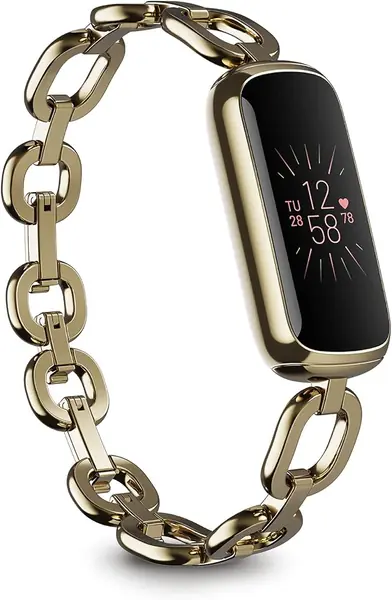
A tracker that can pass for a bracelet is the entire pitch of the Luxe Special Edition, and it is the only pick here that takes the idea seriously: Gorjana's soft gold stainless steel Parker link bracelet in place of a silicone strap, plus a peony classic band in small and large sizes for the days metal does not suit. The case runs about 1.43 inches long and four tenths of an inch thick, so it sits like a link bracelet rather than a screen strapped to your arm.

What sells it is the second half of the day. Most trackers look like gym equipment at dinner and this one does not, and swapping to the peony band for a run takes seconds. The color display is bright, sleep tracking comes with the same nightly Sleep Score as the rest of the line, and the Special Edition includes six months of Fitbit Premium, the longest trial in this group.

Charging is where the jewelry idea costs you. There is no battery rating on the spec sheet, and the honest expectation is a couple of days between charges rather than a week, so the cable ends up living on your desk instead of in a drawer. The bracelet is also the part to watch: the band can work loose from the case, so check that it seats firmly every time you fasten it.

Pros

  • Gorjana gold link bracelet included with the tracker
  • Slim case that reads as jewelry, not gym gear
  • Six months of Fitbit Premium included

Cons

  • Charges every couple of days, not every week
  • Band can work loose from the case
Our verdict

Buy it if you want a tracker that passes as a bracelet; if charging every couple of days is a dealbreaker, take the Inspire 3 instead.

Check Latest Price
3

Fitbit Versa 4 Best for Calls and GPS

87 /100
TKZ Score Excellent

Key details

Display
1.58 in. AMOLED
Battery Life
4 days
GPS
Built-in
Colorway
Pink Sand/Copper Rose
View on Amazon

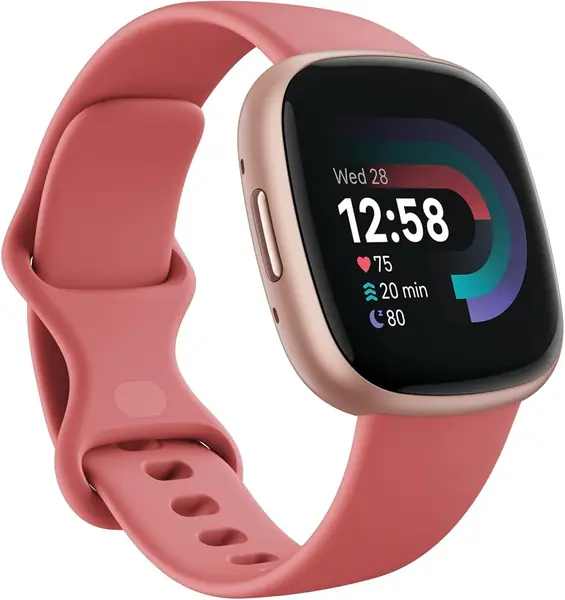
Pink Sand with a copper-rose aluminum case is the finish we reach for when a tracker has to look like it belongs with real clothes, and the Versa 4 is the only big-screen Fitbit here sold in it. The 1.58-inch AMOLED runs 348 by 442 pixels, bright enough for direct sun and large enough to read a text preview without stopping what you are doing.

The rest of the package is the fullest here: built-in GPS for runs and rides without your phone, on-wrist Bluetooth calls, Alexa, Google Wallet and Maps, 40+ exercise modes, a stress management score, SpO2, and menstrual health tracking, with small and large classic bands in the box. It is rated to 50 meters, so showers and pool laps are fine. For a woman who wants one device for the gym, the desk, and the school run, that is a lot of ground covered.

We just do not think it is the one for a very small wrist. A 1.58-inch case is more than twice the width of the Inspire 3's screen, and it is the piece here most likely to catch on a sleeve or feel like a lump under a cuff at night. Fitbit also lists four days of battery, which is on the short side for this group, so the bigger screen and the phone-free GPS ask more of your charging routine in return.

Pros

  • Built-in GPS tracks runs without your phone
  • On-wrist Bluetooth calls, texts, and Alexa
  • 1.58-inch AMOLED in Pink Sand/Copper Rose

Cons

  • Four days of battery is on the short side here
  • Big 1.58-inch case is a lot on a narrow wrist
Our verdict

Anyone who wants wrist calls and phone-free GPS in a finish that dresses up should start here.

Check Latest Price
4

Fitbit Versa 2 Best Value Smartwatch

86 /100
TKZ Score Excellent

Key details

Display
Color display with always-on option
Bands In Box
Small and large
Water Resistance
50 meters
Smart Features
Alexa built-in
View on Amazon

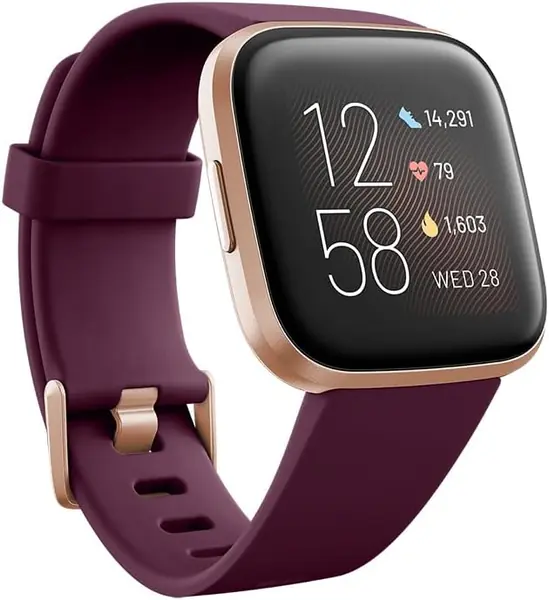
If you want a smartwatch and not a band, the Versa 2 is where we start. It costs less than the Versa 4 and still puts calls, texts, and app notifications on your wrist, with Alexa built in, Spotify controls, Fitbit Pay, and a sleep score broken into light, deep, and REM stages. The Bordeaux case with copper-rose trim is a warmer, less candy-pink take on the same idea.

The compromises are the ones that come with age. It lists 20+ exercise modes against 40+ on the Versa 4, and the always-on display option, genuinely nice for checking the time mid-meeting, is the setting that eats the charge fastest. We keep always-on off and let the wrist raise wake the screen; that is how the battery stretches through a week of normal wear.

For sleep it is more capable than its age suggests, giving you light, deep, and REM stages plus a nightly score, which is the same core measurement the newer models deliver. What you are really choosing between here and the Versa 4 is money versus a bigger, brighter screen and built-in GPS, and the Versa 2 wins that argument for anyone who mostly walks, sleeps, and reads notifications.

Pros

  • Costs less than the Versa 4
  • Calls, texts, Alexa, and Spotify controls on the wrist
  • Sleep score with light, deep, and REM stages

Cons

  • Always-on display drains the battery faster
  • 20+ exercise modes versus 40+ on the Versa 4
Our verdict

A smartwatch we are happy to recommend on a budget: calls, Alexa, and proper sleep stages without paying for the newest model.

Check Latest Price
5

Google Fitbit Edge Best for Guided Training

85 /100
TKZ Score Excellent

Key details

Display
1.34 in. AMOLED
Battery Life
7 days
GPS
Via smartphone
Extra Sensor
Altimeter
View on Amazon

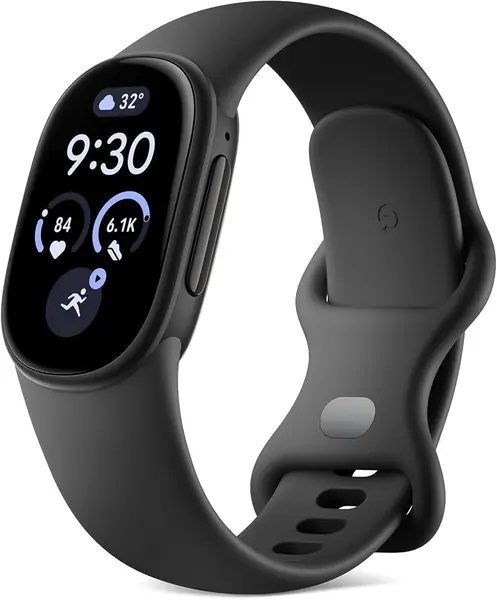
The Edge is the newest shape in the Fitbit lineup, and it is built around coaching rather than a dashboard: a plan in the Google Health app, put together with Gemini, that adjusts as your week changes, plus an altimeter so stairs and climbs count properly. The 1.34-inch AMOLED is bright and easy to read outdoors, and Fitbit rates the battery at seven days.

The coaching is worth the step up from an Inspire 3 if you are the kind of person who wants to be told what Thursday looks like. It is the only pick here that tries to plan your training instead of just recording it, and the medium-size screen makes the daily stats legible without going full smartwatch on your wrist.

What gives us pause is the history rather than anything on the spec sheet. The Edge is the newest model here, so how it holds up in year two is genuinely open in a way it is not for the Versa 2 or the Inspire HR, and that is a real consideration at this price. If you want the coaching and the brighter screen, it is the most interesting tracker in the lineup; if you want a safe bet, one of the older models is it.

Pros

  • Gemini-built coaching plans that adjust to your week
  • Seven-day battery
  • Bright 1.34-inch AMOLED with an altimeter

Cons

  • Only sold in obsidian and matte black
  • Runs track GPS through your phone
Our verdict

The Edge earns its place on coaching and a bright, readable screen; choose one of the others if you want a color option or a longer track record.

Check Latest Price
6

Fitbit Inspire HR Best for Simple Step Tracking

84 /100
TKZ Score Excellent

Key details

Bands In Box
Small and large
Battery Life
Up to 5 days
Sleep Tracking
Light, deep, and REM stages
Heart Rate
24/7 wrist-based
View on Amazon

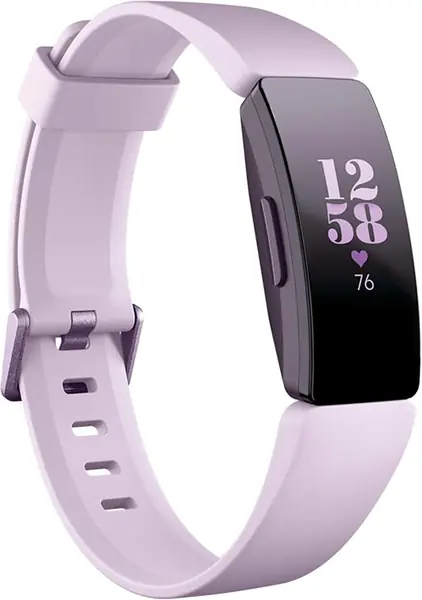
The Inspire HR is one of the oldest designs in this group and the cheapest, and it still does the two things most people buy a tracker for: all-day steps, distance, active minutes, and calories, plus automatic sleep tracking with light, deep, and REM stages. Fitbit rates the battery at up to five days, and both band sizes come in the box.

It is also the least fussy of the group. Heart rate runs continuously, SmartTrack picks up walks, rides, and swims without you starting anything, and connected GPS on runs borrows your phone's signal. Setup is short: pair it, set a goal, and the daily totals are waiting in the app when you open it.

Our hesitation is the five-day battery and the small price gap above it. The Inspire 3 costs a little more and returns 10 days between charges along with a readiness score, stress tools, SpO2 readings, and cycle logging. That is a lot for the difference, which is why the Inspire HR is a second choice for most people, but as a first tracker, or as a gift for someone who wants steps and sleep and nothing else, it is an easy yes.

Pros

  • Cheapest Fitbit in this group
  • Automatic sleep stages and continuous heart rate
  • Small and large bands included

Cons

  • Up to five days of battery
  • Needs your phone for GPS on runs
Our verdict

A good first tracker: it covers steps, heart rate, and sleep stages for the least money here, and asks nothing of you in return.

Check Latest Price

How We Tested: Twelve Trackers, Six Months, No Days Off

We started with every current fitness tracker from the major wearable brands, then cut anything that couldn't pair with both Android and iOS, anything whose companion app hadn't been updated in the past year, and anything we couldn't get in a band small enough for a wrist under six inches. That left 12 units, and we spent six months with them, wearing each one for at least a week straight — overnight included — before rotating to the next.

Sleep tracking got judged against our own nights: did the device log the 2 a.m. wake-up, and did it count the hour we spent reading in bed as sleep? For heart rate, we compared readings against a chest strap during runs and spin classes and checked step counts against a hand tally on a measured loop. Every tracker went into lap swimming and a hot shower to see how it handled water and whether the screen stayed usable with wet fingers.

We ran every battery to zero at least twice and noted which day it died, then timed a charge from empty. Bands got swapped three times each — the small and large sizes in the box plus any bracelet-style option — to see how fiddly the pins were and whether the fit held during a run. Displays were checked at noon in direct sun and at 3 a.m. in a dark bedroom, and we wore each tracker to work, to the gym, and to bed to judge whether it read as jewelry or as a gadget.

Because several of these bundle a few months of the brand's premium subscription, we ran the paid tier and the free tier side by side to see what disappears when the trial ends, and logged every app crash, sync failure, or dropped workout that made us trust a device a little less. The trackers we were reluctant to take off at the end weren't the ones with the longest spec sheet.

How to Choose a Fitbit for a Smaller Wrist

Size comes before sensors

The cases in this group run from 0.76 inches across on the Inspire 3 to 1.58 inches on the Versa 4, and that difference is the one you feel all day. A smaller wrist has less real estate, so a big case becomes something that catches on a cuff and presses into a pillow. Start with the size you would happily fall asleep in, then compare features.

Most of these ship with small and large bands in the box, so the strap is the easy half of the fit. If you are torn between two models, the smaller one wins unless the bigger screen buys you something you will genuinely use every day.

Match the charge cycle to your routine

Battery is where these separate fastest. The Inspire 3 is rated at 10 days, the Edge at seven, the Inspire HR at up to five, and the Versa 4 at four, while the jewelry-style Luxe asks for a charge every couple of days. Bigger screens, always-on modes, and phone-free GPS are what spend the days.

Pick the longest interval you will actually tolerate, because a tracker sitting on the charger is not tracking anything. If you know you forget, the 10-day option turns charging into a weekly habit instead of a nightly one.

Tracker or smartwatch?

The split is simple: a tracker gives you a slim band and the health metrics, while a smartwatch adds a big screen, wrist calls, and a voice assistant. The Versa 4 and Versa 2 lean smartwatch, with Bluetooth calls, Alexa, and the notification stream that comes with them. The Inspire 3, Luxe, and Edge lean tracker.

If you already check your phone constantly, a smartwatch can make that worse. If the appeal is wearing something you forget about, the slimmer shape is the better purchase.

Built-in GPS or your phone's?

Only the Versa 4 carries its own GPS; the Inspire 3 and Edge borrow the phone's signal, and the Inspire HR does the same on runs. That is a real difference if you head out without a phone, since a tethered tracker gives you no route and no live pace until you are back in range.

If your phone comes along in a pocket or belt, save the money and the battery, and put it toward sleep and stress tools instead.

Syncing, returns, and the one-year warranty

Fitbit's warranty on these runs a year, and Bluetooth syncing is the shared weak spot across the lineup: if the app shows yesterday's totals, check the phone's Bluetooth and re-pair the device before you conclude it has died. Buy somewhere with a straightforward return window.

Put the first week to work. Pair it, wear it overnight, log a workout, and keep the box and charger nearby until you are sure, because the problems worth acting on tend to show up early.

Frequently Asked Questions

Final Verdict

If you are buying one Fitbit and you want it to disappear on your wrist, get the Inspire 3. It is the smallest here, the longest-running on a charge, and the only pick that combines a nightly sleep score and cycle tracking with a case small enough to forget you are wearing. The one thing it cannot do is GPS without your phone.

Two situations change the answer. If the point of the purchase is that it looks like jewelry rather than a fitness band, the Luxe Special Edition is the only one that solves that, and charging every couple of days is the price of it. If wrist calls and phone-free GPS in a finish that dresses up matter more, the Versa 4 is the pick, with the caveat that its 1.58-inch case is the biggest here.