Best Fitbits of 2026

A fitness tracker only earns its place on your wrist if you stop noticing it's there. I've watched plenty of them end up in a drawer by week two — not because the sensors were bad, but because the band pinched, the case snagged on sweater sleeves, or the battery died mid-week and the habit died with it. The band is the most underrated part of the purchase and the display is the most overrated: a screenless model can read your sleep just as well as a smartwatch, as long as it actually fits.

What you're really buying is a clearer picture of your own baseline — how you slept, how hard you actually pushed, whether your body is asking for an easy day. Over the past six months, our team has worn 12 trackers through workouts, overnight sleep, and long desk days, and a few were genuinely disappointing: dropped connections, step counts that felt inflated, apps that buried the one number we opened them for. The ones that held up got the fundamentals right first and the extras second.

The Best Fitbits

1

Fitbit Charge 6 Best Overall
88 /100
TKZ Score Excellent

Key details

Display
1.04-inch digital
Battery Life
Up to 7 days
GPS
Built-in GPS
Water Resistance
50 meters
View on Amazon

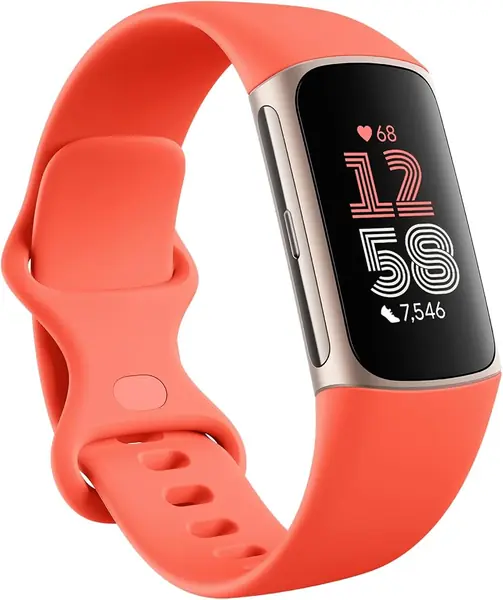
The Charge 6 is the Fitbit we recommend when someone wants one device to cover workouts, daily stats, and sleep without moving up to a full smartwatch. It has built-in GPS, more than 40 exercise modes, a 1.04-inch screen, and a battery rated for about a week. The feature we did not expect to use as often is the heart-rate link to compatible gym equipment; it turns a treadmill or elliptical into a more useful readout.

That combination is what earns it the top spot. The Charge 6 is small enough to wear overnight, but it still gives you a screen for pace, heart rate, and notifications, so you are not pulling out your phone mid-run. We also appreciate the Google Maps directions and YouTube Music controls, which make it feel more current than a basic band.

The 50-meter water resistance covers laps and sweaty sessions, and the stress and sleep scores give you something to review the next morning. We found the screen easy to read at a glance, though it is not as roomy as the Versa 4's AMOLED panel. If you want a bigger display and on-wrist calls, the Versa 4 is the better fit; otherwise the Charge 6 is the easier everyday choice.

Pros

  • Built-in GPS for phone-free workouts
  • Heart-rate broadcast to compatible gym equipment
  • Week-long battery with a readable screen

Cons

  • Durability is the weak point in this set
  • Bluetooth syncing can be finicky
Our verdict

We recommend the Charge 6 to most people because it pairs built-in GPS, a readable screen, and week-long battery in a tracker you can wear overnight.
Check Latest Price
2

Fitbit Air Best Screenless

87 /100
TKZ Score Excellent

Key details

Display
No display
Battery Life
5 days
Water Resistance
50 meters
Weight
0.18 oz
View on Amazon

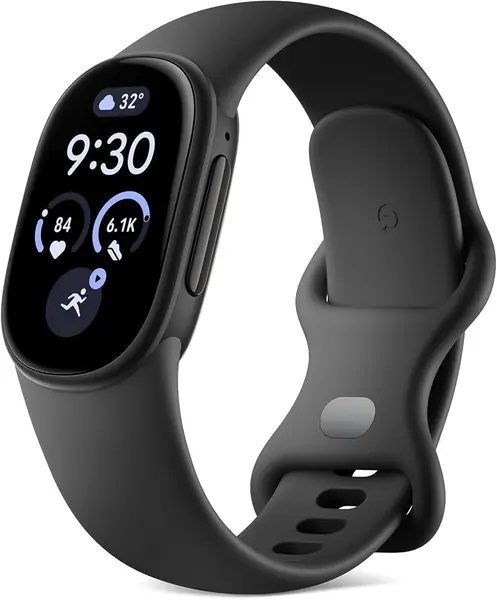
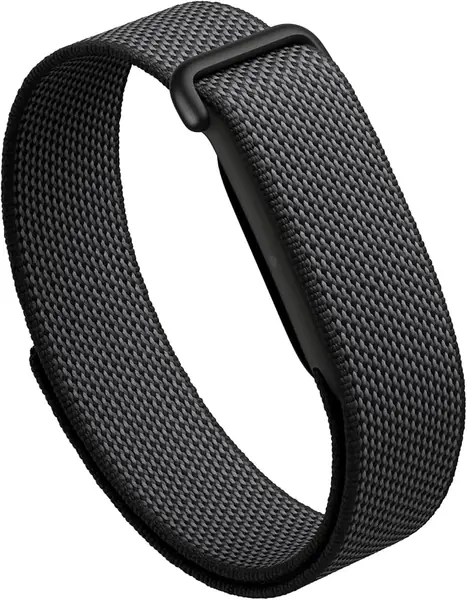
No screen is the point. The Air weighs just over five grams, sits on a 130-to-210-millimeter band, and is rated to 50 meters, so it works as a bracelet, a workout band, and a sleep band without feeling like a watch. We wore it overnight without the usual urge to take it off, which is the highest compliment we can give a sleep tracker.

The screenless design changes the rhythm of use: there is no time or step count on the wrist, so you check the Google Health app instead. We liked that more than we expected at night, because there is no bright display to wake us and nothing to fiddle with. During the day, it is less handy for a quick pace check, which is the trade-off.

The sensors are more complete than the size suggests: heart rate, SpO2, skin temperature, and sleep stages all feed the app, and a five-minute charge adds a day when you are in a hurry. The band swaps easily between a bracelet, workout loop, and sleep band, which is why it stays on for more of the day than a heavier watch.

Pros

  • Feather-light 5.07-gram build
  • Five-minute charge adds a day
  • Swim-ready and band-swappable

Cons

  • Step counts can drift during hand work
  • Sleep staging is inconsistent
Our verdict

We recommend the Air to anyone who wants a tracker that disappears on the wrist and does its best work overnight.

Check Latest Price
3

Fitbit Inspire 3 Best Budget

86 /100
TKZ Score Excellent

Key details

Display
0.76-inch touchscreen
Battery Life
10 days
Water Resistance
50 meters
Stress Tracking
Daily score
View on Amazon

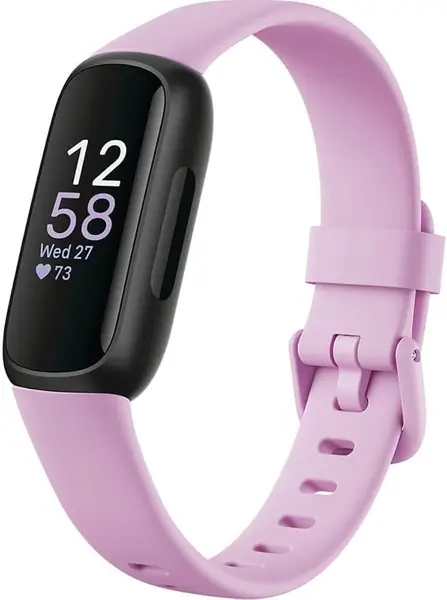
The Inspire 3 is the budget anchor of this group, but it does not feel like a stripped-down afterthought. You get a 0.76-inch color touchscreen, a battery rated for 10 days, 20-plus exercise modes, stress tracking, SpO2, and sleep tools in a case that stays small on the wrist.

What we appreciate most is the fit. The Inspire 3 is easy to wear overnight, and the screen is just large enough for a time, a step count, and a notification without turning into a tiny phone. We also like that it keeps the 50-meter water resistance, so a swim or a sweaty workout is not a problem.

That mix is why it earns a place for budget buyers. It covers the basics of a Fitbit without asking you to charge it every few nights, and the small screen is a better match for narrow wrists than the Versa 4. The Charge 6 is the step up if you want built-in GPS and a roomier display, but the Inspire 3 keeps the essentials.

Pros

  • Ten-day battery between charges
  • Small color touchscreen
  • Stress, SpO2, and sleep tools

Cons

  • Bluetooth syncing can be unreliable
  • Charging can fail over time
Our verdict

We recommend the Inspire 3 to budget-minded buyers who want a small screen, long battery, and stress tracking without a smartwatch.

Check Latest Price
4

Fitbit Edge Best for Coaching

85 /100
TKZ Score Excellent

Key details

Display
1.34-inch AMOLED
Battery Life
7 days
GPS
Via smartphone
Elevation
Altimeter
View on Amazon

The Edge is the Fitbit for someone who wants training guidance and elevation data, not just a step count. It adds an altimeter, a 1.34-inch AMOLED screen, a seven-day battery rating, and Google Health Coach plans built with Gemini. The screen is the first thing you notice: it is bright, easy to read outdoors, and a clear step up from the smaller bands.

We like the coaching angle because it gives the device a job beyond collecting numbers. The altimeter makes hilly walks and climbs more interesting, and the larger display is easier to scan mid-workout than the Charge 6. The 50-meter water resistance means sweat and rain are not a concern.

Our hesitation is the GPS setup. The Edge lists GPS via smartphone rather than built-in GPS, so it is not the phone-free running watch its training features suggest. If you want to leave your phone at home, the Charge 6 or Versa 4 is the better fit. The Edge makes more sense for someone who carries a phone and wants better coaching and elevation insight.

Pros

  • Altimeter for elevation and climbs
  • Bright 1.34-inch AMOLED display
  • Gemini coaching and seven-day battery

Cons

  • iPhone syncing can be incomplete
  • Limited long-term reliability history
Our verdict

We recommend the Edge to outdoor-focused users who want elevation data and coaching in a bright, readable package.

Check Latest Price
5

Fitbit Versa 4 Best Full Smartwatch

84 /100
TKZ Score Excellent

Key details

Display
1.58-inch AMOLED
Battery Life
6 days
GPS
Built-in GPS
Water Resistance
50 meters
View on Amazon

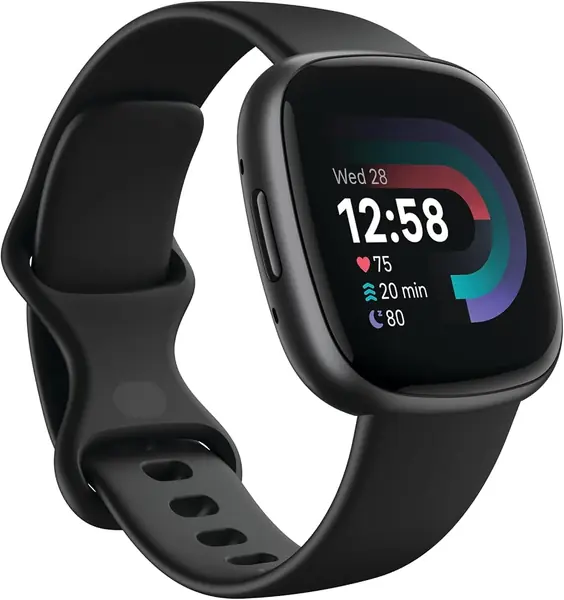
The Versa 4 is for the person who wants a smartwatch first and a fitness tracker second. It has a 1.58-inch AMOLED display, built-in GPS, on-wrist Bluetooth calls and texts, Alexa, Google Wallet and Maps, and a battery rated for about six days. We like it most for the bigger screen: it is the easiest of these to read at a glance, and it makes notifications feel less cramped.

The fitness side is not an afterthought. You get 40-plus exercise modes, 24/7 heart rate, sleep tracking, stress scores, and 50-meter water resistance. We found the built-in GPS useful for walks and rides, and the speaker and microphone make the call feature more than a novelty.

The part that gives us pause is durability. The Versa 4 has a rougher long-term record than the Charge 6, and the case is the piece to watch. If you want the smartwatch experience, it is still the most complete option here; if you want the safest bet for years of wear, the Charge 6 is the more conservative choice.

Pros

  • Large 1.58-inch AMOLED display
  • Calls, Alexa, and built-in GPS
  • Six-day battery and 40+ modes

Cons

  • Syncing can be sluggish
Our verdict

We recommend the Versa 4 to anyone who wants a full smartwatch with calls, Alexa, and built-in GPS on the wrist.

Check Latest Price
6

Fitbit Sense 2 Best for Stress and ECG

83 /100
TKZ Score Excellent

Key details

Battery Life
6+ days
GPS
Built-in GPS
ECG
ECG app
Stress Sensor
cEDA
View on Amazon

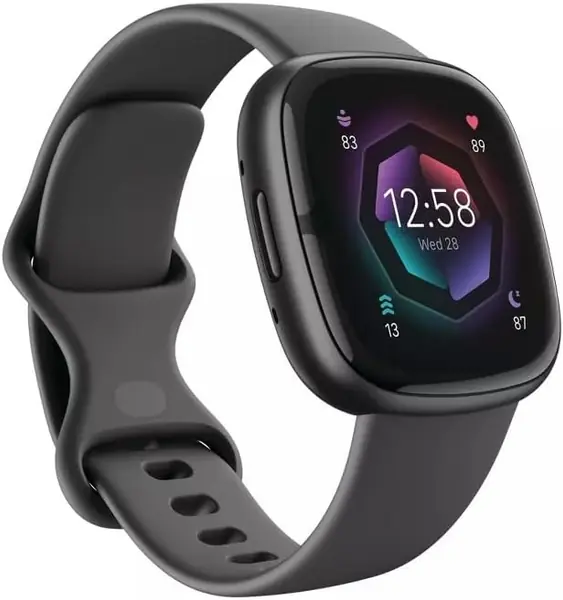
The Sense 2 asks you to pay for health sensing you may not use. Its case is built around an ECG app for atrial fibrillation assessment, a cEDA sensor for all-day stress detection, SpO2, 24/7 heart rate, built-in GPS, and a battery rated for six-plus days. If those sensors are the reason you are shopping, it is the most health-focused Fitbit here.

We like it for the people who will actually look at the data. The ECG reading is easy to pull, and the stress score gives you a daily prompt to notice how the body is doing. It is a useful conversation starter with a doctor if something looks off.

The fitness side is solid, too. Built-in GPS and 40-plus exercise modes cover walks, runs, and gym sessions, and the six-plus-day battery keeps it in the same weekly charging rhythm as the Charge 6. It is a health watch that can still handle a workout.

Our reservation is that the premium is narrow. If you will not use ECG or stress tracking, the Charge 6 covers steps, GPS, heart rate, and sleep for less, and it is the easier recommendation. The Sense 2 earns its place only when those specific health metrics are the point.

Pros

  • ECG app for AFib assessment
  • cEDA all-day stress detection
  • Built-in GPS and six-plus-day battery

Cons

  • Durability is a concern
  • Syncing can be unreliable
Our verdict

We recommend the Sense 2 to people who will use its ECG and stress sensors; otherwise the Charge 6 is the safer buy.

Check Latest Price
7

Fitbit Versa 2 Big-Screen Basics

82 /100
TKZ Score Excellent

Key details

Display
Always-on option
Music
Spotify controls
Swim Tracking
50 meters
Voice Assistant
Alexa built-in
View on Amazon

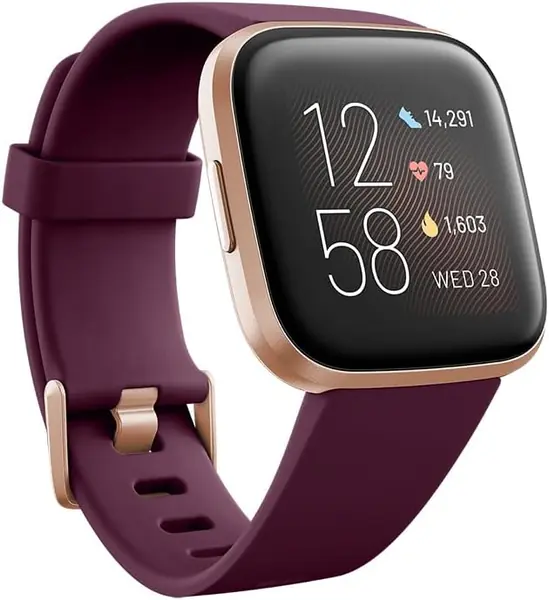
The Versa 2 is the older smartwatch in this group, and it makes sense only as a value play. It still offers a large display with an always-on option, Alexa built in, Spotify controls, Fitbit Pay, sleep tracking, and 50-meter swim resistance. Against the Versa 4, it is the older design, so we treat it as a secondary option rather than the default.

What we still like is how much screen you get. The always-on option is useful for glancing at the time, and Alexa and Spotify controls make it feel more capable than a basic band. The swim rating means you can take it into the pool, and the sleep score gives you a reason to keep it on at night.

That is why it is a secondary pick, not a main recommendation. If you want a big screen and voice controls for the least commitment, the Versa 2 is a reasonable way in. If you want the current sensor set and a newer design, the Versa 4 or Charge 6 is the better fit.

Pros

  • Large display with always-on option
  • Alexa and Spotify controls
  • Swim tracking to 50 meters

Cons

  • Always-on display requires more frequent charging
Our verdict

We recommend the Versa 2 only as a big-screen value pick for people who want Alexa and swim tracking without the newest sensors.

Check Latest Price

How We Tested a Dozen Fitness Trackers

We built the shortlist by pulling every current tracker we could get our hands on that works with both iOS and Android, then filtering by price, band options, display style, and how much of the useful data sits behind a paid membership. Models that shipped in only one band size got cut early — a tracker that doesn't fit a small wrist is a tracker someone stops wearing. That left 12 units, which we rotated through over six months so each one got at least a week of full-time wear.

Every tracker went on in the morning and stayed on overnight, logging sleep stages while we slept, then tracking morning runs, gym sessions, bike rides, and long stretches at a desk. We timed battery life from a full charge to shutoff rather than trusting the spec, walked out of range of a paired phone to see how quickly and cleanly the sync dropped and recovered, and checked heart rate readings against a chest strap during intervals. Showers and hand-washing told us which ones survived water and which screens turned finicky when wet.

Then we looked at the things that only show up after weeks: whether the strap frayed or the case picked up scratches, whether the app opened on the number we wanted or three taps deep, and whether alerts arrived once or twice. We compared what the free tier shows against the premium one, since that subscription is part of what you're paying for. What we couldn't test for you was comfort on your own wrist — but band fit, weight, and how often we forgot we had one on carried a lot of weight in the final ranking.

How to Choose a Fitbit

Start With the Screen You'll Actually Use

Fitbit's range runs from screenless bands to slim touchscreens to square smartwatches, and the screen decides how you use the thing. The Fitbit Air is the screenless end: it disappears on the wrist and is easy to sleep in, but you check your stats in the app. The Charge 6 and Inspire 3 give you a glanceable readout without much bulk, while the Versa 4 is the closest to a smartwatch.

The trap is assuming the biggest screen is the best one. A large AMOLED is easier to read mid-workout, but it adds bulk and draws more power; a screenless tracker is more comfortable overnight but useless for a quick time or pace check. We start with when you want to look at the device, not how impressive the display sounds.

Decide Whether GPS Needs to Be Built In

Built-in GPS is the feature that lets you leave your phone behind for a run, ride, or walk. The Charge 6, Versa 4, and Sense 2 have it. The Edge is the exception that catches people: despite its training focus, its listing says GPS via smartphone, so it still needs the phone for route tracking.

The choice is simple once you know your habit. If you carry a phone on every workout, phone-tethered GPS is fine and you can spend the difference on a better screen or sensors. If you run phone-free, pay for built-in GPS; otherwise you will be carrying the phone anyway, which defeats the point of a light tracker.

Match Battery Life to Your Charging Routine

Battery ratings here run from about five days on the Air to ten days on the Inspire 3, with the smartwatches in the six-to-seven-day range. Real use pulls those numbers down, especially with GPS sessions, always-on displays, and frequent notifications. We care less about the headline number than whether charging fits your week.

The trap is buying a big-screen watch for sleep tracking and then skipping nights because it needs a charge. A slim band you barely notice is more likely to stay on for sleep. If you want the smartwatch experience, plan a weekly charging ritual; if you want to forget about charging, start with the Inspire 3 or Air.

Know Which Sensors You'll Use

Heart rate is table stakes. SpO2, skin temperature, ECG, and cEDA stress sensing are the upgrades, and they are not equally useful to everyone. The Sense 2 is the health-sensor pick, with an ECG app and all-day stress detection. The Air adds skin temperature and SpO2 in a screenless package, while the Charge 6 covers the everyday metrics with a screen.

The trap is paying for a sensor you will not consult. ECG is for atrial fibrillation assessment, not a diagnosis, and a stress score is a prompt rather than a medical test. We look for one metric we will actually act on; if you will not use ECG or stress data, the Charge 6 is the better use of money.

Check Fit, Bands, and Water Resistance

A tracker you wear overnight has to disappear on the wrist, and that is where the Air and Inspire 3 have an advantage over the Versa 4. The Air weighs about five grams and fits a 130-to-210-millimeter wrist; the Inspire 3 is small enough for narrow wrists. The Versa 4's larger case is easier to read but more noticeable in bed.

Water resistance matters if you swim. A 50-meter rating is the swimproof benchmark on the Charge 6, Air, Inspire 3, Edge, and Versa 4. A lower splash rating is fine for sweaty workouts but not laps. Also check the band: silicone is easy to rinse, but a band that traps moisture can irritate skin, so dry it after workouts.

Frequently Asked Questions

Final Verdict

For most people, the Fitbit Charge 6 is the one to buy. It has the best balance of built-in GPS, a readable screen, week-long battery, and gym-equipment heart-rate sharing, and it is small enough to wear overnight. If sleep comfort matters more than a screen, choose the Air; if you want the budget entry, the Inspire 3; if you want calls and Alexa, the Versa 4. Start with the Charge 6 unless one of those needs pulls you away.