Best Fitbits for Running of 2026

A tracker is only as good as mile 18 — cold hands, a sweat-slick wrist, and a band that has gone loose or a heart-rate readout that is quietly making things up. Running asks more of these devices than walking does, and a strap that felt fine on the couch starts to bite somewhere in the second half. What you want is something light, comfortable, and steady enough that you forget it's there until you check your splits.

I've worn wrist trackers since the clip-on pedometer days, and my team and I have now run in 12 of them over the past nine months. The pattern: people overrate the display and underrate the app, where your sleep, heart rate, and run history actually turn into something useful — most of my letdowns came from that side of the pairing. Get one that ships with two band sizes, too; a snug fit at mile two is a tourniquet at mile thirteen.

The picks below held up: accurate, tough enough for salt and showers, and easy to live with between charges. A few earned their price outright; others only made sense once I counted the bundled coaching.

The Best Fitbits for Running

1

Fitbit Charge 6 Best Overall
87 /100
TKZ Score Excellent

Key details

GPS
Built-in GPS
Display
1.04-inch AMOLED
Battery Life
Up to 7 days
Exercise Modes
40+
View on Amazon

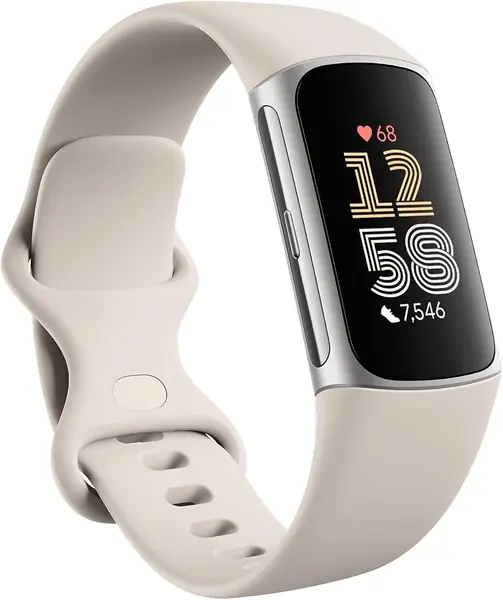
A GPS receiver inside the case is why the Charge 6 takes the top spot. It's the only tracker here that records distance, pace, and a route map without a phone in your pocket, and that single fact changes the morning routine: no patting down pockets at the door, no deciding whether the phone comes along, no keeping an eye on two batteries instead of one. We stopped thinking about the phone entirely on run days.

Around that receiver, the hardware holds up. The 1.04-inch AMOLED is big enough to read pace at a glance without breaking stride, the case shrugs off sweat and rain, and there are 40-plus exercise modes with automatic tracking for the days you forget to start one. Battery is rated at seven days and charges in about two hours; long GPS sessions eat into that, as they do on every watch here.

Two features are easy to overlook and worth knowing. The Charge 6 can send your heart rate to compatible gym equipment, so a treadmill or elliptical shows your effort on its own display during indoor intervals. And Google Maps turn-by-turn directions land on your wrist, which matters more than it sounds the first time a route changes halfway through.

The friction is the app. Pairing is the step that goes wrong: the tracker and the phone lose each other, and getting them back takes a restart of both rather than anything clever. Not a reason to skip the watch, but the thing to know before you buy.

Pros

  • Built-in GPS logs pace and route without a phone
  • 1.04-inch AMOLED is legible at a glance
  • Sends heart rate to compatible gym equipment
  • Seven-day battery with a two-hour charge

Cons

  • Some units stop charging within months
  • Band can leave marks during long wear
Our verdict

We recommend the Charge 6 to anyone who wants run data without a phone in their pocket: it's the only tracker here with built-in GPS, and the screen reads clearly at pace.
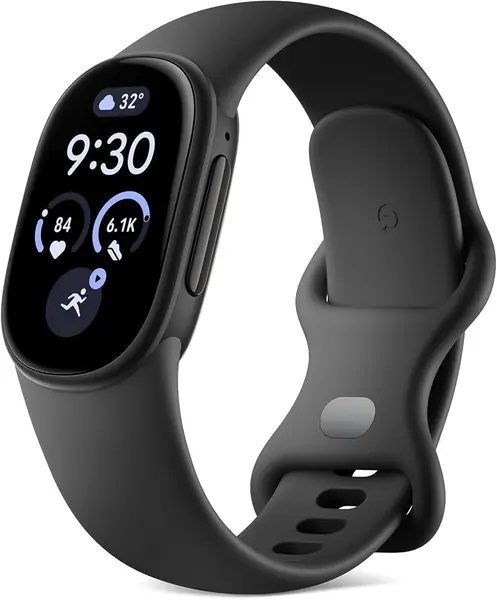
Check Latest Price
2

Fitbit Inspire 3 Best Budget

86 /100
TKZ Score Excellent

Key details

GPS
Connected GPS via phone
Display
0.76-inch touchscreen
Battery Life
Up to 10 days
Water Resistance
50 meters, IP68
View on Amazon

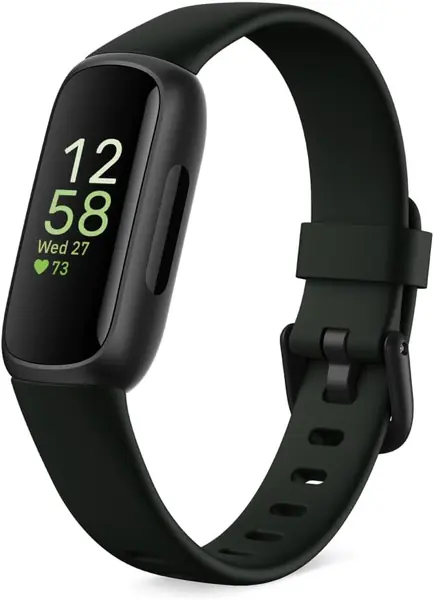
If your phone already comes on every run, the Inspire 3 is the sensible buy here. It has no GPS receiver of its own; connected GPS borrows the one in your phone, so distance and pace come from hardware you already own rather than a second receiver built into the watch.

The battery is the part we noticed most. It's rated at up to 10 days, the longest of anything in this group, and takes about two hours to fill, which makes it a tracker you charge while you shower once a week instead of one that lives on a cable. The trade-off is the screen. At 0.76 inches it's the smallest here, so pace and splits are something you read after the run, not during it; if you like a wrist check at every mile, this isn't your watch.

The rest of the package is generous for the money. It's rated to 50 meters and IP68, so rain, sweat, and a rinse under the tap are all fine, and both small and large bands come in the box. Daily Readiness, Active Zone Minutes, and 40-plus exercise modes with automatic detection cover the days you run and the days you don't.

Pairing is the weak link. The connection between tracker and app drops, and getting it back usually means re-pairing the device in the Fitbit app rather than just reopening it. Annoying on a Sunday morning; not fatal.

Pros

  • Ten-day battery, the longest in this group
  • Rated to 50 meters and IP68
  • Small and large bands both included
  • 40-plus exercise modes with automatic detection

Cons

  • No built-in GPS, so runs need your phone
  • 0.76-inch screen is hard to read mid-run
Our verdict

Buy the Inspire 3 if your phone already joins every run: the longest battery here, a genuinely waterproof build, and all the run basics for less than the Charge 6.

Check Latest Price
3

Fitbit Edge Best Display

85 /100
TKZ Score Excellent

Key details

GPS
GPS via smartphone
Display
1.34-inch AMOLED
Battery Life
Up to 7 days
Altimeter
Built in
View on Amazon

The altimeter is the detail that separates the Edge from everything else in this group. It measures elevation change on climbs, so hill repeats and rolling routes get credit that a watch without one approximates from GPS alone. If your training is hilly, that's a practical difference rather than a spec-sheet one.

The screen backs it up. At 1.34 inches it's the largest AMOLED here, and the bigger type makes pace and heart rate readable at a glance, which is exactly what you want when you're moving. The other piece is the Gemini-built coaching in the Google Health app, which drafts and adjusts training plans — the reason to want this watch for some runners, an ignored subscription for others.

Our hesitation is GPS. The Edge's own spec sheet lists GPS through your phone rather than a receiver inside the case, so a phone-free run isn't guaranteed the way it is on the Charge 6. Check that before you pay the premium. There's also far less real-world history with this model than with the Charge 6 or Inspire 3, so treat long-term durability as an unknown. What's left is a comfortable tracker with the best display in this group and an altimeter nothing else here offers. Buy it for the hills and the screen, not for the GPS.

Pros

  • Altimeter captures elevation on hilly routes
  • 1.34-inch AMOLED is the largest screen here
  • Gemini-built coaching drafts and adjusts plans
  • Seven-day battery with quick charging

Cons

  • GPS through your phone, not built in
  • Long-term reliability still unproven
Our verdict

We see the Edge as a hills-and-display purchase: the altimeter and the biggest screen here are the draw, so long as phone-based GPS suits your runs.

Check Latest Price
4

Fitbit Air All-Day Wear

84 /100
TKZ Score Excellent

Key details

GPS
GPS via smartphone
Display
None, screenless
Battery Life
5 days
Weight
0.18 oz
View on Amazon

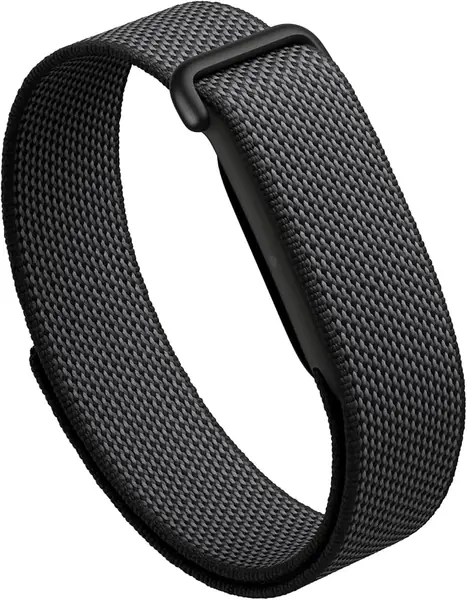
There's no screen on the Fitbit Air, and that one decision explains the rest. Nothing lights up when you turn your wrist; your numbers wait in the app until you go looking for them.

For running, that's a genuine cost. With no display you can't check pace mid-stride, and the GPS comes from your phone, so interval sessions and pace targets aren't what this activity tracker is for — you run on feel and read the numbers afterward. Steady, unmeasured miles are a different story, and so is everything off the road: at just over five grams it disappears on the wrist, which is why ours spent more nights on than any other tracker here.

Everything else is well judged. One band size covers wrists from 130 to 210 mm, a wider range than the fixed small-and-large pairs on the other Fitbits, and the band pops off for a different one. Battery is rated at five days, and five minutes on the charger buys a full day — the most forgiving charging routine in this group. Heart rate, SpO2, skin temperature, and sleep tracking are all on board, with the same Premium trial behind the AI coaching.

Pros

  • Lightest tracker here at about five grams
  • Five-minute charge adds a full day
  • Comfortable enough to sleep in nightly
  • Single band fits 130 to 210 mm wrists

Cons

  • No display, so no live pace or splits
  • GPS requires your phone
Our verdict

We think the Air is a superb all-day and sleep tracker and the wrong tool for pace work, since there's no screen and no GPS of its own.

Check Latest Price
5

Fitbit Charge 2 Best for Budget Steady Runs

83 /100
TKZ Score Excellent

Key details

GPS
Connected GPS via phone
Water Resistance
IPX4 splash-proof
Warranty
90 days
Heart Rate
Continuous wrist heart rate
View on Amazon

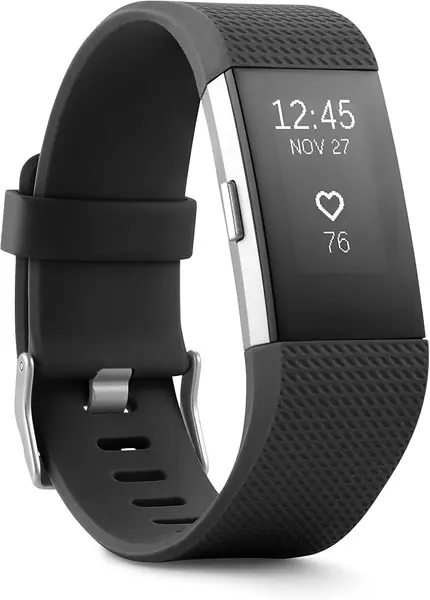
The Charge 2 is the least expensive way into this group, and the limit to accept first is water. It's rated IPX4 and splash-proof, and its own instructions say not to shower with it or submerge it. Sweat and rain are fine; pool laps and a habit of wearing it in the shower are not.

What you get for the money is the basics done plainly. Continuous wrist-based heart rate with simplified zones — Fat Burn, Cardio, Peak — is the part we paid most attention to, because a zone readout tells you more mid-run than a raw pulse number. Connected GPS during run mode pulls distance from your phone, and the OLED display covers pace, steps, floors climbed, and notifications.

The hardware is where it ages badly. The band tends to go first, the screen scratches and cracks, and units stop holding a charge — the kind of failure that makes a low-priced tracker expensive if you replace it every year. Fitbit's warranty here runs 90 days, the shortest in this group by a wide margin.

Pros

  • Heart-rate zones are easy to follow mid-run
  • Connected GPS plus steps, floors, and sleep
  • Least expensive tracker in this group

Cons

  • Splash-proof only, so no swimming or showers
  • Ninety-day warranty is the shortest here
Our verdict

This is the one we point budget runners to, provided a phone comes along and splash-proof water resistance is acceptable.

Check Latest Price

How We Tested Fitness Trackers for Running

We started with every tracker we could find that runners actually wear, then filtered on the practical stuff: band sizes included in the box, whether the companion app runs on both iOS and Android, whether a subscription sits between you and your own data, and what the total cost looks like after a year rather than at checkout. That left 12 trackers, which we rotated among three runners for nine months.

Each one went through the same weekly rotation: a flat four-mile loop before work, treadmill intervals, a weekend long run, and at least one deliberately wet run. We checked distance against a measured loop and heart rate against a chest strap on interval days, and logged every reading that looked wrong. Comfort we judged at mile ten rather than at the start — slipping, hot spots, and strap bite after an hour of sweating — and we swapped the included small and large bands to see how each sat on different wrists.

Battery life we tracked by draining each one and timing the refill, then counting how many runs we got between charges with tracking fully on. Durability meant showering in them, scuffing them against gym equipment, and scrubbing salt off the bands every week to see whether the finish and the strap held.

The last stretch was software. We lived in each companion app for a week, checked whether the sleep and heart-rate numbers told the same story, judged whether the coaching was useful or just noise, and noted how much of the interesting data sat behind a paywall.

How to Choose a Fitbit for Running

Built-In GPS or Your Phone's

Connected GPS borrows the receiver in your phone, which is how the Inspire 3 and the Charge 2 log a route without a receiver of their own. The trade is that the phone comes along and spends its own battery doing the work. A built-in receiver lets the watch handle it alone.

The trap is the word GPS on a listing, which can mean either one. Look for built-in on the spec sheet, not just GPS. In this group the Charge 6 is the only tracker that clearly has it, and for most runners that line decides the purchase.

What You Can Read Mid-Run

Pace only helps while you're moving. Displays here run from nothing at all on the Air to 1.34 inches on the Edge, with the Inspire 3 at 0.76 inches and the Charge 6 at 1.04 inches between them. A small screen is fine for a post-run glance and frustrating for intervals; a screenless tracker means you run on feel and read the numbers later.

Ask yourself whether you check pace at each mile. If you do, buy the largest display your budget allows rather than the smallest watch.

Battery Life and Your Charging Routine

Every rating here — five days, seven, ten — assumes a mix of everyday wear with GPS used sparingly. Long outdoor sessions pull those numbers down, so the useful question isn't the maximum but whether the watch clears your week. Charge times are similar at around two hours, except the Air, where five minutes buys a day.

Pick a fixed charging slot, a Sunday evening or a shower after a long run, and even a five-day tracker never leaves you stranded.

Heart Rate, Elevation, and Honest Numbers

Wrist-based heart rate is good enough to see effort across a long run and shakier for short, hard intervals, where a chest strap still wins. What we value more is consistency: the same tracker on the same route tells you whether you're improving, even when its absolute numbers sit a beat or two off.

Elevation is the other divide. Only the Edge carries an altimeter, so if hill work is the point of your training, it's the one device here measuring climbs rather than estimating them.

Fit, Bands, and Water Resistance

Most of these ship with a small and a large band, which is one less thing to get wrong; the Air uses a single band covering wrists from 130 to 210 mm. Water resistance splits cleanly: everything except the Charge 2 is rated to 50 meters and fine for rain, sweat, and a rinse.

Whichever fitness tracker you pick, take it off and dry the band after a sweaty run. Trapped moisture under a snug band is what turns a comfortable watch into an itchy wrist.

Frequently Asked Questions

Final Verdict

For most runners, the Fitbit Charge 6 is the answer: built-in GPS, a screen you can read at pace, and a week of battery mean you can walk out the door wearing everything you need. The Inspire 3 is the better buy if your phone already comes on every run and you want more days between charges.

The Edge earns its premium only when hill data and the biggest display matter more than leaving the phone at home.