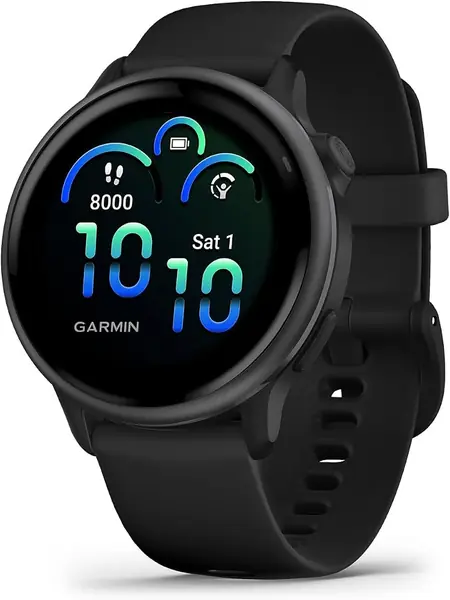
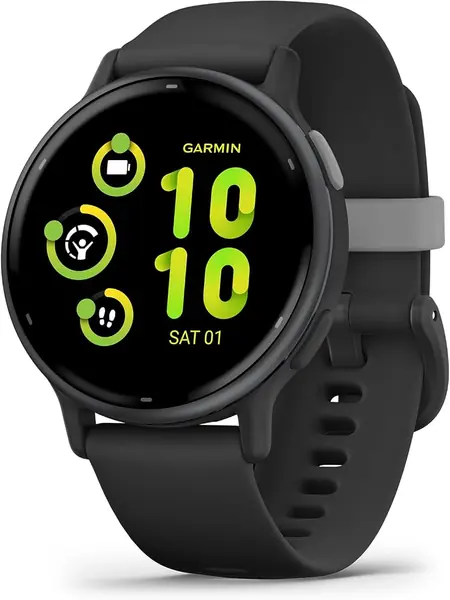
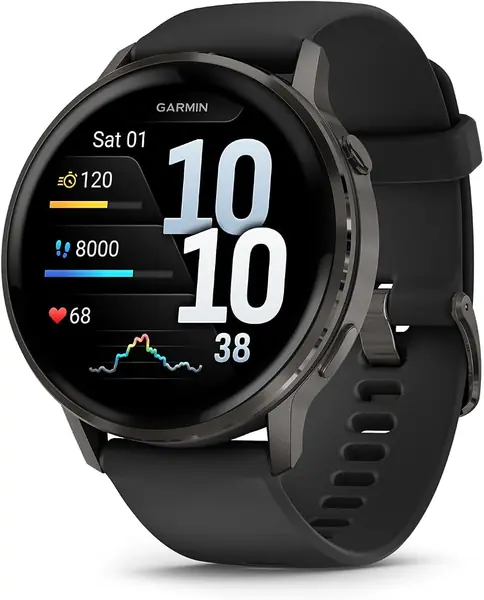
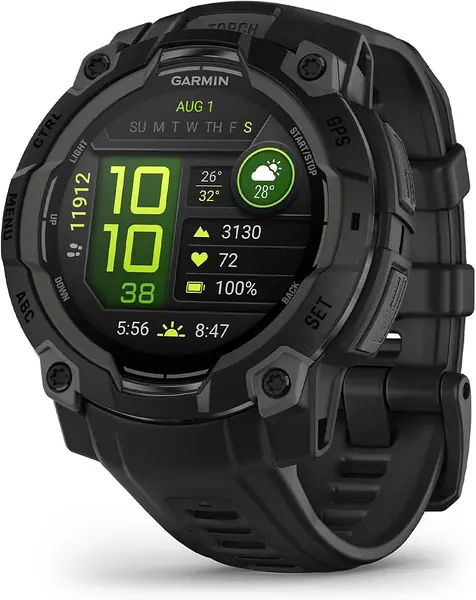
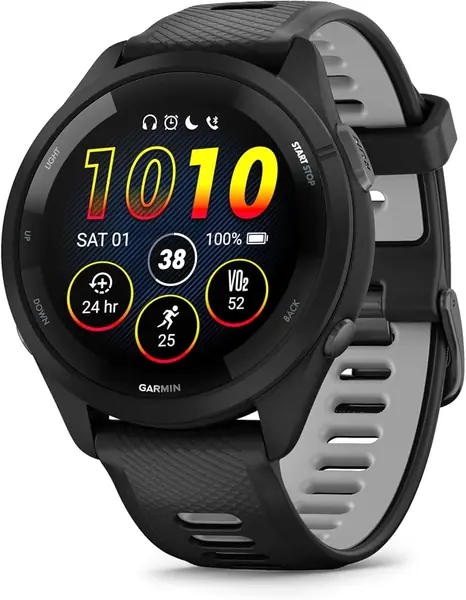
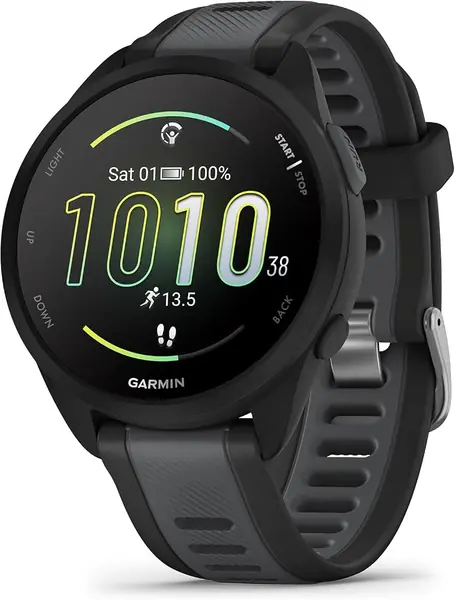
Garmin Forerunner 165 Best Overall
Key details
- Display
- 1.2-inch AMOLED
- Activity Profiles
- 25+
- Battery (GPS Mode)
- Up to 19 hours
- Battery (smartwatch)
- Up to 11 days
The first thing we noticed about the Forerunner 165 was how quickly we stopped noticing it. At 1.38 ounces it sits flat against the wrist, which matters more than any spec figure when the same watch goes to bed with you, comes to the gym, and stays on through a workday. The 1.2-inch AMOLED is bright enough to read mid-stride, and Garmin's button-plus-touchscreen layout means you can start a run with a thumb without breaking stride.
It is the tracker we recommend to most people, and the case rests on consistency rather than one headline feature. Of everything here, it is the most reliable on the things that decide whether a watch stays on your wrist: build quality, accuracy, and whether it still works months in. You get continuous heart rate, sleep with HRV status, stress, and a morning report that sums up your night — plus daily suggested workouts that push you when you have recovered and ease off when you have not.
The running side earns the name. Built-in GPS gives pace and distance without your phone, battery is rated at up to 11 days in smartwatch mode and 19 hours with GPS running, and Garmin Coach will build a plan around a race date. It is a running watch first, though: 25+ activity profiles against the 80+ on the vívoactive 6, so swimmers and studio regulars get less hand-holding. Budget an evening or two for the menus — this watch does far more than four buttons suggest.
Pros
- Accurate GPS and heart rate for the money
- Light enough to wear overnight
- Up to 11 days per charge
Cons
- Only 25+ activity profiles
- Menus take several evenings to learn
If you want one Garmin for daily health tracking and everyday running, the Forerunner 165 is the safest buy here: light, accurate, and the most consistent performer in this set.