Best Fitness Trackers Without a Phone of 2026

Most fitness trackers sold today assume you own a smartphone and are willing to hand over your data. Setup runs the same way every time: download the app, create an account, wrestle with Bluetooth, hope the firmware update lands before dinner. A tracker that runs entirely on the wrist skips all of that. You charge it, strap it on, and it counts — no account, no cloud, no phone in the room.

I've had 14 of these no-phone trackers in rotation since early spring, and the gaps between them are wider than the spec sheets suggest. Two models counted nearly the same steps on the same walk; a third was off by more than 900. Battery claims ran from a believable week to an optimistic month. And a bright, roomy display counts for nothing if it takes five presses to back out of a menu.

The first thing I'd settle is waterproofing, because a tracker you're nervous about wearing in the shower is one you'll quietly stop wearing. Past that, the picks below split by wrist size, eyesight, and how much data someone actually wants to look at.

The Best Fitness Trackers Without a Phone

1

Pautios EW1 Fitness Tracker Best Overall
84 /100
TKZ Score Excellent

Key details

Display
1.4-inch color LCD
App Required
No
Health Sensors
Heart rate, blood oxygen, sleep
View on Amazon

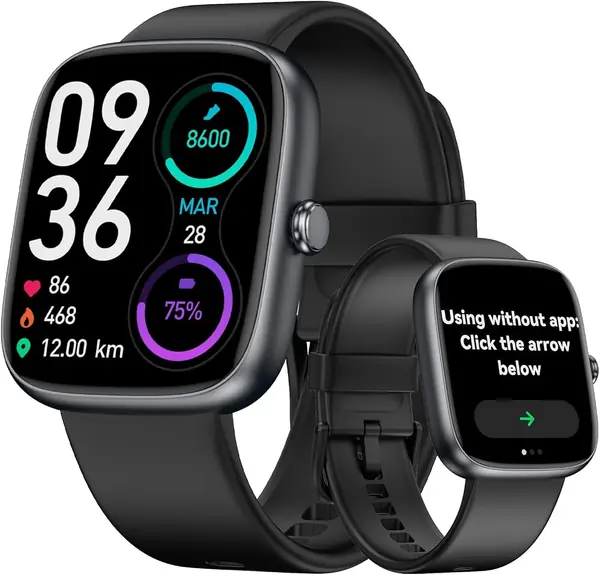
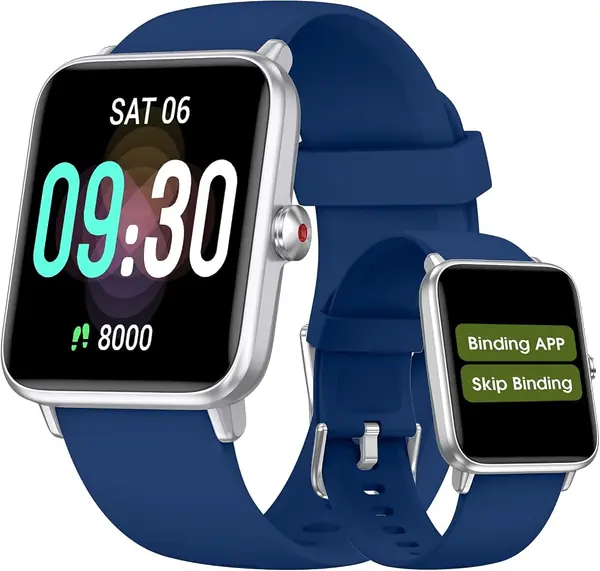
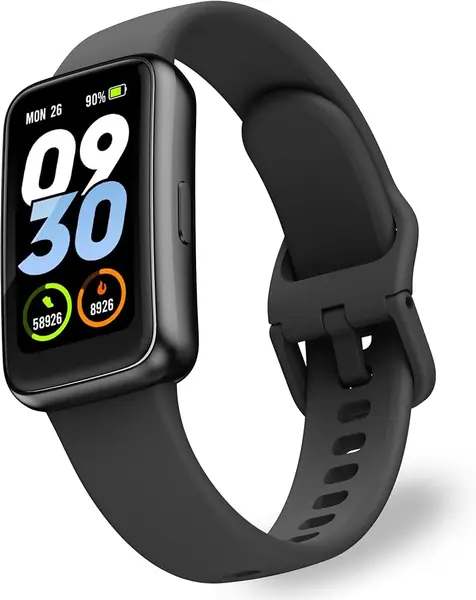
The Pautios EW1 is built around one idea: the numbers live on your wrist, not in an account. You charge it, set the time and date in the watch's own menu, and start walking — no pairing screen to clear, no sign-up before your first step count. We set ours up with the phone in another room to see whether anything stalled, and nothing did. The 1.4-inch color touchscreen is what you notice first, and it is the second-largest panel in this guide.

That self-contained design is why it is our top pick. Heart rate runs continuously, blood oxygen is a manual check you trigger from the screen, and sleep is scored overnight, with steps, distance, calories, and active time all readable on the watch. The menus are plain enough that someone who dislikes gadgets can find their way around without a tutorial, and the screen is the reason this is the one we hand to anyone who reads at arm's length rather than up close.

Battery is the quiet win. It runs for days between charges and tops up quickly, so a Sunday-evening charge covers a normal week of walking instead of becoming a nightly ritual. The strap is soft silicone, which is the right call for something you are meant to keep on overnight.

Step counts run a little generous, which is the trade this category keeps making. For a daily nudge that is harmless; if you are logging training miles, the Octandra's sport modes are the better tool. What you get in exchange is the simplest ownership on this page: nothing to install, nothing to sync, and a battery you think about once a week.

Pros

  • No app, account, or pairing at any point
  • Large 1.4-inch color LCD that is easy to read
  • Heart rate, blood oxygen, and sleep on the watch

Cons

  • No published water-resistance rating
Our verdict

We recommend the Pautios EW1 to anyone who wants steps, heart rate, blood oxygen, and sleep on the wrist with no app to install — the big screen and multi-day battery make it the easiest one here to live with.
Check Latest Price
2

Octandra Active 3 Fitness Tracker Best for Health Metrics

83 /100
TKZ Score Excellent

Key details

Display
1.47-inch color touchscreen
App Required
No
Water Resistance
30 meters
Sport Modes
100+
View on Amazon

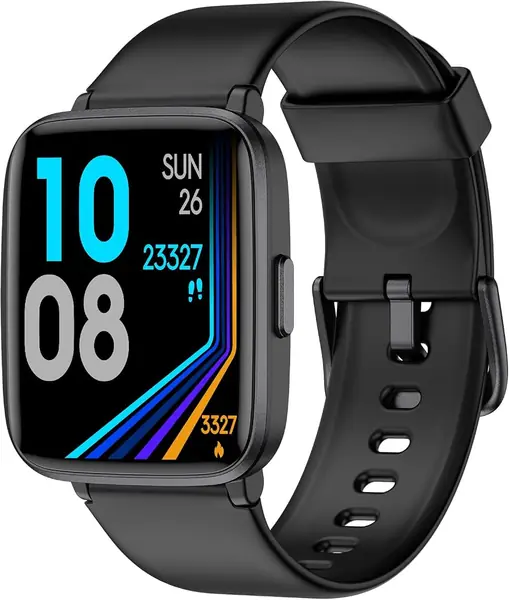
If the Pautios is the sensible default, the Octandra Active 3 is the one for someone who wants a fuller health picture. Stress, blood oxygen, a Body Energy estimate built from heart-rate variability and sleep, and more than 100 sport modes with automatic exercise recognition — that is the deepest feature set in this guide, and it arrives on a 1.47-inch color touchscreen that looks like a smartwatch rather than a pedometer. It is our pick for metrics.

What we appreciated most is that none of it depends on a phone. The watch records on its own, and the sport list is long enough that the mode you want usually exists, from walking to laps. It is rated to 30 meters, the best water protection in this group alongside the DAVIKO Slim, and a 12-month warranty is included. There is no GPS chip inside, so outdoor distance comes from steps unless you pair a phone for the connected-GPS mode.

The weak spot is toughness. Cases have come apart after a few months of daily wear, so treat the warranty as part of what you are buying and do not count on handing this one down. Band and case aside, it is the pick that gives you the most to look at without ever asking for a password.

Pros

  • More than 100 sport modes with automatic recognition
  • Stress, blood oxygen, and Body Energy metrics
  • Records everything on the watch, no app needed

Cons

  • Case durability is the weak spot over months
Our verdict

We recommend the Octandra Active 3 to anyone who wants a real health picture — stress, blood oxygen, body energy — without pairing a phone, and who accepts that it may not survive years of hard wear.

Check Latest Price
3

DAVIKO Slim Fitness Tracker Best Budget

82 /100
TKZ Score Excellent

Key details

Display
1.47 inches
App Required
No
Water Resistance
30 meters
Weight
1 oz
View on Amazon

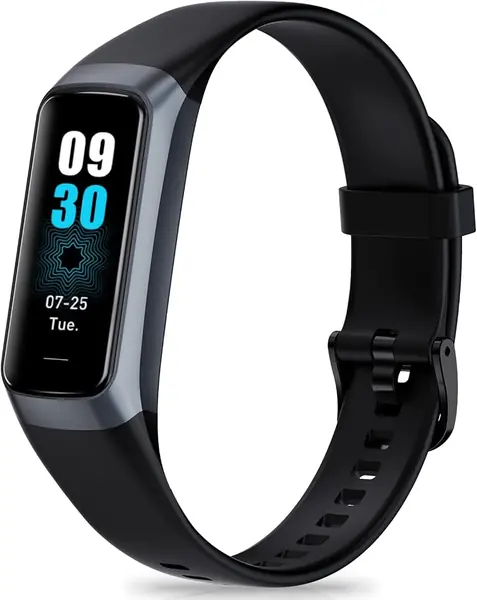
At an ounce and 0.6 inches across the band, the DAVIKO Slim is the least noticeable thing in this guide, and the least expensive. If the reason you have never worn a tracker is that they feel like a bracelet-sized computer, this is the answer to that: it wears like a strap, and we stopped registering it within an hour of putting it on.

The spec sheet reads bigger than the watch feels. There is a 1.47-inch display, continuous heart rate with stress tracking, sleep, and 30-meter water resistance, which covers laps and a rinse in the shower. The sport-mode list runs to 100, which is more marketing than method — most people will use three — but the ones you would name are in there, and they log with no phone in sight.

Where it asks for patience is the readout. Heart-rate figures can sit stale until you reopen the screen, so this is a day-long picture rather than something to glance at mid-interval. Set against the price, we minded it less than we expected to, and it is the one to buy as a first tracker or as a spare that lives in a gym bag.

Pros

  • An ounce on the wrist, the lightest here
  • 30-meter water resistance and 100 sport modes
  • Heart rate and stress without an app

Cons

  • Heart-rate reading can lag behind
Our verdict

We recommend the DAVIKO Slim to anyone buying a first tracker or a cheap spare, since it disappears on the wrist and does the basics with nothing to install — as long as you do not need instant heart-rate feedback.

Check Latest Price
4

DAVIKO Senior Fitness Tracker Best Big Screen

81 /100
TKZ Score Excellent

Key details

Display
1.83-inch LCD
App Required
Optional
Battery Life
Up to 7 days
View on Amazon

The 1.83-inch LCD on the DAVIKO Senior is nearly twice the diagonal of the smallest screen here and about a third larger than the 1.4-inch panels most of these use, and that single decision explains the product. Step counts and heart rate come up big enough to read at arm's length, which is what makes it our pick for anyone whose arms no longer seem long enough for a normal watch face.

It works either way: standalone from the box, or paired to a phone if someone wants notifications later. Continuous heart rate and a manual blood oxygen check are on the watch, sleep is scored overnight, and steps, distance, calories, and active minutes all sit on the face. Controls are touch, the battery is rated at seven days, and charging is a weekly ritual rather than a nightly one.

The one compromise is size on the wrist: a case built around a 1.83-inch screen is a lot of watch under a cuff and will catch on a jacket sleeve. That is the price of the readability, and for the person this is aimed at, it is the right trade. Expect to charge before the rated week runs out if continuous heart rate stays on.

Pros

  • The largest, easiest-to-read display here
  • Works standalone or paired, your choice
  • Rated seven days per charge

Cons

No notable drawbacks to flag.

Our verdict

We recommend the DAVIKO Senior to anyone who reads at arm's length rather than up close, because a 1.83-inch display changes the whole experience of checking your numbers on a wrist.

Check Latest Price
5

LIVIKEY Fitness Tracker Watch Best for Optional Phone Extras

80 /100
TKZ Score Excellent

Key details

App Required
No
Water Resistance
IP68
Sport Modes
9
Battery Life
5 to 7 days
View on Amazon

The LIVIKEY is the one here that keeps a foot in both camps. It runs a step count, all-day heart rate, and sleep with nothing paired, and it also offers texts and call alerts on the wrist if you connect it to a phone later. That flexibility is worth something: it is a phone-free tracker you do not have to commit to forever.

Day to day it covers the basics comfortably — nine sport modes, a 41-millimeter rectangular case, IP68 sealing, and a battery rated at five to seven days off a two-hour charge. The screen is a plain rectangle that is easy to read and the menus are simple enough that we never hunted for the step count.

The band is where it loses ground. Straps split within a few months and screens pick up cracks, the sort of thing that turns an inexpensive tracker into a disposable one. Ours has held up, but we treat it as a two-season device rather than the only watch in the house.

Pairing is fussy when you use it, and the connection can drop and need redoing, which undercuts the notification trick. Even so, if a text on your wrist is the one phone feature you would miss, this is the cheapest door back in without giving up phone-free tracking the rest of the time.

Pros

  • Texts and call alerts optional when paired
  • Five to seven days per charge with IP68
  • Simple menus on a readable rectangular screen

Cons

  • Phone alerts depend on a pairing that can drop
  • Nine sport modes, the shortest list here
Our verdict

We recommend the LIVIKEY to someone who wants phone-free tracking now but cannot quite give up the idea of wrist alerts later; it is the least expensive way here to keep both options open.

Check Latest Price
6

Dagakto C68L Fitness Tracker Best for Small Wrists

79 /100
TKZ Score Very Good

Key details

Display
0.96 inches
Water Resistance
IP68
Battery Life
5 days
Weight
1.59 oz
View on Amazon

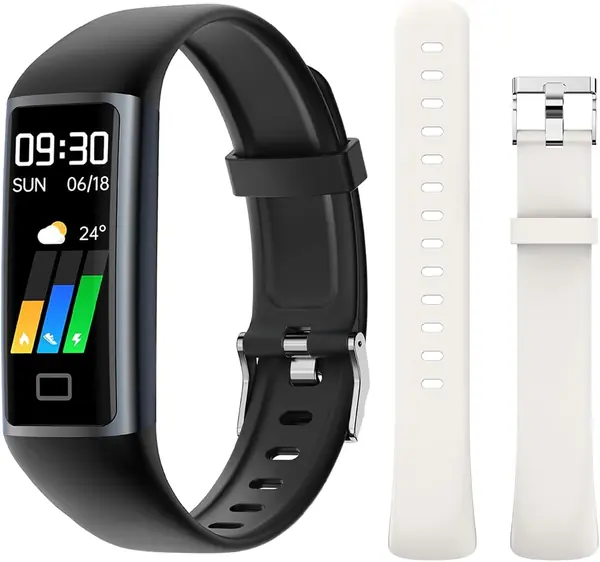
Two straps come in the box with the Dagakto C68L, black and white, plus the charging cable. Nobody else here gives you a second band, and it is a small thing that turns out to matter, since a silicone strap on a watch you sweat in has a limited life and a spare doubles your runway.

The case is the smallest here at 0.96 inches, and that shapes how you use it. You get one number per screen rather than a dashboard, so checking a workout mid-set takes a tap or two; on the other hand it disappears under a cuff and weighs 45 grams. Five days of rated battery, IP68 sealing, and heart rate, blood oxygen, and sleep all work from the wrist.

Where it earns its place is as a second tracker, or a first one for someone who does not want a screen competing with a proper watch. If you want a display you can read at arm's length, this is not it — the 1.4-inch Pautios or the 1.83-inch DAVIKO Senior is the better fit.

Pros

  • Two straps included, black and white
  • Five-day rated battery with IP68 sealing
  • Small and light at 45 grams

Cons

  • Alarms and family sharing need the app
Our verdict

We recommend the Dagakto C68L as a second tracker or a first one for a small wrist, since it is the least conspicuous option here and the only one that ships with a spare strap.

Check Latest Price
7

ST-CARE C60 Fitness Tracker Best for Style and Swimming

78 /100
TKZ Score Very Good

Key details

Display
1.10-inch AMOLED
Water Resistance
5 ATM
Sport Modes
25
View on Amazon

Most of these look like pedometers that happen to tell time. The ST-CARE C60 looks like a watch: a stainless steel frame around a 1.10-inch AMOLED screen, with a soft silicone strap. It is the best-looking thing in this guide, and if you have avoided wrist trackers because they look like gym equipment, that is the reason to look here.

The hardware is more interesting than the price suggests. Twenty-five sport modes record workout time, heart rate, and distance from the wrist, and 5 ATM sealing is the highest water rating in this group, which makes it the one to swim in. Steps, calories, and sleep are all tracked, and the usual smart reminders for calls, messages, and long sitting spells are along for the ride.

The open question is how much of it works without a phone. The reminders clearly assume a paired phone while the tracking is described as running on the watch itself, so if phone-free operation is your hard line, confirm how much history stays on the device before ordering. What we can say is that as a good-looking, swim-proof tracker in a steel case, it is the one here that looks right with a jacket.

Pros

  • Stainless frame and AMOLED screen
  • 5 ATM water resistance, the highest here
  • 25 sport modes recorded on the watch

Cons

  • Call and message reminders need a paired phone
Our verdict

We recommend the ST-CARE C60 to someone who wants a tracker that looks like jewelry and survives the pool, as long as they confirm how much history stays on the watch first.

Check Latest Price

How We Tested No-Phone Fitness Trackers

We built the shortlist by reading listings and then, more usefully, the manuals. Anything that needed a companion app to set the time, read a step total, or change a setting got crossed off. That left 14 trackers, all sold direct rather than tied to a phone ecosystem, and we bought every unit ourselves. Each one went onto a wrist for at least five days, and six stayed in rotation for the full three months.

They were worn through ordinary life: desk workdays, evening walks, a Saturday of yard work, two treadmill runs a week, and every night in bed. We slept in them, showered in them, and left them in a sink of water for 30 minutes to check the waterproofing claims. For step accuracy, we walked a measured mile at a normal pace, counted by hand, and wore one tracker on each wrist to compare.

Ease of use got the harshest test. A tester in her seventies who has never paired a wearable set up every watch cold, with no instructions and no help, while we timed it and counted the button presses needed to silence an alarm or pull up last night's sleep data. We also checked what happened with no phone anywhere near — whether a watch kept logging on its own or went hunting for a connection and stalled.

Battery life was measured, not believed: full charge, continuous heart rate, run to zero, timed recharge. At the end of three months we inspected bands for wear, cases for scratches and wobble, and asked whether each watch's features justified what it asked of your wrist. Appearance got a plain test too — three people looked at each watch in place and said whether it read as a watch or as a gadget.

How to Choose a Fitness Tracker You Can Use without a Phone

Find Out What Actually Works Off-Device

Almost everything in this style collects steps and heart rate on the wrist; the differences hide in the extras. Sleep scoring, calorie estimates, workout history, and notifications are often app features, and a title that promises no app can still hand you a sign-up screen on first boot. Pick the three numbers you check daily, then confirm those appear on the watch itself.

Where a product page describes analysis 'in the app,' assume the watch alone gives you less. The Pautios reads steps, heart rate, blood oxygen, and sleep straight off the screen; on the Dagakto, the app is for alarms and family sharing rather than the tracking.

Size the Screen to Your Eyes, Not Your Wrist

On a phone-free pedometer watch, every number is read on a rectangle roughly an inch across, so display size is a buying decision rather than a style note. Panels here run from 0.96 inches on the Dagakto to 1.83 inches on the DAVIKO Senior, and the second is nearly twice the diagonal of the first. That is the difference between reading a step count at arm's length and bringing your wrist to your face.

Bigger panels come with bigger cases, though. If you read without glasses, start at 1.4 inches; if the watch has to slide under a shirt cuff, 1.1 inches is the sweet spot.

Match the Battery to Your Routine

Rated runs here land between five days and a week — the DAVIKO Senior claims seven, the Dagakto five, the LIVIKEY five to seven — and real use skews shorter once continuous heart rate and overnight sleep tracking are both switched on. A weekly top-up covers most people, especially if you charge it the same day each week.

The cable is the part that gets lost. Each of these ships with its own charger rather than a standard one you can borrow, so keep it in a travel bag instead of a kitchen drawer, and charge the night before a trip rather than at the airport.

Read Water Ratings Literally

Waterproof is a word; a rating is a number. IP68 means sealed against dust and surviving a dunk at a stated depth, 30 meters means swimmable, and 5 ATM means tested to 50 meters of pressure — also swimmable. None of those covers a hot tub, soap, or a high dive, and 5 ATM is not a diving rating however the marketing reads.

If you swim laps, put IP68 or 30 meters on your must-have list. The DAVIKO Slim, LIVIKEY, Octandra, and Dagakto all clear that bar and the ST-CARE goes further with 5 ATM. The Pautios publishes no rating at all, so take it off before you get in.

Expect Estimated Accuracy

Wrist trackers count arm swings, not footsteps. A hand on a shopping cart or a stroller rail can swallow a few hundred steps, and a loose band can add them back. Ten minutes on a treadmill holding the handles is the classic route to a disappointing total.

Before you trust the daily number, walk a measured mile wearing the tracker and compare it with what the watch says, then tighten the band a notch for workouts. Heart rate on the wrist is directional rather than clinical, and none of these devices are medical instruments.

Frequently Asked Questions

Final Verdict

We recommend the Pautios EW1 for most people: it puts steps, heart rate, blood oxygen, and sleep on a big, readable screen, with a battery that lasts days rather than hours and nothing to install. If you want stress, body energy, and a hundred sport modes, the Octandra Active 3 is worth the extra spend.

And if the person wearing it reads at arm's length rather than up close, the DAVIKO Senior's 1.83-inch display settles the choice on its own.