Best Fitness Trackers for Cycling of 2026

A bike ride is an odd thing to ask a wristwatch to understand. Your hands barely move, the terrain changes underneath you, and the number you actually want — how hard was that climb — is the one wrist sensors struggle with most. I've been riding with these things for years, and the difference between a solid tracker and a fussy one shows up around mile 20, not in the first minute.

My team and I spent eight months riding with 12 trackers, and we tested the boring things hardest: whether the battery lasted a full week of commutes, whether pairing held on an Android phone as well as an iPhone, and whether the sleep report the next morning was worth reading.

One thing first-time buyers overrate is the sport mode count; what matters is whether the cycling profile keeps speed, distance, and heart rate on one screen you can read through gloves and glare. The picks below are the ones that did, ride after ride.

The Best Fitness Trackers for Cycling

1

Apple Watch SE 3 GPS 40mm Best Overall
95 /100
TKZ Score Outstanding

Key details

GPS
Built-in
Battery
Up to 18 hours
Case Size
40mm
Extra Tracking
Vitals, temperature, cycle
View on Amazon

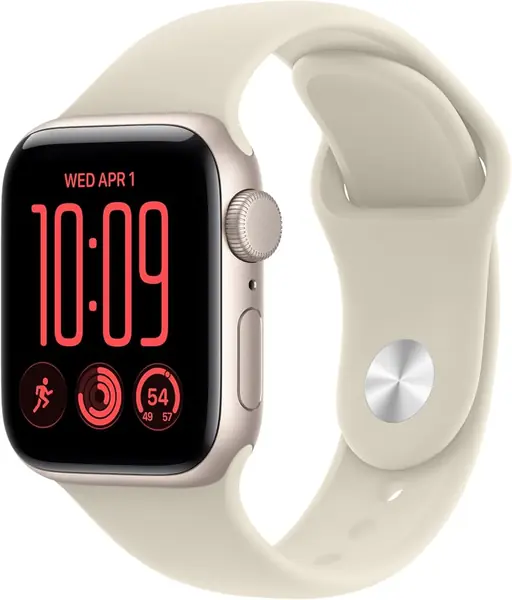
The GPS chip is why this watch sits at the top of our list. The alternatives here either borrow your phone's location over Bluetooth or skip GPS altogether, which is fine until the phone is uncharged, out of range, or buried under a rain jacket. The SE 3 draws the route itself, so a spur-of-the-moment loop still ends up in your history.

We think that's the trade worth making for most iPhone owners who ride. Workouts, heart rate and the Vitals app all land in one place, and temperature sensing feeds overnight readings that the budget watches only gesture at. Fall and crash detection is the detail we keep coming back to — on a solo ride at dusk, a watch that can call for help by itself is worth more than another sport mode.

Battery is the honest catch. The 18-hour rating means a charging ritual every night, and a long day with GPS running will have you glancing at the percentage by late afternoon. Fast charging blunts it rather than solving it. The 40mm case is also on the small side: lovely under a jersey cuff, less so if you like big numerals at a stoplight.

What tipped it for us is how little it asks mid-ride. You start the workout from the wrist, keep the screen dark, and find the whole thing waiting on your phone afterwards without a second app or a sync dance. For a device that also just tells the time, that's a lot of quiet competence.

Pros

  • Records rides with its own built-in GPS
  • Deep health data: Vitals, temperature, cycle tracking
  • Fall and crash detection can call for help

Cons

  • 18-hour battery means charging every night
  • 40mm case runs small for bigger wrists
Our verdict

We recommend the SE 3 to anyone riding with an iPhone: it's the only tracker here that logs a route without your phone, and the health features run deeper than the rest.
Check Latest Price
2

HOMOGO Smartwatch Best Value

89 /100
TKZ Score Excellent

Key details

GPS
Via smartphone
Display
1.83 inches
Sport Modes
100+ with auto-detection
Water Resistance
IP68
View on Amazon

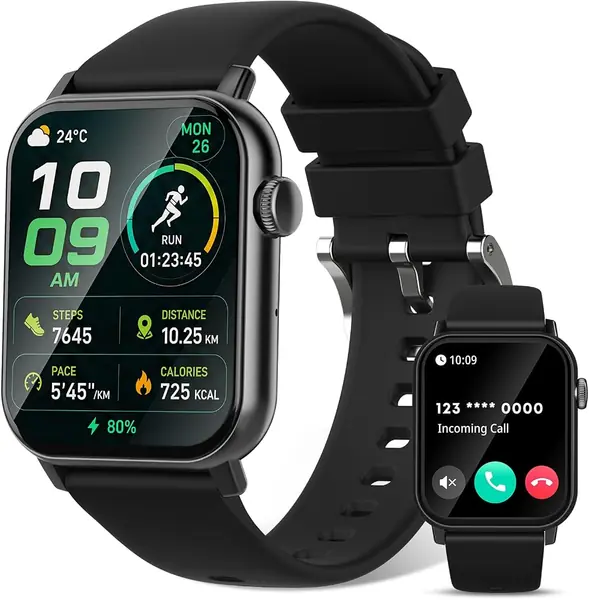
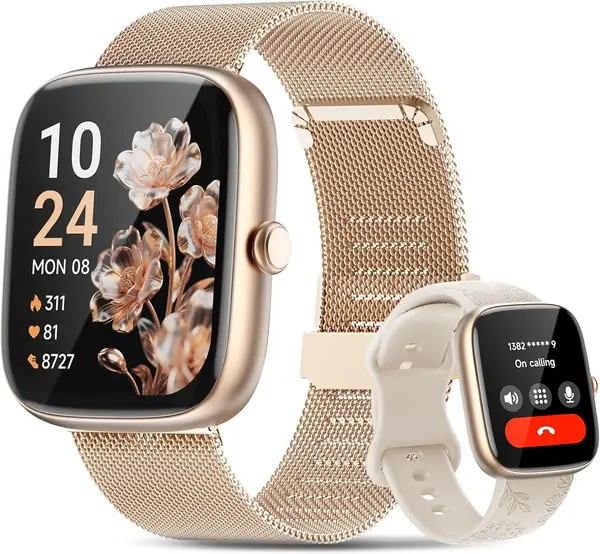
HOMOGO's watch is the value story of this list. It covers the same cycling ground as the Apple Watch — mode-based ride logging, heart rate through the workout, a route drawn from your phone's GPS — for a fraction of the money. What it doesn't do is work without the phone, and that's the line to accept before you buy.

Cycling is one of the modes HOMOGO names outright, alongside running, yoga and hiking, and the watch picks up walking and running on its own. The 1.83-inch screen is the largest here, which sounds like a spec-sheet brag until you're stopped at a light trying to read your pulse through sunglasses: on this one you can. It's also a lot of watch on a narrow wrist, so try it on before you commit to wearing it to work.

Two bands come in the box, a stainless bracelet and a silicone strap, and we like that the silicone takes the sweat while the metal handles dinner. Calls come through with noise reduction, which is genuinely useful when you pull over to answer, and battery life measures in days rather than hours, with a charge that finishes about as fast as a shower.

Pros

  • Ride tracking for a fraction of the Apple Watch
  • Largest screen in this group at 1.83 inches
  • Steel and silicone bands both included

Cons

  • No built-in GPS; distance needs your phone
Our verdict

We point budget-minded riders here first: it logs a ride with your phone's GPS, reads clearly at a stoplight, and costs a fraction of the Apple Watch.

Check Latest Price
3

MorePro Air6 Best for All-Day Wear

88 /100
TKZ Score Excellent

Key details

GPS
No GPS
Display
1.52 inches
Sport Modes
120+
Weight
1.12 oz
View on Amazon

At 1.12 ounces with a soft 20mm silicone band, the Air6 is the one that disappears. That's not a marketing line so much as a wearability decision: nothing digs in under a glove, nothing snags a sleeve, and nothing has to come off before a climb.

Cycling is named in the mode list, one of 120-plus that also covers climbing, running and walking, and the 1.52-inch LCD stays legible in daylight. There's no GPS chip inside, so distance comes from the paired phone — fine with the phone in your jersey, a gap if you ride without it. The app is the slower half of the package; data can take a beat to appear after a sync.

Where it earns its place is 24-hour wear. Sleep and heart-rate data run overnight, the 230 mAh battery goes about a week between two-hour charges, and the band never got in the way of sleep. For a rider who wants one watch for training and the rest of life, that combination is what we keep choosing.

Pros

  • Lightest and most comfortable watch here
  • 120+ sport modes with cycling named
  • Roughly a week of battery, two-hour charge

Cons

  • No built-in GPS
  • App can lag when loading workout data
Our verdict

For riders who wear a tracker to bed, this is the one we hand over first — barely over an ounce, comfortable all night, and about a week between charges.

Check Latest Price
4

KEEPONFIT DR05 Best for a Dressier Look

87 /100
TKZ Score Excellent

Key details

GPS
Via smartphone
Display
1.27 inches, round
Sport Modes
100+
Water Resistance
IP68
View on Amazon

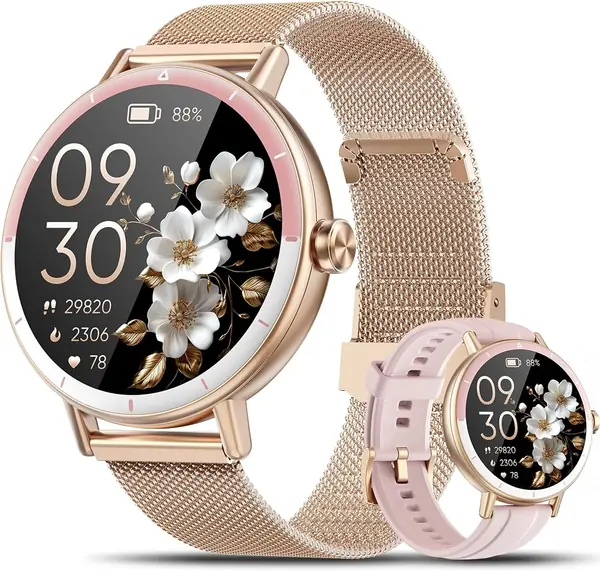
Round, rose gold and 1.27 inches across, the DR05 is the only tracker here you can wear to a wedding without a second thought. That matters more than it sounds, because the watch you actually keep on your wrist is the one that gets the ride logged. Two bands come in the box — a metal bracelet and a silicone strap — and swapping takes seconds.

Underneath the case it's a 100-plus-mode tracker with connected GPS, heart rate, SpO2, stress and cycle tracking, IP68 sealing to five meters, and Bluetooth calling through the VeryFit app. Two years of coverage is the longest here, and for a watch this style-forward it's the reassurance we wanted.

Pros

  • Only round metal case here; dresses up easily
  • Two interchangeable bands in the box
  • Two-year warranty, the longest in this group

Cons

  • Small round face is slower to read mid-ride
Our verdict

We like this one for riders who want a watch that looks like a watch: a round rose-gold case, two bands, and the longest warranty in this group.

Check Latest Price
5

Fitbit Air Special Edition Best Screen-Free Option

86 /100
TKZ Score Excellent

Key details

GPS
Via smartphone
Display
None (screenless)
Water Resistance
50 meters
Battery
Up to 7 days
View on Amazon

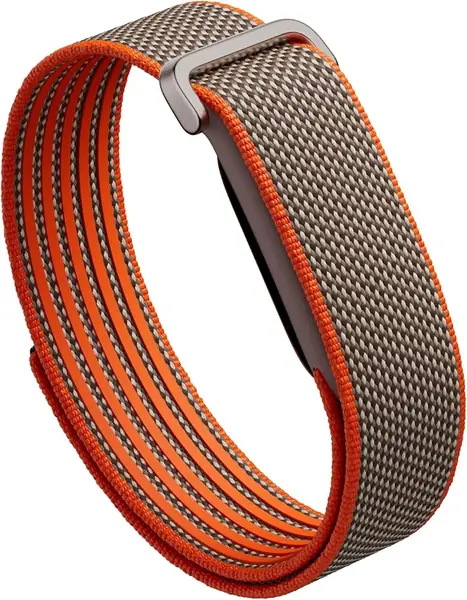
There's no display, no glow, nothing to tap. For something you wear to bed and under a jersey, that turns out to be liberating: nothing lights up at two in the morning, nothing catches on a glove, and the band sits flat against the wrist instead of propped up on a case.

We think that's exactly right for one kind of rider — someone who already runs a computer on the bars or a phone in a mount, wants continuous heart rate and overnight sleep data, and doesn't need a second screen competing for attention in traffic. Battery runs up to a week, and five minutes on the charger buys a day, so it never becomes the nightly chore an Apple Watch does.

The caveats are real. Everything you want to see lives in the app, so no mid-climb pulse check — you look afterwards. And syncing is the part to test hard in the first week: if band and phone stop talking, a screenless tracker is just a bracelet. Water resistance to 50 meters means rain and sweat are non-issues.

Pros

  • Up to a week of battery; five-minute top-ups
  • Comfortable enough to sleep in
  • Water resistant to 50 meters

Cons

  • No display; everything is in the app
  • Sync can stall and needs watching
Our verdict

Riders who already have a bike computer are the ones we hand this to: a week of battery, real comfort overnight, and nothing glowing on your wrist.

Check Latest Price
6

DIVOAZBVO TK29 Best Budget Pick

85 /100
TKZ Score Excellent

Key details

GPS
Via smartphone
Display
1.83 inches
Sport Modes
120
Water Resistance
IP67
View on Amazon

Ninety days. That's the warranty on the TK29, and in a sense it's the whole pitch: a competent watch priced on the assumption that you'll replace it rather than repair it. Accept that and the rest reads surprisingly well.

The screen matches our value pick at 1.83 inches, with a 240 by 284 IPS panel that holds up in sun, and the mode list runs to 120 with heart rate, sleep and cycle tracking behind it. Bluetooth calling and music control route through the phone, the buckle takes a standard strap, and it pairs with Android 5.0 or iOS 9.0 and newer.

For a first tracker or a winter-bike spare, we think it earns the money. The phone comes along for the route, nothing here pretends to be a training computer, and a rider who wants miles, heart rate and a call alert on the wrist gets all three.

Pros

  • Big 1.83-inch screen at the lowest price here
  • 120 sport modes with connected GPS
  • Bluetooth calling and music control

Cons

  • 90-day warranty is the shortest in this group
  • IP67 handles sweat, not swimming
Our verdict

Our pick for the tightest budget: a 1.83-inch screen, 120 sport modes and connected GPS, all at the lowest price in this group.

Check Latest Price
7

Zeacool Fitness Tracker A Readable Screen at a Low Price

84 /100
TKZ Score Excellent

Key details

Display
1.47-inch AMOLED
Sport Modes
123
Water Resistance
IP68
Health Sensors
Heart rate, SpO2, sleep, temperature
View on Amazon

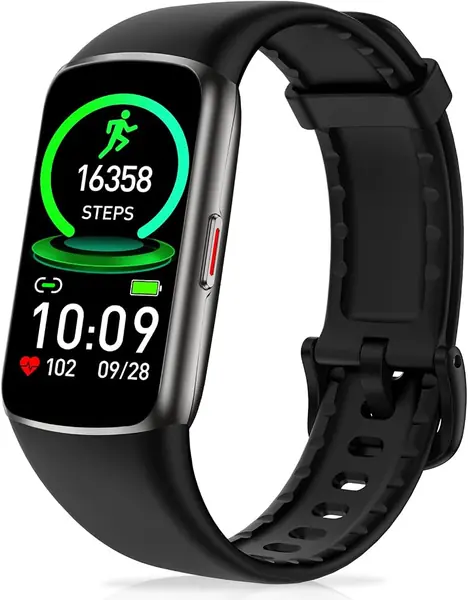
The 1.47-inch AMOLED is the first thing you notice. Color on this panel is in a different class from the LCD watches in this group, and at a glance the time, pulse and step count all hold up in daylight.

Behind the screen sits the usual health kit: round-the-clock heart rate, blood oxygen, blood pressure, temperature and sleep, plus a 123-mode sport list and the notifications, camera shutter, hydration nudges and cycle reminders that fill out a watch like this.

The modes are curated in the paired app rather than on the watch, which keeps the on-wrist menu short but adds a setup step before your first ride. IP68 sealing covers sweat and rain, which is all a road ride asks for, and Bluetooth pairing to your phone is straightforward.

We see it as the sensible step up from a bare-bones band. The screen is the upgrade you notice every time you look down, the sensors cover the numbers a cyclist actually checks, and at this price the experiment costs little if you decide you want a bigger name next season.

Pros

  • 1.47-inch AMOLED stands out at this price
  • 24/7 heart rate, SpO2, sleep and temperature
  • IP68 sealing for sweat and rain

Cons

  • Sport modes are curated in the app, not on the watch
Our verdict

What we like most is the display: a 1.47-inch AMOLED that makes the cheaper LCD watches look dull, with round-the-clock heart rate behind it.

Check Latest Price

How We Tested: Eight Months, 12 Trackers, One Chest Strap

We started from roughly 40 models pulled from spec sheets and customer reviews, then cut anything that couldn't log a ride without a phone tethered to it, skipped built-in GPS, or needed a charge every other day. That left 12 trackers, from small-case watches to oversized touchscreens.

Each one was worn for at least two weeks across eight months, on weekday commutes, long weekend road rides, a gravel loop that shakes the fillings loose, and indoor trainer sessions, then slept in overnight. On rides we ran a phone and a bike computer alongside as a reference, and on hard efforts a chest strap to compare heart rate against.

Water resistance we judged by living in it: rain, sweat, a post-ride shower with the tracker still on. Connectivity meant pairing each one to an iPhone and an Android phone, walking out of range, and counting how long it took to reconnect cleanly. For accuracy we watched GPS drift under tree cover, whether heart rate lagged behind on a climb, and whether the app ever dropped a ride mid-route. Battery life got logged as days per charge, comparing a week of short commutes with a week of long ones.

Design and build got a slower read — scuffed bezels, clouded screens, bands that stretched or held onto smell after a summer of sweat and sunscreen. Size and comfort were checked by smaller-wristed testers and by wearing one under a jersey cuff and overnight, noting red marks and snagged sleeves. Sleep reports were graded against the night we actually had, including the wake-ups it caught and the ones it invented. Value had the last word: a tracker that demanded babysitting lost to one that quietly worked.

How to Choose a Fitness Tracker for Cycling

Built-In GPS vs. Connected GPS

A built-in receiver draws the route with your phone left at home, and the Apple Watch SE 3 is the only pick here that has one. Everything else is tethered: the watch borrows your phone's location over Bluetooth, which works well until the phone is uncharged, zipped into a waterproof bag, or left behind on purpose.

Here's the trap. A listing that says 'GPS' frequently means 'GPS via smartphone,' and the difference only shows up on the first ride you take without a phone. If long days out or phone-free riding are the point, pay for the chip. If the phone always comes along, save the money and spend it on a mount.

What a Sport Mode Actually Records

Every tracker here lists dozens of modes, and the number tells you very little — 100-plus usually means small variations on walking, running and cycling. What matters is what a cycling entry captures: elapsed time and heart rate on any of these, distance and route only when GPS is in play.

Confirm cycling appears on the mode list before you commit, then set your expectations at training log rather than training computer. None of these will show you power or cadence without extra hardware, and a watch that records the ride honestly is more useful than one that promises analysis it can't deliver.

Screen Size and Where You Look

A 1.83-inch rectangle is readable at a stoplight through sunglasses; a 1.27-inch circle takes a squint; a screenless band like the Fitbit Air means the phone comes out of the pocket. There's no wrong answer, only a habit you're willing to build.

Whichever you choose, set the workout up before you clip in and take your numbers standing still. Tapping a watch mid-descent is a genuinely bad idea, and a display you can read in half a second is safer than one you have to study.

Battery, Water, and Wear

Battery ranges from a single day on the Apple Watch to about a week on the Fitbit Air and the MorePro Air6. That gap is really a difference in habit — a nightly charger versus a Sunday top-up — so match the rating to your longest ride with margin left over.

On sealing, IP67 handles sweat and rain, IP68 adds an accidental dunking, and 50 meters covers swimming. Bands matter just as much: silicone for the ride, and a metal or woven strap for the rest of the day if you want one watch to do both.

Phones, Apps, and Compatibility

The Apple Watch pairs with an iPhone; every other pick here works with both iOS and Android, which makes them the practical answer for Android riders. Check the operating-system floor too, since several of these want reasonably current versions of Android or iOS.

Beyond pairing, the app is where you'll actually review a ride, and the cheaper watches lean on it for setup and history rather than storing much on the wrist. Try the app on day one — if syncing or navigation feels like a chore then, it won't improve with familiarity.

Frequently Asked Questions

Final Verdict

The Apple Watch SE 3 is the one we point most riders to, and the reason is a single chip: it records a ride with its own GPS, so the phone can stay home, and it wraps that around the deepest health tracking in this group. If you're on Android, or you'd rather spend the difference on tires, the HOMOGO does the same job through your phone's GPS for a fraction of the money.

And if you already own a bike computer, buy the Fitbit Air instead — a week of battery and nothing on your wrist to distract you is the better second device.