Best Fitness Trackers for Running of 2026

Every runner has had the same argument with their watch. You finish a loop you've run a hundred times and the screen swears you were slower and shorter than you know you were. Or your heart rate jumps to 170 while you're standing at a crosswalk, because the sensor lost your pulse and grabbed your cadence instead. A good running watch ends that argument: it gives you two numbers you can trust, how far and how hard, and then stays out of the way.

I've run with a watch on one wrist and a phone in my pocket for years, and over the past four months my team and I logged miles with 12 trackers, from bare-bones bands to full training watches. Here's what first-timers don't know: battery life claims are almost always measured with GPS turned off, and wrist-based heart rate is only as reliable as the fit is snug.

Recovery scores and suggested workouts are lovely, but they're worthless if the basics fall apart on a rainy Tuesday. The picks below held up when it mattered, and each one suits a slightly different kind of runner.

The Best Fitness Trackers for Running

1

Garmin Forerunner 165 Best Overall
93 /100
TKZ Score Outstanding

Key details

Battery
Up to 11 days; 19 hours GPS
Display
1.2-inch AMOLED
GPS
Built-in GPS
Weight
1.38 oz
View on Amazon

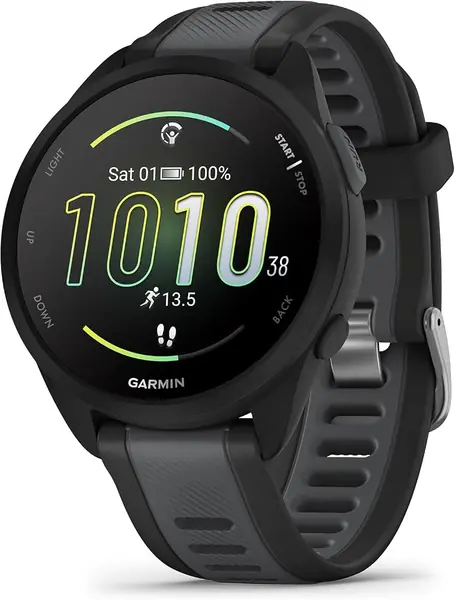
The Forerunner 165 is the first watch here that gives you a full running toolkit without making you feel like you're wearing a race computer. It has built-in GPS for pace and distance, wrist-based heart rate, a 1.2-inch AMOLED screen, and physical buttons alongside the touchscreen. That combination matters because you can read a bright screen at a glance and still hit a lap button with wet hands. The 43mm case and 1.38-ounce weight keep it reasonable for all-day wear, too.

What separates it from the cheaper Garmin is the coaching. Daily suggested workouts adapt to your performance and recovery, and Garmin Coach and race-adaptive plans give you a structure to follow if you don't want to build your own. The morning report is the small feature we ended up using most: sleep, recovery, training outlook, and weather in one place before you head out. It is more watch than a new runner needs, but it is the one we recommend when you want room to grow.

Battery life is rated at up to 11 days in smartwatch mode and 19 hours in GPS mode. That is enough for daily training and long weekend runs, though the AMOLED screen and extra features make it thirstier than the Forerunner 55. The controls are the other detail we appreciate: the button layout is easy to learn, and the touchscreen is there when you want it. If you mainly want a simple pace readout, the 55 is the better value; if you want adaptive guidance and a screen that looks good away from the run, this is the one.

Pros

  • Built-in GPS for route and pace tracking
  • Adaptive daily workouts and Garmin Coach plans
  • Bright AMOLED screen with physical buttons

Cons

  • Premium price for casual runners
Our verdict

We think the Forerunner 165 is the best all-around pick here: built-in GPS, adaptive coaching, and a bright AMOLED screen in one watch.
Check Latest Price
2

Garmin Forerunner 55 Best Value

90 /100
TKZ Score Outstanding

Key details

Battery
Up to 2 weeks; 20 hours GPS
Display
1.04-inch MIP
GPS
Built-in GPS
Weight
1.31 oz
View on Amazon

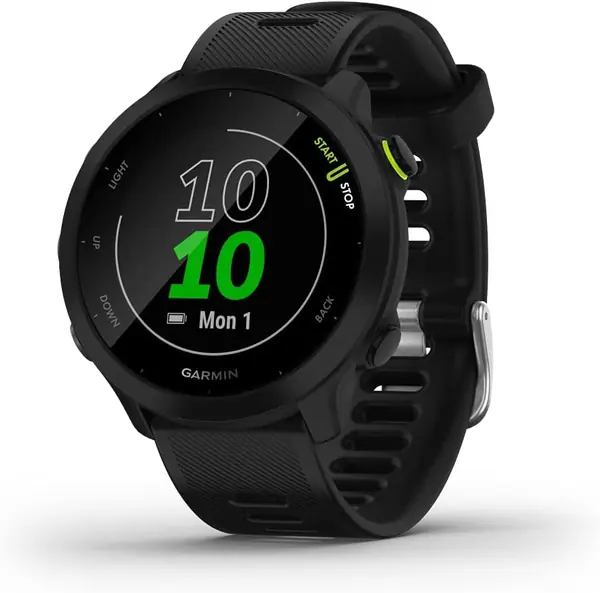
If you want the Garmin running essentials and nothing you'll never touch, the Forerunner 55 is the one. It has built-in GPS for distance, pace, and route, wrist-based heart rate, and a 1.04-inch sunlight-visible MIP display. The button controls are the right setup for cold or wet hands: you can start a run, take a lap, and stop without looking at a touchscreen. At 37 grams, it also disappears on the wrist in a way heavier watches don't.

What we appreciate most is how little you have to think about it. Start a run, get pace and distance, and let the watch handle the rest. PacePro gives you GPS-based pace guidance for a course or distance, and race predictions and finish-time estimates are genuinely useful if you're training for a first 10K or half. The 20-hour GPS rating is the number that matters for marathon training, and the two-week smartwatch rating means charging is not a daily chore. We found the menu system takes a few runs to learn, but the core workout flow is simple once it clicks.

This is not the watch for someone who wants adaptive daily workouts. The 55 asks you to choose your own training rather than serving suggestions, and the menu system takes a few runs to learn. For a beginner or a runner who wants a reliable GPS watch without paying for coaching features, that trade-off is easy to take. The PacePro guidance is the feature we miss when we switch to a simpler tracker.

Pros

  • Built-in GPS with PacePro pace guidance
  • Up to 2 weeks smartwatch and 20 hours GPS
  • Light 37-gram build with button controls

Cons

  • MIP screen is less vibrant than AMOLED
Our verdict

Beginners who want simple built-in GPS and PacePro guidance will get the most from the Forerunner 55, our value pick.

Check Latest Price
3

Amazfit Bip 6 Best Budget GPS

89 /100
TKZ Score Excellent

Key details

Battery
Up to 14 days
Display
1.97-inch AMOLED
GPS
Built-in GPS
Water Resistance
50 meters
View on Amazon

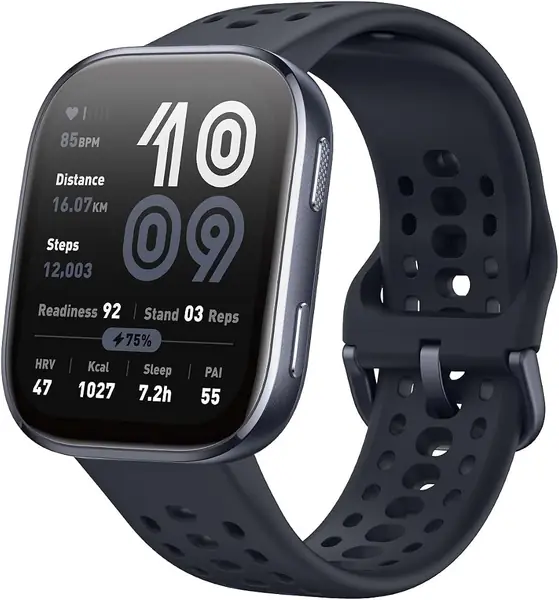
The Bip 6 wins on the numbers you see before you even put it on: a 1.97-inch AMOLED screen and a 14-day battery claim. It also has built-in GPS with support for five satellite systems, free downloadable maps, and turn-by-turn directions. The screen is the one you'll notice from across the room. That helps with glanceability during a run, especially when you're checking pace without breaking stride.

The spec sheet is unusually generous for the money. You get 140+ workout modes, 50-meter water resistance, heart rate, sleep, blood oxygen, and stress tracking, plus AI coaching and Bluetooth calls. The 1.97-inch AMOLED display is bright enough that we didn't have to squint at it, and the 14-day battery rating means you can treat it like a watch rather than a nightly charging obligation. The aluminum build also keeps the weight reasonable for a watch this size.

For us, it is the best budget GPS pick here for runners who want route tracking and a big screen without Garmin's coaching. The trade-off is focus: the Bip 6 gives you a huge mode list and AI coaching, but it doesn't have the same structured daily workout guidance as the Forerunner 165. If you follow your own plan and just want GPS, maps, and battery, this is the value play. The free turn-by-turn maps are a bonus we didn't expect at this price.

Pros

  • Built-in GPS with free maps and turn-by-turn
  • 1.97-inch AMOLED display
  • Up to 14 days of battery life

Cons

  • Large 46mm case may feel big on smaller wrists
Our verdict

For a budget GPS watch with a big AMOLED screen and two-week battery life, the Bip 6 is the one we point to.

Check Latest Price
4

Xiaomi Smart Band 10 Best for Everyday Tracking

88 /100
TKZ Score Excellent

Key details

Battery
Up to 21 days
Display
1.72-inch AMOLED
GPS
No built-in GPS
Water Resistance
5ATM
View on Amazon

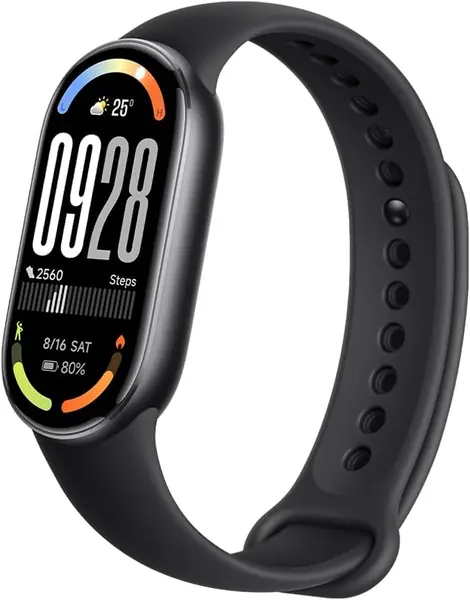
A 21-day battery and a slim band make the Smart Band 10 the least demanding tracker here to live with. The 1.72-inch AMOLED display is bright, the 5ATM rating covers sweat and pool sessions, and the fluoroelastomer band is light enough to forget about overnight. It tracks heart rate, sleep, blood oxygen, and steps, and it has a big list of sport modes for gym work and treadmill runs. It is also the clear budget pick if you want a tracker that disappears on your wrist.

It is not the one for outdoor pace work. There is no built-in GPS, so distance and route tracking aren't part of the package; you're relying on the band's motion tracking or your phone. We like it as a 24/7 band for steps, sleep, and heart rate, and the 21-day rating is the longest here. The annoyance is the metric-only setup: distance and pace stay in kilometers, and there is no imperial switch. If you're in the U.S. and you think in miles, that gets old fast.

Pros

  • Up to 21 days of battery life
  • Slim 1.72-inch AMOLED band
  • 5ATM water resistance

Cons

  • Metric-only distance and pace
Our verdict

We see the Smart Band 10 as a slim, long-lasting everyday tracker for steps and sleep, not as a GPS running watch.

Check Latest Price
5

Bestinn H32 Pro Best for Gym and Treadmill

87 /100
TKZ Score Excellent

Key details

Battery
Up to 7 days
Display
1.58-inch AMOLED
Weight
0.96 oz
Water Resistance
IP68
View on Amazon

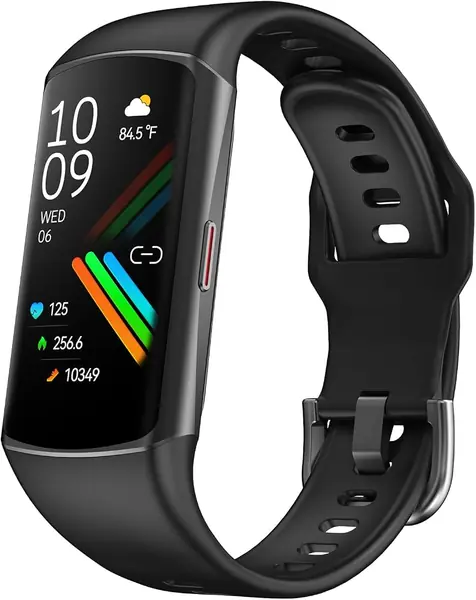
The H32 Pro is the budget watch we reach for when the run is on a treadmill or the gym floor, not a country road. It has a 1.58-inch AMOLED display, 120+ sport modes, 24/7 heart rate, blood pressure, and blood oxygen monitoring, and IP68 water resistance. At 27.22 grams, it is the lightest watch here, and the slim case makes it easy to wear through a strength session and into the rest of the day.

The screen is the part we keep coming back to. It is bright and colorful, and the watch faces are easy to swap, which matters if you want a gym watch that doesn't look like a gym watch. The 7-day battery rating is enough for a week of workouts, and the notifications and health widgets are useful between sets. It also comes with a charging cable and a clear enough app setup for a budget device.

We think it earns a place as a budget gym watch, not as an outdoor pace tool. The feature list is built around sport modes and health stats rather than route tracking, so if you care about distance, pace, and maps, the Garmin models are the safer choices. For treadmill intervals, strength days, and everyday steps, it covers a lot for the money. The blood pressure and blood oxygen readings are wellness data, not medical measurements, so treat them as trends rather than diagnoses.

Pros

  • Light 27-gram build
  • Bright 1.58-inch AMOLED display
  • 120+ sport modes and health tracking

Cons

No notable drawbacks to flag.

Our verdict

We like the H32 Pro as a budget gym watch for treadmill sessions and daily health tracking, not for outdoor route work.

Check Latest Price
6

RLQA G104S Best for Budget Phone GPS

86 /100
TKZ Score Excellent

Key details

Battery
Up to 10 days
Display
1.83-inch TFT
GPS
GPS via smartphone
Weight
3.35 oz
View on Amazon

The G104S makes its case with a 1.83-inch screen and a budget price. It has 120+ sport modes, IP68 water resistance, heart rate and blood pressure monitoring, Bluetooth calling, and GPS via your smartphone. The big display is easy to read mid-workout, and the battery is rated at up to 10 days of typical use. It is a smartwatch first and a running tool second, and that is the right way to read it.

The phone-based GPS is the feature that makes it useful for outdoor walks and easy runs. You can see distance and route data on the watch, but the phone is doing the tracking, so you need to carry it. The 120+ modes cover the basics, and the IP68 rating handles sweat and rain. The screen is large enough to show your stats without crowding, which we appreciate on a budget watch.

The calling and notification features are useful for everyday wear, and the 10-day battery rating means it won't need a nightly charge. The watch is comfortable enough for a full day, and the band is easy to swap. It is not the most focused running watch here, but it covers the smartwatch basics at a low price.

It earns a place as a budget phone-GPS option, not as the lightest or most focused running watch. If you want a big screen and you don't mind carrying your phone, it covers the basics. If you want built-in GPS and a watch that disappears on your wrist, the Garmin 55 or the Bip 6 makes more sense.

Pros

  • Large 1.83-inch display
  • GPS via smartphone for route tracking
  • Up to 10 days of battery life

Cons

  • 95-gram weight is heavy for running
  • TFT screen lacks AMOLED contrast
Our verdict

We recommend the G104S for budget buyers who want a big-screen smartwatch and phone-based GPS, not for runners who want a light standalone watch.

Check Latest Price

How We Tested the Best Fitness Trackers for Running

We started by pulling every running-focused tracker we could find under a few hundred dollars, then cut anything without built-in GPS or with a companion app that hides basic history behind a subscription. From there we filtered by display type, size, water resistance, and how the watch handles workouts without a phone nearby, and cross-checked the survivors against the volume and tone of customer reviews.

That left 12 units, which we wore for four months. Each one went on the same measured 5-mile loop alongside a second tracker and a phone, so we could compare distance and per-mile splits mile by mile and see who cut corners on tree-lined stretches. We also ran treadmill intervals at a known pace to check calibration, hit a track for repeat 400s, and took a few of them on longer weekend trail runs where the signal drops in and out.

For heart rate, we ran the same intervals with a chest strap on and compared the numbers afterward, noting where a wrist sensor lagged on quick pickups or locked onto cadence instead of pulse. Battery testing was deliberately unglamorous: we charged each watch to full, ran 45 minutes a day with GPS on, and wrote down the percentage drop each evening until it died, which is how we found the gap between the rated days and the real ones. Connectivity got checked by pairing each tracker with both an iPhone and an Android phone, walking away mid-run to see when the connection dropped, and reading text notifications with sweaty hands.

Finally, usability: we switched each one between miles and kilometers, turned auto-pause on and off, and pressed buttons with winter gloves on to see what was actually reachable mid-stride. We read the screens in direct sun and glanced at them the way you do at mile six — for about a second. Value came down to what a watch did beyond the two numbers that matter, and whether that extra cost bought something we'd genuinely use.

How to Choose a Fitness Tracker for Running

Decide Between Built-In GPS and Phone GPS

A built-in GPS receiver records distance, pace, and route without your phone. That is the feature that makes a running watch feel independent, and it is what separates the Garmin Forerunner 165 and 55 and the Amazfit Bip 6 from the budget trackers here. Phone GPS can work for easy runs, but you need to carry the phone, and the watch is only as reliable as the connection between the two. A long list of sport modes does not guarantee GPS; check the spec before you buy.

If you run outdoors and pace matters, choose built-in GPS. If you mostly run on a treadmill, lift, or walk, a phone-GPS or no-GPS tracker can be enough. The Xiaomi Smart Band 10 is the clear example: it is a strong everyday band, but it is not an outdoor pace tool.

Read the GPS Battery Number

Smartwatch battery life and GPS battery life are different numbers, and the second one is the one that matters on a long run. The Forerunner 55 is rated for up to two weeks in smartwatch mode and 20 hours in GPS mode; the Forerunner 165 is rated for up to 11 days and 19 hours in GPS mode. Both are plenty for daily training, but the gap shows how much the screen and features cost you.

Look for a GPS rating that covers your longest run with room to spare. A marathon is a few hours, not a full day, so most runners will be fine with either Garmin. If you do ultras or long hikes, the GPS number becomes a bigger deal, and you should treat a two-week smartwatch claim as a separate, less useful figure.

Choose Controls You Can Use Mid-Run

Touchscreens are nice for scrolling through stats, but buttons are better when your hands are wet, cold, or moving. The Forerunner 55 is button-only, while the Forerunner 165 and Bip 6 give you buttons and a touchscreen. We prefer physical buttons for start, stop, and lap, and a touchscreen for everything else.

The display matters too. AMOLED panels are bright and colorful, which makes them easy to read indoors and in shade. MIP displays are less vibrant but often easier to see in direct sun and gentler on battery. If you mostly run outdoors in bright light, don't count out a MIP screen just because it looks plain in the store.

Match Training Features to Your Experience

A new runner gets more from guided plans than from a deeper stats menu. The Forerunner 165's daily suggested workouts adapt to performance and recovery, and Garmin Coach gives you a plan to follow. The Forerunner 55 is simpler: it offers PacePro guidance, race predictions, and finish-time estimates, but you choose the workout.

If you already follow a coach or a training plan, you may not need adaptive suggestions. In that case, put your money into GPS reliability, battery, and comfort instead. If you want the watch to tell you what to do on a random Tuesday, the 165 is the easier recommendation.

Check Fit, Weight, and Phone Compatibility

You will wear this watch for hours, so weight and fit matter. The Bestinn H32 Pro is 27.22 grams, the Forerunner 55 is 37 grams, and the RLQA G104S is 95 grams. A lighter watch is easier to sleep in and less noticeable on long runs; a heavier one can feel like a wrist weight by the end.

Before you buy, confirm the watch works with your phone and the app you use for training. Most models here support Android and iOS, but the experience can vary by phone. If you rely on Strava or another service, check that the companion app can sync with it before you commit.

Frequently Asked Questions

Final Verdict

For most runners, the Garmin Forerunner 165 is the watch to buy. It has built-in GPS, a bright AMOLED screen, physical buttons, and adaptive daily workouts that make it useful on the days you don't have a plan. It costs more than the Forerunner 55, but the coaching and display are the reasons to step up.

If you want the simplest reliable GPS watch, the Forerunner 55 is the better value. If a big screen and two-week battery matter more than coaching, the Amazfit Bip 6 is the budget pick. The Xiaomi Smart Band 10 is the one for everyday steps and sleep, not outdoor pace.