Best Fitness Trackers for Women of 2026

A fitness tracker asks for a lot: a spot on your wrist all day, the same spot overnight, and access to your heart rate, workouts, and calendar. The catch is the tradeoff built into the category — the prettiest ones tend to be the first to need a charger, and the ones that run a week or more usually make you squint. I've worn one through training cycles and through months when my only exercise was the dog walk, and the trackers I keep reaching for are comfortable enough to forget and nice enough to wear to dinner.

Over the past six months, my team and I have worn 12 trackers — screenless bands, small-case smartwatches, and full GPS watches — through workouts, workdays, and sleep. Case size, it turns out, matters more than the spec sheet suggests. A 40 to 42mm case that sits comfortably on a smaller wrist beats a bigger screen you end up taking off at night, and sleep tracking only counts if you actually sleep in it. The picks below are the ones that earned a permanent spot.

The Best Fitness Trackers for Women

1

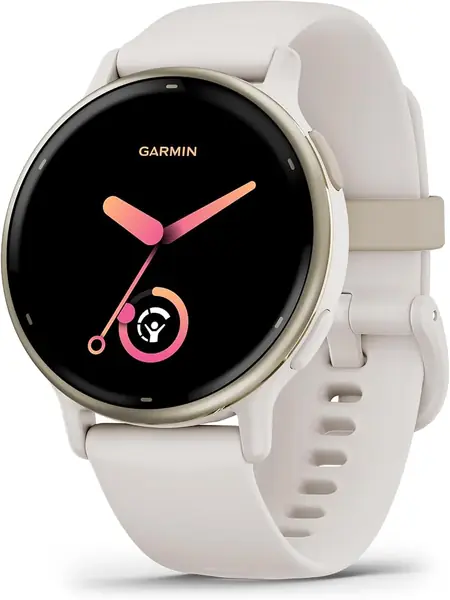
Garmin vívoactive 5 Best Overall
93 /100
TKZ Score Outstanding

Key details

Battery Life
Up to 11 days
Case Size
42mm
Display
1.2-inch AMOLED
GPS
Built-in
View on Amazon

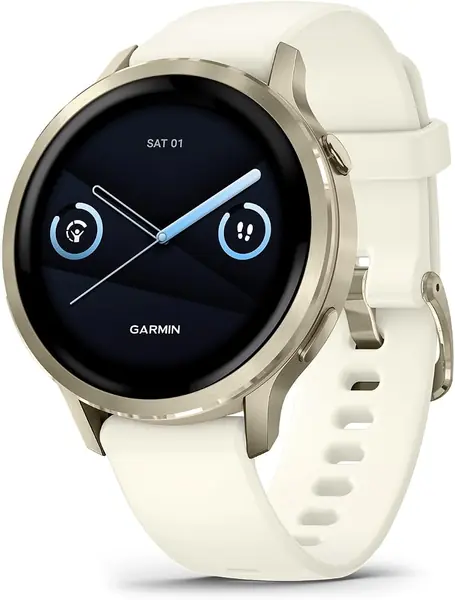
Eleven days is the number that makes this the tracker we recommend first, and it isn't really about convenience. A watch that needs charging every night is a watch you take off before bed, and the sleep data you bought it for never gets collected. Garmin rates the vívoactive 5 at up to 11 days in smartwatch mode, so wearing it overnight becomes the default rather than a nightly decision.

The hardware holds up its end. The 42mm case with its 1.2-inch AMOLED display weighs 1.3 ounces, light enough to sleep in and small enough that it doesn't swamp a narrow wrist, and the ivory finish reads as a watch you wear to work rather than a gym gadget. We also appreciate that the band is a standard 20mm width, so replacing it doesn't mean hunting down a proprietary strap.

Garmin's advantage shows up after you sync. Body Battery, a nightly sleep score with coaching, and HRV status feed one another, so a rough night arrives as a rough morning with an explanation attached. There are more than 30 sport apps, built-in GPS for runs without your phone, and — the detail we didn't expect to care about — a wheelchair mode that counts pushes instead of steps.

Taken together, that is the best balance of price and capability in this set: a week of battery, a screen bright enough to read outdoors, GPS without your phone, and no loyalty oath to either phone platform. If you want the smallest possible object on your wrist, look at the 40mm Apple Watch SE 3 or the screenless Fitbit Air. If you want a metal case and a serious training partner, the Venu 4 is the step up.

Pros

  • Up to 11 days between charges
  • Built-in GPS and 30+ sport apps
  • Sleep score, HRV status, and Body Battery

Cons

  • Lens scratches; some units fail early
  • Sleep scores don't always match how you slept
Our verdict

Our default for most people: a week of battery, a bright AMOLED screen, built-in GPS, and support for both iPhone and Android.
Check Latest Price
2

Apple Watch SE 3 (40mm) Best for iPhone Users

92 /100
TKZ Score Outstanding

Key details

Battery Life
Up to 18 hours
Case Size
40mm
Safety
Fall and crash detection
Compatibility
iPhone
View on Amazon

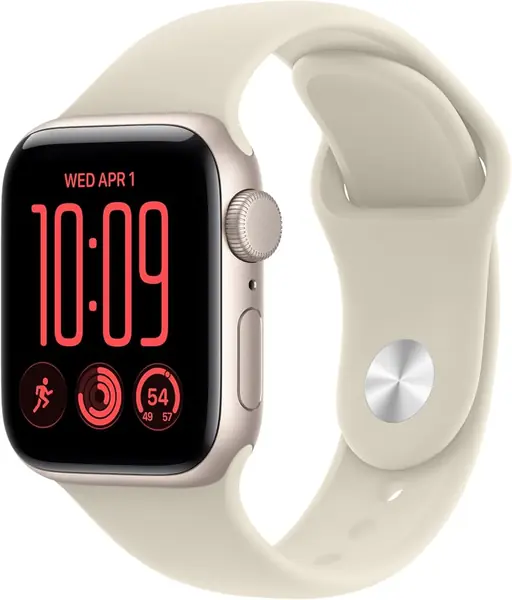
If your phone is an iPhone, this is where we start. The 40mm SE 3 is the smallest and least expensive Apple Watch, and the size is the whole argument: it sits flat on a narrow wrist instead of hanging past it, and the starlight aluminum case doesn't fight with a bracelet on the other arm.

What you get for the money is what sold us. Temperature sensing feeds the Vitals app and Cycle Tracking, so overnight readings and cycle predictions live in the same place as your workouts, and fall detection and crash detection — the features that used to justify the expensive models — are standard here. Workout tracking covers runs, strength sessions, and the ten-thousand-steps version of being active, and it all lands in one app instead of three.

The trade is charging. Apple rates the SE 3 at 18 hours, which in practice means a daily top-up, and the faster charging means a short session while you shower and dress puts a good chunk of the day back. That habit is easy in a bathroom and hard on a camping trip. For a watch that runs a week between charges, the vívoactive 5 is the pick; for the Apple ecosystem in the smallest case Apple makes, this is it.

Pros

  • Fall and crash detection at this price
  • Cycle tracking with temperature sensing
  • Compact 40mm case for narrow wrists

Cons

  • iPhone only
Our verdict

If you carry an iPhone, we think this 40mm model is the sweet spot: fall detection, cycle tracking, and Apple's apps for less than the Series 12.

Check Latest Price
3

Google Fitbit Air Best Screenless Tracker

91 /100
TKZ Score Outstanding

Key details

Battery Life
Up to 7 days
Display
None, screenless
Weight
0.18 oz
Band Fit
130-210 mm
View on Amazon

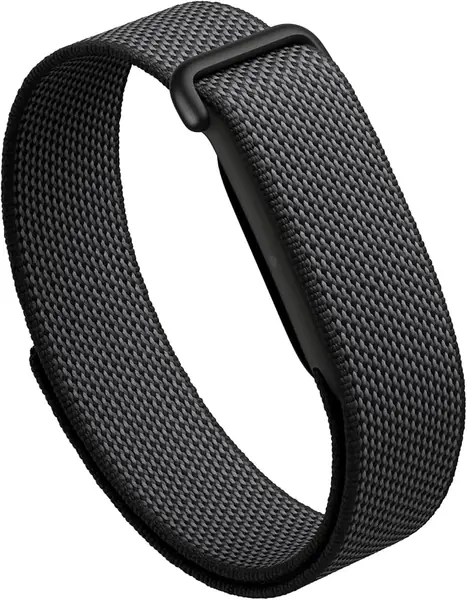
There's no screen on the Fitbit Air, and that's the feature rather than the compromise. At about five grams it disappears on the wrist — the one-size band adjusts from 130 to 210mm with a buckle — and there is nothing glowing at 2 a.m. to wake you when you roll over. For a device whose real job is being worn while you sleep, that matters more than a clock you already carry in your pocket.

The tracking is Fitbit's familiar set: continuous heart rate, blood oxygen, skin temperature, sleep stages, and steps, all routed through the Google Health app, which includes a three-month premium trial and coaching that adapts to what you actually did last week. Battery is rated at up to seven days, and the fast-charge claim is the useful one — five minutes on the cable buys a day, which covers the morning you forgot.

The honest cost of no screen is that everything happens in the app: no clock glance, no step count on the wrist, and your phone becomes the interface. If that sounds irritating, the vívoactive 5 gives you a display and GPS for more money. If you want a tracker that feels like a bracelet and never interrupts you, this is the most comfortable thing here — the band doesn't rub, doesn't get hot, and doesn't have to come off at night.

Pros

  • About five grams, comfortable enough for sleep
  • Up to seven days of battery
  • Five-minute charge adds a day

Cons

  • App sync can stall and drop workouts
  • Sleep-stage data is inconsistent
Our verdict

Our pick for anyone who hates sleeping in a watch: no screen, almost no weight, and a week between charges.

Check Latest Price
4

Garmin Venu 4 (41mm) Best Premium Pick

90 /100
TKZ Score Outstanding

Key details

Battery Life
Up to 10 days
Case Size
41mm
Display
1.2-inch AMOLED
Case Material
Stainless steel
View on Amazon

The Venu 4 is the one here that looks like jewelry. A 41mm stainless steel case, a bone silicone band, and a 1.2-inch AMOLED display that stays readable in direct sun — on the wrist it reads closer to a dress watch than a training tool, and at 1.2 ounces it doesn't drag on a narrow arm.

What the price buys is range. Ten days of battery, more than 80 preloaded sport apps, menstrual cycle tracking, sleep coaching, and a Health Status feature that watches heart rate, HRV, and skin temperature for changes worth paying attention to. The built-in flashlight is the detail that ends up mattering — a dark hallway, a parking garage, a tent at 2 a.m.

This is the pick for the woman who wants one watch for the office, the gym, and bed, and who will actually use the training and recovery data. If your routine is steps, sleep, and a good-looking case, the vívoactive 5 gets you most of the way for considerably less. If you want Apple's ecosystem instead, the Series 12 does more with an iPhone and costs less than this.

Pros

  • Stainless steel case and bright AMOLED display
  • Up to 10 days of battery
  • Health Status plus menstrual cycle tracking

Cons

  • Highest price in this set
Our verdict

We think the Venu 4 earns its premium: stainless steel, ten days of battery, and training tools you'll actually use.

Check Latest Price
5

KEEPONFIT DR05 Best Budget Pick

89 /100
TKZ Score Excellent

Key details

Screen
1.27-inch LCD touchscreen
Calls
Yes, via Bluetooth
Bands Included
Two
View on Amazon

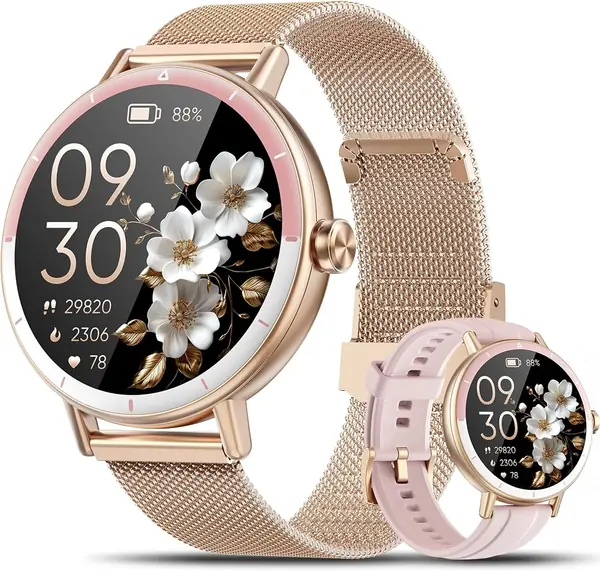
Two bands come in the box: a rose gold metal bracelet for the office and a silicone strap for the gym. That one detail explains the whole watch — it's the only pick here that tries to be jewelry and workout gear at the same time without asking you to buy a second strap.

For the money the feature list is unusually complete: a 1.27-inch round touchscreen, more than 100 sport modes, heart rate, blood oxygen, stress and menstrual cycle tracking, and Bluetooth calling that genuinely works for short conversations on the wrist. Setup runs through the VeryFit app, message notifications come through promptly, and the whole thing is light enough to forget you have it on. It won't out-track a Garmin, but it won't make you choose between the watch you wear to work and the one you wear to run.

Pros

  • Two bands included, metal and silicone
  • Bluetooth calling on the wrist
  • 100+ sport modes and cycle tracking

Cons

  • LCD screen, not AMOLED
  • No built-in GPS
Our verdict

We send first-time buyers here: two bands, working Bluetooth calling, and cycle tracking in a watch that doesn't look cheap.

Check Latest Price
6

Apple Watch Series 12 (42mm) Deepest Apple Health Data

88 /100
TKZ Score Excellent

Key details

Case Size
42mm
Safety
Fall and crash detection
Compatibility
iPhone
Heart Data
HRV as often as every 5 minutes
View on Amazon

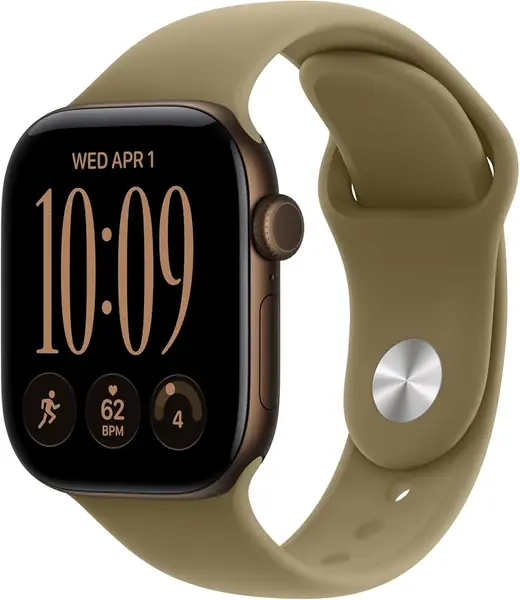
At 42mm, the Series 12 is the larger Apple Watch, and the extra screen room is noticeable — notifications are easier to read at a glance and workout stats don't get clipped mid-run. The dark bronze aluminum case with the olive sport band is the best-looking combination Apple has shipped in a while, and it's the version we point people toward when they ask which finish to get.

The health case is what separates it from the SE 3. Apple samples HRV as often as every five minutes, feeds overnight metrics into the Vitals app, and turns the result into a readiness score for the day alongside a nightly sleep score. Heart Rate Zones, Pacer, and fall and crash detection round it out; this is the most complete health picture Apple puts in a watch.

For an iPhone owner who wants the deepest data and doesn't mind a bigger case, this is the better of the two Apples here. For a smaller wrist or a tighter budget, the 40mm SE 3 is the more sensible buy. The advantage is granularity: a readiness score that can react to one bad night instead of one bad month.

Pros

  • HRV sampled as often as every five minutes
  • Readiness, Vitals, and sleep scores in one app
  • Fall and crash detection

Cons

  • Costs more than the SE 3
  • 42mm case is large for narrow wrists
Our verdict

We point iPhone users who want Apple's deepest health data at the 42mm Series 12, provided the larger case suits their wrist.

Check Latest Price
7

Zeacool Fitness Tracker Cheapest Way in

87 /100
TKZ Score Excellent

Key details

Battery Life
12 days
Screen
1.1-inch AMOLED
Sport Modes
25
Water Resistance
5 ATM
View on Amazon

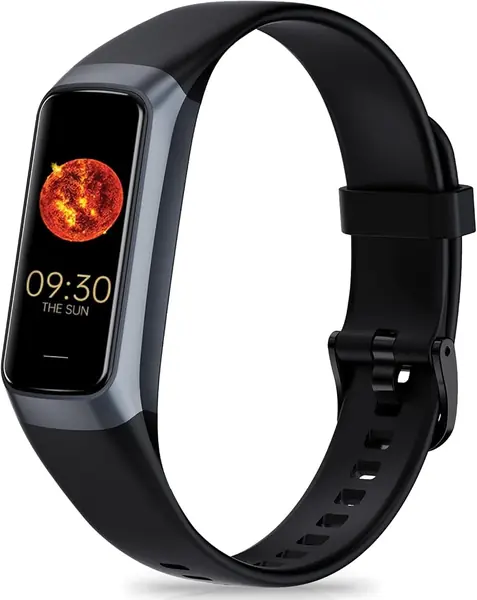
At the very bottom of the price range, the Zeacool still gives you a 1.1-inch AMOLED touchscreen, 5 ATM water resistance, and a claimed 12 days of battery. For a first tracker — or for anyone who wants to find out whether wrist tracking fits their day before spending real money — that is a genuinely low-risk way in.

The feature list runs longer than the price suggests: 25 sport modes, heart rate, blood oxygen, sleep and temperature readings, a menstrual cycle reminder, a remote camera shutter, and a one-year warranty. The warranty is the detail that matters most at this end of the market, because it covers the year in which a budget tracker either proves itself or doesn't.

Pros

  • 1.1-inch AMOLED at the lowest price here
  • Up to 12 days of battery
  • 5 ATM water resistance for swimming

Cons

  • Plastic case feels basic
  • Sport modes must be set in the app
Our verdict

We treat it as a cheap first tracker: AMOLED, 5 ATM water resistance, and 12 days of battery at the lowest price in this guide.

Check Latest Price

How We Tested the Best Fitness Trackers for Women

We started by pulling every tracker we could find in a case size of 42mm or smaller, then narrowed by price, app compatibility, and the things reviewers actually argue about: sleep accuracy, notification reliability, and whether a watch looks like jewelry or a piece of gym equipment. That left 12 trackers — screenless bands, small-case smartwatches, and full GPS watches — all bought at retail.

Each one got at least two weeks as a daily driver, worn overnight for most of that stretch. We slept in them for a month, noting which straps left marks and which ones woke us up buzzing; we wore them to the office and out to dinner to see how they read with real clothes; we ran, lifted, and swam in them. We also timed charge cycles from full to dead, so a seven-day battery claim only counted after we'd watched it play out.

For the data, we logged when we went to bed, woke up, and got up in the night, then compared our notes against each sleep report. Heart rate got checked against a chest strap during hard intervals, and GPS accuracy by running the same familiar loop with a phone in hand. To test ease of use, we handed each tracker to someone who had never worn one and timed setup without help; connectivity was checked by pairing with both an iPhone and an Android phone and walking out of range.

Durability came down to plain abuse: keys in a bag, a few drops on tile, weeks of sweat and sunscreen. We watched for scratches, straps that stretched or yellowed, and apps that quietly stopped syncing. Then we asked whether the price was earned, which is where the cheaper trackers sometimes win.

How to Choose a Fitness Tracker for Women

Start With Your Phone

Compatibility is the one decision you can't undo later. An Apple Watch pairs with an iPhone only, so an Android shopper is choosing among Garmin, Fitbit, and the budget brands whether or not the Apple reviews read better. Garmin and Fitbit both run on iOS and Android, which makes them the safer default for a household that might switch phones.

Settle the platform first, then compare case sizes and battery life inside it. It sounds backward to pick software before hardware, but no amount of AMOLED brightness makes up for a watch that can't talk to the phone in your pocket.

Choose a Case Size for Your Wrist

Cases in this category run from roughly 35mm to 43mm, and a couple of millimeters changes how a watch sits on a narrow wrist. A 42mm case can hang past the wrist bone; a 40mm one usually clears it. The band matters as much as the case — most trackers ship a one-size strap sized for about 130 to 210mm wrists, and a stiff silicone band on a small case looks bulkier than the same case on a soft knit.

If you plan to sleep in it, weigh the whole package rather than the case alone. The Fitbit Air comes in around five grams; a stainless steel smartwatch is a different object entirely on a pillow.

Read Battery Life as a Sleep-Tracking Spec

Battery numbers look like a convenience spec until you remember that the most interesting data gets collected overnight. An 18-hour watch means finding a charging window every single day, usually in the morning. A seven- to eleven-day tracker lets you charge on a schedule you choose.

If sleep and recovery are why you're buying, treat anything under two days as a warning sign, and check the fast-charge claim too. A few minutes on the cable that add a full day is often what keeps the habit alive.

Know What the Sensors Can Tell You

Wrist sensors are good at trends and poor at absolutes. Heart rate during steady exercise, resting heart rate over weeks, HRV, and how long you slept are the readings worth building decisions on. A single spot check of blood oxygen or blood pressure on an inexpensive band is not a diagnostic measurement, and it should not be treated as one.

Cycle and temperature tracking reward consistency — log periods for a few months before you expect the predictions to line up. Use the numbers to spot patterns, and keep a clinician for anything that looks like a medical question.

Decide Between a Screen, a Bigger Display, and None at All

A bright AMOLED panel is a genuine pleasure outdoors and in bright gyms; an LCD is readable but flatter; a screenless band is the most comfortable and the least distracting of the three. Then check where the GPS signal comes from. Built-in GPS on the Garmin vívoactive 5 and Venu 4 records a route with your phone at home, while the budget picks borrow your phone's signal — fine for walks, annoying on runs where you want to leave the phone behind.

Frequently Asked Questions

Final Verdict

The Garmin vívoactive 5 is the tracker we recommend to most women, because it removes the two things that make people stop wearing one: the daily charge and the phone tether. You get a bright screen, built-in GPS, and a full slate of health tracking for a mid-range price, on either platform.

If your phone is an iPhone and your wrist is small, the 40mm Apple Watch SE 3 is the better fit and adds fall detection. If you want to sleep in something you can't feel at all, the screenless Fitbit Air is the one to put on your wrist.