Best Wireless Headphones of 2026

Every pair of wireless headphones promises two things at once: a week of battery and a wall of silence. In practice you tend to get one. Switch on noise cancellation and the playtime on the box quietly loses a third of its number, and the set that runs for days between charges usually asks you to give up some of the quiet. That trade separates the good ones more than any spec sheet.

We've spent six months with 12 pairs, and the differences showed up fast. Sound divides them less than you'd expect — most are listenable, and the real gap is bass that muddies at volume. Comfort stops being a footnote around hour three: pads that feel plush at first can press your glasses into your temples by afternoon. Multipoint pairing, which keeps your laptop and phone both connected, mattered more than driver size, and durability is the slow tell — hinges that creak and pads that flake by month four. Value rarely tracked with price, and the picks below are the ones that held their connection and earned their place.

The Best Wireless Headphones

1

Soundcore Q20i Best Overall
94 /100
TKZ Score Outstanding

Key details

Battery Life
Up to 40 hours with ANC on
Weight
9.12 oz
Bluetooth
5.0 with multipoint
Noise Cancelling
Hybrid ANC with transparency mode
View on Amazon

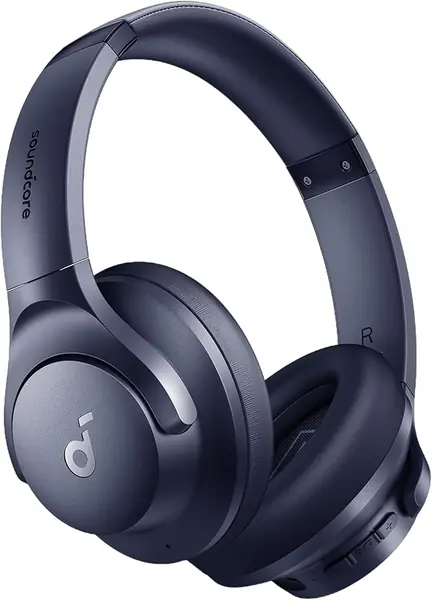
The Q20i is the rare budget pair that isn't asking you to give something up. Four microphones run hybrid active noise cancelling with a transparency mode, the battery is rated at 40 hours with the cancelling switched on, and two devices stay connected at once, so a call on your phone cuts into the podcast playing from your laptop without a re-pairing ritual.

That is the case for making it our top pick. Almost everything you actually do with headphones — a podcast on the walk to work, a film on a laptop, a week of listening between charges — is handled here, and the equalizer in the app fixes the one thing that would otherwise bother us, the bass-forward default tuning. Spend ten minutes in the app and the Q20i stops sounding like a budget pair.

Put it next to the Bose and you can hear where the extra money goes. The Q20i takes the rumble out of a bus or an open-plan office; it doesn't erase an engine the way the QuietComfort does, and more of the room comes through when you pause. What surprised us at 9.12 ounces is how little it registers after an hour — the cups are big enough to sit around the ear rather than on it, and the gentle clamp keeps pressure off the side of your head.

If battery life is the only thing that matters, the Picun B8 goes longer between charges; if you fly constantly, the Bose earns its price. Those are the only two reasons we'd look past this one.

Pros

  • Hybrid ANC plus a transparency mode
  • 40 hours with ANC switched on
  • Two devices connected at once
  • App equalizer reshapes the default bass

Cons

  • Light clamp slides on smaller heads
  • No carry case in the box
Our verdict

We tell most people to start here: it covers noise cancelling, 40 hours and two-device pairing without the premium markup.
Check Latest Price
2

Bose QuietComfort Best Noise Cancelling

93 /100
TKZ Score Outstanding

Key details

Battery Life
Up to 24 hours
Weight
8.47 oz
Wired Backup
3.5 mm cable and protective case
Noise Cancelling
Quiet and Aware modes
View on Amazon

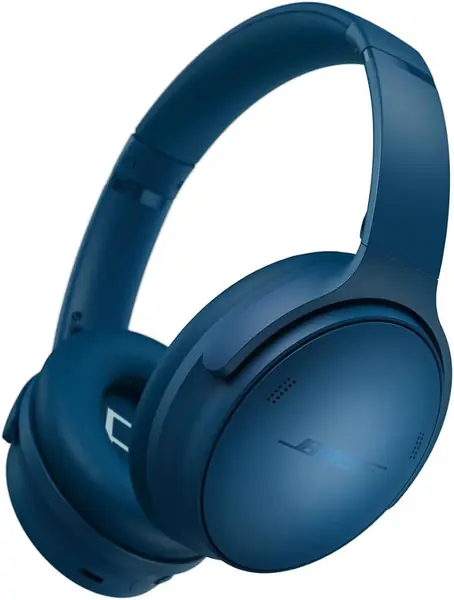
Some headphones reduce noise; this pair removes it. On a flight, the engine drone drops to a faint hiss before the music even starts, and Aware mode brings the cabin back when the drink cart arrives. That is the QuietComfort's whole argument, and it is a strong one: 24 hours of playtime, a detachable 3.5 mm cable and a protective case in the box, and 240 grams carried on cushions plush enough that you stop adjusting them halfway through a film.

We keep coming back to it for the two things you notice first and last on a long trip — how quiet it gets, and how little it asks of your ears three hours in. The sound is clean and balanced, with an adjustable EQ in the app for anyone who wants more low end, and Quiet and Aware modes toggle with a tap rather than a trip into settings.

The thing to plan around is longevity. Ear pads are the first part to wear, and a dead ear cup or a microphone that quits turns up in longer-term use rather than on day one. Buy from a seller with a return window you don't have to argue about and the risk drops to an inconvenience.

Pros

  • Noise cancelling that empties a cabin
  • Plush comfort for long sessions
  • Case, cable and 24 hours included

Cons

  • Costs far more than the rest of this set
  • Bluetooth 5.1 can stutter and drop over time
Our verdict

If your listening happens on planes and in loud offices, this is the pair to buy: nothing here is quieter or softer over a long flight.

Check Latest Price
3

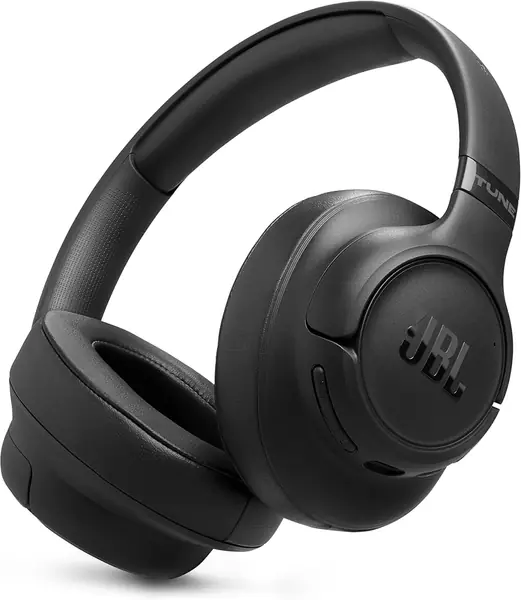
JBL Tune 720BT Best Battery Life

92 /100
TKZ Score Outstanding

Key details

Battery Life
Up to 76 hours
Weight
7.76 oz
Bluetooth
5.3
Wired Backup
3.5 mm jack
View on Amazon

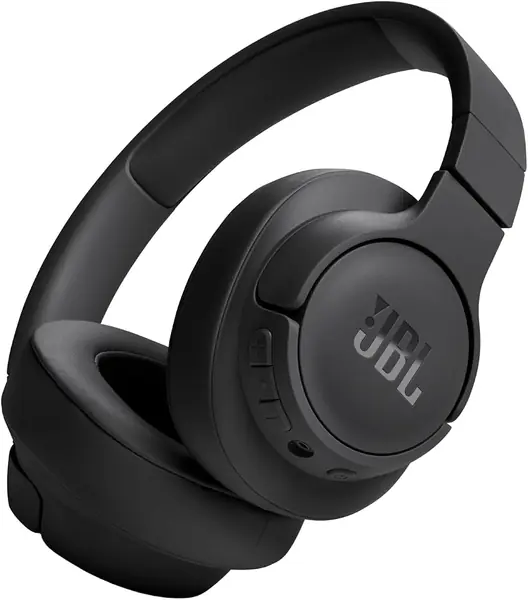
Seventy-six hours is not a spec-sheet abstraction. It is a month of gym sessions, a two-week trip, or a semester of commuting between charges, and the five-minute speed charge covers the morning you forgot to plug in. That is the whole pitch of the Tune 720BT: a pair you charge when you think of it rather than because you have to.

The sound is the JBL house curve — bass pushed forward, clean highs, and an app equalizer with presets for bass and vocal if the low end starts to wear on you. The 40 mm drivers are the same size as the pricier Tune 780NC's, and at 220 grams these are light enough that you forget you have them on. The cups seal well enough to take the edge off an office or a train, which is what you get instead of circuitry.

Where it earns its place is the boring stuff: hinges that fold flat into a bag, buttons you can find by feel without taking them off, a 3.5 mm cable in the box for a seatback screen, and an app that adds the equalizer and voice prompts in your language. It is the pair we grab for a long trip because there is nothing to manage — no case to pack, no firmware nag, no charging anxiety.

Pros

  • 76 hours per charge with speed charge
  • Folds flat with a 3.5 mm cable included
  • Light at 220 g with app EQ

Cons

  • No active noise cancelling
  • Snug band presses after a couple of hours
Our verdict

For anyone who hates charging, this is the pick: 76 hours a charge, folding hinges and a cable for the seatback screen.

Check Latest Price
4

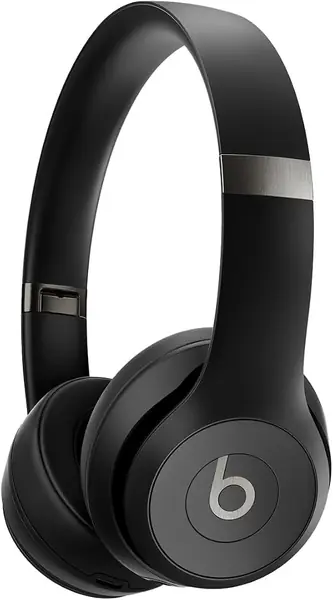
Beats Solo 4 Best On-Ear

91 /100
TKZ Score Outstanding

Key details

Battery Life
Up to 50 hours
Fit
On-ear with flex-grip headband
Audio
Personalized Spatial Audio
Charging
USB-C Fast Fuel
View on Amazon

The first thing you notice about the Solo 4 is the pressure. On-ear headphones grip the outside of your ears rather than surrounding them, and Beats builds this pair with a flex-grip band that holds tight enough to stay put through a run. That is the right call for the gym and the wrong one for a five-hour flight, where the squeeze makes itself known well before the film ends.

Judged as an on-ear, it is the best one in this set. Fifty hours of battery covers a week of commuting, USB-C Fast Fuel gets you back to listening in minutes, and Personalized Spatial Audio with head tracking makes a film on a laptop feel bigger than it has any right to. The tuning is bass-forward and lively — good for pop, hip-hop and podcasts, less flattering to acoustic recordings.

The ergonomics are smarter than the spec sheet suggests. The cups angle so they sit flat against your ears rather than pinching at the top, the headband adjusts without fiddling, and the whole thing is small enough to wear around your neck between meetings, which is more than we can say for the full-size over-ears here.

What we'd watch is longevity. A dead ear cup or a pair that stops taking a charge is the failure that turns up with these, and it tends to arrive months in rather than on day one, so register the warranty and keep the receipt. Buy them as a compact everyday pair, not as the headphones you wear for an entire workday.

Pros

  • 50 hours with USB-C fast charging
  • Personalized Spatial Audio with head tracking
  • Stable fit for movement

Cons

  • No active noise cancelling
Our verdict

It's the best on-ear pair here, and the one we point Apple users to for spatial audio, 50 hours and a fit that stays put.

Check Latest Price
5

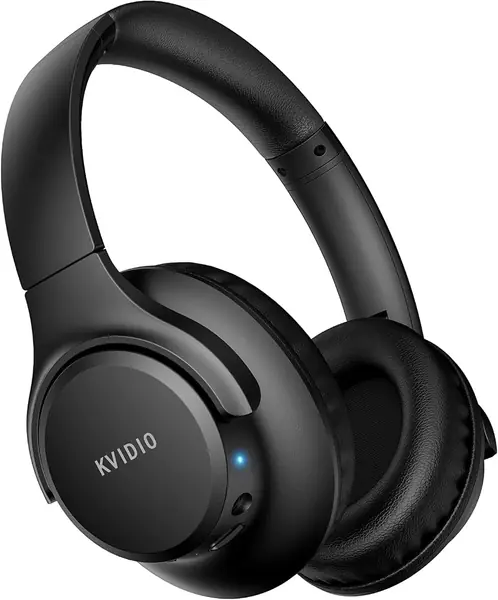
KVIDIO WH201A Best Budget

90 /100
TKZ Score Outstanding

Key details

Battery Life
Up to 65 hours
Weight
7.04 oz
Wired Backup
3.5 mm cable included
Drivers
40 mm dynamic
View on Amazon

Not everyone needs a primary pair. For the second set that lives in a truck, gets knocked around at a ball game and disappears into a teenager's backpack, the KVIDIO is the one we'd hand over without flinching. It is the lightest full-size pair here at just over seven ounces, the memory-foam pads are softer than the money suggests, and it folds down small enough for a glove box.

The sound is warm and bass-forward from the 40 mm drivers, which suits podcasts, country and hip-hop and asks little of a rough recording. The frame is honest budget plastic, the buttons are simple enough to work with gloves on, and there's a 3.5 mm cable and a charging cable in the box — more than some pricier pairs manage.

This is the pair we point to when someone wants a set for the yard, the garage or a kid's first headphones and doesn't want to care what happens to them. Sixty-five hours a charge means it will still be alive when you find it in a drawer three months later, and at this money, replacing it is an annoyance rather than a decision. It won't impress anyone, but it does the job it's given.

Pros

  • 65 hours between charges
  • Lightest full-size pair here
  • Soft memory-foam pads
  • Wired cable included

Cons

  • No active noise cancelling
  • Occasional Bluetooth dropouts
Our verdict

The pair we hand someone who wants a spare set for the yard, the truck or a kid's first headphones — light, soft and cheap to replace.

Check Latest Price
6

JBL Tune 780NC Noise Cancelling for Less

89 /100
TKZ Score Excellent

Key details

Battery Life
Up to 76 hours (50 with ANC)
Bluetooth
6.0 with multipoint
Noise Cancelling
Adaptive ANC with Smart Ambient
Drivers
40 mm dynamic
View on Amazon

Think of the Tune 780NC as the Bose argument at a different price. Adaptive noise cancelling with a Smart Ambient mode, 76 hours of playtime that drops to a still-generous 50 with the cancelling on, spatial sound, Bluetooth 6.0 with multipoint, and a USB-C to 3.5 mm cable in the box — this is the spec sheet of a much dearer pair, and we mean that as the recommendation.

We like the shape of the deal more than the last five percent of performance. The cancelling handles an office, a train and a lawn mower, and the spatial mode is fun for films even if we switch it off for music. What you give up against the Bose is the final layer of quiet and that weightless, cushioned feel; what you keep is a pair that folds, takes a cable and runs a week without a charger.

It is a 2026 model, so there is less long-term history to lean on than for the stalwarts in this set, and the app is where the useful settings live — the equalizer, the ambient levels and the mode switching. If you want genuine noise cancelling without paying Bose money, this is the obvious stop, and the gap between the two is smaller than the gap in price suggests.

Pros

  • Adaptive ANC with Smart Ambient
  • 76 hours, 50 with ANC on
  • Bluetooth 6.0 multipoint plus a wired cable

Cons

  • No case included
  • Button markings are hard to read
Our verdict

Real adaptive noise cancelling, 76 hours and multipoint at a midrange price — this is where to look before you spend Bose money.

Check Latest Price
7

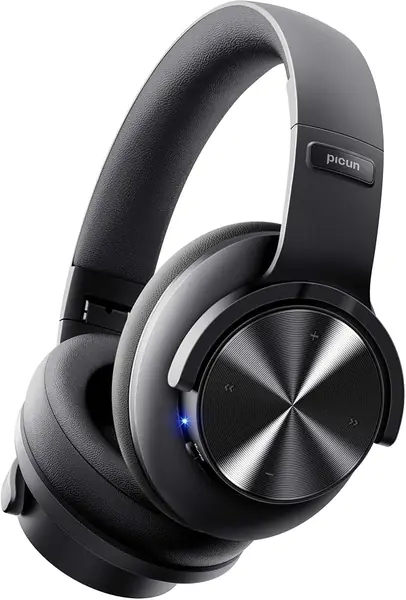
Picun B8 Maximum Battery per Charge

88 /100
TKZ Score Excellent

Key details

Battery Life
Up to 120 hours
Weight
12.3 oz
Bluetooth
5.3
Drivers
40 mm dynamic
View on Amazon

The Picun is built around one idea: 120 hours from a single charge. A 1,000 mAh battery and low-power components get you close to a month of nightly listening, which makes this the pair for someone who resents every cable in their life. It is also the reason to forgive a lot elsewhere.

The rest is more competent than the money suggests. Dual 40 mm drivers with three EQ modes give you a bass setting, a vocal setting and something close to flat, and none of them is unlistenable. Multipoint keeps a laptop and a phone connected, the frame folds, and there is a 3.5 mm cable and a USB cable in the box.

The weight is what you notice first. At 12.3 ounces it is the heaviest pair here, and the big cups that carry it are genuinely comfortable once it is on — the padding is thick and the band spreads the load. Treat it as a sit-down pair rather than a gym pair and the heft stops mattering.

Buy it for the battery and you'll be pleased; buy it for sound and you'll wonder what the fuss is about. The weak point is the build, and hinges and headband padding are where these give out. As a bedside, camping or workshop pair, that's a trade worth making.

Pros

  • 120 hours from one charge
  • Three EQ modes and multipoint
  • Folds with both cables included

Cons

  • No active noise cancelling
  • Runs roomy on smaller heads
Our verdict

You're buying one thing here, and it's the battery: 120 hours a charge in a folding frame, for anyone who resents owning a charging cable.

Check Latest Price
8

Wentronic Y01 Comfort on a Budget

84 /100
TKZ Score Excellent

Key details

Battery Life
Up to 48 hours
Bluetooth
5.3 with multipoint
Wired Backup
3.5 mm cable included
Noise Cancelling
Active noise cancelling
View on Amazon

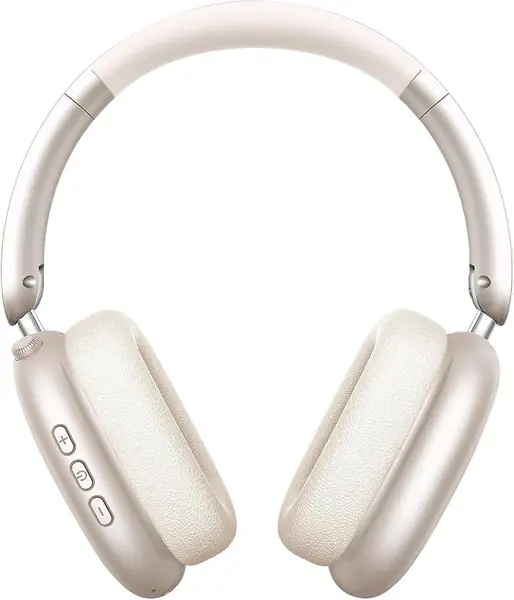
The Y01 doesn't look like a budget pair. The starlight finish is a proper color rather than a cheap gloss, the protein-leather cups and memory-foam padding have a softness we didn't expect at this price, and it folds flat into a bag. If appearance matters as much as output, this is the one in this set that gets noticed.

Comfort is where it earns its keep. The padding is deep enough that a two-hour session doesn't leave your ears hot, the band adjusts over a wide range, and the whole thing is light enough to forget. That is rarer than it should be among budget noise-cancelling pairs, which often make up for thin padding with a hard clamp.

Sound is warm and bass-forward with enough clarity for podcasts and audiobooks, the button controls are laid out simply, and two devices can be paired at once. There is a 3.5 mm cable and a charging cable in the box, and 48 hours a charge makes this a weekly charge rather than a nightly one.

The active noise cancelling is the part to be clear-eyed about: it takes the hum out of a fridge or a road, and it does much less with a conversation two seats over. If your commute is engine noise, that is enough; if it is a crowded train full of talkers, the Bose is the pair that actually solves it. At this money, comfort and a solid 48 hours are a fair trade for the last of the quiet.

Pros

  • Deep padding that stays comfortable
  • ANC and 48 hours per charge
  • Multipoint with a wired cable included

Cons

  • Runs large on smaller heads
Our verdict

We recommend it to anyone who wants noise cancelling and genuinely soft cups on a tight budget, and who mostly travels by bus or train.

Check Latest Price

How We Tested 12 Pairs of Wireless Headphones Over Six Months

We started by pulling together every over-ear and on-ear wireless model we could find under roughly $350, then filtered that pile by the features shoppers actually compare: active noise cancellation, multipoint pairing, a foldable hinge, transparency mode, app-based EQ, and a battery claim worth taking seriously. From there we bought 12 pairs, stretching from budget sets to premium noise-cancelling models, and lived with them for six months instead of a weekend.

Battery life was logged, not guessed. Each set was charged to full and we tracked hours used per charge across commutes, workdays, and flights, noting how much playtime dropped once noise cancellation was on and how much a ten-minute top-up actually bought. Noise cancellation was judged where it's needed: a subway platform, a desk under an office air vent, two flights, and a loud kitchen. We also kept a running tally of Bluetooth stumbles, since a set that drops its connection on the walk to the kitchen doesn't stay on the shortlist. Sound got checked against the same handful of tracks across genres, at low volume and loud, with the EQ flat and then adjusted.

Fit and comfort came down to long stretches — three-hour sessions, some of us in glasses, some with larger heads, checking clamp and pad pressure as the afternoon wore on. For durability, we folded and unfolded each hinge daily, tossed sets loose into a tote bag with keys, and inspected earpads for flaking and creaks after a month of it. Finally, we asked what each pair gave you for the money, because a mid-priced set that nails comfort and battery beats a fussy one with a bigger name.

How to Choose Wireless Headphones

Decide Whether You Need Noise Cancelling

Active noise cancelling uses microphones and counter-signals to remove steady low-frequency sound: engine drone, air conditioning, the hum of a train. It does much less with voices and sudden noise, which is why a good pair can quiet a cabin and still let the gate announcement through. Passive isolation — a sealed cup and soft padding — is the free version, and it is what the cheapest picks here rely on.

The trade is battery and money. The JBL Tune 780NC is rated at 76 hours without cancelling and 50 with it switched on. If you commute by transit or fly a few times a year, pay for the feature. If your listening happens at a desk, spend the difference on comfort and hours instead.

Look Past the Battery Number to the Charge Time

Rated hours are measured at moderate volume with features off, so treat the figure as a ceiling rather than a promise. What matters day to day is what happens when you forget to plug in: a five-minute top-up that buys a commute is worth more than another ten hours on the label. The Soundcore Q20i and both JBL picks here offer one. The Picun B8 solves the problem from the other direction, with a battery big enough that you stop tracking it.

Anything from 24 hours up is roughly a weekly charge for most people. Below that, check the fast-charge spec before you buy.

Fit, Clamp and the Word Compact

Over-ear cups surround your ears and spread pressure across the skull, which is what you want for long sessions and for anyone who wears glasses. On-ear cups press against the ear itself: they pack smaller and grip better when you move, and they turn uncomfortable sooner. Neither shape is better in the abstract.

The trap is the word compact in a listing — it describes folded size, not how the thing feels after two hours. Head size matters more than any specification here: the JBL Tune 720BT runs snug, the Picun B8 runs roomy, and the Q20i's light clamp suits a bigger head better than a small one. Buy somewhere with a return window and wear them for an evening before you commit.

Connections, Controls and the Cable

Bluetooth versions matter less than stability and multipoint. A pair that holds its connection and switches between a laptop and a phone is more useful than a newer version number that drops out in a crowded station. Dropouts turn up at every price tier here, so the return window is your real protection.

Look for buttons you can find without taking the headphones off, and a 3.5 mm cable in the box. The cable keeps a pair alive through a long flight with no charging, and it is the only way into a seatback entertainment system. Several pairs of Bluetooth headphones here ship with one; check rather than assume.

Frequently Asked Questions

Final Verdict

The Soundcore Q20i is the pair we point most people toward. It cancels noise, runs 40 hours with that cancelling on, holds two devices at once and costs a fraction of what the premium picks do — nothing else here covers that much ground for so little.

Spend more only for a specific reason: the Bose QuietComfort if quiet and cushioning matter most, the JBL Tune 720BT if you'd rather charge as rarely as possible, or the Beats Solo 4 if you want something small that stays on through a run.