Best Wired Headphones of 2026

A cord is a commitment. It means no pairing screen, no low-battery chime halfway through a call, and, if you buy well, more sound for your money than any wireless pair at the same price. It also means one obvious weak point, and it's almost always the cord.

I've spent the past eight months living with 12 pairs of wired headphones, from cheap on-ears you'd hand a teenager to open-back studio sets. A few started to kink at the plug inside a week; others I've barely taken off since. The spec sheet rarely predicted which was which.

What separates the keepers is unglamorous: a plug that fits the device in front of you and an adapter in the box if it doesn't, pads that don't clamp by hour two, and controls you can find without looking down. Sound quality still decides it, but a pair that leaks every note into the next seat or buries its volume dial somewhere along four feet of cable tends to stay in the drawer. The picks below earned their place on those terms.

The Best Wired Headphones

1

Audio-Technica ATH-M20x Best Overall
93 /100
TKZ Score Outstanding

Key details

Wearing Style
Over-ear, closed-back
Impedance
47 ohm
Driver Size
40 mm dynamic
Cable
Single-side exit, 6.3 mm adapter
View on Amazon

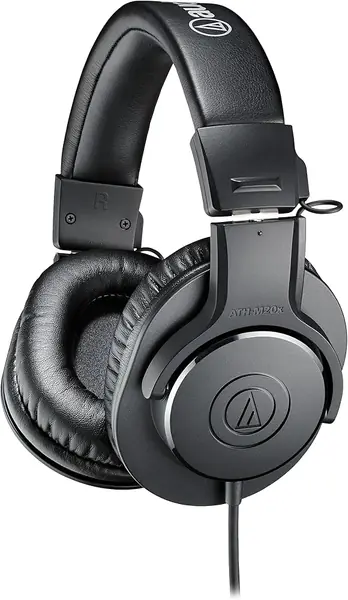
Over-ear cups that close around the ear are why the Audio-Technica ATH-M20x stayed on through a full day of desk work in a shared room. The closed-back seal does two jobs at once: it keeps our music from leaking into the room, and it takes the edge off nearby conversation, so we ended up listening at a lower volume than we do with any on-ear pair here. The 40 mm drivers and 47 ohm impedance mean a laptop jack or a phone drives them with no amp in the chain.

Sound is what earns it the top spot. The tuning leans warm with a real bass lift, which flatters pop, hip-hop, and games more than flat studio monitoring, and the midrange stays clear enough that vocals do not disappear behind it. The OneOdio Pro-10 below gives you bigger drivers, two cables, and a case for less money, but the M20x is the pair we hand someone who wants their music to sound better without thinking about gear.

Around the back, the cable leaves one side only, so it stays out of the way of a jacket collar, and it runs long enough to lean back from a desktop — long enough that it wants a hook-and-loop tie in a bag. A 6.3 mm adapter is in the box for a stereo receiver or an audio interface. If you need to hear a train announcement or a doorbell, that seal works against you, and that is the price of closed-back quiet.

Pros

  • Closed-back seal keeps music in and room noise out
  • Clear, bass-forward tuning for everyday listening
  • Single-side cable with a 6.3 mm adapter included

Cons

  • Firm clamp pressure out of the box
Our verdict

We recommend it as the default wired pair: the closed-back seal, clear bass-forward sound, and phone-friendly 47 ohm load cover music, video, and games without an amp.
Check Latest Price
2

Sony MDR-ZX110 Best Budget

91 /100
TKZ Score Outstanding

Key details

Wearing Style
On-ear, closed-back
Impedance
24 ohm
Cable
3.94 ft, L-shaped plug
Weight
4.76 oz
View on Amazon

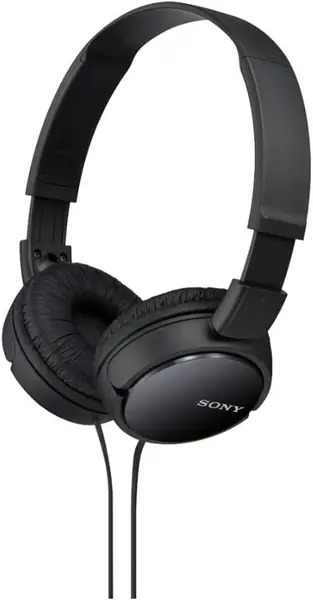
The cheapest pair in this guide is also one of the easiest to live with. The Sony MDR-ZX110 weighs 135 g, swivels its cups flat against the headband, and runs loud from a phone on 24 ohm impedance and 98 dB sensitivity, so nothing here asks anything of your gear. We kept a pair in a jacket pocket and never once thought about an amp or a dongle.

Sound is bass-forward and clear enough for the money, with a closed-back cup that takes the edge off an office. The top end is where the price shows: two taps in your phone's equalizer and a little treble lift opens it up considerably. On-ear pads press on the ear rather than around it, so a two-hour session is fine and a six-hour one is not, especially with glasses on.

The 3.94 ft cord is the other thing to know. It is a phone-and-pocket length rather than a lean-back-on-the-sofa one, and it is molded in, so the joint where it meets the cup is where to be gentle. There is no mic and no inline remote, which makes this a music-only pair — right for a commute or a desk, wrong for class or calls.

Pros

  • Runs loud from any phone at 24 ohm
  • 135 g with cups that swivel flat for a bag
  • Bass-forward sound that beats the price

Cons

  • Cable entry and swivel hinge are the wear points
  • No mic or inline remote
Our verdict

Buy it if you want a light, genuinely good-sounding pair for a phone and nothing more — we think it is the best value here as long as you treat the cable gently.

Check Latest Price
3

OneOdio Pro-10 Best for Studio and DJ Work

89 /100
TKZ Score Excellent

Key details

Wearing Style
Over-ear, swiveling cups
Driver Size
50 mm dynamic
Cable Jacks
3.5 mm and 6.35 mm, detachable
Shared Audio Port
Second 3.5 mm output
View on Amazon

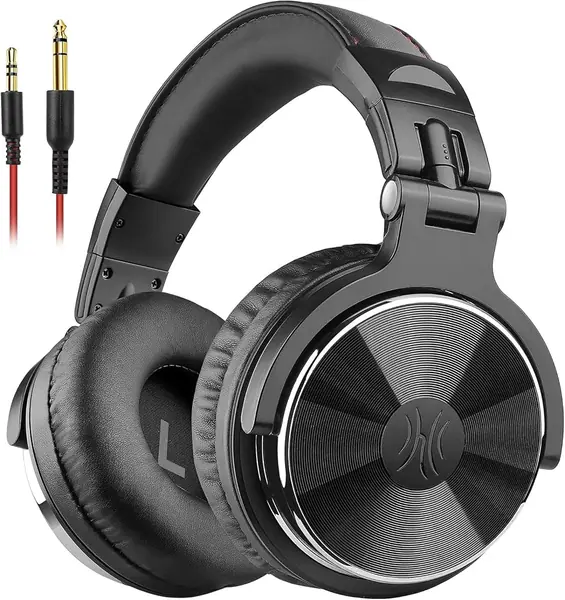
A second 3.5 mm socket lets another pair of headphones plug into yours and hear exactly what you hear. That share port is the most distinctive thing about the OneOdio Pro-10, and it tells you who the pair is for: someone at a keyboard, a mixer, or a turntable with another person in the room.

The rest of the hardware points the same way. Detachable cables cover both 3.5 mm and 6.35 mm jacks, the 50 mm drivers move a lot of air, the cups swivel 90 degrees so you can cue a track with one ear free, and a protective case comes in the box. At 32 ohm they still run straight from a phone, which is not a given at this size.

We rate them as the studio pair in this guide rather than the everyday one, and the reasons are weight and clamp: 415 g is a lot of headphone after an hour, and the headband grips hard enough that wider heads feel it first. Months of use is where they separate most — the yoke and headband are what eventually give out. For monitoring, mixing, and passing a track to a bandmate, none of that is a dealbreaker. For a four-hour flight, it is.

Pros

  • Detachable cables for both 3.5 mm and 6.35 mm
  • Share socket lets a second pair plug in
  • 50 mm drivers deliver strong, clean bass

Cons

  • 415 g gets heavy after an hour
  • Yoke and headband are the long-term wear points
Our verdict

Our pick for studio and DJ work: the share socket and dual detachable cables solve problems nothing else here touches, and the weight only matters over long sessions.

Check Latest Price
4

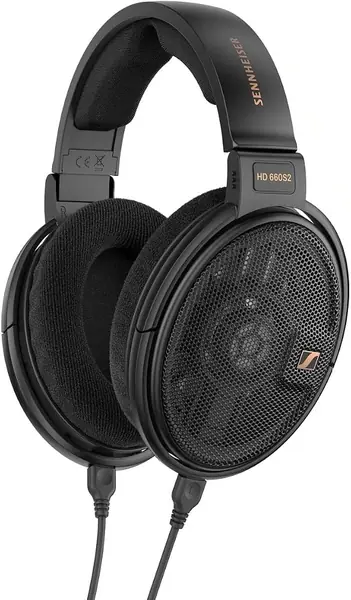
Sennheiser HD 660S2 Best Audiophile Sound

88 /100
TKZ Score Excellent

Key details

Wearing Style
Over-ear, open-back
Impedance
300 ohm
Weight
10.6 oz
Cables
Detachable 1.8 m, 6.3 mm and 4.4 mm
View on Amazon

300 ohm is the number that decides whether the Sennheiser HD 660S2 is for you. Straight out of a phone it makes sound, but a thin, restrained version of it. Given a proper DAC and amp, the low end reaches down to the 27.5 Hz piano notes and 45 to 60 Hz kick drums the 42 mm transducers were built to move, and the whole recording opens up.

Properly driven, it is the most revealing pair in this guide by a wide margin. The open-back cups throw a wide stage, instrument separation is the cleanest of anything here, and the treble stays nimble instead of sharp — this is the pair we reach for when we want to hear the room a record was made in. It is also the pick that depends most on the rest of your chain, and a bare laptop jack does not do it justice.

Comfort is the quiet surprise: 0.3 kg with breathable plush pads does not turn into a clamp problem over a long evening, and the fit holds firm on small heads and large ones alike. What you give up is privacy, because open-back means the room hears your music and you hear the room. Two detachable cables come in the box, 6.3 mm and 4.4 mm balanced, which tells you Sennheiser expects a desktop system rather than a phone.

Pros

  • Open-back stage with deep, controlled sub-bass
  • Breathable pads stay comfortable for hours
  • Two detachable cables, including 4.4 mm balanced

Cons

  • Needs a dedicated amp to sound its best
  • Open-back leaks sound in both directions
Our verdict

Worth it only if you own a DAC and amp and listen in a quiet room — we were struck by how much detail it pulls out when it is properly driven.

Check Latest Price
5

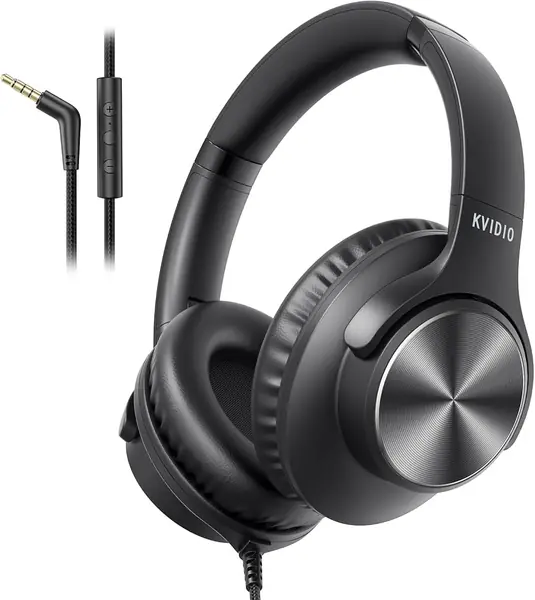
KVIDIO Wired Headphones Best for Kids and School

86 /100
TKZ Score Excellent

Key details

Wearing Style
Over-ear, foldable
Driver Size
40 mm dynamic
Cable
4.9 ft, tangle-free
Inline Controls
Volume buttons and mic
View on Amazon

If the headphones are headed into a backpack alongside a tablet, the KVIDIO pair is the one we hand over. A five-position sliding headband and cups that rotate 90 degrees cover a wide range of head sizes, the 4.9 ft nylon cord is flat enough to survive being stuffed in a bag, and the comfort feedback is the most consistently warm of anything in this guide.

The 40 mm drivers and 32 ohm impedance make it easy to drive from a school tablet or a laptop, and the sound is clear enough for video lessons and music without pretending to be more than it is. The inline remote carries a microphone and a volume rocker, which is the whole reason to pick this over a plainer budget pair — with one caveat. The volume buttons do not work on desktops and on some laptops, so plan on adjusting volume on the device itself.

Comfort is where it earns its keep. The cups sit over the ear rather than on it, the headband adjusts through five stops, and the whole thing is light enough that kids leave it on through a lesson. Durability is the part to watch: the cord and the folding joints are what go first, and at this kind of money that is a replace-don't-repair situation rather than a disappointment.

Pros

  • Inline mic and volume buttons for classes and calls
  • Five-position headband and swivel cups fit kids
  • 4.9 ft tangle-free nylon cord

Cons

  • Volume buttons do not work on desktops and some laptops
Our verdict

The pair we hand a kid: light, adjustable, over-ear, and cheap enough to replace without an argument, with a mic for classes.

Check Latest Price
6

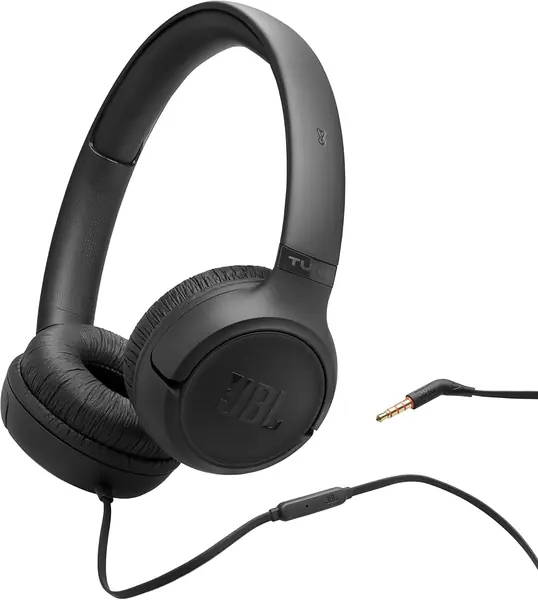
JBL Tune 530 Best for Commuting and Calls

83 /100
TKZ Score Excellent

Key details

Wearing Style
On-ear, closed-back
Impedance
30 ohm
Driver Size
33 mm dynamic
Inline Controls
One-button remote and mic
View on Amazon

Flat cable, folding cups, just over five ounces: the JBL Tune 530 is built for the bottom of a bag. The cups fold up into the headband, the 3.5 mm cable is the flat ribbon type that refuses to knot itself, and the whole thing weighs less than a paperback. We liked how little room it takes up next to a laptop, which matters more on a commute than anything on a spec sheet.

Sound follows the JBL house recipe: 33 mm drivers with a Pure Bass tuning and 30 ohm impedance, easy to drive from a phone. If you have liked other JBL headphones you will recognize it — extra low end under vocals that stay forward. A microphone and one button on the cable handle calls and play/pause, and a long press brings up your phone's voice assistant.

Two things to know before you buy. The single button means no volume control on the cable, so you will reach for the phone. And on-ear cups sit on the ear rather than around it, so a long flight makes itself felt; the folding design is the reason to accept that. For a commute, a walk, and calls at a desk, it is a light, tidy pair that disappears into a bag.

Pros

  • Folds flat and weighs about five ounces
  • One-button remote with mic for calls
  • Flat cable resists tangling

Cons

  • One button means no inline volume
  • On-ear cups press on larger ears
Our verdict

A folding on-ear for a commute bag — we like the flat cable and the mic, and we accept the one-button remote as the cost of the design.

Check Latest Price

How We Tested Wired Headphones, From Desk to Commute

We started by pulling together more than 40 wired models currently sold, then cut the list using things a shopper can verify before buying: whether the plug is 3.5mm, 6.3mm, or both; whether a quarter-inch adapter comes in the box; whether the cable detaches or is fixed; whether there's an inline mic and volume control; how the cups fold; and how the price spread across budget, everyday, and studio tiers. That left 12 pairs, which we bought at retail and used for eight months.

Testing happened where wired headphones actually live: a standing desk for full workdays of calls and playlists, a commuter train at rush hour, a home setup for tracking and mixing, a backpack that got tossed around a classroom hallway, and a few long flights.

We measured every cable end to end, then wrapped it around a hand thirty times to see how fast it kinked. We pushed each plug sideways in a laptop jack and listened for dropouts. Every pair ran from a phone, a laptop, and an audio interface, partly to see whether the inline volume control did anything at the source. To judge leakage, a deskmate sat two feet away and reported what they could hear; to judge isolation, we wore each pair in a loud kitchen and noted what got through. Fit and clamp were checked at the two-hour mark and again at six, and we kept notes on pad wear and headband flex through months of folding and unfolding.

How to Choose Wired Headphones

On-Ear or Over-Ear Comes First

On-ear cups rest against the ear; over-ear cups close around it. Over-ear is the more comfortable choice for long sessions and the better isolator, because the pad seals against the skull instead of pressing the ear flat. On-ear is lighter and packs smaller, which is why the Sony MDR-ZX110 and JBL Tune 530 disappear into a bag so easily. The trap is that a listing's over-ear claim says nothing about the size of the cup opening — a small cup becomes an on-ear that pinches. If you wear glasses or listen for more than an hour at a stretch, put a roomy over-ear pair at the top of your list.

Match Impedance to Your Jack

Impedance tells you how hard a pair is to drive. Anything in the 24 to 50 ohm range, like the Sony MDR-ZX110 at 24 and the Audio-Technica ATH-M20x at 47, reaches full volume from a phone or a laptop headphone jack with nothing in between. A 300 ohm pair such as the Sennheiser HD 660S2 needs a dedicated amp; a phone produces sound, but a thin, quiet version of it. If you are shopping at the top of the range, budget for the amp at the same time as the headphones, because the headphone is only half of the system.

The Cable Is What Fails

Nearly every dead pair of headphones dies at the cable: a bent plug, a frayed entry at the cup, or wire that has been wrapped around the earcups a thousand times. A detachable cable is the one genuinely future-proof feature here — the OneOdio Pro-10 and the Sennheiser HD 660S2 both use them, and a replacement costs a fraction of a new pair. With a molded cable, coil it loosely and never let the cord hang from the plug. A four- to five-foot cable suits a phone in a pocket; anything longer is for a desk.

Closed-Back or Open-Back

Closed-back cups seal the driver against the ear, keeping your music in and the room out — the right choice for an office, a train, or a shared apartment. Open-back designs like the Sennheiser HD 660S2 trade that isolation for a wider, airier stage, and they leak in both directions: the room hears you, and you hear the room. Where you listen decides this one. If other people are nearby or you need to hear a train announcement, buy closed-back. Open-back belongs behind a door that closes.

Frequently Asked Questions

Final Verdict

Buy the Audio-Technica ATH-M20x if you want one pair for music, video, and games at a desk or on a couch. The closed-back seal and the clear, bass-forward tuning make it the safest choice in this group, and at 47 ohm it needs nothing but the jack you already have.

If budget is the deciding factor, the Sony MDR-ZX110 gets a phone loud and clean for far less, and you accept a shorter molded cable and a swivel hinge worth watching. And if you own a DAC and amp and listen behind a closed door, the Sennheiser HD 660S2 is the pair that rewards the rest of your chain.