Best Sennheiser Headphones of 2026

Open-back headphones are a strange thing to recommend to a friend: they leak sound, they let the room in, and they often sound better than anything that seals you off from it. That trade-off is the whole decision. At a desk, an open pair gives you a stage that seems to stretch past your ears; on a train or beside a sleeping partner, only a closed pair will do.

I've spent the past six months in eight pairs from this lineup — full workdays, late-night listening, calls, games — and open versus closed mattered more than any spec on the box. Weight and clamp came second: a pair that feels fine for twenty minutes can be a headache by hour three, and the ones you forget you're wearing almost always spread the pressure with wide, soft pads.

Two things I'd tell a first-time buyer: detachable cables and replaceable ear pads are the difference between headphones you keep for a decade and ones you replace in two years. And wireless noise cancellation has gotten close enough that battery life and a clean handoff between phone and laptop now matter more than the last word in detail. Below, the picks are grouped by where you'll actually use them.

The Best Sennheiser Headphones

1

Sennheiser HD 599 Best Overall
93 /100
TKZ Score Outstanding

Key details

Impedance
50 ohm
Design
Open-back over-ear
Weight
1.57 lb
Cable
Detachable 3 m and 1.2 m
View on Amazon

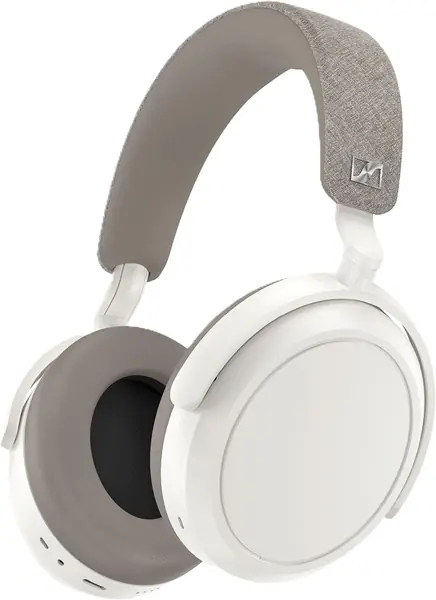
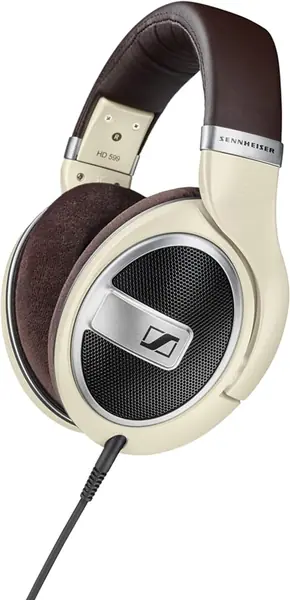
The HD 599 is the Sennheiser we reach for when the goal is a long, easy listen rather than analysis. Its 50-ohm load is low enough for a laptop or a phone dongle to drive to a comfortable volume, and the open-back cups give music room to spread out. We like that combination because it keeps good sound from becoming a headphone-plus-amp project. The ivory finish and brown headband also give it a warmer look than the black studio models.

Comfort is the reason it earns the top spot. The velour pads sit around the ear rather than pressing on it, and the headband spreads weight instead of concentrating it on the crown. Vocals come through cleanly, and the bass has enough body for rock and electronic music without blunting detail. The tuning is more forgiving than the HD 560S's neutral monitor sound, which makes it easier to live with across poor recordings.

Two detachable cables are included: a long 3-meter run for a desk and a shorter 1.2-meter cable for a phone or laptop. We appreciate the short cable because it turns a desktop headphone into something you can use at a kitchen table without a coil of excess wire. The open-back design is the boundary: this is a quiet-room headphone, not a commuter. For that setting, it is the least fussy way into the open-back sound that makes Sennheiser famous.

Pros

  • Easy to drive from a laptop or phone
  • Plush velour pads for long sessions
  • Wide, forgiving open-back sound

Cons

  • Clamp may feel firm on larger heads
Our verdict

We recommend the HD 599 to anyone who wants an easy, comfortable open-back headphone for home listening without building a desktop rig around it.
Check Latest Price
2

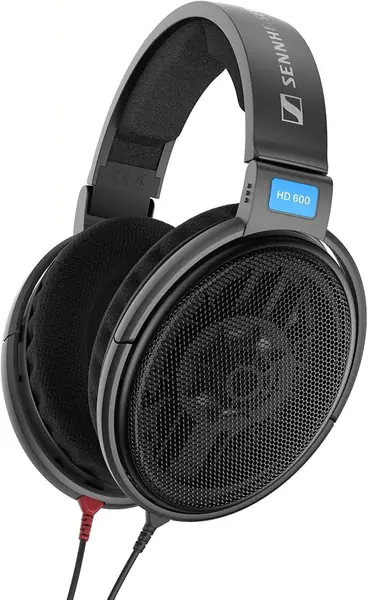
Sennheiser HD 600 Best for Critical Listening

92 /100
TKZ Score Outstanding

Key details

Impedance
300 ohm
Design
Open-back over-ear
Cable
Detachable, Kevlar-reinforced
Sensitivity
97 dB
View on Amazon

The HD 600's 300-ohm impedance is the first thing to understand. Plugged into a phone or a weak laptop jack, it can play loudly enough but sounds polite and flat; give it a dedicated DAC/amp and the midrange opens into one of the most natural presentations in this group. It is not a basshead headphone. The low end is present and tuneful, but the focus is on voices, strings, and the shape of a recording. The open metal mesh and black-gray finish look utilitarian in a way we like.

What keeps it from being the default is the system around it. The HD 600 rewards a desk with a proper amp, and it is not the headphone to grab for a commute or a noisy office. If you mostly listen from a phone, the HD 599 is the easier buy. At a desk with a DAC/amp, its midrange detail and lack of fatigue hold up over hours. The detachable Kevlar-reinforced cable keeps a worn cable from ending the headphone's life, and the neutrality is the point.

We also appreciate that it does not try to add excitement with boosted treble. On acoustic music and well-recorded vocals, that restraint sounds expensive; on poor files, it can be unforgiving. For critical listening, it remains the reference against which the rest of this list makes sense.

Pros

  • Natural, neutral mids for voices and acoustic music
  • Comfortable over long sessions
  • Detachable cable and sturdy open-frame build

Cons

  • Clamp is firm out of the box
Our verdict

The HD 600 is the reference-sound pick for listeners who already have a proper amp and want neutral mids that make voices and acoustic instruments feel honest.

Check Latest Price
3

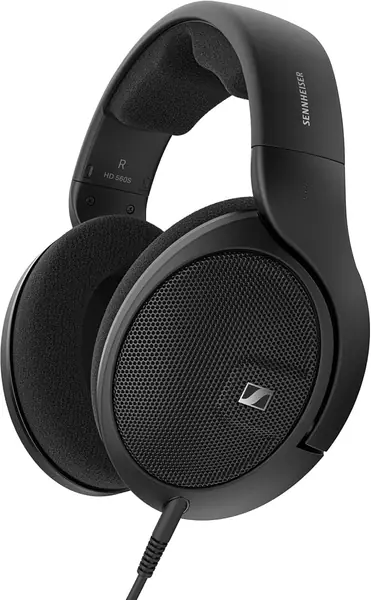
Sennheiser HD 560S Best for Gaming and Detail

91 /100
TKZ Score Outstanding

Key details

Impedance
120 ohm
Design
Open-back over-ear
Frequency Range
6 Hz to 38 kHz
Driver
38 mm dynamic
View on Amazon

Compared with the HD 599, the HD 560S trades some warmth for precision. The angled 38 mm drivers throw a wide, well-defined stage, and footstep cues in games are easy to place. We also like the neutral balance for editing and for music with a lot of layered instruments; it does not smudge the midrange to make bad recordings sound friendlier. The 120-ohm load is more demanding than the HD 599's 50-ohm design, but a laptop or a small dongle can still drive it to sensible levels. A dedicated amp gives it more grip, especially in the low end.

The detachable cable is a practical detail we appreciate because the HD 560S is the kind of headphone people keep at a desk for years. The open-back cups keep the sound airy and your ears cool, which matters during long gaming sessions. If your room is noisy or you need isolation, this is not the one; the HD 280 Pro is the better fit. For a quiet desk, it is the more precise alternative to the HD 599.

The low end is leaner than the HD 599's, which is the trade for that precision. On games, the extra separation is worth it; on bass-heavy music, some listeners will miss the warmth. We reach for the HD 560S when we want to hear what is in the mix, not when we want the mix to hug us back.

Pros

  • Wide, precise stage for gaming and detail
  • Neutral balance that reveals recordings
  • Detachable cable simplifies replacement

Cons

  • Treble can sound sharp on bright recordings
  • Clamp is tight out of the box
Our verdict

The HD 560S is the pick for gamers and detail lovers who want a more neutral, wider stage than the HD 599 without jumping to the HD 600's price and amp demands.

Check Latest Price
4

Sennheiser MOMENTUM 4 Best Wireless Value

90 /100
TKZ Score Outstanding

Key details

Type
Wireless over-ear
Weight
10.3 oz
Battery
Up to 60 hours
Noise Control
Adaptive ANC
View on Amazon

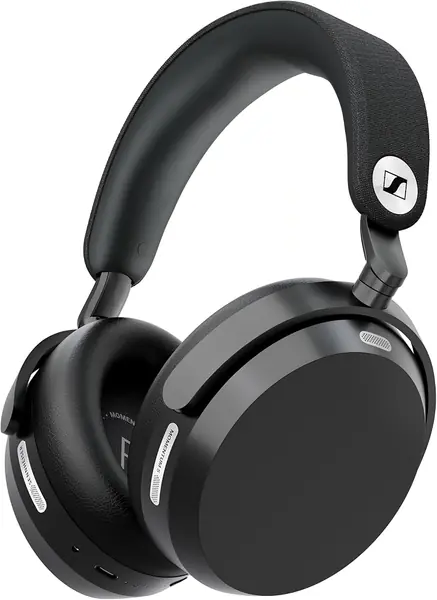
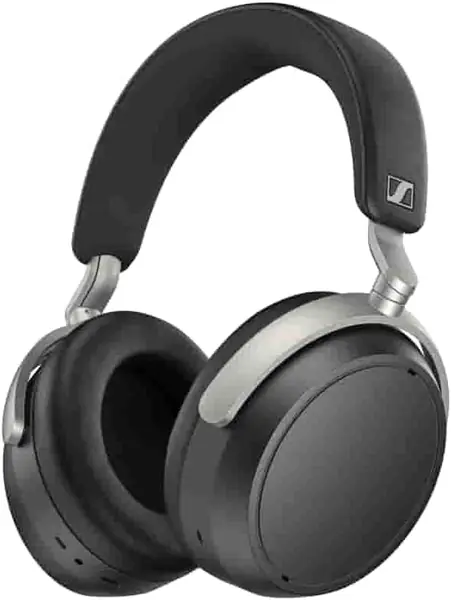
Battery life is the reason the MOMENTUM 4 makes sense as a daily wireless headphone. Sennheiser rates it at up to 60 hours with ANC, which means most people can charge weekly rather than nightly. The 293 g weight is light enough to wear through a workday, and the padded headband keeps pressure off the crown. The sound is full and clear, and the app's EQ gives you a way to tame or boost the low end without reaching for another pair.

Adaptive ANC and transparency are the features that make it a daily headphone. The ANC handles steady office noise and engine drone; transparency lets you order coffee without pulling the cups off. The touch controls are easy to remember, and the app is where the useful tuning lives. The earcups fold flat for travel, and the case is sturdy enough to live in a backpack.

We prefer the MOMENTUM 4 to the more expensive MOMENTUM 5 for most people because it covers the same everyday jobs without asking you to learn a new control scheme. The sound is not the last word in detail, but it is musical and easy to listen to for hours. If you want a wireless Sennheiser for the commute and the desk, this is the easiest transition.

Pros

  • Up to 60 hours of battery with ANC
  • Comfortable for long workdays
  • App EQ and personalized sound

Cons

  • Bluetooth can drop when switching devices
  • ANC is not the strongest in this group
Our verdict

The MOMENTUM 4 is the wireless Sennheiser we recommend for commuters and workdays, with battery life that makes charging an afterthought and sound that undercuts its price class.

Check Latest Price
5

Sennheiser MOMENTUM 5 Best Noise Canceling

89 /100
TKZ Score Excellent

Key details

Type
Wireless over-ear
Weight
10.2 oz
Battery
Up to 57 hours with ANC
Noise Control
Hybrid adaptive ANC
View on Amazon

The MOMENTUM 5 is what you look at when the MOMENTUM 4's noise cancellation leaves too much of the world in. Sennheiser rates the hybrid adaptive ANC as up to three times stronger in the midrange than the MOMENTUM 4, which is the range that covers voices and office chatter. The 57-hour battery with ANC is still long enough to forget the charger on a weekend trip.

The detail we appreciate most is the replaceable battery. Wireless headphones usually become disposable when the cell ages; this one is designed to be opened and serviced, and the ear pads swap too. The 290 g weight and balanced clamp make it comfortable with glasses, and the case is included. The sound is refined and clear, with treble that stays smooth rather than sharp.

The MOMENTUM 5 also adds Bluetooth 5.4 and a more polished feel than the MOMENTUM 4, but it is not a night-and-day upgrade in every area. The app is where the EQ and personalization live, so give it a few minutes before you judge the sound. If you travel often and want the longest-lived wireless pair here, this is the one.

Pros

  • Stronger ANC than the MOMENTUM 4
  • Replaceable battery and ear pads
  • Up to 57 hours with ANC

Cons

  • Costs more than the MOMENTUM 4
  • Controls take some learning
Our verdict

The MOMENTUM 5 is the premium wireless pick for travelers who want stronger ANC, a replaceable battery, and a more polished feel than the MOMENTUM 4.

Check Latest Price
6

Sennheiser HD 280 Pro Best Closed-Back Studio Value

88 /100
TKZ Score Excellent

Key details

Impedance
64 ohm
Type
Closed-back over-ear
Cable
Coiled 3.3 to 9.8 ft
Attenuation
Up to 32 dB
View on Amazon

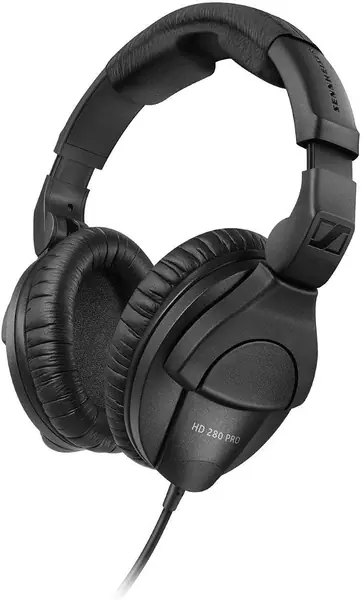
The HD 280 Pro's job is to shut out the room. Sennheiser claims up to 32 dB of passive attenuation, and the closed cups plus the clamping fit make that believable in a loud office or tracking space. We like it for the same reason studios do: it lets you hear the take, not the air conditioner. The sound is clear and balanced rather than exciting. Bass is present but not boosted, and the mids stay forward enough for speech and instruments to cut through.

The replaceable earpads, headband padding, and cable are the practical part. This is a headphone you can keep running instead of replacing when one wear item gives out. We also appreciate the coiled cable at a desk because it stays out of the way without a puddle of slack. The closed-back design keeps sound from leaking into a microphone, which is why it remains a sensible first studio headphone.

It is a studio tool, not a lifestyle headphone, and that is the point. For the price of a budget pair, it gives you a replaceable set of parts and enough isolation to work in a room with other people. If you need a closed-back Sennheiser for tracking, editing, or a noisy shared office, start here.

Pros

  • Up to 32 dB passive isolation
  • Replaceable pads, padding, and cable
  • Clear, balanced closed-back sound

Cons

  • Heavy for long listening sessions
  • Coiled cable adds weight and limits movement
Our verdict

The HD 280 Pro is the budget closed-back workhorse for recording, editing, or any noisy room where isolation matters more than audiophile air.

Check Latest Price
7

Sennheiser HD 25 Best DJ and On-Ear

87 /100
TKZ Score Excellent

Key details

Impedance
70 ohm
Type
Closed-back on-ear
Weight
4.94 oz
Cable
Detachable single-sided
View on Amazon

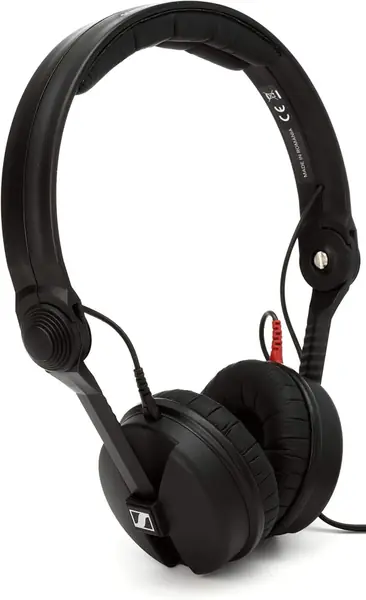
The HD 25 is not trying to be a living-room audiophile headphone. It is a DJ tool: light on the head, loud from a mixer, and closed enough to cue the next track over a club system. The 140 g weight disappears on the head, which matters when you are wearing it for a full set. The earcups swivel for one-ear cueing, and the single-sided detachable cable releases instead of yanking the cup off your ear if it snags.

We like it most for the way it handles pressure. The high 120 dB sensitivity means it gets loud from almost anything, so watch the volume, but it also means a phone or a small mixer can drive it without strain. The sound is punchy and direct, with strong mids and enough bass to feel the kick without masking the vocal. The cable detaches, the jack adapter screws on, and replacement parts are part of the design.

This is a specialist, and it is very good at its specialty. It is not the headphone to choose for a quiet listening session, but it is not meant for that. For cueing, portable DJ use, and a headphone that survives a bag, the HD 25 earns its place.

Pros

  • Light 140 g on-ear design
  • High output from mixers and phones
  • Detachable cable and replaceable parts

Cons

  • On-ear clamp can become uncomfortable
  • Plastic build feels less premium
Our verdict

The HD 25 is the DJ and on-ear pick: light, loud, and built with replaceable parts for people who cue tracks in loud rooms.

Check Latest Price
8

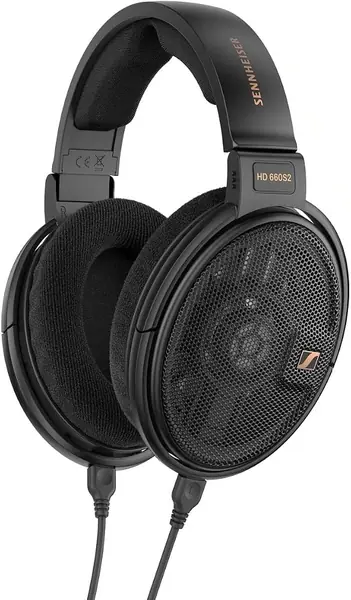
Sennheiser HD 660S2 Best for Premium Open-Back Listening

86 /100
TKZ Score Excellent

Key details

Impedance
300 ohm
Design
Open-back over-ear
Frequency Range
8 Hz to 41,500 Hz
Driver
42 mm dynamic
View on Amazon

The HD 660S2 takes the HD 600 family's neutral mids and adds sub-bass you can feel on electronic and orchestral music. Sennheiser tunes the 42 mm transducers for a claimed 27.5 Hz low note, and on the right recording the extra weight at the bottom is obvious without turning the mids muddy. At 300 ohm, it wants the same kind of amp as the HD 600; a phone will make sound, but not the sound you paid for.

We like the 0.3 kg weight and the open, breathable pads for long sessions, and the detachable cables in both 6.3 mm and 4.4 mm are a nice touch for balanced setups. The build feels premium in the hand, with aluminum touches and a carry pouch. The question is whether the extra bass and refinement justify the jump over the HD 600. For most listeners, the HD 600 is the smarter first stop; the HD 660S2 is the upgrade for someone who has already lived with the family and wants more low-end reach.

The treble is more polite than the HD 560S's, and the stage is wider than the closed-back models here, so it works as a long-session open-back for acoustic music, jazz, and games. It is also the pick here if you want the HD 600's honesty with a little more physical bass. It does not replace the HD 600 for everyone; it gives the family a different flavor.

Pros

  • Deeper sub-bass than the HD 600
  • Comfortable open-back design for long sessions
  • Balanced and single-ended cables included

Cons

  • Open-back design leaks sound
Our verdict

The HD 660S2 is for the listener who wants the HD 600's honesty with deeper sub-bass and already owns an amp that can drive 300-ohm headphones.

Check Latest Price
9

Sennheiser HD 490 PRO Best for Mixing and Producing

85 /100
TKZ Score Excellent

Key details

Impedance
130 ohm
Design
Open-back over-ear
Weight
7.05 oz
Frequency Range
5 Hz to 36,000 Hz
View on Amazon

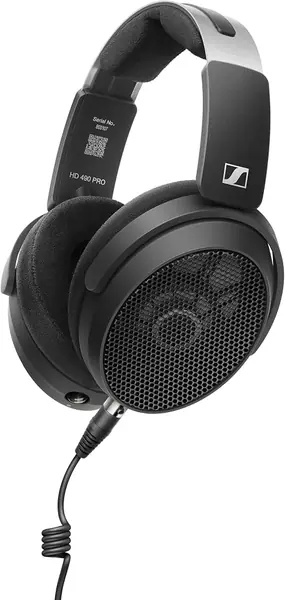
The HD 490 PRO comes with two sets of ear pads, one aimed at producing and one at mixing. Sennheiser tunes them for different jobs, and swapping them is quick enough that the headphone can cover both writing and final checks. The open-back frame keeps the stage wide and the mids honest, which is what you want when you are placing instruments rather than enjoying a bass boost.

We like that flexibility in a studio headphone because one pair can cover more than one session. It is also unusually light at 200 g, and the washable, replaceable pads are a practical answer to studio grime. The 130-ohm load is easier to drive than the 300-ohm models, but it still benefits from an interface or amp. The sound is crisp and detailed, with a larger stage than the closed-back studio models here.

This is a studio tool first. For a home listener who wants one open-back for music, the HD 600 or HD 660S2 is the more natural fit. For a project studio, though, the pad system and low weight are genuinely useful, and the replaceable pads make more sense than a fancy case. It earns a place as a specialist rather than the default.

Pros

  • Two swappable pad sets for producing and mixing
  • Light 200 g build with washable pads
  • Wide, honest open-back stage

Cons

  • Open-back design leaks sound
  • Pricey for home listening
Our verdict

The HD 490 PRO is a studio-first open-back for mixing and producing, with swappable pads that let you shift the balance without buying a second headphone.

Check Latest Price
10

Sennheiser HDB 630 Best for Wireless Audiophile Listening

80 /100
TKZ Score Excellent

Key details

Type
Wireless and wired over-ear
Battery
Up to 60 hours
Noise Control
Adaptive ANC
Included
BTD 700 dongle
View on Amazon

The HDB 630's most interesting feature is the included BTD 700 Bluetooth dongle. It gives you a dedicated high-resolution wireless path to a laptop or desktop, which is a more reliable answer than hoping your computer's built-in Bluetooth supports the codec you want. We like the idea because it turns a wireless headphone into a desk-friendly system without a cable.

The parametric EQ is the other reason to look at it. Most headphone apps give you a few sliders; this one lets you set frequency, width, and filter type, which is useful if you know what you want to correct. The 60-hour battery and 10-minute fast charge for up to 7 hours are practical for travel, and the adaptive ANC and transparency cover the basics. The 42 mm transducer is tuned for a neutral, open sound rather than a club-style bass lift.

The HDB 630 is a more complex headphone than the MOMENTUM 5. The tuning lives in the app, and the dongle is another thing to keep track of. That is the trade for the control it offers. If you want the simplest wireless Sennheiser, the MOMENTUM 4 or 5 is easier. The HDB 630 is for the listener who enjoys tuning and wants wireless without giving up audiophile adjustment.

Pros

  • Included BTD 700 dongle for hi-res wireless
  • Parametric EQ for precise tuning
  • Up to 60 hours with fast charging

Cons

  • Premium price
Our verdict

The HDB 630 is a specialist wireless pick for audiophiles who want a dongle-backed hi-res connection and deep EQ control, not the simplest everyday headphone.

Check Latest Price

How We Chose and Tested Eight Pairs

We started with the full lineup and sorted it into three jobs — open-back listening at a desk, closed-back monitoring and DJ work, and wireless noise canceling for travel — then cut anything that duplicated a stronger pick or looked overpriced for its parts. Eight made the cut.

Over six months, each pair got at least a week of daily use: a familiar playlist of well-recorded tracks, an evening or two of games and podcasts, and a long call or two. We listened for bass depth, whether vocals sat forward or got buried, and whether the treble turned sharp after an hour. We also weighed every pair and wore it through a whole workday, noting clamp at hour three, whether the pads went hot, and how they sat over glasses.

Isolation we judged by ear in places that punish you — a kitchen with the dishwasher running, a packed commuter train, an open-plan office where someone takes every call on speaker — and for the open pairs, we had a colleague sit three feet away to hear how much leaked.

Then we handled them like owners do: detaching and reattaching cables, folding the collapsible models, checking that replacement pads are actually sold, and feeling for play in the hinges. On the wireless pairs we ran the battery down with cancellation on and off, timed a fast charge, and paired alternately to a phone and a laptop to see whether they switched cleanly or needed coaxing. Value was the final filter — whether each pair earned its spot against the one above it.

How to Choose Sennheiser Headphones

Start With Open-Back or Closed-Back

Open-back models like the HD 599, HD 600, HD 560S, HD 660S2, and HD 490 PRO let air move behind the driver. That is what gives them their wide, unboxed stage, and it is also why they share your music with the room and let noise in. Choose open-back for a quiet desk, a dedicated listening chair, or gaming in a private room.

Choose closed-back when you need isolation for tracking, commuting, or a shared space. The HD 280 Pro and HD 25 keep sound in and room noise out, which makes them more practical in a busy house or a studio with other people. If you need to hear a doorbell or a baby monitor, open-back can be a feature rather than a flaw.

Decide Between Wired and Wireless

Wired Sennheisers give you more sound per dollar and no charging, but they tether you to a source. Wireless models like the MOMENTUM 4 and MOMENTUM 5 add ANC, transparency, and multipoint, which is the difference between hearing engine noise and not. The HDB 630 sits between the two with a wireless design and an included dongle for desk use.

If most of your listening happens on a commute, in an open office, or on calls, wireless is the practical choice. If you sit still and want the last word in detail, spend the wireless premium on a wired model and a better amp.

Match Impedance to Your Gear

Impedance is the number that decides whether your phone or laptop can drive a headphone properly. The HD 599 at 50 ohm and HD 25 at 70 ohm are easy loads; the HD 560S at 120 ohm is still manageable but benefits from a dongle; the HD 600 and HD 660S2 at 300 ohm want a dedicated DAC/amp.

A high-impedance headphone can play loudly from a phone and still sound thin, so do not judge by volume alone. If you do not already own an amp, the HD 599 or MOMENTUM 4 is the safer first buy.

Check Comfort and Replaceable Parts

Clamp force and pad material matter more than a spec sheet can show. Velour pads, like those on the HD 599 and HD 600, stay cooler than leatherette, but they also collect dust and eventually flatten. The HD 280 Pro, HD 25, and HD 490 PRO are built with replaceable wear parts, and the MOMENTUM 5 has a replaceable battery; those details extend the useful life of a headphone far more than a fancy case.

If you wear glasses or have a larger head, treat a firm clamp as a try-before-you-commit feature, not a number to ignore.

Look Beyond the ANC Number

ANC is not one thing. Good cancellation of engine drone is different from good cancellation of voices, and transparency mode matters if you need to hear announcements. The MOMENTUM 5 is the strongest noise-canceling model here, while the MOMENTUM 4 covers the basics for less.

Codec support and multipoint are just as practical: aptX Adaptive and AAC help with latency and phone use, but a stable connection beats a longer codec list. If your laptop is the weak link, the HDB 630's included dongle is more useful than another codec badge.

Frequently Asked Questions

Final Verdict

For most people, the Sennheiser HD 599 is the best first purchase: it is comfortable, easy to drive, and open enough to show what the brand does well without demanding a desktop amp. If your listening happens on a commute, in a shared office, or on calls, the MOMENTUM 4 is the better fit; its battery life and ANC make the wireless trade-off worthwhile. The HD 600 remains the step-up for a quiet desk and a proper amp.