Best Over-Ear Wireless Headphones of 2026

I spent a decade commuting with earbuds jammed into my ears, convinced over-ear headphones were for people with bigger bags than mine. Then a two-hour train ride with a borrowed pair made the case for me: the cars were still loud, but I wasn't hearing them. That's the pitch — bigger drivers and a real seal around the ear — and the tradeoff is bulk, plus the risk of a headband that presses on your skull before the first hour is out.

Weight and clamping force matter more than any spec sheet lets on, and the battery figure printed on the box is usually the best case, measured at half volume with noise cancellation off. Over eight months, my team has worn 12 pairs on commutes, in open-plan offices, and through a lot of yard work and laundry.

We also watched the things nobody shops for until they've been burned: whether the hinge survives a tote bag, whether pairing holds when you switch from laptop to phone, whether the buttons still feel crisp in month eight. That's where value lives in this category, and it's what shaped the list below.

The Best Over-Ear Wireless Headphones

1

Bose QuietComfort Best Overall
94 /100
TKZ Score Outstanding

Key details

Weight
8.47 oz
Battery Life
Up to 24 hours
Noise Cancellation
Quiet and Aware modes
Wired Listening
3.5 mm detachable cable
View on Amazon

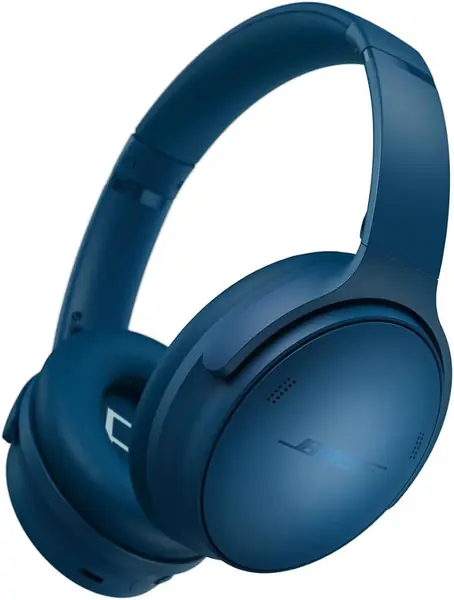
The QuietComfort folds at the headband and travels in a hard-shell case, which sounds like housekeeping until you've tried to fit a pair of Bluetooth headphones into a backpack next to a laptop. Folded, they take up about the room of a paperback. The cushions are the plush, memory-foam sort that sit around the ear instead of pressing on it, and at 240 grams the weight spreads across a padded band rather than landing in two hot spots.

That balance is why these are the pair we recommend first. Quiet mode drops the drone of an engine or an HVAC vent to a whisper, Aware mode lets a boarding announcement through without taking them off, and the two are worth setting up in the app before your next flight. Battery life is listed at 24 hours — roughly a week of commutes between charges — and there's a 3.5 mm cable in the box, so a dead battery on a long trip is an inconvenience rather than the end of your podcast.

Two things to know before you commit. The touch panel takes a few days of muscle memory, and the adjustable EQ lives in the app, so give it five minutes on day one. And if your household is entirely Apple and you want spatial audio with head tracking, the AirPods Max 2 do more of that; for everyone else, this is the safer purchase.

Pros

  • Plush cushions that stay comfortable for hours
  • Quiet and Aware modes for planes and offices
  • Folds into a hard-shell travel case
  • 24-hour battery and a 3.5 mm cable

Cons

  • Bluetooth can drop or stutter
  • Costs more than most pairs here
Our verdict

Our default recommendation: cushions soft enough for a full workday, noise cancellation that handles planes and open offices, and a hard case for the trip home.
Check Latest Price
2

Apple AirPods Max 2 Best for Apple Devices

93 /100
TKZ Score Outstanding

Key details

Weight
13.6 oz
Noise Cancellation
Adaptive Audio with Conversation Awareness
Chip
Apple H2
Spatial Audio
Personalized with head tracking
View on Amazon

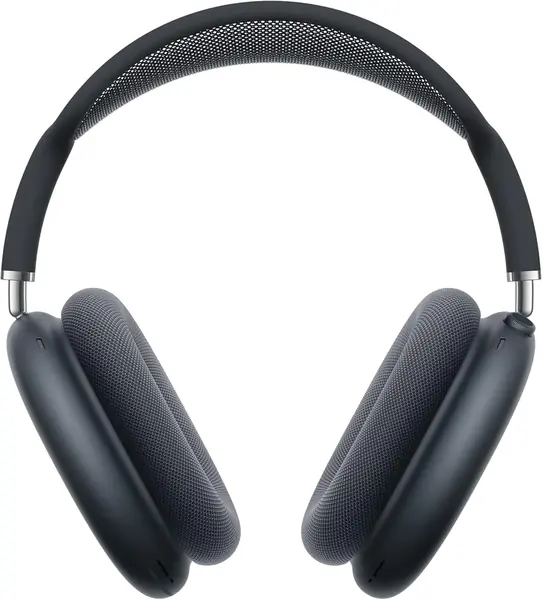
These sit at the top of this group's price range. What the money buys is Apple's H2 chip, noise cancellation claimed at up to 1.5 times the previous generation, Adaptive Audio that rebalances cancellation as your surroundings change, and personalized spatial audio with head tracking.

Setup is a tap, and moving between an iPhone, an iPad, and a Mac happens without opening a settings menu — nothing else here switches devices as cleanly. Conversation Awareness dropping the volume when you start speaking reads as a gimmick until you're ordering coffee with them on. And the sound is the most consistently praised of anything in this group, with bass that comes across as natural rather than boosted.

We think they're worth it only if your gear is Apple's; with an Android phone you're paying for features you can't use, and the Bose or Beats picks make more sense there. The 13.6 ounces are the other thing to weigh — fine at a desk, noticeable after two hours in the air, and worth an afternoon's trial before a long trip.

Pros

  • Instant switching across iPhone, iPad, and Mac
  • The most consistently praised sound in this group
  • Adaptive Audio and strong noise cancellation

Cons

  • Battery drains while they sit idle
  • Firm clamp that presses on larger heads
Our verdict

If your devices are all Apple, these are the ones: switching is instant, the sound is the most consistently praised in this group, and nothing else here integrates as cleanly.

Check Latest Price
3

Beats Studio Pro Best for Wired Listening

92 /100
TKZ Score Outstanding

Key details

Weight
9.2 oz
Battery Life
Up to 40 hours
Noise Cancellation
ANC with Transparency mode
Wired Listening
USB-C lossless and 3.5 mm
View on Amazon

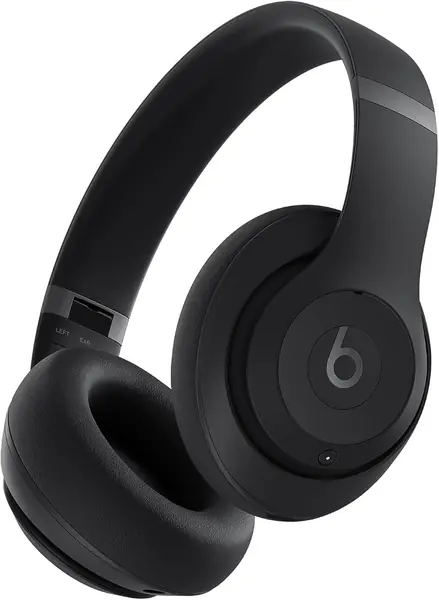
The line most people skip on the spec sheet is the one that matters: USB-C audio. Plug the cable into a laptop and the headphones take the signal directly rather than over Bluetooth, and there's a 3.5 mm cable as well for a seatback screen or an old receiver. For a travel pair, that's two ways to keep listening when wireless isn't an option.

That's why these hold a place here. Forty hours of playback means charging roughly once a week, Fast Fuel bails out a forgotten morning, and the hinges fold them flat into a bag. Noise cancellation and Transparency mode are both on board, spatial audio tracks your head, and one-touch pairing covers Apple and Android alike — unusual in a group where most pairs lean one way or the other.

Our hesitation is structural rather than acoustic: the headband and the hinge are where these fail when they fail, so treat the case as mandatory if you're hard on gear. That's the trade you're making, and it's the reason we stop short of calling them the default.

Pros

  • USB-C lossless audio plus a 3.5 mm cable
  • Up to 40 hours of playback with Fast Fuel
  • One-touch pairing with Apple and Android

Cons

  • Tight clamp on larger heads
  • Sound draws split opinions, especially on bass
Our verdict

The pair to buy if you want a cable option without giving up cancellation: USB-C lossless, a 3.5 mm jack, and 40 hours in a folding frame.

Check Latest Price
4

JBL Tune 720BT Best Budget

91 /100
TKZ Score Outstanding

Key details

Weight
7.76 oz
Battery Life
Up to 76 hours
Noise Cancellation
Passive sound isolation
Connectivity
Bluetooth 5.3 with multipoint
View on Amazon

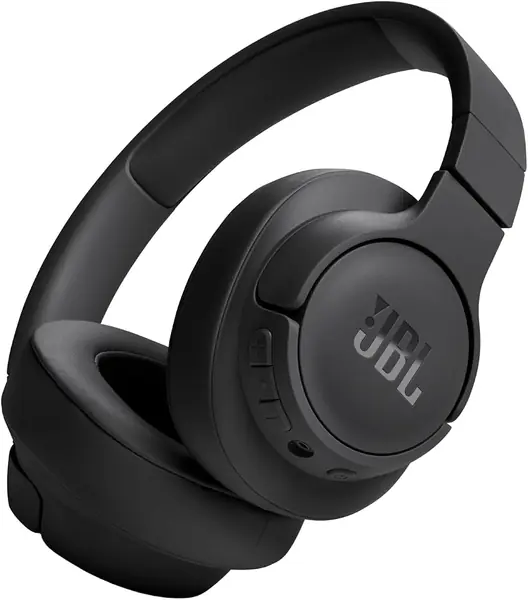
If you listen at a desk, in a kitchen, or on a walk and you don't need the world switched off, the Tune 720BT is where the money goes furthest. It's a plastic-and-memory-foam pair at 220 grams with 40 mm drivers, Bluetooth 5.3, multipoint pairing, a folding hinge, and a 3.5 mm cable in the box.

Seventy-six hours is the headline, and it's the part of these we trust most — a charge every month or two is realistic. The sound is bass-forward in the way JBL tunes everything, and the app's EQ presets are worth ten minutes if the default isn't to your taste. The cushions blunt an office or a kitchen; a jet engine is still a jet engine, which is the line between these and the noise-canceling picks.

Against the Bose pair you're trading cancellation, a case, and about 20 grams for a much smaller bill. That's the right trade if your listening happens at a desk rather than at 35,000 feet, and the clamp easing after a week makes it an easy one to live with.

Pros

  • Up to 76 hours of playback per charge
  • Light 220-gram build that folds flat
  • Multipoint pairing and a 3.5 mm cable

Cons

  • Snug clamp out of the box
Our verdict

Our budget pick: 76 hours of playback, a 220-gram build, and app EQ for a fraction of what the noise-canceling pairs here cost.

Check Latest Price
5

BERIBES WH202A Best Battery Life on a Budget

90 /100
TKZ Score Outstanding

Key details

Weight
0.38 lb
Battery Life
Up to 120 hours
Wired Listening
3.5 mm backup cable
Sound Modes
6 EQ presets
View on Amazon

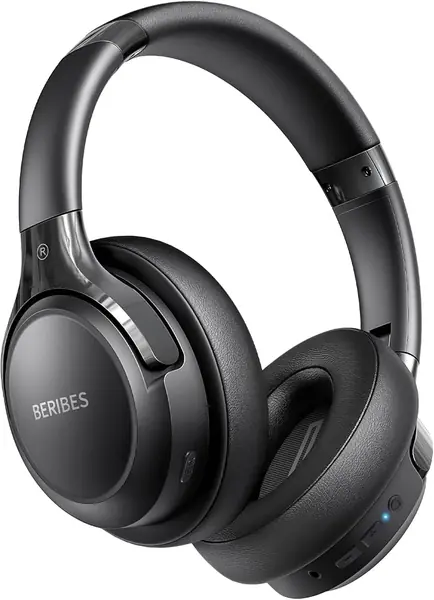
A 120-hour rating is easy to dismiss as marketing until you do the arithmetic: two hours a night for two months between charges. The 1,000 mAh battery and the 0.38-pound build are the whole pitch — these are headphones you can leave in a bag and forget about until you need them.

The rest is budget-normal: 40 mm drivers, six EQ presets cycled with a button, a folding hinge, a built-in mic, and a 3.5 mm cable in the box. The cushions are soft and the clamp is mild enough for a two-hour movie, and the sound is clear rather than rich — better suited to spoken word and background music than to bass-heavy playlists.

For the money, we think these are the least risky cheap pair in this group: comfort, battery, and build all land where they should, and nothing rattles or creaks. What they don't do is keep time. Audio can trail video by a noticeable beat, which rules them out for gaming and lip-synced video unless you reach for the cable.

Pros

  • Up to 120 hours per charge
  • Featherweight 0.38-pound build
  • Six EQ presets and a wired cable included

Cons

  • No active noise cancellation
Our verdict

The cheapest way to stop thinking about charging: a 120-hour rating, a 0.38-pound build, and enough clarity for podcasts, audiobooks, and background music.

Check Latest Price
6

TAGRY H5 Best for Calls and Travel

89 /100
TKZ Score Excellent

Key details

Weight
9.17 oz
Battery Life
Up to 140 hours
Noise Cancellation
Hybrid ANC, 48 dB rating
Calls
6-mic ENC array
View on Amazon

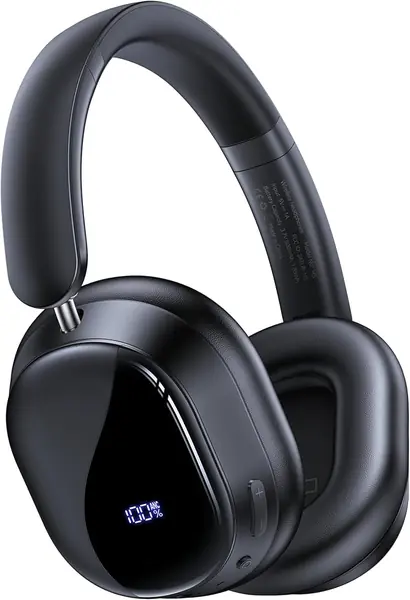
A battery percentage printed on the earcup sounds like a small thing, and it is — until you've spent a week guessing at four little LEDs on another pair. Read it at a glance, see you have 60 percent left, and stop thinking about charging.

The rest of the sheet is the most aggressive in this group: 140 hours of playback, a one-hour charge, hybrid noise cancellation rated at 48 dB, a six-microphone array for calls, a transparency mode, Bluetooth 6.4, a detachable 3.5 mm cable, and a 0.26 kg build. The warranty is listed at five years, longer than anything else here.

Treat the big numbers as claims rather than results. A 48 dB cancellation figure is a measurement made under lab conditions, and no pair at this price erases a cafe; the six-mic array is the part most likely to hold up, since call quality is where hardware like this earns its keep indoors.

We're high on the package and cautious about the history. This is a newer name with a shorter record than Bose or JBL, so how the hinges, pads, and firmware hold up over three years is still being written. Buy it for battery and calls from one pair; buy the Bose if you want the safer bet.

Pros

  • Up to 140 hours with a one-hour charge
  • On-earcup battery percentage display
  • Six-mic call array and detachable cable

Cons

  • Shorter track record than the big-name picks
Our verdict

A wildcard worth a look if marathon battery, clear calls, and a wired backup matter more to you than a long brand track record.

Check Latest Price
7

Picun B8 Backup Pair

88 /100
TKZ Score Excellent

Key details

Weight
12.3 oz
Battery Life
Up to 120 hours
Noise Cancellation
Passive isolation only
Connectivity
Bluetooth 5.3 with multipoint
View on Amazon

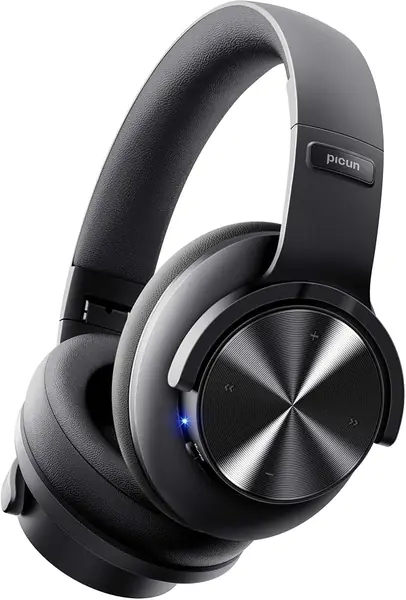
The B8 and the BERIBES pair cost about the same and claim the same 120 hours, and we think the Picun is the better-equipped of the two: multipoint pairing and touch controls are unusual at this end of the market, and they make switching between a laptop and a phone painless.

The rest is familiar budget fare done slightly better than expected — Bluetooth 5.3, 40 mm drivers, three EQ modes, a folding hinge, a 3.5 mm cable, and a 1,000 mAh battery that charges in about three hours. The PU leather cushions are the softest in the budget half of this group, and the touch panel handles volume and track changes without hunting for a button.

Two things to know. The isolation is passive, so a bus or a cafe comes right through, and the touch panel takes a week of muscle memory before the taps land where you mean them to. As a second pair that lives in a bag or at a desk, that's an easy trade to take.

Pros

  • Multipoint pairing at a budget price
  • Up to 120 hours per charge
  • Soft PU leather cushions

Cons

  • Heavy at 12.3 ounces
  • Hinges and pads are the wear points
Our verdict

A sensible second pair: multipoint, 120 hours, and the softest budget cushions here, as long as you don't need the world quieted.

Check Latest Price

How We Tested: 12 Pairs, Eight Months, One Very Long Commute

We started with spec sheets and retail listings for more than 40 pairs, then narrowed to 12 based on price spread, availability, and the features shoppers in this category actually compare — active noise cancellation, a folding hinge, multipoint pairing, EQ presets, and fast charging.

Comfort came first, because it decides everything else. We weighed each pair on a kitchen scale, then wore them through a full eight-hour workday — on the train, at a desk, through an afternoon of yard work — noting where the headband pressed and how hot our ears got, glasses on.

For sound and noise cancellation, we ran the same six-track playlist on every pair, from bass-heavy hip-hop to acoustic guitar to a podcast, listening for muddy lows and sharp highs. We checked cancellation with a sound level meter app on a subway platform and beside a running box fan, and noted whether nearby voices went silent or just got quieter.

Battery claims got their own test: full charge, continuous playback at half volume with cancellation on, until each pair died, so we could log actual hours against the number on the box. Durability and reliability played out in daily life — every pair rode in a tote bag next to keys, hinges got folded and unfolded all day, and we paired each one to both a laptop and a phone to see how cleanly the handoff went and whether the controls still responded months in.

How to Choose Over-Ear Wireless Headphones

Decide Whether You Want Active Noise Cancellation

Active noise cancellation uses microphones and inverse sound to erase steady low-frequency noise — engine drone, air handlers, the rumble of a train — and it is much weaker against speech and sudden clatter. That's why a well-cushioned passive pair can feel quieter in a kitchen than a cheap ANC model. If your loud is a plane or an open-plan office, pay for cancellation; two picks here have it. If your loud is a living room, the passive isolation on the JBL Tune 720BT or the BERIBES pair is enough, and you save the battery that cancellation eats.

Match Battery Life to How You Charge

Battery figures are quoted at moderate volume with cancellation off, so read a 24-hour rating as roughly a week of commutes rather than a month. A 76-hour pair like the JBL means charging monthly; the 120-hour BERIBES and Picun models stretch that to every couple of months. Long totals matter most if you're forgetful or travel without a cable.

Look at quick-charge support too. A few minutes on the cable buying hours of playback is more useful day to day than another ten hours of total capacity you'll never drain.

Fit Beats Every Specification

Cushion softness is not the same thing as a comfortable fit; clamping force decides it. A pair that grips hard feels secure in the first minute and aches by the second hour, and several picks here run snug, the JBL and Beats models in particular. Cup depth matters if your ears stick out, and glasses arms break the seal under any pad, which thins the bass before it ever hurts. Weight adds up as well: 220 grams disappears, 12 ounces does not. Buy somewhere you can return them and give a new pair a week before you judge the clamp.

Check the Wired Option Before You Fly

A 3.5 mm jack is the difference between using your headphones on a seatback screen and leaving them in the bag, and it also covers a dead battery and the audio lag some budget Bluetooth pairs show on video. The Bose, Beats, JBL, BERIBES, TAGRY, and Picun picks all list an analog cable. USB-C audio, which the Beats Studio Pro support for lossless playback from a laptop, goes a step further.

Multipoint pairing is the other connectivity feature worth having if you move between a phone and a computer all day — it lets a pair hold both connections instead of making you re-pair.

Budget for Wear, Not Just the Purchase

The parts that fail first are the ones that move: the folding hinge, the headband, and the ear pads. A hard case is not packaging snobbery — it's what keeps a folded pair from being crushed in a bag, and the Bose ships with one. Pads flatten and flake with sweat and hair products, so a model with easy-to-source replacements outlasts one with a slightly better spec sheet. If you're rough on gear, a cheap pair you can replace without wincing makes more sense than a premium one you baby.

Frequently Asked Questions

Final Verdict

For most people, the Bose QuietComfort is the pair to buy: the most comfortable set here, cancellation that handles a plane and an open office, and a case that keeps it intact in a bag. If your devices are all Apple, the AirPods Max 2 are worth the premium for instant switching and the best-supported sound in this group. And if you would rather spend the difference elsewhere, the JBL Tune 720BT does the everyday job — desk, kitchen, commute — for a fraction of the money, as long as you don't need the engines to disappear.