Best Wireless Earbuds with Wingtips of 2026

A wingtip is a tiny piece of rubber doing a big job: it tucks into your ear and keeps the bud from shifting when you talk, chew, or jog for the bus. The catch is that security can turn into pressure if the fin lands wrong, and no amount of tuning fixes a bud that feels like a pebble after an hour. The right pair disappears into your routine.

I have lost count of workouts interrupted by a bud skittering across the gym floor, which is why I check fit first. Sound quality and noise cancellation get the headlines, but a shallow seal makes bass thin and active noise cancellation about as useful as a closed window in a thunderstorm. Over the past six months, my team and I have worn 12 pairs through treadmill intervals, humid outdoor runs, and noisy commutes, weighing battery life, connectivity, controls, and value.

The picks below balance that locked-in feel with comfort, build quality, and app quirks, because a pair that sounds great but drops its connection or feels flimsy is not a bargain.

The Best Wireless Earbuds with Wingtips

1

Beats Fit Pro Best Overall
86 /100
TKZ Score Excellent

Key details

Fit System
Flexible wingtips
Noise Control
ANC and Transparency
Chip
Apple H1
Audio
Spatial Audio with head tracking
View on Amazon

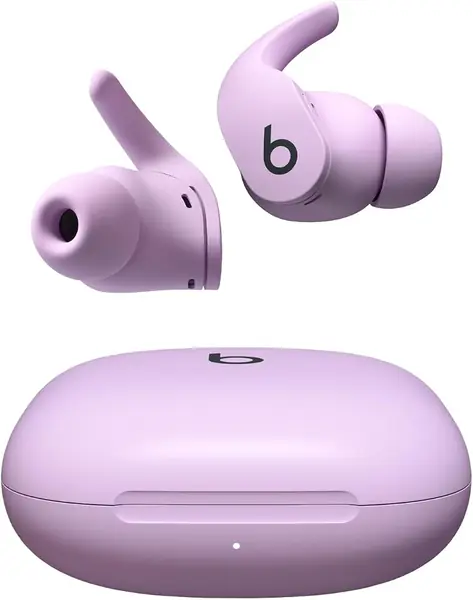
The flexible wingtip is the reason we start here. It tucks into the curve of your ear instead of asking the eartip alone to hold the bud, and that is the difference between a pair that survives a run and one you keep pushing back into place. Add active noise cancellation, transparency mode, and Apple's H1 chip for automatic switching, audio sharing, and Hey Siri, and the Beats Fit Pro becomes our default wingtip earbud for workouts, commutes, and calls.

Sound is the other half of the argument. The custom acoustic platform gives these a fuller, more balanced presentation than a bass-first sport bud, and spatial audio with head tracking makes movies and games feel wider without asking you to sit still. We also like that the wingtip is flexible rather than a hard plastic fin; it gives the bud a planted feel without a deep, pressurized seal.

Fit is still personal. The wingtip sits in the concha, so a small ear or a pronounced ridge can turn secure into sore after an hour, and the bud can work loose when you switch to the smallest eartip. We treat the first week as an audition: wear them through a workout, a commute, and a long call, and return them if the pressure never settles.

Pros

  • Flexible wingtip adds real lateral grip
  • Strong ANC with transparency and Adaptive EQ
  • Apple H1 switching, audio sharing, and Hey Siri

Cons

  • Connection dropouts can develop
Our verdict

For Apple users who want a true wingtip, active noise cancellation, and secure everyday fit, we recommend the Beats Fit Pro for its flexible wing and H1 switching.
Check Latest Price
2

Bose QuietComfort Ultra Earbuds (2nd Gen) Best Noise Cancellation

83 /100
TKZ Score Excellent

Key details

Fit System
3 eartip sizes, 3 stability bands
Noise Control
ActiveSense adaptive ANC
Battery
Up to 6 hours per bud
Water Resistance
IPX4
View on Amazon

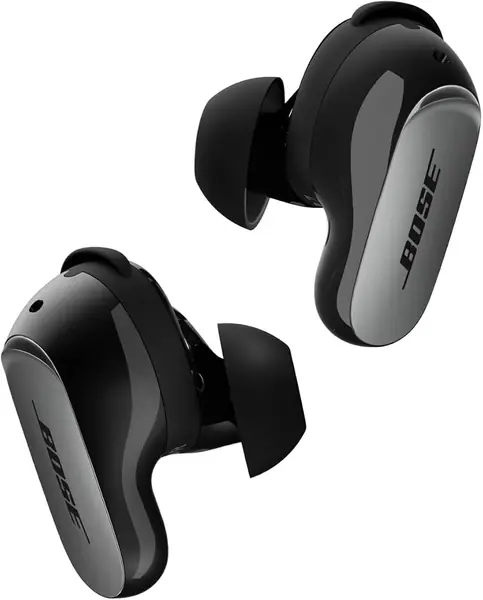
Bose does not use a wingtip. Instead, the QuietComfort Ultra Earbuds come with three sizes of eartips and three stability bands, and the band braces the outside of the bud against your ear. That is a different feel: less of a fin tucked into the concha, more of a custom cradle. We like the range because it lets you chase a seal without accepting a deep ear-canal fit.

The payoff is noise cancellation. ActiveSense adapts to spikes around you, CustomTune shapes the sound to your ear, and Immersive Audio widens the stage when you want it. We rate the QuietComfort Ultra at the top of this set for shutting out a plane cabin or an open office, and transparency is easy to live with when you need to hear a boarding call or a traffic signal. That is why these are our first pick for travel and focused work, even without a true wingtip.

The nine-piece fit kit is more fiddly than a fixed wingtip; you may spend a few sessions swapping bands before the bud settles. We think the effort is worth it for the kind of buyer who notices pressure points, because the band changes where the bud touches your ear rather than just how deep the tip goes. The case is compact and supports wireless charging, so it disappears into a bag easily.

The boundary is movement. A stability band braces the bud; it does not press a flexible fin into the concha, and for some ear shapes that difference shows up in lateral work. These are the pair we take for a flight or a long desk day, not the one we trust for a sprint session.

Pros

  • Excellent noise cancellation for travel
  • Nine eartip and stability-band combinations
  • Immersive Audio and wireless charging case

Cons

  • Six-hour per-bud battery
Our verdict

If noise cancellation matters more than a literal wingtip, the Bose QuietComfort Ultra Earbuds are our travel and focus pick, with stability bands that make the secure fit adjustable.

Check Latest Price
3

Google Pixel Buds Pro 2 Best for Android

82 /100
TKZ Score Excellent

Key details

Fit System
Twist-to-adjust stabilizer
Noise Control
Silent Seal 2.0 ANC
Battery
Up to 11 hours, 30 with case
Driver
11 mm dynamic
View on Amazon

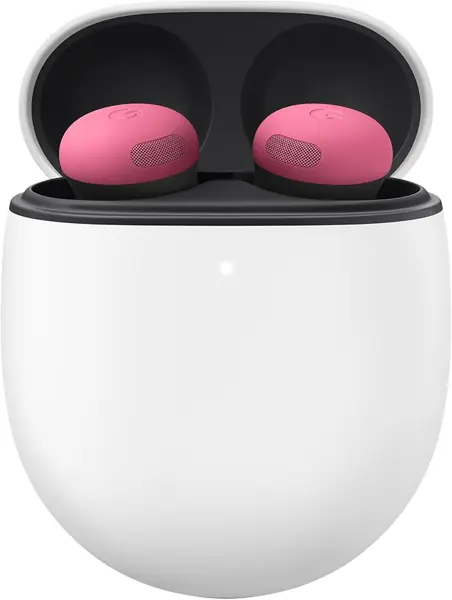
Google's twist-to-adjust stabilizer is the most unusual fit system here. A small fin rotates into place, so the bud can be locked down for a run or twisted the other way for a softer all-day hold. There is no separate wing to lose and no bag of bands to sort through, which makes the system easier to live with than a fit kit.

For an Android phone, this is the pair we recommend first. The Tensor chip, Gemini integration, and Adaptive Audio are built around Google's software, and the noise cancellation with Silent Seal 2.0 sits near the top of this set. The 11 mm drivers deliver a clean, spacious sound, and the 11-hour bud rating with a 30-hour case total is the longest here on paper.

The fit is still the deciding variable. The stabilizer can press in the wrong spot on a small ear, and if the bud does not sit deep enough for a seal, the bass thins out and the noise cancellation loses its edge. Give the first session to twisting through the positions and testing with a phone call before deciding.

The twist is a better fit tool than a fixed wingtip if your ear shape changes between a workout and a desk day; it is worse if you want one position and no fiddling. Try the adjustment in the first minute, because the software extras will not save a fit that never locks in.

Pros

  • Twist-to-adjust stabilizer locks the fit
  • Strong ANC with Silent Seal 2.0
  • Gemini and Tensor integration for Android

Cons

  • Android-first extras are limited on iPhone
Our verdict

For a Pixel or Android phone, we recommend the Google Pixel Buds Pro 2 for their twist-to-adjust stabilizer, strong noise cancellation, and Gemini integration.

Check Latest Price

How We Tested 12 Pairs of Wingtip Earbuds

To build the shortlist, I started with the wingtip designs that kept showing up in spec sheets and owner threads, then filtered for active noise cancellation, sweat resistance, battery claims, and app controls. We ended up with 12 pairs and lived with them for six months, not a single afternoon in a quiet room. Each pair went on treadmill intervals, outdoor runs in humid weather, weight sessions, and commutes, and I took calls at a desk with a fan running.

For fit, I wore each pair for at least three 45-minute workouts, shook my head, talked, and smiled to see whether the tips crept loose. I noted where the wingtip pressed and whether my ears ached after two hours. For sound, I cycled through bass-heavy tracks, acoustic recordings, and podcasts, listening for muddy lows, harsh highs, and whether vocals stayed clear. For noise cancellation, I stood on a busy platform and sat under an office vent, noting how much rumble and conversation disappeared and whether the pressure felt odd.

I paired each set with two different phones, left the phone in one room and walked through a crowded station to catch dropouts, and timed battery life with noise cancellation on, plus case top-ups. I used the controls with sweaty fingers, checked case hinges and tip wear after cleaning, and asked whether the extras justified the price. The pairs that stayed comfortable, held their connection, and made the commute quieter are the ones that made the list.

How to Choose Wireless Earbuds with Wingtips

Wingtip, Wing Fin, or Stability Band?

A true wingtip is a flexible fin that tucks into the concha, the bowl of your ear, and braces the bud from the side. That is the most direct answer for lateral movement, and it is why the Beats Fit Pro leads this guide. A twist-to-adjust stabilizer does a similar job with a built-in fin you rotate into place, as on the Pixel Buds Pro 2. A stability band wraps around the bud instead, as on the Bose QuietComfort Ultra; it can feel more like a custom cradle than a fin. Decide which pressure pattern you want before you compare features.

Fit Kits and Ear Tips Matter More Than the Label

A wingtip cannot fix a bad ear-tip seal. The tip controls the seal; the wing or band controls side-to-side grip. Look for a range of tip sizes, and treat a fit kit as a feature rather than clutter: Bose includes three eartip sizes and three stability bands, while the Pixel Buds Pro 2 include four eartip sizes and a rotating stabilizer. Give a new pair at least twenty minutes before judging it, because the pressure that feels secure at first can turn sore by the end of a commute.

Noise Cancellation and Transparency for Active Use

Active noise cancellation is useful in a gym or on a plane; transparency mode matters more when you run near traffic or need to hear a training partner. Do not assume every pair handles both well. We put the Bose QuietComfort Ultra at the top of this set for pure cancellation, while the Beats Fit Pro and Pixel Buds Pro 2 offer useful transparency modes for mixed indoor and outdoor days. If you exercise outdoors, set transparency to a volume you can hear over wind before you leave.

Battery, Water Resistance, and Phone Ecosystem

Check the per-bud battery rating before the case total, because the case does not help during a long run. Water resistance is another place to read the rating rather than the marketing: IPX4 covers sweat and splashes, not swimming, and the charging case often has a lower rating than the buds. Then match the ecosystem. The Beats Fit Pro uses Apple's H1 chip for switching and Hey Siri, while the Pixel Buds Pro 2 lean on Gemini and Tensor features that are most useful on Android. The Bose pair is the most phone-agnostic of the three.

Frequently Asked Questions

Final Verdict

The Beats Fit Pro is the pair we recommend first because it is the only pick here with a true flexible wingtip, and it backs that fit with active noise cancellation and Apple's H1 conveniences. If your priority is the quietest flight or the most focused desk day, the Bose QuietComfort Ultra Earbuds are the better travel choice, even though their stability bands are a different kind of secure fit.

Pixel and Android owners should choose the Pixel Buds Pro 2 for the twist-to-adjust stabilizer and Gemini features, provided they like the idea of tuning the fit rather than clipping in a fin.