Garmin Forerunner 265 Best Overall
Key details
- Display
- 1.3-inch AMOLED
- Weight
- 1.66 oz
- Satellite Positioning
- Multi-band GPS
- GPS Battery
- 20 hours
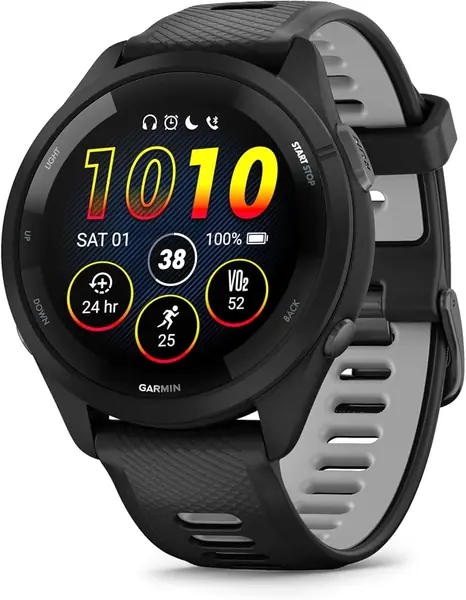
Twenty hours of GPS battery and multi-band positioning are the two figures that make the Forerunner 265 the default here. On a bike, those are the specs that decide whether a watch holds a line under tree cover and whether it survives a long gravel day. The 1.3-inch AMOLED screen is bright and easy to scan at a stoplight, and the 47-gram case is light enough to forget about after the ride. We also like that Garmin keeps physical buttons alongside the touchscreen, because wet gloves and touchscreens are a bad pairing.
The training side is where the 265 pulls ahead of the budget picks. It logs the ride and gives you recovery and readiness context that a basic fitness tracker does not, including a morning report and a training readiness score for planning hard days. We treat those numbers as guidance rather than a coach's orders, but they are useful when you are stacking intervals and long rides in the same week. The 13-day smartwatch rating is realistic for mixed use; the 20-hour GPS figure is the one to check against your longest ride.
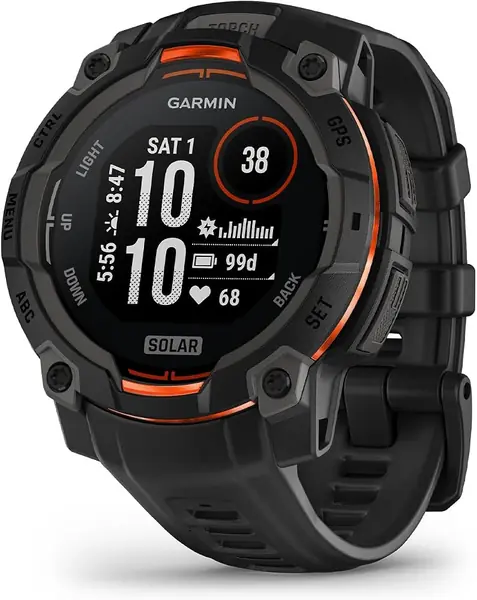
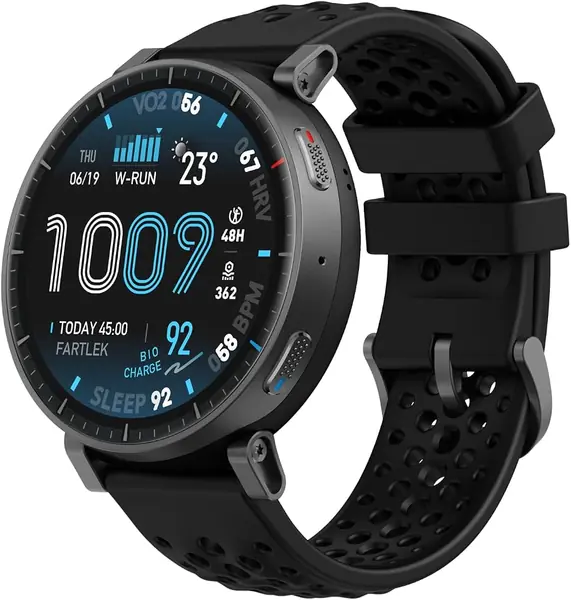
If you mostly ride familiar roads and do not care about training scores, the 265 is more watch than you need. For the rider who wants one device for intervals, long weekend rides, and the occasional run, it is the most complete package in this group. The Amazfit Active Max covers the basics with a bigger battery, while the Instinct 3 Solar is the better choice for mud, sun, and multi-day battery.
Pros
- Multi-band GPS for cleaner tracks
- 20 hours of GPS-mode battery
- Bright 1.3-inch AMOLED display
- Light 47 g case with buttons and touch
Cons
- Premium price next to budget picks
- Training menus take time to learn
We recommend the Forerunner 265 as the best cycling watch here for riders who want multi-band GPS, a bright AMOLED screen, and serious training data without a heavy wrist load.