Best GPS Watches for Cycling of 2026

For years my ride data lived in my phone, which lived in a jersey pocket — every red light a fumble, every long ride ending at a battery percentage I didn't want to see. Moving that job to my wrist fixed most of it. What separates a watch you'll love from one you'll leave in a drawer isn't the spec sheet; it's whether the screen reads in midday glare with sweaty fingers, whether the GPS holds a line under tree cover, and whether it lasts a week between charges instead of a day.

My team and I have now spent seven months riding with 10 of them — commutes, gravel loops, and trainer sessions in a basement. Two things I wish someone had told me sooner: advertised battery life is usually measured in everyday-watch mode, not with GPS running, and a touchscreen that's lovely with bare hands is useless through full-finger gloves in November. Case size matters more than the product photos suggest, and the price gaps tend to show up in the fundamentals — an accurate position, honest battery numbers, a menu you can work one-handed.

Below are the watches that earned a permanent spot on the mount, plus a plain answer on who each one actually suits.

The Best GPS Watches for Cycling

1

Garmin Forerunner 265 Best Overall
94 /100
TKZ Score Outstanding

Key details

Display
1.3-inch AMOLED
GPS Battery
Up to 20 hours
Weight
1.66 oz
Smartwatch Battery
Up to 13 days
View on Amazon

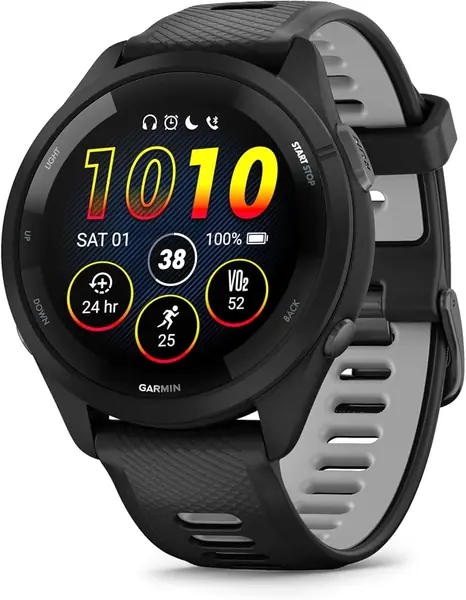
Twenty hours of GPS battery and a 1.3-inch AMOLED screen are the numbers that define the Forerunner 265. The 46mm case carries a 47-gram weight, and Garmin pairs the touchscreen with physical buttons for gloves or sweaty hands. It also has multi-band GPS, daily suggested workouts, training readiness, recovery insights, and music storage.

What makes it our top pick is the balance: the 265 gives you serious training depth without the weekly charging routine of an Apple Watch. We like the button-and-touchscreen mix for cycling specifically, because you can start a lap or pause a ride without peeling off a glove. The 13-day smartwatch rating is the everyday number, while the 20-hour GPS rating is what matters on the bike. The 50-meter water rating covers rain and sweat without a second thought.

The 20-hour GPS mode covers most training rides and century efforts, but it is not the ultra-endurance choice; the COROS PACE Pro lasts longer and adds offline maps. If your longest rides push past that window, the COROS is the better tool. For everyone else, the 265 is the watch we reach for when a ride includes intervals, a route, and a full workday afterward.

Pros

  • Advanced training and recovery metrics
  • Multi-band GPS and 20-hour GPS battery
  • Bright 1.3-inch AMOLED with button controls
  • Music storage and daily suggested workouts

Cons

  • 46mm case may overwhelm smaller wrists
Our verdict

We recommend the Forerunner 265 for cyclists who want advanced training data, multi-band GPS, and a bright screen without charging every night.
Check Latest Price
2

Garmin Forerunner 165 Best Value

93 /100
TKZ Score Outstanding

Key details

Display
1.2-inch AMOLED
GPS Battery
Up to 19 hours
Weight
1.38 oz
Smartwatch Battery
Up to 11 days
View on Amazon

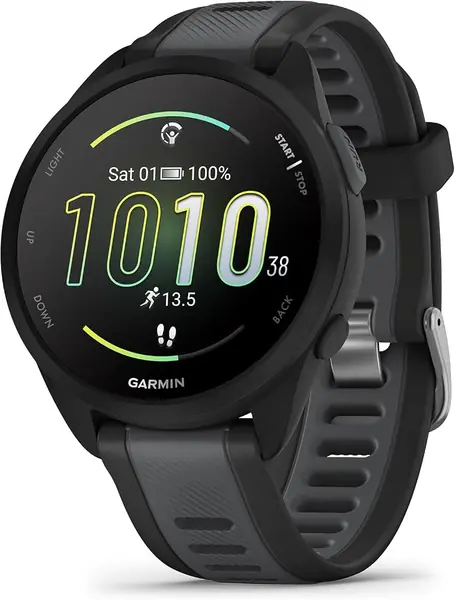
The 19-hour GPS rating is the first thing to notice about the Forerunner 165, because it comes close to the 265's 20 hours for less money. It has a 1.2-inch AMOLED display, 25+ activity profiles including cycling, and a 1.38-ounce build. Garmin also includes daily suggested workouts and Garmin Coach, so it is not just a distance logger.

This is the value pick because it keeps the parts most cyclists use: GPS, heart rate, pace and distance, a bright screen, and multi-day battery. We prefer its lighter case for all-day wear, and the 11-day smartwatch rating means it disappears from your charging routine. The 165 also has a touchscreen and buttons, so you can swipe through stats or use the physical controls with gloves.

The 165 is not the watch for someone chasing race-readiness scores; the 265 is the step up there. For a first GPS watch or a commuter, it covers the essentials without the bulk. The 1.2-inch screen is compact, which keeps the watch light and leaves less room for data fields at once. It is a simple, honest training watch.

Pros

  • Bright AMOLED at a lower price
  • 19-hour GPS battery
  • Light 1.38-ounce build
  • Daily suggested workouts and Garmin Coach

Cons

  • 1.2-inch screen limits visible data fields
Our verdict

We recommend the Forerunner 165 for riders who want Garmin's core tracking and a bright screen without the 265's extra training depth.

Check Latest Price
3

COROS PACE Pro Best for Long Rides

92 /100
TKZ Score Outstanding

Key details

Display
1.3-inch AMOLED
GPS Battery
38 hours
Daily Battery
20 days
Navigation
Global offline maps
View on Amazon

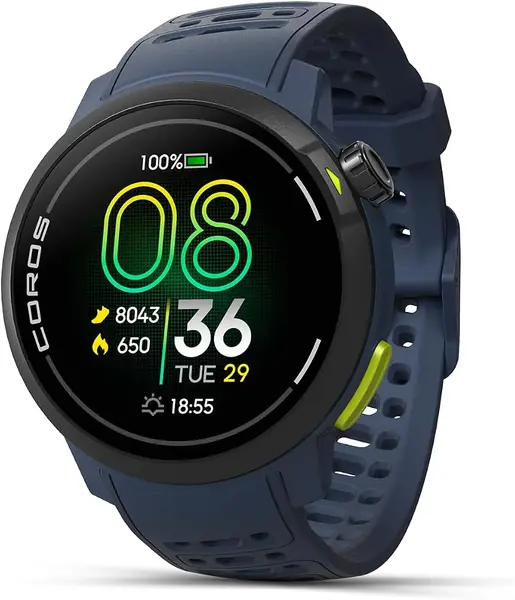
A 38-hour GPS rating and global offline maps are the reason the COROS PACE Pro earns a spot. The 1.3-inch AMOLED screen is bright and sharp, the watch weighs 49 grams, and COROS lists 20 days of daily use. The route planner in the COROS app lets you build a route and send it to the watch, which is the feature that separates it from simpler trackers. For long rides, that combination is more useful than a long feature list.

On the bike, the wider battery window matters more than the spec-sheet bragging. The PACE Pro also lists dual-frequency GPS for 31 hours, which is the mode to use when you want the best positioning in cities or under tree cover. The 32GB of storage is generous for maps and workouts, and the 1.3-inch screen is readable in sunlight. The 49-gram weight is noticeable but not bothersome on a ride.

The trade-off is ecosystem depth. COROS gives you the training and navigation tools, but the app and smart features are simpler than Garmin's or Apple's. If you want a watch that doubles as a phone on your wrist, look elsewhere; if you want a long-ride navigator that does not need a charger every few days, this is the one.

Pros

  • 38-hour GPS battery
  • Global offline maps and route planner
  • Bright 1.3-inch AMOLED
  • Light 49-gram build

Cons

  • 1.3-inch screen is small for map browsing
Our verdict

We recommend the COROS PACE Pro for riders who put long battery life and offline maps ahead of app polish.

Check Latest Price
4

Amazfit Bip Max Best Budget

91 /100
TKZ Score Outstanding

Key details

Display
2.07-inch AMOLED
Weight
1.86 oz
GPS
Built-in GPS
Battery Life
Up to 20 days
View on Amazon

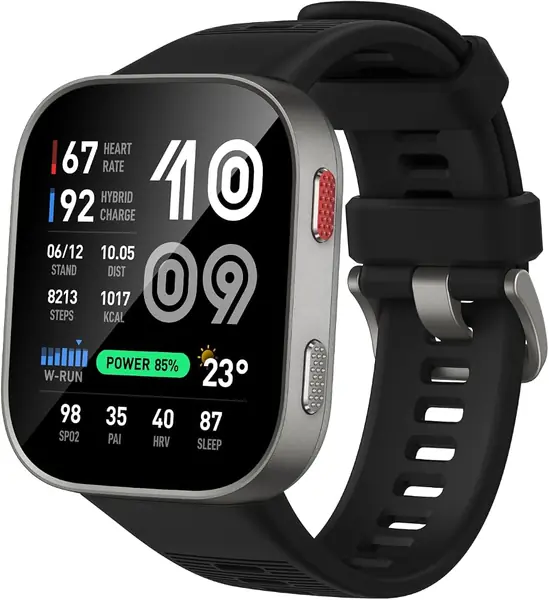
The 2.07-inch AMOLED display is the reason the Bip Max stands out; it is the largest screen here by a wide margin. For riders who struggle to read pace and distance at a glance, that size is a real advantage. Amazfit pairs it with a 20-day battery rating, built-in GPS, offline maps, and 150+ sport modes. The case measures 50mm and the watch weighs 1.86 ounces.

The Bip Max is the budget pick because it gives you navigation and long battery without the price of a Garmin or COROS. The 4GB of storage holds offline maps from the Zepp app, and the five satellite systems help it lock on quickly. The screen is bright at 3,000 nits, so it stays readable in direct sun. It is a lot of watch for the money, and the interface is simple enough to learn in an afternoon.

The 20-day rating is a typical-use figure; GPS rides and the always-on display will pull it down. Charge it before a long event and keep the charger handy for weekends with multiple rides. If the big screen is the appeal, the battery math is the thing to plan around. It is not the most polished watch here, but it does the core job.

Pros

  • Large 2.07-inch AMOLED
  • Up to 20-day battery
  • Offline maps and 150+ sports
  • Budget-friendly

Cons

  • 50mm case is oversized for small wrists
Our verdict

We recommend the Bip Max for budget-minded riders who want a huge screen, long battery, and offline maps.

Check Latest Price
5

Apple Watch SE 3 iPhone Everyday Wear

90 /100
TKZ Score Outstanding

Key details

GPS
Built-in GPS
Battery Life
Up to 18 hours
Case Size
40mm
Phone Compatibility
iPhone
View on Amazon

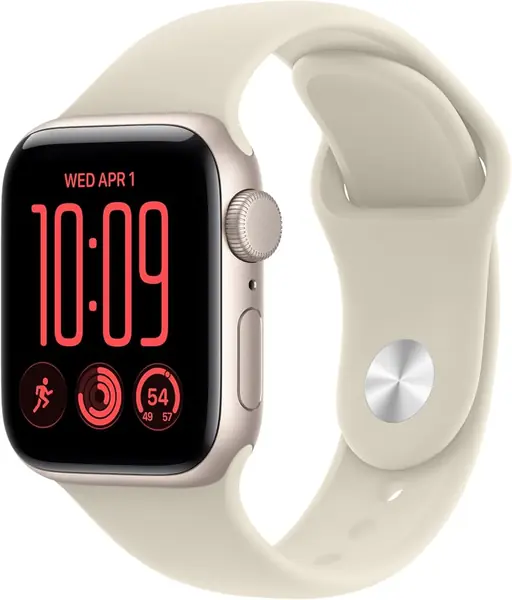
The 40mm case and iPhone pairing are the two facts that define the Apple Watch SE 3. It is the smallest watch here, and Apple builds it around the phone you already carry: notifications, Apple Pay, Siri, and health data flow through the iPhone. It records workouts and heart rate, and fall detection and crash detection are the kind of backup you hope never to need. The 40mm case is easy to wear under a cuff.

The 18-hour battery rating is the trade-off. A long ride with GPS will eat into it faster than a multi-day Garmin or COROS, and the watch expects a daily charge. But the SE 3 charges quickly, and for a commute, a weekend loop, or a rider who wants one watch for the office and the bike, the smaller case is easier to live with than a 46mm training watch.

Where it earns a place is as the iPhone-first everyday watch rather than a dedicated cycling computer. We like the way fitness and safety features disappear into daily wear, and the fast charging takes some sting out of the battery rating. It is the watch we hand to someone who wants a watch first and a training tool second.

Pros

  • Seamless iPhone pairing
  • Fall and crash detection
  • Compact 40mm case
  • Fast charging

Cons

  • 40mm case may fit larger wrists poorly
Our verdict

We recommend the Apple Watch SE 3 for iPhone owners who want a compact everyday watch with fitness tracking and safety features, not a long-ride specialist.

Check Latest Price
6

COROS PACE 4 Best for Ultralight Training

87 /100
TKZ Score Excellent

Key details

Display
1.2-inch AMOLED
GPS Battery
41 hours
Daily Battery
19 days
Case Thickness
11.8 mm
View on Amazon

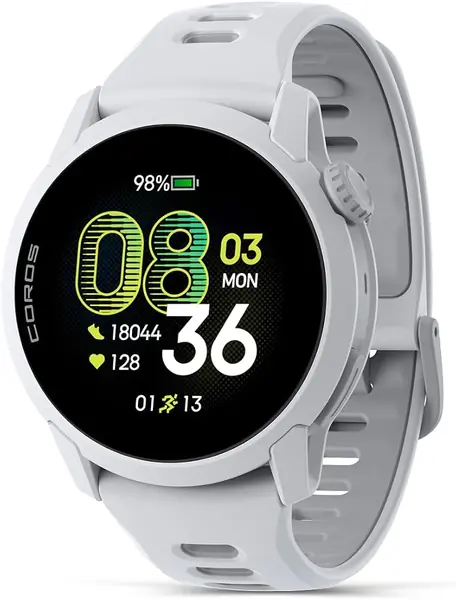
The PACE 4 is the watch in this group built around a thin case and a low weight. COROS lists an 11.8mm profile, a 1.2-inch AMOLED screen, 41 hours of GPS battery, and 19 days of daily use. The digital crown and two buttons are easy to find by feel, which matters when you are moving.

The 41-hour GPS rating is the longest here, and the 19-day daily rating means the charger can stay home for a week of training. The screen is bright and sharp, and the digital crown makes it easy to scroll metrics with a thumb. The lightweight build is the part we appreciate most on long days, because a heavy watch becomes noticeable. The 4GB of storage is enough for workouts and voice notes.

We like the PACE 4 for riders who race or train without wanting a brick on the wrist; the low weight and long GPS battery are the reasons it stays on for interval days. It is the watch we pick when the workout is the point and the smart features are not. The PACE 4 is a specialist, and that is exactly what makes it useful. It is not trying to be a phone on your wrist.

Pros

  • Thin, ultralight design
  • 41-hour GPS battery
  • 19-day daily battery
  • Bright 1.2-inch AMOLED

Cons

  • Small 1.2-inch display
  • 5-meter water resistance is modest
Our verdict

We recommend the PACE 4 for weight-conscious riders who want a fast, bright training watch with exceptional GPS battery life.

Check Latest Price
7

SUUNTO 9 Peak Pro Rugged Navigation

82 /100
TKZ Score Excellent

Key details

GPS Battery
40 hours
Weight
2.12 oz
Sport Modes
97
Water Resistance
100 meters
View on Amazon

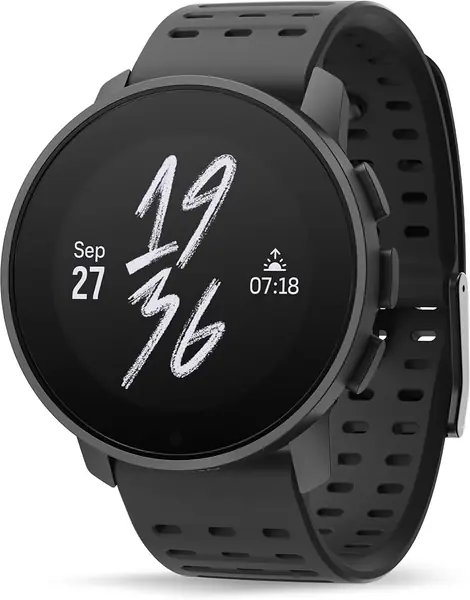
The stainless-steel case and 100-meter water-resistance rating set the SUUNTO 9 Peak Pro apart from the plastic training watches here. It weighs 60 grams, has a 1.2-inch digital display, and uses physical buttons rather than a touchscreen. The watch offers 97 sport modes and turn-by-turn navigation with four satellite systems.

The 40-hour GPS rating is the number that matters on the bike, and the watch also lists a 70-hour endurance mode. The steel case feels built for rough weather, and the 100-meter rating covers pool and open-water use, not just rain and sweat. The app supports structured workouts and route planning. The battery life is the reason to consider it for long gravel or bikepacking days, where a dead watch is worse than a dim screen.

The display is the compromise. It is a digital panel with lower contrast than the AMOLED screens on the Garmin and COROS picks, and the 1.2-inch screen is small for map detail. We noticed the lower contrast most when glancing at the watch in bright sun.

We recommend it for riders who value a durable case, long battery, and turn-by-turn navigation. The 9 Peak Pro is one of the most rugged ways to keep a route on your wrist. If you want a watch that feels like a tool rather than a phone accessory, this is the one.

Pros

  • Rugged stainless-steel case
  • 40-hour GPS battery
  • Turn-by-turn navigation and 97 sport modes
  • 100-meter water resistance

Cons

  • Button interface has a learning curve
Our verdict

We recommend the SUUNTO 9 Peak Pro for riders who want a rugged steel watch, turn-by-turn navigation, and long GPS battery.

Check Latest Price

How We Tested GPS Watches for Cycling

We started with research rather than a stopwatch. I pulled every watch in the category with built-in GPS and a heart-rate sensor, then cut the list based on the things that decide whether a watch works on a bike: battery life with GPS running, offline maps, display type, case size, and how cleanly it pairs with a phone and with sensors like a chest strap or speed and cadence units. Ten made the cut, and we bought them at retail like anyone else would.

Testing ran seven months. Each watch spent time on a wrist and on an out-front handlebar mount, and we rode the same 18-mile loop — open road, tree-covered park paths, one long climb — so we could stack GPS traces side by side rather than trusting a single ride. Every watch was also drained from full to dead in GPS mode to see how the advertised numbers held up, and we logged how long a finished ride took to reach the phone app and whether any ride failed to upload or lost its fix mid-route.

For usability, we started rides wearing cycling gloves, tried to read the screen at noon through sunglasses, and paged through menus one-handed with the other hand on the bars — the touchscreen-versus-buttons question answered itself fast. Each watch was then worn with regular clothes for a week to judge appearance and how the case size sat on different wrists, and we finished by asking the blunt question: did the features we were paying for actually get used, or did we ignore half of them after the first month?

How to Choose a Gps Watch for Cycling

Start With GPS Battery, Not Standby

The everyday battery number is the one shoppers notice, but the GPS rating is what gets you home on a long ride. A watch rated for 13 days in smartwatch mode may last 20 hours with GPS on; another may last 38 or 41 hours. Match the GPS rating to your longest regular ride and add a buffer for cold weather and route finding. If you ride centuries, gravel events, or bikepacking, prioritize 30 hours or more; for commutes and two-hour training loops, 20 hours is plenty. The Garmin Forerunner 265 and 165 sit in that 19- to 20-hour range, while the COROS PACE Pro and PACE 4 go longer.

Decide Whether You Need Maps

Offline maps and turn-by-turn directions are the features that separate a training watch from a navigation tool. If you ride familiar roads and only need distance, pace, and heart rate, a watch without maps can be lighter and simpler. If you explore new gravel or city routes, maps are worth the extra size and cost; the COROS PACE Pro, Amazfit Bip Max, and SUUNTO 9 Peak Pro list offline or turn-by-turn navigation. Check that the route file format works with your phone and app before you rely on it. A watch with a 1.2-inch screen is fine for turn prompts, less so for studying a map at a junction.

Match the Screen and Controls to Your Hands

AMOLED screens are bright and colorful, but they draw more power than the MIP displays common on endurance watches. A touchscreen is handy for scrolling stats, yet physical buttons are easier to use with gloves or wet hands. We prioritize a watch with at least two buttons and a screen that stays readable in direct sun. Size matters too: a 46mm or 50mm case can crowd a smaller wrist and catch on a jacket, while a 40mm to 43mm case is easier to wear all day. Try to handle the watch before buying if wrist clearance is tight.

Choose Training Metrics You Will Actually Use

If you race or follow a plan, advanced metrics such as training readiness, recovery time, and daily suggested workouts can make a watch worth the upgrade. If you mostly commute or ride for fitness, pace, distance, heart rate, and elevation are enough. The deeper Garmin ecosystem is the safest bet for structured training and data review; COROS and SUUNTO offer strong training tools with simpler app experiences. Apple Watch is the outlier: it is excellent for iPhone owners who want one device for health, notifications, and workouts, but its 18-hour battery rating makes it a daily-charge watch rather than a multi-day training tool.

Do Not Overlook Fit, Water Resistance, and Durability

A cycling watch spends more time on your wrist than on the bike, so weight and strap comfort matter. A lightweight 39-gram watch feels different from a 60-gram steel case after a few hours, and a 50mm case is a lot to wear under a cuff. For sweat and rain, a 50-meter rating is enough; for pool or open-water swimming, look for 100 meters. A screen protector is cheap insurance on models with exposed glass, especially if you ride gravel or mountain bike. Check the band replacement options too, since the strap is the first part to wear out.

Frequently Asked Questions

Final Verdict

The Garmin Forerunner 265 is the cycling watch we recommend first. It pairs a 20-hour GPS rating and multi-band positioning with the training metrics, recovery insights, and bright AMOLED screen that make a watch useful beyond the ride. The 13-day smartwatch battery keeps it off the charger, and the button-and-touchscreen controls work with gloves.

If your longest rides push past 20 hours or you need offline maps, the COROS PACE Pro is the better tool. iPhone owners who want one everyday watch should look at the Apple Watch SE 3, provided they are not expecting multi-day battery.