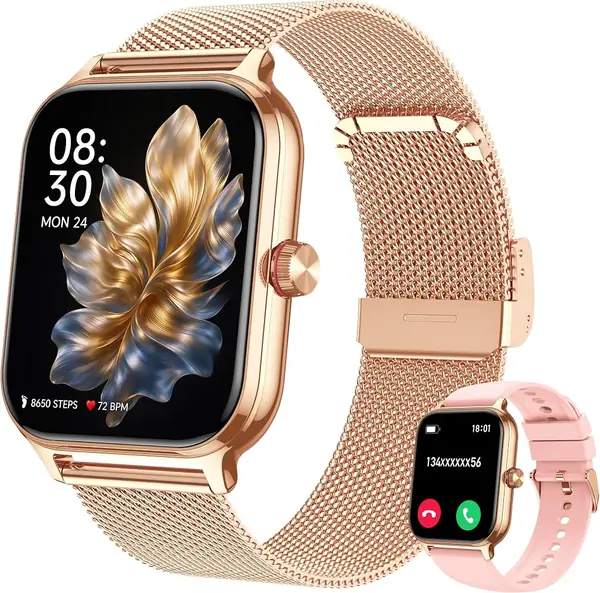
Best Smartwatches for Nurses of 2026

There's a particular moment on a twelve-hour shift when you look down and realize the watch you charged the night before is at six percent — and you still have med pass, charting, and a commute home ahead of you. What a nurse actually needs on a wrist is unglamorous: something that survives alcohol wipes and glove cuffs, taps you for a call when your phone is in a locker down the hall, tracks the strange sleep that comes with working nights, and still looks decent on a day off.

We've spent the last six months wearing 12 of these through days, nights, and doubles, and the pattern that emerged had less to do with the spec sheet than I expected. Size and strap matter more than most shoppers think — a chunky case snags on gloves, and a stiff band traps sanitizer against your skin — while a feature like answering calls from your wrist only earns its keep if the connection holds three rooms from your phone.

Battery life is the one spec I'd over-weight, since a dead watch on hour nine is just a bracelet. The picks below are the ones that made it through a full stretch of shifts, along with what each does best.

The Best Smartwatches for Nurses

1

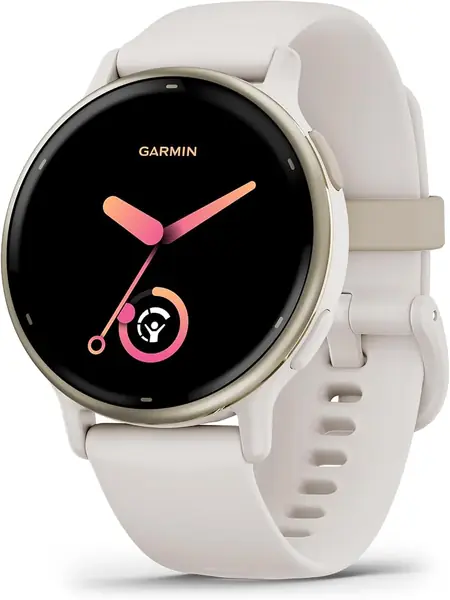
Garmin vívoactive 5 Best Overall
90 /100
TKZ Score Outstanding

Key details

Water Resistance
50 meters
Battery Life
Up to 11 days
Weight
1.3 oz
Case Size
42mm
View on Amazon

Eleven days of battery life and a 50-meter water rating are the numbers that separate the vívoactive 5 from the rest of this group. For a nurse, that combination matters more than any running coach: it means the watch can survive a handwashing-heavy shift and still have charge left after a run of twelves. The 42mm case and 1.3-ounce build are light enough to disappear under a glove, and the silicone band is the right material for a job where cleanup is constant. We recommend it first because it makes the fewest compromises on the things a shift actually demands.

The controls are the practical detail we appreciate most. Garmin gives you buttons as well as a touchscreen, which is a real advantage when hands are wet, gloved, or moving fast; a pure touchscreen can turn a simple timer into a fumble. The 1.2-inch AMOLED display is bright and sharp, notifications are easy to scan, and the Body Battery and sleep tools are useful for spotting recovery patterns, even if they are not clinical measurements.

The catch is that 11 days is a best-case figure. With the always-on display enabled, Garmin rates it at about five days, and heavy notification use will pull it down further. We do not think that undercuts the recommendation because five days still covers a stretch of twelves with room for a weekend charge, but it does mean the headline number is not the one to plan around.

Pros

  • Battery life rated up to 11 days
  • 50-meter water resistance for handwashing
  • Light 1.3-ounce case with buttons

Cons

  • Screen can scratch with daily knocks
  • Menus take time to learn
Our verdict

We make the vívoactive 5 our top pick for nurses who want a light, long-lasting watch that shrugs off handwashing; its 11-day battery and physical buttons make a 12-hour shift easier.
Check Latest Price
2

Gydom IDW19 Best Budget

89 /100
TKZ Score Excellent

Key details

Water Resistance
IP68
Screen Size
1.8 inches
Battery Life
Up to 7 days
Weight
1.41 oz
View on Amazon

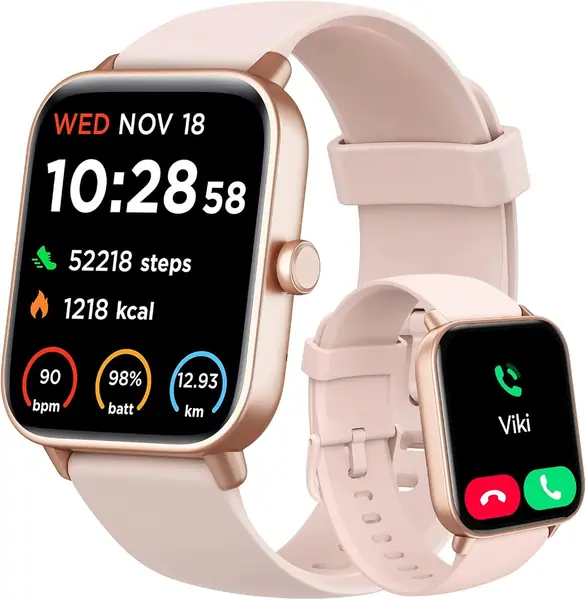
The budget end of this list is crowded, and the Gydom IDW19 is the one we keep coming back to because it covers the shift basics without asking you to baby it. You get a 1.8-inch touchscreen, Bluetooth calling, message alerts, and a rubber band that wipes clean. The 40-gram build is light enough to wear through a long day, and the 300 mAh battery is rated for up to seven days.

We like it most as a second watch or a first smartwatch for a nurse who does not want to spend on a Garmin. IP68 protection is enough for handwashing and splashes, and the screen is readable in normal indoor light. The compromise is the LCD panel, which lacks the contrast of the AMOLED watches here, and the app can be inconsistent to pair. Battery life is rated at seven days, but calls and constant alerts will shorten that; a top-up before a double is a sensible habit.

Pros

  • Covers calls and alerts on a budget
  • IP68 water resistance for handwashing
  • Light 40-gram build

Cons

  • LCD lacks AMOLED contrast
  • App pairing can be inconsistent
Our verdict

The budget pick we keep coming back to: calls, alerts, and IP68 protection in a light 40-gram watch, with a simpler LCD as the trade-off.

Check Latest Price
3

RUXINGX G62 Best Long Battery Life

88 /100
TKZ Score Excellent

Key details

Water Resistance
3ATM (30 meters)
Screen Size
1.85 inches
Battery Life
Up to 30 days
Battery Capacity
1000 mAh
View on Amazon

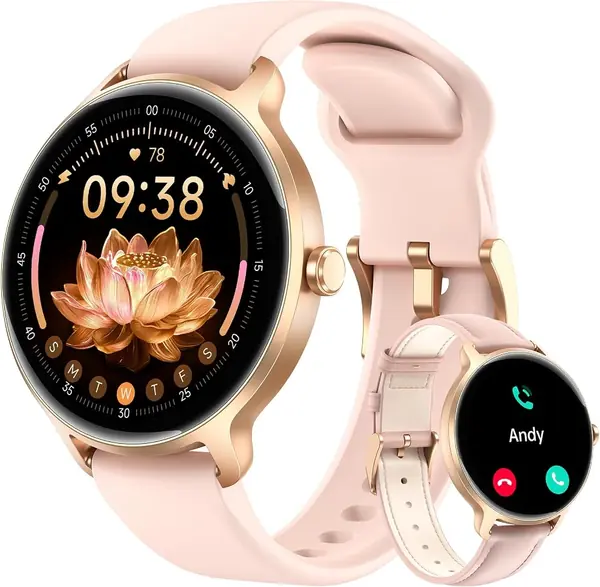
The RUXINGX G62 makes one claim that gets our attention: up to 30 days of battery life from a 1,000 mAh cell. For a nurse who is tired of charging a watch every night, that is the most useful kind of overkill. It also carries a 3ATM rating, which is a step above splash resistance, and a 1.85-inch screen that is easy to read at a glance. On the face of it, this is the low-maintenance shift watch.

The rest of the package is familiar budget-watch territory: Bluetooth calling, message alerts, 100+ sport modes, and a rose-gold finish. We see the G62 as the watch you can leave on the charger less often and not worry about when you wash your hands. The trade-off is a conventional LCD rather than an AMOLED panel, so colors and contrast are functional rather than impressive. The 30-day figure is a rating, not a guarantee; calling and constant alerts will use more power, and the software is unlikely to be as polished as Garmin's.

That makes the G62 a specific buy rather than a universal one. If your priority is going a long stretch between charges and you mostly need alerts, timers, and a big display, it makes sense. If you want the best screen or the deepest health coaching, the extra money for a Garmin or an AMOLED model buys a more pleasant watch every day.

Pros

  • Up to 30-day battery rating
  • 3ATM water resistance
  • Large 1.85-inch screen

Cons

  • Basic LCD looks flat
Our verdict

We like the G62 for nurses who want the longest stated battery life here and can accept a basic LCD in exchange.

Check Latest Price
4

Samsung Galaxy Watch9 Best for Android Power Users

87 /100
TKZ Score Excellent

Key details

Weight
1.1 oz
Case Size
40mm
Display Type
OLED
Compatibility
Android phones
View on Amazon

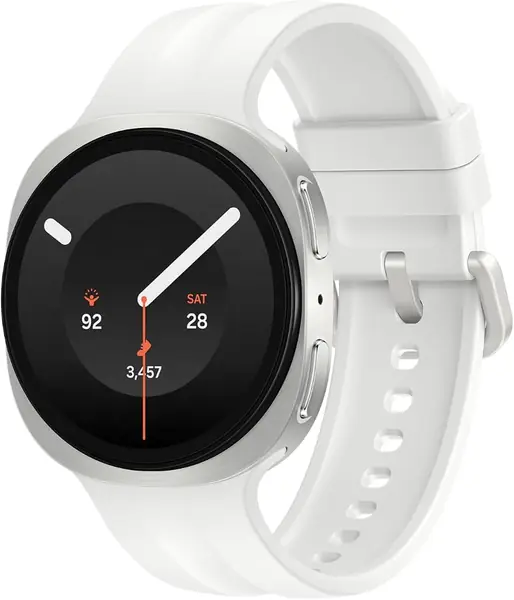
The Galaxy Watch9 is the most polished watch in this group, and also the most particular: it works with Android phones, not iPhone. If your phone is a Samsung or another Android device, that trade is easy to accept; if it is an iPhone, stop here. The 40mm case is light at 1.1 ounces, and the 1.34-inch OLED display is sharp enough for quick alerts and timers.

Samsung's health software is the draw. Sleep coaching, heart-rate tracking, and the AI assistant give it more depth than the budget watches, and the screen stays readable in indoor light. For a nurse, the useful part is not the coaching but the polish: notifications arrive cleanly, the watch feels good under a sleeve, and the interface is quick once you learn it.

Battery life is the compromise. This is not a watch you can forget about for a week; plan on a charging routine, especially if you use the display and health features heavily. We recommend it for Android users who want a full smartwatch and do not mind charging often. For most nurses, the Garmin's longer battery and stated 50-meter water rating are easier to live with.

Pros

  • Sharp 1.34-inch OLED display
  • Light 1.1-ounce build
  • Deep Samsung health and sleep tools

Cons

  • Android phones only
  • Water-resistance rating not listed
Our verdict

We rate the Galaxy Watch9 as the most polished Android watch here, with frequent charging as the price of that polish.

Check Latest Price
5

Yoever Smart Watch Best Round Design

86 /100
TKZ Score Excellent

Key details

Water Resistance
IP68
Screen Size
1.27 inches
Battery Life
Up to 7 days
Weight
3.17 oz
View on Amazon

A 1.27-inch AMOLED screen is small for a smartwatch, and that is exactly the point of the Yoever. It sits closer to a traditional round watch than the big rectangular budget models, with a crisp display and a pair of bands that let you switch from a silicone shift strap to something dressier. If a large screen catches on gloves or sleeves, the smaller face is easier to live with.

We like the combination of IP68 protection, a seven-day battery rating, and Bluetooth 5.3 calling at this end of the market. The screen is bright and easy to read for its size, and the round shape looks less like a gym gadget in a clinical setting. The compromises are real: the watch weighs 90 grams, which is heavy for its size, and messaging is limited even though calls and alerts work. The second band is the practical bonus; the weight is the thing to try before you commit.

Pros

  • Sharp 1.27-inch AMOLED screen
  • IP68 and 7-day battery rating
  • Two bands included

Cons

  • Heavy 90-gram build
  • Text replies are limited
Our verdict

A small round face and two bands make the Yoever our pick for nurses who want a dressier watch without a big-screen feel.

Check Latest Price
6

aeac Smart Watch Best Display

85 /100
TKZ Score Excellent

Key details

Water Resistance
IP68
Screen Size
1.27 inches
Battery Life
Up to 10 days
Brightness
1500 nit
View on Amazon

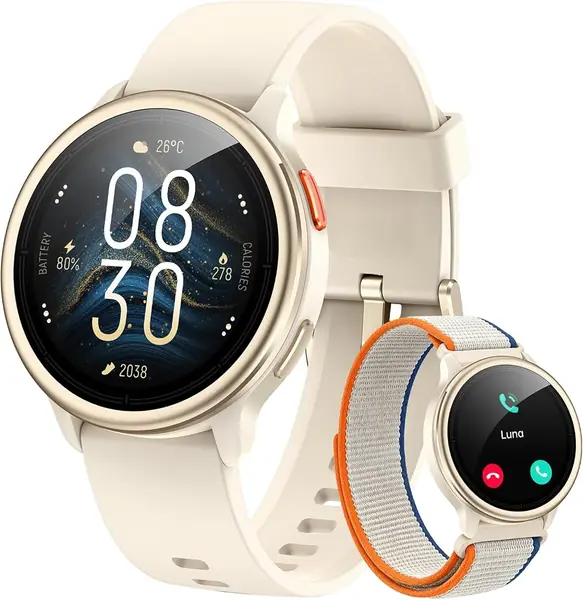
The aeac smartwatch claims 1,500 nits of brightness, the highest figure in this group, and that is not just a spec-sheet flex. Under the hard light of a med room or a bright hallway, a display with that much headroom is easier to read at a glance, especially when your hands are full and you only have a second.

The rest of the package is built for long shifts: a 1.27-inch AMOLED screen, IP68 protection with a 30-meter rating, a 350 mAh battery rated for up to 10 days, and Bluetooth 5.3 calling. The round case looks tidy on the wrist, and the 200-plus watch faces let you keep the display simple. We like it as the display-first pick for a nurse who wants notifications and a timer to be instantly visible.

The limits are the software and the battery. Message replies are not supported, so the aeac is for reading and answering calls, not typing back. The 10-day figure is a rating, not a promise; heavy use will pull it down. Pairing is the other thing to test early, because a watch that drops its connection is not much use at work. We recommend it for nurses who care most about a bright, sharp screen and can live with those compromises.

Pros

  • 1,500-nit AMOLED display
  • IP68 and 30-meter water rating
  • Up to 10-day battery rating

Cons

  • No message replies from wrist
  • Battery life may fall short
Our verdict

The aeac is the display-first choice we recommend for nurses who need a bright, sharp screen; its 1,500-nit AMOLED is the most legible here, though replies are limited.

Check Latest Price
7

KIPTUMTEK T7 Two-Band Value

84 /100
TKZ Score Excellent

Key details

Water Resistance
IP67
Screen Size
1.83 inches
Bands
Two bands included
Battery Capacity
230 mAh
View on Amazon

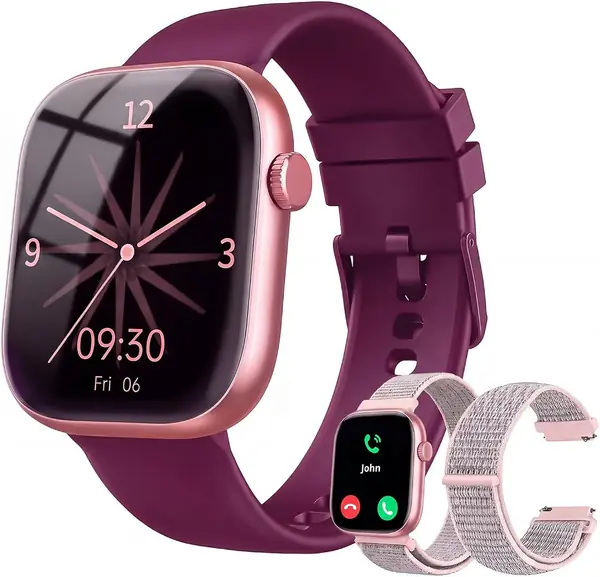
The KIPTUMTEK T7 comes with two bands, and that is the most useful thing about it for a nurse. One silicone strap can take the sweat, hand sanitizer, and spills of a shift; the other stays clean for the drive home. The maroon finish is a nice change from black, and the 1.83-inch screen is large enough to read a notification without squinting.

The rest is familiar budget-watch equipment: Bluetooth calling, heart-rate and sleep monitoring, multi-sport tracking, and a 230 mAh battery that charges in about an hour. The screen is LCD rather than AMOLED, so it is functional rather than vivid. IP67 protection is the lowest water rating in this group, which is fine for handwashing and rain but not for swimming or a soaked sleeve.

We see the T7 as a second-watch value rather than a primary clinical tool. The two-band bundle is genuinely useful, and the large display is easy to live with, but the lower water rating and modest battery capacity mean it asks for more care than the Garmin or the G62. If your shifts are mostly dry and you want a spare strap without paying for a premium name, it fits.

We recommend the T7 for nurses who want a big screen and a spare band on a tight budget, as long as splash resistance is enough. The maroon color also hides scuffs better than pale silicone, which matters when a wrist brushes bed rails and supply carts all day.

Pros

  • Two bands included
  • Large 1.83-inch screen
  • Easy-to-clean silicone strap

Cons

  • IP67 is splash-resistant only
  • Modest 230 mAh battery
Our verdict

We see the T7 as a tight-budget pick for nurses who want a large screen and a spare band, provided splash resistance is enough.

Check Latest Price
8

LODIMEKE P133 Best for Large-Screen Tracking

83 /100
TKZ Score Excellent

Key details

Water Resistance
IP68
Screen Size
1.96 inches
Battery Life
Up to 7 days
Bands
Metal and silicone
View on Amazon

The LODIMEKE P133 has the largest screen in this group at 1.96 inches, and it makes a case for itself the moment you imagine reading a patient reminder or a timer from across a med cart. The metal-and-silicone band package also gives it a more professional look than the all-plastic budget watches.

It backs that up with IP68 water resistance, a seven-day battery rating, Bluetooth calling, and the usual heart-rate, blood-oxygen, and sleep tracking. The metal band is the one for meetings or a dressier day; the silicone band is the one for a shift. The round-rectangular case is not subtle, but the screen is the easiest to read here.

The compromises are size and depth. A 1.96-inch face is a lot of watch on a smaller wrist, and the feature set is broad rather than refined. The blood-pressure and blood-oxygen readings are consumer features, not clinical measurements, so they should not change how you assess a patient. The battery rating is seven days, but the large display is the kind of feature that can eat into it.

We recommend the P133 for nurses who want the biggest, easiest-to-read display and do not mind a large case. The metal band looks more professional than the watch costs; the silicone band is the one that will do the real work.

Pros

  • Largest 1.96-inch display
  • IP68 and 7-day battery rating
  • Metal and silicone bands included

Cons

  • Large face may overwhelm small wrists
Our verdict

For the biggest, easiest-to-read screen in this group, we point nurses to the P133, as long as a large case does not bother them.

Check Latest Price

How We Tested the Best Smartwatches for Nurses

To build the shortlist, I started with what nurses actually ask for: a case small enough to clear a glove cuff, a water-resistance rating that survives repeated handwashing, call and text alerts on the wrist, and sleep tracking that means something after a night shift. I read through specs and customer reviews, weighed battery claims against the case size each watch was working with, and cut anything that paired with only one phone platform. That left 12 watches, which my team and I wore for six months.

Each one went through at least two full shifts — a day, a night, and a double where we could swing it — plus commutes, workouts, and weekend errands. Durability got the least glamorous test: after every shift I ran the watch under a faucet for a minute, then wiped the case and band with alcohol pads twice a day to see whether the finish clouded, the band stiffened, or the touchscreen got fussy with damp fingers.

For battery life, we logged the percentage at hour six and hour twelve and timed a full recharge from dead. For size, we measured case thickness and noted whether a watch caught on a glove cuff or disappeared under a sleeve, and we asked coworkers whether it read as a work device or something you'd wear out. Calls and alerts were checked from a supply closet two rooms from the phone, sleep tracking was compared against how rested we actually felt after nights, and we swapped in the second band several picks shipped with, since changing a strap with short nails is its own skill. Every watch was judged on what it delivered for the money.

How to Choose a Smartwatch for Nurses

Battery Life and the Charging Routine

A 12-hour shift is the easy part; the harder question is whether the watch has enough reserve for three in a row. A multi-day rating gives you margin for notifications, timers, and a few calls, while a one-day watch turns charging into another task to remember. We prioritize a watch rated for at least several days, or one you are happy to charge nightly.

Check what the rating assumes. Always-on displays, calls, and constant alerts all shorten it. The Garmin's 11-day rating gives real margin, the G62 claims up to 30 days at the budget end, and the Galaxy Watch9 is the one that asks for the most regular charging habit.

Water Resistance for Handwashing and Spills

Handwashing is the non-negotiable. IP67 handles splashes and brief immersion; IP68 adds more margin; 3ATM or 50-meter ratings are better still. None of these ratings cover hot water, high-pressure cleaning, or a strap that stays wet against the skin.

We treat a stated water rating as the minimum for clinical work. The KIPTUMTEK's IP67 is the lowest rating in this group, while the Garmin's 50-meter rating is the most protective. If the listing does not give a rating, ask the maker before you rely on it around handwashing.

Fit, Weight, and Strap Material

Your watch has to sit still under a glove and come off without a fight. A 40- to 42mm case and a light build are easier to wear all day; 1.3 ounces is barely noticeable, while a 90-gram watch can feel heavy by the end of a shift. Silicone is the practical strap because it wipes clean and tolerates sweat; a metal band looks more professional but needs more care.

Two-band packages are useful if you want one strap for work and one for everything else. Try the clasp with wet hands before committing.

Buttons, Alerts, and Glove-Friendly Controls

Gloves and wet hands change the interface question. A touchscreen is fine for reading a notification, but a physical button is easier to hit for a timer or alarm when your hands are full. We look for at least one button and strong vibration, and we do not count on typing replies from the wrist.

Many watches can answer a call but not send a text; the aeac is explicit that message replies are not supported. If your phone stays in a locker, check the Bluetooth range or plan on a cellular model.

Health Tracking Is a Bonus

Heart rate, sleep, stress, and blood oxygen can be useful for spotting patterns, but they are not clinical measurements. A consumer watch's blood-pressure or SpO2 reading should not guide patient care or replace a cuff or pulse oximeter.

We treat these features as a bonus, not a reason to choose one watch over another. The better question is whether the watch helps you recover between shifts without adding noise. If the health dashboard is the main draw, the Galaxy Watch9 has the deepest software; if you want the basics, a budget fitness tracker can cover them.

Frequently Asked Questions

Final Verdict

For most nurses, the Garmin vívoactive 5 is the watch we recommend. Its 11-day battery, 50-meter water resistance, light 42mm case, and physical buttons answer the shift-time questions that matter more than workout coaching. It is not the cheapest watch here, but it is the one that needs the least babysitting.

If budget is the deciding factor, the Gydom IDW19 covers calls, alerts, and IP68 protection for far less. If charging is the thing you resent most, the RUXINGX G62's 30-day rating is the outlier. Those are narrower buys; the Garmin remains the easiest one to live with across a run of twelves.