Best Headphones for iPhone of 2026

The headphone jack left the iPhone years ago, and most people I know have stopped carrying a dongle and picked a lane: buds in a case, or something that lives on the desk. Which pair is less settled. I've watched friends buy something that sounded gorgeous and abandon it by week three because the cups pinched or the case wouldn't fit a coat pocket. The right set isn't the one with the longest spec sheet — it's the one you're still reaching for in month six, when the novelty has worn off and the commute hasn't.

That's what we chased: six months with 14 pairs — buds, on-ear, over-ear, and one wired holdout. Two things worth knowing: USB-C is now the default on everything worth the money, so a Lightning-era hand-me-down means a dongle forever; and battery figures are the least trustworthy number on the box, so we timed our own. Noise cancellation only earns its keep if the seal is comfortable enough that you'll actually leave them in, and fit decided more of these picks than any spec did.

The Best Headphones for iPhone

1

Apple AirPods Pro 3 Best Overall
93 /100
TKZ Score Outstanding

Key details

Battery (ANC On)
Up to 8 hours
Noise Cancellation
Active, with Adaptive Audio
Apple Extras
Heart rate sensing, Live Translation
View on Amazon

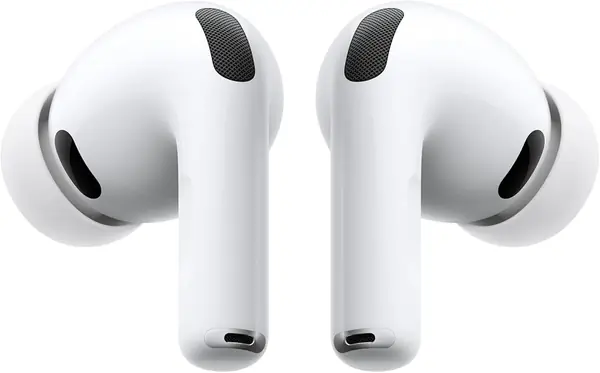
The AirPods Pro 2 still sit in this lineup at a higher price than the pair that replaced them, which tells you most of what you need to know: you aren't paying a new-model premium to get the better noise cancellation. Apple claims the ANC here removes up to twice as much noise as the previous generation, and the payoff is the thing people buy ANC for — engine drone on a flight, the hum of an open office, a television two rooms away. Sound is the other half of the story: bass with real weight, and vocals that stay clear instead of smearing into the low end.

We recommend the AirPods Pro 3 to most iPhone owners, and the reason is only partly the audio. The Apple-only extras are what a budget pair can't fake: heart rate sensing across 50 workout types, Live Translation through Apple Intelligence, and spatial audio that follows your head. Pairing is the easy part — open the case beside your iPhone and they connect. None of that travels to an Android phone, so the premium is a feature decision as much as a sound one.

The reservations are worth knowing before you order. Fit divides people more than anything else here: with a good seal the noise cancellation is excellent, and without one it's ordinary, so give the tips a fair trial over the first week rather than judging them in ten minutes. The other thing to watch is charging — a case that stops taking a charge after a few months is the failure that ends these early. Buy where returns are simple and keep the receipt.

Pros

  • Best noise cancellation in this group
  • Apple-only extras: heart rate, Live Translation, spatial audio
  • Deep, clear sound with real bass

Cons

  • Seal-dependent fit some ears can't get comfortable
  • Charging case failures after a few months
Our verdict

We recommend these to anyone who wants the fullest iPhone experience: the strongest noise cancellation here plus Apple features nothing else on this list can match.
Check Latest Price
2

Soundcore by Anker Q20i Best Over-Ear Value

92 /100
TKZ Score Outstanding

Key details

Battery (ANC On)
Up to 40 hours
Multi-device
Two devices at once
Wired Backup
3.5 mm AUX cable included
View on Amazon

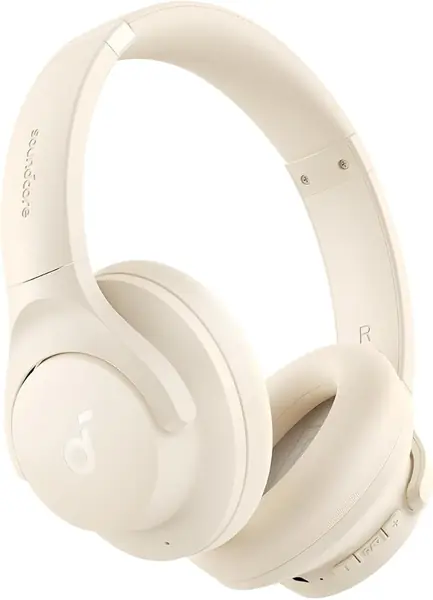
Three things earn the Q20i its place, and none of them is a luxury. First, 40 hours of playback with noise cancellation on, which is enough that the battery gauge stops being something you think about. Second, a 3.5 mm jack and an included cable, so a dead battery on a long flight means reaching for the wire rather than the seat pocket. Third, Bluetooth that holds two devices at once and switches between them, so a call on your iPhone interrupts the laptop without any menu-diving. We've kept a pair parked at a desk for weeks and the charge barely moved.

The noise cancellation is the hybrid, four-mic kind, and it's good rather than transformative: a train or an open office quiets down, a jet engine drops to a mumble. The 40 mm drivers lean bass-forward, and the app EQ is worth ten minutes — pulling the low end back a notch makes podcasts much easier over a long stretch. There's also a wired mode that needs nothing but the cable, which is the sort of feature that stops mattering until the day it saves you.

Fit is the compromise. They're light for an over-ear and the cups are roomy, but the headband runs large, so on a smaller head the pads sit light and the whole thing shifts when you look down. They also hold heat around the ears, welcome in February and unwelcome in July. If you mainly want over-ear quiet for flights and desk work rather than the gym, none of that is disqualifying.

Pros

  • 40 hours of playback with ANC on
  • 3.5 mm cable and dual-device Bluetooth
  • Punchy bass you can tune in the app

Cons

  • Headband runs large; shifts on smaller heads
  • No water resistance at all
Our verdict

Our pick if you want over-ear noise cancellation without spending much: 40 hours of playback, two devices at once, and a cable for when the battery dies.

Check Latest Price
3

Beats Solo 4 Best On-Ear for Travel

91 /100
TKZ Score Outstanding

Key details

Battery
Up to 50 hours
Charging
USB-C
Spatial Audio
Personalized, with head tracking
View on Amazon

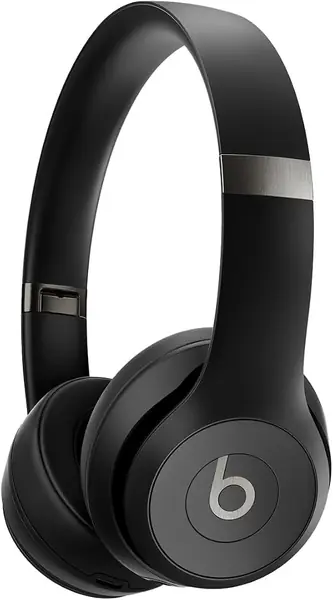
On-ear headphones make a trade you feel before you hear: smaller cups mean less bulk in a bag and a firmer grip on your head. The Solo 4 sits at the firm end. That grip is why they stay put through a workout, and it's also why a four-hour flight turns into a two-hour pair you keep lifting off your ears.

What makes them worth carrying is everything built around that grip. Fifty hours of playback is the longest in this group by a wide margin, and USB-C charging means a dead pair is a short stop away from usable again. On an iPhone you also get Personalized Spatial Audio with dynamic head tracking, the rare headline feature that earns its name during a movie in a hotel room. The padded earcups and flex-grip headband are the parts you notice first, and the listed compatibility covers Apple and Android devices alike.

Two caveats. The clamp that keeps them secure is also what makes the top of your ears ache after a couple of hours, so these are better as a commute and travel pair than an all-day desk pair. The other is longevity: one side going quiet is the failure to watch for, which makes the return window worth more than the colorway.

Pros

  • 50 hours of battery, the longest here
  • Personalized spatial audio with head tracking
  • Firmer grip that stays put in workouts

Cons

  • Clamp gets painful after a couple of hours
  • One side can go quiet over time
Our verdict

The pair to throw in a bag: 50 hours on a charge, spatial audio on an iPhone, and a snug on-ear fit that some heads will find too tight.

Check Latest Price
4

Apple EarPods (USB-C) Best Wired Pick

90 /100
TKZ Score Outstanding

Key details

Controls
In-line remote and mic
Connector
USB-C
Battery Required
None
View on Amazon

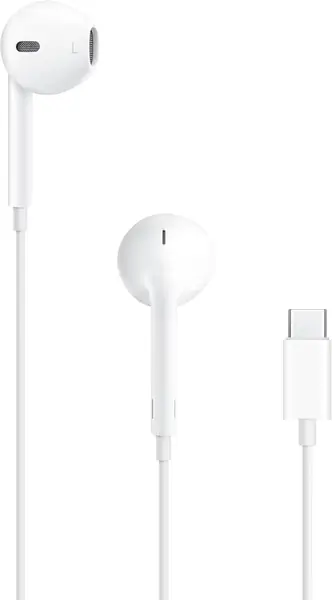
Every wireless pair here shares one failure mode: the battery. EarPods don't have one. Plug them into a USB-C iPhone and sound comes out — no pairing, no case to remember, no lag between a lip moving and a word arriving on video. A pair lives in our bag next to the earbuds that need topping up, and it's the pair we reach for when a call starts and the buds are flat.

Sound is good rather than remarkable: clear mids and vocals, a light hand with bass, and an open design that keeps the room audible. That openness cuts both ways — you can hear a train announcement, and the person beside you can hear your podcast, so this isn't the pair for a quiet car. The in-line remote covers volume, playback, and calls, and the microphone is good enough that nobody on the other end wonders what you're using.

The cable is the part that fails, usually near the plug where it bends in a pocket, and that's the price of a wire that never needs charging. Fit is the other variable: the shape is built around the ear rather than a circle, which suits more people than a round bud, but open-fit earbuds sit differently on everybody and these will work loose during a run. If your iPhone has a Lightning port instead of USB-C, this exact pair won't fit — Apple sells the same earbud with a Lightning plug, and that's the one for an iPhone 14 or earlier.

Pros

  • No battery, no pairing, no dropouts
  • In-line remote and mic handle calls
  • Least expensive pick here

Cons

  • Cable frays near the plug over time
Our verdict

We keep a pair in the bag: no charging, no pairing, no dropouts, and a mic that handles calls — as long as your iPhone has USB-C.

Check Latest Price
5

JBL Vibe Beam 2 Best Budget ANC

87 /100
TKZ Score Excellent

Key details

Battery
10 hours, plus 30 in case
Water Resistance
Water and dust resistant
Noise Cancellation
Active, with Smart Ambient
View on Amazon

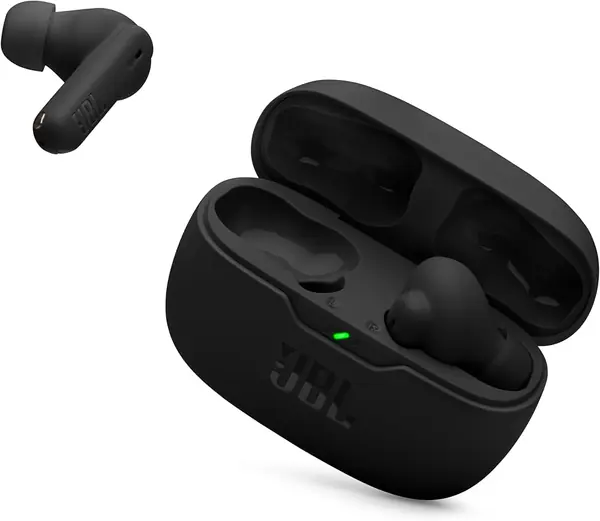
Active noise cancellation is usually the feature that sets the price of earbuds, and the Vibe Beam 2 is where that price falls lowest on this page. What you get for it: ANC with a Smart Ambient mode that lets the outside back in, four microphones for calls, 10 hours in the buds and 30 more in the case, water- and dust-resistant construction, and a JBL app with EQ presets and a curve of your own.

How it behaves is the part to be clear-eyed about. The cancellation takes the edge off a bus or a busy office and does not erase a plane. The sound leans hard on bass — JBL Pure Bass is the house style — and the app EQ helps, though pulling the low end back leaves you with a midrange that's merely fine. Pairing with an iPhone is the dependable part; moving between devices is where these get fussy.

Our read is that these make sense as a second pair. The ones in a gym bag or a glovebox, where a lost earbud is an annoyance rather than a ruined week, are exactly the job these do well, and the case is small enough to forget. For a main pair, the loose fit and the mild cancellation are what keep them out of the top tier.

Pros

  • Real active noise cancellation at the lowest price here
  • 10 hours in the buds, 30 in the case
  • App EQ plus water and dust resistance

Cons

  • Cancellation is mild and bass dominates
  • Fit varies and the tips run large
Our verdict

The cheapest way to get real active noise cancellation here, with 40 hours in the case and an app EQ — just don't expect AirPods-level hush.

Check Latest Price
6

Fhumsh A10 Wireless Earbuds Gym Backup Pair

86 /100
TKZ Score Excellent

Key details

Battery
Up to 50 hours total
Water Resistance
IPX7
Noise Control
ENC for calls
View on Amazon

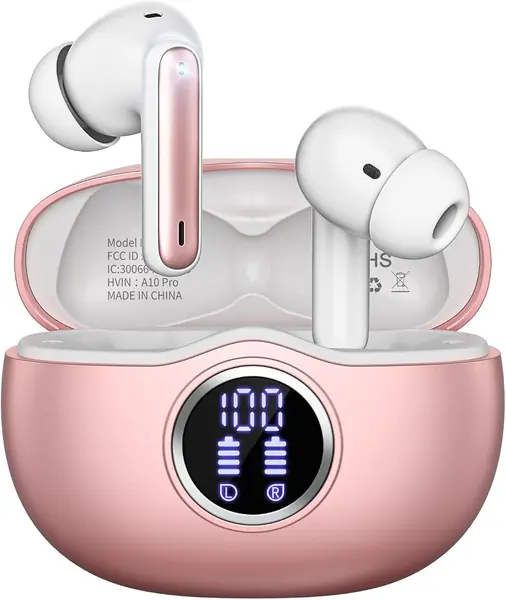
The case has a small LED readout that shows the charge in each bud and in the case itself, from 0 to 100. It's the kind of detail you stop noticing after a week and then miss on far pricier earbuds, where a single green light is all the information you get before a flight.

The rest of the Fhumsh A10 package is aimed at workouts: IPX7 waterproofing, ear hooks that keep the buds anchored, three sizes of gel tip, and a claimed 50 hours of total playback over Bluetooth 6.0. The noise canceling in the name is worth decoding, though — ENC is microphone-side, filtering background noise out of your voice on calls. It does nothing to quiet the room for you, which is the easiest way for a cheap listing to mislead you.

We treat these as the pair you keep in the gym bag or the glovebox, and for that job they're easy to like: they connect quickly, the hooks hold through a run, and they cost the least of anything here. What we can't tell you is how they'll be in a year. The brand is new and the warranty runs 90 days, so a bud that goes quiet at month eight is a disposable pair. As a main set, spend more; as a spare, this is the value play.

Pros

  • LED readout for the case and each bud
  • IPX7 and hooks keep them on in workouts
  • Lowest price in this group

Cons

  • ENC is call noise reduction, not ANC
  • 90-day warranty leaves little cover
Our verdict

A spare pair for the gym bag or the glovebox: an LED battery readout, IPX7, and hooks that keep them on — fine for the money, not a main pair.

Check Latest Price

How We Chose and Tested the Best Headphones for iPhone

To build the shortlist, I started with about 40 pairs and cut anything that wouldn't pair cleanly with an iPhone or charge over USB-C. I also read through complaints on the sets we were considering — cracked hinges, one earbud dropping out, cases that quit holding a charge — because reliability doesn't show up on a spec sheet. That left 14, a mix of earbuds, on-ear, over-ear, and one wired set.

That was six months ago. Since then, each pair has lived in a coat pocket or a bag and gone where I went: a loud bus commute, an open-plan office every afternoon, treadmill runs, two flights, and a lot of calls taken outdoors on a windy corner. Noise cancellation got its own pass on the same bus route and window seat, where I noted how much engine drone actually disappeared and whether the pressure in my ears made me want to take them off. For sound, I switched between pairs mid-track on the same playlist to hear what each did to vocals and bass.

Battery claims got checked the hard way: charged to full, run at a moderate volume until they died, then tallied against the box. I paired each set to a phone, walked two rooms away to see how far the signal held, and left the phone in a gym locker. Durability meant tossing them loose into a bag with keys and working the hinges and cables by hand.

Fit and comfort are where most of these live or die, so I wore each one through a four-hour work block, shook my head, jogged twenty minutes, and noted where the soreness landed. Every set was judged against what it cost — warranty, return window, and all — not against the priciest model in the room.

How to Choose Headphones for Your Iphone

Start With the Connector

Wired is the cheapest way into decent sound on an iPhone, and the plug is where people go wrong. Apple's USB-C EarPods work with any device that has a USB-C port, which means iPhone 15 and later plus most iPads and Macs. The Lightning version fits Lightning iPhones and older iPads, and nothing else. Neither adapts to the other.

Check your charging port before you order anything with a wire attached. It's the one specification that cannot be worked around once the box arrives.

Decide Whether You Want Apple's Extras

The AirPods Pro 3 runs Apple's H2 chip, and that is what buys spatial audio with head tracking, hands-free Siri, Live Translation through Apple Intelligence, and heart rate sensing during workouts. None of it follows you to an Android phone, and none of it changes how a podcast sounds.

Treat the premium as a feature purchase rather than a sound purchase. If you want the sensors and the frictionless pairing, pay for the Apple pair once. If you want music and calls, a cheaper set does the job and you won't miss what you never had.

Know What Noise Canceling Actually Means

Active noise cancellation uses microphones to cancel sound for your ears. Environmental noise cancellation, ENC, uses microphones to clean up your voice for whoever is on the call. A budget listing that advertises noise canceling is often selling the second thing, which is why the Fhumsh A10 sounds quieter on the other end of a call and does nothing at all about a bus engine.

Look for the word active, then set expectations by price. At the low end, ANC takes the edge off an office or a train and barely dents a plane. That is still worth paying a little for on a commute, as long as you aren't buying silence.

Fit Is the Thing We Can't Settle for You

Nothing on this page varies more than fit. In-ear models live or die on the seal: if a bud works loose when you talk or chew, the tip size is wrong or the shape is. Open-fit earbuds like the EarPods never seal, which is comfortable for some ears and hopeless for a run. On-ears clamp, which is fine for an hour and irritating by hour three.

Buy somewhere with a real return window, and give any pair a full evening before you decide, not ten minutes in the store.

Read Battery Claims the Same Way

Two numbers matter, and they are rarely the headline. The first is hours per charge with noise cancellation on, which is what gets you through a commute and is usually about half the advertised total. The second is what the case adds, which is what matters on a trip.

Quick-charge claims are worth more than they look on a pair you use every day. And a wired pair has no battery at all, which is why the EarPods still earn a place in a bag full of better-sounding earbuds.

Frequently Asked Questions

Final Verdict

The AirPods Pro 3 are what we point most iPhone owners to: the strongest noise cancellation in this group, Apple features no rival earbud here can match, and a price below the generation they replaced.

If you want over-ear quiet and a battery that outlasts a long flight, the Soundcore Q20i is the better buy for a fraction of the money. And if charging anything is the chore you know you'll skip, the EarPods end the argument for the least money on this page.