Best Wireless Headphones for Teens of 2026

Headphones are the rare gift a teenager will use four hours a day and then treat like a jacket: stuffed in a backpack, sat on, lent to a friend, and expected to still work on Monday. They want bass they can feel and something that doesn't look like it came from the school supply aisle; you want a pair that survives until spring and doesn't need charging every night. I've spent the last six months with 12 pairs of wireless headphones in a house with two teenagers, and the gap between the cheap ones and the good ones is rarely about sound alone.

Two things get overlooked in the shopping. Multipoint pairing keeps a phone and a school laptop connected at the same time, so nobody has to re-pair between classes. Volume is the other: at this price, few pairs cap how loud they go, and noise cancellation mostly takes the edge off a bus ride rather than creating silence.

Comfort and fit decide the rest — a pair that clamps or slides off during a walk ends up in a drawer, no matter how good it sounds. The picks below are sorted by how they'll actually get used.

The Best Wireless Headphones for Teens

1

JLab JBuds Lux ANC Best Overall
95 /100
TKZ Score Outstanding

Key details

Battery Life
70 hours
Item Weight
8.29 oz
Warranty
2 years
Noise Cancellation
Hybrid ANC, up to 35 dB
View on Amazon

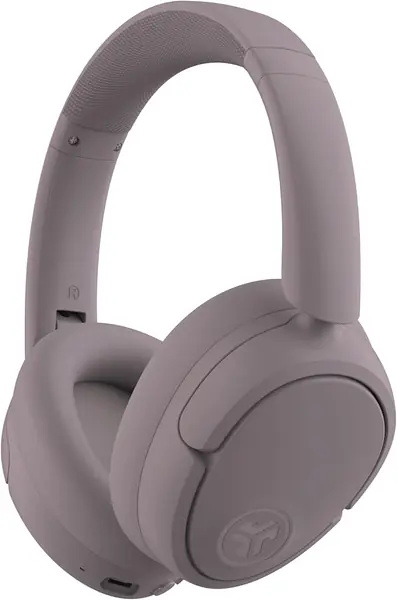
Noise cancellation is what changes a school day, and this is the only pair here that cancels noise actively instead of leaning on its ear pads. JLab rates the hybrid system at up to 35 dB, which covers a bus engine, a cafeteria, and the television in the next room, and it does that without the premium price of the usual ANC brands. That combination is why it is our pick for most teenagers: real cancellation, an over-ear fit that lasts a full day, and coverage that outlasts the school year.

The battery supports the same story. JLab rates 70 hours with cancellation off and more than 40 with it on, which works out to a weekly charge on a normal school schedule, and it tops up over USB-C. Multipoint holds a phone and a school laptop at once, so a video on one device does not mean re-pairing when a call arrives on the other.

What we appreciate most sits in the app: EQ presets, remappable controls, and a safe-hearing limit, so a volume ceiling stays put even if the phone's own limiter gets switched off. At 235 g with soft over-ear cushions, these are built for a whole day rather than a commute, and the two-year warranty is the longest in this group, which is the kind of thing that matters when the alternative is replacing a pair in March.

Pros

  • Hybrid ANC rated to cut up to 35 dB
  • 70 hours of battery, 40+ with ANC on
  • Safe-hearing limit built into the JLab app
  • Two-year warranty, the longest in this set

Cons

  • Ear cups are the first part to wear
Our verdict

We tell most families to start here: the ANC handles a bus or a study hall, the battery covers a school week, and the two-year warranty covers the year a teenager is hardest on gear.
Check Latest Price
2

BERIBES WH202A Best Budget

94 /100
TKZ Score Outstanding

Key details

Battery Life
120 hours
Item Weight
6.35 oz
Driver Size
40 millimeters
Charge Time
3 hours
View on Amazon

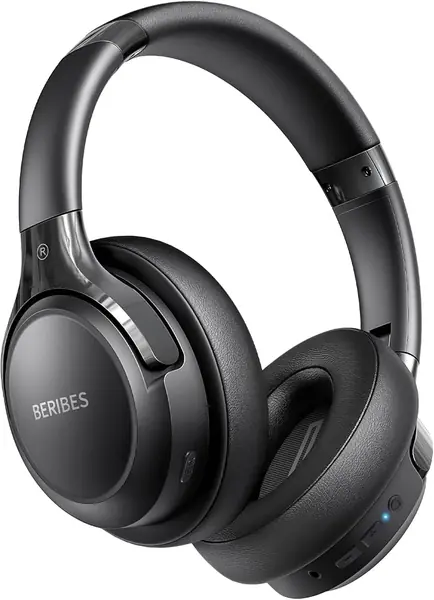
These cost a fraction of our top pick, and a teenager who leaves things on the bus is exactly the reason to care. That money buys 120 hours of playback from a 1000 mAh battery, 40 mm drivers with six EQ modes, a folding frame at 0.18 kg, and a 3.5 mm cable in the box.

We like the value more than the sound. The tuning is clear and loud enough for pop, podcasts, and video, but it is not the pair to buy for someone who wants textured bass, and the isolation is honest rather than impressive: these are not noise canceling, so a loud bus still gets through. The battery is the real argument, since charging every couple of weeks is realistic, and at 0.18 kg they disappear on a smaller head.

The cable is the detail that matters most. If pairing misbehaves with a school laptop, or the battery dies on a long trip, the 3.5 mm jack turns them back into ordinary headphones, and that is a fallback worth having on any pair a teenager carries daily.

Pros

  • 120 hours of playback per charge
  • Light 0.18 kg frame with folding cups
  • 3.5 mm audio cable included
  • Six EQ modes on 40 mm drivers

Cons

  • Bluetooth audio can drift behind video
  • Cushions run warm on long wear
Our verdict

We point tight budgets here without hesitation: 120 hours and a cable in the box cover the two ways a cheap pair usually lets a teenager down.

Check Latest Price
3

JBL Tune 720BT Best Big-Brand Sound

93 /100
TKZ Score Outstanding

Key details

Battery Life
76 hours
Item Weight
7.76 oz
Driver Size
40 millimeters
Bluetooth
5.3
View on Amazon

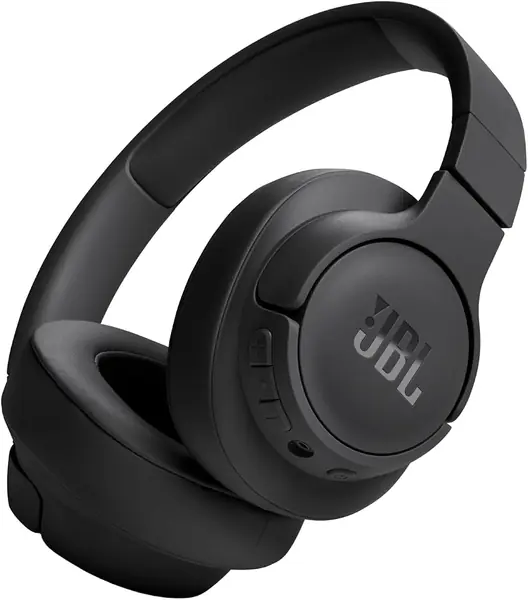
JBL sells these as over-ear, and the cups are shallow and the headband firm enough that on some heads they end up resting on the ears the way a big on-ear does. For a teenager with a small head or a pair of glasses, that is the first thing to know, because clamp is what decides whether a two-hour study session ends in a headache.

The rest is the JBL formula done properly. The 40 mm drivers carry Pure Bass tuning, the free app adds EQ presets and voice prompts, and the buttons on the ear cup handle volume, tracks, and calls. Battery life runs to 76 hours with a two-hour charge, multipoint switches between a phone and a laptop, Voice Aware drops the volume so they can hear themselves talk, and the frame folds with a 3.5 mm cable in the box at 220 g.

What earns it a place is the tuning and the control it gives: bass-forward sound, an EQ they can adjust themselves, and hardware that folds flat into a bag. The buttons are easy to find without looking, which is more than the touch panels manage, and multipoint keeps the school laptop and the phone connected at the same time. It is the set for a teenager who wants the music to have punch and will actually open the app.

Pros

  • Bass-forward JBL tuning with app EQ
  • 76 hours with a two-hour charge
  • Folds flat with a 3.5 mm cable included
  • Multipoint and Voice Aware for calls

Cons

  • No active noise cancellation
  • Call microphone sounds thin
Our verdict

We pick this one for a teenager who wants real bass and a name they recognize; the tuning and the app do the work, and the cable keeps it useful when Bluetooth does not.

Check Latest Price
4

Sony WH-CH520 Best Compact On-Ear

92 /100
TKZ Score Outstanding

Key details

Battery Life
50 hours
Driver Size
12 millimeters
Charging
USB-C cable included
Ear Cups
Swivel design
View on Amazon

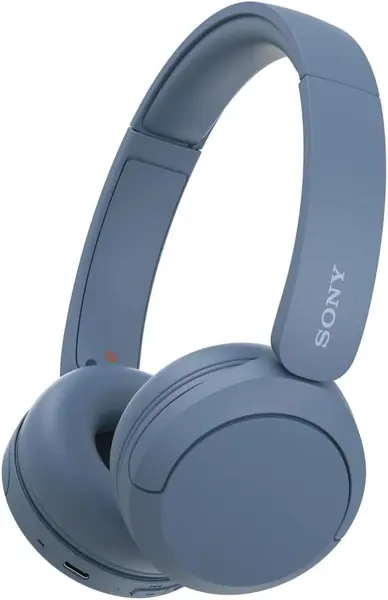
On-ear headphones that swivel flat are the ones that survive a backpack, and that is the job this Sony does better than anything else on this list. The cups turn to lie flat, the frame is light enough to forget about in a bag, and the 50-hour battery with USB-C quick charging means the cable rarely comes out.

Clean and balanced rather than bass-heavy is how the 12 mm drivers are tuned, and the Sony Headphones Connect app adds EQ on top of that. Multipoint holds a phone and a laptop at once, calls run through a built-in mic, and the swivel means they go on and off one-handed. There is no 3.5 mm jack, so everything depends on Bluetooth behaving.

Connectivity is the softer spot. Pairing is quick, but dropouts can interrupt a session, and with no cable to fall back on, a school laptop that refuses to pair leaves these silent until it cooperates. That is worth knowing before these become the pair that lives in a locker.

Pros

  • Swivel cups pack flat in a bag
  • 50 hours with USB-C quick charging
  • Multipoint for phone and laptop
  • App EQ in Sony Headphones Connect

Cons

  • On-ear pressure builds within an hour
  • Headband and hinge are the break points
Our verdict

We like it for the teenager whose headphones live in a backpack: flat-folding cups, 50 hours, and an app that lets them tune the sound.

Check Latest Price
5

Picun B8 Best for Gaming and Video

91 /100
TKZ Score Outstanding

Key details

Battery Life
120 hours
Item Weight
12.3 oz
Bluetooth
5.3
Audio Latency
50 milliseconds
View on Amazon

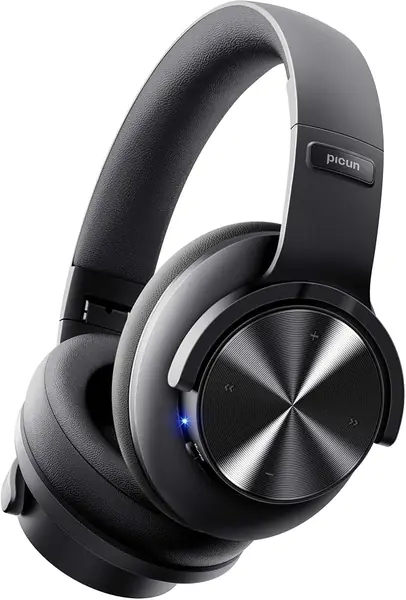
Fifty milliseconds is the number that puts the Picun B8 on this list. That is the rated Bluetooth latency, and it is the difference between sound that follows a game or a video and sound that arrives a beat late, which is the usual frustration with budget wireless headphones.

The rest of the package is built for long sessions. The 1000 mAh battery is rated for 120 hours, the dual 40 mm drivers carry three EQ modes, multipoint keeps a phone and a console or laptop connected at once, and the controls mix buttons with a touch panel that takes a few days to learn. A 3.5 mm cable is in the box, which makes the wired option a backup here rather than a requirement.

Weight is where these give ground. At 12.3 ounces they are the heaviest pair here, and a teenager who walks to school in them will feel it by the end of the walk; at a desk, on a couch, or in a gaming chair it stops mattering. That is the trade for the battery and the low-latency radio, and for the way these actually get used, it is usually a fair one.

Pros

  • 50 ms rated latency for games and video
  • 120 hours on a single charge
  • Multipoint plus a 3.5 mm cable
  • Soft cushions and a secure fit

Cons

  • Hinge and headband break early
Our verdict

We hand this to the teenager who games or watches video in bed, where low latency and a 120-hour battery matter more than a light frame.

Check Latest Price
6

Beats Solo 4 Style-First Splurge

90 /100
TKZ Score Outstanding

Key details

Battery Life
50 hours
Charging Time
2.15 hours
Compatibility
Apple and Android
Spatial Audio
Personalized with head tracking
View on Amazon

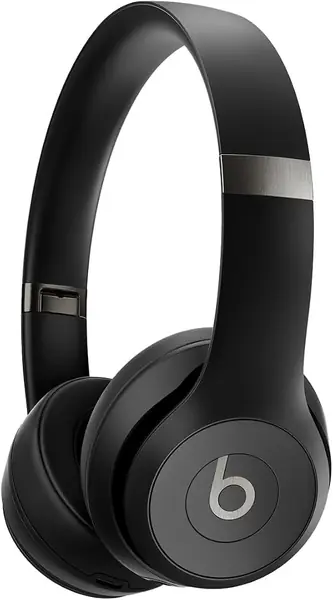
There is a version of this purchase where the name is the point. If the teenager has asked for Beats specifically, the Solo 4 is the pair that answers the request, and no amount of value math from us changes that.

What they get is the custom acoustic architecture with bass-forward tuning, personalized Spatial Audio with head tracking, 50 hours of battery, USB-C Fast Fuel charging, and pairing that works with Apple and Android alike. The flex-grip headband and UltraPlush cushions are shaped to keep the fit stable, which matters on a walk to school with a backpack over one shoulder.

It is the priciest pair here, and the case for it is sound and identity rather than all-day comfort. The cups sit on the ear by design, the clamp is firm, and a double period of study is where that shows. What the money buys is the tuning, the spatial audio, and a pair they will actually want to be seen wearing.

Pros

  • Bass-forward sound with spatial audio
  • 50 hours with USB-C Fast Fuel
  • Works with Apple and Android

Cons

  • Longevity is the open question at this price
Our verdict

We recommend these only when the teenager has asked for Beats by name, and then the sound and the spatial audio make the request reasonable.

Check Latest Price
7

Uliptz WH203A Light Budget Backup

89 /100
TKZ Score Excellent

Key details

Battery Life
65 hours
Item Weight
6.35 oz
Driver Size
40 millimeters
Bluetooth
6.0
View on Amazon

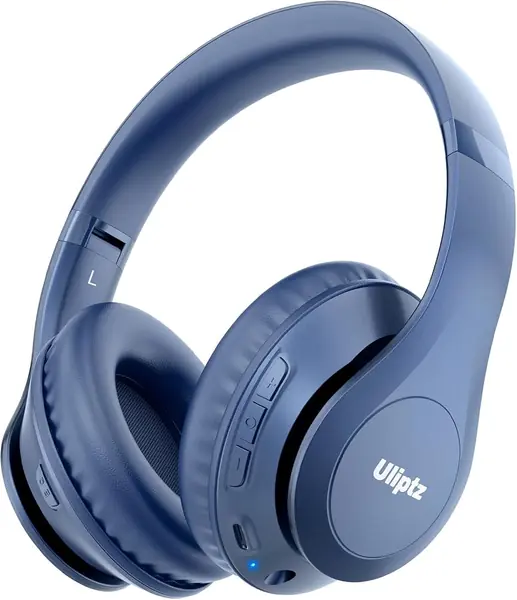
The BERIBES wins the budget argument on hours alone; this one wins the morning the battery is already dead. Ten minutes on the charger is rated for about four hours of playback, which is the kind of number that rescues a school day.

For the bottom of the range the hardware is generous: 40 mm drivers with six EQ modes, Bluetooth 6.0, 180 g on the head, memory foam cups on a metal slider headband, multipoint pairing, and a 3.5 mm cable in the box. Battery life is rated at 65 hours and the frame folds down for a backpack.

Sound is the compromise. The EQ modes give bass and vocal options, but the volume ceiling is modest: push the level and the sound thickens rather than getting louder, and a busy room eats what is left. For podcasts, video, and background music that is fine; for a teenager who wants to feel the bass, it is not.

Where these earn a place is as the pair nobody has to worry about. They are light, they top up fast, they fold, and they cost little enough to replace without a family discussion, which is most of what a first pair needs to do. Six EQ modes at this end of the range is the detail we did not expect.

Pros

  • Ten-minute charge for about four hours
  • 180 g frame with folding cups
  • Six EQ modes over Bluetooth 6.0
  • 3.5 mm cable and multipoint pairing

Cons

  • Durability is the gamble
Our verdict

We point first-time buyers and locker-pair shoppers here: the quick charge covers a forgotten cable, and 180 grams is easy to live with.

Check Latest Price

What Six Months With 12 Pairs of Headphones Taught Us

We built the shortlist from research first: over-ear and on-ear wireless models with a published battery claim, a built-in mic, and enough of a review history to suggest the hinges survive daily life. Folding designs and multipoint pairing showed up across listing after listing, so we treated both as requirements rather than bonuses. Twelve pairs came in, spread from budget to mid-range, and stayed for six months.

They went where a teenager's headphones actually go: the school bus, a bedroom floor between homework problems, the back seat on weekend drives, and the bottom of a backpack under textbooks and a water bottle. My team used them on commutes and calls; the teenagers used them for homework, gaming, and streaming.

At the six-week mark we dropped each pair from desk height onto hardwood, twisted the headbands, tugged the hinges, and checked for cracks or a clamp that had gone slack. Every pair got a two-hour study session, which is where we learned whether the headband pressed or the earcups turned ears hot, and we tried them on different head sizes and over glasses — anything that slid off during a walk got marked down.

Battery was logged, not guessed: a full charge, then the number of days until the low-battery warning, measured against the claim. We paired each set to a phone and a school laptop, walked two rooms away to listen for dropouts, and switched multipoint mid-song. Volume we measured with a decibel meter at arm's length and listened for distortion at full tilt; noise cancellation went up against a box fan and a bus engine, which is where budget models show their limits. At the end we weighed what each pair cost against what it actually delivered.

How to Choose Wireless Headphones for a Teen

Decide What a Lost Pair Should Cost

The first decision is not sound, it is arithmetic: how much can vanish into a bus seat without ruining the month? Budget pairs here cost a fraction of the premium pick and sound good enough for streaming, podcasts, and video. A mid-priced pair buys active noise cancellation and a longer warranty; a premium pair buys tuning and status.

Set the replacement number before you shop, then stay inside it. One pair with real coverage beats three cheap pairs you resent buying.

Durability Lives in the Hinges

Headphones for teenagers fail in two places: the folding hinge and the headband just above the ear cup. Drivers rarely die; plastic does. That makes the warranty a specification worth comparing, and most pairs here carry one year while the JLab carries two.

A folding frame is a genuine convenience for a backpack, but each fold adds a joint. Check that the hinge feels tight rather than loose, and buy the longer coverage if your teenager is rough on gear.

Battery Life: The Top-Up Beats the Headline

Hours are easy to compare and less important than they look. Fifty hours covers a school week; 120 hours means charging twice a month. What actually rescues a teenager is a fast top-up: the Uliptz is rated for about four hours of playback after ten minutes on the cable, and the JBL adds a five-minute speed charge.

If your teenager never remembers to charge, prioritize USB-C and a quick top-up over the biggest number on the box.

Fit Is Where Cheap Pairs Fail Teenagers

The label over-ear describes the shape of the cup, not its size. A pair sold as over-ear can still press on the ears, and the JBL Tune 720BT is the example here. On-ear cups press by design, which is what turns the Sony and Beats picks into a fit decision rather than a sound one.

If the teenager wears glasses or earrings, a deeper cup and a gentler clamp matter more than driver size. Assume compact means on-ear until the listing proves otherwise.

Noise Cancellation: Worth It for a Teenager?

Active noise cancellation is the one upgrade that changes daily use: a bus, a study hall, and a shared bedroom are all steady noise, which is what ANC handles best. It costs money and battery, since the JLab runs 70 hours without it and more than 40 with it on.

It is also not the same as isolation, which is just the pads blocking sound. If your teenager studies in a loud house or commutes, pay for ANC; at a quiet desk, passive isolation is enough.

Frequently Asked Questions

Final Verdict

Buy the JLab JBuds Lux ANC for most teenagers. It is the one pair here that combines real noise cancellation, a battery that lasts a school week, and two years of coverage, which is what a family actually needs from something a teenager carries everywhere.

If the budget is the hard limit, the BERIBES WH202A does the two things that matter most, long battery and a cable in the box, for a fraction of the money. And if the request is Beats by name, buy the Solo 4 knowing that all-day comfort is the gamble.