Best Kids Headphones for School of 2026

The first time headphones appeared on a school supply list, I assumed it was a one-off. Three kids later, it's a standing line item right next to the glue sticks, and the pair I grabbed in August is usually the pair that's broken by Halloween. What you actually need here is unglamorous: a volume ceiling that holds, a fit that survives being shoved in a backpack, and a cord that doesn't quit in December.

We've spent the past three months with 14 pairs, through morning bus rides, classroom reading apps, and homework at the kitchen table. The telling moment is always the same one — the first time a kid yanks them off by the cord instead of the earcup.

Two things I didn't expect to care about: a spare jack for splitting a tablet with a sibling, and color. A kid who likes how a pair looks is a kid who doesn't quietly lose them. The picks below were chosen for the things that get a family through a school year — a real decibel limit, an adjustable fit, sound that doesn't turn read-alouds to mush, and a price that doesn't sting when they eventually get sat on.

The Best Kids Headphones for School

1

EarFun K1 Best Overall
95 /100
TKZ Score Outstanding

Key details

Volume Limit
85/94 dB switchable
Warranty
18 months
Microphone
Inline, with share port
Weight
6.98 oz
View on Amazon

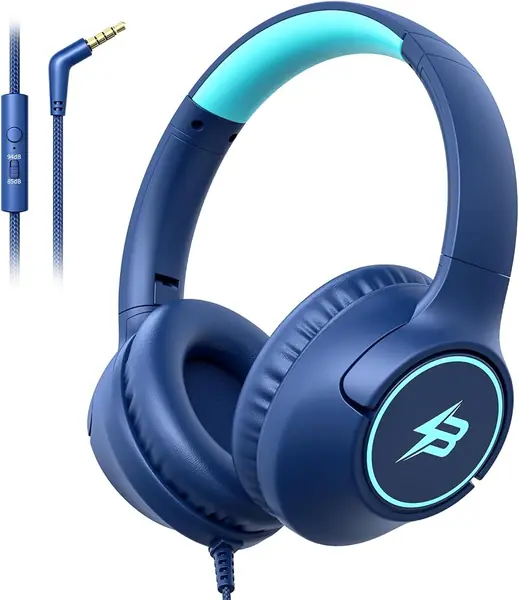
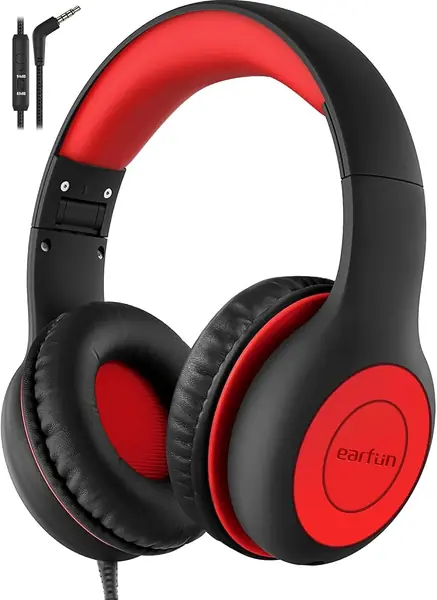
The line we kept coming back to on the EarFun K1 is the certification: it is built to the CPC and CPSIA children's product standards, a claim only one other pair here makes, and it sits in the middle of this group on price. Add a limiter that switches between 85 and 94 dB, a microphone on the cable, and a share port, and you have the only set here that answers every school requirement at once. That is the whole case for making it our top pick.

The share port is the detail we did not expect to care about. It lets a second pair daisy-chain off the first, so two kids can split one tablet in a computer lab or on a car ride without a splitter dongle to lose. The microphone sits on the braided cable with push-button controls for play and calls, and it is the version we want on a Google Meet or Zoom lesson rather than a child shouting into a laptop lid.

Sound is good for the money: 40 mm drivers, clear enough for a read-aloud or a phonics app, and soft ear caps that get through a morning of lessons without complaints. It folds into a backpack side pocket, and at about seven ounces it is not the lightest pair here but sits comfortably in the middle. For everyday school use, this is the one we reach for.

Pros

  • Switchable 85/94 dB volume limiting
  • Inline mic plus a share port
  • Built to CPC and CPSIA kids' standards

Cons

  • Durability is uneven; some pairs quit in a school year
  • Runs small for older elementary kids
Our verdict

We recommend the K1 as the default school pair because it is the only set here that is certified, volume-limited, and ready for a video call at the same time.
Check Latest Price
2

noot K11 Best Long-Cord Pick

94 /100
TKZ Score Outstanding

Key details

Warranty
24 months
Microphone
None
Fits Ages
3 to 16
Cord Length
5 ft
View on Amazon

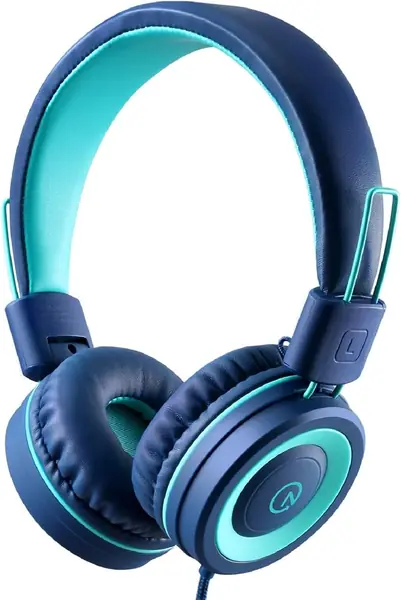
Five feet of cord is the first thing that makes the noot K11 useful: a child can push back from a desktop, sit on the floor with a Chromebook on the table, or hand a tablet to a sibling without unplugging anything. The cable is tangle-free and threaded, which is what keeps it alive through the daily wrap-and-stuff routine.

Everything else is plain on purpose. The adjustable band spans roughly ages 3 to 16, the on-ear pads are padded and light, and the whole thing folds flat for a backpack. The warranty runs 24 months, which covers two school years and is twice what several picks here offer.

What you do not get is a microphone or a volume cap. For a child who only listens, whether that is a recorded lesson, a practice test, or an audiobook on the way in, that is a fair trade, and this is the pair we hand over without worrying about the cord. If there are live classes on the schedule, or your child is young enough that you want a ceiling on volume, the EarFun K1 or the Botesty Ivy is the better buy.

Pros

  • Five-foot tangle-free cord
  • Folds flat and fits ages 3 to 16
  • 24-month warranty on a cheap pair

Cons

  • No microphone for online classes
  • No volume limiter at all
Our verdict

We keep the K11 in the bag for the child who only plugs into a Chromebook, because five feet of cord and a two-year warranty cost less drama than any feature here.

Check Latest Price
3

iClever HS19 Best Over-Ear Fit

93 /100
TKZ Score Outstanding

Key details

Volume Limit
85 dBA
Microphone
Inline
Weight
6.1 oz
Share Port
Yes
View on Amazon

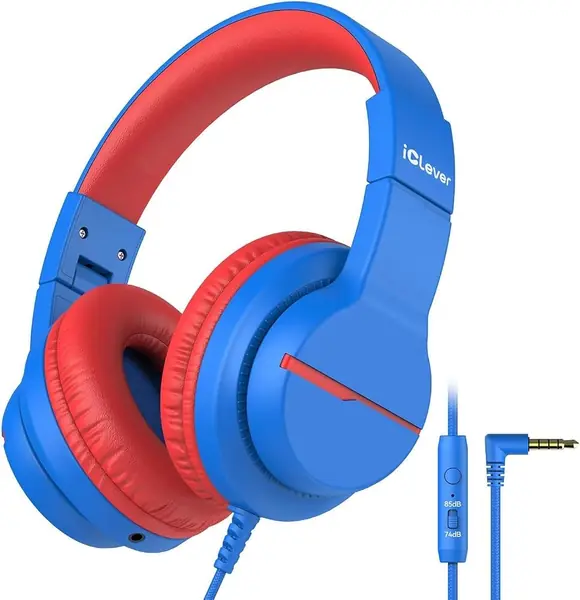
The knock on the iClever HS19 is volume. The cap is fixed at 85 dBA, and a room full of second graders can make that feel thin. We understand the complaint and we still keep these in rotation for a different reason: the over-ear cups actually enclose the ear, so a kid who hates the pressure of a pad on the cartilage tends to stop noticing them after a few minutes.

That makes it our pick for the child who squirms, complains, or pulls a pair off halfway through a lesson. The padding is soft, the band adjusts from first grade to fifth, and at 173 g it does not drag a small head forward. There is an inline mic for class calls and a share port so a second pair can listen in when one tablet has to serve two kids.

Sound is tuned for speech rather than music: clear on a compressed video call, thin on bass if your kid is using them for anything fun. The folding hinge and the collar where the cable enters the cup are the parts to watch, and the 12-month replacement warranty is the shortest cover in this group, so keep the order confirmation somewhere you can find it.

Pros

  • Over-ear pads that enclose the ear
  • 85 dBA cap with an inline mic
  • Share port for a second pair of ears

Cons

  • Thin plastic at the headband adjuster
Our verdict

We recommend the HS19 for the child who takes headphones off mid-lesson, because over-ear cups that enclose the ear solve a comfort problem no spec sheet captures.

Check Latest Price
4

Botesty Ivy Best Value Pick

92 /100
TKZ Score Outstanding

Key details

Volume Limit
85/94 dB
Warranty
24 months
Microphone
Inline HD
Cord
4.9 ft braided
View on Amazon

Near the bottom of the price range, the Botesty Ivy still includes almost everything the expensive pairs do: 85 and 94 dB modes, an inline microphone with push buttons, 40 mm drivers, ear cups that swivel 90 degrees, and a shape that folds down small enough for a backpack pocket. The braided cord runs 4.9 feet and resists tangling, which is more than we can say for the thin rubber cables on some cheap sets.

Kids can put these on by themselves, which sounds like a small thing until it is 7:55 in the morning and the bus is coming. The band adjusts, the set stays put through a morning of lessons, and the styling has held up well enough that a pair still looks new after a term. It is cut for the younger end of elementary, which is exactly where most first school pairs get bought.

For a first grader, this is the value pick. It gives up the share port and the certification line of the EarFun K1 and keeps the two volume modes, the microphone, and the warranty for less money. Set against the Aechorhy at nearly the same price, we prefer the extra year of cover here, and for a child who is hard on gear that matters more than a color choice.

Pros

  • Two volume modes, 85 and 94 dB
  • Inline mic and push-button controls
  • 24-month warranty at a budget price

Cons

  • Cord is the first part to fail
Our verdict

We point first-time school parents to the Ivy because it delivers two volume modes, a microphone, and a two-year warranty for less than almost anything else here.

Check Latest Price
5

Belkin SoundForm Mini 2 Best Wireless Option

91 /100
TKZ Score Outstanding

Key details

Volume Limit
85 dB
Case
Included
Playtime
55 hours
Connection
Bluetooth 5.4 and 3.5 mm
View on Amazon

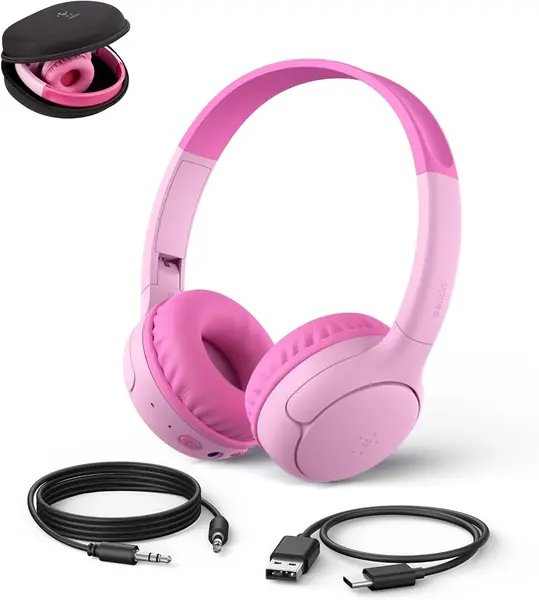
If you want one pair to cover the flight, the visit to grandma, and Monday's Chromebook, the Belkin SoundForm Mini 2 is the only set here that manages both: Bluetooth 5.4 with 55 hours of playtime, plus a 3.5 mm jack and a cable for school. Volume tops out at 85 dB in either mode, there is a built-in mic, and RockStar mode shares one source with a sibling or a classmate. That flexibility is why we keep it on the list despite the price.

Up close it is thoughtfully built for small people: kid-sized on-ear cushions, an adjustable band, controls a child can work without a tutorial, and a hard case that survives a backpack. The cable detaches, which matters more than it sounds, because a chewed or frayed cord becomes a replaceable part rather than the end of the pair. Belkin backs the whole thing for two years.

The catch is cost and habit. You are paying several times the price of a good wired pair for wireless a child may never use in class, and a headphone that needs charging is one more thing to remember on a Sunday night. If the classroom is wired-only and travel is a twice-a-year event, two wired pairs are the smarter spend.

Pros

  • Bluetooth 5.4 plus a 3.5 mm cable
  • 85 dB cap with a built-in microphone
  • Hard case included and a detachable cord

Cons

  • Costs several times a wired pair
  • Battery adds a charging routine
Our verdict

We recommend the SoundForm Mini 2 for families who want one pair to cover the flight and the classroom, since it is the only pick here that does both properly.

Check Latest Price
6

POWMEE P20 Cheap Spare Pair

90 /100
TKZ Score Outstanding

Key details

Volume Limit
94 dB
Warranty
12 months
Weight
7.76 oz
Ear Cups
90° swivel
View on Amazon

The POWMEE P20 leaves out the microphone and the quieter mode, and that is roughly what its price buys: a 94 dB ceiling, a 3.5 mm plug, ear cups that swivel 90 degrees to lie flat, and an adjustable band. It is the cheapest pair in this group by a wide margin.

As a spare, the second pair that stays in the backpack for the morning the good ones are left on the kitchen table, that is a good deal. The pads are soft, the swivel makes it easy to stuff into a front pocket, and the 12-month warranty covers the first year of hard use. This is the pair we suggest for a classroom set or a backup, not the one we suggest for a child with online lessons on the schedule.

The fit is the thing to check before ordering. The band runs large and the cups sit low on a 3- or 4-year-old, so it suits a 5-year-old and up better than a preschooler, which is the opposite of the Botesty Ivy and its smaller cut.

Pros

  • Lowest price in this group
  • Ear cups swivel flat for a backpack
  • Soft pads and an adjustable band

Cons

  • 94 dB only, with no quieter setting
  • No microphone for class calls
Our verdict

We suggest the P20 as a spare that lives in the backpack, since nothing else here costs so little for a pair that still fits and swivels flat.

Check Latest Price
7

Acer OHW328 Best for Bigger, Wider Ears

89 /100
TKZ Score Excellent

Key details

Volume Limit
85/94 dB
Weight
5.75 oz
Fits Ages
3 to 16
Ear Cup Opening
54 x 40 mm
View on Amazon

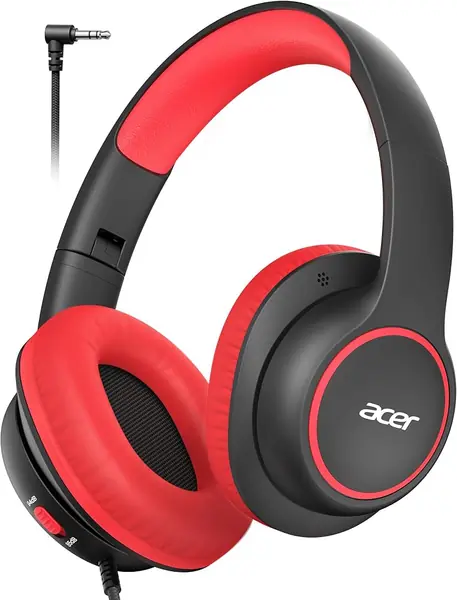
The measurement that makes the Acer OHW328 worth a look is the ear cup opening: 54 by 40 mm, with cups that tilt about 10 degrees in every direction. That is a lot of room inside, and it is aimed squarely at the child whose ears have outgrown everything else, the one leaving red marks on the cartilage of an on-ear pad.

The rest of the kit suits school. There are 85 and 94 dB modes, a 40 mm driver, a standard 3.5 mm plug, a folding hinge, and a listed range of 3 to 16 years. Acer also states BPA-free materials and compliance with US children's product rules, which puts it alongside the EarFun as the only certified pair in this group.

At 5.75 ounces it is lighter than any other pick here that publishes a weight, and a light pair is a pair that gets left on instead of pushed up. The cups rotate flat, the band adjusts, and the pads are soft rather than deep, enough to take the edge off the clamp without swallowing a small head.

This is where we point a parent whose child says every headphone squeezes, and especially one who wears glasses, because the tilt lets the cups sit around the arms rather than on them. The caveat is track record: this is a newer model, so the second school year is an open question. Nothing about the build worries us for the first.

Pros

  • Large 54 x 40 mm ear cup openings
  • Cups tilt 10 degrees to sit around the ear
  • BPA-free and CPC compliant

Cons

  • Large cups sit wide on a preschooler
  • Newer model with a shorter track record
Our verdict

We keep the OHW328 on the list for the kid whose ears have outgrown every other cup, since 54 mm openings and tilting cups solve a fit problem nothing else here does.

Check Latest Price
8

Aechorhy YY-01 Best for Colorful First Headphones

88 /100
TKZ Score Excellent

Key details

Volume Limit
85/94 dB
Warranty
1 year
Microphone
Built-in HD
Drivers
40 mm
View on Amazon

Nearly the same money as the Botesty Ivy buys nearly the same list: 85 and 94 dB modes, a built-in microphone, 40 mm drivers, a folding hinge, and soft over-ear pads. The differences sit in the details, which come down to pad material, fit, and color, and color is where a 7-year-old actually has an opinion.

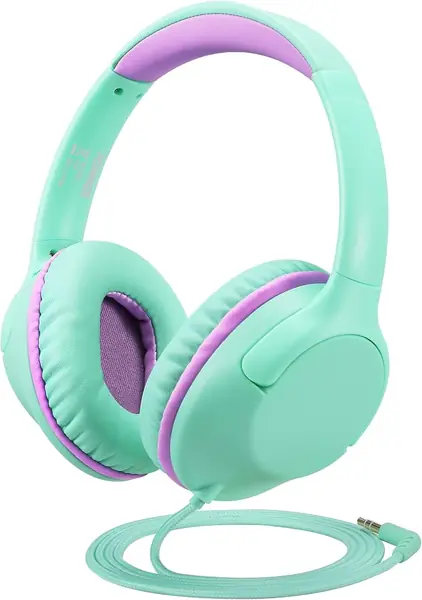
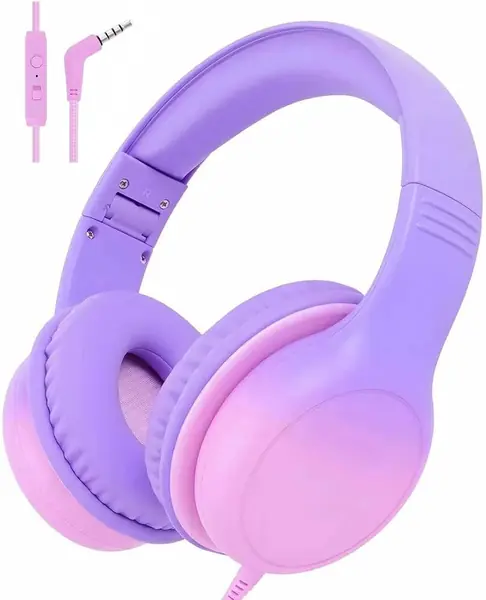
On the head it is snug and stays put, with plush, breathable pads that drew no complaints about pressure through a long school day, and the purple-pink finish is the sort of thing that makes a kid willing to wear them without a negotiation. The band adjusts far enough to cover the elementary years.

Sound is clear and mid-forward, good for a teacher's voice and a read-aloud app, a little thin on bass if the headphones double as a toy. The microphone is built into the set rather than hanging on the cable, and the package includes a cable and the headphones, nothing else.

For a careful child who chose the color, this is a fine buy: everything a school pair needs, at a price that takes the sting out of losing one. If the pair will be crammed into a backpack five days a week, pay the small step up to the Botesty for the extra year of warranty, or to the EarFun for the certification. Otherwise, the YY-01 does the job.

Pros

  • 85/94 dB modes at a budget price
  • Microphone built in for online classes
  • Plush pads and a snug adjustable fit

Cons

  • Ear pads can work loose with daily handling
  • Warranty runs only one year
Our verdict

We suggest the YY-01 for a careful kid who picked the color, since it covers every school requirement at a price that makes a replacement painless.

Check Latest Price

How We Tested Kids Headphones for School

We started with what a classroom actually demands: a 3.5mm plug that goes straight into a Chromebook or an iPad with no adapter, a published volume limit, and a hinge that folds flat enough to disappear into a pencil pouch. From a long list of research candidates we cut anything with no stated decibel rating and anything priced like a serious purchase rather than a school supply. Fourteen pairs made the cut, and they've been in rotation for three months.

Testing happened where these things actually live: the morning bus, a second-grade reading app, the kitchen table during homework, one long flight, and a rainy walk to the bus stop with the cord dragging on the pavement. We tugged each cord at the plug, folded and unfolded every hinge twice a day, and checked the ear pads for the seam split that shows up first. To test the volume limit, we ran each pair at maximum on a phone and held a decibel meter against the earcup to see whether the ceiling held or drifted.

Fit was judged by three kids, ages 4, 7, and 10 — we noted whether the headband slid down on the smallest head and whether the cups pinched the largest. For sound, we listened for whether spoken words stayed clear on read-aloud apps rather than how much bass a pair pushed. We recorded a voice memo through each microphone and played it back to hear how tinny it sounded on the other end, and we put two kids on one tablet through the sharing jack to see whether the volume sagged. Color we left to the kids, and the pairs they picked were the pairs that came home at the end of the week.

How to Choose Kids Headphones for School

The Volume Cap Comes First

Every pair here except the noot K11 limits volume, and how it does that is the first thing to check. A fixed 85 dB ceiling is the simplest version: it cannot be undone, and it matches how most classrooms sound. A switchable 85/94 dB set adds a louder mode for a plane or a school bus, which is genuinely useful. The trap is that the switch is easy to leave in the loud position, so set it back to 85 before the headphones go in the bag. A pair with no limiter at all is fine only for a child old enough to be trusted with the dial.

Do You Need a Microphone?

If your child has live lessons, a tutor on video, or speech practice, buy an inline mic: the EarFun K1, iClever HS19, Botesty Ivy, Belkin, and Aechorhy all have one. Listening-only use, such as recorded lessons, tests, and audiobooks, does not need it, and the noot K11 and the POWMEE P20 go without.

The plug matters as much as the mic. Microphone support needs a four-pole 3.5 mm connector, and a laptop with separate headphone and microphone jacks needs a splitter. Run a test call at home before the first morning of school.

On-Ear or Over-Ear, and Getting the Fit Right

Over-ear cups surround the ear; on-ear pads press against it. For a full day of lessons we lean over-ear, which is why the iClever, Botesty, Acer, and Aechorhy are the picks we point to first for a child who wears glasses or complains about pressure. Weight and cup size matter as much as the headband: the picks here run from about 5.75 ounces to 8 ounces, and the Acer's 54 mm openings suit a bigger head where a smaller cup pinches.

Adjust the band before the first school day. A band set too long slides forward, and a cup that sits half on the ear gets pushed off all morning.

The Cable Is What You Are Really Buying

The cable is the usual failure point, and the plug end takes most of the abuse. Four to five feet is enough slack for a desk without becoming a trip hazard. A detachable cable, as on the Belkin, is a replaceable part; a fixed one ends the whole pair when it frays. Look for a braided or threaded jacket, teach a loose loop rather than a tight wrap, and weight the warranty, because two years as on the noot K11 and the Botesty Ivy covers two full school years.

Wired, Wireless, or Both

School devices are wired, and most classrooms still ask for a 3.5 mm plug, so wired is the safe default. Bluetooth earns its place on the bus and the plane. A set that does both, like the Belkin SoundForm Mini 2, covers everything with one purchase and costs roughly three times a good wired pair, plus a charging routine. If your school insists on wired, buy wired and put the difference toward a second pair for travel.

Frequently Asked Questions

Final Verdict

Buy the EarFun K1. It is the only pair here that combines a certified kids' build, a switchable 85/94 dB limiter, an inline microphone, and a share port, and it does that at a mid-range price that makes a mid-year replacement survivable. The noot K11 is the better buy for a child who only listens and needs the longest cord; the Belkin SoundForm Mini 2 earns its premium when the same pair has to work on a plane; the Acer OHW328 is the one to try when every other set squeezes.