Best Bone Conduction Headphones for Running of 2026

Bone conduction headphones solve a problem sealed earbuds can't. They rest on your cheekbones and leave your ear canals open, so the car behind you and your playlist arrive at the same time. The catch is real, though: bass is thin, and in wind or traffic you'll want to push the volume higher than you should.

My team has worn 11 pairs over the past six months — on greenway loops, treadmill intervals, and one memorably soggy bike commute — and the differences came down to things the box doesn't tell you. How the band sits when you're also wearing glasses or a ponytail. Whether Bluetooth holds through a crowded intersection. What the claimed battery actually delivers at a volume you'd really use.

One thing worth knowing before you shop: an IPX4 survives sweat but not a downpour, and sweat is what kills these long before rain ever does. Every pick below earned its spot on a run, not on a spec sheet.

The Best Bone Conduction Headphones for Running

1

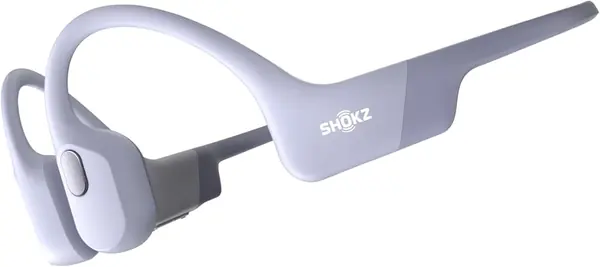
SHOKZ OpenRun Best Overall
91 /100
TKZ Score Outstanding

Key details

Battery Life
8 hours
Water Resistance
IP67
Weight
0.93 oz
Charging
Magnetic cable
View on Amazon

A nickel-titanium wire runs through the whole band of the OpenRun, which is why it stays put: the frame springs back to shape and holds tension against the sides of your head instead of hanging off your ears. Mid-run that means no shoving the band back up at a stoplight and no shift when you turn to check a driveway. It's the most reliable fit of the pairs here, and the payoff is that you stop thinking about the headphones. IP67 covers the rest — sweat, rain, and a rinse at the tap afterward.

Sound is clear and voice-forward, which is what bone conduction does well and what you actually want for podcasts and mile cues. Where every pair in this group struggles is volume outdoors: into a headwind or beside a highway, the music thins and you find your thumb on the button. Keep it where tires on pavement are still audible, because that's the reason to wear these instead of earbuds.

Eight hours is the number to plan around. It covers a week of short runs or one long one, and the ten-minute quick charge buys roughly an hour and a half if you're leaving straight from work. The charging cable is a proprietary magnetic one, so the accessory not to lose is the cable — the protective case, at least, comes in the box.

Longevity is the honest caveat. The band and the buttons are what go: some pairs lose one side or a stuck power button after a year or more of steady use. The two-year warranty is longer than most of the budget pairs here offer, and it's the right way to think about a bone conduction headband — a two-year consumable rather than a buy-once object.

Pros

  • Most reliable fit in this group
  • IP67 seals against sweat and rain
  • Open ear keeps traffic audible

Cons

  • Band and buttons can fail after a year
  • Eight hours is short for ultramarathon days
Our verdict

We point most runners here: the memory-wire frame is the most secure fit in this group, IP67 handles sweat and rain, and your ears stay open. Eight hours covers everything short of an ultra.
Check Latest Price
2

Gavhaio X128 Best Budget

90 /100
TKZ Score Outstanding

Key details

Battery Life
10–12 hours
Water Resistance
IP54
Weight
0.99 oz
Charging
USB-C
View on Amazon

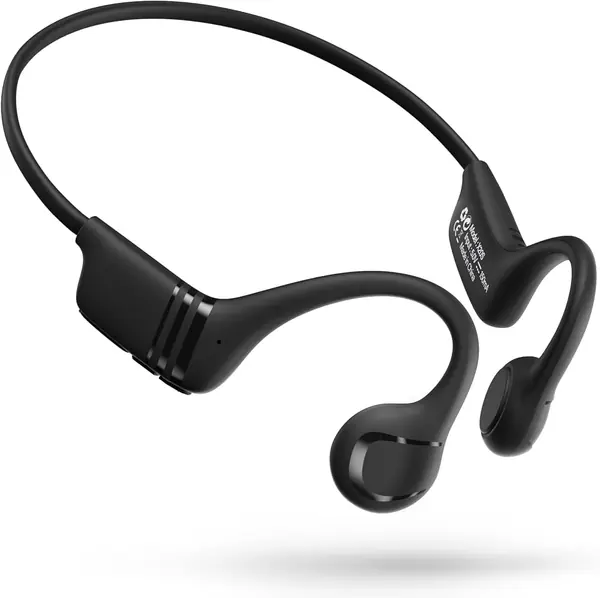
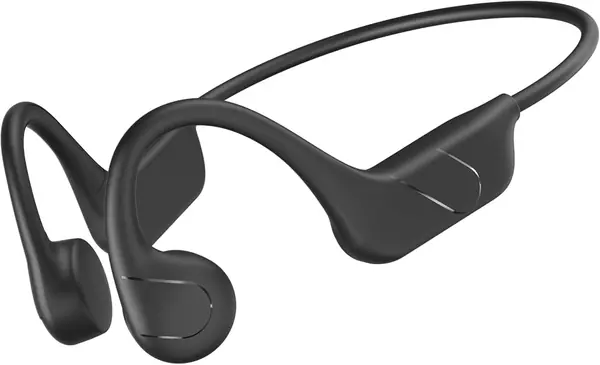
At the low end of the price range, the X128 gets the fundamentals right: a wraparound frame at about 28 grams, USB-C charging instead of a proprietary magnetic puck, and a claimed 10 to 12 hours of playback at 70% volume. The frame is flexible, and the box includes a silicone fit strap you slide on when you want the band tighter against a narrower head. That's the detail that makes a budget band usable, because a frame that's too wide is the usual reason these ride up.

We reach for this one when someone wants to try open-ear running without committing SHOKZ money. You give up the IP67 sealing of the premium picks and the bass of the hybrid drivers, but you keep the two things that matter on a run: the band holds, and your ears stay open to traffic. Bluetooth 6.0 is current, so pairing is quick and the connection held steady.

IP54 is the catch. It handles sweat and a splash, but unlike the IP67 pairs here it doesn't belong under a running tap, so plan on wiping the band down after a hot run rather than rinsing it. The box also includes a pair of earplugs, and they aren't filler: plug your ears and the same volume sounds fuller, because less outside noise competes with the vibration. They also erase the awareness you bought these for, so save them for the treadmill.

No case ships with it — just the cable, the strap, and the plugs — which is what a budget pair looks like. Everything that touches the run itself is here.

Pros

  • Secure frame with an included fit strap
  • USB-C charging and 10 to 12 hours
  • Bluetooth 6.0 at a budget price

Cons

  • IP54 seals against sweat but not a rinse
  • No carry case in the box
Our verdict

We hand this to anyone testing the open-ear idea without the premium: the band stays put, charging is a plain USB-C cable, and ten hours covers a week of runs.

Check Latest Price
3

SHOKZ OpenRun Pro 2 Best Sound

89 /100
TKZ Score Excellent

Key details

Battery Life
12 hours
Water Resistance
IP55
Weight
1.07 oz
Bluetooth
5.3
View on Amazon

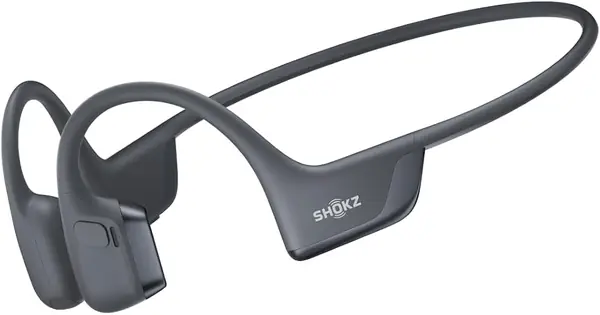
Two drivers do the work here: the bone conduction element carries the mids and highs that keep voices intelligible, and a small air-conduction driver adds a low end the rest of this group simply doesn't have. It's the best sound in this group, and twelve hours of playback is near the top of these picks — enough for a marathon with charge left at the finish.

The trade is water and weight. This is IP55 while our top pick is IP67, so a downpour is fine and a rinse under the tap is not, and the frame is heavier at 30.3 grams. We noticed the extra weight in the first mile and stopped noticing it in the second, but it's there, and if you run hot or sweat heavily the OpenRun is the more sensible frame.

The Shokz app adds EQ modes — a Classic setting that keeps everything bone-conducted, and a fuller mode that leans on the air driver. The dual wind-resistant mics are the reason callers can hear you on a breezy day, and the hard-shell case plus reflective stickers in the box are more care with accessories than anyone else here takes.

One thing no design fixes: in a stiff headwind, none of these pairs stays loud, and the Pro 2 is no exception. Buy it for the bass and the battery, not for volume the format can't deliver.

Pros

  • Air driver delivers bass the others lack
  • Twelve hours of playback
  • Hard-shell case and reflective stickers included

Cons

  • IP55 means no rinsing after a sweaty run
  • Heavier than the top pick at 30.3 g
Our verdict

Buy this one for the sound and the twelve hours; we still take the OpenRun for wet weather, but nothing else here comes close on bass.

Check Latest Price
4

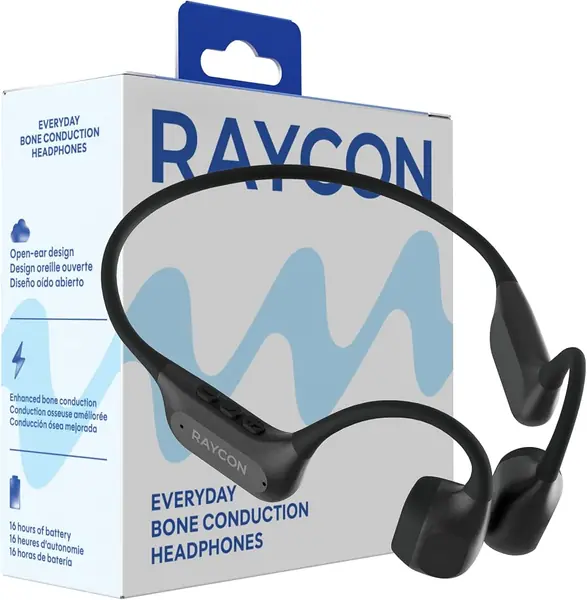
Raycon Everyday 2nd Gen Best Battery Life

88 /100
TKZ Score Excellent

Key details

Battery Life
16 hours
Water Resistance
IP67
Bluetooth
6.0
Sizes
Regular and Small
View on Amazon

Sixteen hours is the longest stretch between charges in this group — enough that charging becomes a weekend chore rather than a nightly one. IP67 sealing covers sweat, rain, and dust, and Bluetooth 6.0 keeps the connection current. Raycon sells it in two frame sizes, Regular and Small, which is more attention to head size than anyone else here gives beyond a strap in the box.

Sound is the compromise. It's punchier and less articulate than the SHOKZ pairs, with bass pushed forward and detail pushed back, and call volume is the weakest part of the package — fine in a quiet room, strained at a windy intersection.

The rest is sensible. The band clears your ears entirely and doesn't bounce, and the small size is the detail worth flagging: a frame that's too wide is the most common reason a bone conduction band slides during a run, and a second size solves it before you start.

The one-year warranty is half of what SHOKZ gives, which is worth knowing on a premium band that you plan to sweat on five days a week.

Pros

  • Sixteen hours between charges
  • IP67 sealing for sweat and rain
  • Two frame sizes, including a small

Cons

  • Sound trails the SHOKZ picks
  • One-year warranty, the shortest premium coverage
Our verdict

We recommend it to runners who want to charge once a week and need a smaller frame; the sound isn't the draw, but the endurance and the size options are.

Check Latest Price
5

MJOFFIN x19s Runners Minimizing Gear

87 /100
TKZ Score Excellent

Key details

Battery Life
10 hours
Water Resistance
IP55
Weight
0.78 oz
Charging
USB-C
View on Amazon

Twenty-two grams is the lightest pair here, and on a long run that's the difference between a band you notice and one you forget about. The frame is titanium, so it flexes and springs back rather than deforming, and MJOFFIN includes a silicone tension band for narrower heads — the same fix Gavhaio ships, and a sign the frame runs generous.

The rest of the sheet is competitive for the tier: IP55, ten hours of playback, Bluetooth 6.0, and USB-C charging that fills in about an hour and a half. What you can't count on is endurance. The band and buttons are the first things to go on any of these, and this one carries a one-year warranty where SHOKZ gives two — the number to weigh if you plan to keep a pair for years.

IP55 means sweat and rain are fine and a rinse is not, and there's no case in the box, just the cable, the tension band, and the manual. For a second pair that lives in a gym bag and comes out for lunch runs, those are fair trades.

Pros

  • Lightest pair here at 22 g
  • Titanium frame with a tension band for smaller heads
  • Ten hours and USB-C on a budget

Cons

  • IP55 only, so no rinsing
  • One-year warranty
Our verdict

For the runner who wants the least hardware on their head, this is it: 22 grams, a titanium band, and ten hours of playback.

Check Latest Price
6

Otium X20 Best for Forgetful Chargers

86 /100
TKZ Score Excellent

Key details

Battery Life
12 hours
Water Resistance
IPX6
Charging
USB-C
Quick Charge
15 min for 2 hours
View on Amazon

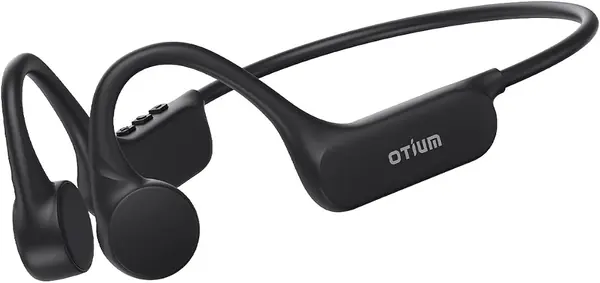
Otium takes a different route to bass: a bone conduction driver paired with a small air-conduction driver, the same hybrid approach SHOKZ uses in the OpenRun Pro 2, at a fraction of the money. Twelve hours of playback ties the OpenRun Pro 2, and a fifteen-minute charge adds two hours — the number that decides whether a forgotten cable ruins tomorrow's run.

The charging behavior is our favorite thing about it. Fifteen minutes on the cable before you walk out the door buys a couple of hours, which is how most people actually keep a pair alive. IPX6 is the caveat: it shrugs off sweat and spray from any direction, but it isn't rated for submersion, so keep it out of the sink and away from the wet end of a gym bag.

The frame is titanium memory wire with an adjustable headband, and the companion app carries EQ presets plus an AI song generator. The EQ is the part worth opening it for.

Where it lands: this is the pair for the runner whose last set died at 12% in a parking lot. Nothing else here recovers that fast.

Pros

  • Twelve hours plus a 15-minute two-hour top-up
  • Hybrid drivers add bass on a budget
  • Titanium memory-wire frame

Cons

  • IPX6 resists spray but not submersion
  • EQ settings live in an app
Our verdict

We keep this one for the runner who forgets to charge: fifteen minutes buys two hours, and twelve hours covers a week of short runs.

Check Latest Price
7

Niecase X29 Best for Rainy Day Runs

85 /100
TKZ Score Excellent

Key details

Battery Life
10 hours
Water Resistance
IP67
Bluetooth
6.0
Warranty
2 years
View on Amazon

Two years of coverage on a budget pair is unusual — most of the inexpensive options here offer one, and only our top pick matches it. Niecase pairs that with IP67 sealing, ten hours of playback, Bluetooth 6.0, and multipoint pairing, so the band can stay connected to a phone and a watch without repairing every morning.

The rating is what sells it. IP67 is the same protection our top pick carries, which means sweat, rain, and a rinse under the tap are all fine — rare below the premium tier, and the reason this is the pair for hot climates, heavy sweaters, and anyone who trains in the rain on purpose.

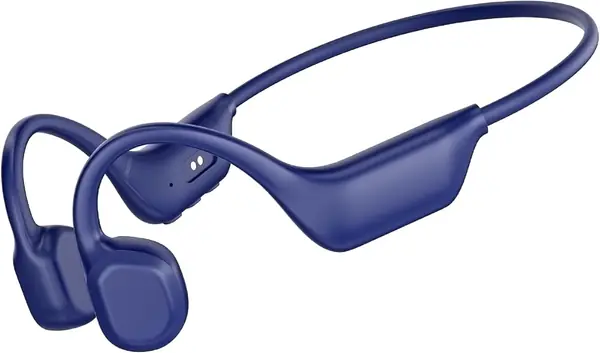
What you accept is presentation. It comes in one color, a light blue, and the Game Mode toggle is aimed at a different customer than you. The box does include earplugs and an adjustable strap, so you can snug the frame and mute the world when the run is on a treadmill.

Pros

  • IP67 protection at a budget price
  • Two-year warranty
  • Ten hours and multipoint pairing

Cons

  • Only sold in light blue
  • No carry case included
Our verdict

This is the pair we hand to heavy sweaters and rain-or-shine trainers: IP67 sealing and a two-year warranty at the bottom of the price range.

Check Latest Price

How We Tested 11 Pairs of Bone Conduction Headphones

We started by collecting every open-ear, bone conduction model sold for running, then filtered by price, water-resistance rating, claimed playtime, and review patterns — anything with a hinge that kept snapping in customer photos came off the list. That left 11 pairs, which we paired to both an iPhone and an Android phone and rotated through six months of training. Price counted, but only against what a pair actually did better than the rest.

Most of the testing happened where these headphones live: a four-mile greenway loop at 6:30 a.m., treadmill intervals in a loud gym, a bike commute through traffic, and a handful of runs in drizzle. We wore sunglasses, a ponytail, and a winter hat with each pair to see whether the band shifted or dug in behind the ears. Volume was set by ear rather than by an app, since that's how anyone actually uses them.

To check the claims, we ran every pair from full charge to shutdown at a set volume and compared the result to the number on the box. In a quiet room, a colleague stood at arm's length and told us what they could hear, which is how we judged sound leakage. We placed calls from a windy street corner to hear how the mic handled gusting. Durability meant sweat, a wipe-down, and a week in a gym bag getting crushed by a water bottle. We logged every Bluetooth dropout and where it happened, and noted comfort at the 30- and 90-minute marks, because a band that's fine for three miles can be unbearable by eight.

How to Choose Bone Conduction Headphones for Running

Read the IP Rating Before the Word Sweatproof

IP55 handles sweat and low-pressure spray, which is enough for a dry-climate runner. IP67 adds dust-tight sealing and survives a dunking, so you can rinse the band under a tap after a hot run — the SHOKZ OpenRun, the Raycon Everyday, and the Niecase X29 all carry it. IPX6 means jet spray, which sounds tougher than it is and still isn't submersion.

Any listing that says water resistant with no number is telling you nothing. Assume the weakest rating, plan on wiping the band down after every run, and keep the charging port dry either way.

Fit Comes Down to the Frame, Not the Ear Hooks

Bone conduction bands hold by tension across the back of your head, so the wire matters more than the shape of the hooks. A nickel-titanium frame springs back after being stretched and keeps that tension; a stiff plastic band either clamps or goes slack within a season. If your head runs narrow, look for a second size or an included tension strap — the Raycon Everyday comes in Regular and Small, and the MJOFFIN and Gavhaio both ship a silicone strap.

Check the warranty while you're there. The band is the part that fails first, and coverage ranges from one year on most budget pairs to two on the SHOKZ and Niecase.

Match Battery to Your Longest Run, Then Look at the Cable

Eight hours covers a marathon for most runners and a full week of shorter outings; twelve to sixteen hours turns charging into a weekend chore instead of a nightly one. Quick charge is the feature people actually use: the OpenRun adds about an hour and a half in ten minutes, and the Otium adds two hours in fifteen.

Then check the plug. USB-C means one cable for your phone and your headphones, while a proprietary magnetic cable is the accessory that gets left in a hotel room.

Awareness Is the Point; Bass Is the Compromise

Open-ear headphones trade bass for hearing the world, and no pair here escapes that. Standard bone conduction gives you clear voices and thin low end. Hybrid designs that add an air driver, like the SHOKZ OpenRun Pro 2 and the Otium X20, fill in the bass but push sound closer to the ear canal.

On a road with traffic, keep the volume where tires and engines are still audible. On a treadmill, the earplugs in the box let you turn the music down and hear more detail.

Frequently Asked Questions

Final Verdict

Start with the SHOKZ OpenRun. It has the most secure frame in this group, IP67 handles everything from a July tempo run to a cold rain, and the open ear keeps you aware on roads with no shoulder. If bass and twelve hours matter more than rinsing them off, the OpenRun Pro 2 is the step up.

And if the budget is the deciding factor, the Gavhaio X128 gets the fit and the awareness right for a fraction of the money.