Best Bone Conduction Headphones of 2026

Bone conduction headphones don't sit in your ears. They rest against your cheekbones and send sound through the bone, leaving your ear canals open, so you hear the traffic, the trail, or the person beside you while your music keeps playing. The catch is that open ears cut both ways: you give up bass and isolation for that awareness.

I've run with a pair on my head for years, and the gap between a good set and an irritating one comes down to things the spec sheets bury: clamp force, leakage, and battery claims that don't survive a cold morning. Too loose and the transducers drift off the cheekbone mid-mile; too tight and you feel the band an hour in. Over six months, my team and I put 12 pairs through runs, rides, pool laps, and calls to see which of them actually held up.

The Best Bone Conduction Headphones

1

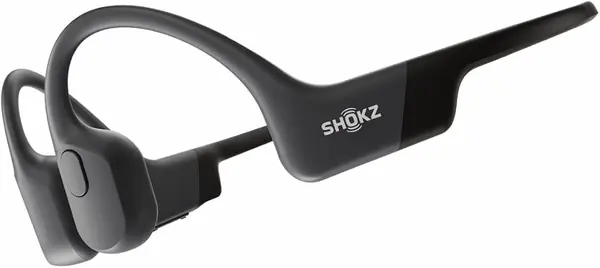
SHOKZ OpenRun Pro 2 Best Overall
90 /100
TKZ Score Outstanding

Key details

Water Resistance
IP55
Battery Life
12 hours
Weight
1.07 oz
Bluetooth
5.3
View on Amazon

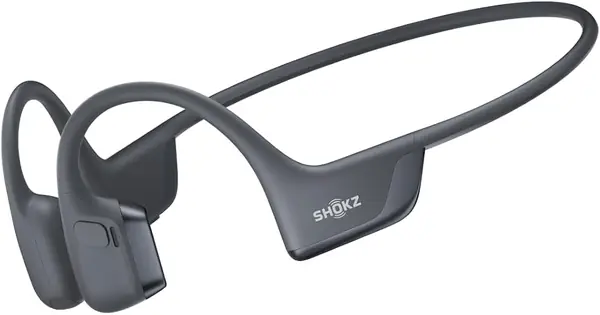
Bone conduction's oldest compromise is bass. The transducer vibrates the bone in front of your ear, high frequencies arrive cleanly, and the low end mostly disappears on the way. The OpenRun Pro 2 is Shokz's answer to that: a bone conduction element for the mids and highs paired with a small air-conduction driver for bass, both in the same housing. The result is music you want to run to rather than a podcast you can follow, and nothing else in this guide closes that gap as far.

The frame is the part to think about. At 30.3 grams it's the heaviest of our sport picks, and the memory-wire band comes in a single size, so a smaller head gets pods that press rather than rest, which can read as an ache behind the ear after an hour or two. On a larger head the fit is secure enough for sprint work and head checks, and the ear hooks stay put under a cap.

Twelve hours is the longest run time of the running-focused pairs here, and a full charge takes about an hour, so a dead pair at the door isn't a disaster. The app adds EQ modes if you want the mids pushed forward for podcasts, the dual wind-resistant mics hold up on calls, and the box includes a hard case and a two-year warranty. The case matters more than it sounds, because these don't fold.

What keeps us coming back is that the Pro 2 is the one pair here we're as happy to wear off the bike as on it: clear enough for a call at a desk, light enough to forget, and honest about being an open ear rather than a sealed one. If you want a tougher, lighter pair instead, the OpenRun covers most of the same ground, and what you give up is bass and four hours of battery.

Pros

  • Bass you can actually feel on a run
  • Twelve hours, the longest of the sport picks here
  • Dual wind-resistant mics for clearer calls

Cons

  • IP55 only, so no rinsing after a dirty run
  • Audio gets buried by wind and heavy traffic
Our verdict

We point most runners and riders to the OpenRun Pro 2: the best sound in this category, bass you can feel, and twelve hours of battery.
Check Latest Price
2

SHOKZ OpenRun Best for Daily Runs

89 /100
TKZ Score Excellent

Key details

Water Resistance
IP67
Battery Life
8 hours
Weight
0.92 oz
Bluetooth
5.1
View on Amazon

Take the Pro 2, pull the bass driver out, and add a full water-resistance class. That's roughly the OpenRun, which is 26 grams, rated IP67, and still the pair we hand people first. IP67 is the number that changes ownership: sweat, rain, and a rinse under the tap are all fine, which you can't say about an IP55 pair. A ten-minute charge buys about an hour and a half of listening, enough to rescue a forgotten pair on the way out the door.

Sound is the familiar open-ear compromise, and Shokz tunes it well. Voices, podcasts, and midrange come through clearly, bass is thin next to the Pro 2, and there's enough volume for a quiet road but not for a headwind or a highway. The bigger surprise is how little you notice the band after ten minutes, which is the whole trick of a good open-ear design: the wraparound nickel-titanium frame rests in front of the ear rather than in it and stays there through sprints and head checks.

Longevity is the part to go in with your eyes open about. Pairs that stop taking a charge, and bands that crack after months of use, are the two failures that follow this model around, and they're why the two-year warranty is worth as much as the IP67 rating: register the pair the day it arrives and keep the receipt. Treat the magnetic charging cable carefully too, since it's the piece most likely to disappear first.

Pros

  • IP67: rain, sweat, and rinsing are all fine
  • 26 grams with a frame that stays put
  • Ten-minute charge adds about 1.5 hours

Cons

  • Eight hours per charge is the shortest of the sport picks
  • Pairing can drop and needs a re-pair
Our verdict

The safest first bone conduction purchase we can name: IP67, a secure 26-gram frame, a two-year warranty, and the deepest track record here.

Check Latest Price
3

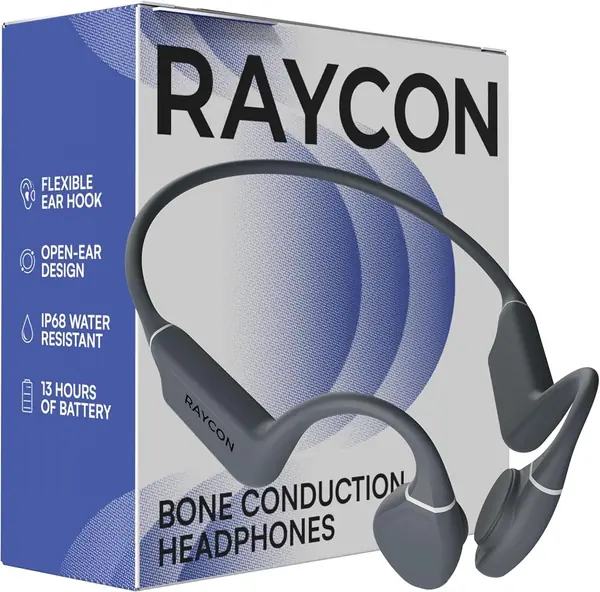
Raycon Bone Conduction Headphones Best for Sweat and Rain

87 /100
TKZ Score Excellent

Key details

Water Resistance
IP68
Bluetooth
5.3
Charging
Magnetic cable
View on Amazon

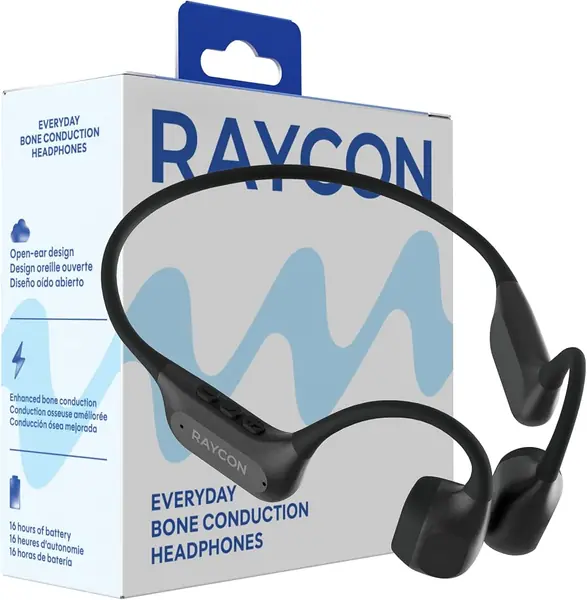
IP68 is the highest water-and-dust rating on any pair here that isn't built for swimming, and it changes how you treat the thing: sweat, rain, and a rinse under the faucet are all fine. If you've killed a cheaper pair with sweat in the past, that alone is the argument, and it's the reason this one sits above the flashier options for gym work.

The sliding pods are the more interesting idea. Push them toward the cheekbone for more volume, pull them back toward the ear for more awareness; it's a physical version of the volume button, and it's the control we reached for most in the first week. Sound is clear and balanced rather than rich, and in a loud gym or a stiff headwind the ceiling arrives earlier than you want it to.

Run time is the hole in the spec sheet. There's no hour rating on this model, so if battery life is your deciding factor, the Raycon Everyday 2nd Gen below claims sixteen hours. Charging runs through a proprietary magnetic cable, which seals better against water and is the first accessory you'll lose, so order a spare with the headphones. The warranty is a year, against two from Shokz.

Pros

  • IP68 sealing survives sweat, rain, and rinsing
  • Sliding pods let you trade volume for awareness
  • Clear calls and steady connection

Cons

  • Proprietary magnetic charging cable is easy to lose
  • Pods can press on glasses over a long session
Our verdict

For heavy sweaters and wet-weather riders, the Raycon is the pick: IP68 sealing, sliding pods you can nudge for volume or awareness, and clear calls.

Check Latest Price
4

Sanag B60SPRO Best for Swimming

86 /100
TKZ Score Excellent

Key details

Water Resistance
IPX8
Battery Life
8 hours
Built-in Memory
32 GB
View on Amazon

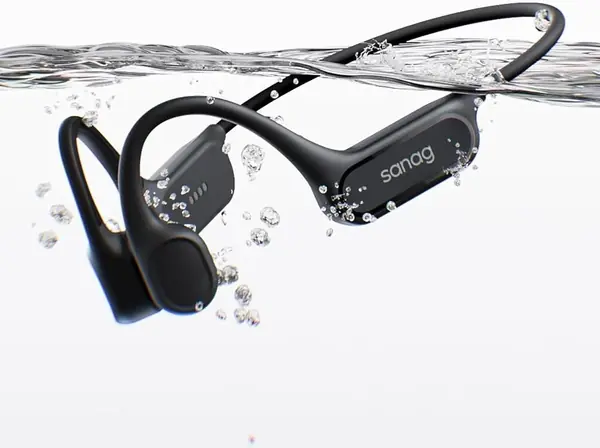
Bluetooth and water don't mix. Radio drops within inches of the surface, which is why every swim-proof headphone has to carry its own music, and the B60SPRO carries a lot of it: 32 GB of onboard storage, an IPX8 one-piece shell rated to two meters, and a switch that flips between Bluetooth on land and MP3 in the pool.

Eight hours of playback covers several lap sessions, and a full charge takes about two, the kind of top-up you do on a Sunday. The open-ear shape is the other half of the appeal in a pool: nothing goes into your ear canal, so there's no water trapped behind a tip and no fiddling with earplugs between sets.

On land it's competent rather than special. The band is a simple curve rather than a memory-wire frame, the noise-cancelling mic handles calls without flattering you, and eight hours is mid-pack here. We think of it as a specialist that earns its place by doing the one thing nothing else in this guide can, and the right way to buy it is as a swimming tool that doubles for runs rather than the other way around.

Pros

  • IPX8 rated to two meters for real swimming
  • 32 GB of onboard music for phone-free laps
  • Eight hours per charge with a two-hour refill

Cons

  • Playlists must be loaded before you get in the water
Our verdict

Swimmers who want music without earplugs should get the B60SPRO: IPX8 to two meters and 32 GB of onboard music solve what Bluetooth can't.

Check Latest Price
5

Raycon Everyday 2nd Gen All-Day Wear

85 /100
TKZ Score Excellent

Key details

Water Resistance
IP67
Battery Life
16 hours
Sizes
Regular and Small
View on Amazon

Two sizes is a small thing that solves a big problem. Most bone conduction fit trouble starts with a band that's too tight on a small head or too slack to keep contact on a large one, and this Raycon comes in Regular and Small, the only pair here that admits heads come in different sizes. Add a claimed sixteen hours of run time, IP67 sealing, and Bluetooth 6.0, and the Everyday is the long-day pair in this guide.

Sound is where it's ordinary: music plays fine, the tuning is pleasant rather than detailed, and there's none of the low-end work that makes the Pro 2 worth its premium. It's also the least-proven of the premium options here, which is why it sits in this section rather than higher up. Buy it for the fit and the run time, not for the audio.

Pros

  • Comes in Regular and Small sizes
  • Claimed sixteen hours per charge
  • IP67 and Bluetooth 6.0

Cons

  • Call volume runs quiet
Our verdict

Worth a look if sixteen hours and a small-size option matter more to you than the last word in sound.

Check Latest Price
6

MJOFFIN x19s Budget First Pair

84 /100
TKZ Score Excellent

Key details

Water Resistance
IP55
Battery Life
10 hours
Weight
0.78 oz
Charging
USB-C
View on Amazon

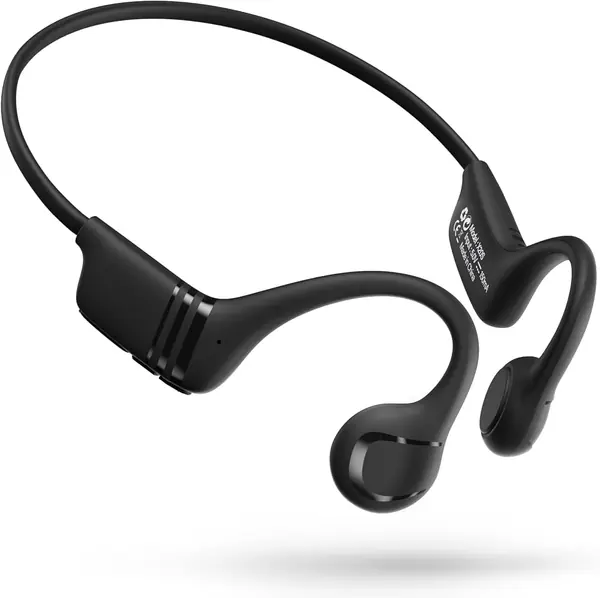
Twenty-two grams is the lightest pair in this guide by a clear margin, since the OpenRun is 26 and the Pro 2 is 30.3, and over a long run that's the difference between a band you notice and one you forget. It's also one of only two pairs here that charges over USB-C instead of a proprietary magnetic cable, which means one less cable in the bag when you travel.

The rest of the design reads like it cost more than it did: a titanium frame, button controls you can work with gloves on, ten hours plus a 1.5-hour charge, and a one-year warranty. What it doesn't have is history, so we treat it as a trial run: keep the box and the paperwork until it has survived a wet week of training. It's a sensible second pair for a gym bag, or a first pair for anyone who wants to find out whether open-ear listening suits them before spending real money.

Pros

  • 22 grams, the lightest pair here
  • USB-C charging instead of a magnetic cable
  • Ten hours with a 1.5-hour charge

Cons

  • IP55 only, so no rinsing after a sweaty run
  • No case in the box
Our verdict

We like the x19s as a cheap way into the category: 22 grams, USB-C charging, and ten hours, as long as you don't need weatherproofing.

Check Latest Price

How We Tested Bone Conduction Headphones

We started with roughly 30 models and filtered by the things that change daily use: the IP rating, the claimed battery life, the weight, the Bluetooth version, and whether the band was rigid or flexible. That left 12 pairs, which we wore for six months on morning runs, bike commutes through traffic, pool laps, weekend hikes, and desk calls.

Fit and comfort got judged on the body, not on paper. I wore each pair in three-hour stretches, with glasses, a bike helmet, and a knit hat, and noted where the band pressed and whether the transducers slid off my cheekbone mid-run. For leakage, a colleague sat an arm's length away in a quiet room while I played the same track at half volume and then at full.

Battery life started from a full charge and ran to empty at a set volume; we logged the real hours against the claim and whether a ten-minute top-up covered a workout. Each pair paired to an iPhone and an Android phone, and we counted dropouts with the phone left in a gym locker two rooms away.

Durability meant sweat, rain, and rinse-offs: we wiped every band after each session, dunked the fully sealed set in a pool, and checked the charging pins for corrosion after a few weeks. We made calls from windy corners and noisy gym floors and asked the person on the other end how clear I sounded, then weighed what each pair delivered against what it cost.

How to Choose Bone Conduction Headphones

What Sound You Can Realistically Expect

Bone conduction trades bass for awareness, and no amount of tuning changes the physics. The transducer vibrates the bone in front of your ear, high frequencies arrive cleanly, and low frequencies need moving air they never get. A pure bone conduction pair gives you clear voices, podcasts, and midrange, and not much thump.

The workaround is a second, tiny air-conduction driver in the same housing, which is what the OpenRun Pro 2 does, and it's the closest this category gets to a normal headphone curve. If you mostly listen to spoken word, a simpler pair is fine. If you want music that moves you, pay for the dual-driver design.

Fit Decides More Than Any Specification

The pod should rest on the bone just in front of the ear, not on the ear itself. Too much tension shows up as a dull ache behind the ear after an hour; too little shows up as thin, drop-out sound because the pod keeps losing contact. Most pairs here are a single band size, so the shape of your head is doing half the work.

If you know your head runs small, look for a second size, which the Raycon Everyday 2nd Gen offers. If you ride with a helmet, check that the retention dial sits behind the band rather than pressing on it.

Read the IP Rating, Not the Word Waterproof

Ratings here run from IPX5 through IP55 and IP67 to IPX8. The letters and digits matter more than the marketing: IP55 handles sweat and light rain, while IP67 is dust-tight and survivable in a meter of water, which is what lets you rinse a pair under the tap after a hot run. If you don't swim, IP67 is the sensible floor.

IPX8 goes deeper and stays there, but only a pair with onboard memory is any use in a pool. Bluetooth radio doesn't travel through water, so a swimming pair has to hold your playlist itself.

Hours, Weight, and the Volume You'll Actually Use

Eight hours covers a week of hour-long runs; twelve is peace of mind for long rides and ultras; sixteen is really about desk days, which is where the Raycon Everyday makes sense. Budget for volume as well, because open ears let road noise in, you run these louder than earbuds, and louder drains the battery faster.

Weight matters as much as hours if you wear them for hours at a time. The range here runs from 22 to 30.3 grams, and the lightest pairs are the ones you forget are on.

Cables, Cases, and the Warranty

Most pairs here charge on a proprietary magnetic cable, which seals better against sweat and is the accessory people lose first. A USB-C pair means one cable for everything you carry. Check what ships in the box too, since some include a hard case and others include nothing but a cable.

Note the warranty, because charging faults are the failure to watch for: Shokz covers two years, Raycon and MJOFFIN one. Register the pair the day it arrives and keep the receipt in your inbox.

Frequently Asked Questions

Final Verdict

Our default is the SHOKZ OpenRun Pro 2. It's the best-sounding pair in this guide, the only one with a dedicated bass driver, and twelve hours covers a week of training with room to spare.

Two requirements change that answer. If you swim, the Sanag B60SPRO is the only pick that works underwater, because it carries its own music. If you'd rather have a pair you can rinse and forget, the OpenRun is tougher at IP67 and lighter at 26 grams, and what you give up is bass and four hours of run time.