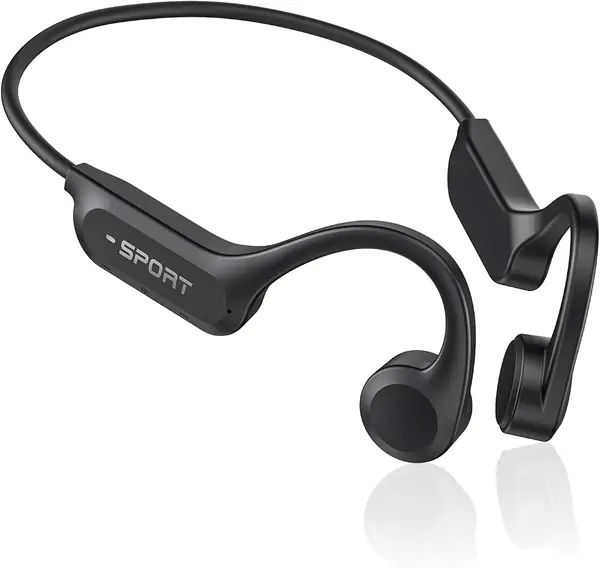
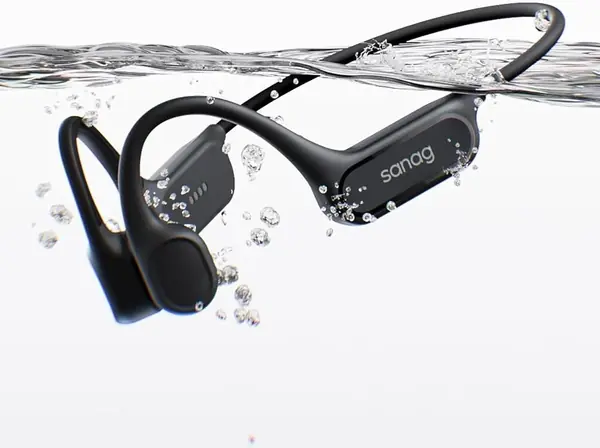
Best Waterproof Bone Conduction Headphones of 2026

Bone conduction headphones skip your ear canal entirely: small transducers rest against your cheekbones and send sound straight to your inner ear, so your ears stay open to traffic and to the swimmer in the next lane. On land that's a safety feature; in a pool it's a puzzle, because everything that makes the format good above ground — open ears, a light band, a Bluetooth radio — is what water breaks best. What fixes it is a combination: a housing that survives a dunking, music stored on the headset itself, and a fit that holds through a flip turn.

Nobody warns a first-time buyer that Bluetooth and water don't mix, so the sets that genuinely work while you're submerged keep your playlist on board and save the radio for the walk to the pool. We've spent seven months swimming, running, and taking calls in 12 of these, and that one detail separated the keepers from the returns more than any spec sheet. Below are the ones that stayed comfortable under a swim cap, held their battery claims, and earned their price.

The Best Waterproof Bone Conduction Headphones

1

PSIER S18 Best Overall
88 /100
TKZ Score Excellent

Key details

Playtime
Up to 8 hours
Waterproof Rating
IPX8 (2 m for 1 hour)
Built-in Storage
32GB MP3
Driver
14 mm bone conduction
View on Amazon

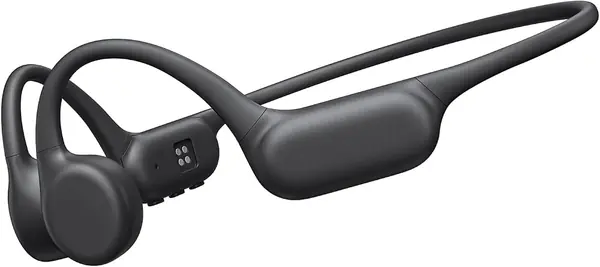
The question we keep coming back to with a swimming pair is simple: can it get you through a session without your phone and without a charge? The PSIER S18 answers that better than anything else in this group. It combines an IPX8 rating for submersion up to two meters for an hour with 32GB of built-in storage and up to eight hours of playback. That is the practical combination for laps: you can leave the phone in the bag, and the pair keeps playing when your head goes under.

The fit is the one thing to check before you commit. The S18 runs large, and a swim cap or a snug goggle strap is what keeps it pressed against the cheekbones through turns. If you have a smaller head, that is a real adjustment, not a dealbreaker—the same open hook that feels loose on land settles down once you are in the water. We also like the magnetic charging here; there is no exposed USB port to dry out before you top it up.

Sound is good for bone conduction, with enough body for podcasts and gym playlists, though it will not match a sealed earbud for bass. The 14mm driver keeps voices clear when you are moving, and the open design lets traffic and pool noise through. That is the trade you are making, and for swimming it is the right one.

Pros

  • IPX8 protection for pool and open-water use
  • 32GB of phone-free MP3 storage
  • Sound and value hold up for the price

Cons

  • Call microphone is the weak spot
Our verdict

The PSIER S18 is our default waterproof pick: IPX8 protection, 32GB of phone-free storage, and enough battery for most pool sessions.
Check Latest Price
2

Tevese X9 Best Battery for Swimming

87 /100
TKZ Score Excellent

Key details

Playtime
Up to 10 hours
Waterproof Rating
IPX8
Built-in Storage
32GB MP3
View on Amazon

Ten hours is the number that separates the Tevese X9 from most swimming pairs. The X9 carries an IPX8 rating, 32GB of built-in memory, and up to 10 hours of playback on a charge that takes about two hours. If your pool sessions run long or you split time between the pool and the open water, that reserve matters more than a slightly smaller shell.

That extra runtime is why it earns our long-session pick. The 32GB capacity is the same phone-free convenience as our top pick, so you can load a large library and leave the phone behind. The X9 is also shaped to sit securely with swim caps and goggles, which is the fit problem most swimmers actually fight. We appreciate that the controls are physical buttons rather than a touch panel; wet hands and touch controls are not a natural pair.

Sound is clear enough for music and spoken-word, and the open design keeps pool noise and lane traffic in the mix. It is not a call-first pair; bone conduction remains a compromise there. For laps, that is the right priority.

Pros

  • IPX8 swimming protection
  • 32GB of built-in MP3 storage
  • Up to 10 hours of playback

Cons

  • No carrying case included
Our verdict

We reach for the Tevese X9 when a swim runs long: IPX8 protection, 32GB of storage, and up to 10 hours of playback.

Check Latest Price
3

ZOVIMAX X7 MAX Best for Open-Water Swims

86 /100
TKZ Score Excellent

Key details

Playtime
Up to 8 hours
Waterproof Rating
IPX8 (5 m for 2.5 hours)
Built-in Storage
8GB MP3
Driver
14.2 mm dynamic
View on Amazon

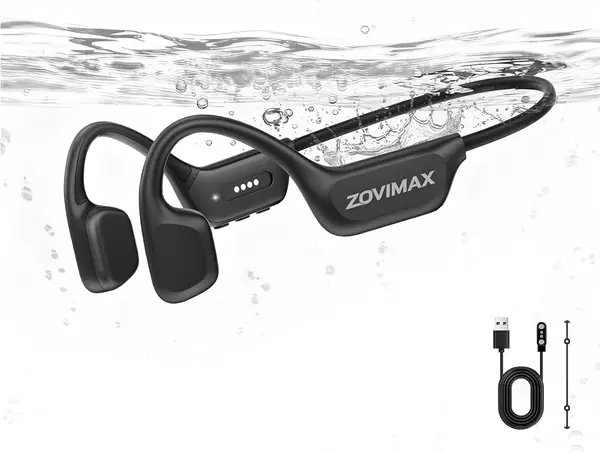
The ZOVIMAX X7 MAX makes a very specific promise: an IPX8 rating that covers submersion up to five meters for as long as 2.5 hours, the deepest claim in this group. That is the reason to put it on your shortlist for open-water swims. It also carries 8GB of built-in storage for phone-free playback, and the magnetic charging keeps the port area simple after a swim.

The 14.2mm drivers give it a little more body than the smallest bone-conduction sets. The open hook is designed to stay put with goggles and a cap, and the frame has enough flex to sit over sunglasses on land. We like that combination for swimmers who move between open water and the pool.

We recommend it for open-water swimmers who want the extra submersion margin. The eight-hour battery covers a normal pool session, and the IPX8 claim is the feature that separates it from the land-first pairs here. For a swimmer who wants margin in open water, the depth claim is the reason to choose it.

Pros

  • IPX8 to 5 meters for 2.5 hours
  • 8GB of built-in MP3 storage
  • 14.2 mm drivers with more body

Cons

  • Only 8GB of storage
Our verdict

The ZOVIMAX X7 MAX is the one we choose for open-water margin, with the deepest IPX8 claim here and 8GB of storage.

Check Latest Price
4

Raycon Everyday 2nd Gen Best for All-Day Wear

85 /100
TKZ Score Excellent

Key details

Playtime
Up to 16 hours
Waterproof Rating
IP67
Fit
Regular and Small sizes
View on Amazon

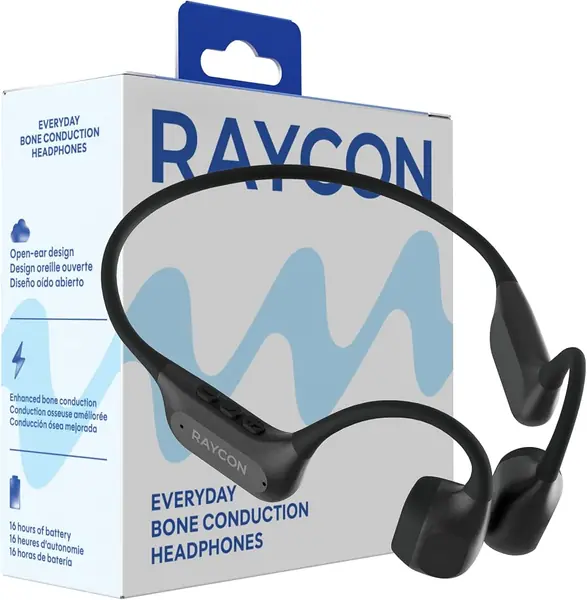
The Raycon Everyday 2nd Gen is the premium pair in this group, and it is built for the run, the commute, and the long day where you want your ears open to traffic and coworkers. IP67 protection covers sweat, rain, and dust, and the battery is rated for up to 16 hours. That is a different brief from the swimming pairs here, and Raycon does not blur the line.

We recommend it for all-day wear. The 16-hour battery is the real draw: it gets you through a workday and a workout without a top-up. Raycon also sells the Everyday in Regular and Small sizes, which is a more useful fit feature than another equalizer preset. If you have had trouble with open-ear hooks sitting too wide, start with the Small.

Sound is the compromise. The signature Raycon tuning is punchy and easy to like at the gym, but clarity is not as clean as the swimming picks here, and the open design lets in a lot of room noise. That is the point of an open-ear pair, but it means this is not the one for critical listening. The dual-mic setup is there for calls, though call quality is not its strongest suit.

Pros

  • Up to 16 hours of playback
  • Regular and Small shell sizes
  • IP67 dust and water resistance

Cons

  • Not rated for swimming
Our verdict

For all-day wear and commuting, we prefer the Raycon Everyday 2nd Gen: IP67 protection, up to 16 hours, and Regular or Small sizing.

Check Latest Price
5

CXK X14 Best Budget

84 /100
TKZ Score Excellent

Key details

Playtime
Up to 10 hours
Waterproof Rating
IPX7
Weight
1.06 oz
View on Amazon

The CXK X14 is the least expensive pick here, and it still clears the waterproof bar with an IPX7 rating. That makes it our budget pick for rainy runs, gym sessions, and commutes where you want to stay aware of traffic. It does the basics without charging you for features you will not use.

The 10-hour battery is generous for the money, and the 15mm bone-conduction driver gives voices and podcasts a clear edge over bass-heavy music. At 1.06 ounces, the frame is light enough to forget on a long run, though the open hook still needs a quick check when you pull a hood or helmet over it. We like the button controls for cold or gloved hands.

The CXK is the one to buy if you want the waterproof basics without paying for swimming features. It handles rain and sweat, pairs over Bluetooth 6.0, and charges by USB-C. For a land workout, that is the trade, and it is an easy one to accept.

Pros

  • IPX7 water resistance
  • Up to 10 hours of playback
  • Light 1.06-ounce frame

Cons

  • Not rated for lap swimming
Our verdict

The CXK X14 is our budget pick for rain, sweat, and gym sessions, with IPX7 protection and 10 hours of playback.

Check Latest Price
6

Sanag B60SPRO Best for Phone-Free Laps

83 /100
TKZ Score Excellent

Key details

Playtime
Up to 8 hours
Waterproof Rating
IPX8 (2 m)
Built-in Storage
32GB MP3
View on Amazon

Sanag's B60SPRO uses a one-piece seamless shell and an IPX8 rating for submersion up to two meters, which is the simple, pool-first combination we look for. It also carries 32GB of built-in memory and up to eight hours of playback. On paper, it sits close to our top pick; the difference is in the details.

The 32GB capacity is the headline. You can load a large playlist and swim without a phone, and the IPX8 shell is rated for pool training and ocean swimming. The eight-hour battery is a step behind the 10-hour Tevese, but it covers a normal session with room to spare. The one-piece design also means fewer seams to rinse and dry after a swim.

We think it is a sensible second swimming pick when you want the same phone-free capacity as our top pick and do not need the longest battery. The sound is tuned for clarity rather than thump, which suits spoken-word and lap podcasts. For a pool bag, the simple shell is easy to live with, and the 32GB capacity is the reason to choose it over the cheaper land-only pairs.

Pros

  • IPX8 to 2 meters
  • 32GB of built-in MP3 storage
  • Up to 8 hours of playback

Cons

  • No carrying case included
Our verdict

We keep the Sanag B60SPRO on the shortlist for phone-free swimmers who want a second IPX8 option with 32GB of storage.

Check Latest Price

How We Tested Waterproof Bone Conduction Headphones

We started by pulling every open-ear headset we could find with an IPX7 or IPX8 rating, then filtered out anything without onboard MP3 memory — a Bluetooth-only set is dead weight the second your head goes under. From there we sorted by claimed playtime, Bluetooth version, and price, deliberately keeping a mix of budget and mid-range options. Twelve made the cut.

Testing ran seven months, in the water and out of it. Every set did a Saturday morning lap swim, a shower, and at least one open-water session, then went back to ordinary life: pavement runs, a bike commute, dog walks in the rain, and calls from a desk.

In the pool we submerged each one in a bucket of chlorinated water for 30 minutes, then dried it off and checked that the buttons still clicked and the sound hadn't gone muddy. Fit got the roughest treatment: we wore sets under a silicone cap and with goggles, pushed off the wall, and shook our heads mid-lap to see what slipped. Comfort we judged over two-hour stretches — pressure behind the ears, hot spots, whether the band loosened. Battery life was timed with a stopwatch from a full charge to shutdown at moderate volume, not copied off the box.

Sound got A/B'd against a wired pair on dry land, since everything is a little muffled underwater, and we listened for whether vocals stayed clear or turned to mush. Bluetooth we tested by leaving the phone in a locker across the deck and walking until it dropped, then timing the re-pair. Build quality came down to bending the band and pressing buttons with wet fingers.

How to Choose Waterproof Bone Conduction Headphones

Read the Waterproof Rating Before Anything Else

Bone-conduction headphones are a type of open-ear headphone, but not every open-ear pair is bone conduction; check for the bone-conduction driver. For swimming, we treat IPX8 as the entry ticket. It means the maker has tested the sealed shell for continuous immersion at a stated depth and time, though the limits vary: the PSIER S18 lists two meters for an hour, while the ZOVIMAX X7 MAX claims five meters for 2.5 hours. IP67 is enough for rain, sweat, and dust, but it is not a swimming rating. A plain waterproof claim without a number is not enough to plan a lap around.

Storage Is What Makes a Swim Pair Useful

Bluetooth does not travel well underwater, so the best swimming pairs switch to built-in MP3 playback. That is why storage matters as much as the waterproof rating. 32GB is the generous end of this group and holds a large library; 8GB is enough for a few playlists or a training block. If you only run and ride, you can skip storage and stay Bluetooth-first. If you swim, buy the storage you will actually fill.

Battery Life and Charging

Eight hours covers most pool sessions; 10 hours gives you more margin for long training days or a weekend trip. The bigger practical detail is charging: magnetic cables are common on swimming pairs because they avoid an exposed USB port, and a full charge usually takes about two hours. We prefer a slightly shorter battery and a charging system that survives a wet swim bag. Check the charging time, not just the playtime.

Fit With Caps, Goggles, and Glasses

Bone-conduction hooks have to sit against the cheekbone without fighting a swim cap, goggles, or sunglasses. A titanium memory frame helps, but size matters more. Raycon sells its Everyday pair in Regular and Small, which is a real advantage for narrower heads; the PSIER S18 runs large and benefits from a cap or snug strap. Try the pair with your normal eyewear before you commit to a long swim.

Sound, Calls, and What You Give Up

Bone conduction is not built for deep bass or isolation. You are trading some low end and detail for awareness, and that is the right trade on a road or in a pool. Larger drivers can add body, but fit and sealing against the cheekbone matter just as much. Call microphones are usually the weak point; if calls are a priority, test the mic in a quiet room before relying on it. We put waterproofing and storage first for swimming.

Frequently Asked Questions

Final Verdict

The PSIER S18 is the pair we recommend first because it gets the three things that matter right: IPX8 protection, 32GB of phone-free storage, and enough battery for most pool sessions. It is the safest default for a swimmer who wants one pair to cover laps and land workouts.
If your swims run long, the Tevese X9's 10-hour battery is the better fit. For open-water swimmers who want the deepest submersion claim, the ZOVIMAX X7 MAX is the one to choose.