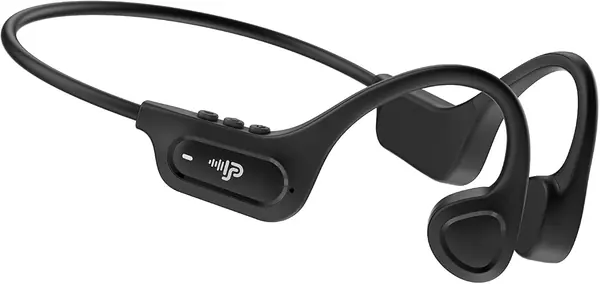
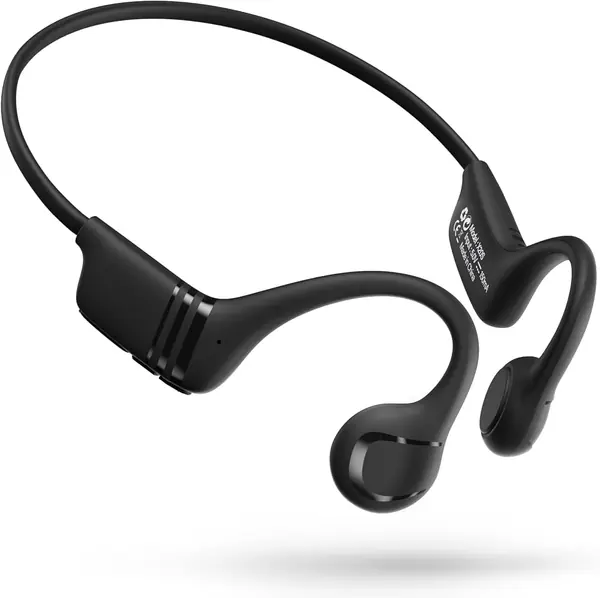
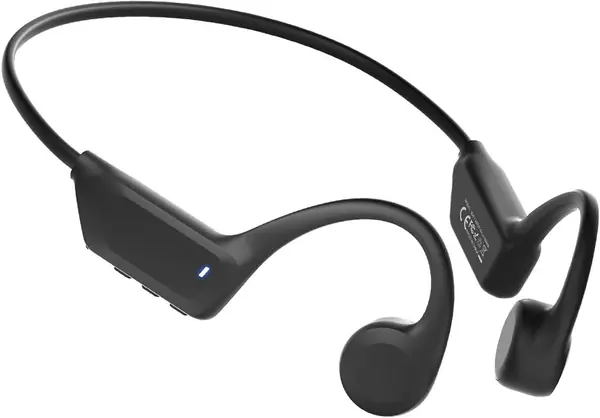
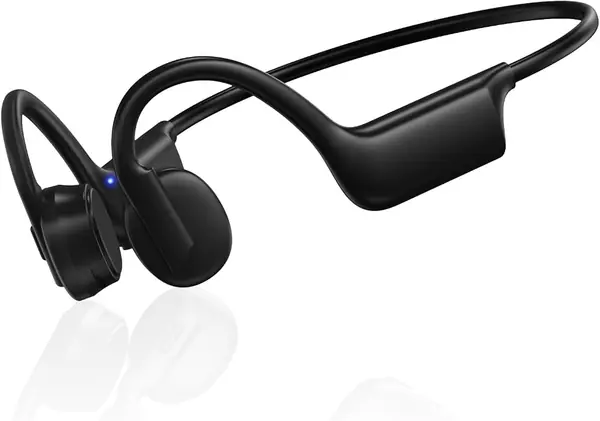
Best Bone Conduction Headphones for Cycling of 2026

The scariest moment on a ride usually isn't a technical descent — it's the car at your elbow that you never heard coming. Bone conduction headphones sit against your cheekbones and send sound through your skull, leaving your ear canals open to traffic, birds, and the rider next to you. You give up a little bass and gain a lot of awareness, which on the road is the better deal.

What nobody tells you until you're a few miles in: wind is the real enemy. At 20 mph a gust swallows the volume that felt fine in your driveway, and sunglasses arms and helmet straps are already competing for the skin behind your ear. Battery claims tend to assume half volume, which almost never happens outdoors. We spent five months riding with 12 pairs, from budget models to premium ones, and the gaps between them were wider than the category's sameness suggests.

The ones below stayed put under a helmet, held their charge through a week of commutes, and let us hear the group and the traffic at the same time.

The Best Bone Conduction Headphones for Cycling

1

SHOKZ OpenRun Best Overall
91 /100
TKZ Score Outstanding

Key details

Battery Life
8 hours
Water Resistance
IP67
Weight
0.92 oz
Warranty
2 years
View on Amazon

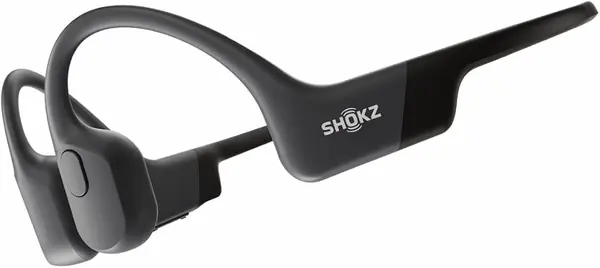
OpenRun's fit is the first thing we notice, because it is the thing that keeps a cycling headphone useful. The 26-gram frame and memory-wire band wrap around the back of the head without touching the ear canal, and the IP67 rating means sweat and rain are not automatic reasons to take them off. Under a helmet, the hooks sit close enough to stay put without a lot of fiddling.

That combination is why OpenRun is our top pick for most riders. The open-ear design leaves traffic audible, the physical buttons are easy to find with a glove on, and the eight-hour battery covers a long morning or a full commute. We also like the 10-minute quick charge, which is the kind of detail that saves a ride when you forgot to plug in the night before.

The limit is wind. On exposed roads, volume can lose ground to a crosswind, and bass is not the point of this design. The two-year warranty is the best backstop in this group for electronics that live in sweat. If your rides usually finish inside eight hours, this is the pair we point to first.

Pros

  • Secure 26-gram helmet fit
  • IP67 sweat and rain protection
  • Eight hours with quick top-up

Cons

  • Durability can be inconsistent
Our verdict

We recommend the OpenRun as the default cycling headphone: the 26-gram fit stays put under a helmet, IP67 handles sweat and rain, and eight hours covers most rides.
Check Latest Price
2

SHOKZ OpenRun Pro 2 Best for Long Rides

89 /100
TKZ Score Excellent

Key details

Battery Life
12 hours
Water Resistance
IP55
Weight
1.07 oz
Microphones
Dual wind-resistant
View on Amazon

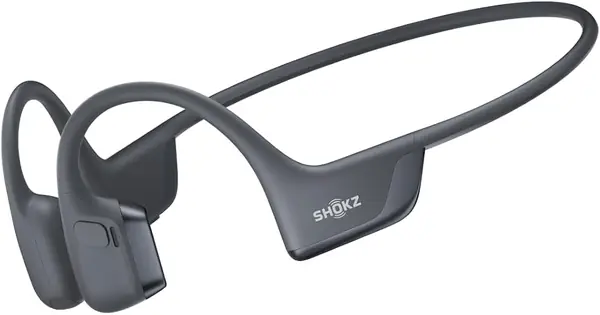
Twelve hours is the number that makes the OpenRun Pro 2 worth a look for cyclists who go long. That is four more than the OpenRun, and it changes the planning: a century ride, a full day of commuting, or a weekend tour no longer has to end with a charging stop. The dual-driver setup adds more low end than pure bone conduction, and the wind-resistant mics are aimed at exactly the conditions that make open-ear calls hard.

The rest of the package is familiar Shokz: a memory-wire frame, open-ear awareness, button controls, and a hard-shell case. The 30.3-gram weight is still light for all-day wear. The app EQ is a nice extra if you like to tune the sound, but it does not turn these into bass monsters.

We see the Pro 2 as the long-ride upgrade, not the default. If you want more bass, better wind handling on calls, and a battery that outlasts a full day, the extra bulk is easier to accept. If most of your rides are two or three hours, the OpenRun is the more sensible buy.

Pros

  • 12-hour battery for long rides
  • Dual drivers add low-end
  • Wind-resistant mics for calls

Cons

  • IP55 is not rinseable like IP67
  • Heavier than the OpenRun
Our verdict

We choose the OpenRun Pro 2 when the ride runs long: 12 hours, wind-resistant mics, and more bass make it the best long-distance option here.

Check Latest Price
3

Raycon Everyday 2nd Gen Best Battery Life

88 /100
TKZ Score Excellent

Key details

Battery Life
16 hours
Water Resistance
IP67
Bluetooth
6.0
Sizes
Regular and Small
View on Amazon

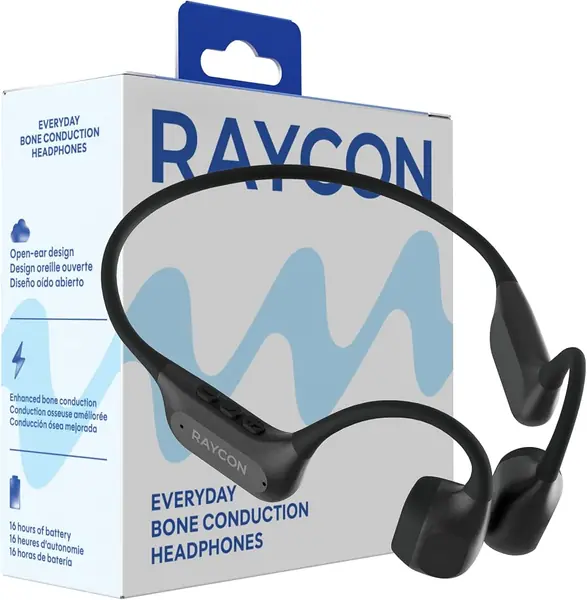
Sixteen hours is the reason to put the Raycon Everyday 2nd Gen on your shortlist. That is the longest claimed battery in this group, and for a cyclist who does multi-hour rides or forgets to charge, it is a genuinely useful advantage. The IP67 rating and two-size fit system make it more than a one-trick battery play, and that is why we keep it near the top of this set.

The open-ear shape sits outside the ear, and the two sizes are meant to solve the fit problem that plagues one-size frames. We like that Raycon made sizing explicit instead of asking every rider to make do. The controls are buttons, and the set charges over USB-C, which is easier to live with than a proprietary cable.

Sound is the compromise. The bone-conduction audio is clear enough for music and podcasts, but this is not a bass-first listen. The 16-hour rating also depends on volume, like every battery claim. If you want the longest time between charges and a secure open-ear fit, this is the one; if calls are a priority, the Shokz pairs are the better call for wind.

Pros

  • 16-hour battery leads this group
  • IP67 protection
  • Regular and Small sizes

Cons

  • Call volume can be weak
Our verdict

We recommend the Raycon Everyday 2nd Gen for riders who want the longest battery here, with IP67 protection and a two-size fit, as long as calls are secondary.

Check Latest Price
4

PSIER X22 Best Value Under a Helmet

87 /100
TKZ Score Excellent

Key details

Battery Life
10 hours
Water Resistance
IPX5
Weight
0.81 oz
Frame
Memory titanium
View on Amazon

At 23 grams, the PSIER X22 is one of the lightest pairs here, and that is the first thing that matters under a helmet. The memory-titanium frame is designed to flex and hold its shape, and the IPX5 rating covers sweat and light rain. Bluetooth 6.0 is current, and the 10-hour battery is competitive for the money.

This is the value pick we point to for helmet wear. The low weight and slim frame are easier to forget than a heavier set, and the sound has enough clarity for podcasts and pace cues. We also like the physical buttons, which are simpler to use with gloves than touch controls. It is not a premium listen, and wind still gets in, but the basics are right.

The IPX5 rating is the boundary: sweat and rain are fine, but do not rinse it like an IP67 model. The low-latency Bluetooth is a small bonus if you watch video off the bike. For a rider who wants a light, inexpensive second pair or a first open-ear set, the X22 makes a strong case.

Pros

  • 23-gram frame is easy under a helmet
  • 10 hours with IPX5 protection
  • Bluetooth 6.0 and low latency

Cons

  • Bass is modest
Our verdict

We like the PSIER X22 as the best value under a helmet: 23 grams, 10 hours, IPX5, and current Bluetooth make it an easy low-cost cycling pick.

Check Latest Price
5

MJOFFIN x19s Ultralight Budget

86 /100
TKZ Score Excellent

Key details

Battery Life
10 hours
Water Resistance
IP55
Weight
0.78 oz
Warranty
1 year
View on Amazon

The 22-gram frame is the MJOFFIN x19s's opening argument, and it is the lightest weight in this group. That matters on a bike because every gram on the back of your head competes with helmet straps and glasses. The titanium frame is flexible, and the set uses Bluetooth 6.0, IP55, and a 10-hour battery.

The package includes a silicone tension band, which is a small admission that one frame does not fit every head. We like that the band is there rather than pretending sizing is universal, though it adds a piece to keep track of. The controls are buttons, and charging is USB-C, so you are not hunting for a proprietary cable.

IP55 is enough for sweat and rain, not for a rinse. The 10-hour battery is in line with the other budget picks, and the 22-gram weight is the real differentiator. There is no hard-shell case in the box.

We see the x19s as the ultralight budget choice: you give up brand history and the extras, and you get the least weight on your head for short and medium rides. If you want the longer warranty, the Shokz pairs are the safer bet; if weight is what bothers you most, this is the one to try.

Pros

  • 22-gram frame is the lightest here
  • 10 hours and IP55
  • USB-C charging and Bluetooth 6.0

Cons

  • One-year warranty
Our verdict

We point to the MJOFFIN x19s when weight is the priority: at 22 grams it is the lightest pick here, with 10 hours, IP55, and USB-C charging.

Check Latest Price
6

Blrakx X27 Budget Backup

85 /100
TKZ Score Excellent

Key details

Battery Life
10 hours
Water Resistance
IPX5
Weight
1.02 oz
Charging
USB-C
View on Amazon

The pitch is simple: a lightweight open-ear headphone for not much money. The Blrakx X27 lists a 29-gram titanium frame, IPX5 water resistance, Bluetooth 6.0, and 10 hours of playtime. Those are the right bullet points for a cycling backup pair.

The frame is heavier than the 22- and 23-gram picks, but still light enough to disappear on a short ride. The IPX5 rating covers sweat and light rain, and the USB-C port is easy to live with. There is no app, and the set is basic, so this is a straightforward get-it-done pair.

We see the X27 as the budget backup, not the main pair. If you want a second set for the trainer, a commuter bike, or a trip where losing a headphone would hurt, the price makes sense. The sound is clear enough for podcasts and traffic awareness, but it is not the pair we choose for a long, music-heavy ride.

The 10-hour battery is competitive, and Bluetooth 6.0 is current. For a cheap second pair, those are fair trade-offs.

Pros

  • 10-hour battery at a budget price
  • IPX5 sweat and rain resistance
  • Bluetooth 6.0 and USB-C

Cons

  • One-year warranty
Our verdict

We keep the Blrakx X27 as a budget backup: 10 hours, IPX5, Bluetooth 6.0, and a light frame for riders who want a second pair without paying for extras.

Check Latest Price
7

Ogogrs K08 Simple USB-C Pick

84 /100
TKZ Score Excellent

Key details

Battery Life
10 hours
Water Resistance
IP55
Charging
USB-C
Bluetooth
5.3
View on Amazon

USB-C charging is the quiet advantage of the Ogogrs K08. There is no proprietary cable to lose, and the 10-hour battery is enough for a week of short commutes. The IP55 rating covers sweat and rain, and the open-ear frame is built for awareness. We like it as a simple, low-cost open-ear option for riders who do not want another charging cable ecosystem.

The package includes earplugs, which is an odd addition for cycling, since you will not use them on the bike. The titanium frame is flexible, and the open-ear shape is built for awareness. It pairs with phones and watches like any Bluetooth headphone, and the buttons are easy to use with gloves.

Sound is clear enough for podcasts and directions, and the IP55 rating is the same boundary as the other budget picks: sweat and rain are fine, but do not rinse it. We see the K08 as a simple everyday pair for short rides and commutes, not a long-distance or high-performance choice.

Pros

  • USB-C charging
  • 10 hours with IP55
  • Easy physical buttons

Cons

  • No case included
  • Bluetooth 5.3 trails 6.0 picks
Our verdict

We like the Ogogrs K08 as a simple everyday pair: USB-C charging, 10 hours, IP55, and easy buttons make it a low-cost commuter option.

Check Latest Price

How We Tested Bone Conduction Headphones on the Road

We started by rounding up every bone conduction model we could find that was rated for sweat or rain, quoted a real runtime, and weighed under about 35 grams, then cut anything that needed a proprietary app just to play music or couldn't state its IP rating. That left 12 pairs, which we rode with for five months.

Each pair went out on weekday commutes through traffic, on weekend 40-mile loops with a fast group, and on a few wet mornings, plus a couple of trainer sessions where wind wasn't a factor. Fit was checked under two different helmets, with sunglasses and with a cycling cap, and we noted whether the band bounced over potholes, where it landed relative to helmet straps, and whether it pressed into the temples after an hour. One three-hour ride per pair showed us where the marks appeared.

Sound was judged on the bike, not in a quiet room. We noted how much volume was left climbing into a headwind at 20 mph, whether wind roar buried a podcast, and how much low end survived at speed. We also called a colleague from the shoulder of the road and asked whether traffic or our voice came through louder on the other end.

Battery numbers were measured, not trusted: we ran each pair at about 60 percent volume until it died, compared that with the claim, and timed a full charge. Each set was paired to both an iPhone and an Android phone, then left in a jersey pocket while we walked into a coffee shop to see where the signal broke up. We rinsed every pair under a faucet, checked the port covers for trapped water, and tossed them in a bag with keys and a U-lock to see how the finish held up.

How to Choose Bone Conduction Headphones for Cycling

Fit Under a Helmet Comes First

A cycling headphone has to survive helmet straps, glasses, and a head that moves. The useful shape is a flexible band with hooks that sit outside the ear, not a frame that clamps the temple. Weight matters, but so does tension: a 22-gram pair that presses is worse than a 30-gram pair that floats. We prioritize a secure hook and a return policy over a fancy finish, because fit is the one thing you cannot adjust later. Try the set with your helmet and glasses before the return window closes.

Read the Water Rating, Not the Word Waterproof

IPX5 handles sweat and light rain; IP67 adds dust protection and survives a rinse. For cycling, IPX5 is a reasonable floor, but riders who sweat heavily or commute in rain should look for IP67. The charging port is the weak point on any set, so dry it before plugging in. A magnetic cable is convenient until you lose it; USB-C is easier to replace. We do not treat a higher rating as permission to rinse a dirty set without checking the maker's instructions.

Match Battery Life to Your Longest Ride

Eight hours covers most road and commute rides; 10 to 12 hours gives more buffer; 16 hours is for multi-day touring or riders who routinely forget to charge. Quick charging is more useful than a small bump in capacity if you often start a ride with a low battery. The OpenRun's 10-minute top-up and the Pro 2's 12-hour run time illustrate the trade-off. We prefer a battery that matches your longest regular ride with an hour to spare, not the biggest number on the page.

Open-Ear Sound Is a Safety Feature and a Limit

Bone conduction and open-ear designs leave the ear canal clear, so traffic, tires, and voices stay audible. That is the point on a bike, and also the limit. Wind and road noise can overwhelm quiet passages, and bass is never the strength. Physical buttons are easier to find with gloves than touch panels, and a mic with wind resistance helps if you take calls. If you want isolation, this is the wrong category; if you want awareness, it is the right one.

Warranty and Long-Term Support Matter

These are sweat-exposed electronics with small charging contacts, and long-term durability is the most common weak spot across the category. A two-year warranty is a real advantage for a daily rider; one year is acceptable on a budget pair but should be priced in. Keep the receipt and register the product if the maker asks. We also look for a case and a standard charging cable, because the small extras are what keep a set usable after the honeymoon phase.

Frequently Asked Questions

Final Verdict

We start with the SHOKZ OpenRun. It has the best balance here of secure fit, open-ear awareness, IP67 protection, and an eight-hour battery, and it is the pair we point most cyclists to first. The volume limit in strong wind is real, but it does not change the recommendation for everyday riding.

If your rides regularly run longer than eight hours, the OpenRun Pro 2 is the upgrade, with 12 hours, more bass, and wind-resistant mics. If battery life is the single priority, the Raycon Everyday 2nd Gen stretches to 16 hours and adds IP67. Both are specialized choices; the OpenRun remains the default.