Best Audiophile Noise-Canceling Headphones of 2026

For years, buying headphones meant picking a side. One pair made your records sound like records and did nothing about an airplane cabin; the other turned the world to hush and flattened everything you played through it. That wall has mostly come down. The pairs below give you detail you can follow at low volume, and quiet enough to actually hear it.

We've spent most of a year with seven pairs — commutes, open offices, long flights where the engine drone is the real test. Here's what I'd tell a friend: noise cancellation reshapes the tuning. Most of these are voiced with ANC engaged, so switching it off can loosen the bass or harden the treble. Judge them in the mode you'll actually use.

Battery claims get the same skepticism — they're usually measured with ANC off at moderate volume, so expect fewer hours in real use. And fit does as much for sound as the tuning does; a loose seal costs you bass and lets the cabin back in. The picks below are the ones that held up on both counts.

The Best Audiophile Noise-Canceling Headphones

1

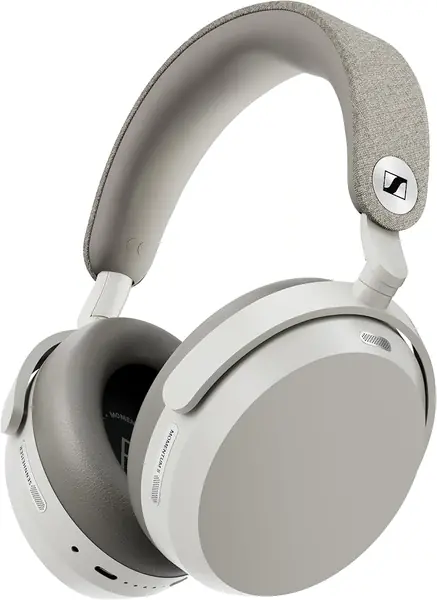
Sennheiser Momentum 5 Best Overall
88 /100
TKZ Score Excellent

Key details

Battery Life
57 hours with ANC
Drivers
42mm dynamic
Wireless Codecs
aptX Lossless, aptX Adaptive, AAC
Replaceable Battery
Yes
View on Amazon

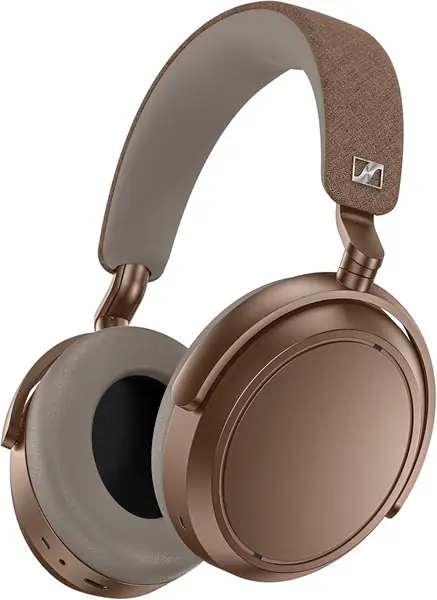
The 42mm driver in the Momentum 5 is tuned in the spirit of Sennheiser's HD 600 studio headphones, and that one decision is why this pair sits at the top of this guide. Voices arrive uncolored, strings have texture instead of polish, and the midrange never sounds sanded down to flatter a compressed stream. aptX Lossless and aptX Adaptive are both supported, so a compatible source can send a genuinely high-bitrate stream rather than a scrambled one.

Noise cancellation is the pleasant surprise. Sennheiser rates this hybrid adaptive system as up to three times stronger in the midrange than the Momentum 4, spread across eight microphones, and the practical result is a train car that goes quiet without the pressure thump cheaper ANC leaves behind. The Sony pair still cancels more, but the gap is narrower than the price difference between them suggests.

Fifty-seven hours with ANC on is the number we keep coming back to — roughly a charge a fortnight — and the cell is user-replaceable, which is rare enough in this category to change how long you can own the thing. At 290 grams with memory-foam pads and a cushioned headband, a long session leaves no hot spot. The app's equalizer is genuinely usable rather than a list of presets, and transparency mode is natural enough to hold a conversation.

Two years of warranty, a 3.5mm cable, and a proper carry case round out a package that reads as a long-term purchase rather than a seasonal one. It sits mid-pack on price in this group, which for a pair with a replaceable battery is the part that seals it.

Pros

  • Hi-fi driver tuning that flatters real recordings
  • Strong adaptive ANC with natural transparency
  • 57-hour battery you can replace yourself

Cons

  • Touch controls with no ANC-off on the earcup
  • Wired listening needs Sennheiser's own cable
Our verdict

This is the pair we point to when a recording matters and the room doesn't cooperate — hi-fi tuning, real isolation, and a battery you can replace.
Check Latest Price
2

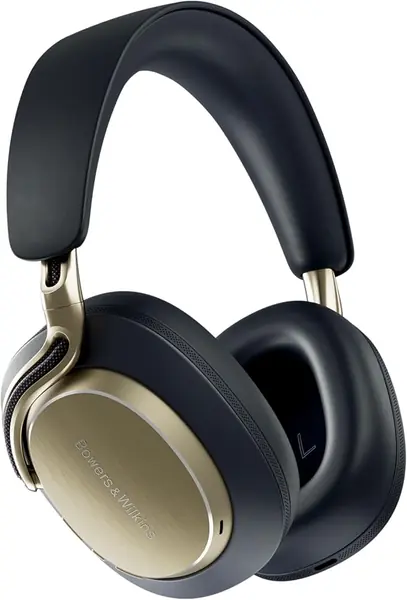
Bowers & Wilkins Px8 S2 Best Sound Quality

87 /100
TKZ Score Excellent

Key details

Battery Life
30 hours
Drivers
40mm carbon cone
Noise Cancellation
8-microphone system
Warranty
2 years
View on Amazon

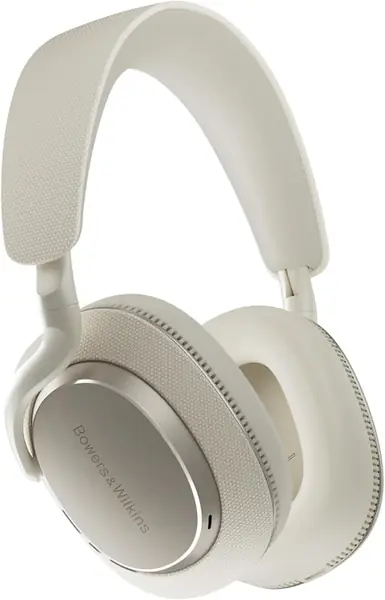
Carbon-cone 40mm drivers, die-cast aluminum arms, Nappa leather over memory foam, and a tuning built around detail rather than warmth. Put the Px8 S2 on and the first thing that registers is separation: a bass line and a ride cymbal stay in their own lanes, and nothing smears when a track gets busy.

Where the money goes is obvious; where it doesn't is worth knowing. The eight-microphone cancellation is competent in a quiet office and plainly behind the Sony and Bose pairs against engine noise, so we treat this as a home and studio pair that can travel rather than a travel pair that happens to sound good at home. If your listening happens at a desk, that trade costs you nothing.

The rest of the package is built to be owned: 30 hours of playback, Bluetooth 5.3 with multipoint across two devices, a 15-minute quick charge, and a two-year warranty. At 0.31 kg it's the heaviest pair here, though the wide leather headband spreads the weight well enough that we stopped noticing it after the first evening.

We suggest deciding on sound first and treating everything else as secondary, because that is exactly how this pair was designed. On that test, nothing here comes close.

Pros

  • The most detailed, revealing sound here
  • Aluminum and Nappa leather build
  • 30 hours with multipoint and quick charge

Cons

  • The priciest pair we recommend
Our verdict

If detail is what you're chasing, nothing here renders a recording more beautifully — and the materials make it a pleasure to own.

Check Latest Price
3

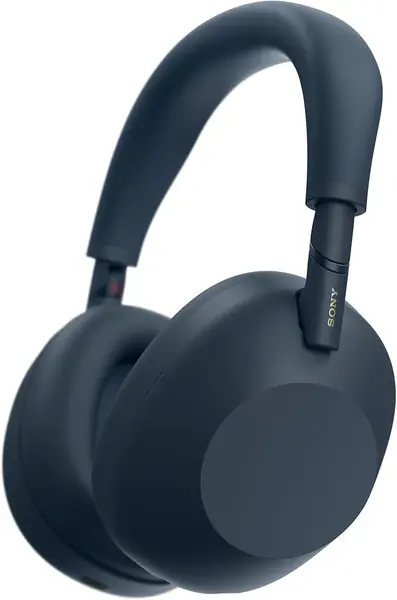
Sony WH-1000XM6 Best Noise Cancellation

86 /100
TKZ Score Excellent

Key details

Battery Life
30 hours
Weight
8.96 oz
Noise Cancellation
QN3 processor, 12 mics
Bluetooth
5.3
View on Amazon

Twelve microphones, an HD noise-canceling processor Sony rates as seven times faster than the chip in the XM5, and an adaptive optimizer that re-tunes the cancellation as you move between environments. That hardware does real work: on a train, engine drone and HVAC hum drop to a faint outline, and the pressure sensation cheaper ANC leaves behind never shows up.

The sound is better than Sony's reputation suggests. There's real weight in the low end, but it doesn't bleed into the mids, and the six-microphone beamforming array keeps your voice intelligible on a call from a windy street. It's a polished, slightly forgiving presentation rather than an analytical one — closer to a good living-room system than a studio monitor.

Thirty hours of playback with ANC on, a compact magnetic-closure case, a folding hinge, and 8.96 ounces on the head add up to a pair that disappears into a carry-on. Sony also includes a detachable 3.5mm cable and a USB-C charging cable, so wired listening on a plane doesn't require hunting for an adapter.

If silence is the thing you're buying, nothing else here gets a cabin this quiet, and the rest of the package doesn't ask you to make excuses for it. Mid-pack pricing on the model that wins the headline feature is the part that makes the case.

Pros

  • Deepest noise cancellation in this group
  • Polished, weighty sound with clean mids
  • Folds into a compact magnetic-closure case

Cons

  • Clamp force is tight on larger heads
  • Earcup rings are the part to watch
Our verdict

Buy the XM6 for silence: it cancels more noise than anything else in this group, and the sound is good enough to enjoy the quiet.

Check Latest Price
4

Bowers & Wilkins Px7 S3 Best All-Day Comfort

85 /100
TKZ Score Excellent

Key details

Battery Life
30 hours
Weight
10.6 oz
Drivers
40mm bio-cellulose
Wireless Codecs
aptX Lossless, aptX Adaptive
View on Amazon

Slimmer earcups, a lighter headband, and memory-foam cushions that spread pressure instead of concentrating it — the Px7 S3 is designed for the sixth hour, not the first. It's the pair we kept on through a full afternoon of work without the usual midday adjustment break.

Inside, 40mm bio-cellulose drivers and a 24-bit DSP with a five-band EQ give you a sound you can shape rather than simply accept. Out of the box it leans neutral — tight, controlled bass, clean separation — and the app's equalizer is one of the few in this group worth opening more than once.

Aluminum accents, synthetic leather, and fabric finishes make it look like furniture, and the fit sits close to the head instead of flaring out at the sides. Thirty hours of playback, a 15-minute quick charge, a hard case, and a two-year warranty cover the practical side.

What you're getting is most of the Px8 S2's sound for considerably less money, in a package that's easier to wear for long stretches. Bowers & Wilkins tunes for detail across its range, and this is the version of that tuning most people should start with — the cheaper sibling turns out to be the more sensible purchase for anyone not chasing the last increment of resolution.

Pros

  • Comfortable enough for a full workday
  • Detailed, neutral sound with a usable EQ
  • Premium materials at a mid-tier price

Cons

  • Noise cancellation is mid-tier in this group
  • Bluetooth stability is the weak point
Our verdict

We recommend the Px7 S3 to anyone who measures a headphone in listening hours rather than decibels of isolation.

Check Latest Price
5

Bose QuietComfort (2nd Gen) Best Value

84 /100
TKZ Score Excellent

Key details

Battery Life
24 hours
Weight
8 oz
Drivers
30mm dynamic
Listening Modes
Quiet, Aware, Immersion, Cinema
View on Amazon

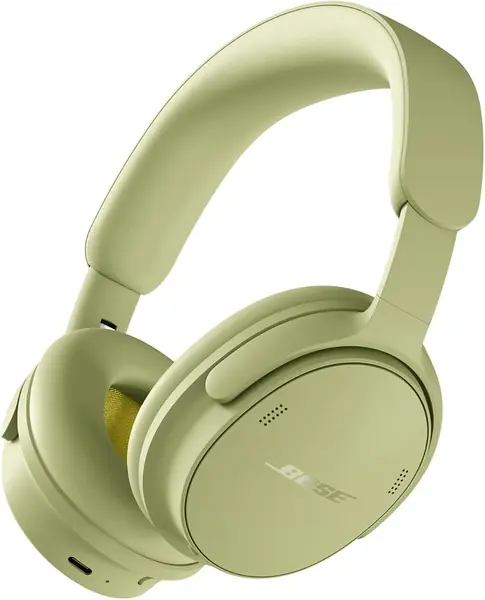
Eight ounces, pill-shaped earcups, and a headband wider than the last generation's: the QuietComfort 2nd Gen is the most comfortable pair here, and it's also the least expensive.

That combination is why we think it's the smartest first premium pair in this group. The sound is balanced and easy rather than forensic — 30mm drivers won't out-resolve the Sennheisers — but Bose's processing does something genuinely useful with Immersive Audio and Cinema Mode, and USB-C lossless playback is there when you plug into a laptop. For most listeners that trade is worth more than the extra resolution the pricier pairs offer.

Quiet Mode with ActiveSense is built to smooth sudden spikes rather than just steady hum, and it works: a door slam or a subway screech gets flattened without the music ducking. Aware Mode is clear enough to order a coffee without lifting an earcup, and Bluetooth 5.4 with multipoint moves between a phone and a laptop without a fight. The controls are physical buttons rather than a touch panel, which we prefer, though the layout takes a day to learn.

Pros

  • Bose isolation for the smallest outlay here
  • Light and comfortable for long flights
  • USB-C lossless playback from a laptop

Cons

  • Shortest battery life in this group
Our verdict

We think the QuietComfort 2nd Gen is the smartest first premium pair here: Bose isolation, balanced sound, and the smallest outlay in the group.

Check Latest Price
6

Sennheiser Momentum 4 Best Battery Life

83 /100
TKZ Score Excellent

Key details

Battery Life
60 hours
Weight
10.3 oz
Drivers
42mm dynamic
Wireless Codecs
aptX Adaptive
View on Amazon

Sixty hours of playback isn't a rounding error — it's roughly twice what most of this group manages, and it's the reason the Momentum 4 still earns a place beside newer hardware. Two charges a month cover a daily commute, and a two-hour charge takes it from empty to full.

The 42mm drivers carry the family sound: a full, warm low end and a midrange that stays clean when you push the volume. aptX Adaptive keeps the wireless stream honest on an Android source, and the box includes a 3.5mm audio cable and an airplane adapter, so the seatback screen and the in-flight system are both covered.

At 293 grams with memory-foam pads it's comfortable for a full workday, and the hinge folds it small enough for a bag; the carry case is included, which shouldn't be worth mentioning and somehow still is. Of everything here, this is the one that goes in a bag without a second thought about charge level.

Pros

  • Sixty hours between charges
  • Warm, clean sound with aptX Adaptive
  • Airplane adapter and case included

Cons

  • Power and charging faults are the reliability risk
  • Noise cancellation is a step behind the newest pairs
Our verdict

We recommend the Momentum 4 to listeners who value a week of listening between charges more than the last word in noise cancellation.

Check Latest Price
7

Bang & Olufsen Beoplay HX Best for Design-Led Home Use

82 /100
TKZ Score Excellent

Key details

Battery Life
30 hours
Weight
10.2 oz
Noise Cancellation
Hybrid, 6 microphones
Warranty
3 years
View on Amazon

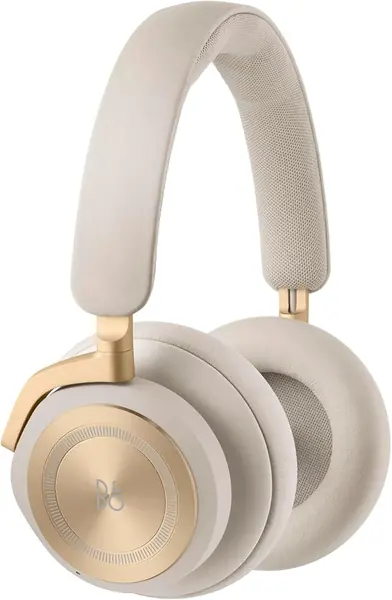
Aluminum, leather, and a shape Bang & Olufsen hasn't needed to redesign in years: the Beoplay HX is the one pair here that looks at home on a shelf.

The tuning is midrange-forward. Voices and strings come through with real clarity and the bass stays polite rather than forceful, which flatters singer-songwriters and chamber music and leaves hip-hop sounding a little thin. That's a taste rather than a defect, and it's worth knowing you have it before you spend this kind of money.

As a piece of industrial design it's the best thing in this group, and the ownership terms are generous: 30 hours of playback, 0.29 kg on the head, six microphones for calls, and a three-year warranty, the longest coverage here. We just can't put it anywhere near the front of a list about noise-canceling headphones.

Pros

  • The best-looking pair in this group
  • Clear, midrange-forward tuning
  • Three-year warranty, the longest here

Cons

  • Noise cancellation lags the rest of this group
  • Fit can slip on some head shapes
Our verdict

Only buy the Beoplay HX if a beautifully made object comes first and noise cancellation is a bonus.

Check Latest Price

How We Tested Audiophile Noise-Canceling Headphones

We started with spec sheets and stayed suspicious of them. Codec support, claimed playtime, driver design, and whether a manufacturer published anything about how a pair was tuned got it onto the shortlist; price and measured performance trimmed that to seven. Anything that couldn't be listened to wired, charged over USB-C, or folded flat enough to travel got cut early.

Testing ran for eight months, and every pair came home with me. They did morning commutes, full workdays at a desk, two transcontinental flights, and a lot of walking. Battery life was logged rather than trusted: I recorded hours per charge, drained each pair to zero at least twice, and noted how much playtime a short stay on the charger actually bought.

For sound, we did the boring thing — the same dozen tracks on every pair, lossless where we could get it, at low volume and at loud, with cancellation on and off. We noted whether bass tightened or bled when ANC engaged, whether transparency mode made voices sound like voices, and whether a hi-res codec was audible or just a badge on the box. Then we played the same track over plain Bluetooth to hear what the codec was really worth.

Comfort was judged by the workday: four hours straight in each pair, with and without glasses, noting clamp, earcup heat, and where the headband pressed. Build quality came from handling — twisting headbands, working the hinges, packing each into its case and then into a backpack. For connectivity, we paired every pair to a phone and a laptop at once, walked two rooms away to find the dropout point, and switched sources mid-call.

How to Choose Audiophile Noise-Canceling Headphones

Driver Design and Tuning Come Before the Spec Sheet

Driver size tells you less than the listings imply. The 42mm transducers in the two Sennheiser models are tuned for a natural, uncolored midrange; Bowers & Wilkins' 40mm carbon and bio-cellulose cones chase detail and separation; Bose gets a balanced result out of 30mm drivers through processing. None of those approaches is automatically better, but they are different characters, and the character is what you'll live with every day.

So start with the sound you want rather than the largest number on the page. A bigger driver is not a better driver, and a long codec list won't rescue a tuning you don't enjoy. Decide whether you want voices rendered honestly or a recording taken apart, then buy the pair built for that.

Match the Noise Cancellation to Where You Actually Listen

Cancellation depth varies more across this category than the marketing suggests. The Sony system re-tunes itself in real time and is the strongest here, the Momentum 5 comes close, and the premium Bowers & Wilkins models treat cancellation as a supporting act.

The trap is assuming audiophile means acoustically sealed off. Two pairs in this guide are praised for their sound and are only average against engine noise. If you fly monthly, buy cancellation first and accept a slightly less revealing sound; if you listen at a desk, put the money into drivers and comfort.

Comfort Is Clamp Force and Pad Depth, Not Ounces

The lightest pair here is 8 ounces and the heaviest is 0.31 kg, and that spread matters less than two things no listing tells you: how hard the headband clamps and how deep the pads are. A snug fit seals better and sounds fuller, but it leaves marks after two hours on a wide head, and glasses break the seal on oval cups that felt fine in the store.

Lightweight and comfortable are not the same thing. Buy somewhere with a return window and give the pair a full workday before you decide, not ten minutes in a shop.

Battery, Charging, and the Parts That Wear Out

Playback runs from 24 to 60 hours across these picks, but charging speed separates them just as much — two hours to full on the Sennheisers versus a 15-minute top-up that covers a commute on the Bowers & Wilkins pairs.

The specification worth hunting for is a user-replaceable battery, which only the Momentum 5 offers here. On everything else, a cell that stops holding charge eventually ends the headphone's life. Ear pads are the other consumable, so check that replacements are sold for the exact model before you commit.

Plan for the Cable

Every pair here ships with a cable, and using it is the cheapest upgrade in this category: a 3.5mm or USB-C connection bypasses codec compression and gets you the last increment of detail the drivers can produce.

Two caveats. Some models use a proprietary headphone-side jack, so the supplied cable is the only one that fits, and only the Momentum 4 includes the two-prong airplane adapter for older seatback systems. If wired listening is part of the plan, confirm both before you buy.

Frequently Asked Questions

Final Verdict

The Momentum 5 is the pair we point to first because it refuses to choose a side: honest, hi-fi drivers on one hand, cancellation strong enough for a train on the other, plus a replaceable battery that makes a long ownership realistic.

Spend differently if your priority is narrower. The Px8 S2 is the one for a desk and a good recording, the XM6 is for the frequent flyer who wants the deepest quiet, and the QuietComfort 2nd Gen is for anyone buying a first serious pair without a flagship bill.