Best Midrange Over-Ear Noise-Canceling Headphones of 2026

The midrange is the most crowded shelf in headphones and the one where a spec sheet tells you the least. Every pair in this band claims active noise cancellation, a week of battery, and a companion app, and on paper they're nearly interchangeable. The differences show up on hour four of a red-eye, when one pair has built a dull pressure behind your ears and another has quietly let the baby in 22B through. What you're actually buying is a set of compromises someone made on purpose — money spent on drivers and padding, saved on hinges. Choose well and a pair stays with you for years.

I've worn twelve pairs over the past six months, on a daily bus commute, in an office with a vent that hums at exactly the wrong pitch, and through two long flights, and the ranking rarely follows the spec sheet. A high-res codec and adaptive cancellation don't help much if the earcups won't seal around your glasses, and Bluetooth version numbers matter less than whether multipoint survives an incoming call. The picks below are the ones that kept ending up in my bag.

The Best Midrange Over-Ear Noise-Canceling Headphones

1

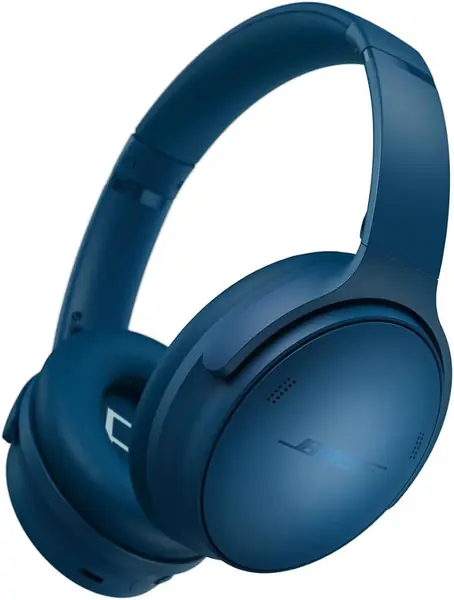
Bose QuietComfort Headphones Best Overall
93 /100
TKZ Score Outstanding

Key details

Battery Life
Up to 24 hours
Weight
8.47 oz
Bluetooth
5.1
Noise Modes
Quiet and Aware
View on Amazon

Two things put the QuietComfort at the top of this list: it costs midrange money, and nothing about wearing it feels like a compromise. The cushions are plush, the band is padded, and 240 grams is light enough that the headband stops registering after the first hour. Its noise canceling is the second-most effective in this group, behind only the Sony XM4, and the gap between them is small enough that most people will never notice it on a commute.

The driver is the detail that shifted how we think about the tuning. Bose uses a 30 mm driver where most of this group uses 40 mm, yet the low end still lands with real weight — the stock sound is warm and bass-forward, and the adjustable EQ is there when you want the mids pushed forward for podcasts or acoustic records. Quiet mode is the one you'll live in; Aware opens the room up for a gate announcement without lifting a cup.

Switching between the two takes a tap rather than a trip into the app, which is the right call. The touch panel is the part that takes adjusting: swipes handle volume and playback, lovely with bare hands and awkward through a glove. Everything else about living with it is thought through — the cups fold into a hard shell case, and a detachable 3.5 mm cable keeps a seatback screen in play when the battery isn't.

Pros

  • Noise canceling close to the best here
  • 240 g with genuinely plush cushions
  • Quiet and Aware modes plus adjustable EQ

Cons

  • Shortest battery life in this group at 24 hours
  • Bluetooth dropouts can occur with some devices
Our verdict

The quiet, comfortable all-rounder we point most people to: near-best noise canceling, the lightest fit here, and midrange money that leaves the flagships looking indulgent.
Check Latest Price
2

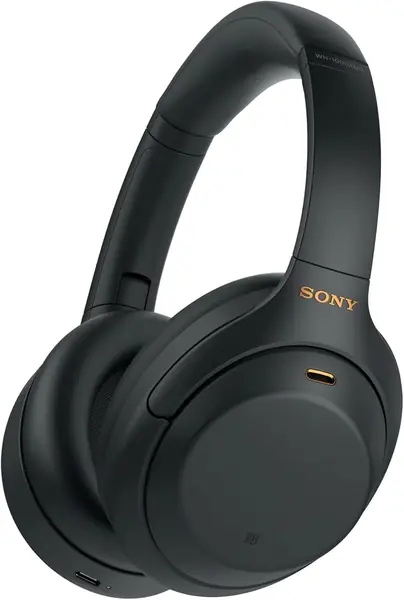
Sony WH-1000XM4 Best Noise Canceling

92 /100
TKZ Score Outstanding

Key details

Battery Life
Up to 30 hours
Weight
9 oz
Bluetooth
5.0
Quick Charge
10 min for 5 hours
View on Amazon

Nothing here cancels noise like the WH-1000XM4. We rank it first on that one dimension by a clear margin: the dual-sensor system flattens the drone of an engine or an air handler while leaving voices and detail intact, and it keeps working at the low volumes you actually listen at rather than needing to be cranked.

That performance is why it sits at the front of the runners-up despite what it costs. This is the priciest pair on the page, and the money has gone into the silence and the software rather than the materials — the shell is honest plastic. Comfort is the real risk, with a clamp firmer than the Bose's that can leave ears aching after a few hours. For a desk, the Bose is the better buy; for a plane, this one earns its keep.

The small conveniences are what make it liveable. Speak-to-Chat pauses playback the moment you start talking, ten minutes on USB-C returns about five hours, and the touch panel handles volume and track changes. Five microphones look after calls, and the folding case is slim enough to slide into a laptop sleeve.

Pros

  • The most effective noise canceling here
  • Ten minutes of charging returns about five hours
  • Speak-to-Chat and five-mic call handling

Cons

  • Firm clamp can ache over long sessions
  • Charging faults can develop over time
Our verdict

The best noise canceling we tested in this group, and still the pair we take on a long flight — worth the stretch when silence is the whole point.

Check Latest Price
3

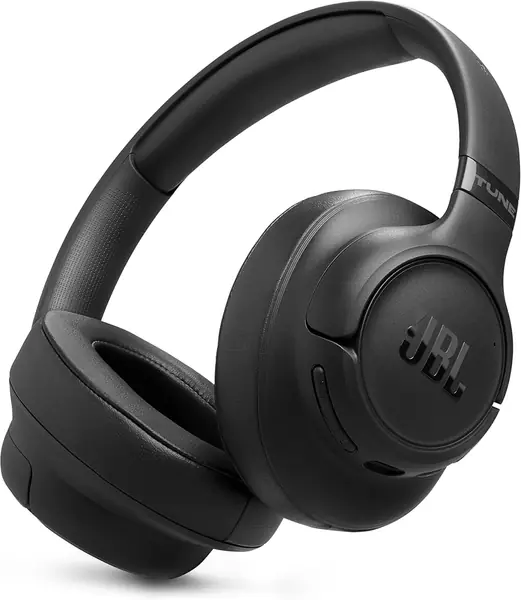
JBL Tune 780NC Best Battery Life

89 /100
TKZ Score Excellent

Key details

Battery Life
Up to 76 hours (50 with ANC)
Bluetooth
6.0
Drivers
40 mm
Multipoint
Two devices
View on Amazon

Seventy-six hours is the number that stops you, and it drops to 50 with adaptive noise canceling running — still roughly double what the Bose or the Sony manages. Charging stops being a ritual and becomes something you do when you remember, and a five-minute top-up gets you through an evening if you don't.

Battery aside, this is a bass-first headphone with spatial audio on tap and a mild V-shape that flatters pop, games, and film. The adaptive cancellation handles offices and street noise, and Smart Ambient lets you order a coffee without taking them off. Where it gives ground is materials: the plastic is functional rather than lovely, and the 40 mm drivers are tuned to entertain rather than to dissect a recording.

Bluetooth 6.0 with multipoint is the quiet win — pair a laptop and a phone and it hands off when a call comes in, which is the feature people use most once they have it. The buttons are physical, which we prefer on a cold commute, and the cups fold flat for a bag.

Pros

  • Up to 76 hours, 50 with ANC on
  • Two-device multipoint over Bluetooth 6.0
  • Physical buttons and 40 mm drivers

Cons

  • No carry case included
Our verdict

If you charge your headphones once a week and resent it, this is the pair: days of playback per charge and two-device pairing that actually switches.

Check Latest Price
4

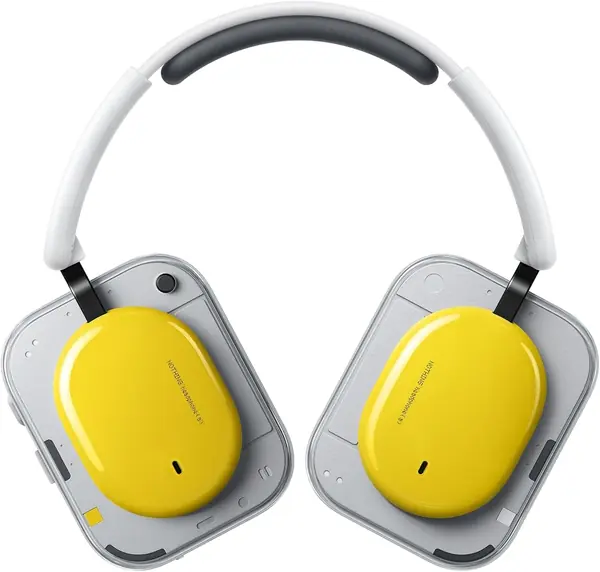
Nothing Headphone (a) Best Design

88 /100
TKZ Score Excellent

Key details

Battery Life
Up to 135 hours
Weight
10.9 oz
Drivers
40 mm
Wired Listening
3.5 mm cable included
View on Amazon

Very few headphones get a reaction when you walk into a room; this yellow one does. The finish is the reason to consider it over a plainer pair at the same money, and it isn't skin deep — the cushions are memory foam, the headband is wide, and at just under eleven ounces the weight spreads instead of pressing on one spot.

The sound is the part we didn't expect to like as much. The default tuning leans bassy — the app's Ultra Bass switch is there if you want more of it — but pull that back and the 40 mm drivers are clean through the mids, and LDAC support means higher-resolution streaming from a compatible Android phone. The five-mic array handles calls, and the personal sound profile in the app is worth the ten minutes it takes.

Noise canceling is where it concedes ground. The adaptive system tames an office or a bus, but it won't seal off a cabin the way the Bose or the Sony does, so a long-haul flight isn't its best use. In exchange you get 135 hours of playback, a 3.5 mm cable and a pouch in the box, and a shutter button on the cup that fires your phone's camera from across the room — a gimmick until you're setting up a group photo.

Pros

  • 135 hours of playback between charges
  • Distinctive design with memory foam cushions
  • Camera shutter button on the earcup

Cons

  • Fit runs snug on larger heads
Our verdict

Buy it for the look and stay for the 135-hour battery — the most characterful pair on this page, and the one people ask about.

Check Latest Price
5

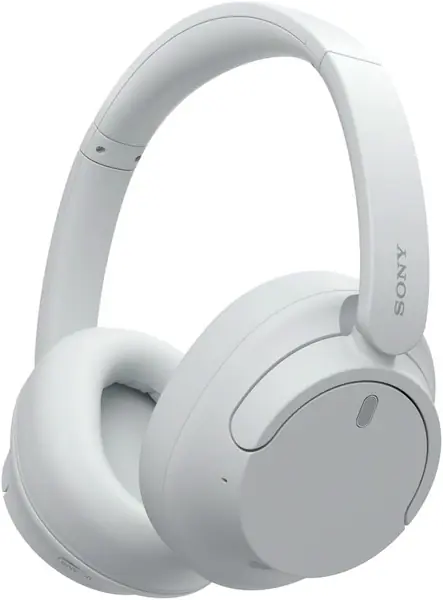
Sony WH-CH720N All-Day Wear at a Desk

87 /100
TKZ Score Excellent

Key details

Battery Life
Up to 35 hours
Weight
6.77 oz
Multipoint
Two devices
Quick Charge
3 min for 1 hour
View on Amazon

At 192 grams this is the lightest pair in the group by a wide margin — 48 grams under the Bose, more than 100 under the Nothing — and that number is the whole argument. On a long shift, lightness beats almost any other spec, because clamping and heat are what make you take headphones off. The cups are roomy, the band doesn't press, and it's the pair we kept on for entire workdays.

Noise canceling is the compromise. The dual-sensor system with Sony's V1 processor does a decent job on steady low noise — fans, road hum, a distant air handler — but voices and clatter come through in a way they don't on the XM4. If you need a cone of silence, keep looking. If you want the edge taken off an open office without the sealed-in feeling, it's the more pleasant wear of the two.

The practical case is easy to make. Three minutes on the charger returns an hour of playback, multipoint keeps a laptop and a phone connected at once, and 35 hours means you charge weekly rather than nightly. Sound leans clear and bright rather than bassy, which suits podcasts and acoustic music better than it suits hip-hop.

Pros

  • 192 g, the lightest pair here
  • Three-minute charge for an hour of playback
  • Multipoint and a 35-hour battery

Cons

  • Plastic frame feels light-duty for daily bag use
Our verdict

The one to wear for eight hours straight — 192 grams, 35 hours, and noise canceling that softens a room rather than silencing it.

Check Latest Price
6

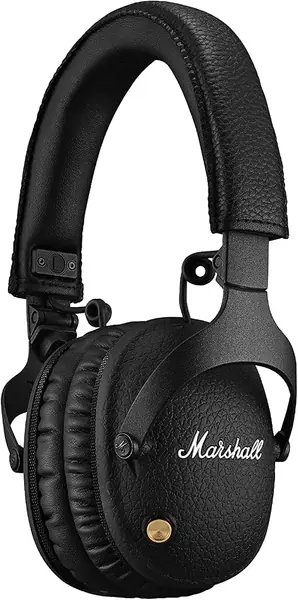
Marshall Monitor II Best for Physical Controls and Retro Looks

83 /100
TKZ Score Excellent

Key details

Battery Life
Up to 30 hours (45 without ANC)
Weight
11.3 oz
Bluetooth
5.2
Drivers
40 mm
View on Amazon

There's a single multi-directional knob where the controls usually go, and it does everything — play, pause, skip, volume, calls. No swiping, no hunting for a button with a glove on, no looking down. That knob is the whole pitch of the Monitor II: a headphone designed to be operated without thinking about it. The black finish with metal detailing is why a lot of people pick it over a plastic alternative.

The rest is old-fashioned in the best way. The cups collapse into a compact shape, a canvas travel bag comes in the box, and the detachable 3.5 mm cord means it still works with a seatback screen or a laptop's headphone jack long after the battery has gone. Marshall's app picks up the settings the knob can't reach.

The battery figures tell you how Marshall expects this to be used: 30 hours with noise canceling engaged, 45 with it off. Which is the honest summary of the pair overall — it's a beautifully operated headphone that happens to cancel noise, rather than the other way around. The 40 mm drivers give it a warm, full sound, and the headband holds its shape.

Pros

  • One knob handles playback, volume, and calls
  • Folds compact with a canvas travel bag
  • Up to 45 hours with noise canceling off

Cons

  • Heaviest pick here at 11.3 ounces
Our verdict

A headphone for people who want a knob instead of a touch panel and don't mind the weight — handsome, folding, and 45 hours with cancellation off.

Check Latest Price

How We Tested the Midrange Noise-Canceling Headphones

We started by pulling every over-ear noise-canceling model sitting between the budget shelf and the flagship tier, then cut anything with a fixed cable, no companion app, a review pattern clustered around cracked hinges and dead earcups, or corners that looked cut to hit a lower shelf. That left twelve pairs, all bought outright.

They lived in my bag for six months. Each pair got at least one full workday of continuous wear, a week of bus commutes, a pass through an open-plan office with that humming vent, and time in a noisy coffee shop and on a windy sidewalk for phone calls; several came along on longer flights. I kept notes on which ones I was happy to walk into a meeting wearing.

Sitting beside a running dishwasher and a window air conditioner with each pair, I noted what disappeared and whether my ears felt pressurized; then I wore each one for two straight hours, glasses on and off, logging where the headband pressed and how much the cups actually swiveled. I ran every pair down to zero with cancellation on rather than trusting the box figure, and paired a laptop and phone at once, taking calls mid-song and walking two rooms away to see what dropped. Each pair also rode in a tote bag with keys and a water bottle, and I twisted the headband looking for play in the hinges, with a running log of app crashes and surprise re-pairings. Sound got the same three tracks every time, judged on bass bloat, vocal clarity, and whether switching on cancellation changed the tone.

How to Choose Midrange Noise-Canceling Headphones

What Midrange Money Actually Buys

Above the budget tier you're paying for two things: genuine noise cancellation and the processing to run it well. What separates midrange from flagship now is refinement — how a pair handles wind, whether pressure builds in your ears, how smoothly it moves between modes — rather than raw blocking power.

Ignore the decibel figure on the box. Every brand measures it differently, so a big number on one listing says nothing against a smaller one on another. Look instead for adjustable ANC levels or a transparency mode, because that control is what makes cancellation liveable on a six-hour day.

Fit and Weight Decide Whether You Wear Them

The most common reason a good headphone ends up in a drawer is clamping force. A 192-gram pair and a 308-gram pair can both feel fine for ten minutes; the lighter one asks less of your neck over an eight-hour shift, while a heavier one with wide, deep cushions spreads the load. If you wear glasses, the arms break the seal at the temples and let noise back in, and deeper pads help far more than tightening the band does.

Wear any pair you're considering for a full hour on the first day, and keep the box until you have.

Battery Figures Are Usually Quoted Without ANC

Manufacturers headline the longest possible number, which is playback with cancellation switched off. The JBL Tune 780NC states both — 76 hours, or 50 with ANC running — and the second figure is the one to compare against a rival's headline. Quick charge matters more than total capacity on a commute: ten minutes for five hours on the Sony WH-1000XM4 covers a week of short trips.

As a rule of thumb, anything under about 25 hours means charging weekly, and anything past 50 means you'll forget where the cable went.

Hinges, Pads, and the Second Year

Two parts fail first on over-ear headphones: the pads and the folding hinge. Cushions flake and flatten, so check that replacements are sold before committing to an unusually shaped cup. Hinges take the load every time the headphones go into a bag without a case, which is why the hard shells shipped with the Bose and the Sony XM4 matter more than they look.

Every pair here carries a one-year warranty, so year two is on you — a case and a hook by the door are cheap insurance.

Frequently Asked Questions

Final Verdict

For most people the Bose QuietComfort is the answer: it spends midrange money on comfort and near-top-tier noise canceling, and asks nothing in return beyond a place to plug in and a short adjustment to the touch panel.

If most of your listening happens at 35,000 feet, step up to the Sony WH-1000XM4 — its cancellation is the strongest here and worth the difference. And if you simply refuse to charge anything twice a week, the JBL Tune 780NC makes that its entire personality.