Best Audiophile Wireless Earbuds of 2026

Bluetooth used to be where good sound went to die — a codec bottleneck that smeared everything above the midrange. That's mostly behind us: current earbuds can carry high-resolution audio, and several handle lossless or LDAC-class streams without choking. The catch is that two pairs can both advertise hi-res support and sound nothing alike.

Nobody tells a first-time buyer that the earbud itself is half the sound. A driver that won't seal in your ear canal loses its bass no matter what codec it decodes, and noise cancellation changes how loud you instinctively turn it up. I stopped judging these on the spec sheet — what matters is whether the app gives me real EQ and gain adjustment, and whether the connection holds three weeks in.

Over eight months, my team and I lived with 14 pairs through commutes, full workdays, and long runs. The gap between the best and the rest came down to fit, tuning flexibility, battery life that matched the claim, and staying reliable — and at these prices, value counts. The picks below are what I'd hand someone who cares how a record breathes.

The Best Audiophile Wireless Earbuds

1

Status Pro X Best Overall
88 /100
TKZ Score Excellent

Key details

Playtime
8 hrs, 32 with case
Noise Cancellation
52dB hybrid
Drivers
12mm dynamic + 2 balanced armature
Hi-res Codec
LDAC
View on Amazon

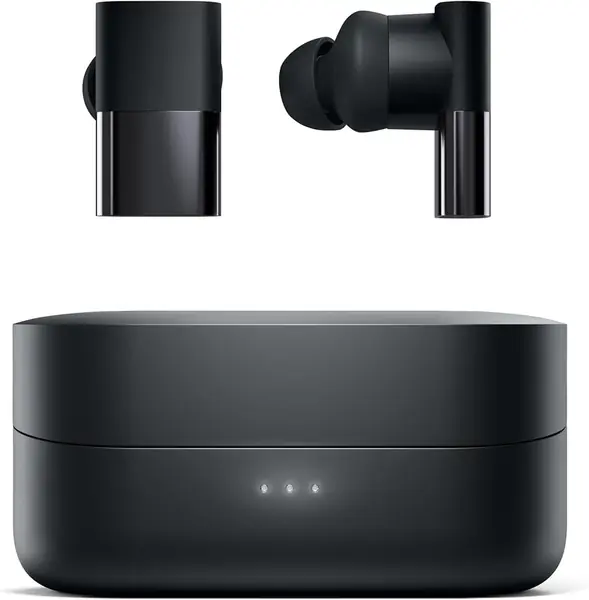
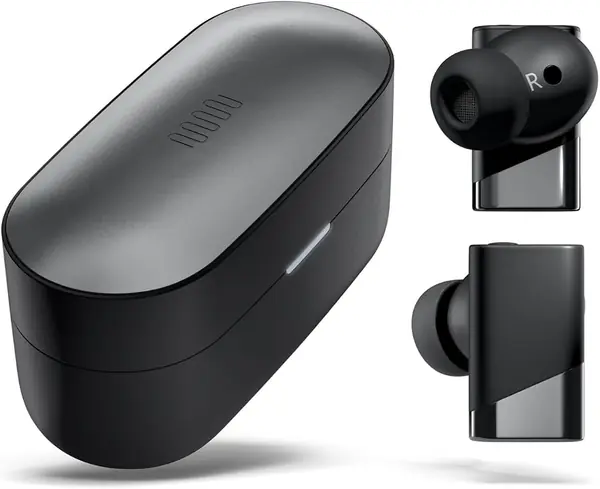
Three drivers in each bud is usually the kind of specification that reads better than it sounds, but on the Status Pro X it is the whole argument. A 12mm dynamic driver carries the low end while two Knowles balanced armatures handle the mids and highs, and the separation that buys you is audible: dense mixes stay uncluttered, and we could follow a walking bass line and a brushed snare at the same time on records we know inside out. LDAC gets the file to the buds at full resolution on an Android phone, which is the other half of the promise.

Noise cancellation is quoted at 52dB, the highest figure in this group, and the hybrid setup earns it on a train. Six beamforming mics and the VoiceLoom processing handle calls, and multipoint, LE Audio and Auracast are all on board. We kept a laptop and a phone paired at once and the handoff was the boring, invisible kind, which is exactly what you want from it.

Eight hours per charge and 32 with the case covers a week of commutes if the case lives on a desk, and Qi wireless charging means no cable hunt at night. The fit runs snug. Three tip sizes ship in the box, and the seal you get changes the bass more than any move in the equalizer, so give an evening to trying them all before you decide the tuning is not for you.

Pairing is where we hit friction. On a couple of phones the buds needed a second attempt the first time, and the flow is happier started from the app than from the Bluetooth menu; once connected, they held. If you hop between sources all day, the Samsung set below is the more forgiving of the two.

Pros

  • Triple-driver array with two balanced armatures
  • LDAC, LE Audio and multipoint on board
  • 52dB ANC, the highest figure in this group

Cons

  • Shorter playtime than cheaper picks here
Our verdict

For critical listening, this is the one: a 12mm dynamic driver crossed with two Knowles balanced armatures and LDAC on tap, and the sound to justify the spend.
Check Latest Price
2

Samsung Galaxy Buds 4 Pro Best for Galaxy Phones

87 /100
TKZ Score Excellent

Key details

Playtime
7 hours
Water Resistance
IP57
Speakers
Woofer + tweeter per bud
Hi-res Audio
24-bit codec
View on Amazon

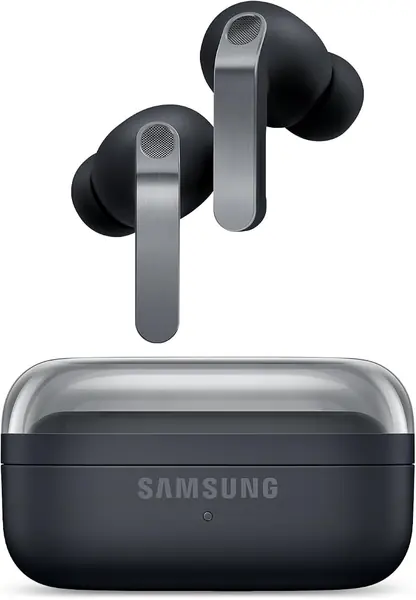
A tweeter and a woofer in each bud is a small-speaker arrangement rather than one driver doing everything, and Samsung is the only pick here that splits the job in two. The payoff sits at the top: cymbals, strings and breath detail arrive cleanly instead of being smeared by a driver that is also trying to move bass.

The rest is built around a Galaxy phone. Adaptive noise cancellation 2.0 adjusts continuously, Live Translation and the HD voice handoff want a recent Samsung handset, and IP57 is the highest water and dust rating on this page, which is worth having if the buds live in a gym bag. The stock tips run firm, so work down a size before you conclude the seal is wrong; the fit settles once you do.

Where it lands for us: this is the pair we suggest to anyone holding a Galaxy phone, because the sound is good enough for real listening and nothing about owning it is fussy. It does not separate instruments the way the Status Pro X does, but it costs less and does more of everything else. On a phone from another maker, some of what you paid for sits unused.

Pros

  • Woofer and tweeter in each bud
  • IP57, the highest water rating here
  • Adaptive cancellation that re-tunes continuously

Cons

  • Seven hours per charge is the shortest here
Our verdict

If you carry a Galaxy phone, these are the least fussy way to get genuinely good sound: a dedicated tweeter and woofer in each bud, 24-bit hi-res audio, and cancellation that adapts on the fly.

Check Latest Price
3

Sennheiser MOMENTUM True Wireless 5 Best for Long-Term Ownership

85 /100
TKZ Score Excellent

Key details

Playtime
40 hours with case
Driver
7mm TrueResponse
Codec
aptX Lossless
Battery
User-replaceable
View on Amazon

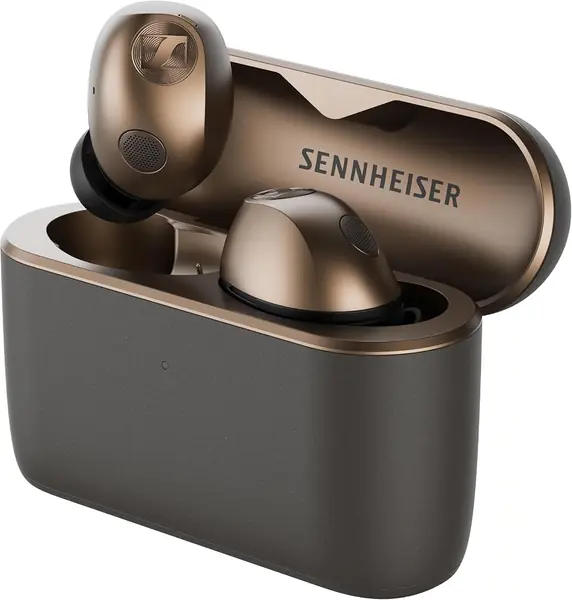
A battery you can replace yourself is close to unheard of in true wireless, and Sennheiser ships the little tool to do it. That one decision changes the ownership math: when the cells fade, the buds do not become a drawer ornament, and you are not shopping again in year three.

On paper this is the most audiophile-credentialed set on the page — a 7mm TrueResponse driver, aptX Lossless and aptX Adaptive, 3D Dolby Atmos, 40 hours with the case. In our listening it was also the pick we argued about most. The tuning is drier and more neutral than the Status and Samsung sets, which flatters acoustic recordings and exposes anything mixed bright, and whether that counts as a virtue depends entirely on your library.

Comfort takes some thought. Four tip sizes run down to XS and the shells are shaped to sit deep, which suits smaller canals and takes fiddling on larger ones. The touch panels want a firm, deliberate tap; the app is where you fix that, so remap the controls before you decide they are unresponsive.

Calls are a strength: beamforming mics, a bone conduction sensor and AI voice isolation keep you audible on a busy street, and IP54 covers rain and sweat. What you are paying for is longevity and codec support rather than excitement.

Pros

  • Battery you can replace yourself
  • aptX Lossless and aptX Adaptive support
  • 40 hours of playtime with the case

Cons

  • The most expensive pair in this group
Our verdict

Buy these for the years, not the weeks: a battery you can replace yourself, a 40-hour case and aptX Lossless on Android phones that support it.

Check Latest Price
4

Nothing Ear (3) Best Midrange

84 /100
TKZ Score Excellent

Key details

Playtime
38 hours with case
Driver
12mm dynamic
Noise Cancellation
45dB hybrid
Bluetooth
5.4
View on Amazon

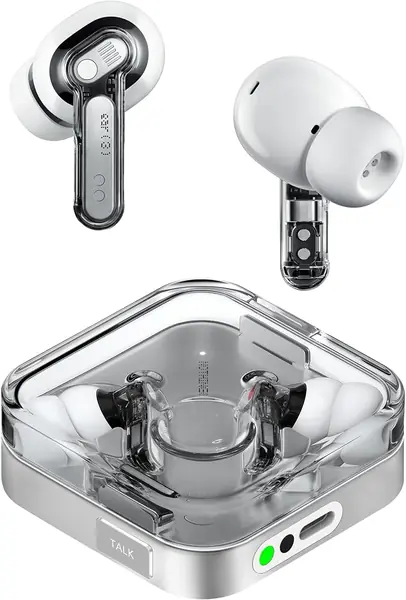
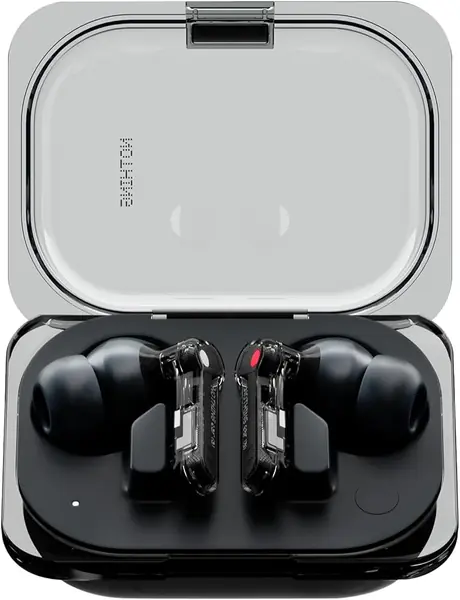
There is a microphone in the charging case. Hold the TALK button with the case a couple of inches from your mouth and the Ear (3) switches to it instead of the mics in your ears — the sort of gimmick that turns out to be genuinely useful when you take a call on a windy corner. It is also one of the best-value sets here, which is why it made the list.

The music side is not an afterthought. A 12mm dynamic driver, hi-res wireless audio over Bluetooth 5.4, 45dB of hybrid cancellation and an app with real equalizer bands, an Ultra Bass control and a personal sound test add up to a fuller toolkit than several pricier pairs offer. There is genuine low-end weight here without the mids turning to mud.

Thirty-eight hours with the case is mid-pack, and dual connection keeps a laptop and a phone attached at the same time. Fit holds through movement, which not every stem-style bud manages. The Nothing X app also hides the low-lag gaming setting and the personal sound test, and both are worth two minutes of setup.

Pros

  • Case microphone for calls in noise
  • 12mm driver with 45dB hybrid cancellation
  • Deep EQ and sound test in the app

Cons

  • Case microphone needs the case in hand
Our verdict

We recommend it to anyone who wants most of the audiophile experience without flagship money: a 12mm driver, 45dB cancellation and a case that doubles as a microphone.

Check Latest Price
5

Status Between 3ANC Best Triple-Driver Value

83 /100
TKZ Score Excellent

Key details

Playtime
8 hours with ANC
Noise Cancellation
Three modes
Water Resistance
IPX5
Drivers
Dynamic + 2 balanced armature
View on Amazon

The Between 3ANC is the same recipe as our top pick for about half the money: one dynamic driver and two balanced armatures in each bud, with three noise modes you switch between rather than one adaptive setting. If the idea of a bass driver and dedicated detail drivers appeals and the Pro X is out of reach, this is where the search ends.

Battery is the practical win — eight hours with cancellation running is a full workday, and the case carries more charges on top. Wingtips in the box and an IPX5 rating make this the one here we are happiest taking to a gym. Cancellation is the softer part: it handles steady noise like a plane cabin and is less convincing against voices.

What tempers the recommendation is wireless behavior. Connection drops and pairing trouble turn up with some phones, and a set this good on sound is frustrating when it stutters mid-track. Buy it for the tuning rather than for the most polished Bluetooth experience in this group — if you switch devices all day, the Samsung or the Nothing Ear (3) is the smoother companion.

Pros

  • Triple-driver array at a midrange price
  • Eight hours with cancellation running
  • Wingtips and IPX5 for workouts

Cons

  • Bluetooth drops on some phones
  • Cancellation struggles against voices
Our verdict

If the top pick's driver recipe is exactly what you want and the budget says otherwise, buy this one — it delivers the detail and asks for patience with Bluetooth.

Check Latest Price
6

Nothing Ear (a) Best Budget

82 /100
TKZ Score Excellent

Key details

Playtime
42.5 hours
Driver
11mm dynamic
Noise Cancellation
45dB
Fast Charge
10 min for 10 hours
View on Amazon

A real equalizer on the least expensive set here is the anomaly worth explaining. Most budget buds hand you three presets and a bass slider; the Nothing X app gives you bands you can actually move, plus a personal sound test, and that is why this one made the list instead of a generic cheap pair.

An equalizer is only useful if it can change something, and here it can. We pulled back the boosted low end and got a more neutral balance for acoustic material, and the 11mm driver had headroom left afterwards. At this price you give up some resolution at the very top and the sense of air around instruments; you do not give up the ability to shape the sound to your taste.

Fast charging is the sleeper feature. Ten minutes in the case returns ten hours of playback with cancellation off, which is the difference between a dead pair and a commute. Forty-two and a half hours in total is generous, and dual connection keeps a laptop in play.

Watch the long-term side. A bud that stops taking a charge is the failure to look out for, and the stock tips run firm enough to ache in small ears after an hour. Neither should put you off at this price; try the tips early and keep the receipt.

Pros

  • Equalizer that genuinely reshapes the sound
  • Ten-minute charge returns ten hours
  • 45dB cancellation at the lowest price here

Cons

  • A bud can stop charging over time
  • Firm tips get sore in small ears
Our verdict

We point budget shoppers here: the least expensive set in this group that still gives you an 11mm driver, 45dB cancellation and an equalizer worth using.

Check Latest Price
7

Moondrop Golden Ages 2 Best for Tinkerers and EQ Fans

81 /100
TKZ Score Excellent

Key details

Codec
LDAC
Bluetooth
6.0
Pairing
Two devices at once
App Control
EQ, gain, codec switches
View on Amazon

Adjustable output gain is not a control you find on wireless earbuds, and it is the tell: this is a pair from a company that expects you to open the app. Gain, a multi-band equalizer, codec selection, touch mapping and the cancellation switch all live in there, and the buds reward the fiddling.

The hardware is unusual too. Moondrop claims four times the energy conversion efficiency of a similar-sized dynamic driver, and what comes out is a fast, bright-leaning tuning that lays detail out rather than warming it up. LDAC runs over Bluetooth 6.0, and dual-device connection keeps a laptop and a phone attached.

The extras are where it gets interesting: a gyroscope drives a spatial mode that follows your head, and a protective case comes in the box alongside a wearing-fit guide. That last item tells you something about who this pair is aimed at.

Where it lands: we like it for the tinkerer, not the first-time buyer. The setup is the product here — an hour with the equalizer, gain and codec settings turns a lean, revealing pair into something tuned to your ears and your library, and that is a pleasure rather than a chore for the right person.

Pros

  • Gain, EQ and codec control in the app
  • LDAC over Bluetooth 6.0
  • Head-tracked spatial audio mode

Cons

  • Oval tips need a third-party swap for some ears
  • Bluetooth is less steady than the rest here
Our verdict

A specialist pick for the tinkerer: LDAC over Bluetooth 6.0 and an app that hands you gain, equalizer and codec control in one place.

Check Latest Price
8

JBL Live Beam 3 Tweaking Without a Phone

80 /100
TKZ Score Excellent

Key details

Playtime
48 hours
Driver
10mm dynamic
Water Resistance
IP55
Case
1.45-inch touchscreen
View on Amazon

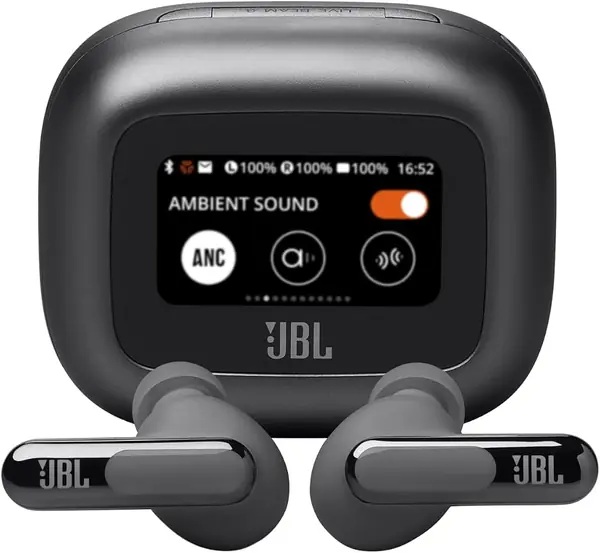
A 1.45-inch touchscreen in the charging case sounds like a solution looking for a problem until you use it: equalizer, volume, cancellation mode and track skipping without pulling out your phone or opening an app. If you listen at a desk all day, that shortcut earns its place.

The audio underneath is solid rather than spectacular. 10mm dynamic drivers and hi-res wireless audio give a warm, bass-forward presentation, adaptive cancellation is effective against steady noise, and six mics hold calls together. Forty-eight hours with the case is the longest figure in this group.

The screen is the part to handle with care. It rides in a pocket on a case that gets knocked around, and if it fails the shortcuts go with it even though the buds keep playing. IP55 and wireless charging round out the practical side, and multipoint keeps a phone and a laptop both attached.

Where it lands: this is the pair for someone who wants control at their fingertips as much as fidelity, and who does most of their listening away from a quiet room. The buds are good; the case is why it is on this list.

Pros

  • Touchscreen case controls EQ and ANC
  • 48 hours total, the longest here
  • Multipoint, IP55 and wireless charging

Cons

  • Warm, bass-forward tuning rather than neutral
  • Stock tips do not hold for every ear
Our verdict

The case is what sells this one — a touchscreen that puts EQ and noise control in your hand — backed by the longest playtime in this group.

Check Latest Price

How We Tested the Best Audiophile Wireless Earbuds

We built the shortlist by filtering every current wireless earbud that claimed high-resolution audio — lossless or LDAC-class transmission, a driver layout built for it, and a companion app with more than a token three-band equalizer — then cut by price and availability until 14 models remained. All 14 went into rotation for eight months, and most of that testing happened where earbuds actually live: a commuter platform, an open-plan office, a desk during a full workday, and weekend runs.

Sound quality was judged with the same eight reference tracks on every pair — a bass-heavy soul record, a string quartet, a live jazz set — and we noted where instruments crowded each other and whether the low end held together at volume, with high-res transmission switched on wherever a pair supported it. For noise cancellation we sat through an HVAC drone, a leaf blower, and a train car, listening for what was left over. Customizability got checked twice: once in the app, adjusting EQ and output gain and listening again to see whether the changes did anything, and once in hand, swapping ear tips until a seal held.

Comfort and fit were tracked across full eight-hour days, since a pair that seals fine at 9 a.m. can ache by 4 p.m. Design and build quality got the pocket test, closed case and keys and all. We drained each pair from full to empty over a workday and logged the real number, paired every set to a phone and a laptop at once and walked between rooms to see how quickly they handed off, and kept a running note of dropouts, app crashes, and whether firmware updates fixed anything or broke it. Value came last: each pair got weighed against what it was asking.

How to Choose Audiophile Wireless Earbuds

Match the Codec to the Phone You Own

LDAC and aptX Lossless are Android features, and aptX Lossless in particular wants a recent Snapdragon chipset. An iPhone tops out at AAC whatever the box promises, so a hi-res badge buys you nothing there — driver tuning and a usable equalizer matter far more. Check your phone's codec support before you pay for lossless.

This is where our top pick earns its keep and where cheaper sets can catch up. The Status Pro X sends LDAC to a modern Android handset; on an iPhone that same feature is a line item you never cash in.

Driver Count Is Not the Same as Resolution

A dynamic driver moves air and gives you weight; balanced armatures are small, fast and detailed. Hybrid designs split the work — the Status Pro X and Between 3ANC use one dynamic plus two armatures, while Samsung does it with a woofer and a tweeter. More drivers can buy cleaner separation, but a badly crossed three-way set sounds worse than a well-tuned single driver.

Listen for whether vocals stay solid when the bass gets busy. That, not the driver count, is what tells you how the crossover was done.

The Seal Decides What You Actually Hear

Cancellation and bass both depend on the tip closing your ear canal, and no app fixes a leak. Work through every size in the box before you judge a pair, and try a half size smaller than you assume you need. Foam tips rescue an awkward canal.

Shape matters as much as size: winged designs such as the Between 3ANC hold through movement, and deeper shells like the Sennheiser sit best with a smaller tip than you might pick by eye.

Read Playtime Figures Carefully

Quoted hours are usually a total with the case, and cancellation cuts the per-charge number. Seven to eight hours per charge is typical here, with the case adding two to four more charges on top. If you listen all day at a desk, per-charge capacity matters more than the total; if you commute, the total is what saves you.

A replaceable battery, as on the Sennheiser, is the only real answer to cells aging out. Everything else is a warranty question.

Treat the App as Part of the Purchase

Equalizer depth varies wildly. Some apps give you presets and a bass slider; others hand over gain, codec choice and touch mapping. If you listen across a wide range of material, an app with real bands is worth more than a marginally better driver, because it lets you correct the tuning to your own ears.

The JBL's case screen is the other approach — control without reaching for the phone — and the Nothing and Moondrop apps are the deepest here.

Frequently Asked Questions

Final Verdict

Our pick is the Status Pro X. Its triple-driver array and LDAC make it the one here built for listening rather than for a feature list, and its weaknesses, playtime and a fussy first pairing, are the kind you work around in a week.

If you carry a Galaxy phone, the Galaxy Buds 4 Pro get you most of the way and ask nothing of you. If the budget is fixed, the Nothing Ear (a) is the set that proves the point.