Best Audiophile Earbuds of 2026

Earbud spec sheets lie by omission. A single dynamic driver can out-resolve a five-driver hybrid, and a wireless pair can undercut a wired set on detail — or lose to it badly. The number printed on the box tells you how a thing was built, not how it will sound in your ears.

What actually decides it is fit. A tip that seals properly is worth more than any driver count, because a leaky seal eats bass and pushes you to crank the volume until the treble turns hard. I learned that the expensive way. Over the past six months, my team and I have logged long hours with 12 pairs — wired in-ear monitors and wireless noise-cancelling models alike — on subway platforms, in a shared office, and on a few cross-country flights.

What survived all that listening wasn't the marketing. Detachable cables and replaceable batteries are what keep a good pair alive for years, and real noise cancellation plus honest battery ratings are what make wireless worth the trade. The picks below earned their spots on sound first; comfort, isolation, and build settled the ties.

The Best Audiophile Earbuds

1

Shure SE215 Pro Best Overall
89 /100
TKZ Score Excellent

Key details

Driver Setup
Single dynamic MicroDriver
Cable
Detachable MMCX
Impedance
10 ohm
Noise Isolation
Up to 37 dB
View on Amazon

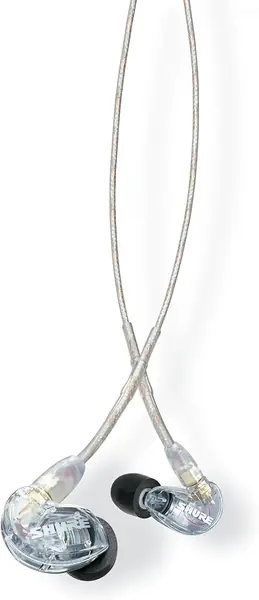
The first thing we noticed about the SE215 Pro is how much outside noise disappears before the music starts. Shure rates the isolation at up to 37 dB, and the over-ear wire plus foam or flex sleeves create a seal that makes a train car or a shared office feel farther away. That isolation is the reason this is our top pick: you can listen at lower volume and still hear the quiet parts. The detachable MMCX cable is another long-term win; if the cable fails, you replace it rather than the whole earphone, and the two-year warranty backs the housing.

The sound is warm and bass-forward rather than ruthlessly neutral. A single dynamic MicroDriver gives drums and bass guitar real weight, and vocals stay clear, but the SE215 Pro does not dig out as much fine texture as the SIMGOT EW300. We think that trade is fine for commuting, practice, and long sessions: the tuning is forgiving of rough recordings, and the seal does more for perceived detail than an aggressive treble lift.

The included foam tips are the place to start for a seal, and the over-ear routing keeps the cable out of the way. The SE215 Pro is the one we reach for when the room is loud and we want to disappear into a record, not when we want to analyze every cymbal.

Pros

  • Up to 37 dB of passive isolation
  • Detachable MMCX cable and two-year warranty
  • Comfortable over-ear fit for long sessions

Cons

  • No inline mic or controls
  • Large housings may not suit small ears
Our verdict

We recommend the SE215 Pro to anyone who wants a tough, isolating first audiophile IEM and can live with a warm, bass-forward tuning.

Check Latest Price
2

Status Pro X Best Wireless

88 /100
TKZ Score Excellent

Key details

Driver Setup
12mm dynamic + dual Knowles balanced armature
Battery
8 hours, 32 with case
Codec Support
LDAC
Noise Cancellation
52 dB hybrid ANC
View on Amazon

Wireless audiophile earbuds usually ask you to trade detail for convenience; the Status Pro X is the first pair here that makes that trade feel less painful. The specification sheet is unusually serious for a true wireless model: a 12mm dynamic driver crossed over to two Knowles balanced armatures, LDAC support, Bluetooth 5.3, and multipoint. That combination is why it earns the wireless slot in this guide.

In our listening, the Pro X has the kind of bass that gives drums body without turning everything muddy, and the balanced armatures bring out cymbals and string texture. We were also impressed by the 52 dB hybrid ANC: it knocks down engine rumble and office hum, though it does not erase nearby conversation. The app's EQ is worth using, because the default tuning is a little polite in the treble.

Battery life is rated at eight hours per charge and 32 with the case, and the case is pocketable enough to top up mid-day. The touch controls are customizable, and IP55 means sweat or rain is not an issue. The Pro X is the pair we hand over when someone wants one wireless earbud for the desk, the commute, and the gym.

Pros

  • Triple-driver sound with LDAC support
  • 52 dB hybrid ANC and ambient mode
  • Eight hours per charge, 32 with case

Cons

  • Connection can be less stable than the best
  • Touch controls need some practice
Our verdict

For a wireless pair with real audiophile intent, the Status Pro X is our pick, as long as the occasional connection fuss does not bother you.

Check Latest Price
3

SIMGOT EW300 Best Wired Value

87 /100
TKZ Score Excellent

Key details

Driver Setup
1DD + 1 planar + 1 PZT
Cable
Detachable silver-plated OFC
Impedance
28 ohm
Tuning
Two detachable nozzle sets
View on Amazon

Two sets of nozzles in the box is the tell: the EW300 is built for listeners who want to tune the sound themselves. The standard edition uses a 1DD + 1 planar + 1 PZT hybrid setup, a CNC alloy shell, and a detachable silver-plated OFC cable. Swapping the nozzles changes the tuning without opening an app, which is a rare amount of control at this price.

The planar driver gives the EW300 a fast, open feel, and the dynamic driver supplies the low-end weight that planar-only designs sometimes lack. We like the detail it pulls out of acoustic music and games; the metal shell also feels more expensive than the rest of the budget wired group. The cable is light and does not tangle easily, and the 28-ohm impedance means most phones and dongles can drive it.

The catch is that the EW300 is a wired in-ear, so it is happiest with a dongle or a dedicated player with a 3.5mm output. Still, we keep coming back to it when we want to hear a recording's layers without spending flagship money. It is the wired pick we recommend when the goal is detail and tuning rather than isolation.

Pros

  • Two tuning nozzles for adjustable sound
  • Hybrid DD, planar, and PZT drivers
  • Metal shell and detachable OFC cable

Cons

  • Fit can be tight for smaller ears
  • Durability is the open question
Our verdict

The EW300 is the wired pick for listeners who want tuning flexibility and planar-style detail without paying flagship prices.

Check Latest Price
4

KZ ZS10 Pro Best Budget Wired

86 /100
TKZ Score Excellent

Key details

Driver Setup
4 BA + 1 DD
Cable
Detachable
Impedance
24 ohm
Frequency Range
7 Hz–40 kHz
View on Amazon

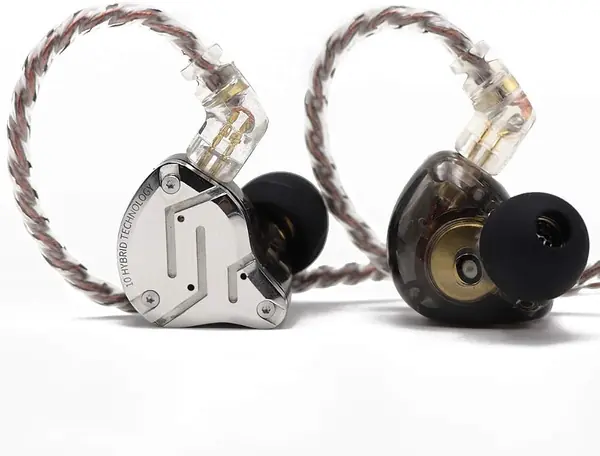
The ZS10 Pro is the low entry point for a multi-driver IEM: four balanced armatures and one 10mm dynamic driver per side, a stainless-steel faceplate, and a detachable cable. It is easy to drive at 24 ohms and 111 dB sensitivity, and the 7 Hz–40 kHz frequency range looks ambitious on paper. The resin shells are larger than a simple bud, and the included cable does the job without feeling premium.

What we like is the sense of separation: the armatures pull apart layers in rock and games, while the dynamic driver gives kick drums a solid thump. The tuning is lively rather than neutral, and the stainless faceplate gives it a little visual punch. We treat the ZS10 Pro as a starter pair: it shows what a hybrid can do with space and detail, and it leaves money for a better cable or tips later.

Pros

  • Lively hybrid separation for the price
  • Easy to drive from a phone
  • Detachable cable and metal faceplate

Cons

  • High sensitivity can reveal source hiss
  • Durability is a gamble
Our verdict

Budget-minded listeners should start with the ZS10 Pro to hear what a hybrid in-ear does with separation before spending more.

Check Latest Price
5

SIMGOT EA1000 Fermat Best Premium Wired

85 /100
TKZ Score Excellent

Key details

Driver Setup
10mm dynamic + passive radiator
Cable
Silver-plated OFC Litz
Impedance
16 ohm
Tuning
Detachable nozzles
View on Amazon

The EA1000 Fermat is the premium wired pick that refuses the hybrid arms race. Instead of stacking drivers, SIMGOT uses a single 10mm dynamic driver with a passive radiator, a purple-gold diaphragm, a polished metal shell, and threaded nozzles for tuning. The approach is deliberate: fewer crossovers can mean a more coherent sound, and the passive radiator is there to add low-end weight without a second driver.

The hardware is genuinely nice. The silver-plated OFC Litz cable is detachable, the nozzles thread on securely, and the metal body has the heft of a small precision tool. At 16 ohms and 127 dB sensitivity, it is easy to drive from a phone dongle, though it will also reveal a noisy source. The tuning nozzles give you a way to soften or sharpen the top end without EQ.

For acoustic music, vocals, and listeners who prize texture over thump, the single-driver approach makes sense; for bass-heavy playlists, the cheaper hybrids here are the more obvious choice. We like the Fermat most as a specialist: it rewards a quiet room and a good recording. It is the connoisseur's wired choice, not the first pair we hand to a newcomer.

Pros

  • Single dynamic driver plus passive radiator
  • Detachable tuning nozzles and Litz cable
  • Easy to drive at 16 ohms

Cons

  • Premium price for a single-driver design
Our verdict

We recommend the EA1000 Fermat to wired listeners who value a coherent single-driver sound and are willing to pay for the machining.

Check Latest Price
6

Sennheiser IE 100 Pro Best Stage Monitor

84 /100
TKZ Score Excellent

Key details

Driver Setup
10mm dynamic
Cable
Detachable
Impedance
20 ohm
Warranty
2 year manufacturer
View on Amazon

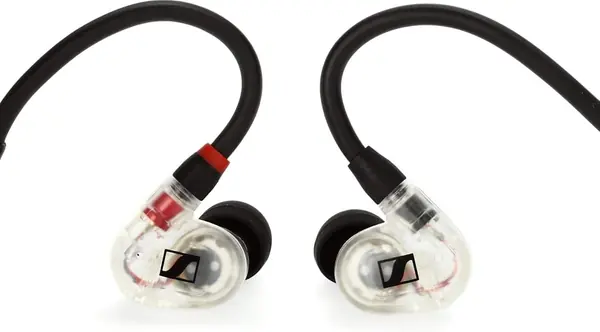
The IE 100 Pro looks like a stage tool, and that is exactly how we treat it. We like the slim, rounded housing because it tucks close to the ear without a big metal shell pressing on the outer ear. The 10mm dynamic driver sits in a package that includes silicone and foam tips, a cleaning tool, a case, and a detachable cable. Sennheiser rates it at 20 ohms and 115 dB, so it does not need a powerful amp to reach a useful volume.

The tuning is monitor-first: mids are clear, and the top end is honest rather than sparkling. That makes it good for hearing a mix and for long listening at low volume. The slim shape also slides under a helmet or a pair of glasses more easily than the larger metal in-ears here.

We like the IE 100 Pro most as a workhorse: the detachable cable and two-year warranty take some of the anxiety out of daily use, and the isolation is strong enough for a loud stage or a commute. If you need to hear the middle of a recording without a bulky housing, this is the sensible choice.

Pros

  • Slim housing fits under helmets and glasses
  • Detachable cable and two-year warranty
  • Strong passive isolation for stage or commute

Cons

  • Bass is modest for casual listening
  • Fit can be shallow for some ears
Our verdict

The IE 100 Pro suits musicians and commuters who want a slim, isolating monitor and do not need a bass-forward tuning.

Check Latest Price
7

Sennheiser Momentum True Wireless 5 Premium Wireless

81 /100
TKZ Score Excellent

Key details

Driver Setup
7mm TrueResponse dynamic
Battery
40 hours with case
Codec Support
aptX Lossless, aptX Adaptive, AAC
Battery Service
User-replaceable
View on Amazon

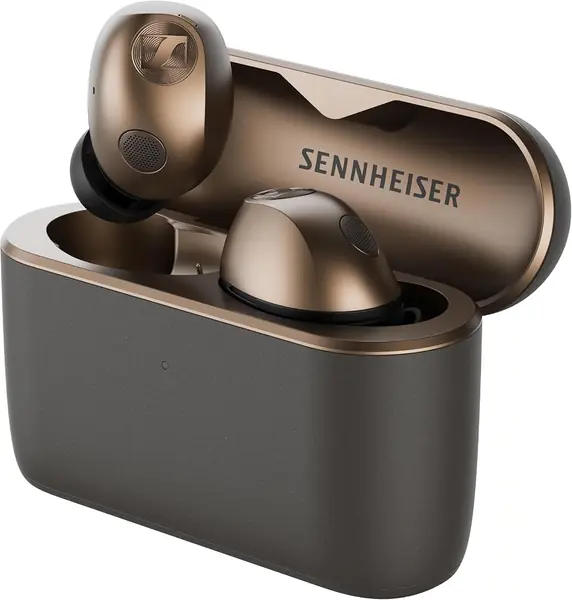
A user-replaceable battery in a flagship wireless earbud is rare enough that it changes the ownership math. The Momentum True Wireless 5 ships with a battery replacement tool, a charging case, four sizes of silicone tips, and a USB-C cable. Sennheiser rates the system at up to 40 hours with the case, and the cell inside each bud can be swapped rather than thrown away.

The 7mm TrueResponse driver and aptX Lossless support are the audiophile bait, but the sound is more refined than aggressive out of the box. We found the in-app EQ worth the trouble; a small lift in the treble and a touch more bass makes the tuning feel more alive. The earbuds are comfortable for long calls, and the IP54 rating covers sweat and light rain.

Noise cancellation is the weak spot. It lowers steady noise, but it does not create the vacuum-like silence of the best ANC models. The transparency mode is useful for quick conversations, and the beamforming mics keep voices clear on calls.

The battery is the reason to consider it over the cheaper wireless picks: a replaceable cell means the earbuds can outlast the first battery, and the 40-hour case rating supports that plan. For someone who keeps earbuds for years, that serviceability is worth more than a slightly deeper noise floor. The replaceable cell is the detail that makes the premium easier to justify over a sealed pair.

Pros

  • User-replaceable battery extends lifespan
  • aptX Lossless and 7mm TrueResponse driver
  • Up to 40 hours with the charging case

Cons

  • ANC is not class-leading
  • Fit can be shallow for some ears
Our verdict

We recommend the Momentum True Wireless 5 to anyone who keeps earbuds for years and wants premium sound with a battery they can replace.

Check Latest Price
8

Status Between 3ANC Midrange Wireless

80 /100
TKZ Score Excellent

Key details

Driver Setup
1 dynamic + 2 balanced armature
Battery
8 hours ANC, 12 without
Bluetooth
5.2
Water Resistance
IPX5
View on Amazon

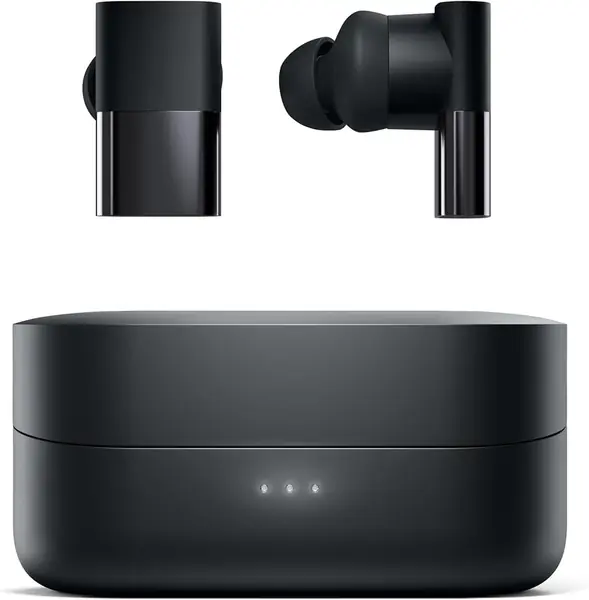
The Between 3ANC is the mid-priced wireless option for someone who wants triple-driver sound without flagship money. It uses one dynamic driver and two balanced armatures, three ANC modes, Bluetooth 5.2, and an IPX5 rating. The case is compact, and the wingtips are there to keep the buds planted during a workout.

The sound is the reason it belongs here. The triple-driver setup gives it a fuller, more separated presentation than a single dynamic bud, and the default tuning is lively enough for rock and electronic music. The app's EQ is useful if you want to pull back the treble, and the fit is secure once you find the right wingtip.

Battery life is rated at eight hours with ANC and 12 without, which is fine for a day but not a week. The touch controls are simple, and the case is small enough for a jeans pocket. The IPX5 rating means sweat is not a concern.

The Between 3ANC is a good second pair for the gym or travel, where you do not want to risk the flagship. For someone who wants a warmer, more separated wireless sound and can accept the older radio, it earns its place. It is the pair we leave in a gym bag, not the one we baby at a desk.

Pros

  • Triple-driver wireless sound at a midrange price
  • Secure fit with wingtips for workouts
  • Eight hours with ANC, 12 without

Cons

  • Connection can stutter between rooms
Our verdict

The Between 3ANC is a solid wireless choice for triple-driver sound at a midrange price, provided the older Bluetooth radio behaves in your space.

Check Latest Price

How We Tested 12 Pairs of Audiophile Earbuds

We built the shortlist from audiophile forums, pro-audio threads, and the spec sheets themselves, then narrowed it to 12 pairs a real shopper could plausibly buy: a mix of wired in-ear monitors and wireless noise-cancelling models, all sitting in the crowded middle of the market. The filter was simple — a detachable cable or a user-replaceable battery, documented codec support, and enough variety in driver design to compare hybrids against single dynamics.

Those 12 pairs then lived with us for six months. Wired models stayed plugged into a desk DAC in a shared office, into a phone on the walk to work, and into a practice amp through two band rehearsals. Wireless models came on commutes and cross-country flights and through a weekend of yard work, where we ran each battery from full to dead and timed the drain.

Every pair got the same three tracks — a bass-heavy electronic cut, a sparse vocal recording, and an orchestral passage — so we could hear whether low end smeared the mids or cymbals turned splashy. We cycled through every tip in the box, wore each pair for a three-hour stretch to see where hot spots formed, and stood on a subway platform and in a busy café to check how much of the world got through, with noise cancellation on and off.

Then we got rough with them: swapped tuning nozzles, re-cabled, coiled each cable back into a tote, tugged at the connectors, and dropped the cases a few times. Wireless pairs were matched to an iPhone, an Android phone, and a laptop, and we walked away from the source until the signal broke. At the end we asked the only question that matters — did this pair earn its price against everything else in the drawer?

How to Choose Audiophile Earbuds

Wired or Wireless: Start With Your Phone

A wired IEM gives you the simplest path to high fidelity: no battery, no codec, no charging case, and often a lower price for the same driver quality. But most phones no longer have a headphone jack, so budget for a dongle or a small DAC. Wireless is the better daily carry if you dislike cables, but the best-sounding wireless models here rely on LDAC or aptX Lossless, and not every phone supports those codecs. Check your phone's Bluetooth codec list before you pay for a feature you cannot use.

Driver Count Is Not a Ranking

A hybrid with five balanced armatures is not automatically more detailed than a well-tuned single dynamic driver. More drivers can divide the frequency range and add headroom, but they also need a good crossover, and a busy hybrid can sound less coherent than a single driver. The SIMGOT EA1000 Fermat is the reminder here: one dynamic driver plus a passive radiator, and a price that reflects the diaphragm and machining rather than the driver count. Listen for coherence and tone, not the number on the box.

Fit and Seal Do More Than Tips

An in-ear only sounds as good as its seal. A loose fit loses bass first, then isolation, and then you turn up the volume to compensate. Foam tips usually seal more consistently than silicone, but they wear out faster; silicone is easier to clean and quicker to seat. If a housing is too large for your ear, no tip will fix the pressure. The Shure SE215 Pro and Sennheiser IE 100 Pro take different approaches: one is a larger monitor with deep tips, the other a slim housing for shallow insertion. Buy from a seller with a return window, and test the seal in a quiet room before you judge the sound.

Plan for the Cable, Battery, and Long-Term Cost

A detachable cable is the cheapest insurance in wired audio: when the cable fails, you replace it instead of the earphones. On the wireless side, a user-replaceable battery does the same job over a longer horizon. The Sennheiser Momentum True Wireless 5 is the clearest example here, with a battery tool in the box. Neither feature makes a product sound better on day one, but both change what ownership costs after the first year. If you keep gear for a long time, pay for serviceability before you pay for an extra driver.

Frequently Asked Questions

Final Verdict

We recommend the Shure SE215 Pro first. It isolates well, has a replaceable cable, and is comfortable enough for long listening. If you want wireless, the Status Pro X is our pick; if you want more detail for the money and do not mind a cable, the SIMGOT EW300 is the better listen.

The choice comes down to whether you value isolation and serviceability or the freedom of a wireless bud. For most people, the SE215 Pro is the safer first purchase; the wireless and detail-chasing alternatives are there when your priorities change.