Best Wireless On-Ear Headphones of 2026

On-ear headphones sit on your ears rather than around them, which is both the appeal and the catch. You give up some of the hush that a good over-ear seal buys you, but you get something light enough to wear through a full workday and flat enough to disappear into a tote. The pair that gets this balance right stops being a gadget you have to remember to charge and becomes the thing you grab on your way out the door.

I've lived with a dozen pairs over the past six months — on the bus, at my desk, on dog walks — and the things that separate them aren't printed on the box. Battery estimates are almost always measured at moderate volume with the extras switched off; run noise cancelling at a real volume and you'll lose a chunk of that number. Bluetooth multipoint, which keeps two devices connected at once, turned out to be the feature I'd now pay for: answering a call mid-podcast without re-pairing is the whole game. Foldability matters just as much once the headphones live in a bag rather than on a stand.

Some of these are cheap enough to be an impulse buy; a couple cost enough that you'll want to read the fine print. Either way, the picks below are the ones that survived being shoved in backpacks, worn for hours at a stretch, and passed around to people with very different-size heads.

The Best Wireless On-Ear Headphones

1

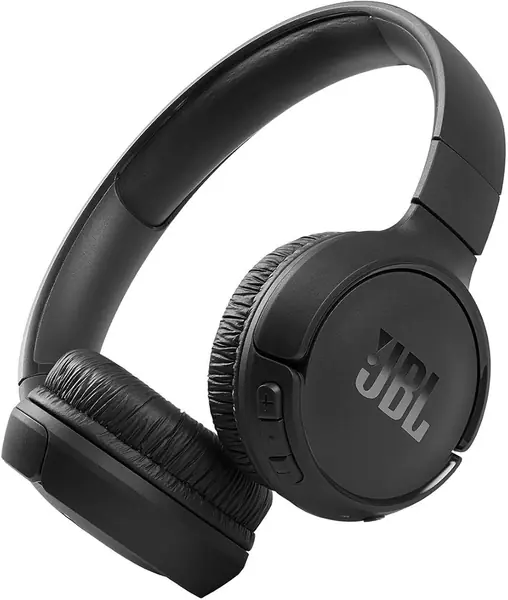
JBL Tune 510BT Best Overall
93 /100
TKZ Score Outstanding

Key details

Battery Life
Up to 40 hours
Connectivity
Bluetooth 5.0 with multipoint
Weight
5.64 oz
Charging
USB-C, 2-hour charge
View on Amazon

Compared with the Sony WH-CH520, the Tune 510BT gives up ten hours of battery but wins on weight and price. At 160 grams it is the lighter pair, and it undercuts most of this group while still offering multipoint and up to 40 hours. That combination is why it earns the top spot: nothing here asks less of your bag, your charging cable, or your budget.

JBL's Pure Bass tuning gives the 510BT a fuller low end than the Sony, which suits pop, podcasts, and commutes, though it is not the most neutral presentation here. The earcup buttons are easier to find by feel than a touch panel, and we appreciate that Siri or Google Assistant is one press away. Calls are handled by the built-in microphone, and the controls are simple enough to learn without much practice.

Battery life is the quiet luxury: up to 40 hours, a 2-hour USB-C charge, and a short top-up that adds listening time when you are late leaving the house. The fit is the part to try before committing. The clamp is snug enough to stay put, but larger heads may feel pressure after a long session; if you wear glasses or listen for hours at a stretch, the Sony's swivel cups are worth a look.

Pros

  • Light 160 g build
  • Up to 40 hours with USB-C charging
  • Bluetooth 5.0 multipoint for two devices

Cons

  • No carrying case included
Our verdict

We recommend the Tune 510BT as the default on-ear pair for everyday listening: it is light, pairs with two devices, and gets through a workweek on a charge.
Check Latest Price
2

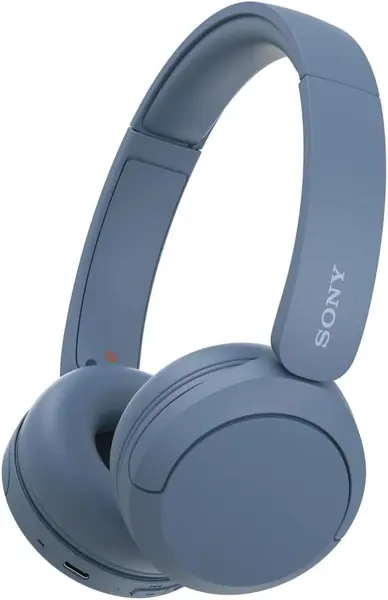
Sony WH-CH520 Best for App Control

91 /100
TKZ Score Outstanding

Key details

Battery Life
Up to 50 hours
Connectivity
Bluetooth 5 with multipoint
Weight
10.6 oz
Earcups
Swivel design
View on Amazon

Sony rates the WH-CH520 at up to 50 hours, which is enough to charge on Sunday and stop thinking about the cable for a week of commutes. USB-C charging is included, and a quick top-up is enough to get through a commute if you forget. That runtime is the main reason this pair stays in the conversation.

We appreciate the EQ in Sony's Headphones Connect app, which lets you tame the bass or lift vocals without buying a different pair. Multipoint handles a laptop and phone at once, and the swivel earcups fold flat in a bag. The built-in microphone is fine for short calls, though this is not the pair we reach for when call quality is the priority.

Comfort is the caveat. The on-ear clamp and cushioning work for shorter sessions, but the pressure can become noticeable after a couple of hours, and the fit is more head-dependent than the JBL's. If you have a larger head or wear glasses, try these before committing.

Pros

  • Up to 50 hours of battery
  • App EQ and multipoint
  • Swivel earcups fold flat

Cons

  • Heavier 0.3 kg build
  • Plastic build may not suit rough handling
Our verdict

The WH-CH520 is our pick for commuters who want a long-running pair with app EQ, multipoint, and swivel cups.

Check Latest Price
3

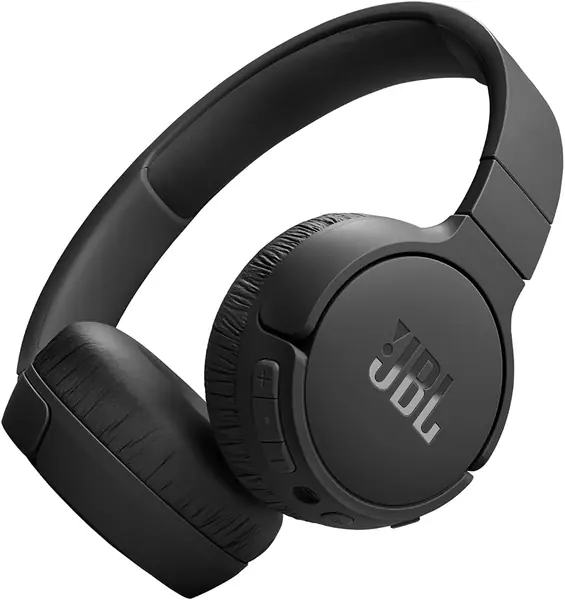
JBL Tune 670NC Best Noise Cancelling Value

90 /100
TKZ Score Outstanding

Key details

Battery Life
Up to 70 hours
Connectivity
Bluetooth 5.3 with LE Audio and multipoint
Weight
6.14 oz
Noise Control
Adaptive noise cancelling
View on Amazon

Adaptive noise cancelling at this price is the reason the Tune 670NC earns a place. It is the only JBL here with ANC, and it adds Smart Ambient, Bluetooth 5.3 with LE Audio, multipoint, and a detachable 3.5mm cable. We were struck by how complete the package feels: this is a travel pair that does not ask you to carry a dongle or give up wired listening.

Battery life is rated at up to 70 hours, among the longest here. That is enough to make charging an afterthought on a week-long trip, and the 174-gram build folds down without much bulk. The sound is JBL's Pure Bass tuning, with enough punch for podcasts and pop, and the physical buttons are easier to use with gloves than a touch panel.

The on-ear cups are the limit: they do not fully cover larger ears, so the fit is more likely to feel snug than spacious. The 3.5mm cable and 70-hour battery make up for it on a plane, where you can plug into the seatback and save the charge for the layover.

Pros

  • Adaptive noise cancelling with Smart Ambient
  • Up to 70 hours of battery
  • Detachable 3.5 mm cable and multipoint
  • Light 174 g folding build

Cons

  • No carrying case included
Our verdict

The Tune 670NC is the noise-cancelling pick we recommend when you want adaptive ANC, a detachable cable, and long battery life without a premium price.

Check Latest Price
4

JLab Go Lux ANC Best Comfort

89 /100
TKZ Score Excellent

Key details

Battery Life
Up to 50 hours
Connectivity
Bluetooth 5.4 with multipoint
Noise Control
Hybrid ANC up to 30 dB
Design
Foldable with Cloud Foam cushions
View on Amazon

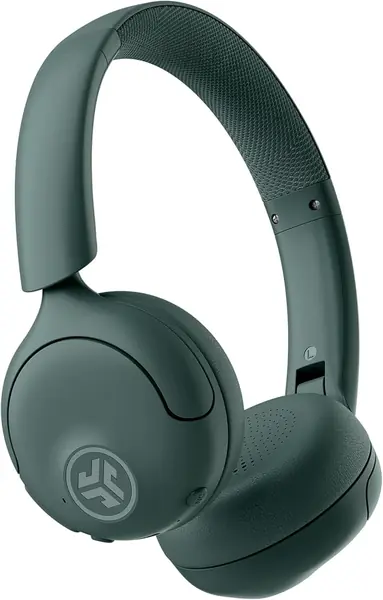
On-ear headphones can turn into a pressure point by mid-afternoon. The Go Lux ANC uses Cloud Foam earcups and a shaped headband to spread that load, and it folds flat for a bag. The Sage finish is a change from black plastic, and the earcups are shaped to follow the outline of the ear rather than clamp flat against it.

Hybrid ANC cuts up to 30 dB and pairs with a Be Aware mode for crossing a street or hearing a gate announcement. Bluetooth 5.4 multipoint handles two devices, the touch controls can be remapped in the JLab app, and the battery is rated at up to 50 hours. The app also adds EQ presets and a safe listening limit.

What earns it a place is the balance: the ANC takes the edge off a bus or office without the sealed-in feeling of a bigger over-ear pair, and the cushions do not demand a break after an hour. We minded it least of the on-ear pairs here over a long stretch, and the Be Aware mode is the feature we reached for most when someone started talking.

Pros

  • Hybrid ANC with Be Aware mode
  • Cloud Foam cushions for long sessions
  • Bluetooth 5.4 multipoint and foldable design

Cons

  • No charging cable included
Our verdict

The Go Lux ANC is our comfort-first noise-cancelling pick: Cloud Foam cushions and long battery life make it easy to wear for hours.

Check Latest Price
5

Beats Solo 4 Best Premium Pick

88 /100
TKZ Score Excellent

Key details

Battery Life
Up to 50 hours
Charging
USB-C Fast Fuel
Audio
Personalized Spatial Audio
Cushions
UltraPlush ear cushions
View on Amazon

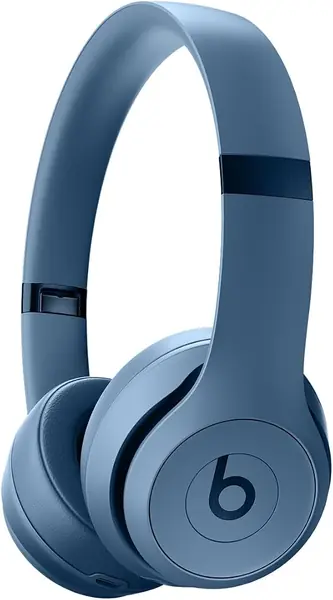
The Solo 4 feels like the most finished product in this group: a flex-grip headband, angled ear cups, and UltraPlush cushions give it a density that the budget pairs do not match. The slate blue finish is subdued enough for an office and still looks like a Beats product.

Personalized Spatial Audio with dynamic head tracking is the feature that separates it, and it is the reason we recommend the Solo 4 to someone who lives in Apple's ecosystem. The bass-forward Beats tuning is fun without being muddy, and USB-C Fast Fuel means a short charge goes a long way. Battery life is rated at up to 50 hours.

The trade-off is the clamp. The Solo 4 grips firmly, which keeps it stable during a workout but can press on the ears after an hour. It is also the most expensive pair here, so the premium has to buy you something you value: spatial audio, the finish, or the Apple integration.

Pros

  • Personalized Spatial Audio with head tracking
  • Up to 50 hours of battery
  • USB-C Fast Fuel charging
  • UltraPlush cushions and flex-grip headband

Cons

  • One-sided audio failures can develop
Our verdict

The Solo 4 is the premium pick for listeners who want spatial audio, a bass-forward sound, and deep Apple integration in a polished on-ear design.

Check Latest Price
6

JLab Rewind 2 Best for Retro Styling

85 /100
TKZ Score Excellent

Key details

Battery Life
20+ hours
Connectivity
Bluetooth 5 with multipoint
Weight
4.16 oz
Style
Retro on-ear with swappable foam pads
View on Amazon

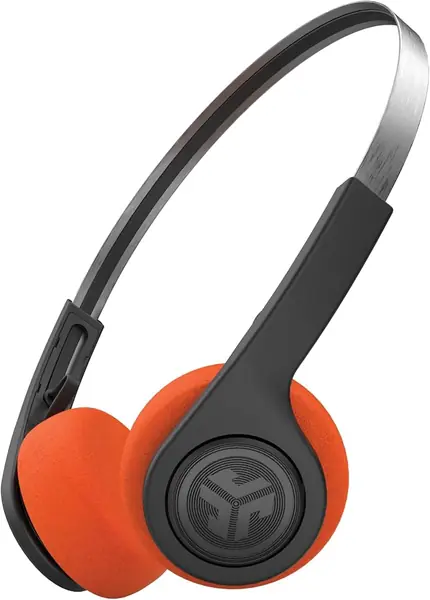
The Rewind 2 looks like a Walkman-era headphone, complete with exposed metal and foam pads. The retro silhouette is the point, and JLab includes both orange and black pads so you can change the mood.

At 4.16 ounces it is the lightest pair here, and the low-profile cups sit close to the head without a lot of bulk. Battery life is rated at 20+ hours, charging is USB-C, and Bluetooth 5 multipoint handles a laptop and phone. The EQ3 modes are adjusted on the earcup, with JLab Signature, Balanced, and Bass Boost.

What earns it a place is the combination of weight, character, and a price that leaves room for a backup pair. The swappable pads are a small joy, and the 20-hour battery is enough for a commute week if you charge on the weekend. It is not the pair for critical listening, but it is the one that makes a walk feel a little more fun.

Pros

  • Retro style with swappable foam pads
  • Very light 4.16 oz build
  • 20+ hours with USB-C charging
  • EQ3 modes and multipoint

Cons

  • Bluetooth can drop and re-pair
  • Some units stop working within months
Our verdict

The Rewind 2 is the retro pair we recommend for lightweight, low-cost listening when style matters as much as specs.

Check Latest Price
7

Skullcandy Icon 180 Best for Small-Head Travel

81 /100
TKZ Score Excellent

Key details

Battery Life
Up to 50 hours
Connectivity
Bluetooth 5.3 with multipoint and 3.5 mm cable
Weight
5.13 oz
Water Resistance
Sweat and water resistant
View on Amazon

The Icon 180 folds flat, has a sweat- and water-resistant nano-coating, and includes a 3.5mm cable for wired listening. Those are the features that separate it from the budget JBL and JLab pairs.

Battery life is up to 50 hours, and a 10-minute rapid charge gives four hours of listening. Bluetooth 5.3 multipoint handles two devices, the Skullcandy app adds EQ presets and low-latency audio, and the 145.5-gram build is light enough to forget in a bag.

The single button is the friction point: it handles power, pairing, and playback, and it takes practice to get the press timing right. It is the kind of control that works better once you stop thinking about it, but it is not as immediate as separate volume and play buttons.

We see the Icon 180 as a secondary pair rather than your only headphones: the water resistance and wired cable are worth the trade-off for the gym or a trip, and the price is easy to justify for a backup. The compact earcups are the catch, which is why it suits smaller heads best.

Pros

  • Sweat- and water-resistant nano-coating
  • Up to 50 hours with rapid charge
  • 3.5 mm wired backup and multipoint
  • Folds flat for travel

Cons

  • Earcups run small for larger heads
Our verdict

The Icon 180 is the travel pair we recommend for smaller heads and sweaty workouts, thanks to its water-resistant build and wired backup.

Check Latest Price

How We Tested Wireless On-Ear Headphones

We started by pulling together every on-ear model we could find from brands with a track record in this price range, then cut the list down. Models got dropped if they were actually over-ear designs in disguise, if they were priced well above the rest of the field without an obvious reason, or if they were simply unavailable. That left us with 12 pairs, which we bought ourselves and tested over six months.

Comfort and fit got the most scrutiny, because that's where these headphones fail first. Each pair went out with at least three testers, and we wore them in two-hour blocks through an ordinary workday, noting where the pads pressed and whether our ears felt hot or tender around the 45-minute mark. We weighed every pair on a kitchen scale and checked whether the band left a sore spot on top of the head. To judge battery life, we charged each one to full, ran a looped playlist at 50 percent volume until it died, timed it, then repeated the run with noise cancelling on.

For sound, we listened to the same handful of tracks across every pair and wrote down whether the bass crowded out vocals or the highs turned brittle at higher volume. Noise cancelling was judged at the kitchen counter next to a running dishwasher and on a crowded bus, not in a quiet room. We kept a laptop and a phone paired simultaneously and answered calls in the middle of songs to see how cleanly each pair switched. Durability came down to daily handling — folded into a tote, hinges worked every time we packed up, cables tugged where a wired option existed. At the end, each tester wrote down what they'd honestly pay for the pair in front of them, and we compared notes.

How to Choose Wireless On-Ear Headphones

Start With Fit, Not Specs

On-ear headphones rest on the ear, so clamp force and cushion size matter more than they do with over-ears. A snug pair stays put; too much pressure becomes a headache by the second hour. If you wear glasses or have a larger head, look for swivel cups and softer cushions, and treat compact as a bag measurement, not a promise that the earcups will fit every adult. The JBL Tune 510BT is light but runs snug, while the Skullcandy Icon 180 is best for smaller heads.

Match Battery Life to Your Charging Habit

Think in weeks, not hours. A 20-hour pair like the JLab Rewind 2 is fine if you listen in short bursts; a 50- to 70-hour pair like the Sony WH-CH520 or JBL Tune 670NC can go a week or more between charges. USB-C is the standard now, and quick charging is the feature to check if you routinely leave the house with a low battery. We prioritize a cable in the box and a quick top-up over a few extra hours on paper.

Decide Whether You Need ANC

Active noise cancellation is the biggest price jump in this category. It helps on buses and planes, but on-ear ANC is not the same as the sealed-in quiet of a good over-ear pair. If you need to hear traffic or office chatter, a passive model such as the JBL Tune 510BT is simpler and lighter. If you want to take the edge off a commute, the JBL Tune 670NC and JLab Go Lux ANC are the two to compare.

Listen for Tuning and Controls

Bass-forward tuning is common here, and it is not a flaw if you like pop, podcasts, and gym music. The question is whether the app lets you adjust it. Sony and JLab offer app EQ; the JBL Tune 670NC keeps controls on the earcup. Buttons are easier to use with gloves than touch panels, while touch controls keep the earcup smooth. Multipoint is worth having if you switch between a laptop and phone all day.

Check the Build and the Box

On-ear headphones take more abuse than over-ears because they get tossed in bags. A folding hinge helps, but plastic hinges are the first thing to fail. Check whether a case or cable is included: the JBL Tune 510BT ships without a case, while the JBL Tune 670NC includes a detachable audio cable. If you run or sweat heavily, a water-resistant pair like the Skullcandy Icon 180 is the safer choice.

Frequently Asked Questions

Final Verdict

The JBL Tune 510BT is the pair we recommend first. It is light, pairs with two devices, and has enough battery for a workweek, which makes it the easiest on-ear pair to live with day to day. If active noise cancellation matters, the JBL Tune 670NC is the better buy; if you want app EQ and swivel cups, choose the Sony WH-CH520.