Best Wireless IEMs of 2026

I resisted wireless in-ear monitors for years, convinced I'd be trading real sound for convenience. Then a cable snagged on a turnstile once too often, I switched, and I never went back. The category has caught up: a good pair now holds a steady connection on a crowded platform, runs a full workday on a charge, and still pulls apart details that cheap buds smear together.

We've spent six months living with 14 pairs — on commutes, at our desks, on runs, and on calls that ran long — and the gaps between them got obvious fast. What separates a pair you'll still like next year isn't the headline numbers; it's whether the fit holds when you're walking fast, whether the case survives a pocket full of keys, and whether the app connects on the first try.

Two things first-time buyers overrate: codec names and quoted battery life. A high-res codec won't rescue a shallow seal, and most playtime figures assume noise cancellation is off. Every pair below was judged on how it behaved after the novelty wore off, so start with the ones that match the way you actually listen.

The Best Wireless IEMs

1

SoundPEATS H3 Best Overall
86 /100
TKZ Score Excellent

Key details

Battery
7 hrs (37 hrs with case)
Noise Cancellation
55 dB hybrid ANC
Water Resistance
IPX5
Drivers
12 mm dynamic + dual balanced armatures
View on Amazon

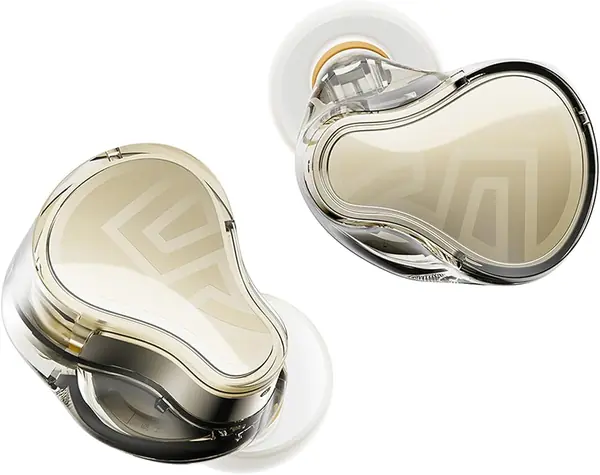
The H3 pairs a 12 mm dynamic driver with dual balanced armatures, adds LDAC and aptX Lossless support, and wraps it in a case rated for 37 hours of total playtime. Bluetooth 5.4, multipoint, IPX5 water resistance, and a 55 dB hybrid ANC rating round out a spec sheet that reads more like a premium pair than its price suggests.

That driver array is why the H3 earns our top pick. The extra hardware pays off in separation: vocals sit clear of the bass line, and acoustic instruments have room to breathe instead of blurring together. The 55 dB ANC is the strongest claim in this set, and the app's indoor and outdoor modes make it easy to match the suppression to a train, an office, or a street. We also appreciate the secure fit during movement.

Battery life is the trade-off to understand before you buy. The H3's 7-hour single-charge figure is respectable, but with ANC and music running, that stretch can shrink to a few hours. The 10-minute quick charge for 2 hours of playtime takes some of the sting out of that, and the 37-hour case total means you are not hunting for an outlet every night. Heavy ANC users should treat this as a shorter-session pair and top up at lunch.

The app is the other rough edge: it is basic, and registration can be fussy, though the EQ and presets are useful once you get in. That is a small annoyance rather than a dealbreaker. The H3 is the one we keep coming back to when the music matters more than the mileage.

Pros

  • Triple-driver detail and strong instrument separation
  • 55 dB hybrid ANC with adjustable modes
  • Secure fit and IPX5 sweat resistance

Cons

  • Buds sit proud of the ear
Our verdict

We recommend the H3 for listeners who want the most detailed wireless sound here, with adaptive noise cancellation that earns its place.
Check Latest Price
2

Nothing Ear (a) Best Value

85 /100
TKZ Score Excellent

Key details

Battery
42.5 hrs with case
Noise Cancellation
45 dB hybrid ANC
Driver
11 mm dynamic
Bluetooth
5.3
View on Amazon

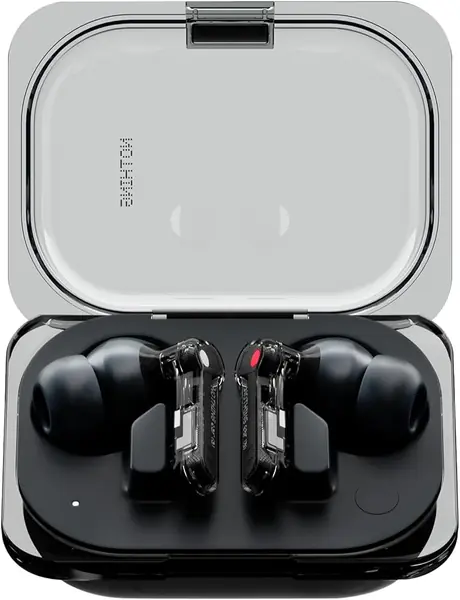
The Ear (a) leads with a 45 dB adaptive ANC rating and a price below our top pick, but it does not stop there. It pairs an 11 mm dynamic driver with a 42.5-hour case total, Bluetooth 5.3, multipoint, and a low-lag mode. The case is compact enough to disappear in a pocket, and the light build keeps the buds from weighing on your ears.

Fit is the first thing to audition. The buds are light, but the shape does not suit every ear: some listeners get a snug seal, while others feel soreness after an hour or find the buds working loose. The light build suits short sessions and calls, and the 6 mics plus clear-voice tech keep speech natural. A secure seal matters here because the adaptive ANC uses it to decide how much cancellation to apply.

What tips the decision for us is the feature set. Adaptive ANC, multipoint, a low-lag mode, and app EQ are all present in a package that costs less than our top pick. The sound is clear and bass-forward without getting muddy, and the ANC is strong enough for a bus or an open office. The low-lag mode is a nice extra for video, even if it won't replace a dedicated gaming headset.

Pros

  • Adaptive 45 dB ANC with everyday strength
  • 42.5-hour total playtime and multipoint
  • Clear calls and useful app EQ

Cons

  • Charging can be finicky over time
Our verdict

For a balanced mix of price, ANC, and everyday polish, the Ear (a) is the pick we point most people to first.

Check Latest Price
3

Sony WF-C510 Best for All-Day Wear

84 /100
TKZ Score Excellent

Key details

Battery
11 hrs (22 hrs with case)
Water Resistance
IPX4
Multipoint
Two devices
Noise Control
Passive isolation
View on Amazon

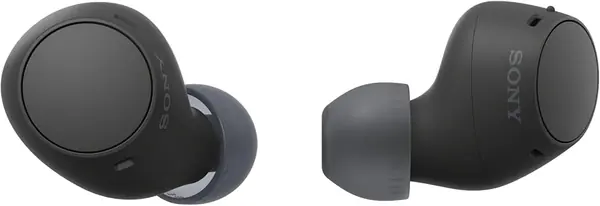
The WF-C510 skips active noise cancellation entirely, which sounds like a dealbreaker until you look at the rest of the package. With up to 11 hours on a charge and 22 with the case, it is the longest single-charge performer here, and the compact housing is built for all-day wear. We think that trade is worth it if you want a light pair for work, errands, and workouts and do not need to erase a train cabin.

Comfort is where the Sony earns its keep. The 6 mm driver sits in a small housing, and the fit is secure enough for the gym without filling your ears with pressure. The physical controls are a welcome change from touch panels that misfire when you adjust the bud. Ambient Sound mode keeps traffic and coworkers audible, and multipoint lets you switch between a phone and a laptop without repairing.

The IPX4 rating handles sweat and light rain, and the case is small enough to pocket. We wish the case felt more robust, since it can show wear over time. Still, 11 hours on a charge is the kind of headroom that turns a pair into an all-day companion rather than a commute-only one.

Pros

  • Up to 11 hours on a charge
  • Light, compact fit for long wear
  • IPX4 sweat resistance and multipoint

Cons

  • Bluetooth 4.2 is dated and can drop
Our verdict

If battery life and a light fit matter more than active noise cancellation, the WF-C510 is the easy daily pair we reach for.

Check Latest Price
4

Moondrop Space Travel 2 Best Budget

83 /100
TKZ Score Excellent

Key details

Noise Cancellation
Single-feedforward ANC
Driver
13 mm dynamic
Bluetooth
6.0
Game Mode
55 ms low latency
View on Amazon

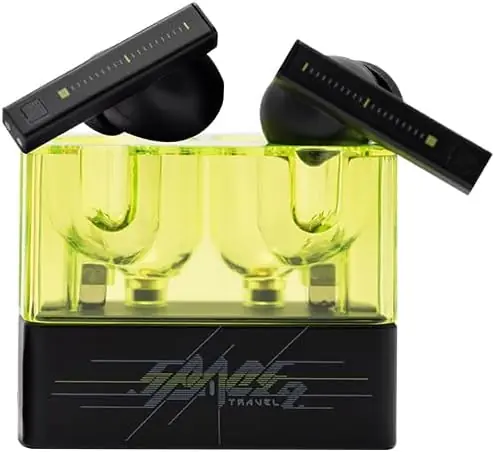
The Space Travel 2 puts a 13 mm beryllium-plated dynamic driver, Bluetooth 6.0, and a 55 ms game mode into a case that looks like a tiny spaceship. It is the least expensive pair here by a wide margin, and the spec sheet does not look like a budget compromise. The driver is larger than the ones in the H3 and Ear (a), which gives the design a different starting point.

We recommend it as the budget pick because the sound is the reason to buy. The 13 mm driver gives a wide, lively presentation, and the one-button EQ in the app makes it easy to shift the tuning without fiddling. The ANC is the weak spot: it will take the edge off an office or a bus, but it will not erase a plane cabin, and it can pick up wind noise. Comfort is also ear-dependent—the buds run larger, so start with the smallest tips.

Battery life is the open question. Moondrop does not publish a single-charge figure, so treat the Space Travel 2 as a short-session pair until you know your own drain; the case charges quickly, which helps. The touch controls are customizable, so you can set the tap commands you actually use. At this end of the market, the Space Travel 2 is a lot of sound for the least money, with a lively tuning that makes budget listening more fun than it has any right to be.

Pros

  • 13 mm driver with lively, detailed sound
  • Bluetooth 6.0 and 55 ms game mode
  • One-button EQ and strong value

Cons

  • No water-resistance rating for sweat
  • Case can be fussy to open
Our verdict

The Space Travel 2 is the budget pick we recommend for listeners who want lively, detailed sound and can accept average ANC.

Check Latest Price

How We Tested 14 Pairs of Wireless IEMs

We started with roughly 60 models and narrowed by spec first: driver layout, supported codecs, hybrid versus single-mic noise cancellation, water-resistance rating, and whether the companion app offers real EQ rather than three presets. We kept the price spread even and dropped anything with a pattern of complaints about dropouts, buds dying at six months, or a case that quit charging. That left 14 pairs, which became daily drivers for six months.

Sound and fit were judged together, because they turned out to be the same test. The same three reference tracks and one podcast went onto every pair, and I listened for bass bleeding into vocals, cymbals turning to hiss at higher volume, and whether the mix stayed separated when I turned it down. Then each one stayed in my ears for a three-hour stretch; I jogged a block, shook my head, logged pressure points, and counted how many tip swaps it took to get a seal that survived speech and walking.

Noise cancellation got the same stretch of city sidewalk and the same vacuum running in the next room, and I noted how much low rumble disappeared versus how much conversation leaked through. Transparency mode was tested by ordering coffee with the buds in. Battery ran at moderate volume with cancellation on until each pair died, followed by a timed 10-minute top-up. Calls went out from a windy corner and a loud café, played back to hear how the mics handled both.

Connectivity meant a phone in one pocket and a laptop in the next room, with multipoint switching mid-call, watching for dropouts and re-pair delays. Cases lived in a jeans pocket with keys and were dropped from waist height, stems got bent, and anything rated for water got splashed. Pairs that stuttered got a firmware update and another week before we decided, and we weighed what each one cost against what it gave back.

How to Choose Wireless Iems

Start With Fit and Seal

Most wireless earbuds in this style rely on a silicone seal to deliver bass and make noise cancellation work. A loose tip leaks both, so start with the smallest tip that stays put without pressure, then size up only if the seal breaks when you talk or chew. The Sony WF-C510 is built around a compact housing, while the Moondrop Space Travel 2 runs larger; smaller ears should begin with its smallest tips. If silicone slips, a foam tip can add grip, but it will change the tuning. Fit is not a one-time decision—swap tips after a long session if your ears ache.

Choose ANC or Passive Isolation

Active noise cancellation is not a single feature with a single strength. Hybrid systems like the 55 dB setup on the SoundPEATS H3 and the 45 dB system on the Nothing Ear (a) use microphones inside and outside the ear, so they can cancel more of a steady train rumble. Single-feedforward designs like the Moondrop Space Travel 2 are simpler and milder. If you commute on transit, prioritize hybrid ANC and a good seal. In a quiet office, passive isolation and an ambient mode may be enough—the Sony WF-C510 skips ANC but keeps you aware of traffic and coworkers.

Read Battery Life Carefully

Battery claims are easy to misread because the case total and the single-charge figure answer different questions. A 42.5-hour case number can hide a short run in the buds themselves, and ANC usually shortens it further. The SoundPEATS H3 is rated for 7 hours on a charge but can fall to a few hours with ANC and music; the Sony WF-C510 is rated for 11 hours on a charge and 22 with the case. Look for both numbers, then assume you will get less at high volume or in cold weather. Quick charging helps more than a huge case total if you forget to plug in.

Check Water Resistance and Case Wear

Water ratings tell you how much sweat and weather a pair can take. IPX4 handles splashes and gym sweat; IPX5 adds low-pressure spray. The Moondrop Space Travel 2 has no water-resistance rating, so keep it for dry commutes and desk listening. The Sony WF-C510 and SoundPEATS H3 are better workout candidates. Also inspect the charging case: hinges, lids, and contact pins are the parts that wear first, and a case that lives loose in a bag will age faster than one that rides in a pocket.

Match Features to Your Routine

Multipoint is worth having if you move between a phone and a laptop; the SoundPEATS H3, Nothing Ear (a), and Sony WF-C510 all support it. A stable radio matters more than a long feature list, especially if you pocket your phone and walk through busy areas. App EQ is useful only if you will actually use it, so favor a pair whose controls make sense without opening an app. Choose the features you will touch every day, not the longest list on the box.

Frequently Asked Questions

Final Verdict

The SoundPEATS H3 is the wireless IEM we recommend first for sound-first listening: its triple-driver array, adaptive ANC, and secure fit make it the most complete package here. The trade-off is battery life with ANC, so frequent travelers should look at the Sony WF-C510, which gives up active noise cancellation for longer single-charge play and a lighter fit. If you want the best mix of features and price, the Nothing Ear (a) is the value alternative.