Best Wireless Earbuds for Sensitive Ears of 2026

Earbuds that hurt are a particular kind of letdown — the sound can be excellent and you'll still resent them by the forty-minute mark. If your ears ache after an hour, itch under silicone, or feel too small for anything on the shelf, the problem usually isn't your ears; it's the housing, the tip, and how much of the bud's weight lands in your canal.

I have narrow, cranky ear canals and a drawer of abandoned earbuds to prove it. Over the past six months, my team and I have worn 14 pairs — clip-on open-ear designs, micro in-ears, one built for side sleepers — through commutes, workouts, and long calls. What separates a pair you forget from one you count minutes in is where the pressure sits.

One thing worth knowing before you shop: an open-ear bud doesn't seal, so it trades bass and isolation for all-day comfort — a fair trade at a desk, a bad one on a plane. The picks below favor comfort, but we weighed sound, battery life, and value just as hard.

The Best Wireless Earbuds for Sensitive Ears

1

TOZO OpenEarRing Best Overall
91 /100
TKZ Score Outstanding

Key details

Water Resistance
Water resistant
Design
Open-ear clip-on
Playtime
10 hours per charge, 40 total
Bluetooth
5.4
View on Amazon

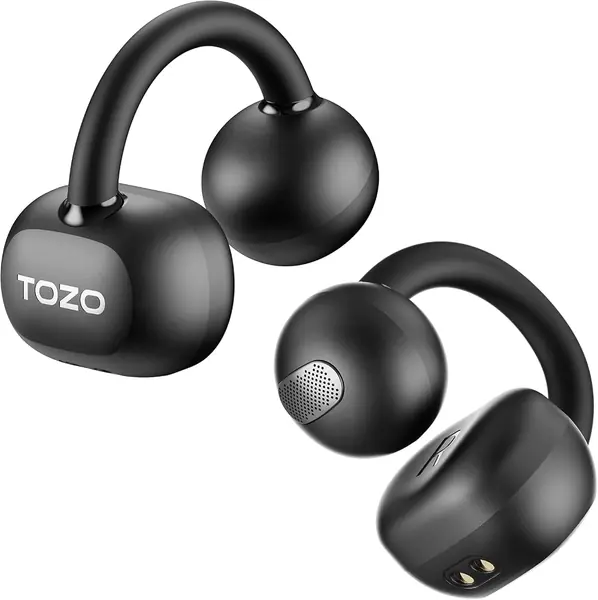
The OpenEarRing solves the first problem before it solves the second. Its clip sits over the edge of the ear and leaves the canal open, so there is no silicone tip pressing inward and no seal to swell or itch. We wore it through desk work and short walks, and the lack of canal pressure was the thing we noticed first. You do give up isolation: traffic, a kettle, and a coworker all come through. For sensitive ears, that is often the right trade.

The clip is light enough to forget on a good fit, but fit is the variable. If the ring lands on a tender part of your ear, it becomes a pressure point rather than a relief. We do not treat it as a universal fit; try the clip on your own ear before a long run. The touch controls are easy to tap once you learn them, and the app's EQ presets let you soften the treble if the open sound feels bright.

Battery is rated at 10 hours per charge and 40 with the case, enough for several days of mixed use. The charging case is the part to watch: long-term charging is less consistent than the comfort, and a case that needs re-seating is a nuisance. We like the digital display because it takes the guesswork out of a pocket charge.

The OpenEarRing is not the pair for a noisy commute or for bass-heavy listening. It is the pair we reach for when the goal is to finish a workday without sore ears, and the open design is why it earns the top spot.

Pros

  • Keeps pressure off the ear canal
  • Stays put through errands and light workouts
  • 40 hours total with charging case

Cons

  • Charging case can be finicky over time
Our verdict

We recommend the OpenEarRing to anyone whose ears ache after an hour in standard earbuds; the clip-on design keeps pressure off the canal and still stays put.
Check Latest Price
2

Back Bay Audio Mini Best for Tiny Ear Canals

90 /100
TKZ Score Outstanding

Key details

Water Resistance
IPX7
Design
Small in-ear
Battery
Up to 32 hours with case
Ear Tips
Six sizes
View on Amazon

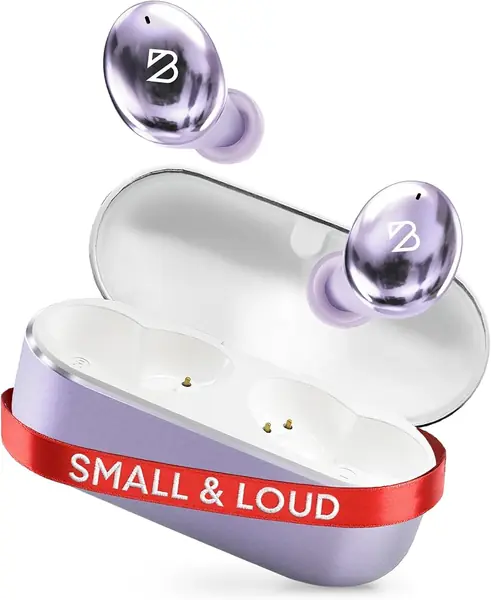
If you want the isolation and bass of an in-ear bud, the Back Bay Mini is the small-ear alternative we point to. It comes with six ear-tip sizes, which matters more than any single measurement: the right tip can mean the difference between a bud that sits still and one that presses or falls out. The shell is slim, so it sits closer to flush than a full-size bud.

We appreciate that the design is built around smaller canals rather than shrinking a standard shell and calling it done. The IPX7 rating makes it a reasonable gym companion, and the extra bass mode is there when you want more low end. Sound is warm and easy to listen to; it is not the most detailed pick here, but it is not harsh either.

The in-ear design is still the dividing line: it will not suit someone who wants zero canal contact. But for a small ear that tolerates a tip, the six-size kit is the reason to choose it over a one-size-fits-most bud. The higher price buys fit options and water resistance, not a premium noise-cancelling feature.

Pros

  • Six tip sizes for small canals
  • Slim shell sits close to the ear
  • IPX7 sweat and water resistance

Cons

  • Volume can run low on calls
  • Connection can drop between devices
Our verdict

We recommend the Back Bay Mini to anyone with small ear canals who still wants an in-ear fit; six tip sizes give sensitive ears a real chance at comfort.

Check Latest Price
3

RRLLRJ Sleep Earbuds Best for Side Sleepers

89 /100
TKZ Score Excellent

Key details

Design
Two pairs: flat and in-ear
Connectivity
Bluetooth
Ear Placement
In-ear
Noise Control
Passive
View on Amazon

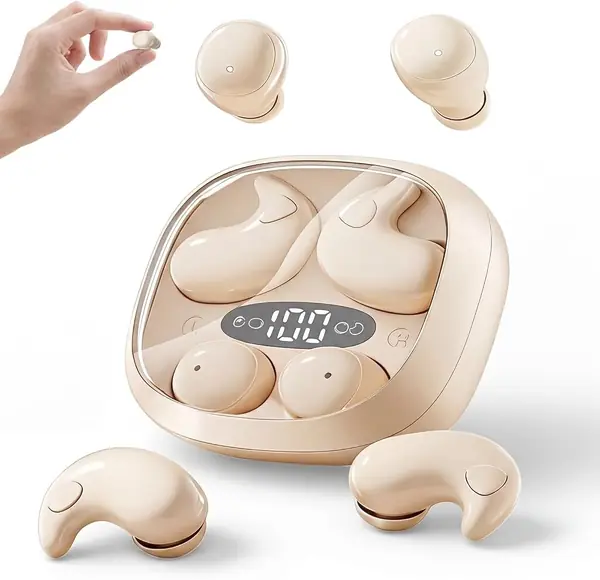
Side sleeping is the hardest test for sensitive ears because the pillow does the pressing. The RRLLRJ set answers that with two pairs in one case: a flat pair that is meant to sit without deep insertion, and a standard in-ear pair for daytime. The flat pair is the one that matters at night; it removes the bulk that usually digs in when you turn over.

We like the flexibility of keeping both pairs in the same charging case. You can use the flat pair for sleep and the in-ear pair for a walk without hunting for a second case. The in-ear pair also gives you a more conventional fit when you want a little more sound.

We were skeptical of a two-pair system because it can feel like a gimmick, but the shared case makes it practical. The flat pair is not a universal sleep solution; it is a shape that reduces pillow pressure, and that is the specific problem it solves. For a side sleeper, the flat pair is the feature and the second pair is the bonus.

Pros

  • Flat pair reduces pillow pressure
  • Two pairs share one charging case
  • In-ear pair for daytime listening

Cons

  • Passive isolation only
Our verdict

We recommend the RRLLRJ set to side sleepers who need a flat pair for the pillow and a conventional pair for daytime; it is a sleep-first tool, not an all-purpose earbud.

Check Latest Price
4

TOZO A1 Best Budget

88 /100
TKZ Score Excellent

Key details

Water Resistance
IPX5
Battery
Up to 32 hours with case
Bluetooth
5.3
Weight
3.7 g per earbud
View on Amazon

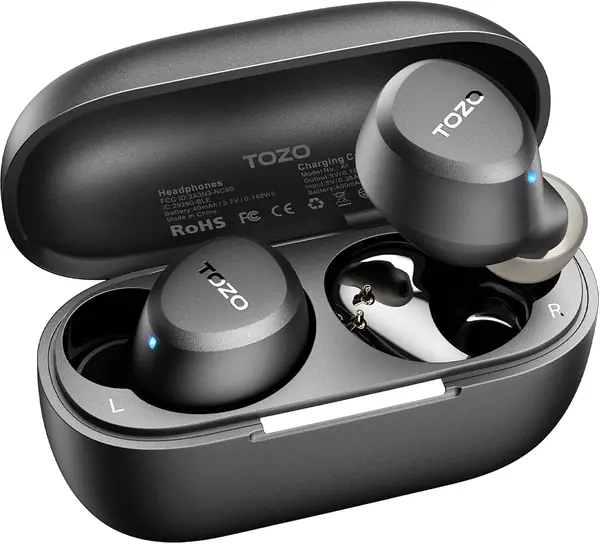
At 3.7 grams per bud, the TOZO A1 is the budget pick for ears that notice every bit of pressure. The shell is compact and aimed at small ears, so it does not fill the whole bowl of the ear the way a full-size bud can. We found the light weight easy to forget during a podcast, which is exactly what a sensitive-ear buyer wants from an everyday pair.

The A1 also gets the basics right for the money: Bluetooth 5.3, IPX5 water resistance, and a case that stretches the claimed 7 hours per charge to 32 total. The app adds EQ presets, which is more customization than we expect at this end of the set. Sound is clear enough for podcasts and casual music, with a little bass emphasis.

This is still an in-ear bud, so it is not the zero-pressure option that an open clip is. It is the small-shell option, and for a first pair or a backup, the light weight and low cost make it an easy experiment. The A1 is the pair we hand to someone who wants to try a smaller bud without committing to a specialty price.

Pros

  • 3.7-gram bud is easy to forget
  • Up to 32 hours with case
  • App EQ adds easy customization

Cons

  • Battery and charging can be inconsistent
  • Fit varies by ear shape
Our verdict

We recommend the TOZO A1 as the budget starting point for small, sensitive ears; its 3.7-gram shell is easy to try, though long-term battery behavior is the gamble.

Check Latest Price
5

TRAUSI T6 Open Ear Best for Workouts

87 /100
TKZ Score Excellent

Key details

Water Resistance
IPX7
Design
Open-ear ear hook
Playtime
Up to 80 hours with case
Bluetooth
5.4
View on Amazon

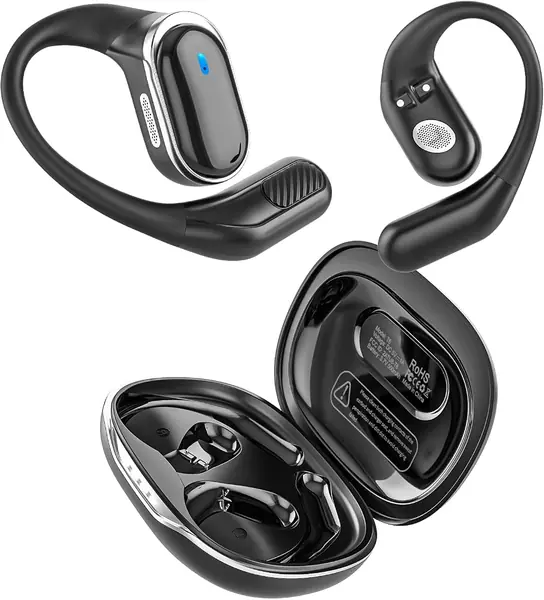
The T6 is built for the long workout, not the quick commute. Its case carries an 80-hour total playtime claim, and the open-ear hook leaves the canal open while the arm wraps behind the ear. That combination is appealing if you run or cycle and want to hear traffic, or if standard tips make your ears sore after an hour.

The hook is the part we paid closest attention to. It holds the bud in place without plugging the ear, and the IPX7 rating means sweat and rain are not an immediate problem. The open design also means you hear the gym or the street, which is a safety benefit and a bass limitation at the same time.

Fit is the condition: the hook needs to sit close enough to the ear to sound right, and the open design is not for someone who wants deep isolation. The T6 is not the pick for a loud commute; it is the open-ear pick for long days and sweaty sessions. What sells it is the battery-to-freedom ratio: you can leave the case at home for a long stretch and still have power.

We do not reach for it when we want quiet; we reach for it when we want to stay aware. That is a narrower brief than the top pick, and it is exactly why the T6 earns a place for workouts.

Pros

  • 80 hours total with charging case
  • Open-ear hook keeps canal clear
  • IPX7 sweat and rain resistance

Cons

  • Hook can crowd glasses
Our verdict

We recommend the TRAUSI T6 to runners and cyclists who want an open ear and a huge battery case; it is a workout tool, not a quiet-listening pair.

Check Latest Price
6

Kinglucky Clip-On Gen 3 Best for Glasses Wearers

86 /100
TKZ Score Excellent

Key details

Water Resistance
IPX5
Design
Open-ear clip-on
Playtime
Up to 50 hours with case
Ear Hooks
Extended and slim
View on Amazon

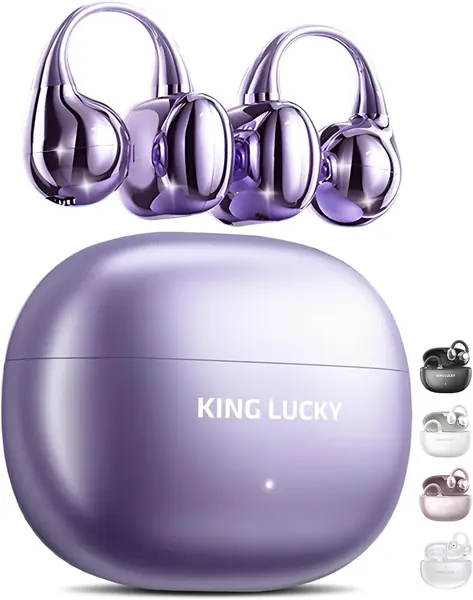
The Kinglucky Gen 3 is a clip-on for people who wear glasses and still want an open ear. Its ear hooks are longer and thinner than a traditional clip, which gives the arm more room to sit behind the ear instead of fighting the temple of your frames. That is a specific design choice, not just a color option, and it is the reason this one is in the guide.

We found the 13mm driver gives it a fuller sound than the small open-ear shape suggests, and the 50-hour total playtime is generous for the money. The touch controls are on the part that sits behind the ear, though, so they take a few tries to hit without poking yourself. Once you learn the spot, it is fine.

The glasses-friendly shape is the reason to pick it. If you want a clip-on that clears your frames and you like a fuller open-ear sound, this is the one to try; the OpenEarRing is the alternative if you want the top pick's wider comfort record. The Gen 3 is a casual pair first; that is the role it fills best.

Pros

  • Longer hooks leave room for glasses
  • Fuller sound from 13mm drivers
  • Up to 50 hours with case

Cons

  • Reliability and battery are uneven
Our verdict

We recommend the Kinglucky Gen 3 to glasses wearers who want an open-ear clip with a fuller sound and a generous case.

Check Latest Price
7

JLab Go Air Pop+ Compact Budget

85 /100
TKZ Score Excellent

Key details

Water Resistance
IPX4
Battery
35+ hours total
Ear Tips
Three sizes
Size
15% smaller than previous gen
View on Amazon

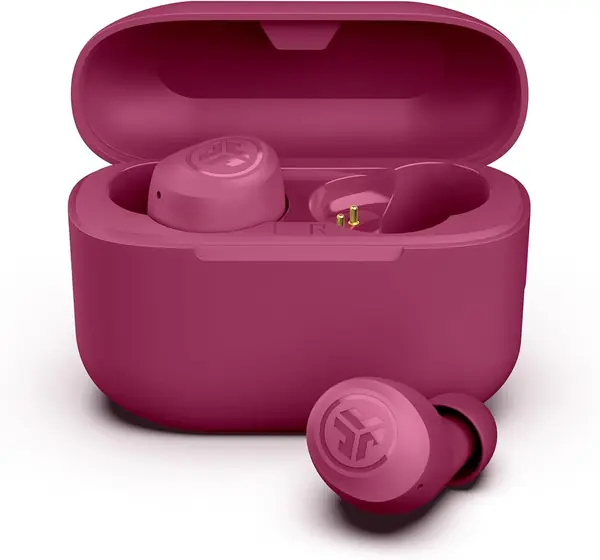
The Go Air Pop+ is the compact budget in-ear for someone who wants a smaller shell without paying a specialty-brand price. JLab lists it as 15% smaller than the previous generation, and the flattened outside is less noticeable in the ear. We like that for sensitive ears that are more bothered by bulk than by the tip itself.

The basics are strong for the money: 35+ hours total, Bluetooth 5.3, IPX4, three gel tip sizes, and Dual Connect so either bud can work alone. The EQ3 switch is a simple way to tame or boost bass without an app, and the case is small enough to pocket.

This is a budget in-ear, so it makes sense as a second pair or a gym backup rather than a single do-everything bud. The small shell and simple controls are the draw; the rest of the package is basic in the way a budget pair can be. If you want the smallest shell here and do not need premium features, it is an easy entry.

Pros

  • 15% smaller shell than previous gen
  • 35+ hours total with case
  • Dual Connect and EQ3 controls

Cons

  • Connection can drop on some phones
  • Fit can run loose for some ears
Our verdict

We recommend the JLab Go Air Pop+ as a compact budget backup for small ears; it is easy to pocket, though fit and connection are less consistent than the top picks.

Check Latest Price
8

soundcore P30i Noise Cancellation

84 /100
TKZ Score Excellent

Key details

Water Resistance
IP54
Battery
Up to 45 hours with case
Case
2-in-1 phone stand
Noise Cancellation
Up to 42 dB ANC
View on Amazon

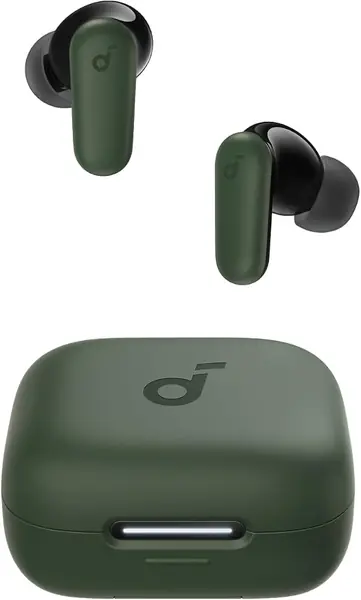
The P30i is the odd one out here because its answer to sensitive ears is 42 dB of active noise cancellation, not a softer shape. It is designed to reduce noise in a busy office or on a train, and the case has a flip-out panel that turns it into a phone stand. If you are easily overstimulated by sound, that combination is more useful than another open-ear clip.

We like the phone-stand case more than we expected; it is a small thing, but it means you can prop a phone for a video call without hunting for a separate stand. The 45-hour total battery and IP54 rating are solid for the money, and the app gives you EQ control.

The catch is physical. These are in-ear buds, so they still put silicone in the canal, and the fit is the make-or-break part for sensitive ears. If your ears burn after an hour in standard tips, this is not the pair for you. The ANC also has to manage wind, which is where the noise-cancelling performance is least convincing.

If you need quiet and already tolerate in-ears, the P30i is the strongest ANC pick here. If your sensitivity is pressure rather than noise, the open-ear picks are the better answer.

Pros

  • Up to 42 dB active noise cancellation
  • 45 hours total with case
  • Case doubles as phone stand

Cons

  • ANC struggles with wind
Our verdict

We recommend the soundcore P30i to people whose sensitive ears need quiet more than a pressure-free shape; its ANC is strong, but it still puts tips in the canal.

Check Latest Price

How We Tested Wireless Earbuds for Sensitive Ears

We started by pulling every pair in the category that either sits outside the canal or shrinks the part that goes in — clip-ons, earhooks, micro in-ears, side-sleeper pairs — and comparing the spec sheets for tip sizes, weight per bud, nozzle length, and how hard the clips pinched. Anything that shipped with a single tip size, or that buyers kept describing as snug, got cut before it reached us. That left 14 pairs, which we wore for six months.

Each pair went through the same rotation: an eight-hour desk day, a two-hour train commute, a five-mile run, and two nights of side sleeping, with the glasses wearers on our team testing every clip-on over their frames.

Comfort was timed, not rated. We wore each bud in 90-minute stretches and logged the minute it started to ache, then checked behind the ear for redness. We shook our heads, chewed, and talked mid-podcast to see whether the seal or the clip gave out first. Sound was judged on the same three tracks at low and high volume, with notes on how much bass thinned out on the open designs and whether the app EQ actually changed anything. We also walked 40 feet from the phone to test connectivity, drained each battery from full to dead twice, watched for re-pairing headaches after a week rattling in a bag, and compared what came in the box against what each pair cost.

How to Choose Wireless Earbuds for Sensitive Ears

Start With Where the Pressure Lands

An open-ear clip or hook keeps silicone out of the canal, which is the right first move if your ears itch, swell, or ache after an hour in standard tips. The TOZO OpenEarRing is the clearest example in this set. If your outer ear is the sensitive part, a small in-ear bud with several tip sizes can sit shallower; the Back Bay Audio Mini's six-size kit is built for that. Neither design is universally comfortable, so choose the pressure point you want to avoid.

Buy Adjustability, Not Just a Small Shell

Small does not automatically mean comfortable. A compact bud with one tip shape can still press in the wrong place, and a hook that is too short can crowd glasses. Look for multiple tip sizes or a hook that leaves room behind the ear. The Back Bay Mini and JLab Go Air Pop+ both include multiple tip sizes; the Kinglucky Gen 3 uses longer, thinner hooks for glasses wearers. Test the fit with the tip you will actually use, not the one pre-installed.

Sleep Changes the Shape You Need

Side sleeping puts the pillow against the outer ear, so a standard bud that sits proud will press no matter how soft the tip is. A flat or low-profile pair is the practical answer, and a two-pair set lets you keep a more conventional in-ear pair for daytime. The RRLLRJ Sleep Earbuds are the dedicated example here. If you only doze with audio, start with the flat pair and keep volume low; if you need active noise cancellation at night, accept that the shape will be bulkier.

Treat Battery and Connection as Comfort Features

A long playtime claim is useful only if the case actually charges reliably. For sensitive ears, a bud that dies mid-day or needs constant re-seating can be more irritating than a slightly heavier shell. Match the number to your routine: a 10-hour bud with a 40-hour case covers several days of mixed use, while an 80-hour case is for long workouts and travel. Then check the connection record, because dropouts are the other practical risk. Buy enough battery for your longest day, not the biggest number on the box.

Use Noise Cancellation Only When the Trade Makes Sense

Active noise cancellation needs a seal, which usually means an in-ear tip. That can be a good trade if your sensitivity is to noise rather than to pressure, and the soundcore P30i is the ANC pick here. It will not help if the tip itself is what makes your ears sore. If you want awareness and low pressure, an open-ear design is the better fit even though it lets more room noise in. Decide which irritant you are solving before you pay for ANC.

Frequently Asked Questions

Final Verdict

We recommend the TOZO OpenEarRing as the default for sensitive ears because it removes the canal pressure that often causes soreness, and its 40-hour case is enough for daily use. It is not the pair for a noisy commute, but that is a trade we are happy to make for all-day comfort.

If you want an in-ear fit, the Back Bay Audio Mini's six tip sizes make it the better small-canal choice; for side sleeping, the RRLLRJ's flat pair is the one to try. The soundcore P30i is the exception for people who need active noise cancellation and already know they tolerate in-ear tips.