Best Wired Closed-Back Headphones of 2026

Closed-back headphones do one thing open-back pairs can't: they keep the mix inside the cups and the room outside them. That's why they turn up everywhere from a tracking booth to a crowded bus. The catch is that the seal comes from pressure, and the same clamping force that shuts out noise is what makes the wrong pair ache across the top of your head by hour three.

Over the past nine months, my team and I have worn twelve pairs of wired closed-back headphones through recording sessions, commutes, and a lot of late-night editing, and the differences were not subtle. We cared about how each pair actually sounded, how it felt on hour four, how the cable and pads held up, and whether the price made sense. One thing nobody tells a first-time buyer: cable ends and pads give out long before the drivers do, which is why a detachable cable matters more than it sounds like it should.

Everything below earned its spot on sound, comfort, build, and value. No pick is here because of a spec sheet.

The Best Wired Closed-Back Headphones

1

Audio-Technica ATH-M50x Best Overall
95 /100
TKZ Score Outstanding

Key details

Weight
10.2 oz
Impedance
38 ohm
Cable
Detachable
Driver Size
45 mm
View on Amazon

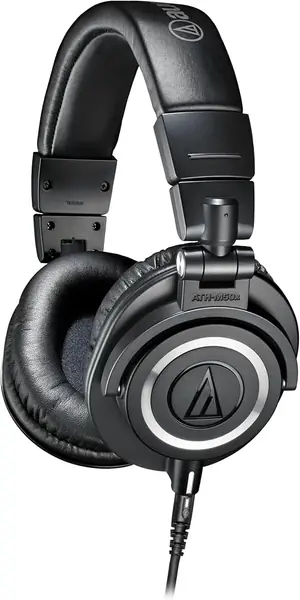
A detachable cable and 90-degree swiveling earcups are the two details that make the ATH-M50x more than a one-job headphone. The closed-back cups seal around the ear for monitoring, and the swivel lets you slide one cup back for cueing without taking the whole pair off. That flexibility is the first reason it sits at the top of this list.

The 45 mm drivers and 38-ohm impedance keep it easy to drive from a laptop, phone, or interface. The tuning has more low-end weight than a strict reference monitor, but the mids stay clear and the treble has enough detail for editing. We think that balance is why it works for both casual listening and studio work.

Comfort is good for a long session, though the clamp is snug at first and the pads can warm up. The folding frame and included cable options make it easier to pack than the HD 280 Pro. We also like that the cable is detachable: a damaged cord is a swap, not a death sentence.

Against the other picks, the M50x is the generalist. The HD 280 Pro blocks more room noise, the DT 770 Pro X is softer for marathon sessions, and the M20x costs less for a second desk. None of those gives you the same mix of swiveling cups, detachable cable, and closed-back isolation in one package.

That is why it is our top pick: it covers tracking, DJ cueing, and everyday listening without forcing you to buy a specialist for each job. If you want one wired closed-back pair to do the most, start here.

Pros

  • Detachable cable and swiveling cups add flexibility
  • Balanced sound with useful bass weight
  • Folds for transport and storage

Cons

  • Clamp feels tight on larger heads
Our verdict

For one wired closed-back pair that handles studio work, DJ cueing, and everyday listening, the ATH-M50x is our default recommendation.
Check Latest Price
2

Sony MDR7506 Best for Broadcast and Tracking

94 /100
TKZ Score Outstanding

Key details

Weight
8 oz
Impedance
63 ohm
Cable
9.8 ft, non-detachable
Driver Size
40 mm
View on Amazon

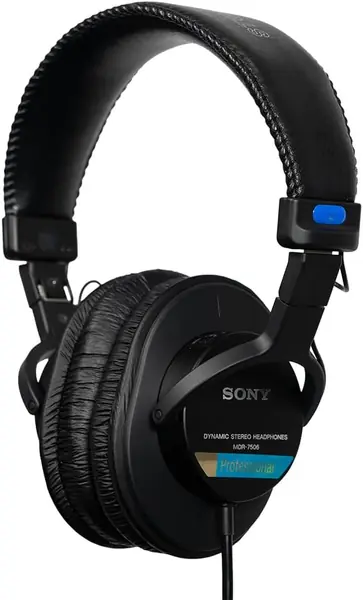
The MDR7506 is the desk-first monitor in this group: a 9.8-foot cable and a folding frame tell you it is meant to stay near a console, not ride in a pocket. We recommend it for tracking, editing, and broadcast work where a clear midrange matters more than a bass thrill.

The 40 mm drivers and 63-ohm impedance are easy enough to drive from a laptop or interface. The sound is lean and detailed, with a flat-ish response that puts vocals and cymbals forward. If you want deep sub-bass or a warm, smoothed-over listen, this is not the pair.

The long cable is genuinely useful at a desk, and the included 1/4-inch adapter covers a mixer or interface. It is light at 8 ounces, and the fold-flat hinge plus soft case make it easy to stash. The fit runs snug, though, and the pads are not the plushest here.

The cable is not detachable, which is the main long-term risk: a failure at the plug takes the whole headphone out of service. For a home studio or broadcast desk, the MDR7506 remains a practical tool. For deep-bass listening or travel, another pick serves you better.

Pros

  • Detailed, mid-focused sound for monitoring
  • Long 9.8-foot cable reaches a desk
  • Folds into a compact soft case

Cons

  • Cable is not detachable
Our verdict

If you want a proven wired monitor for tracking, editing, or broadcast, the MDR7506 is still a smart buy; just do not expect a bass-heavy listen.

Check Latest Price
3

Sennheiser HD 280 Pro Best for Isolation

92 /100
TKZ Score Outstanding

Key details

Weight
1.3 lb
Impedance
64 ohm
Cable
3.3 to 9.8 ft coiled
Isolation
Up to 32 dB
View on Amazon

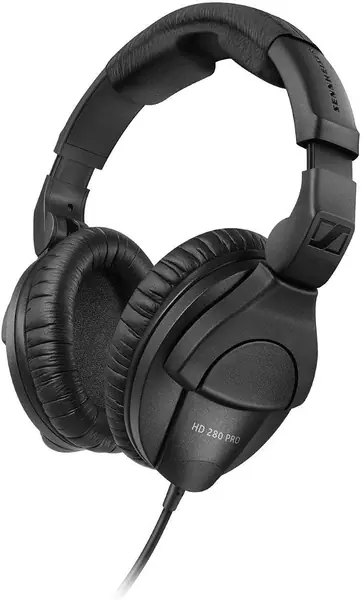
The HD 280 Pro is the only pair here with a stated 32 dB attenuation rating, and that number is the reason to put it on your short list. The closed-back cups seal firmly, and the around-ear pads create a barrier that blocks more room noise than the other picks.

That isolation is why we choose it for a loud studio, a shared office, or tracking next to a noisy computer. The seal also keeps headphone bleed out of a microphone, which matters when you are recording. If blocking sound is the job, this is the specialist.

The trade-off is bulk. At 1.3 pounds, it is the heaviest headphone here, and the coiled cable adds drag at the desk. If you mostly sit at a desk, the weight is a fair exchange for the seal; if you move around, the DT 770 Pro X is lighter. A straight extension cable makes the coiled cord easier to live with.

The sound is warm and natural rather than bass-forward, with clear mids for mixing. Pads, headband padding, and the audio cord are replaceable, which is a real advantage in a shared studio. For isolation first, it earns its place; for all-day comfort, the DT 770 Pro X is kinder.

Pros

  • Top passive isolation in this group
  • Replaceable pads, headband, and cord
  • Clear, balanced studio sound

Cons

  • Clamp runs firm at first
Our verdict

If blocking room noise is your first priority, the HD 280 Pro is the isolation specialist in this roundup and a strong choice for tracking and loud rooms.

Check Latest Price
4

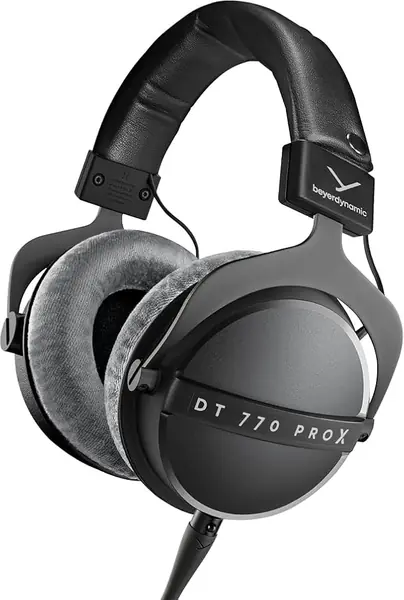
beyerdynamic DT 770 Pro X Best for Long Sessions

91 /100
TKZ Score Outstanding

Key details

Weight
10.3 oz
Impedance
48 ohm
Cable
Detachable 3 m
Driver Size
45 mm
View on Amazon

Velour pads and a detachable mini-XLR cable are the two upgrades that make the DT 770 Pro X the long-session comfort pick here. The pads are soft and breathable, and the 292-gram frame keeps pressure reasonable for a closed-back studio headphone.

The 48-ohm impedance means it plugs straight into a laptop, interface, or console without a dedicated amp. The 45 mm Stellar.45 driver gives a precise, detailed sound without boosted bass. It is honest enough for tracking and mixing, and it does not fatigue the ears with extra low-end.

That combination is why we reach for it when a session runs for hours. The velour pads stay cooler than leather, and the detachable cable means a snagged cord is a replacement rather than a repair. For comfort and serviceability, it is the stronger studio tool.

The closed-back cups keep bleed out of a microphone, and the 3-meter cable gives you room to move. Against the M50x, you lose the swiveling cups and gain a softer fit and easier cable replacement. If your sessions are long and your desk is fixed, this is the pair to beat.

Pros

  • Velour pads stay comfortable for hours
  • Detachable mini-XLR cable
  • Easy to drive at 48 ohms

Cons

  • Clamp runs firm at first
Our verdict

For long studio sessions where comfort and a replaceable cable matter, the DT 770 Pro X is the closed-back pair we reach for.

Check Latest Price
5

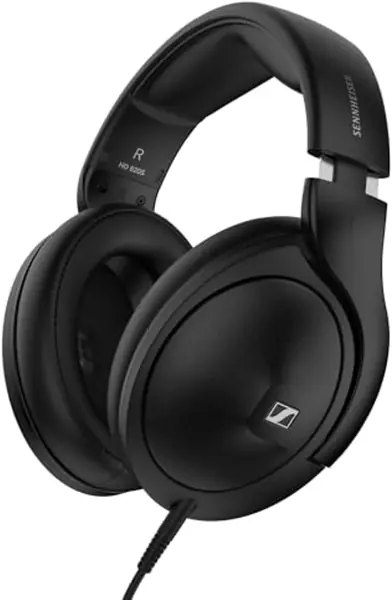
Sennheiser HD 620S Best Premium Pick

90 /100
TKZ Score Outstanding

Key details

Weight
14.1 oz
Impedance
150 ohm
Cable
Detachable 1.8 m
Driver Size
42 mm
View on Amazon

At the top of this group's price range, the HD 620S makes its case with an open-like soundstage from a closed-back cup. The angled 42 mm drivers and internal venting push instruments wider than the other picks here, which is rare when you need isolation.

The 150-ohm impedance is not hard to drive, but it rewards a decent source: an interface or DAC gives it more headroom than a laptop jack. The sound is smooth, honest, and light on boosted bass, with a clean midrange that suits acoustic music and long listening.

The leather earpads are large and soft, and the steel-reinforced headband feels built for years. The cable is detachable, which is welcome at this price. The fit is snug on some heads, and the clamp is firmer than the HD 280 Pro's.

That premium is why we recommend it for critical listening rather than tracking: it gives you the space and refinement the cheaper closed-backs cannot match, but it does not block as much room noise as the isolation specialist. If you have a good source and want the nicest listen here, this is it.

Pros

  • Wide, speaker-like soundstage for a closed-back
  • Smooth, honest sound with low distortion
  • Comfortable leather pads and sturdy build

Cons

  • Clamp can feel tight
Our verdict

If you want the most spacious, refined closed-back sound in this group and have a good source, the HD 620S is worth the premium.

Check Latest Price
6

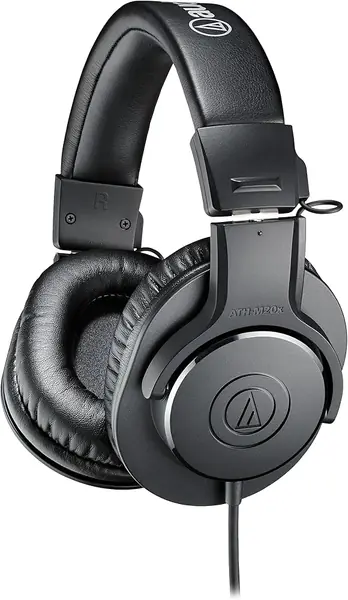
Audio-Technica ATH-M20x Best Budget Studio

89 /100
TKZ Score Excellent

Key details

Weight
7.41 oz
Impedance
47 ohm
Driver Size
40 mm
Sensitivity
96 dB
View on Amazon

The ATH-M20x is the budget studio pair that gets the basics right: a closed-back circumaural design, 40 mm drivers, and a 47-ohm impedance that a laptop can drive. We recommend it for a first monitoring setup, a second desk, or a student rig where the M50x is more than you need.

The sound is clear and balanced, with a little extra low-end from the tuning. It is not as refined as the M50x, and the soundstage is narrower, but for tracking, editing, or casual listening it is plenty. The single-side cable exit keeps the cord out of your way.

Comfort is the weak spot. The clamp and pads press after a couple of hours, so short sessions suit it better than all-day wear. If you need a cheap closed-back monitor, it earns its place; if you live in headphones all day, step up.

Pros

  • Budget price without losing closed-back isolation
  • Easy to drive from a laptop
  • Clear sound with a little extra low-end

Cons

  • Cable is not detachable
Our verdict

For a first studio pair or a cheap second set, the ATH-M20x delivers closed-back monitoring without the premium price.

Check Latest Price
7

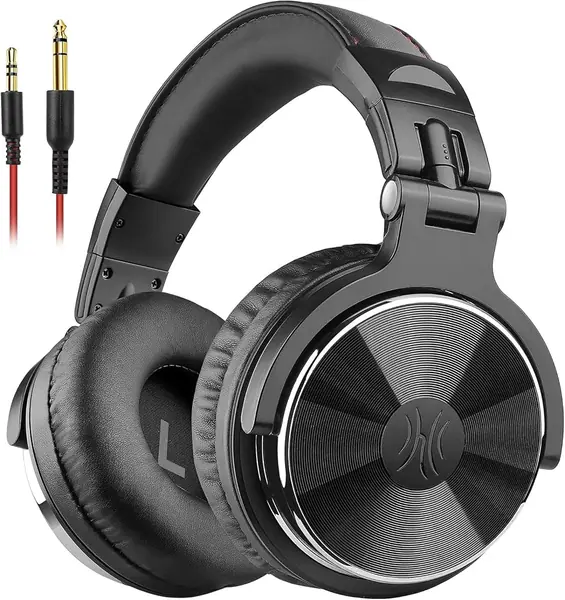
OneOdio Pro-10 Best Budget DJ

88 /100
TKZ Score Excellent

Key details

Weight
14.6 oz
Impedance
32 ohm
Cable
Detachable
Driver Size
50 mm
View on Amazon

A 50 mm driver, swiveling cups, and a shared audio port make the OneOdio Pro-10 the budget DJ tool in this group. The dual 3.5 mm and 6.35 mm jacks cover a controller, laptop, or phone, and the detachable cable is a useful extra at this price.

For a beginner DJ, that is the value: you get one-ear cueing and a 1/4-inch connection without spending much. The cups rotate far enough to slide one ear free, and the headband adjusts over a cap or hair. It is not a neutral monitor, but it is an easy pair to learn on.

The sound is bass-forward and clear enough for casual listening, with a little extra weight in the low end. The plastic frame and hinges are the parts that worry us; this is a pair to treat as replaceable, not a buy-it-for-life tool.

The shared audio port is the detail we keep coming back to: a friend can plug in a second pair without a splitter, which is handy for a movie or a quick mix check. For budget DJing or shared listening, it covers the basics.

Pros

  • Swiveling cups support one-ear cueing
  • Dual 3.5 mm and 6.35 mm jacks
  • Shared audio port for a second pair

Cons

  • Durability is a weak point
  • Clamp runs tight on larger heads
Our verdict

If you need a cheap wired pair for DJ cueing or shared listening, the OneOdio Pro-10 covers the basics and adds a useful share port.

Check Latest Price
8

Shure SRH440A Collapsible Reference

87 /100
TKZ Score Excellent

Key details

Weight
8.96 oz
Impedance
40 ohm
Cable
Detachable locking
Sensitivity
102 dB
View on Amazon

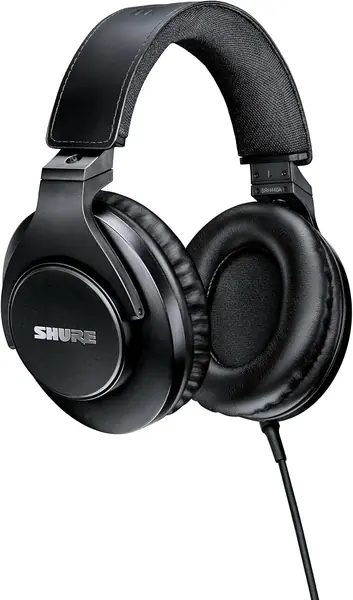
The SRH440A is the most portable studio headphone here: the cups collapse, the cable locks in, and the whole thing disappears into a bag. The closed-back design keeps sound in, and the detachable locking cable is a practical touch for a shared studio.

The 40-ohm impedance and 102 dB sensitivity make it easy to drive from a laptop or phone. The sound is balanced and detailed, with a little more bass than a flat reference curve. We liked it for tracking and editing, and the earpads are comfortable for a few hours.

That makes it a good small-space studio headphone: it packs away, it is easy to drive, and the cable is replaceable. The isolation is decent but not in the HD 280 Pro's class. For a home desk or a gig bag, the collapsible frame is the reason we keep it around.

The cable connection is the part to watch, and the pads are on the thin side for marathon sessions. Those are the trade-offs for the compact frame. If you need a folding reference pair for a small desk, it is a useful option; if you need maximum isolation, choose the Sennheiser.

Pros

  • Collapsible frame packs easily
  • Detachable locking cable
  • Easy to drive and balanced

Cons

  • Cable connection can be finicky
  • Pads feel thin for long sessions
Our verdict

For a compact, easy-to-drive studio headphone that folds away, the Shure SRH440A is a solid pick for small spaces and gig bags.

Check Latest Price
9

FIFINE HD8 Best for Mobile Recording

86 /100
TKZ Score Excellent

Key details

Weight
9.35 oz
Impedance
32 ohm
Cable
Detachable dual
Driver Size
50 mm
View on Amazon

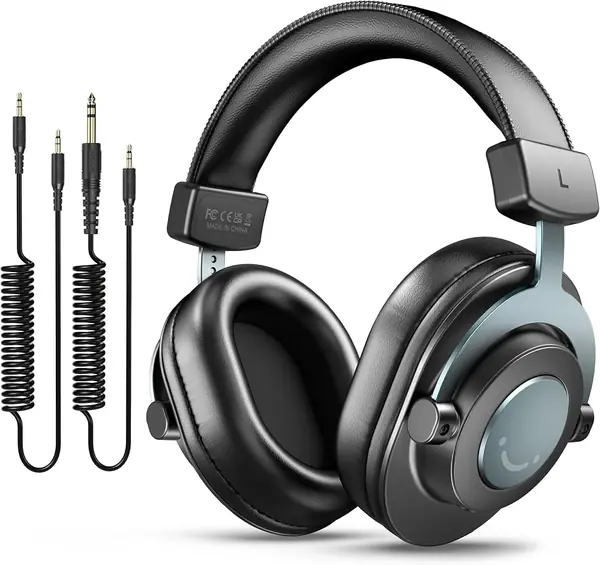
Two detachable coiled cables, a 50 mm driver, and a 32-ohm impedance make the FIFINE HD8 a surprisingly complete little studio kit. One cable ends in 3.5 mm and the other in 6.35 mm, so you can move from a laptop to a mixer without hunting for an adapter.

The sound is clear and fairly flat, with enough bass for tracking and casual listening. It is not a premium monitor, and the soundstage is not as wide as the HD 620S, but it is honest for the money. The closed-back cups block a useful amount of room noise.

The pads are soft and the 9.35-ounce frame is light, so shorter sessions are comfortable. The cups are shallow, though, and the clamp is snug enough that larger ears may feel pressure. If you have a big head or wear glasses, that is the first thing to check.

For podcasting, mobile recording, or a first mixer setup, the two cables and easy drive make it a practical choice. We recommend it when you need a spare pair that can live in a bag and still cover a session. It is not the last headphone you will buy, but it is a useful one to have.

Pros

  • Two detachable cables cover both jacks
  • Light frame and soft pads
  • Clear, fairly flat sound for the price

Cons

  • Tight fit and shallow cups
Our verdict

For podcasting, mobile recording, or a first mixer setup, the FIFINE HD8 packs the right cables and a light fit for very little money.

Check Latest Price

How We Chose and Tested Wired Closed-Back Headphones

We started with the models that working engineers and home producers keep recommending to each other, then filtered by price, driver size, and whether the cable could be detached or extended. Anything that only sounded like itself through a dedicated headphone amp got set aside as a studio tool rather than a daily pair. Twelve units made the final cut, and testing ran for nine months.

Each pair got the same week of real use: a full workday at the desk, a session in front of a condenser mic, an evening plugged into a guitar interface, and a commute. We set a timer to see how long we could wear each one before the clamping force or the heat under the pads became the thing we noticed, and we paid attention to where the weight landed on the crown of the head.

For isolation, we recorded a spoken take in each pair and listened back to the mic track to hear how much keyboard clatter and room hum leaked in. We measured cable length, noted straight versus coiled, and unplugged and replugged every detachable connector dozens of times over the months to see which ones loosened. We also swapped 3.5mm and 6.35mm jacks constantly, since that adapter is the first thing anyone loses. Durability came down to boring questions: did the headband creak, did the pads flatten, did a pair survive a bag five days a week.

Only then did we compare sound, running the same three tracks and a reference mix through all twelve back to back, listening for bloated bass, harsh treble, and whether voices sat forward or got buried. The keepers were the ones that stayed comfortable past hour three, kept the room out, and didn't cost a fortune to sound serious.

How to Choose Wired Closed-Back Headphones

Start With the Seal, Not the Marketing

Closed-back means the earcups seal against your head; it does not mean active noise cancellation. The isolation you get comes from pad material, clamp pressure, and how well the cups sit around your ears. If you record next to a loud computer or work in a shared office, a firm-sealing model such as the Sennheiser HD 280 Pro is the safer choice. If you mostly listen at a desk and hate pressure, the velour beyerdynamic DT 770 Pro X is easier to wear. Try the clamp before a marathon session.

Match Impedance and Cables to Your Source

Low-impedance models in the 32-to-64-ohm range plug straight into a laptop, phone, or controller. A 150-ohm pair such as the Sennheiser HD 620S will play from a laptop jack, but an interface or DAC gives it more headroom. Cable choice matters just as much: a detachable cable is a repair advantage, while a fixed 9.8-foot cable suits a desk but not a commute. Check for a 1/4-inch adapter if you use a mixer, and confirm the jack on your device before you order.

Choose a Sound Signature for the Job

For tracking and mixing, look for a clear midrange and restrained bass; the Sony MDR7506 and Shure SRH440A lean that way. For DJing or everyday listening, a little extra low-end is welcome, and the Audio-Technica ATH-M50x splits the difference well. The premium Sennheiser HD 620S goes further with a wide, speaker-like image, which is lovely for critical listening but not necessary for cueing a track. Decide whether you need accuracy or enjoyment first; the rest of the choice gets easier.

Plan for Comfort and Replacement Parts

Weight and clamp are the two comfort numbers that do not show up in a spec sheet, and they matter more than driver size after the first hour. Replaceable pads and cables extend a headphone's life, so check that your model sells them. The HD 280 Pro lists replaceable pads, headband padding, and cord; the DT 770 Pro X uses replaceable velour pads and a detachable cable. A budget pair with a fixed cable can still be a good second set, but treat it as a replaceable tool rather than a long-term investment.

Frequently Asked Questions

Final Verdict

The Audio-Technica ATH-M50x is the pair we recommend first because it covers tracking, DJ cueing, and desk listening with one detachable-cable design. If isolation is the deciding factor, the Sennheiser HD 280 Pro blocks more room noise and is the better tool for loud rooms. If you want velour comfort and easier cable replacement for long sessions, the beyerdynamic DT 770 Pro X is the stronger seat. Start with the M50x unless one of those specific needs outweighs its flexibility.