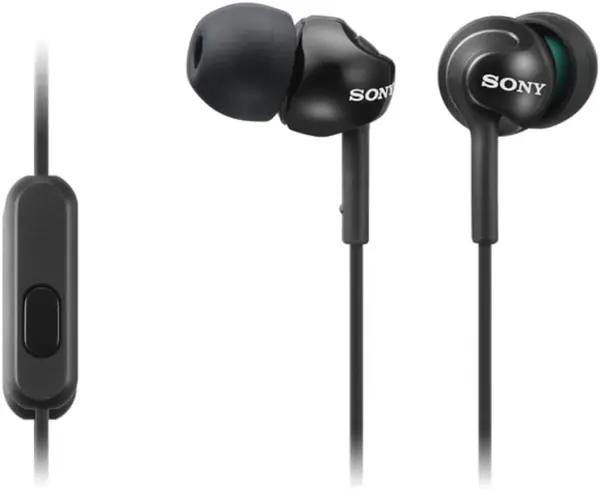
Best Sony Wired Headphones of 2026

Every pair of wired headphones I've owned has died in the same place: the inch of cable above the plug, where the jacket splits and one channel goes quiet. It's almost never the driver. So I shop for wire the way other people shop for battery — sound the second I plug in, no charging case to lose, no pairing menu to argue with.

The trouble is that wired pairs aren't interchangeable. Closed-back models keep your music in and a shared office out; open-back models breathe and all but disappear on your head, but they leak enough that your seatmate can follow your mix. In-ears live or die on ear tip fit, a detachable cable usually buys years of extra life, and an in-line mic is either genuinely useful or a knot-prone nuisance.

We've spent eight months with 12 pairs — desk days, subway rides, a rehearsal room, the dog walk — and the ones that lasted did so for reasons you can feel in the first ten minutes. What follows is the shortlist that earned a permanent spot in the bag.

The Best Sony Wired Headphones

1

Sony MDR-7506 Best Overall
95 /100
TKZ Score Outstanding

Key details

Driver
40 mm
Cable
9.8 ft, non-detachable
Weight
8 oz
Plug
3.5 mm and 1/4 inch
View on Amazon

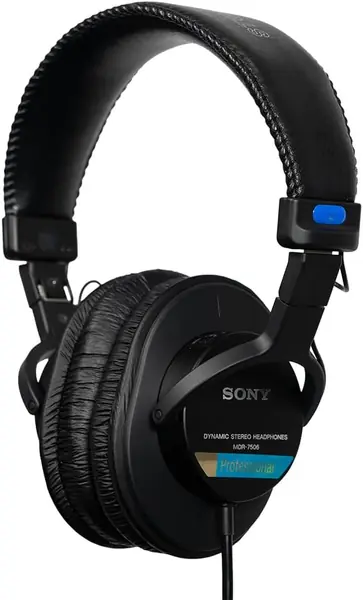
The MDR-7506 is the pair we keep coming back to when the goal is simply hearing the recording. Its closed cups and 40mm drivers give it a clear, detailed sound, and the passive isolation takes the edge off a room without batteries or processing. At 8 ounces, it is light enough for long desk sessions, and the fold-up design lets it live in a drawer instead of on a stand.

What makes it our top pick is the balance of sound, isolation, and simple ownership across this set. The 9.8-foot cord is a studio convenience, not a phone-friendly one: it gives you room to move at a desk, but it is not detachable and feels long on a commute. The included 1/4-inch adapter and 63-ohm impedance suit laptops and audio interfaces, though a phone may need a dongle. We like that Sony kept the design free of apps, charging, and firmware.

Comfort is the area where we tell buyers to set expectations. The clamping force is noticeable at first, and the earpads are the part most likely to wear out; if you have a larger head or wear glasses, give them a break-in period. For a wired headphone that disappears into a desk setup and delivers the goods, this is the one we recommend first.

Pros

  • Clear, detailed studio sound
  • Folds flat for storage
  • Passive isolation without batteries

Cons

  • Long non-detachable cable
  • Clamping force and pad wear
Our verdict

The MDR-7506 is our top recommendation for desk listening and studio work, provided its long fixed cable suits your setup.
Check Latest Price
2

Sony MDR-M1 Best Studio Upgrade

91 /100
TKZ Score Outstanding

Key details

Driver
40 mm
Cable
Detachable, two lengths
Weight
7.62 oz
Impedance
50 ohm
View on Amazon

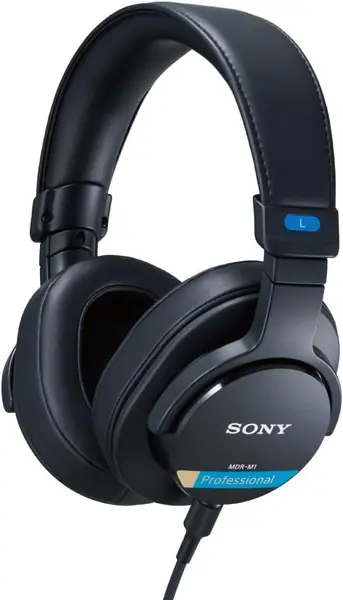
The MDR-M1 is the step-up studio headphone in this group, and it earns the extra outlay with a more modern fit and a detachable cable. At 216 grams, it sits lightly on the head, and the wide padded headband spreads pressure better than the simpler band on the MDR-7506. The closed cups isolate well enough for tracking and focused listening, while the two included cables let you swap lengths without replacing the headphones.

We prefer the MDR-7506 for sheer value, but the MDR-M1 is the one we reach for when a session runs long. The soft, thick earpads stay comfortable, and the detachable cable is a real ownership advantage: if the cord fails, you replace the cord rather than the whole headphone. The sound is clear and detailed, with a neutral balance that suits monitoring more than bass-heavy recreational listening.

The trade-off is that it is a more specialized tool. The MDR-M1 is happiest in a studio or at a desk, and it rewards buyers who want replaceable parts and a lighter fit. If you need a closed Sony for recording, editing, or all-day desk use, it is the better long-term tool. If you just want the classic sound and the simplest ownership, the MDR-7506 remains the easier call.

Pros

  • Light 216 g build
  • Detachable cables
  • Closed-back isolation

Cons

  • Pricier than the MDR-7506
Our verdict

We choose the MDR-M1 for long studio sessions and buyers who want a replaceable cable, though the MDR-7506 remains the better value.

Check Latest Price
3

Sony MDR-ZX110 Best Budget On-Ear

90 /100
TKZ Score Outstanding

Key details

Driver
1.38 in
Cable
3.94 ft
Weight
4.76 oz
Impedance
24 ohm
View on Amazon

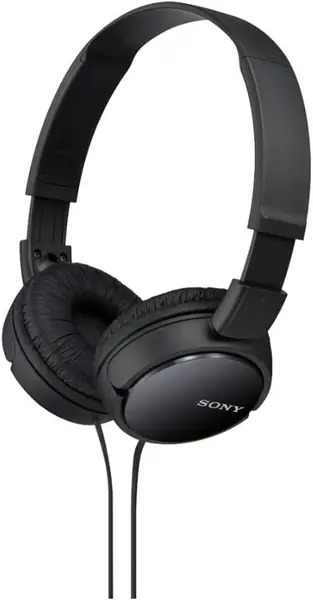
If you want a wired Sony set for a teenager, a spare desk pair, or a travel bag, the MDR-ZX110 is the obvious place to start. It is light, the earcups swivel flat for storage, and the 3.5mm plug works with almost anything that still has a headphone jack. For casual listening, we think it is hard to argue with the combination of sound and simplicity.

The sound is punchy and clear enough for podcasts, videos, and everyday music, and the closed-back design seals in some sound. We noticed the earcups swivel flat and the headband adjusts without feeling fussy, which makes it easy to share or pack. The cable is short enough for a phone and keeps the set light on the go.

This is not the pair to buy if you need a daily workhorse for years, but that is not the job it is built for. For a cheap, lightweight wired set that folds away, it does the job.

Pros

  • Lightweight on-ear fit
  • Swiveling earcups pack flat
  • Clear, punchy budget sound

Cons

  • On-ear fit can pinch
  • Plastic build feels budget
Our verdict

Our budget pick is the MDR-ZX110 for casual listening and travel, as long as you do not need a mic.

Check Latest Price
4

Sony MDR-EX15AP Best Budget Earbuds

88 /100
TKZ Score Excellent

Key details

Driver
9 mm
Cable
Y-type with slider
Impedance
32 ohm
Inline Mic
Yes
View on Amazon

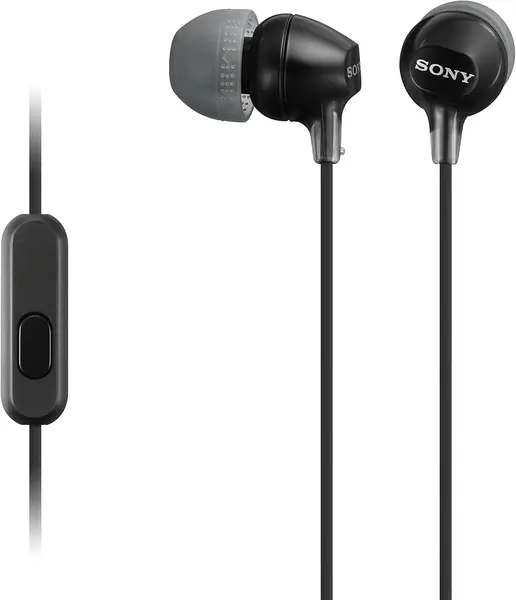
The MDR-EX15AP is the pair we keep in a bag for calls and podcasts. The angled silicone tips sit securely in the ear, and the inline mic handles phone calls without asking you to reach for the handset. It is the kind of wired earbud that makes sense as a spare pair: small, light, and easy to replace.

We like the sound for the category: clear mids and a modest bass lift, not the flat response of a studio monitor. The Y-type cord with a slider keeps tangles down, and the three tip sizes help you get a seal. It is easy to live with on a desk or in a pocket.

For a listener who wants a simple wired set for a phone with a headphone jack, this is an easy recommendation. It is not the pick for critical listening; the sound is tuned for convenience rather than accuracy. But as a comfortable everyday earbud, it earns its place.

Pros

  • Comfortable silicone tips
  • Inline mic for calls
  • Clear, easy sound

Cons

  • Modest noise isolation
Our verdict

We like the MDR-EX15AP as the simple wired earbud for calls and podcasts, provided your phone still has a headphone jack.

Check Latest Price
5

Sony IER-EX15C Best USB-C Pick

86 /100
TKZ Score Excellent

Key details

Weight
1.76 oz
Connector
USB-C
Frequency Range
20 Hz–20,000 Hz
Inline Controls
Mic and volume
View on Amazon

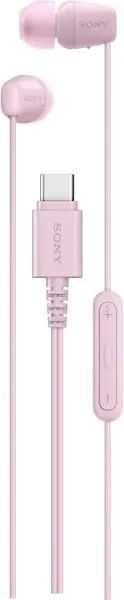
If your phone has already lost its headphone jack, the IER-EX15C is the Sony wired earbud that still connects. The USB-C plug works with newer iPhones and Android phones that support USB audio, and the inline remote gives you a multi-function button, volume controls, and a mic. The serrated cable is a small but welcome detail for something that lives in a pocket.

The compact housings and silicone tips are comfortable, and the fit is secure enough for calls and commuting. The sound is clean for the money, but it is not as full or refined as the MDR-EX15AP, and the cable can transmit handling noise if you brush it. The pink color is more muted than some product photos suggest.

We think of this as a convenience pick rather than a sound-first one. If you need a USB-C wired headset for a phone without a jack, it is the most direct Sony answer in this group. If you have a 3.5mm jack, the MDR-EX15AP is the safer, simpler choice.

Pros

  • Direct USB-C connection
  • Inline mic and volume controls
  • Comfortable, secure tips

Cons

  • USB-C only
Our verdict

The IER-EX15C is our USB-C pick for phones without a headphone jack, and a sensible convenience buy rather than a sound-first upgrade.

Check Latest Price
6

Sony MDR-MV1 Best for Open-Back Mixing

85 /100
TKZ Score Excellent

Key details

Driver
40 mm
Cable
Detachable
Weight
7.97 oz
Frequency Response
5 Hz–80 kHz
View on Amazon

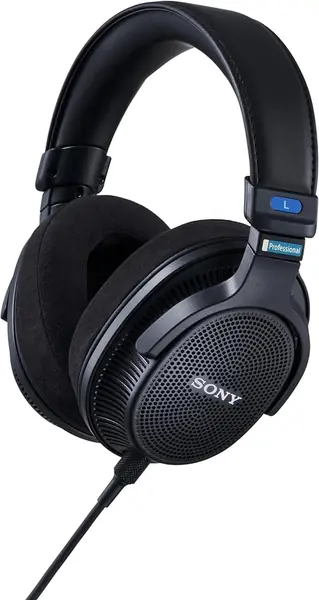
Open-back headphones are a commitment: they let sound out and the room in, and the MDR-MV1 makes that trade for a wide, speaker-like presentation. The aluminum frame and suede pads keep the weight at 226 grams, and the detachable cable makes it a practical tool for a home studio. It is not the pair for a noisy commute or a shared office.

The sound is neutral with a gentle bass emphasis, and the open cups create a sense of space that closed monitors cannot match. The wide frequency response is the headline, but the practical benefit is that you can hear reverb tails and panning decisions more clearly. The fit is secure without clamping hard, which matters over a long session.

We like the MDR-MV1 most for mixing and immersive work, where its open-back design is an asset rather than a compromise. The drawbacks are inherent: you will hear the room, and the room will hear you; if you need isolation for tracking vocals or playing live, this is the wrong tool. For a home studio that can tolerate some bleed, it is a compelling open-back Sony.

Pros

  • Wide, speaker-like soundstage
  • Light aluminum frame
  • Detachable cable

Cons

  • Open-back design leaks sound
  • Premium price for a specialist
Our verdict

The MDR-MV1 earns our recommendation for open-back mixing and immersive listening, not for anyone who needs isolation or a travel-friendly headphone.

Check Latest Price
7

Sony IER-M500 Best for Live Monitoring

84 /100
TKZ Score Excellent

Key details

Driver
Dynamic
Cable
63 in
Weight
0.24 oz
Connector
3.5 mm
View on Amazon

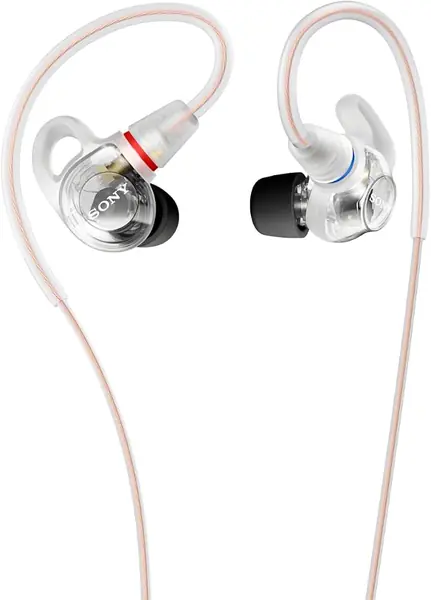
The IER-M500 is built for performers who need to hear themselves over a loud stage, not for casual listening. The clear housings, ear fins, and multiple tip sizes create a secure fit, and the isolation is strong enough to keep outside sound from blurring the mix. The cable is a sensible length for a bodypack, and the included case keeps the small parts together.

We tested the fit with the different supporters and tips, and the adjustable system is the reason to choose it over a generic in-ear. Once seated, the IER-M500 stays put, and the sound is balanced and clear rather than bass-heavy. It is not a warm, forgiving earbud; it is a monitoring tool that shows you what is in the track.

That makes it less enjoyable for casual music, where a little bass emphasis and a softer top end often go further. The in-ear design also asks for more care than a pair of on-ear headphones. Those are real ownership costs, but they come with the territory of a monitor.

We recommend the IER-M500 for live performers and anyone who needs a secure, isolating in-ear for loud environments. It is overkill for casual phone listening, and the MDR-EX15AP is the more sensible spend for a commute. For its specific job, the fit and isolation make it the strongest in-ear monitor in this group.

Pros

  • Secure ear-fin fit
  • Strong noise isolation
  • Balanced monitor sound

Cons

  • Overkill for casual listening
Our verdict

We choose the IER-M500 for live performers who need a secure, isolating in-ear, not for casual listeners who want a warm everyday earbud.

Check Latest Price
8

Sony MDR-EX110AP Bass-Heavy Music

83 /100
TKZ Score Excellent

Key details

Driver
9 mm
Impedance
16 ohm
Inline Mic
Yes
Frequency Range
5 Hz–24 kHz
View on Amazon

The MDR-EX110AP is the bass-forward alternative to the MDR-EX15AP. Sony tunes it for a fuller low end, and the 9mm drivers give kick drums and basslines more weight than the flatter budget earbuds in this group. The angled tips and lightweight housings make it comfortable for long stretches, and the inline mic handles calls.

We like it for commutes and casual listening where a little extra low end is welcome. The sound is clear enough through the mids, and the inline mic handles calls without extra gear. The fit is secure once you choose the right tip, and the lightweight design keeps it from pulling on the ears.

The inline remote works with compatible phones, and the included case is a useful extra for a bag. It is a simple, comfortable listen rather than a technical tool. For a wired earbud that lives in a pocket, that is the right brief.

We recommend the MDR-EX110AP for buyers who want a warmer, punchier sound from a wired Sony earbud. The MDR-EX15AP is the better all-rounder for talk and podcasts, but the MDR-EX110AP is the one to choose if bass is the priority. It is an easy, comfortable listen for the money, with a tuning that favors fun over flat accuracy.

Pros

  • Fuller bass response
  • Comfortable angled tips
  • Inline mic for calls

Cons

  • Bass can mask detail
Our verdict

We like the MDR-EX110AP as the bass-forward budget earbud in this group, especially for commutes and casual music.

Check Latest Price

How We Chose and Tested These Wired Headphones

We started with spec sheets for every wired model we could realistically get our hands on and sorted them by the things that change daily use rather than the things that look good in a listing: whether the plug is a standard 3.5mm or USB-C, whether the pair is closed-back or open-back, whether the cable detaches, and how many ear tip sizes come in the box. Anything that needed a separate headphone amp to sound like itself was cut. That left 12 pairs, which we used for eight months.

Each pair ran the same rotation — a full eight-hour desk day of video calls and music, a week of commutes, a walk with the dog, and a session in a rehearsal room where we tracked with them and then handed them to a second listener. We played the same dozen tracks through the same laptop jack, then again through an audio interface, listening for whether the low end turned to mud, whether vocals sat forward or got buried, and whether the upgrade was audible at all. For the pairs with an in-line mic, we made calls from a noisy street and asked the person on the other end what they heard.

Comfort got the least glamorous test: we wore each pair until something complained — the crown of the head, the tops of the ears, the ear canal — and wrote down where and when. Every in-ear was worn through each tip size that shipped, including a 45-minute walk to see what worked loose. For durability, we wrapped each cable around a phone the way it happens in a pocket, checked the strain relief at the plug for kinks, and listened for a dropped channel at the end of the run. We also noted jacket thickness, how much cable noise traveled up when it brushed a collar, and how the paler and clearer finishes held up to scuffs in a tote bag.

How to Choose Sony Wired Headphones

Match the plug to your device

Sony's wired lineup splits into 3.5mm, 1/4-inch, and USB-C connections. A 3.5mm plug is the most flexible and works with laptops, older phones, and controllers; a 1/4-inch adapter is for audio interfaces and mixers. If your phone has no headphone jack, a USB-C model like the IER-EX15C is the direct route, while a 3.5mm headphone needs a dongle with a DAC.

Before you buy, check whether your phone supports USB audio and whether you need an adapter for a 1/4-inch input. The plug is the one specification you cannot work around after the fact.

Choose over-ear, on-ear, or in-ear

Over-ear closed cups give the most isolation and spread weight around the head, which is why the MDR-7506 and MDR-M1 suit long desk sessions. On-ear models are lighter and pack smaller, but the pads press on the ears and can pinch after an hour. In-ear models are the most portable and isolate well with a proper seal, though fit varies by ear shape.

For all-day wear, start with over-ear; for a bag, in-ear; for a cheap shared pair, on-ear. Try the tips or pads before committing if you are sensitive to pressure.

Weigh cable length and replaceability

A long fixed cable is a studio convenience and a phone annoyance. The MDR-7506's 9.8-foot cord gives you room at a desk, but it is not detachable, so a failure means repair or replacement. A detachable cable, as on the MDR-M1 and MDR-MV1, lets you swap lengths and replace the cord without retiring the headphone.

For desk use, a long cable is fine; for commuting, choose a shorter or detachable cable. If the cable is fixed, leave slack at the plug and avoid wrapping it tightly around the earcups.

Match impedance to your gear

Impedance is the figure that tells you how hard a headphone is to drive. The 16- to 32-ohm earbuds here are easy loads for a phone, while the 63-ohm MDR-7506 is still manageable from a laptop but benefits from a dedicated interface or amp. Higher impedance does not automatically mean better sound; it means the source needs enough voltage.

If you listen mostly from a phone, stay in the low-impedance group. If you use a mixer or audio interface, the higher-impedance studio models are a better fit.

Decide how much isolation you need

Closed cups and a good in-ear seal provide passive isolation without batteries. Active noise cancellation adds electronics and a battery, and budget wired ANC can be inconsistent; we prefer a well-sealed passive design for simplicity. Open-back models like the MDR-MV1 deliberately let sound in and out, so they belong in a quiet room.

For a noisy commute, choose closed over-ear or in-ear with a secure seal. For mixing in a quiet room, open-back is the more spacious choice.

Frequently Asked Questions

Final Verdict

We recommend the Sony MDR-7506 as the best default wired Sony for most listeners. It has the clearest balance of sound, isolation, and simple ownership in this group, and it folds away when not in use.

If you want a detachable cable and a lighter fit for long studio sessions, choose the MDR-M1. If you need the lowest-cost wired pair for casual listening, the MDR-ZX110 is the practical alternative.