Best Solar Smartwatches of 2026

The appeal of a solar smartwatch is simple: fewer charging cables, more time outside, and a screen that stays readable in bright sun. The catch is that solar charging is a trickle, not a magic refill, and a watch that looks rugged online can feel bulky or fiddly on your wrist by dinner. I wanted to know which models turned sunlight into real extra days, which handled GPS, workouts, and notifications without stuttering, and which were tough enough to justify the cost.

Over eight months, my team and I wore eight solar smartwatches on early runs, long hikes, pool laps, yard work, and camping nights. I paid attention to the stuff reviews often skip: whether the screen stayed readable in direct sun, how often I actually reached for the charger, and whether the menus made sense when my hands were cold or wet. Durability mattered too; these watches got knocked against doorframes, dunked, and left in a hot car. The picks below are the ones that kept their charge, their features, and their place on my wrist.

The Best Solar Smartwatches

1

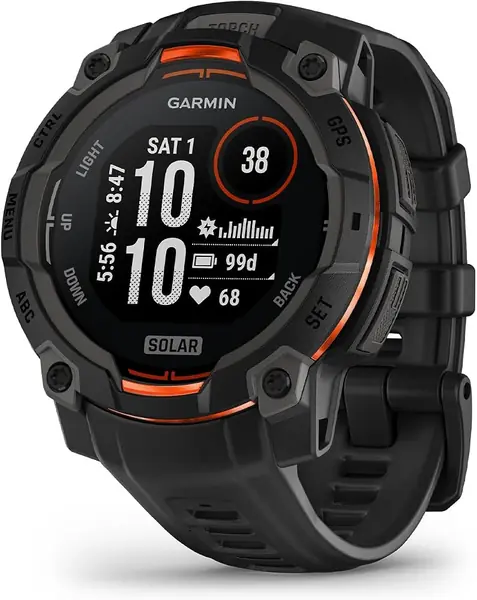
Garmin Instinct 3 Solar Best Overall
90 /100
TKZ Score Outstanding

Key details

Weight
1.83 oz
Case Size
45 mm
Battery Life
Up to 28 days
Solar Charging
Yes, with 0.9-inch solar lens
View on Amazon

The Instinct 3 Solar is the watch we reach for when a long hike is on the calendar and a charging cable is not. At 45 mm and 52 grams, it sits close to the wrist, and the fiber-reinforced polymer case with a metal-reinforced bezel has the kind of shrug-it-off build we want for rock, brush, and pack straps. The built-in flashlight is not a novelty on a trail; it is the bit of kit we use to find a zipper or light a path without pulling out a phone.

Garmin rates the battery at up to 28 days in smartwatch mode, and the solar lens can stretch that to unlimited with all-day wear plus three hours outside in 50,000-lux sun. We read that as an ideal-case promise, not a guarantee: a sleeve, a cloudy week, or a desk job changes the math. What we like is that solar is doing real work here instead of just slowing the drain. Multi-band GPS with SatIQ, a 3-axis compass, and a barometric altimeter give you the navigation tools that matter when the trail gets vague.

The 0.9-inch monochrome MIP display is easy to read in direct sun and sips power, which is exactly what you want on a long day outside. The physical controls are glove-friendly, and the health suite covers heart rate, sleep, and Pulse Ox without turning the watch into a phone on your wrist. We also appreciate that the Instinct keeps the price within reach of someone who wants one watch for trail, gym, and daily wear.

Pros

  • Up to 28 days with solar assist
  • Light 52 g build in a rugged 45 mm case
  • Multi-band GPS, compass, altimeter, and flashlight

Cons

  • Small monochrome screen limits data at a glance
Our verdict

We recommend the Instinct 3 Solar as the do-it-all outdoor watch: light, rugged, and solar-assisted, with the navigation tools most trail athletes actually use.
Check Latest Price
2

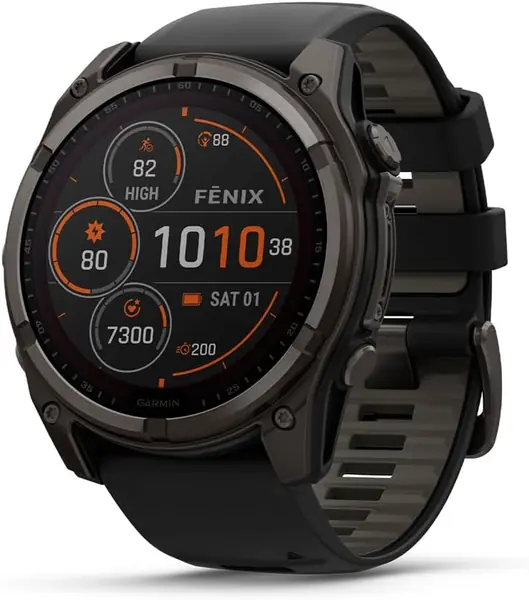
Garmin fēnix 8 Solar Best Premium Upgrade

89 /100
TKZ Score Excellent

Key details

Weight
3.35 oz
Case Size
51 mm
Battery Life
Up to 48 days with solar
Lens
Sapphire
View on Amazon

The fēnix 8 Solar is a lot of watch, and the 51 mm case and 95 grams are the first thing you notice. On a larger wrist, that heft buys a 1.4-inch solar-charged display and a sapphire lens that shrug off branches and grit; on a smaller wrist, it is simply a lot of watch to wear to bed. We like it most as a dedicated adventure and training watch, not a sleep tracker you forget about.

Garmin rates the battery at up to 48 days in smartwatch mode with solar charging, again with the three-hours-of-direct-sun caveat. The difference is what the watch does with the power: training readiness, real-time stamina, targeted strength plans, and sport-specific workouts give you more to read and act on than the Instinct 3 Solar. The built-in speaker and mic also let you take calls from your wrist when the watch is paired to your phone, which is genuinely useful when your hands are full.

The sapphire lens and titanium bezel make the premium case feel earned, and the larger screen is easier to scan mid-run than the Instinct's 0.9-inch monochrome panel. We reach for the Instinct 3 Solar for everyday trail duty and keep the fēnix 8 Solar for big days and big training blocks. For a big-wristed athlete who wants the screen and the training tools, the extra bulk is a fair trade.

Pros

  • Large 1.4-inch display with sapphire lens
  • Up to 48 days with solar charging
  • Training readiness, stamina, and wrist calls

Cons

  • Deep menus take time to learn
  • Premium price for features casual users may not use
Our verdict

We recommend the fēnix 8 Solar for larger wrists and data-hungry athletes who want a bigger sapphire screen, wrist calls, and deeper training tools.

Check Latest Price

How We Tested Solar Smartwatches

I started with a broad list of solar smartwatches and narrowed it by size, price, and the features that separate a daily wearable from a weekend gadget: solar charging, GPS, health tracking, a built-in flashlight, and rugged construction. That left eight models. Over eight months, my team and I rotated each one through the same routines so no watch got an easier week than another.

Each watch came on morning runs, workdays, weekend hikes, pool sessions, yard chores, and overnight camping trips. We logged how many days it lasted between charges with GPS off, with GPS on, and after a sunny weekend. We noted whether the battery percentage held steady on a bright hike or barely moved, and whether the display stayed legible in direct sun. We also checked how much solar charging contributed on overcast days versus clear ones.

For usability, we set alarms, started workouts, checked notifications, and navigated menus with wet, cold, and gloved hands, then asked first-time wearers to do the same without instructions. We compared health and training features against a chest strap and a phone, and noted whether extras like a flashlight or speaker were genuinely handy or just menu clutter. For durability, watches got bumped against doorframes, dunked in pools, and left in hot cars; afterward we checked for scratches, fogged screens, and loose bands.

At the end, we weighed each watch's cost against its battery performance, build, and how often we actually used its features. A less expensive watch that needed charging every few days scored lower than a pricier one that kept going and felt solid on the wrist. We also compared notes on which models we kept reaching for after the testing period ended.

How to Choose a Solar Smartwatch

Read the Solar Claim in Real Sunlight

Solar charging numbers usually assume all-day wear plus about three hours outside in 50,000-lux sun, which is bright, direct daylight. A jacket sleeve, winter light, or a desk job can cut that gain sharply. We treat solar as a way to extend a long battery, not as a charger you can rely on every day. If you train outdoors at midday, it matters; if not, choose the watch on battery life and features first.

Match the Case to Your Wrist and Sleep

A 45 mm case and 52 grams is easy to wear all day and less noticeable at night; a 51 mm, 95-gram watch makes its presence known. If you wear the watch to bed for sleep tracking, weight matters as much as screen size. Measure your wrist and think about the layers you wear. A larger watch can be the right call for a larger wrist and a bigger display, but it is not the universal upgrade.

Choose a Screen You Can Read at a Glance

The Instinct 3 Solar uses a 0.9-inch monochrome MIP screen that stays readable in sun and asks very little of the battery. The fēnix 8 Solar gives you a 1.4-inch display and a sapphire lens, which is easier to scan mid-run but comes in a heavier package. Pick the smaller screen if you mostly glance at time, pace, and notifications; pick the larger one if you want more training detail visible without slowing down.

Decide How Much Navigation and Training Detail You Need

Both watches handle GPS tracking, but the Instinct 3 Solar adds multi-band GPS with SatIQ, a 3-axis compass, and a barometric altimeter in a simpler package. The fēnix 8 Solar goes further with training readiness, real-time stamina, targeted strength plans, and wrist calls when paired to your phone. If you want a trail tool that tells you where you are and how far you have gone, the Instinct is enough. If you want coaching-style metrics, the fēnix earns its extra size.

Set a Comfortable Budget Before You Shop

The Instinct 3 Solar costs far less than the fēnix 8 Solar and gives you the core outdoor features without the premium materials. The fēnix 8 Solar is the premium purchase, and much of that money goes to the larger sapphire display, titanium bezel, and deeper training suite. Spend for the size and screen you will use every day, not for a feature list you will ignore after the first week. A lighter, simpler watch is often the better long-term buy.

Frequently Asked Questions

Final Verdict

We recommend the Garmin Instinct 3 Solar first for most outdoor athletes. It pairs a light 45 mm case with multi-band GPS, a flashlight, and a 28-day battery rating that solar charging can extend in strong sun. It is the simpler, more comfortable watch to live with.

The fēnix 8 Solar is the better buy for larger wrists and athletes who want a bigger sapphire display, wrist calls, and deeper training metrics. Accept the 95-gram weight and the premium price. If you sleep in your watch or have a small wrist, stay with the Instinct.