Best Small Fitness Trackers of 2026

A small fitness tracker is a compromise you make on purpose. You trade the big, bright display for something you can sleep in, shower in, and forget until it buzzes. Plenty of slim bands make that trade and then cheat on what you can't see: heart rate that drifts when you pick up the pace, sleep data that's mostly guesswork, and a battery that quits on day three of a promised two weeks.

That's what my team and I spent six months chasing down. We wore 14 trackers through workouts, overnight, and into the shower, paired each one to both an iPhone and an Android phone, and logged when every battery actually died. What separated the good ones wasn't the display — it was whether the band disappeared on your wrist, and whether the numbers were still believable a month in.

One thing I'd tell a first-time buyer: ignore the battery number on the box, and don't assume a bigger screen means better data. A plain band can out-track a flashy one, and the picks below are the ones we kept reaching for after the testing week ended.

The Best Small Fitness Trackers

1

Google Fitbit Air Best Overall
90 /100
TKZ Score Outstanding

Key details

Display
No display
Water Resistance
50 meters
Battery Life
Up to 7 days
Weight
0.18 oz
View on Amazon

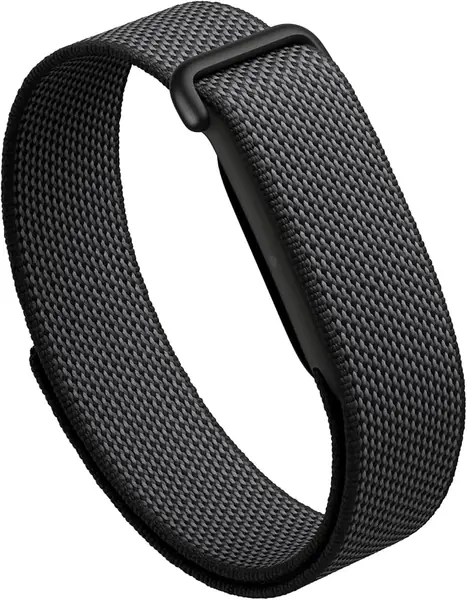
At just over 5 grams and with no screen, the Google Fitbit Air is the closest thing here to a tracker that disappears. That is the reason it is our top pick: you can wear it to bed, under a sleeve, or through a workout without a glowing rectangle competing for attention. The 130-210 mm band is micro-adjustable, so it covers a wide range of wrists without a sizing decision.

The screenless design is the point, not a missing feature. Steps, heart rate, sleep, and blood oxygen live in the Google Health app, and the payoff is a 5-gram device with up to seven days of battery and 50-meter water resistance. We think that trade is right for someone who wants continuous tracking, not notifications. The screenless design also makes more sense overnight than a chunky watch, and the weekly view in the app is the one that makes a trend obvious.

The caveat is accuracy. Heart rate is the stronger metric; step counts can drift during arm-heavy tasks, and sleep tracking is more trend than gospel. If you need to trust every daily total, a tracker with a screen and a more conservative step algorithm may suit you better. But for all-day wear and sleep, the Air's comfort is the feature.

Pros

  • Feather-light 5-gram build
  • Up to seven days of battery
  • Comfortable for sleep and all-day wear

Cons

  • No on-wrist display for quick stats
Our verdict

We recommend the Google Fitbit Air to anyone who wants tracking to disappear on the wrist; its 5-gram, screenless design is the most unobtrusive pick here.
Check Latest Price
2

Xiaomi Smart Band 10 Best Battery Life

89 /100
TKZ Score Excellent

Key details

Display
1.72-inch AMOLED
Water Resistance
5ATM
Battery Life
21 days
Weight
1.06 oz
View on Amazon

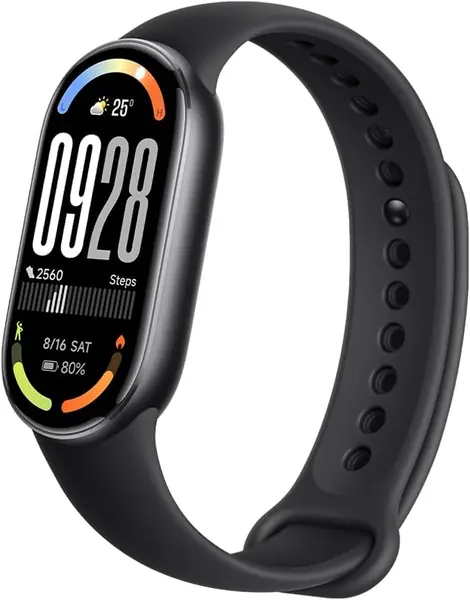
Twenty-one days is the number that makes the Xiaomi Smart Band 10 hard to ignore. It is a slim band with a 1.72-inch AMOLED display that reaches 1500 nits, so you can read it in sunlight, and the 5ATM rating covers showers and swims. The 22 mm band is narrow, but the screen takes up most of the top of your wrist.

We like it as the screen-and-battery alternative to the Fitbit Air. You get on-wrist steps, heart rate, sleep, and blood oxygen without reaching for your phone, and the 21-day rating means charging is a monthly chore rather than a weekly one. The panel is bright and easy to read, though it makes less sense if your priority is a tracker you never notice.

The trade-off is accuracy: step and heart-rate numbers are better for trends than for lab-grade records. If you prefer a quieter wrist, the Fitbit Air is the better match. But if you want a small band that still shows your stats and goes weeks between charges, this is the one we point to first.

Pros

  • Three-week battery life
  • Bright 1.72-inch AMOLED display
  • 5ATM water resistance

Cons

  • App sync can be inconsistent
  • No built-in GPS
Our verdict

For on-wrist stats and a three-week battery in a slim band, we point to the Xiaomi Smart Band 10.

Check Latest Price
3

Zeacool Fitness Tracker 1.1 Best Budget Battery

88 /100
TKZ Score Excellent

Key details

Display
1.10-inch AMOLED
Water Resistance
5 ATM
Sport Modes
25
Battery Life
12 days
View on Amazon

At the budget end, the Zeacool 1.1-inch tracker is the one that makes the least fuss about charging: the listing claims 12 days, and the 5ATM rating means you can leave it on in the shower. We see it as the long-battery budget pick. The 1.10-inch AMOLED screen is small enough to stay out of the way, and 25 sport modes cover the usual walks, runs, and gym sessions.

The health suite is the familiar one: heart rate, blood oxygen, blood pressure, sleep, and temperature monitoring, with the app holding the detailed history. The 5ATM rating is a step above the IP68 rating on several cheap bands, which matters if you swim or shower with it. The one-year warranty is the main safety net.

The catch is accuracy: the readouts are best for trends. If you want a low-cost tracker for walks, sleep, and general activity, it covers the basics; if you need proven accuracy or deep coaching, spend more.

Pros

  • Rated for 12 days of battery
  • 5ATM water resistance
  • 25 sport modes in a compact band

Cons

  • Small 1.10-inch display can be fiddly
Our verdict

The Zeacool earns our budget nod for a tiny screen and a long charge cycle, as long as you do not need big-brand app depth.

Check Latest Price
4

Moremore Fitness Tracker Best Budget AMOLED

87 /100
TKZ Score Excellent

Key details

Display
1.1-inch AMOLED
Sport Modes
25
Battery Life
Up to 7 days
Health Sensors
Heart rate, blood pressure, blood oxygen
View on Amazon

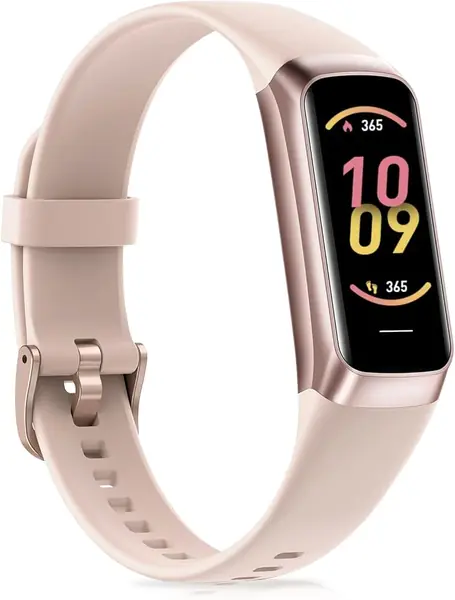
The Moremore tracker puts a 1.1-inch AMOLED screen in a small pink case and asks very little of you: magnetic charging tops it up in an hour or two, and the battery is rated for up to seven days. The screen is bright enough for quick glances, and the band is light enough for all-day wear.

We like it for a first tracker or a spare, because it covers 24/7 heart rate, blood pressure, blood oxygen, sleep, and 25 sport modes without adding smartwatch bulk. The health readings are best treated as trends, not medical measurements, and the app is doing most of the work behind the scenes. For step counts and workout reminders, that is enough.

What keeps it out of the top tier is the pink-only finish and the basic app. But if you want an inexpensive AMOLED tracker with a small footprint, it is an easy one to try.

Pros

  • Bright 1.1-inch AMOLED screen
  • Up to seven days of battery
  • 25 sport modes and all-day health tracking

Cons

  • Only listed in pink
Our verdict

We see the Moremore as a budget AMOLED tracker for anyone who wants a small screen and simple health stats, provided pink suits them.

Check Latest Price
5

FITVII Slim Fitness Tracker Best Slim Design

86 /100
TKZ Score Excellent

Key details

Display
1.45-inch LCD
Water Resistance
IP68
Compatibility
Android 7 and iOS 13 or later
Health Metrics
Heart rate, blood pressure, SpO2, sleep
View on Amazon

FITVII calls this the Slim, and the 1.45-inch LCD case is narrow enough to sit closer to a bracelet than a smartwatch. It comes with heart rate, blood pressure, blood oxygen, sleep tracking, and multiple sport modes, plus call and message notifications through the app.

The health dashboard is broader than the 1.1-inch budget bands: you get sleep stages, blood oxygen, and around-the-clock heart rate in one place, and the app handles the history. IP68 covers sweat, rain, and handwashing, though it is not the same as a 5ATM swim rating. The band is a standard 20 mm width, so replacements are easy to find.

We like it for someone who wants a slightly larger display than the 1.1-inch budget bands but still wants a low-profile wrist piece. It is a practical daily tracker rather than a training tool.

Pros

  • Slim 1.45-inch profile
  • IP68 water resistance
  • Detailed health and sleep dashboard

Cons

  • LCD display lacks AMOLED brightness
Our verdict

We like the FITVII Slim as a middle choice for a slightly larger screen and a slim band, as long as you prefer LCD over AMOLED.

Check Latest Price
6

Bakoor Fitness Tracker Best for Casual Exercisers

81 /100
TKZ Score Excellent

Key details

Display
1.10-inch AMOLED
Water Resistance
IP68
Sport Modes
25
Compatibility
Smartphones
View on Amazon

Twenty-five sport modes is a lot for a tracker this small. The Bakoor pairs a 1.10-inch AMOLED screen with an IP68 body, silicone band, and the usual heart rate, sleep, and blood pressure readouts. It is the kind of feature list that makes a budget tracker feel more capable than its price.

The screen is bright and the band is light, and the app covers the basics. You get call and message alerts, remote camera control, and the standard activity history. Charging is by cable, and the 1.10-inch AMOLED panel is the highlight; it is bright and readable for a budget device.

We think it is a reasonable first fitness tracker for someone who wants to log walks, runs, and gym sessions without spending much. The risk is reliability: some units stop or refuse to turn on, so we see it as a budget option for casual use rather than a long-term daily driver.

Pros

  • 25 sport modes
  • Bright 1.10-inch AMOLED screen
  • IP68 water resistance

Cons

  • No warranty listed
Our verdict

We see the Bakoor as a budget tracker for casual step and workout logging, but its mixed reliability makes it a second-tier pick.

Check Latest Price
7

ST-CARE Fitness Tracker Dressier Budget

78 /100
TKZ Score Very Good

Key details

Display
1.10-inch AMOLED
Water Resistance
5 ATM
Sport Modes
25
Frame
Stainless steel
View on Amazon

The ST-CARE C60 is one of the few budget bands here with a stainless steel frame, which gives it a more finished look than the all-plastic alternatives. The 1.10-inch AMOLED screen, 25 sport modes, and 5ATM water rating put it in the same basic class as the Zeacool, with a slightly dressier case.

The 5ATM rating is good for showers and pools, and the screen is bright enough for quick glances. The black silicone band keeps it casual, while the metal frame makes it look less like a gym gadget and more like a simple watch.

The app covers call and message reminders, drinking water and sedentary alerts, and remote camera control. It is a standard budget-tracker feature set, not a coaching platform, and the 12-month warranty is the main cover.

We like it as an also-consider for someone who wants a small tracker that looks a bit nicer on a bracelet. If you want the longest battery rating in this budget group, the Zeacool is the better call; if appearance matters more than app depth, this one earns a look.

Pros

  • Stainless steel frame
  • 5ATM water resistance
  • Bright 1.10-inch AMOLED screen

Cons

  • Only listed in black
Our verdict

We like the ST-CARE as a dressier budget tracker for small wrists, but it is an also-consider rather than a reliability leader.

Check Latest Price

How We Chose and Tested These Small Fitness Trackers

We started by rounding up every slim tracker currently selling well with a review score above four stars, then filtered by size and weight — anything wide enough to feel like a watch, or heavy enough that we noticed it, came off the list. We also cut models whose app only worked on one phone platform. That left 14 trackers, all bought at retail so nothing arrived pre-paired to a manufacturer account.

Over those six months, each unit got a full week on the wrist, and I mean full: worn overnight for at least five nights, through showers and a swim, two gym sessions, and a Saturday of yard work. We compared heart rate against a chest strap during intervals and easy walking, and checked the morning sleep reports against nights we knew had been short or broken. Because these are meant to be small, we weighed every band on a kitchen scale and had testers with three different wrist sizes wear each one for an hour, noting whether it left a mark or crept around mid-run.

Battery life got its own ledger: notifications on, every charge logged, and the day each tracker actually died written down instead of trusted from the box. We paired each one to an iPhone and an Android phone to see how quickly steps and sleep moved over and whether anything dropped, then lived in the app for the week — a comfortable band with a clumsy app is one you stop opening. We wore them with short sleeves and to dinner to see which read as a watch and which read as a rubber band, and judged value by how much of that week the thing actually worked.

How to Choose a Small Fitness Tracker

Start with fit, not features

In a small tracker, weight and band shape matter more than the feature list. A 5-gram screenless model such as the Fitbit Air disappears under a sleeve and is easy to sleep in; a 30-gram band is still light but more noticeable. Check the band's stated range and whether it uses a standard width, because a replaceable band can rescue a fit you do not love. If you wear the tracker overnight, choose the lightest case and a soft band, then loosen it one notch before bed.

Decide whether you want a screen at all

The screenless Fitbit Air keeps your wrist quiet but sends every detail to your phone. A 1.1-inch AMOLED band such as the Zeacool or Moremore shows steps and heart rate at a glance without much bulk. The trap is assuming a bigger screen makes a tracker better for small wrists: a 1.72-inch panel can be bright and readable, but it takes up more visual space. Pick the smallest display that answers the questions you actually check on your wrist.

Treat battery life as a routine

Battery ratings of seven, 12, and 21 days describe different charging habits, not just different numbers. Seven days means a weekly top-up; 12 days stretches to roughly every other week; 21 days turns charging into a monthly chore. Screen brightness, notifications, and constant heart-rate tracking all shorten those ratings. If you know you will forget a charger, pay for the longer rating. If you take the band off every night anyway, a seven-day model is easier to live with.

Check accuracy and app sync before you commit

Step counts drift during arm-heavy tasks, and wrist heart rate is more reliable at steady effort than during interval work. Sleep staging is a trend, not a diagnosis. The app matters just as much: check that your phone's operating system is supported, then test pairing and syncing during the return window. A tracker that will not sync is a pedometer with a dead end. If you want on-wrist stats, choose a model with a screen; if you want the smallest possible band, accept that your phone is the dashboard.

Match water resistance and comfort to your day

IP68 handles sweat, rain, and handwashing; 5ATM is the better choice for swimming and showers. If you swim laps, look for 5ATM and a band that stays put when wet. For sleep, comfort is mostly about width and weight: a narrow band with a soft finish is less likely to dig in. Keep the skin under the band dry, and take the tracker off if you notice irritation. The best water rating is the one that matches what you actually do, not the highest number on the box.

Frequently Asked Questions

Final Verdict

The Google Fitbit Air is the small tracker we recommend first because it is the one you are least likely to notice: 5 grams, no screen, and up to seven days between charges. It is not the most accurate step counter here, and you will read the detail on your phone, but for all-day wear and sleep tracking that is a fair trade.

If you want a screen and a three-week battery, choose the Xiaomi Smart Band 10; if you want to spend the least, the Zeacool is the budget pick.