Best Power Banks for Cameras of 2026

The worst time to find out your power bank can't talk to your camera is the end of a long shoot day, light fading, one bar left on the battery. Cameras are pickier than phones about what they'll accept over USB-C: some need a particular power-delivery handshake, some want a 12-volt DC barrel, and a rig running a monitor and a light wants a mount rather than a cable dangling off a cage. The right pack keeps a shoot moving; the wrong one is dead weight in the bag.

My team and I have spent the past seven months cycling 13 power banks through actual shoots — clamped to cages, stuffed in side pockets, topped up in the car between locations. The most useful thing I learned is that a pack's mAh rating is measured at the cells, not at the port, so a real slice of what's printed on the label never reaches your camera. What counts is how much of it arrives, how fast, and whether the thing is light enough to forget you're carrying it. Below are the ones that earned a permanent spot.

The Best Power Banks for Cameras

1

Suptig 9000mAh Power Bank Best Overall
94 /100
TKZ Score Outstanding

Key details

Weight
0.41 lb
Mounting
1/4-inch threads
Output Ports
USB-C, USB-A
Battery Capacity
9,000mAh
View on Amazon

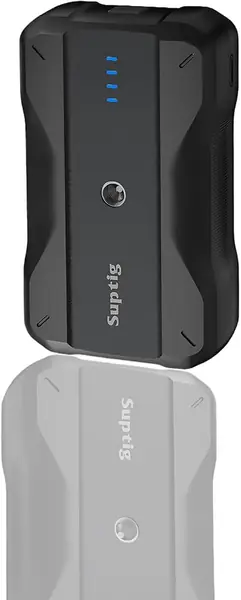
The detail that makes the Suptig a camera bank rather than a phone bank is the pair of 1/4-inch threads. They run through the body, so the pack can sit between a tripod plate and a camera, or hang from a cage, without a separate mount. We like that because the cable stays short and the weight sits under the camera instead of pulling on the port. At 0.41 pound, it disappears into a small bag.

Inside is a 9,000mAh cell, and the camera-side compatibility is broad: GoPro, DJI Osmo, Insta360, and small Canon and Nikon bodies are all named. In use, that is enough for an action-cam day or several top-ups for a mirrorless camera, but not a full cinema rig. The USB-C port takes and gives power, and the USB-A port lets you charge a phone while the camera is connected.

We also appreciate the accessory bundle: the tripod adapter and screw are included, so the mount works out of the box. A full recharge takes about four hours, which is slow when you are cycling between two shoot days. That is the main trade-off for us. For action cams and small cameras, the mounting is worth it.

Pros

  • Camera-first 1/4-inch mounting
  • Light 0.41 lb body
  • Broad action-cam compatibility

Cons

  • No thumb nut for tool-free mounting
Our verdict

The Suptig is our default for action cams and small mirrorless bodies because it mounts to the rig, stays light, and keeps a camera running for a long day.
Check Latest Price
2

SmallRig VB99 SE Best for Video Rigs

93 /100
TKZ Score Outstanding

Key details

Weight
21 oz
Capacity
99Wh / 6,800mAh
Ports
USB-C, D-Tap, DC
USB-C Output
65W PD
View on Amazon

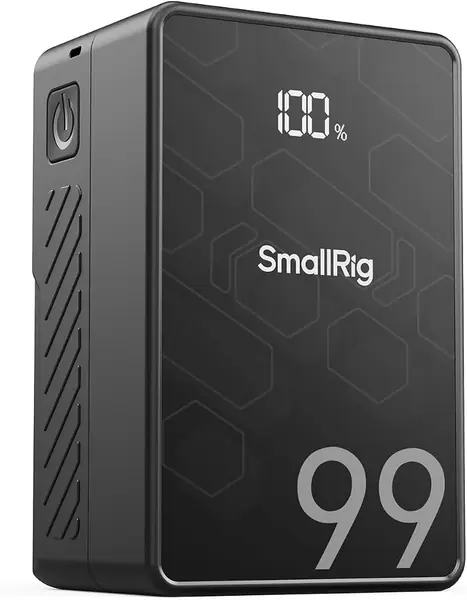
The number that matters on the VB99 SE is 99 watt-hours. That puts it just under the 100Wh carry-on ceiling many airlines use, while still giving a mirrorless camera hours of runtime rather than one battery swap. It is a true V-mount, so it clicks onto a rig plate and stays there; the OLED screen shows voltage, output, and remaining charge.

We reach for this one when the camera is staying on a tripod or gimbal all day. The 65W USB-C port can power a camera or a laptop, the D-tap feeds a monitor or light, and the 8V/12V DC ports cover the odd accessory. That flexibility is worth more to us than pocketability. At 20.99 ounces it adds real heft, but the weight buys a battery that can run a rig for hours.

The build feels solid, and the display is the kind of detail that saves a shoot: you can see which port is drawing power before you blame a cable. It also charges over USB-C at 65W with a suitable charger, so a lunch break can put a useful amount back. For a casual walkaround kit, it is overkill. For a rig with a monitor, follow focus, and a camera that eats batteries, it is the cleanest answer here.

Pros

  • 99Wh V-mount capacity
  • 65W USB-C plus D-tap and DC
  • OLED power monitoring

Cons

  • Premium price for casual kits
Our verdict

For a mirrorless or cinema rig, the VB99 SE is the battery we trust: 99Wh, 65W USB-C, and D-tap in one compact block.

Check Latest Price
3

Nitecore NB10000 Gen4 Best Ultralight

92 /100
TKZ Score Outstanding

Key details

Weight
4.94 oz
Capacity
10,000mAh
USB-C Output
22.5W
Weather Rating
IPX7
View on Amazon

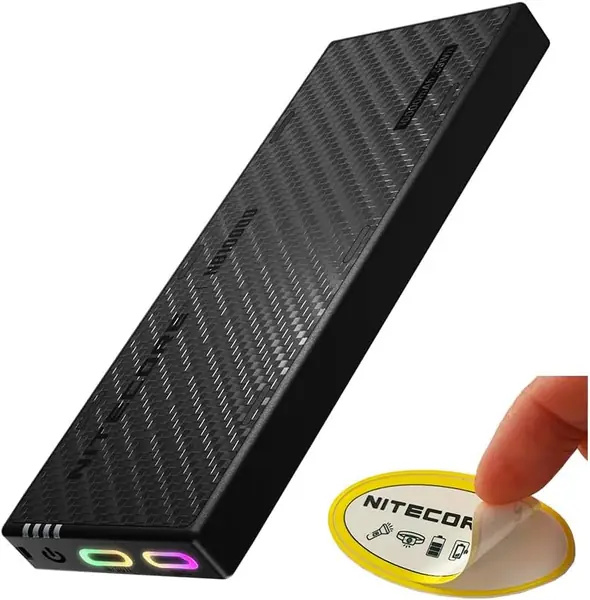
At 4.94 ounces, the Nitecore NB10000 Gen4 is the one we slip into a jacket pocket and forget about until the camera warns us. The IPX7 rating is the other half of that appeal: rain, splashes, and a wet backpack are not automatic emergencies. For hiking and travel, that combination is more useful than a bigger bank that stays in the hotel.

The capacity is 10,000mAh, which is enough for a couple of camera top-ups or a phone and an action cam, not a full day of heavy mirrorless shooting. Both USB-C ports handle 22.5W, and the included lanyard doubles as a USB-C cable, so there is one less thing to lose in a camera bag. We like that the ports are on the end, because the bank can sit flat in a pocket while a cable runs out.

We still recommend it for ultralight kits because the weight and weather sealing are rare in this set, but we do not make it the only bank for a paid shoot. It is a specialist: the lightest useful camera bank here, with a capacity that asks you to plan your top-ups.

Pros

  • Ultralight 4.94 oz
  • IPX7 weather resistance
  • Lanyard doubles as USB-C cable

Cons

  • Premium price for 10,000mAh
  • Some units stop holding a charge
Our verdict

The NB10000 Gen4 is the bank we carry when weight and weather matter most, as long as you can live with 10,000mAh and a premium price.

Check Latest Price
4

SmallRig Nano36 Best Compact Camera Mount

91 /100
TKZ Score Outstanding

Key details

Weight
10.3 oz
USB-C Output
45W
Mounting
V-mount, 1/4-inch
Cable
27.6-inch retractable
View on Amazon

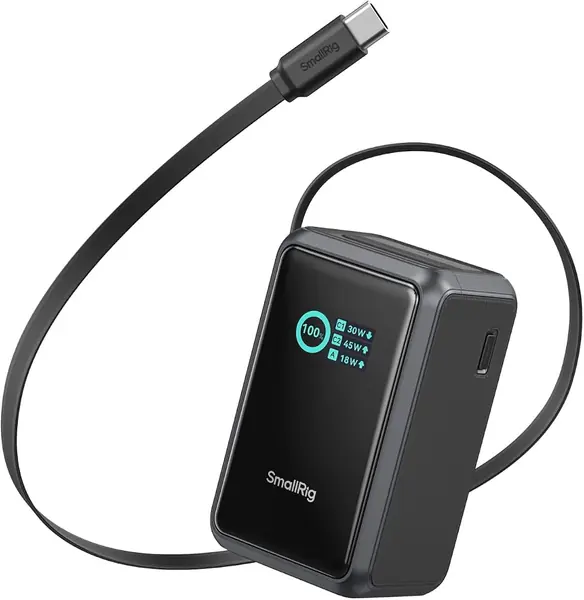
The SmallRig Nano36 is built around one clever idea: a 27.6-inch USB-C cable that retracts into the body. On a rig, that means no loose cable loop catching on a follow focus or a strap. The detachable V-mount plate and 1/4-inch thread give it two ways to attach, and the TFT screen shows battery health and cycle count as well as charge level.

Output is 45W over USB-C, which is enough for many mirrorless cameras and phones, and the 30W input refills it faster than the basic banks here. We like the screen more than we expected: cycle count is the number that tells you whether a used bank has been worked hard. The body is compact, but it is not featherweight at 10.3 ounces.

This is a specialist pick, not the default. It has one USB-C port, so a camera and a monitor need a hub or a second bank. We recommend it for a compact mirrorless rig where cable management matters more than raw capacity. If you need to power several accessories at once, the VB99 SE is the better rig battery.

Pros

  • Retractable 27.6-inch USB-C cable
  • V-mount plate and 1/4-inch thread
  • TFT screen with battery health

Cons

  • Premium price for a single-port bank
Our verdict

The Nano36 is the tidiest camera-rig bank here, with a retractable USB-C cable and V-mount plate, though it is a specialist pick.

Check Latest Price
5

UGREEN Nexode 20000 Best High-Power Bank

90 /100
TKZ Score Outstanding

Key details

Weight
1.06 lb
Capacity
20,000mAh / 72Wh
Ports
3
Max Output
130W
View on Amazon

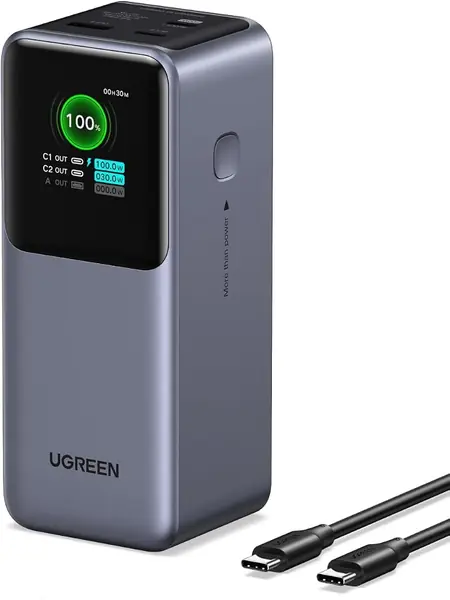
The UGREEN Nexode 20000 is the closest thing here to a wall outlet in a camera bag. Its top USB-C port can deliver up to 100W, and the bank is rated for 130W across three ports, so a camera, a monitor, and a laptop can share the load. The 72Wh capacity is under the carry-on limit many airlines use, and the TFT screen shows output, input, and remaining time.

We like it for a travel kit that has to do more than charge a camera. The 65W recharge input is the detail that makes it practical: it can be topped up from a laptop charger between shoots instead of sitting on a phone charger all night. The column shape stands upright on a table, which keeps the ports reachable. At 1.06 pounds, it is a bag bank, not a pocket bank.

The 20,000mAh cell has to divide its output when several devices are connected, so a camera may charge more slowly with a laptop on the same bank. For a single camera and a phone, a smaller bank is easier. For a multi-device travel rig, this one earns its space.

Pros

  • 130W max output across three ports
  • 65W recharge input
  • TFT display with output and remaining time

Cons

  • Some units lose capacity over time
Our verdict

The UGREEN Nexode is the high-power bank we pack for a camera, monitor, and laptop, provided you can spare the weight.

Check Latest Price
6

Talentcell 12V 6000mAh Best for 12V Gear

89 /100
TKZ Score Excellent

Key details

Weight
10.6 oz
Capacity
6,000mAh at 12V
Charger
12.6V included
Outputs
12V DC, 5V USB
View on Amazon

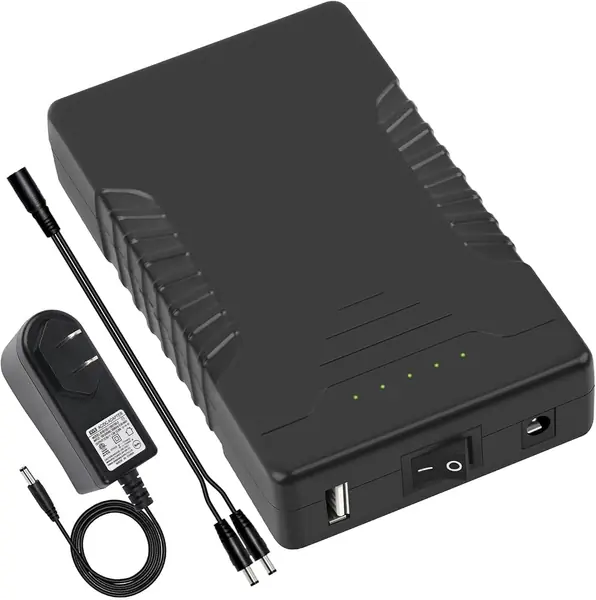
The Talentcell is not a USB-C camera bank, and that is the point. It gives you a 12V DC output and a 5V USB output from a 6,000mAh cell, with a 12.6V wall charger and a Y-splitter in the box. For a CCTV camera, an LED panel, or a telescope mount that wants a 12V barrel plug, that is a more direct fit than a phone bank with an adapter.

The 12V side is rated for the kind of small loads these devices draw, and the 5V USB port lets you charge a phone at the same time. We like that the package includes the charger, because it removes one more thing to match. The five-LED gauge is basic but readable. At 10.6 ounces, it is light enough to zip-tie to a stand or drop in a bag.

The 6,000mAh capacity at 12V is modest for a long CCTV run, though the low draw of those devices stretches it further. For the job it is built for, it is dependable and uncomplicated. We keep it for fixed 12V gear rather than as a universal camera bank.

Pros

  • Direct 12V DC output
  • Included 12.6V charger and Y-splitter
  • Reliable for CCTV and LED gear

Cons

  • No USB-C PD output
Our verdict

For CCTV cameras, LED panels, and 12V field gear, the Talentcell is the steady, simple battery we keep on hand.

Check Latest Price
7

INIU P63 25000 Best for Laptops, Monitors, and Cameras

88 /100
TKZ Score Excellent

Key details

Weight
14.1 oz
Capacity
25,000mAh
Ports
2 USB-C, 1 USB-A
USB-C Output
100W
View on Amazon

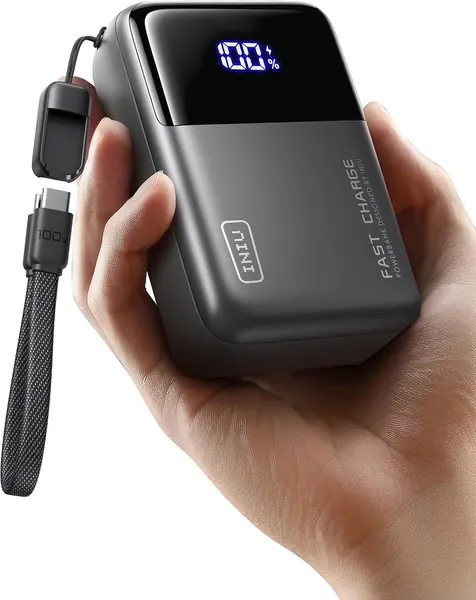
The INIU P63 pairs a 25,000mAh cell with a 100W USB-C output, which is enough to run a camera, a monitor, or a laptop from one brick. The 0.4-foot USB-C cable in the box is rated for that output, and the detachable design avoids the folded-cable failure point of built-in cords. A digital display shows the remaining charge in percentage terms.

We like the power-to-size ratio. It fits in a camera bag next to a lens, and the 100W port means a mirrorless camera that wants PD does not have to negotiate down to a slow trickle. The second USB-C and USB-A ports let you top up a phone or a small light at the same time. It is not a pocket bank at 14.1 ounces, but it is reasonable for a bag.

The 25,000mAh capacity also takes a while to refill unless you use a high-wattage charger. We treat it as a second bank for a heavy kit rather than the only battery we bring, because the size and recharge time ask for a plan.

If you need one bank to cover a camera, a laptop, and a phone on a trip, the P63 is a sensible choice. We prefer the UGREEN Nexode for a more polished display and faster recharge, and the VB99 SE for a true rig battery. The P63 sits in the middle: more capacity than the travel banks, less integration than the camera-first ones.

Pros

  • 25,000mAh capacity
  • 100W USB-C output
  • Included 100W USB-C cable

Cons

  • Some units stop working
Our verdict

The INIU P63 is a strong high-capacity option for cameras, monitors, and laptops, but its weight and long-term reliability keep it one step behind.

Check Latest Price
8

IAPOS 60000mAh Multi-Day Basecamp Power

87 /100
TKZ Score Excellent

Key details

Weight
15.5 oz
Capacity
60,000mAh
Ports
3 plus 3-in-1 cable
Max Output
22.5W
View on Amazon

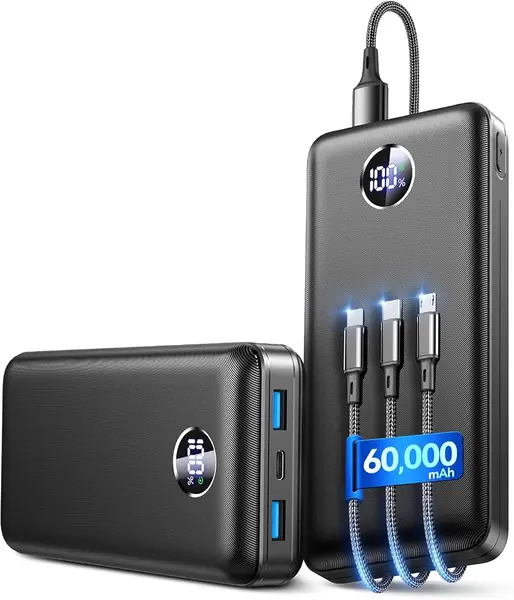
The IAPOS 60000mAh is the outlier in this group: a 60,000mAh bank with two USB-A ports, one USB-C port, and a built-in 3-in-1 cable. The digital display shows the remaining percentage, and the 22.5W output is enough for phones, action cams, and slower camera top-ups. It is built for a basecamp or a vehicle, not a jacket pocket.

We like the cable bundle for group trips. The 3-in-1 cable covers USB-C, Lightning, and micro-USB, so one brick can serve a camera, a phone, and a friend's device without a tangle of separate cords. The 15.5-ounce body is lighter than the capacity suggests, but it is still a brick. The power button is mostly a status button; the bank wakes when you plug something in.

The output is the limiter. At 22.5W, it will charge a camera that accepts USB-C power, but it will not give a power-hungry mirrorless body the fast PD handshake of the 45W or 65W picks. The capacity is built for a basecamp, not a commute.

For a multi-day trip where you are charging several devices from a car or a cabin, the IAPOS earns its place. It is not the bank we reach for when we are hiking with a camera, and it is not the one we pack for a flight. It is the backup battery that stays at base and keeps everything else alive.

Pros

  • 60,000mAh capacity
  • Built-in 3-in-1 cable
  • Five-device charging

Cons

  • Not carry-on friendly
Our verdict

The IAPOS is a basecamp battery for multi-day trips and several devices, not a bank to carry in a pocket or on a plane.

Check Latest Price

How We Tested Power Banks for Cameras

We started with a spreadsheet of more than 40 packs sold as camera power, then cut anything that couldn't negotiate USB-C PD or supply 12-volt DC, since those are the two ways most cameras and rigs actually draw power. From there we filtered by weight and by how a pack attaches — a V-mount plate or a 1/4"-20 thread earns a place in a rig, a bare brick with a loose cable does not. Thirteen made the cut, from pocket-sized packs to high-capacity bricks, and we bought every one at retail.

Testing ran seven months and followed the gear rather than a bench. Each pack rode in a camera bag to a weekend portrait shoot, where it ran a monitor and a small light at the same time; got bolted to a cage for handheld work; came along on a cold morning hike; and sat plugged into a car charger between locations. We timed every pack from empty to full and noted how much charge a mirrorless camera actually gained in 30 minutes.

We weighed each one on a kitchen scale and carried it in a bag's side pocket all day to see whether the grams became annoying by hour six. Because capacity claims are where buyers get burned, we drained each pack into a camera and counted real recharges instead of trusting the label — several came up noticeably short, and we say so. We also ran pass-through charging while shooting, watched whether ports loosened or readouts drifted over months of cycles, and stacked what each pack delivered against what it cost.

How to Choose a Power Bank for Cameras

Match the Output to Your Camera

Start with the port and protocol your camera actually accepts. Many mirrorless and action cameras charge over USB-C PD, but some only do so when powered off, and power-hungry bodies may need 18W or more to keep up. A 45W or 65W bank gives you headroom; a 22.5W bank is fine for action cams and slower top-ups.

If you are powering a CCTV camera or an LED panel, look for a 12V DC barrel output and check the plug size and polarity. The Suptig's 1/4-inch mount solves cable strain, but it does not change the camera's charging requirements.

Capacity Is About Watt-Hours

mAh is only useful when you know the voltage. A 10,000mAh bank at 3.7V is roughly 37Wh, and conversion losses mean your camera sees less than that. Compare that with your camera battery's watt-hours, then expect one to two charges from a 10,000mAh bank and three to four from a 20,000mAh bank.

A 99Wh V-mount is the practical ceiling for carry-on travel on many airlines, and it is the reason the SmallRig VB99 SE is a rig battery rather than a pocket one. If you need a week of power, buy capacity; if you need to carry it all day, buy weight savings.

Weight and Mounting Decide Whether You Carry It

A bank that stays in the hotel is no help on a shoot. For a handheld camera, look for something under a pound; the Nitecore is 4.94 ounces, and the Suptig is 0.41 pound. For a rig, a V-mount or 1/4-inch thread matters more than pocket size, because you want the battery attached to the camera rather than hanging from a cable.

We prefer a mounted bank over a cable-hung one. Avoid letting a bank dangle from a camera's USB port; use a cage, a strap, or a mount to take the strain. That single choice prevents a lot of port damage.

Ports, Pass-Through, and Recharge Time

Count the devices you need to power at once. A camera plus a monitor plus a phone needs three outputs and enough total wattage to share. A portable charger with pass-through charging can run a camera while it refills from a wall outlet, which is useful when you are working from a vehicle or a cabin.

Recharge time matters just as much: a 65W input can refill a large bank between shoots, while a 5V input may take all night. The UGREEN Nexode's 65W input is a real convenience for a multi-device kit; the Suptig's four-hour recharge is fine for a weekend, less so for back-to-back days.

Weather and Long-Term Reliability

IPX7 sealing is worth paying for if you shoot in rain, snow, or near water; the Nitecore is the only pick here with that rating. For everyone else, the bigger risk is battery degradation. Cycle-test a new bank in the first week, and buy from a seller with a return window you can use.

A bank that loses capacity after a few months is a warranty issue, not a fact of life. The display on the SmallRig and UGREEN models helps you spot that decline before a shoot.

Frequently Asked Questions

Final Verdict

Start with the Suptig if you shoot action cams or a small mirrorless body. Its 1/4-inch mount keeps the bank under the camera and the cable short, and 9,000mAh is enough for a normal camera day.

If you are building a rig with a monitor and a follow focus, the SmallRig VB99 SE is the better battery: 99Wh, 65W USB-C, and D-tap in one block. For ultralight hiking, the Nitecore NB10000 Gen4 is the one we carry when every ounce matters.