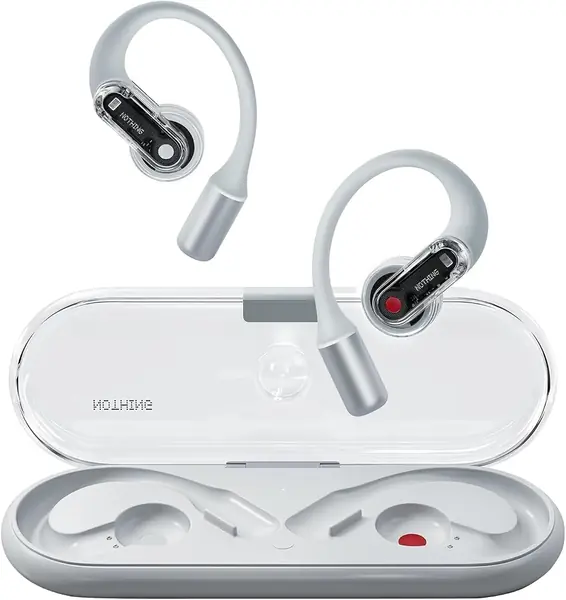
Best Nothing Earbuds of 2026

Bold design is the easy part. The worry with a pair of earbuds that looks unlike everything else on the shelf is that the see-through plastic and dotted stems are doing all the work, while sound, noise cancellation, and fit get whatever attention is left. The best ones in this family put the looks on top of real substance: full bass without muddy vocals, active noise cancellation that can quiet a bus, a comfortable seal that holds through a run, and controls that respond the first time.

I’ve spent the past eight months rotating 12 pairs through commutes, workouts, calls, and weekend trips, and the differences come down to the unglamorous stuff. Battery life that matches the claim, Bluetooth that reconnects without a fight, build quality that survives a pocket, and a fit that stays comfortable past the first hour matter more than a flashy case.

Value is the other dividing line: a few of these feel like a steal, and a couple feel like a design experiment with a driver inside. The picks below are the ones I’d actually keep using.

The Best Nothing Earbuds

1

Nothing Ear (3) Best Overall
89 /100
TKZ Score Excellent

Key details

Battery With Case
38 hours
Noise Cancellation
Up to 45 dB
Bluetooth
5.4
Driver
12 mm dynamic
View on Amazon

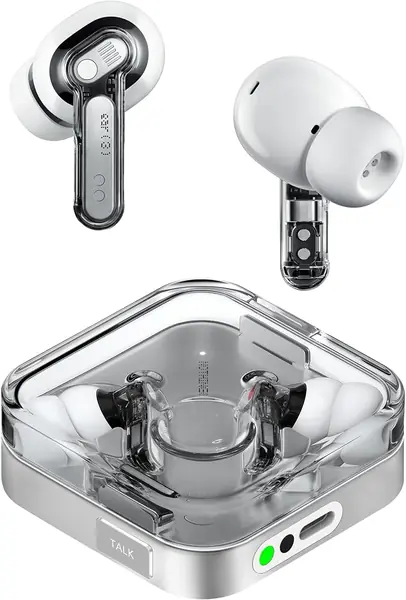
There are microphones in the Ear (3)'s charging case. Hold the case up near your mouth, press the TALK button, and it takes over from the buds, filtering the street or the café out of your voice. It sounds like a novelty until the first call you take on a windy corner, and after that it's the reason you reach for this pair instead of the other sets in the drawer.

The rest of the package backs it up. The 12 mm driver gives kick drums and basslines real weight without burying vocals, 45 dB of adaptive cancellation keeps re-checking the seal and adjusting rather than just hissing harder, and the Nothing X app hands you EQ and Ultra Bass sliders for tuning it your way. Of everything on this list, this is the set with the fewest things to forgive — and that's why it leads.

Longevity is where to be deliberate. A pair can go quiet after four months, and Bluetooth dropouts turn up too, so we treat the return window as part of the purchase. Buy from a seller with a real one and give the buds a hard first week of calls, runs, and pocket time.

The case is the quiet win: wireless charging, 70 minutes to full, and a denser, better-damped feel than the plastic CMF boxes. It's the sort of detail you notice every day rather than once.

Pros

  • Most complete sound and noise package here
  • Charging case doubles as a handheld mic
  • Secure, comfortable fit during activity

Cons

  • 38-hour total playtime trails cheaper CMF models
  • Top price in this lineup
Our verdict

We recommend the Ear (3) as the default Nothing earbud: the most complete sound-and-noise package here, plus a charging case that doubles as a handheld microphone.
Check Latest Price
2

Nothing Ear (3a) Best for Calls and Recording

88 /100
TKZ Score Excellent

Key details

Battery With Case
42 hours
Noise Cancellation
Up to 45 dB
Bluetooth
6.0
Driver
12 mm dynamic
View on Amazon

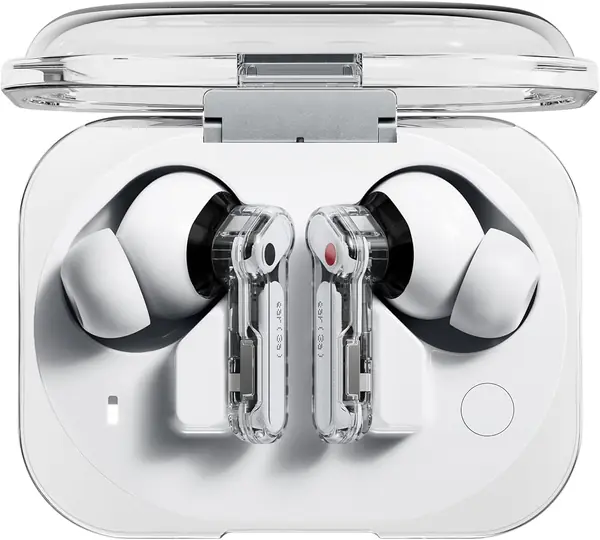
The Ear (3a) is the Ear (3) with a different party trick and a smaller bill. Out goes the microphone in the case; in come Bluetooth 6.0, a recording feature the flagship doesn't have, and the same 45 dB of wideband cancellation and 12 mm driver.

Audio Snapshot is the reason to pick it. The buds save up to a minute of whatever you're listening to, or up to two hours of a call, without a phone in the loop — so the meeting you half-heard on the train is still there when you sit down at your desk. Call recording, six mics, and wideband cancellation make this the set for people who talk for a living.

For us it lands as the working professional's pick, and not only because of the recorder. Four ear tip sizes starting at extra small do a lot of the comfort work, and the whole kit weighs 40.9 g against the flagship's 71.4 g, so a long day in them leaves less of a dent.

Pros

  • Records calls and audio without a phone
  • Bluetooth 6.0 with 45 dB wideband ANC
  • Four tip sizes in a light 41 g kit

Cons

  • Pinch controls need configuring before they feel natural
Our verdict

Buy the Ear (3a) if your earbuds are work equipment: it records calls and audio straight to the buds, runs Bluetooth 6.0, and costs less than the flagship.

Check Latest Price
3

Nothing Ear (a) Best Value

87 /100
TKZ Score Excellent

Key details

Battery With Case
42.5 hours
Noise Cancellation
Up to 45 dB
Bluetooth
5.3
Driver
11 mm dynamic
View on Amazon

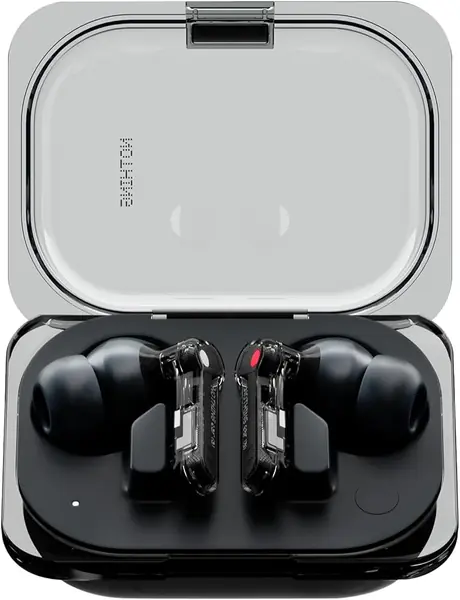
The Ear (a) is where Nothing's own lineup starts, and the savings show in the expected places: an older Bluetooth version, a smaller driver, a plastic case with none of the flagship's heft. What doesn't get cut is the part that matters — 45 dB of adaptive cancellation that checks the seal between bud and canal and compensates when it slips.

We keep pointing people here for the bass. Nothing doubled the driver power over the Ear (2) in the same 11 mm package, and the low end hits hard without turning vocals to mush; the app's equalizer is there for tracks that overdo it. The quick charge is the other quietly great bit: ten minutes in the case is quoted at ten hours of playback with cancellation off, which covers a forgotten charge before a commute.

Buy it knowing that charging is where this model has stumbled. One bud can stop taking a charge after a few months, and the case contacts are the usual suspect. That's a warranty conversation rather than a reason to skip the pair — keep the receipt and buy from a seller that honors the coverage.

Pros

  • 45 dB adaptive ANC with seal compensation
  • Deep bass from an 11 mm driver
  • 10-minute charge covers a commute

Cons

  • Ear tips can work loose in smaller ears
  • Comfort fades after an hour or so
Our verdict

The Ear (a) is the Nothing earbud for a tight budget: real 45 dB cancellation, an 11 mm driver with genuine low end, and the same app as the flagship.

Check Latest Price
4

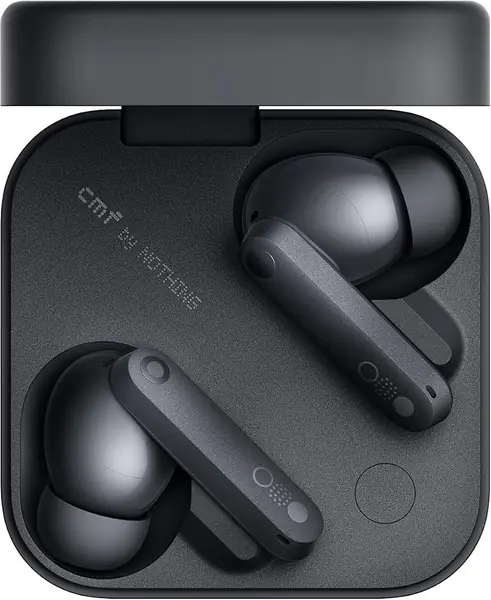
CMF Buds Pro 2 Best Case Controls

86 /100
TKZ Score Excellent

Key details

Battery With Case
43 hours
Noise Cancellation
Up to 50 dB
Audio Codec
LDAC
Drivers
11 mm bass + 6 mm tweeter
View on Amazon

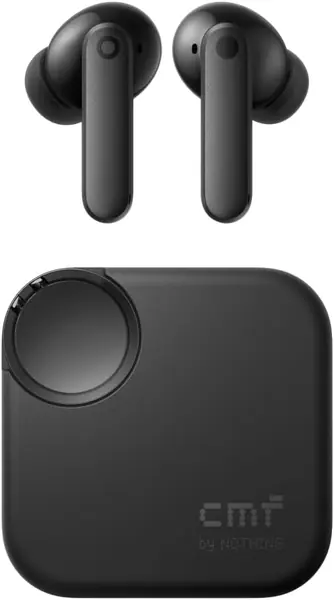
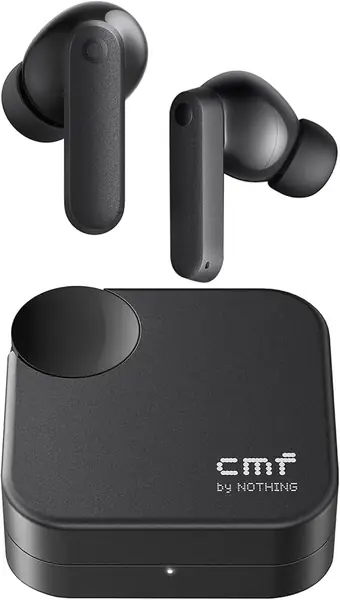
A dial on the charging case sounds like a solution to a problem nobody has, right up until your hands are full and you want the volume down. Spin it, press it to cycle noise modes, and the buds never get touched — no accidental pause, no shoving a bud deeper to find the panel. It's the best control scheme in this lineup, and it's why the Buds Pro 2 earns its place.

The hardware behind the dial holds up. Dual drivers — an 11 mm woofer crossed with a 6 mm tweeter, tuned by Dirac — give it a punchier low end than the Nothing-branded sets, and 50 dB of adaptive hybrid cancellation is the deepest here alongside the Buds 2 Plus. LDAC matters if you stream lossless from an Android phone, and the app's EQ is where you tame the bass if it's too much out of the box.

The caveat is durability. Pairs can stop working after a couple of months, and Bluetooth dropouts show up as well, so buy where returns are simple and register the warranty on day one. Forty-three hours with the case and a ten-minute top-up for three hours means charging is the least of your worries.

Pros

  • Case dial for volume and noise modes
  • 50 dB ANC and dual drivers at a budget price
  • 43 hours total with quick top-ups

Cons

  • Control mapping is limited in the app
  • Fit varies between ear shapes
Our verdict

We recommend the Buds Pro 2 to anyone who fiddles with volume constantly: the case dial handles it, and 50 dB cancellation plus LDAC comes at a budget price.

Check Latest Price
5

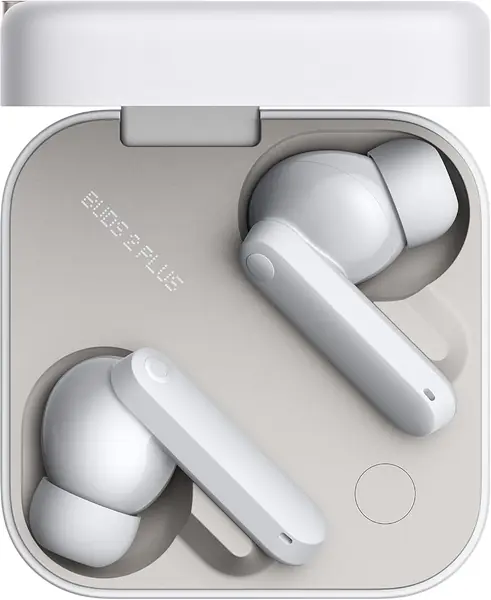
CMF Buds 2 Plus Best for Workouts

85 /100
TKZ Score Excellent

Key details

Battery With Case
61.5 hours
Noise Cancellation
Up to 50 dB
Water Resistance
IP55
Audio Codec
LDAC
View on Amazon

If your earbuds live in a gym bag, start here. IP55 is the highest sealing rating in this group — dust-tight and unbothered by sweat or rain — and the case is a 5.3 cm square that vanishes into a pocket. That combination is what most people actually need from a workout pair, and nothing else here matches both halves of it.

The rest of the sheet is built for long sessions: 61.5 hours with the case, 8.5 hours from a ten-minute charge, 50 dB of adaptive cancellation with wind noise reduction, and 12 mm LCP drivers with LDAC. Personal Sound runs a short hearing test and builds an EQ profile around the result, which is unusual at this end of the lineup.

The wireless link is the weak point. Connections drop, and they drop more often than on the Nothing-branded sets here, so give it a hard first week while returns are open. Past that, the battery is so far ahead of the rest that you'll forget where the charger is.

Pros

  • IP55 sealing for sweat, rain, and dust
  • 61.5 hours total with fast top-ups
  • LDAC and 12 mm drivers for detail

Cons

  • Left-ear ANC can cut out
  • Fit takes trial and error with tips
Our verdict

For training and long days outside, the Buds 2 Plus is our pick: IP55 sealing, 61.5 hours total, and LDAC detail in a case that fits a shorts pocket.

Check Latest Price
6

CMF Buds 2 Best Battery Life

84 /100
TKZ Score Excellent

Key details

Battery With Case
55 hours
Noise Cancellation
Up to 48 dB
Bluetooth
5.3
Single Charge
13.5 hours
View on Amazon

Thirteen and a half hours is how long one charge lasts in the buds themselves — not the case total, the number that decides whether they die during a double shift or a long flight. That's the figure we weigh hardest in a cheap pair, because a case is easy to top up and a dead bud at hour nine is not.

It isn't a one-trick set. 48 dB of hybrid cancellation across a wide frequency band, an 11 mm driver tuned by Dirac, spatial audio, in-ear detection that pauses when you pull one out, and six mics with wind reduction for calls — all in a case barely bigger than the ones on the pricier CMF models.

The place it lags the newer sets is Bluetooth 5.3 rather than 5.4 or 6.0, which shows up as a little more latency in games and a link that thins out through two walls. For music and calls it's a non-issue.

Pros

  • 13.5 hours per charge, 55 with the case
  • 48 dB hybrid ANC with wideband coverage
  • In-ear detection and Dirac tuning at a low price

Cons

  • A pair can stop working within weeks
  • Touch panels trigger by accident
Our verdict

If charging is the chore you want gone, the CMF Buds 2 wins: 13.5 hours in the buds themselves and 55 with the case, at a budget price.

Check Latest Price
7

CMF Buds 2a Cheapest ANC Entry

83 /100
TKZ Score Excellent

Key details

Battery With Case
35.5 hours
Noise Cancellation
Up to 42 dB
Driver
12.4 mm dynamic
Water Resistance
IP54
View on Amazon

Forty-two decibels is the lightest cancellation among the in-ear sets here, and that's the honest way to read the Buds 2a: it gets you Nothing's sound and app, not Nothing's silence.

What the spec sheet does deliver is a 12.4 mm bio-fiber driver with Dirac tuning — the largest driver in this group — plus IP54 sealing, Bluetooth 5.4, four mics with wind reduction, and the same Nothing X app as the flagships, EQ and bass sliders included. Eight hours on a charge, and ten minutes in the case puts 5.5 back.

Where it gives ground is stamina. 35.5 hours total is the shortest here, and the case takes 89 minutes to fill where most of the others are done in about 70.

For a second pair that lives in a bag or a desk drawer, that trade is easy. The driver size is why the 2a doesn't read as the cheap one, and losing a pair this inexpensive stings less than losing a flagship. As an only pair, the step up to the Ear (a) adds real cancellation depth.

Pros

  • 42 dB ANC for the least money here
  • Largest driver in this group at 12.4 mm
  • IP54 sealing and Bluetooth 5.4

Cons

  • Shortest total playtime in this set
  • Slowest case recharge here
Our verdict

The Buds 2a is the cheapest sensible way into Nothing's app and tuning: 42 dB cancellation, the biggest driver in this group, and IP54, with 35.5 hours in the case.

Check Latest Price
8

Nothing Ear (Open) Best for Awareness While Moving

82 /100
TKZ Score Excellent

Key details

Battery With Case
30 hours
Bluetooth
5.3
Water Resistance
IP54
Design
Open-ear ear hooks
View on Amazon

On a bike path, the Ear (Open) makes its case in seconds: the music sits outside the ear canal, so the car behind you is audible long before it's visible. That's not a compromise for the people this is built for — it's the whole reason to own it instead of a sealed pair.

The hardware earns its keep. Each hook weighs 8.2 g, tilts 50 degrees, and balances at three points, which is why an afternoon in them doesn't leave the top of your ear sore. A stepped driver with a titanium coating handles the low end, and an isolation system keeps most of what you're playing from spilling into the room.

Two practical risks. Pairing is stubborn with some devices, so set them up before you need them, and battery runs 30 hours with the case and 8 in the buds — on the low side for this group.

Then there's the trade that decides it: no cancellation at all. On a plane, a packed train, or a loud open-plan floor you'll hear every bit of it, and turning the volume up is the wrong fix. As a companion to a sealed pair — the set you grab for a ride or a shared office — it's excellent.

Pros

  • Stays comfortable through long rides
  • Keeps traffic and coworkers audible
  • 30 hours total with an 8-hour charge

Cons

  • Rigid hooks don't suit every ear
Our verdict

We recommend the Ear (Open) to runners, cyclists, and anyone working with an ear on the room: 8.2 grams per side and hooks that stay put through a long ride.

Check Latest Price

How We Tested This Earbud Lineup

We started by pulling every current model in this family we could find, then narrowed the shortlist by price tier, case size, claimed battery life, and whether the model offered active noise cancellation and a dual-device connection. That left 12 pairs to test over eight months. We wore each pair for at least a week of normal life: subway and bus commutes, open-plan office hours, lunchtime runs, grocery-store errands, and two weekend trips.

Sound quality was judged on familiar tracks across hip-hop, acoustic folk, and orchestral recordings, listening for muddy bass, sharp treble, and whether vocals stayed clear at higher volumes. For noise cancellation, we stood at a busy intersection, sat beside an HVAC vent, and rode a train, noting what disappeared and what cut through. Fit and comfort got a two-hour wear session with every included ear tip, plus a head-shake and stair-run check; we also noted whether the case slipped into a jeans pocket and whether the finish picked up scuffs.

Battery life was timed from a full charge with ANC on, not taken from the box. We paired each pair to a phone and a laptop to test dual-device switching, walked 30 feet from the source to see where Bluetooth dropped, and counted failed reconnects after a few days in the case. Controls were tested with dry hands and gloved hands, tapping through play, pause, skip, and call answer.

Value came last: after all that, would we pay for them ourselves? That question eliminated a few pairs that looked good on paper but felt like a compromise in daily use.

How to Choose Nothing Earbuds

Decide How Much Silence You Want

Cancellation depth here runs from 42 dB to 50 dB, and every in-ear set except the CMF Buds 2a is rated 45 dB or more. Treat the number as a ceiling rather than a promise: it assumes a sealed ear canal, which is why the same pair can feel transformative on a flight and useless in a crosswind. The higher-rated CMF models and the Nothing flagships give you the most headroom in traffic and aircraft noise.

If awareness matters more than silence — running, cycling, an office where people tap your shoulder — the Ear (Open) is the honest choice, and it blocks nothing at all. Buying an in-ear pair and leaving transparency mode on gets you a similar result with worse comfort.

Read the Single-Charge Figure, Not Just the Case Total

Case totals in this group run from 30 hours to 61.5 hours, which is a satisfying spec-sheet number and a slightly misleading one. What decides whether a bud dies mid-flight is the per-charge figure, and only some models publish it: 13.5 hours for the CMF Buds 2, 8 hours for the Buds 2a and the Ear (Open). Where a maker quotes the total only, read the quick-charge claim instead — ten minutes buys anywhere from three to ten hours depending on the model.

Work shifts, long flights, and forgetful charging justify chasing the biggest single-charge number. A twenty-minute commute does not, and the case total will cover you comfortably.

Fit Is Not a Detail, It's the Product

Cancellation, bass, and comfort all run through the seal, and the seal depends on a tip that matches your ear. The Ear (3a) ships four sizes from extra small up and the CMF models include three. The usual failure is a tip that is too big: it feels secure for ten minutes, then aches, then works loose when you talk. Start smaller than you think you need and move up only if the bass thins out.

Open-ear designs replace the tip with a hook, which trades adjustability for awareness — a rigid hook either matches your ear or it doesn't, and there's no fixing it. Give any new pair a full week before you decide, and keep the box until then.

Controls Decide Whether You'll Actually Use Them

Touch panels on the buds are the default and the most common source of small daily irritation: adjusting a bud pauses a track, a scarf changes the volume, a hat ends a call. The CMF Buds Pro 2 sidesteps most of it with a dial on the case for volume, tracks, and noise modes, and we rate that the best control scheme in this lineup.

Elsewhere the Nothing X app handles remapping, though the available gestures are narrower than you might expect. If you change volume constantly, pay for the dial. If you set levels once and forget them, spend the difference on fit.

Frequently Asked Questions

Final Verdict

We recommend the Nothing Ear (3) for most people. It is the most complete earbud in this lineup — strong sound, 45 dB of cancellation that adjusts to a shifting seal, and a fit that holds through a run — and the microphone in its charging case is a real tool rather than a bullet point.

If your earbuds are work equipment, the Ear (3a) records calls and costs less, which makes it the one we point at anyone who spends the day in meetings. If the thing that annoys you about earbuds is charging them, the CMF Buds 2 turns that into a weekly chore instead of a daily one.