Best Earbuds for Motorcycle Riding

Wind roar at highway speed is the loudest thing about riding, and it's why so many people finish a long day with their ears ringing. Earbuds are the obvious fix, except the ones that seal hard enough to kill the wind also seal out the traffic you actually need to hear.

I've been riding with music in my ears for years, and the failures are always the same: a bud pops loose at 50 mph, a gloved finger misses the control at a red light, the battery quits halfway home. My team spent nine months with 12 pairs working out which ones don't do any of that.

Here's what first-time buyers get wrong: sealing beats volume. A pair that blocks wind properly plays quieter and protects your hearing better than one cranked to maximum to fight the noise. The picks below cover active noise canceling, rated hearing protection, and open designs that leave an ear free — and every one of them earned its spot on the bike.

The Best Earbuds for Motorcycle Riding

1

TOZO NC9 Best Overall
89 /100
TKZ Score Excellent

Key details

Water Resistance
IPX8
Total Playtime
60 hours
Noise Control
Hybrid ANC to 45 dB, transparency mode
Call Microphones
6-mic ENC
View on Amazon

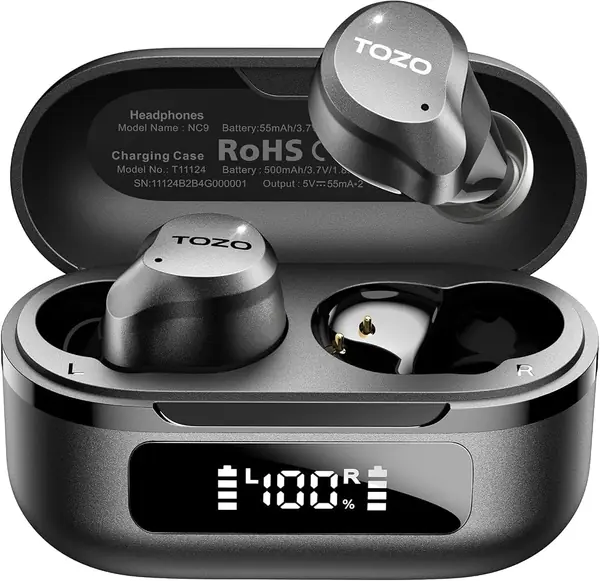
Wind is what actually wears you out on a bike, and it is what the NC9 is built to handle. TOZO rates the hybrid noise cancellation to 45 dB of reduction, lists wind-noise handling among its noise-control settings, and includes a transparency mode that puts horns and traffic back in the moment you slow down. Those are the two modes a rider actually toggles, and having both in a budget pair is why this one sits at the top of our list.

What keeps it there is the balance. The shell is a low-profile in-ear — TOZO sells these on the sleep-earbud shelf, and that shallow shape is what fits inside a helmet's ear pocket instead of pressing against the shell. The case is rated IPX8, so rain and sweat are not an emergency, and the listed 60 hours of total playback covers a weekend of riding between outlets. Bluetooth 5.3 with a 20-meter range gets you from the bike to the counter without dropping the connection. Nothing here leads this group on a single number, but nothing asks you to give something up either.

Seating them takes a little care. Push each bud in, roll the helmet on from the back rather than dropping it over your ears, and check the seal with a fingertip once the straps are fastened. A bud that has shifted forward is no longer sealing anything, and no amount of cancellation makes up for a leak.

The app earns its ten minutes. Adjustable bass and a stack of EQ presets do more for audibility at speed than another notch on the volume rocker, and staying out of that last notch is what protects your hearing over a decade of riding.

Pros

  • Hybrid ANC rated to 45 dB
  • Transparency mode for slow traffic
  • IPX8 case handles rain and sweat

Cons

  • Ear tips lose their seal as you sweat
  • Touch controls need a bare fingertip
Our verdict

We think the NC9 is the right first buy for most riders: it cuts wind noise, lets traffic back in with one tap, and shrugs off rain at a budget price.
Check Latest Price
2

Elgin Ruckus Best Earplug-Style for Highway Wind

88 /100
TKZ Score Excellent

Key details

Water Resistance
IP65
Playtime
12 hours
Controls
Physical buttons
Noise Reduction
25 dB NRR
View on Amazon

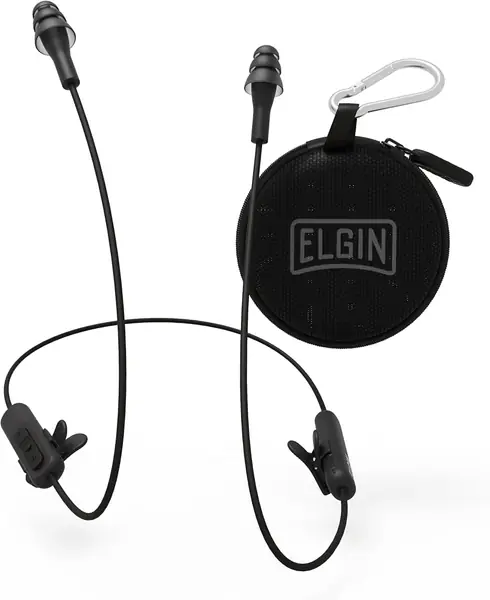
Twenty-five decibels is a different kind of number from the ones elsewhere on this page. The Ruckus is an ANSI-certified earplug first — 25 dB noise reduction rating — with a Bluetooth driver built in, so it lowers the noise at your ear rather than generating a canceling signal to fight it. On a motorcycle that distinction matters: a plug that seals cuts wind roar at the source, which lets you listen at a volume that will not cost you your hearing.

The controls are the detail we keep coming back to. Elgin uses physical buttons rather than a touch panel, and anyone who has tried to tap a bud through a winter glove will understand why that alone puts the Ruckus on this list. Add IP65 sealing that keeps out dust and sweat, 12 hours of playback per charge, and a build that expects to be treated badly, and it is the pair that suits a rider who is hard on gear.

Fit is where it loses ground to the others here. The Ruckus runs large, and on smaller canals it works its way loose — the fit complaints are specific and consistent. The soft tips are also the part that wears out first, so plan on them as a consumable rather than a lifetime component. If your ears take a full-size plug, none of that will bite; if they do not, a compact true wireless bud is the safer shape.

Pros

  • ANSI-certified 25 dB noise reduction
  • Physical buttons work through gloves
  • 12 hours per charge, IP65 sealed

Cons

  • Runs large for smaller ear canals
  • Soft tips wear through with daily use
Our verdict

For highway miles we point riders at the Ruckus: a genuine 25 dB earplug with Bluetooth inside, physical buttons, and 12 hours on a charge.

Check Latest Price
3

JLab Go Air Pop+ Best Budget

87 /100
TKZ Score Excellent

Key details

Water Resistance
Water resistant
Playtime
9+ hours per bud, 35 total
Bluetooth
5.3
Awareness Mode
Be Aware
View on Amazon

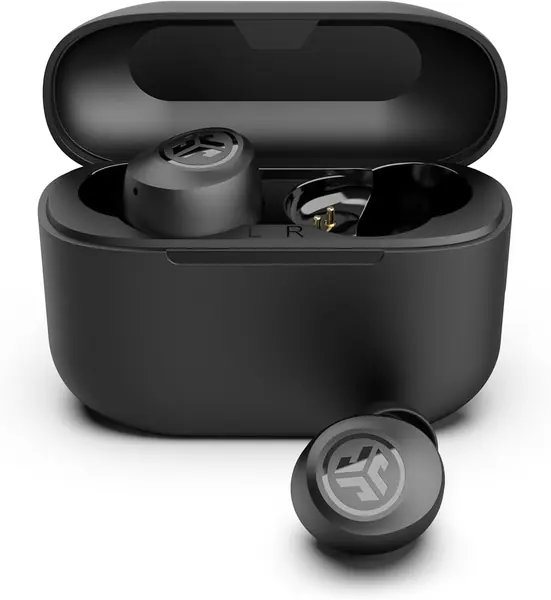
Cheapest here does not have to mean compromised, and the Go Air Pop+ is the pair we point to as proof. JLab's second-generation buds are 15% smaller and 40% lighter than the ones they replaced, and the case is smaller than a credit card — which, for anyone who has tried to close a helmet over a chunky bud, is the whole argument in a sentence.

You get an awareness mode JLab calls Be Aware, 9+ hours in each bud with another 26 in the case for 35 total, Bluetooth 5.3, and app-based EQ with touch controls. What you do not get is active noise cancellation, so wind is handled by the seal and by keeping the volume sensible. JLab rates them water resistant rather than waterproof, which is a fair summary of what a budget pair should promise.

We keep a pair of these in a jacket pocket for exactly the reason the price suggests: a bud that goes missing at a gas station is an annoyance rather than a loss. The small shell also seats deeper and more easily than the bigger buds in this group, and 9 hours per bud is more than a day of riding. Buy them as a second pair, a spare, or a low-risk first experiment with sound under a helmet.

Pros

  • Smallest shell in this group
  • Be Aware mode for traffic
  • 9+ hours per bud, 35 total

Cons

  • No active noise cancellation
Our verdict

We keep the Go Air Pop+ as the cheap spare: small enough to disappear under a helmet, with an awareness mode, for the price of a couple of tanks of fuel.

Check Latest Price
4

JBL Live Buds 3 Best for Calls

86 /100
TKZ Score Excellent

Key details

Water Resistance
Waterproof
Total Playtime
40 hours
Noise Control
Adaptive ANC
Call Microphones
6 beamforming
View on Amazon

Where the NC9 spends its money on quiet, the Live Buds 3 spends it on being heard. Six beamforming microphones are tuned to reduce wind and background interference on calls, and the adaptive noise cancellation runs off four noise-sensing mics. If you take work calls from a pull-off with trucks going past, that is the spec that decides the purchase, and nothing else here is built around it the same way.

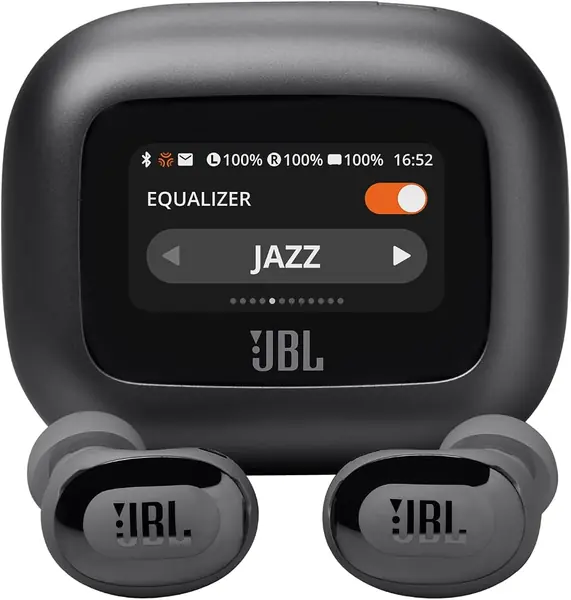
The charging case is the part we did not expect to care about. Its 1.45-inch touchscreen handles volume, EQ, and listening modes without pulling a phone out of a jacket at a light — no small thing with gloves and a helmet on. Leaving the phone pocketed is a real safety improvement on two wheels, and it is what makes the price defensible.

Battery is generous: 10 hours on a charge and 40 total with the case, plus multipoint so an incoming call interrupts a podcast instead of missing it entirely. Bluetooth 5.3 and a waterproof rating round it out. This is the pick for the rider whose bike is also their office, not for the one who wants the deepest possible silence.

Pros

  • Six mics tuned against wind on calls
  • Touchscreen case keeps your phone pocketed
  • Multipoint plus 40 hours total

Cons

  • Fit works loose when you sweat
  • Case charging is the weak link
Our verdict

If you take calls from the roadside, the Live Buds 3 pay you back: six beamforming mics fight wind on your voice, and the case means your phone stays in your jacket.

Check Latest Price
5

TOZO OpenEarRing City Awareness

85 /100
TKZ Score Excellent

Key details

Water Resistance
Water resistant
Total Playtime
40 hours
Bluetooth
5.4
Design
Open-ear clip
View on Amazon

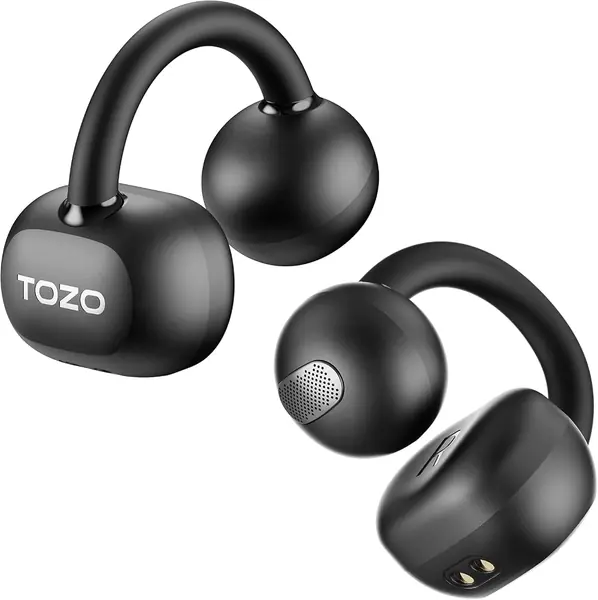
Some riders will not put anything in their ear canal, and the OpenEarRing is the pick for them. A ring clips around the outside of the ear and fires sound inward without plugging anything, which means traffic, horns, and engine note arrive as they should — the one form of awareness that does not depend on a mode you remembered to switch on.

The numbers are friendlier than an open design usually manages: 10 hours on a charge with 30 more in the case for 40 total, Bluetooth 5.4, water-resistant shells, and 32 EQ presets through the TOZO app. It also clips on and stays clipped, which is the thing that usually goes wrong with this shape.

The limiting factor is the helmet itself. A full-face liner and cheek pads sit right where the ring does, so it can shift as you pull the helmet on, and a tight lid may press it against your head. For town, back roads, and short hops in an open-face helmet, that question never comes up — which is exactly the riding this one is for.

Pros

  • Leaves the ear canal completely open
  • 40 hours total from a small case
  • Secure clip-on fit

Cons

  • Wind noise overwhelms it at speed
Our verdict

For town and short hops we like the OpenEarRing: nothing enters your ear canal, so traffic and your own engine stay audible — just do not expect it to beat highway wind.

Check Latest Price
6

Walker's Suppressor Best for Hear and Protect

84 /100
TKZ Score Excellent

Key details

Playtime
36 hours
Noise Reduction
25 dB NRR
App
Walker's Link
Ear Tips
Sure-Lock fins, three sizes
View on Amazon

The first thing to know about the Suppressor is that the app is not optional. Profiles, volume, and battery status all live in Walker's Link, and the profile has to be reselected when you want a different mode. On a range that is fine. At a red light with a helmet and gloves on, it is a phone you have to fish out of a jacket.

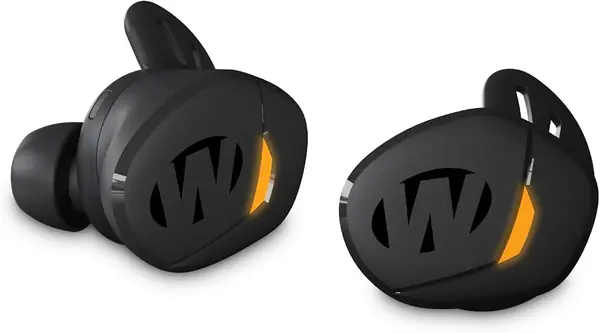
What you get in exchange is a genuinely different feature set. Sound-activated compression protects against impulse noise while letting ambient sound through, the rating is a real 25 dB NRR, and the fit kit is the most thorough here — three sizes of Sure-Lock fins and three sizes of memory foam tips. Battery is rated at 36 hours, and Bluetooth covers music and calls in between.

We rate this as the specialist pick rather than the default. Amplified awareness is an appealing idea for a rider who wants to hear a car coming up the inside, and the protection number is not marketing arithmetic; but app dependence and the highest price in this group make it a considered purchase. If protection plus amplification in one unit is the thing you have been looking for, it is the only pick here that does both.

Pros

  • 25 dB NRR with sound enhancement
  • 36 hours of battery
  • Deepest fit kit here

Cons

  • The priciest pick in this group
Our verdict

We recommend the Suppressor to riders who want traffic amplified rather than merely blocked, provided they can live with running the app before every ride.

Check Latest Price
7

PocBuds T60 Best for Loose Ear Canals

83 /100
TKZ Score Excellent

Key details

Water Resistance
IPX7
Playtime
8 hours per bud, 80 total
Controls
Single button
Drivers
13 mm dynamic
View on Amazon

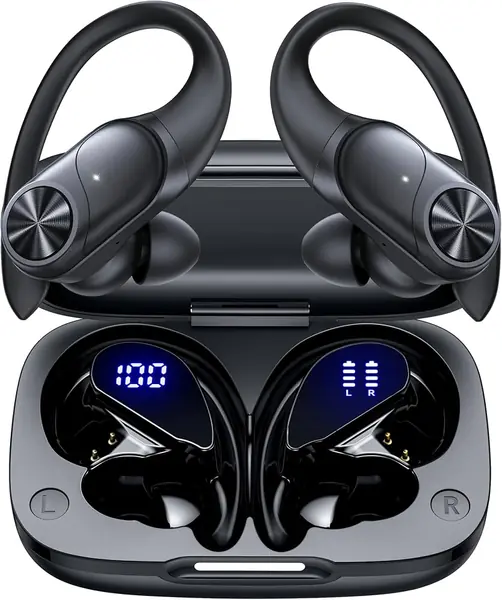
Not everyone can keep a silicone tip seated, and the T60 is built for the riders who cannot. Instead of relying on a seal, these hang from a flexible hook over the top of the ear, so the bud stays put even when your canals run small, sweat heavily, or simply refuse to hold a tip. It is a different answer to the same problem everything else here solves with silicone.

The hardware is more than you expect for the money: 13 mm drivers, one physical button per bud, and a charging case with a digital battery readout. IPX7 covers rain and sweat, Bluetooth 5.3 handles the link, and there are 8 hours in each bud with 80 hours total in the case — the longest reserve in this group by a wide margin.

Hooks have one cost on a motorcycle. They occupy the same space a full-face helmet's ear pocket and liner want, so a tight lid can press them against your head or nudge them forward as you pull it on. Try one side under your own helmet before committing; with an open-face lid the question disappears entirely.

Retention without a seal is a genuinely useful thing to sell, and it is why the T60 stays on this list behind the better-rounded picks. A rider who fights tips all season — through heat, rain, and a hundred helmet removals — gets more from a hook that never needed a seal in the first place than from a bud that sealed beautifully in the store.

Pros

  • Hooks hold without a canal seal
  • 80 hours total from the case
  • IPX7 with one-button control

Cons

  • A bud can stop taking a charge
  • Bluetooth can drop out occasionally
Our verdict

The T60 is the pair we name when tips keep falling out: hooks hold the bud in place without a seal, and the case carries the longest battery reserve here.

Check Latest Price

How We Tested These Earbuds on the Road

We started by pulling every pair a rider might realistically wear under a helmet, then cut the list by fit style — low-profile in-ears, hook-style sport buds, open-ear clips — along with Bluetooth version, water-resistance rating, and whether the maker offered a companion app for EQ and firmware updates. Anything that looked too bulky to sit against a helmet's cheek pads came off before testing began.

That left 12 pairs, which we rode with for nine months: daily commutes, 90-minute highway stretches, stop-and-go traffic, and one very wet weekend. Each pair went through the same routine — helmet on and off at every stop, phone left in a jacket pocket, gloves on the whole time.

We judged fit by whether a bud stayed seated through a helmet pull-on and a shoulder check at speed, and by how our ears felt after two hours. Wind handling we assessed by ear: how much roar was left at 60 mph, and whether a horn or siren still cut through. Battery claims got timed from full to dead on long rides rather than taken from the box.

Calls were tested at fuel stops with the engine off and the helmet still on, and durability by sweat, rain, and the inevitable drop on asphalt. We also tracked how often the connection dropped with the phone in a chest pocket versus a tank bag, and how much of each app's tuning was usable without pulling a glove off.

How to Choose Earbuds for Motorcycle Riding

Fit Under the Helmet Comes First

A bud that seals perfectly on the sofa can lose that seal inside a helmet, and a leaking seal costs you bass, isolation, and battery as the electronics push harder to compensate. Start with the housing. A low-profile in-ear sits down inside the helmet's ear pocket; a hook or a ring takes up the same space the liner wants, which is the trade those designs make for staying on.

Then fit the tip rather than trusting the box. Most riders need one size larger than they expect, and a canal that feels fine at minute two can ache at minute twenty, so wear them a while before deciding. If your canals run small, note that an earplug-style body like the Elgin Ruckus tends to sit loose, and a compact true wireless bud is the safer shape.

Wind Noise, ANC, and Real Hearing Protection

Highway wind is loud enough to damage hearing across years of riding, which is why an earbud on a bike is not purely entertainment. Noise cancellation handles the steady low-frequency roar well, but it does not replace a seal — if your buds leak, the ANC spends its effort chasing wind you are letting in.

Passive protection is measured in NRR, and an earplug-style bud rated at 25 dB cuts noise at the ear instead of canceling it electronically. Riders who pile on interstate miles tend to end up there. Either way, do not fight wind with volume: if you have to crank a podcast at 70 mph, the seal is the problem, not the setting.

Buttons, Battery, and Weather

Touch panels and riding gloves do not get along. A physical button you can find without looking is worth more on a bike than an extra EQ preset, and it is a large part of why the Ruckus and the PocBuds stay in this guide. Check where the controls sit, too, since a touch zone on the outer face can get pressed by a helmet liner.

Read battery as two numbers: hours per charge and hours with the case. The first is what a rider lives on, because the case stays in a pocket while both buds are in your ears. Somewhere around 8 to 10 hours covers a full riding day, and 12 to 14 covers a long one. For rain and sweat, look for IPX7 or IPX8; water resistant with no number attached is a fair-weather promise.

Which Shape Suits Your Riding

True wireless in-ears are the default for good reason: nothing to tangle, small under a helmet, and often cheap enough that a lost bud is annoying rather than expensive. Earplug-style bodies add genuine attenuation and real buttons but run larger and cost more. Open-ear rings and hooks keep the canal clear, the most honest form of awareness, though wind noise beats them above city speeds.

Buy for the riding you actually do. A commuter threading through town has different priorities from someone doing four hours of interstate, and for that second rider the highest passive rating is worth more than the longest feature list.

Frequently Asked Questions

Final Verdict

Start with the TOZO NC9. It is the pick here that handles quiet, awareness, weather, and battery without asking you to give anything up, and it does it at a price that makes a lost bud survivable. If most of your miles are highway, the Elgin Ruckus is the better buy: 25 dB of real attenuation and buttons you can find with a glove on.

Riders who want the canal left open should look at the TOZO OpenEarRing instead, and anyone taking calls from the roadside gets more out of the JBL Live Buds 3 than anything else on this page.