Best Noise-Canceling Headphones of 2026

Noise-canceling headphones used to ask for a trade: silence or sound quality, rarely both. That trade has mostly collapsed, which is good news for shoppers and mildly confusing, since the spec sheet rarely tells you which pair you'll still want on your head at hour four. What these fix is smaller than the marketing promises and bigger than it sounds — the volume stops creeping up, and the commute stops draining you.

I've been living with a rotating stack of them since winter, and my team has put 12 pairs through seven months of commutes, flights, and open-plan offices, timing battery drain and checking how my ears felt four hours in. One thing first-time buyers get wrong: cancellation is strongest against low, steady sound like engine hum, and close to useless against a crying baby. That's why transparency mode matters more than you'd expect, and why multipoint pairing earns its keep when you bounce between a laptop and a phone.

The picks below cover the frequent flyer, the budget-minded, and the person who wants their headphones to disappear entirely.

The Best Noise-Canceling Headphones

1

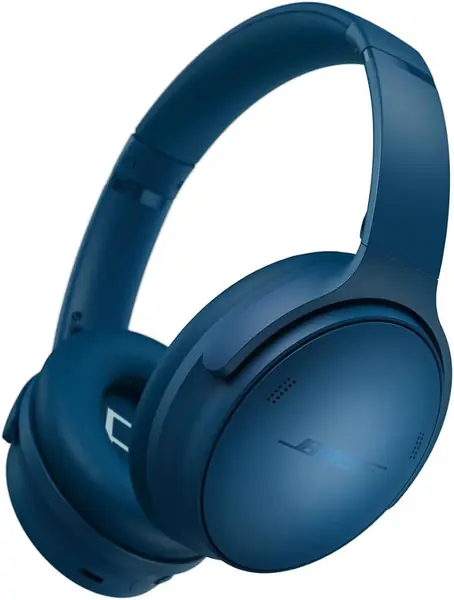
Bose QuietComfort Headphones Best Overall
93 /100
TKZ Score Outstanding

Key details

Battery Life
Up to 24 hours
Noise Cancelling
Active, Quiet and Aware modes
Weight
8.47 oz
In The Box
Protective case and cables
View on Amazon

A plane cabin is the honest test, and the QuietComforts are the pair we take on the flight. The low rumble flattens out and stays flat, the air handler disappears, and what's left is a thin hiss and the drinks cart. Nothing else in this group gets the bottom end that quiet, and that alone is the argument for spending more.

Comfort carries the rest of it. The cushions are plush, the clamp is gentle enough to forget, and at 240 grams the weight doesn't turn into a hot spot on top of your head. Quiet mode seals you off; Aware mode lets the platform announcement through without taking them off. A few minutes with the EQ in the Bose app is worth it — a small bass lift fills in the low end without smothering vocals.

The annoyances are specific. The spoken prompts are startlingly loud, announcing battery and connection at a volume that carries across a quiet office. Bluetooth 5.1 is the other soft spot: the link can stutter, and running two devices at once is where it goes wrong. Keep one device paired while you're moving around and add the second when you sit down.

The ear pads are the part that ages first, and a cover splitting at the seam is the failure to watch for; the hardshell case in the box postpones it. The limited Twilight Blue is a nicer thing to pull out of a bag than another black headphone. When the noise is the whole reason you're shopping, this is where we start.

Pros

  • Quiet mode flattens engine and traffic drone
  • Plush cushions and a gentle clamp for long sessions
  • 24 hours of playtime and a hardshell case included

Cons

  • Bluetooth can stutter, especially with two devices
  • Ear pads wear before the rest of the headphone
Our verdict

If the noise is the reason you're buying, these are the pair we hand over: the deepest quiet here, comfortable enough for a full flight, with a Bluetooth link that tests your patience.
Check Latest Price
2

soundcore Q20i Best Value

92 /100
TKZ Score Outstanding

Key details

Battery Life
40 hours with ANC on
Noise Cancelling
Hybrid ANC with transparency
Bluetooth
5.0, two-device pairing
Drivers
40 mm dynamic
View on Amazon

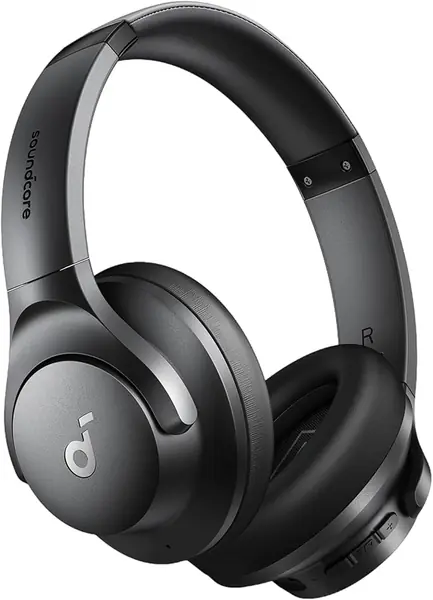
The Q20i is the argument against paying flagship money. Hybrid cancelling with four microphones, a 40 mm driver, transparency mode, app EQ, and two-device pairing are all here, and the battery runs 40 hours with the cancelling switched on. Nothing on the spec sheet reads like the low end of this group.

In a bag it's the pair we don't worry about. The cancelling is tuned for the drone end of the spectrum — fans, road noise, the fridge compressor — which is what a commute actually throws at you; speech comes through, as it does on nearly everything here. BassUp in the app is the setting to try if the stock tuning sounds thin, and a five-minute top-up earns hours back when you forgot to plug them in.

Two things to know before ordering. The clamp is loose, so a smaller head gets a fit that slides when you look down — the JBL Tune 680NC is the safer shape if that has been a problem before. And the cushions run warm after an hour, which matters if you overheat easily. Neither is enough to talk you out of the best value in this guide.

Pros

  • Cancelling that handles a commute for very little money
  • 40 hours with ANC on, plus fast top-ups
  • App EQ and two-device pairing

Cons

  • Loose fit slides on smaller heads
  • No carry case in the box
Our verdict

The pair we recommend to anyone who wants quiet without paying flagship money: hybrid cancelling, 40 honest hours with it switched on, and an app that lets you tune the rest.

Check Latest Price
3

Sony WH-CH720N Best for All-Day Wear

91 /100
TKZ Score Outstanding

Key details

Battery Life
Up to 35 hours
Noise Cancelling
Dual Noise Sensor with Ambient Sound
Weight
6.77 oz
Bluetooth
5.0, multipoint
View on Amazon

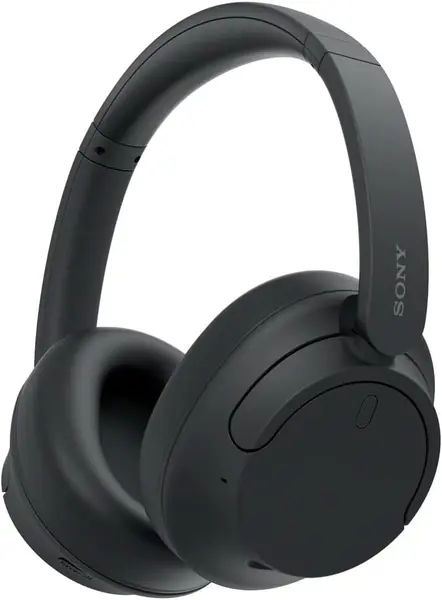
192 grams is the figure Sony leads with, and for once it's the one that matters. Put these on and the weight mostly disappears — the clamp is soft, there's no hot spot on top of your head, and an afternoon at a desk doesn't end with a headache. If you've ever taken headphones off after two hours and rubbed your temples, that's the pitch.

The catch is what the lightness buys. Cancelling here is the mildest in the group: it takes the edge off a room rather than sealing it away, so the drone of a plane stays audible while a chatty office becomes workable. Ambient Sound mode and the app's adaptive switching are the workaround — let voices through deliberately and you stop fighting them. These are office headphones that travel, not travel headphones.

Bluetooth is the other compromise; pairing is fussier than on the Bose or the JBL, and the plastic feels lighter than the price suggests. Neither is disqualifying at 35 hours of playtime and a three-minute charge that buys an hour. For a keyboard, a colleague, and a long day, this is the most comfortable answer here.

Pros

  • 192 g, comfortable through a full workday
  • 35 hours with quick charging
  • Multipoint and Ambient Sound mode

Cons

  • Mildest noise cancelling here
  • Fussier Bluetooth pairing than the Bose or JBL
Our verdict

The one we keep on for a whole workday: 192 grams, a gentle clamp, and enough quiet for an open office — but the mildest cancelling in this group.

Check Latest Price
4

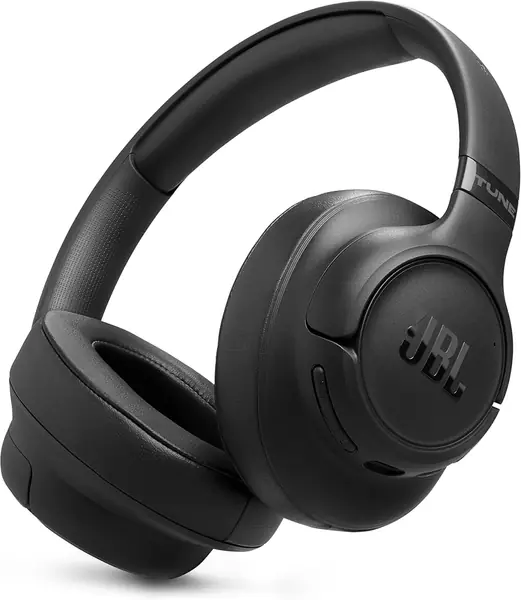
JBL Tune 780NC Best Battery Life

90 /100
TKZ Score Outstanding

Key details

Battery Life
Up to 76 hours (50 with ANC)
Noise Cancelling
Adaptive ANC with Smart Ambient
Bluetooth
6.0, two-device pairing
Drivers
40 mm
View on Amazon

Seventy-six hours is the headline; 50 is the number that matters, because that's the playtime with adaptive cancelling running. A week of commutes between charges, a long-haul round trip with charge to spare — the battery is why these have a place in a group this competitive.

The rest of the package is current where it counts: Bluetooth 6.0 with a two-device link, 40 mm drivers with JBL's spatial setting, cancelling that adjusts to the room, two beamforming mics for calls, and a five-minute charge that returns hours of playback. The cups fold flat, so they pack into a bag pocket rather than a case.

Where these win is the trip you don't want to think about — a long flight, a rail journey, a week away from a charger. They aren't the last word on quiet; the Bose is deeper. As a travel pair at this money, the mix of battery, multipoint, and adaptive cancelling is the most sensible thing here.

Pros

  • 50 hours with noise cancelling on
  • Bluetooth 6.0 with two-device pairing
  • Five-minute charge restores hours

Cons

  • No carry case included
  • Volume tops out lower than the Bose
Our verdict

The travel pair for people who hate charging: 50 hours with cancelling on, a five-minute top-up, and adaptive quiet that handles a train better than a fuselage.

Check Latest Price
5

TOZO HT3 Best Budget Noise Canceling

89 /100
TKZ Score Excellent

Key details

Battery Life
Up to 90 hours
Noise Cancelling
Hybrid ANC, rated to 45 dB
Weight
8.96 oz
Wired Options
3.5 mm and USB-C audio
View on Amazon

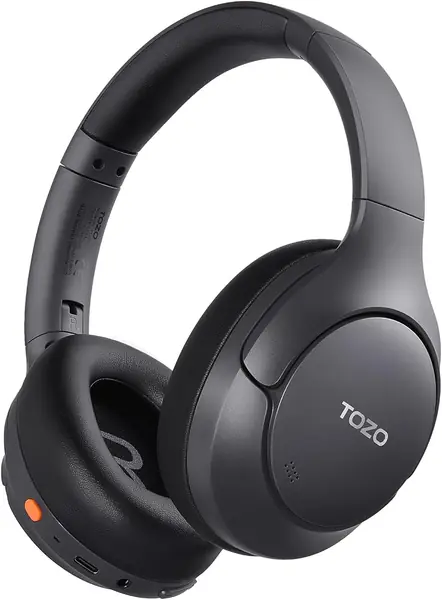
The HT3 feels like a cheap headphone: matte plastic, light in the hand, a bare box with a cable and a manual. Then the cancelling comes on and the arithmetic stops making sense.

Inside is where the money went. Hybrid cancelling rated to 45 dB, 40 mm drivers, Bluetooth 6.0 with a two-device link, 90 hours of playback, and a 10-minute charge that returns about nine hours. The app holds 32 EQ presets, which is roughly 30 more than anyone needs, and — rarer than it should be down here — the headphones also run wired over USB-C, using the same cable you charge with.

The cancelling works on the noise that actually wears you down: bus engines, gym ventilation, a shared kitchen. It won't erase a loud conversation, and it isn't the deepest hush on this page, but it does the job a commuter asks for. Comfort holds up as well — soft pads, a moderate clamp, and no sore spot after a long session.

What we can't vouch for is the hinge after a couple of years of bag life; a folding plastic headphone at this money is one you replace rather than repair. Everything above that is a genuine bargain: the quiet is real, the battery is absurd, and the price asks very little of you.

Pros

  • Hybrid cancelling that quiets a bus or a gym
  • 90 hours of playback and fast charging
  • EQ presets, two-device pairing, and USB-C audio

Cons

  • No carry case included
Our verdict

The pair we hand to someone who wants the effect without the outlay: real hybrid cancelling, 90 hours, and an app that tunes them, in a shell that admits what it costs.

Check Latest Price
6

Beats Studio Pro Best for Apple Device Owners

88 /100
TKZ Score Excellent

Key details

Battery Life
Up to 40 hours
Noise Cancelling
Active with Transparency
Weight
9.2 oz
Audio
USB-C lossless playback
View on Amazon

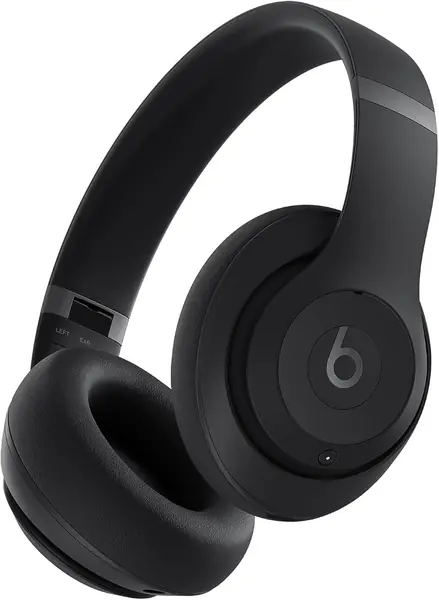
Lossless audio over a cable is the feature worth understanding here. Bluetooth compresses the file on the way to your ears; plug a USB-C cable into the Studio Pros and the headphones decode it themselves, so a laptop or a USB-C phone feeds them a full-resolution stream. That's a narrow thing to care about, and if you care about it, nothing else in this group does it.

The rest is Beats house style: up to 40 hours of battery, active cancelling with a transparency mode, spatial audio with head tracking for films, one-touch pairing on Apple devices, and cups that fold flat. The cancelling is competent rather than exceptional — an office and a train carriage are handled, a fuselage is not silenced the way the Bose manages it.

Where these win is the ecosystem rather than the noise floor. If you carry an iPhone and a Mac, one-touch pairing and automatic switching make them the least fiddly headphones in this group, and the wired mode means one pair covers calls, films, and a proper listen. For that buyer they're an easy recommendation; for someone who mainly wants quiet on a plane, they're the wrong trade.

The caveats are physical. The clamp is firm, and a larger head feels it inside an hour. The headband is the part that fails, with cracks at the hinge turning up in the same place. Bass weight is the other argument — the low end is leaner than the badge leads you to expect.

Pros

  • USB-C lossless playback
  • Up to 40 hours of battery
  • One-touch pairing and switching on Apple devices

Cons

  • Firm clamp tires a larger head
  • Hinge cracks are the durability risk
Our verdict

The Apple-household pick, and the only pair here that plays lossless over a cable — worth it if you switch between an iPhone and a Mac, not if you mainly want silence.

Check Latest Price
7

KVIDIO WH304A A Spare Pair

87 /100
TKZ Score Excellent

Key details

Battery Life
Up to 70 hours (40 with ANC)
Noise Cancelling
Hybrid ANC with transparency
Weight
12.3 oz
Bluetooth
5.3
View on Amazon

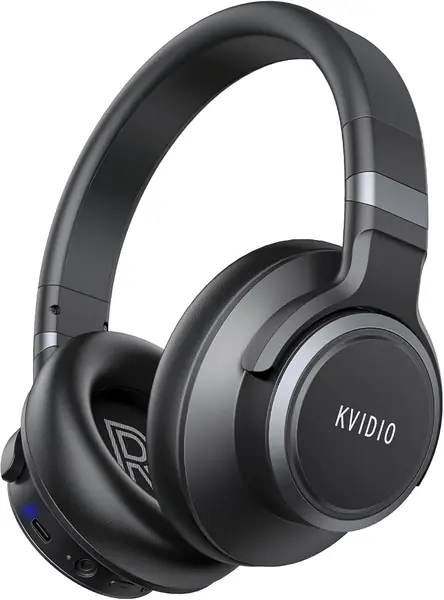
The WH304A is the pair you keep for the gym bag, the kid's backpack, or the drawer that eats headphones. Forty hours of playback with the cancelling on, a transparency mode, Bluetooth 5.3, and earcups roomy enough to sit over a baseball cap and a pair of glasses — a combination that is harder to find than it sounds.

Judged as a cheap headphone rather than a rival to the Bose, it earns its place. The cancelling quiets a television, traffic, and a lawnmower, the pads stay comfortable through a workout, and the volume ceiling is low enough that a quiet podcast needs the source turned up. That's the compromise, and it's a fair one at this end of the market.

Durability is where the savings show. A hinge giving out or an ear pad coming away within the first couple of months is the recurring failure, so buy these as a disposable pair with your eyes open rather than as a long-term investment. As a second pair that lives in a bag, that's a reasonable deal.

Pros

  • Quiet that handles a TV, traffic, and tools
  • 40 hours with ANC on
  • Fits over glasses and a baseball cap

Cons

  • Hinge and ear pad failures show up early
Our verdict

The knockabout pair: enough cancelling for a TV, a lawnmower, or a gym, comfortable over glasses and a cap, and priced like something you don't have to baby.

Check Latest Price
8

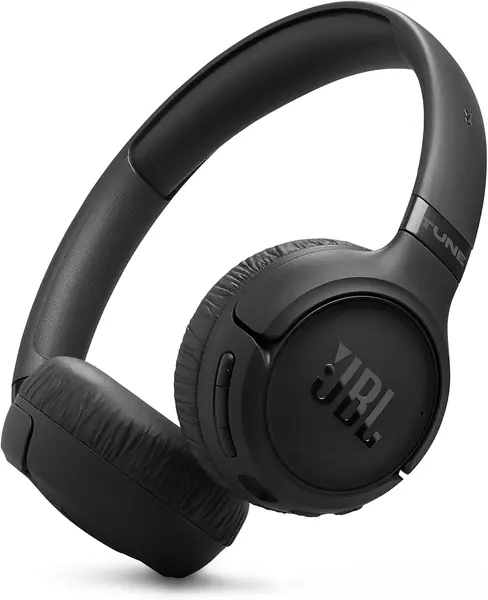
JBL Tune 680NC Best for Smaller Heads

80 /100
TKZ Score Excellent

Key details

Battery Life
Up to 76 hours (50 with ANC)
Bluetooth
6.0, two-device pairing
Drivers
32 mm
Form
On-ear
View on Amazon

On-ear headphones are a fit decision before they're a sound decision. The Tune 680NC sits on your ears rather than around them, which makes it smaller and lighter than the over-ear picks here — 5.6 ounces — and makes it the answer for a head that slides around inside a big pair.

The spec sheet reads like the Tune 780NC's: adaptive cancelling with Smart Ambient, 76 hours of playback and 50 with cancelling on, Bluetooth 6.0 with a two-device link, 32 mm drivers, and app control. The smaller drivers and the on-ear cups mean less of the low rumble goes away — this is a headphone for a commute and an office, not for a fuselage.

Practical notes from the box: there's no case, and the cable included is a USB-C to 3.5 mm audio cable rather than a charging cable, so plan on bringing your own. The power button sits flush enough that finding it by touch takes practice; the volume control is easier to locate.

If you've got a smaller head and a short commute, this is the pair we point to. It fits where the bigger over-ears slide, it runs a week on a charge, and the cancelling is honest work. What it won't do is seal: on-ear cups leak more sound in and press on the ear rather than around it, so a loud train gets through and a long session ends with a reminder that they're there.

Pros

  • Fits smaller heads that slide in big over-ears
  • 50 hours with ANC on, 76 without
  • Bluetooth 6.0 with two-device pairing

Cons

  • No case or charging cable in the box
  • Power button is hard to find by touch
Our verdict

For a smaller head and a short commute, this is the one: on-ear cups that stay put, a week of battery, and cancelling that's real if not dramatic.

Check Latest Price

How We Tested Noise-Canceling Headphones

We started by pulling every over-ear and on-ear model we could find within a reasonable price range, then narrowed to the ones whose listings actually backed their claims: hybrid active noise cancellation, transparency modes, app-based EQ, multipoint pairing. From that pool we brought in 12 pairs and used them as our daily headphones for seven months. Nothing ran on a lab bench. They went on morning subway rides, on two cross-country flights, through back-to-back video calls at a kitchen table, on a stretch of open-plan office days, and on windy walks.

Noise cancellation was judged against a running HVAC unit and a plane cabin, then against a loud café, where we noted whether voices got muffled or just quieter. We flipped into transparency mode mid-conversation to hear how natural it sounded, and whether we had to pull an earcup off to order coffee. Battery was timed, not trusted: we ran each pair from full to dead at a fixed volume with cancellation on, then noted what a ten-minute charge actually bought us.

Connectivity and reliability got the unglamorous treatment. We paired each set with a laptop and a phone at the same time, walked out of range to see which one reconnected on its own, and repeated the drill a month later to check it still behaved. Comfort was tracked over long stretches, with and without glasses, watching for clamp pressure and hot ears. Fit and durability came last: we folded every pair that folded, stuffed them uncased into a tote, and checked hinges, headband padding, and earcups for wear by month seven. Value was the final filter — the question wasn't which pair was best, but whether each one earned its spot over the cheaper set next to it.

How to Choose Noise-Canceling Headphones

What the Cancelling Can and Can't Do

Active cancelling works best on steady, low-frequency sound: engine drone, air handlers, the rumble of a train. It is much weaker against speech, which changes too quickly to cancel, so a good pair makes a nearby conversation quieter and more distant rather than silent. That is why 45 dB or 48 dB on a box tells you less than you expect — the figure comes from a lab measurement against one specific noise, not from your cafe.

If you're buying for flights, put your money into the deepest low-frequency quiet you can afford; the Bose QuietComfort is the reference point in this group. For an office, a milder pair with a comfortable fit and a usable transparency mode does more for a working day than a deeper hush that clamps.

Fit Is Half the Performance

An over-ear headphone only cancels well when the cushion seals around the ear. Break the seal and you lose bass and cancelling together, which is why glasses, thick hair, and a hat all cost you quiet. On-ear models press on the ear instead, seal less, and make up for it in size and weight.

Clamp matters just as much. A headband that's too loose slides when you look down — the soundcore Q20i is the loosest fit here — while a firm one leaves a mark after an hour. If you know you have a small head, start with the JBL Tune 680NC; if you wear glasses, favor a gentle clamp and accept slightly less isolation.

Read the Battery Figure Twice

Battery claims are usually quoted with the cancelling switched off, and cancelling is what costs the most power. The JBL Tune 780NC is rated for 76 hours without it and 50 with it; the soundcore Q20i runs 60 and 40. Compare the ANC-on numbers between pairs rather than against the headline, or a perfectly normal headphone will disappoint you.

Quick charging is what matters day to day. A five-minute top-up is standard at this end of the market and worth confirming before you buy, because the alternative is a dead pair on the morning you need them.

Bluetooth, Multipoint, and What's in the Box

Two-device pairing is the feature people underestimate: it keeps a laptop connected while your phone rings, and it's the difference between one pair for work and two pairs on the desk. It also introduces the most common headache, dropouts when both devices are in range.

Then read the box list, because cases and cables are the first things cut. The Bose QuietComfort includes a hardshell case; the JBL Tune 780NC and the soundcore Q20i do not, and the cable in the Tune 680NC box is an audio cable rather than a charging one. A case is the cheapest way to make a folding headphone last.

Frequently Asked Questions

Final Verdict

If the noise is the reason you're buying, the Bose QuietComfort is the pair we choose: the deepest quiet here, cushions that survive a long flight, and a hardshell case in the box. Its Bluetooth link is the one thing you accept as part of the deal.

Change the requirement and the answer moves. For a full day at a desk, the Sony WH-CH720N's 192 grams make more sense than deeper cancelling. For a week away from a charger, the JBL Tune 780NC's 50 hours with cancelling on wins. And on a tight budget, the soundcore Q20i covers the commute for a lot less money.