Best Headphones for Running

Running headphones have a harder job than the pair sitting on your desk: they have to stay put through a sweaty interval session, survive a downpour, and still let you hear the car coming up behind you. I've fished more than one earbud out of a storm drain, and I've worn pairs that sealed so tight I never heard the cyclist yelling at me. Over the past six months, my team and I have run in 12 pairs — open-ear bone conduction models, earhook sport buds, and the hybrids in between.

The first thing to understand is that open-ear designs and sealed earhook buds solve different problems. Open-ear models leave your ear canal clear, so you hear traffic, and bass will never rattle your skull the way a sealed fit can. Sealed buds sound fuller, but they live or die on fit: get the tip wrong and they're loose by mile two.

Battery claims deserve a skeptical eye, too, since the big numbers usually include the charging case rather than a single run. Below are the pairs that earned a permanent spot by the door — whether you want maximum awareness or a locked-in seal.

The Best Headphones for Running

1

Shokz OpenRun Best Overall
91 /100
TKZ Score Outstanding

Key details

Fit Style
Open-ear bone conduction
Water Resistance
IP67
Battery Life
8 hours
Weight
0.92 oz
View on Amazon

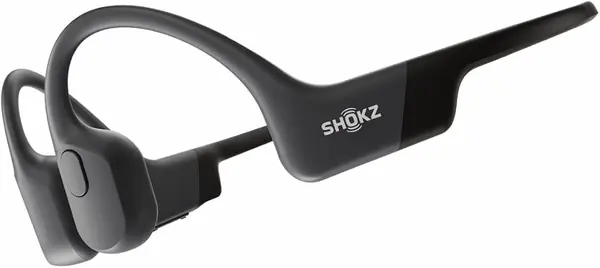
Open-ear bone conduction is the reason the OpenRun is our top pick. The wraparound frame sits outside your ear canal, so traffic, footsteps, and a running partner come through while the audio arrives through your cheekbones. IP67 is the other part of the case: it is rated for sweat and rain, and the 26-gram frame is light enough that the fit stays out of the way. For road running, that combination is hard to beat.

We prefer the physical buttons and the no-case design for daily runs. There is nothing to push into your ear and nothing to lose in a gym bag; the frame goes on and stays put when you turn your head. Sound is clear for podcasts and calls, and the open design is the point, not a compromise. It will not match sealed earbuds for bass, but that is the trade-off you accept for awareness.

Eight hours is enough for a week of short runs, and a 10-minute charge adds up to 1.5 hours when you forget to plug in. The two-year warranty is longer than most here, which matters for a pair that lives in sweat and rain.

Pros

  • Keeps ears open to traffic
  • IP67 sweat and rain protection
  • Secure wraparound frame with no case

Cons

  • Bone-conduction bass is modest
  • Long-term durability is uneven
Our verdict

We recommend the OpenRun for road runners who want to hear traffic and keep a secure, rain-ready fit without a charging case.
Check Latest Price
2

Soundcore V20i Best Value

90 /100
TKZ Score Outstanding

Key details

Fit Style
Open-ear ear hooks
Water Resistance
IP55
Battery Life
8 hours (36 with case)
Driver Size
16 mm
View on Amazon

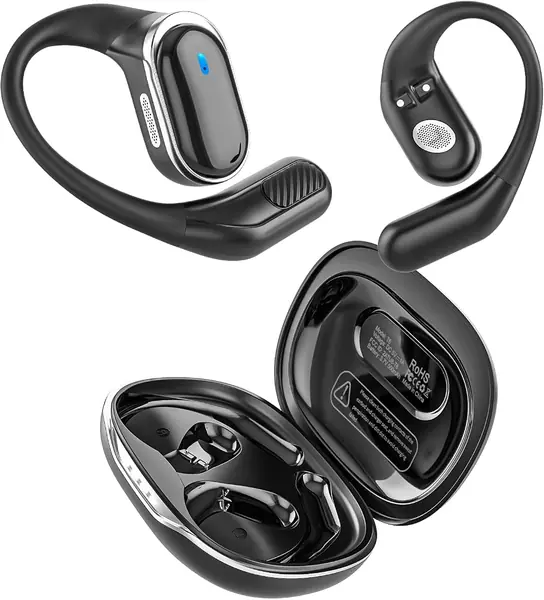
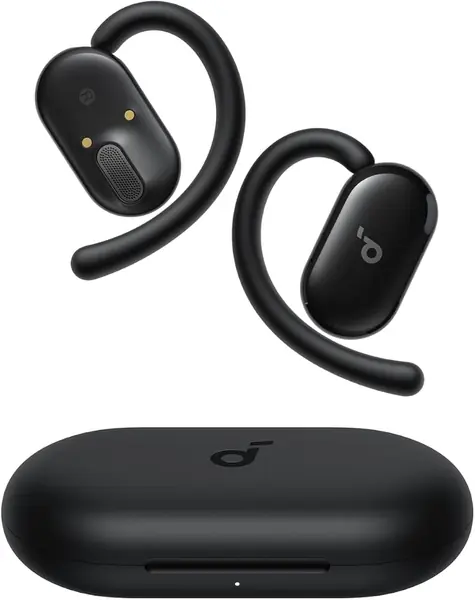
Value is the first thing we notice about the V20i: open-ear hooks, 16 mm drivers, and a charging case that stretches listening to 36 hours for noticeably less than the top pick. We recommend it to anyone who wants the awareness of an open-ear design without paying premium bone-conduction money. The four-position hooks are a smart touch because they let you rotate the earpiece instead of forcing one fixed angle.

On a run, the open design keeps traffic and voices audible, and the 16 mm drivers give it more low-end than most bone-conduction sets here. We like that the hooks rotate through four positions to find a secure angle. The case is part of the package—8 hours in the buds is fine, and 36 with the case is what makes it a week-of-runs option.

The connection and battery are the areas to watch. Some units develop a dead earbud or a charging hiccup, and the Bluetooth link can be fussy when your phone is buried in a pocket. That is why we call it the value pick rather than the no-compromise pick. If you want open-ear awareness on a budget and can live with a little setup time, it is an easy recommendation.

Pros

  • Open-ear awareness at a budget price
  • 36-hour charging case
  • Adjustable hooks and 16 mm drivers

Cons

  • Fit varies by ear shape
  • Sound leaks at higher volume
Our verdict

We recommend the V20i as the value open-ear pick for gym runs and sidewalk miles, as long as you're willing to fine-tune the hook fit.

Check Latest Price
3

Shokz OpenRun Pro 2 Best Sound

89 /100
TKZ Score Excellent

Key details

Fit Style
Open-ear bone conduction
Water Resistance
IP55
Battery Life
12 hours
Weight
1.07 oz
View on Amazon

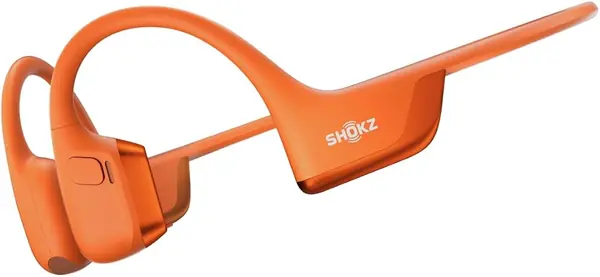
More music is what separates the OpenRun Pro 2 from the standard OpenRun. Its dual-driver setup adds air-conduction bass to the bone-conduction mids and highs, so the sound has more body without plugging your ears. The 12-hour rating is the longest here among bone-conduction models, which matters for marathon training and long days out.

We like the button controls and the titanium frame, and 30 grams is still light enough for long wear. The catch is IP55: it handles sweat and rain, but it is not the most water-resistant pick here. The fit is also more sensitive to head shape than the standard OpenRun. Those are real trade-offs, but the fuller sound and longer battery are why this one earns a place for runners who want more from their music.

Where this one wins is stamina and sound. The bass has more body than the standard OpenRun, and 12 hours covers back-to-back long runs without a midweek charge. For a runner who listens to music more than podcasts and wants the battery to match a marathon block, this is the open-ear pair to choose.

Pros

  • Fuller dual-driver sound
  • 12-hour battery for long runs
  • Light 30 g titanium frame

Cons

  • Premium price
  • Wind can overwhelm the audio
Our verdict

We recommend the OpenRun Pro 2 for runners who want fuller sound and longer battery in an open-ear design, and who don't need the toughest water rating.

Check Latest Price
4

Beats Powerbeats Pro 2 Best Noise Cancellation

88 /100
TKZ Score Excellent

Key details

Fit Style
Ear hooks
Water Resistance
IPX4
Battery Life
45 hours with case
Noise Control
Active noise cancelling
View on Amazon

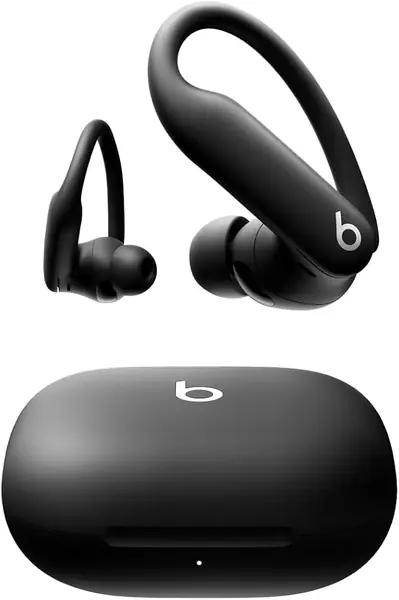
A built-in heart-rate monitor is the feature no other pair here has, and it is the reason to consider the Powerbeats Pro 2. The earhooks are designed to stay put during training, and active noise cancellation can quiet a gym or treadmill room in a way open-ear designs cannot. With the charging case, battery life stretches to 45 hours.

We like the idea of heart-rate data without a chest strap, and the Apple H2 chip makes pairing and switching painless on Apple devices. The catch is the sealed fit: comfort is the weak point, and the earbuds can rub or feel tight over long sessions. That is a serious caveat for a pair built around training, but the people who get a good seal will appreciate the quiet.

Where it wins is indoor training. The ANC is useful on a treadmill or in a noisy gym, and the heart-rate tracking adds something no other pick here offers. If your running is mostly indoors and you want data and quiet, it is a strong niche pick; for road running, the open-ear options are safer.

Pros

  • Built-in heart-rate monitor
  • Active noise cancellation for gyms
  • 45 hours with charging case

Cons

  • IPX4 limits heavy-sweat use
  • Premium price
Our verdict

We recommend the Powerbeats Pro 2 for gym and treadmill runners who want ANC and heart-rate data, not for road runners who need maximum water protection.

Check Latest Price
5

TRAUSI T6 Best Battery Life

87 /100
TKZ Score Excellent

Key details

Fit Style
Open-ear ear hooks
Water Resistance
IPX7
Battery Life
80 hours with case
Bluetooth
5.4
View on Amazon

If you want to leave the charger at home, the T6 is built around that habit. Its charging case is rated for 80 hours of total playtime, so a few short runs a week can go by without a top-up. It also carries IPX7, which is more water protection than most open-ear hooks at this end of the group.

We like the open-ear hook shape for keeping traffic audible, and the touch controls are simple once you learn the taps. The 80-hour figure is a case-included number, not 80 hours in the buds—8 hours per charge is the realistic run time. We also appreciate that the case is small enough to toss in a bag, though it is one more thing to keep track of.

The T6 is a practical pick for someone who wants open-ear awareness and a charging case that lasts. It is not the most polished pair here, and the hook shape will not suit every ear. But if you run a few times a week and want to leave the charger at home, it makes sense.

Pros

  • 80-hour charging case
  • IPX7 water protection
  • Open-ear awareness with touch controls

Cons

  • Durability is less proven
  • Open-ear sound leaks at high volume
Our verdict

We recommend the T6 for runners who want open-ear awareness and a week of case battery, provided the hook shape suits your ears.

Check Latest Price
6

Raycon Bone Conduction Best Water Resistance

86 /100
TKZ Score Excellent

Key details

Fit Style
Bone conduction
Water Resistance
IP68
Weight
5.6 oz
Battery Charge Time
2 hours
View on Amazon

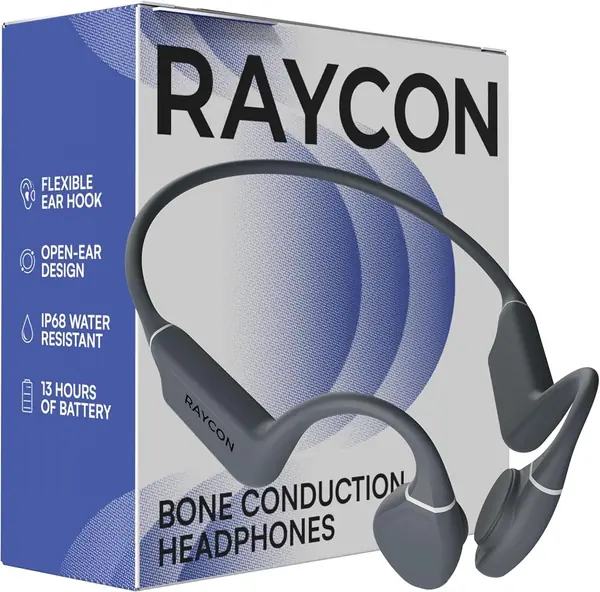
A rainy run is the scenario the Raycon pair is built for. IP68 is the highest water-and-dust rating in this group, and it is the reason to look here if you run in rain, sweat heavily, or rinse your gear after a workout. The earpieces also slide, so you can move them closer for more sound or farther back for more awareness.

We like the adjustable placement because it lets you tune the trade-off between volume and awareness, and the open-ear fit is comfortable for some runners. The problem is that the fit is not as universal: the band does not sit snugly on every head, and the earpieces can become painful over long sessions. That is a lot of variance for a pair priced above the budget options.

The Raycon is a niche pick for wet weather and adjustable awareness. The IP68 protection is genuinely useful if you run in rain, and the sliding earpieces give you control over how much sound reaches you. For a runner who values those two things above a universal fit, it is worth a look.

Pros

  • IP68 for rain and sweat
  • Adjustable earpieces for awareness
  • Solid bone-conduction sound

Cons

  • Heavier than other bone-conduction picks
  • Magnetic charging cable is easy to misplace
Our verdict

We recommend the Raycon for wet-weather runners who want adjustable bone conduction, as long as the headband fit works for you.

Check Latest Price
7

MJOFFIN X19s Light Bone Conduction

85 /100
TKZ Score Excellent

Key details

Fit Style
Bone conduction
Water Resistance
IP55
Battery Life
10 hours
Weight
0.78 oz
View on Amazon

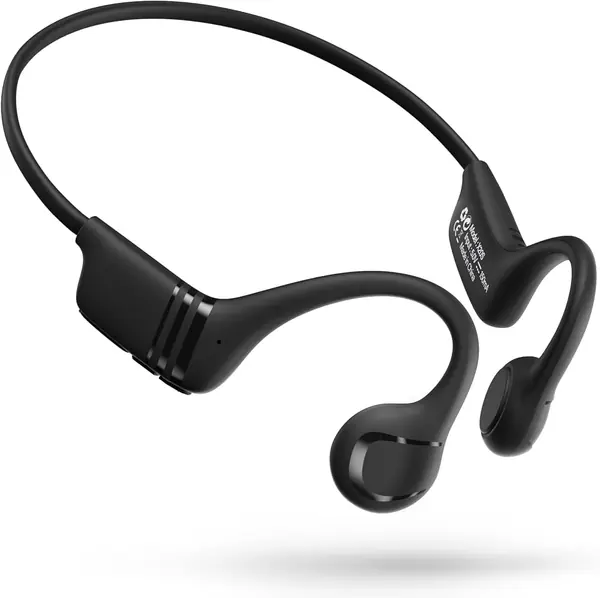
The budget way into bone conduction is the MJOFFIN X19s. At 22 grams, it is the lightest bone-conduction pair here, and the flexible titanium frame is designed to sit on your cheekbones without a charging case or a lot of hardware.

We like the open-ear design for hearing traffic, and the 10-hour battery covers most training days without a recharge. The IP55 rating handles sweat and light rain, but it is not the IP67 or IP68 protection of the more expensive picks, so it is the one to baby in a downpour. Bluetooth 6.0 is listed for a stable connection.

The X19s is a simple pair: no app-heavy setup and no extra features beyond the basics. That is part of the appeal if you want a light headphone for sidewalk runs and gym sessions. It uses a magnetic charging cable, so the cable is the one accessory to keep track of.

For the money, the X19s gives you the awareness and light fit that make bone conduction appealing. It is a sensible first bone-conduction pair for everyday runs, and the low weight is the detail that keeps it comfortable. If you need heavy-rain protection or a charging case, look at the step-up picks.

Pros

  • Featherweight 22 g frame
  • 10-hour battery
  • Open-ear awareness for less

Cons

  • No charging case for travel
  • Bone-conduction bass is modest
Our verdict

We recommend the X19s as a lightweight budget bone-conduction pick for everyday runs, not for heavy rain or bass-heavy listening.

Check Latest Price
8

HAOYUYAN BX17 Best for Tight Budgets

84 /100
TKZ Score Excellent

Key details

Fit Style
In-ear ear hooks
Water Resistance
IPX7
Battery Life
80 hours with case
Bluetooth
6
View on Amazon

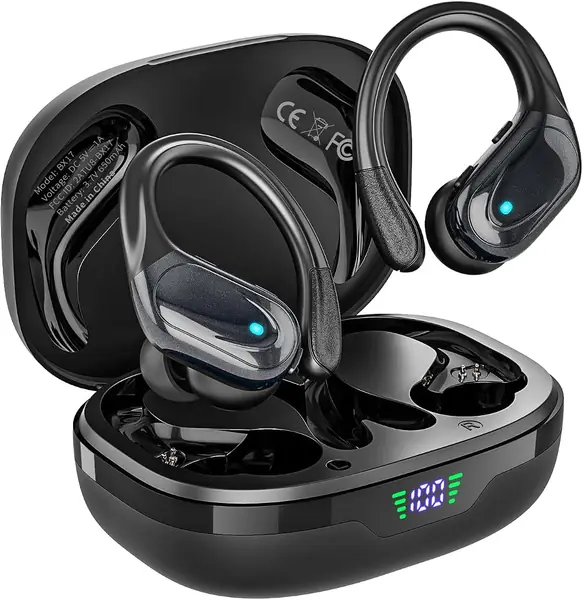
Sealed in-ear tips are the defining choice on the BX17, and they give it a more planted feel than the open-ear picks. The flexible earhooks hold the buds in place, and the button controls are easy to find with sweaty hands. For a runner who wants music to stay put, that is a useful combination.

We like the button controls because they are easier to find with sweaty hands than touch panels, and the IPX7 rating covers sweat and rain. The charging case is rated for up to 80 hours of total playtime, with 15 hours per bud, which is unusually long for a budget pair.

The 14.3 mm drivers are listed for strong bass, and the case has an LED power display. Those are useful touches at this end of the group, and the 15-hour per-bud claim is unusually long. The BX17 is a value play, not the most feature-rich pair here.

For a tight budget, the BX17 covers the basics: a secure earhook, a huge charging case, and water protection that handles sweat and rain. It is the pair we point to for treadmill sessions and gym work, where a sealed fit makes sense. That is a narrow lane, but it is a useful one.

Pros

  • Very low cost
  • 80-hour charging case
  • IPX7 button-controlled design

Cons

  • In-ear tips block traffic noise
Our verdict

We recommend the BX17 for treadmill and gym runners on a tight budget, not for road runners who need to hear traffic.

Check Latest Price

How We Chose and Tested the Best Running Headphones

Every pick started as research: we gathered the sport headphones with the strongest review records, then filtered by the things that actually affect a run — how they sit on the ear, claimed water resistance, single-charge run time rather than the case-included figure, weight, and whether they connect to more than one device at once. That left us with 12 pairs, split between open-ear bone conduction designs and earhook buds, which we tested for six months.

Testing happened where these headphones live. We wore them through treadmill interval sessions, outdoor runs from 5K up to a half marathon, rainy morning loops, weight-room sessions, and bike commutes. Four of us tested, with different ear shapes and habits — one under a ponytail and a cap, one with sunglasses, one who sweats heavily — and we swapped pairs between us so no single fit was judged by one set of ears.

Each pair was charged to full and run until the low-battery warning, so we know how far the claimed playtime stretched in practice. We paired them with phones and watches, walked away from the phone to see where the signal broke, and switched between two devices mid-run. We also pulled hoods and helmets on and off over them, shook our heads hard at tempo pace, dropped each pair on pavement, and rinsed off sweat after every session to see whether the controls and ear hooks kept working.

Sound was judged on the same handful of bass-heavy and spoken-word tracks, always with an ear toward what matters outdoors: could we hear a car, a cyclist, a coach? We scored on whether they stayed put, how they felt at mile ten, and whether the price made sense against what they delivered.

How to Choose Running Headphones

Put Fit and Awareness First

A running headphone has to stay put through sweat and head movement, so look at the hook or band before the driver. Open-ear designs leave the ear canal clear, which is why we prefer them for shared roads; sealed earbuds block more noise and suit treadmill work. If you wear glasses or a hat, try the frame with them on, because a band that pinches at the temple will not improve with mileage. Adjustable hooks, like those on the Soundcore V20i, help, but the shape still has to match your ear.

Match Water Resistance to Your Sweat and Weather

IP ratings are not a single ladder. An IPX4 pair can handle splashes, IP55 covers sweat and light rain, and IP67 or IP68 can survive a rinse or a downpour. If you sweat heavily or run in rain, choose the higher rating and dry the charging port before you plug in. The Raycon pair carries IP68, while the Shokz OpenRun uses IP67; both are more weather-ready than the open-ear hooks rated IP55.

Choose Bone Conduction or Open-Ear Air Conduction

Bone conduction sends vibration through your cheekbones, so your ear canal stays completely open. It is the most awareness-friendly option, but it has less bass and can be drowned out by wind or traffic. Open-ear air-conduction models sit outside the ear and aim sound inward; they usually sound fuller, though they leak more at high volume. We steer road runners toward bone conduction and gym runners toward whatever fits securely. The Shokz OpenRun is the clearest example of the bone-conduction approach, while the Soundcore V20i shows how much open-ear sound you can get for less.

Treat Battery Claims as Two Numbers

Battery life comes in two parts: the buds and the case. A pair rated for 8 hours in the buds and 36 hours with the case is not the same as an 8-hour pair with no case. For three or four short runs a week, 8 hours per charge is manageable; for marathon blocks or all-day use, look for 10 to 12 hours in the buds or a case that carries you through the week. The TRAUSI T6 leans on an 80-hour case, while the Shokz OpenRun Pro 2 puts 12 hours in the headphone itself.

Decide Whether ANC and Training Data Are Worth It

Active noise cancellation and heart-rate tracking are the extras that separate sport headphones from open-ear running headphones. ANC is useful on a treadmill or in a noisy gym, but it works against the awareness you want on a road. A heart-rate monitor saves a chest strap and adds training data, though it also adds cost and complexity. The Beats Powerbeats Pro 2 is the pick here for both features. If you run outdoors and want to hear traffic, spend the money on fit and water protection instead.

Frequently Asked Questions

Final Verdict

If you run outdoors, start with the Shokz OpenRun. It keeps your ears open to traffic, locks onto your head without a case, and carries IP67 protection for sweat and rain. That combination is what makes it the safest default for road runners.

For open-ear awareness at a lower price, the Soundcore V20i is the value alternative; for indoor training with ANC and heart-rate data, the Beats Powerbeats Pro 2 makes more sense. Choose the one that matches where you run, not the one with the longest feature list.