Best Noise-Canceling Headphones for Travel of 2026

A middle seat over the ocean is a bad place to learn that your headphones' noise cancellation is mostly marketing. Real cancellation doesn't erase a cabin, but it flattens the engine drone into distant surf, so you can sleep or watch a movie without cranking the volume. What separates a good pair from a disappointing one usually isn't the number on the box — it's how well the earcups seal, how much pressure the ANC puts on your ears, and whether the battery outlasts the trip.

I've traveled with headphones that died mid-flight and pairs I forgot I was wearing for six hours. Over the past eight months, we've put 14 through long-haul flights, commuter trains, and crowded gates, taking notes on sound, comfort, battery life, and value.

One thing worth knowing: nearly all of these have a transparency mode and app-based EQ, and those small extras end up mattering more day to day than any spec sheet suggests. Below are the pairs I'd carry through a long travel day without a second thought.

The Best Noise-Canceling Headphones for Travel

1

Bose QuietComfort (2nd Gen) Best Overall
91 /100
TKZ Score Outstanding

Key details

Weight
8 oz
Battery Life
24 hours
Noise Control
Active Noise Cancellation
Carry Case
Hard-shell case
View on Amazon

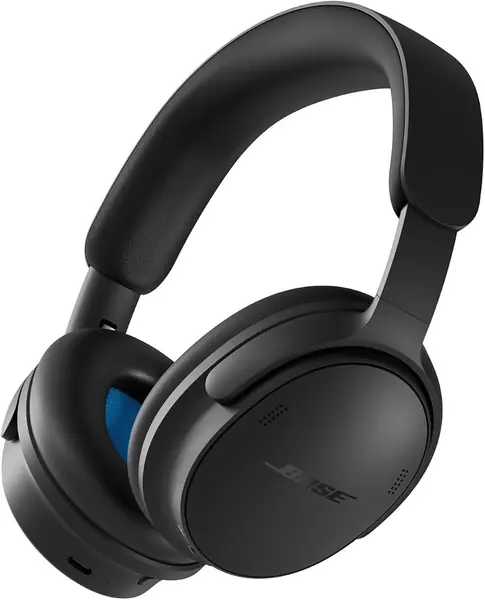
Eight ounces is light for over-ear headphones, and it is the first thing we notice about the Bose QuietComfort (2nd Gen). That low weight, plus the hard-shell case, makes this the pair we recommend first for travel: it disappears into a personal item and does not press on the crown of your head during a long connection. Bose's adaptive ANC is the most polished in this group for engine drone, and the wider headband and pill-shaped earcups distribute pressure better than the older QuietComfort shape.

The 24-hour battery rating is enough for a long weekend, and USB-C charging means one cable for the headphones and your phone. We also like that Bose keeps physical buttons for the core controls; they are easier to find by feel than touch panels when the cabin lights are down. Quiet, Aware, Immersion, and Cinema modes are there if you want them, but the main event is how little of the plane you hear with Quiet mode on.

Sound is balanced rather than bass-heavy, and the USB-C audio path is a real convenience if you want lossless from a laptop. The one trade-off is battery: 24 hours is the shortest run here, so a multi-day trip with heavy ANC use means keeping the cable handy. For most flyers, the lighter build and better case are worth that exchange.

Pros

  • Light 8-ounce build for long flights
  • Polished ANC and a comfortable headband
  • Hard-shell case and wired USB-C audio

Cons

  • Premium price compared with budget picks
Our verdict

We recommend the Bose QuietComfort (2nd Gen) as the travel default: light on the head, quiet in the cabin, and packed in a hard case that survives the overhead bin.
Check Latest Price
2

Soundcore Q20i Best Budget

90 /100
TKZ Score Outstanding

Key details

Weight
9.12 oz
Battery Life
40 hours with ANC
Wired Backup
3.5 mm AUX
Multipoint
Two devices
View on Amazon

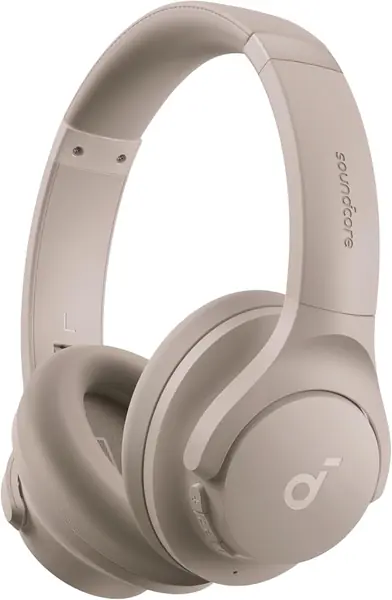
The least expensive pick here covers the travel basics: 40 hours of playback with ANC on, a five-minute top-up for short connections, and a 3.5 mm cable for seatback screens that do not speak Bluetooth. Multipoint pairing lets it stay connected to a laptop and phone at the same time, and the app EQ is a nice bonus at this end of the market.

We recommend the Q20i as the budget pick because it gets the important parts right. The ANC handles engine rumble and road noise well enough to take the edge off a commute, and the BassUp tuning gives music some punch without sounding muddy. The fit is the thing to check: clamping force is light, which is comfortable for long wear but can let the headphones slide when you lean forward or look down. If you have a small head or wear them for workouts, the Bose is the safer shape.

The app adds EQ presets and a BassUp switch, and the buttons are easy to find without looking. We also appreciate the 3.5 mm cable, which keeps the Q20i useful when a plane's seatback system is the only entertainment on offer. It is the one we reach for when the budget is tight and the trip is long.

Pros

  • 40 hours of ANC playback and fast top-up
  • Wired backup and two-device multipoint
  • App EQ and easy physical controls

Cons

  • ANC trails the Bose on deep cabin noise
  • Hinge plastic can crack with rough packing
Our verdict

If you want capable ANC and a wired backup without paying premium money, the Q20i is the budget travel pick we recommend first.

Check Latest Price
3

Sennheiser Momentum 4 Best Sound

87 /100
TKZ Score Excellent

Key details

Weight
10.3 oz
Battery Life
60 hours
Wired Backup
3.5 mm and 2.5 mm
Airplane Adapter
Included
View on Amazon

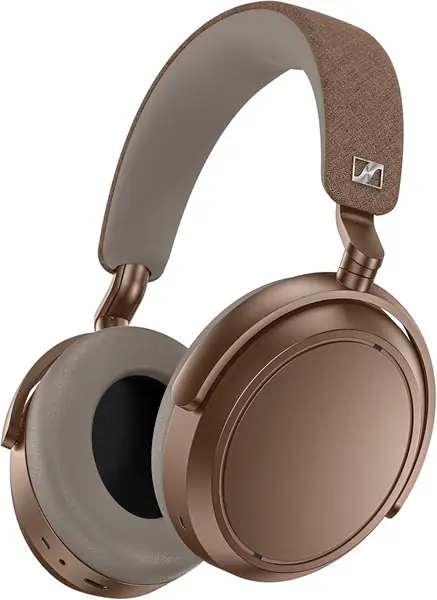
Sixty hours is a long time between charges, and it is the reason the Sennheiser Momentum 4 belongs in a travel bag. We think it is the best-sounding pair in this group: the 42 mm transducers and aptX Adaptive support give music a wide, detailed presentation, and the app EQ lets you tune the balance without fighting the headphones. The 60-hour battery means you can leave the cable at home on a week-long trip.

Comfort is good for long listening, and the 293-gram build is light enough to forget after a while. The carry case and airplane adapter are welcome travel extras, and the 3.5 mm and 2.5 mm cables cover seatback systems and a wired laptop. Adaptive ANC and transparency modes are on board, though the noise cancellation is a step behind the Bose on steady engine drone; this is a sound-first pair, not a silence-first one.

The touch controls are the part we like least. They work, but they are easier to trigger by accident than the physical buttons on the Bose or Soundcore, especially when you pull the headphones off. The Momentum 4 still earns its place for the traveler who wants the best audio and the longest gap between charges, and who can live with ANC that is good rather than class-leading.

Pros

  • Best sound quality in this group
  • 60-hour battery for long trips
  • Carry case and airplane adapter included

Cons

  • Bluetooth connectivity can be inconsistent
Our verdict

We recommend the Momentum 4 for travelers who care most about sound and battery, with the understanding that its ANC is good rather than class-leading.

Check Latest Price
4

TAGRY A18 Best Battery Life

86 /100
TKZ Score Excellent

Key details

Weight
9.17 oz
Battery Life
120 hours
Wired Backup
3.5 mm cable
Noise Control
45 dB hybrid ANC
View on Amazon

A 120-hour battery is overkill for a weekend and exactly right for a long trip. The TAGRY A18 pairs that number with 45 dB hybrid ANC, a six-microphone ENC array for calls, and Bluetooth 6.0, which is a lot of specification for a budget pair. The 0.26 kg build is light, and the 3.5 mm cable gives you a wired fallback when the battery or the seatback screen demands it.

The memory foam earcups and adjustable headband are built for long wear, and the folding design helps it fit into a bag. We like the transparency mode for announcements and the physical controls for volume and playback. The 45 dB figure is a specification, not a promise about a specific cabin, so the fit matters: a good seal is what turns the number into quiet.

We recommend the A18 for long trips where charging is inconvenient and for travelers who want a wired backup without spending much. The ANC specs are strong, but the Bose remains the quieter choice for the most demanding cabins, and the Soundcore is the safer budget all-rounder. The A18 is the battery play.

Pros

  • 120-hour battery for long trips
  • 45 dB hybrid ANC and six-mic calls
  • Light 0.26 kg build with wired backup

Cons

No notable drawbacks to flag.

Our verdict

We recommend the TAGRY A18 for long trips where charging is inconvenient and a wired backup matters; it is the battery-first pick of this group.

Check Latest Price
5

KVIDIO WH304A Best for Spare Pairs, Kids, and Very Tight Budgets

85 /100
TKZ Score Excellent

Key details

Weight
12.3 oz
Battery Life
70 hours
Wired Backup
3.5 mm cable
Noise Control
Hybrid ANC
View on Amazon

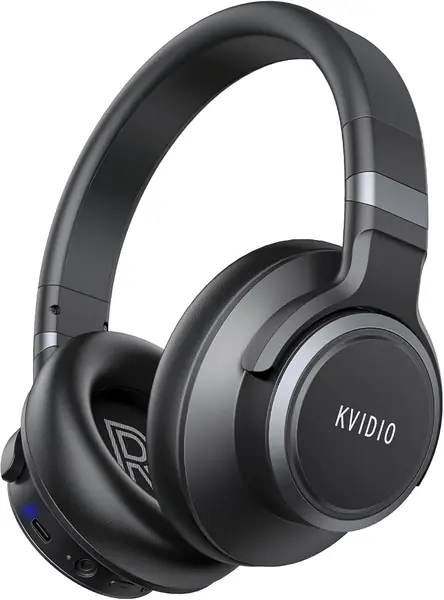
At the ultra-budget end of this group, the KVIDIO WH304A covers the travel checklist: 70 hours of playback, 40 with ANC on, transparency mode, and a 3.5 mm cable. That is a useful set of basics for a short trip, a car bag, or a kid's backpack, and it does not ask you to treat the headphones like an investment.

The fit is one of its better tricks. The soft earpads sit around glasses and behind-the-ear hearing aids without pinching, and the 0.35 kg build does not feel heavy after an hour. Controls are small and take a few trips to learn by feel, but the soft pads and light build are friendly for long wear.

We recommend the KVIDIO as a spare pair, a first ANC set for a kid, or a budget travel backup. It is not the quietest or the most refined headphone here, but it is comfortable, it has a wired cable, and it costs little enough to bring along without worry.

Pros

  • 70 hours total and 40 with ANC
  • Comfortable around glasses and hearing aids
  • Transparency mode and wired backup

Cons

  • Durability is a gamble at this price
  • Volume can run low on quiet tracks
Our verdict

We recommend the KVIDIO as a spare pair, a kid's first ANC set, or a tight-budget travel backup; it covers the basics without asking for much.

Check Latest Price
6

YMOO Y7Pro Seatback Entertainment with the Included Adapter

84 /100
TKZ Score Excellent

Key details

Weight
9.45 oz
Battery Life
100 hours
Airplane Adapter
Included
Bluetooth
6.0
View on Amazon

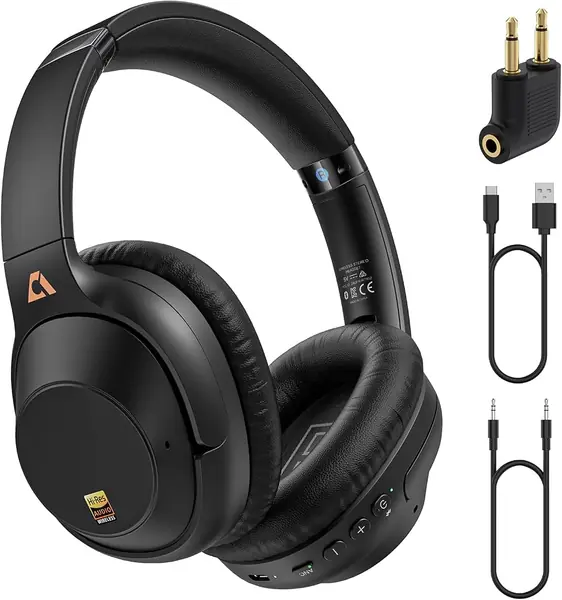
The Y7Pro includes the one travel accessory most headphones leave out: an aircraft adapter. That small part, plus the 3.5 mm cable and wired ANC mode, means you can plug into a seatback screen even when the airline's Bluetooth setup is nonexistent. The 100-hour battery, LDAC support, Bluetooth 6.0, and 268-gram build make it a credible long-haul companion on paper.

We recommend the Y7Pro for seatback entertainment and long battery life rather than for the quietest cabin. The ANC takes down engine rumble and air-conditioning hum, but it is less consistent with voices and changing noise, and the sound is clear rather than rich. The included pouch and adapter are the details that make it feel purpose-built for a flight, and the wired mode is a genuine fallback when the battery runs down.

The controls are physical and easy to find, and the over-ear cups sit around the ear rather than pressing on it. The app adds EQ control, and transparency mode is there for announcements, but this is a travel tool rather than a premium pair. It is a travel tool with the right plugs in the box.

Pros

  • Aircraft adapter included for seatback screens
  • 100-hour battery and wired ANC mode
  • Light 268-gram build with LDAC

Cons

  • Charging faults can appear early
Our verdict

We recommend the Y7Pro for seatback screens and long battery, with an adapter and wired mode that make it a practical flight companion.

Check Latest Price

How We Tested Noise-Canceling Headphones for Travel

We started with a shortlist of about 40 pairs sold specifically for travel, sorted them by price, ANC type, claimed playtime, charging setup, and whether the companion app let us adjust EQ or transparency, then cut it down to the 14 we could live with for eight months. The point was to cover the range a real shopper weighs: a budget pair you won't mourn if it gets left in a seat pocket, and a premium set you expect to keep for years.

Testing happened where headphones actually get used, not on a bench. Each pair flew at least one long-haul route, rode a twice-weekly commuter train, sat through open-plan office hours, and came along on weekend trips stuffed into a tote. On flights, we wore each pair for a continuous six hours and logged exactly where the headband and earcups started to bite, and we had testers with different head sizes and a glasses-wearer try every pair to see how far the headband slid and whether the cups sat flat against the jaw.

For cancellation, we sat in the same rear-cabin seat on every flight and noted whether the engine drone dropped to a hum or stayed a hiss, and whether our ears felt pressurized after half an hour. Calls got tested by recording voice memos on a windy platform and in a packed terminal, then listening back for how much surrounding noise came through. We also flipped to transparency at gate announcements to hear whether voices sounded natural or robotic.

Battery claims got checked the hard way: charged to full, ANC on at a comfortable volume, run until shutdown, with a note on how many hours a 10-minute top-up actually bought. For connectivity, we paired each pair to a phone and a laptop at once, walked two rooms away, and stood in the busiest corner of a station to see if the signal stuttered or dropped and whether it reconnected on its own. Back at the desk, every pair went into a bag daily so we could watch the hinges, earpad seams, and headband padding through month eight.

How to Choose Noise-Canceling Headphones for Travel

Start with the noise, not the number

ANC headphones are best at steady low-frequency sound: engine drone, air-conditioning hum, and the general rumble of a plane. They are less reliable against voices, crying babies, and sudden clatter, and no spec sheet tells you how much of that you will hear. Fit and seal do more than the marketing number.

Spend more when engine drone is the enemy and you want the most polished cancellation. Spend less when you mostly want to take the edge off a commute or a noisy gate area. Either way, try the headphones with a fan running or a cabin recording before a long trip.

Weight and packability decide whether they come with you

An 8-ounce pair feels different from a 0.35 kg pair after hour three, and a hard case protects the hinges in a bag that gets shoved under a seat. Folding helps, but folded headphones without a case are not really travel-ready. Check the case and the hinge before you check the folded dimensions.

The Bose QuietComfort (2nd Gen) is the easy example: light on the head and sold with a hard-shell case. A lighter pair that lives in a soft pouch is still a reasonable choice if you keep the pouch inside a larger bag rather than at the bottom of one.

Plan for a wired backup

Many seatback screens still want a cable, and some airline jacks need a two-prong adapter. Bluetooth-only headphones can leave you with nothing to watch on a long flight. A 3.5 mm input, a USB-C audio path, or an included airplane adapter turns a good pair into a practical one.

The YMOO Y7Pro is the obvious pick here because the adapter is in the box. The Bose QuietComfort (2nd Gen) includes a 3.5 mm to USB-C audio cable. Check the plug, not just the Bluetooth version, before you rely on the plane's entertainment system.

Match battery life to your longest leg

Twenty-four hours is enough for most round trips, while 60 hours and up suit multi-day travel, camping, or anyone who hates charging. The headline number usually assumes a lower volume or no ANC, so look for the ANC rating when it is given and plan for less real-world time.

USB-C charging and a quick top-up are more useful than a huge number if you tend to forget the cable. A 24-hour pair with a 15-minute boost can be easier to live with than a 100-hour pair that takes three hours to charge.

Fit and controls matter after hour four

Clamping force is a Goldilocks problem: too light and the headphones slide when you lean forward, too tight and your jaw aches. Glasses and thick hair change the seal, and touch controls can be harder to use than buttons when you are wearing a beanie or trying not to wake a seatmate.

Look for a return window you can live with, wear the pair for an hour before a trip, and favor physical controls if you adjust volume often. A wider headband and soft pads are worth more on a long flight than an extra audio mode.

Frequently Asked Questions

Final Verdict

We recommend the Bose QuietComfort (2nd Gen) for most travelers because it combines the most polished ANC in this group with an 8-ounce build and a hard case that makes it easy to pack. If budget is the deciding factor, the Soundcore Q20i is the value pick. If sound and battery matter more than maximum quiet, the Sennheiser Momentum 4 is the alternative. For seatback screens, the YMOO Y7Pro has the adapter in the box.