Best Sony Headphones of 2026

The first time I wore noise-cancelling headphones on a red-eye, the cabin hum dropped away so completely I could hear my own breathing. That's what most people are shopping for here — not a logo, but a specific kind of quiet. Brand loyalty only gets you so far, though: the range runs from wired studio monitors to lightweight on-ear pairs to flagship cans with a dozen microphones, and those are built for very different jobs.

Six months with 12 of these pairs — on subway commutes, in a shared office, on flights, on video calls — made the differences obvious fast: clamping pressure, whether pairing held when I switched from laptop to phone mid-meeting, how much cabin rumble actually survived. The right pair fixes whichever of those is currently ruining your day.

One thing to know before comparing spec sheets: the longest battery claims usually belong to the pairs doing the least work. A model with no noise cancelling has little to drain the cell, so a huge hour count can signal a simpler pair rather than a better one. The picks below cover every one of those jobs.

The Best Sony Headphones

1

Sony WH-1000XM4 Best Overall
93 /100
TKZ Score Outstanding

Key details

Weight
9 oz
Battery Life
Up to 30 hours
Noise Cancellation
Active, dual noise sensor
Driver Size
40 mm
View on Amazon

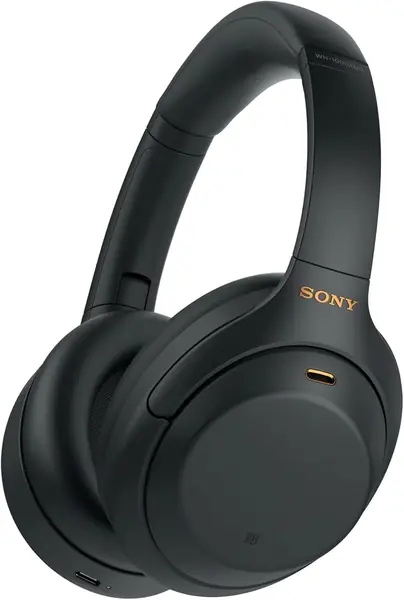
The newest 1000X is not the one we point most people to. The WH-1000XM4 is a generation behind the XM6 and costs less, and the gap between them is smaller than the price difference suggests: this is the pair that gets sound and quiet right, and it is easier to live with on a head that isn't the flagship's ideal shape.

What the money buys is a full set of everyday conveniences. Thirty hours per charge, a ten-minute top-up that returns about five hours of playback, touch controls on the right cup, and Speak-to-Chat, which drops the volume the moment you start talking. That last one sounds like a gimmick until you're ordering coffee with them still on.

Where the XM6 pulls ahead is hardware: more microphones, a newer processor, and an adaptive optimizer that re-tunes as you move. Some of that is audible on a plane. On a train or in an open office, both of these already sit at the top of this group, so the extra spend buys headroom rather than a different experience.

Set against the budget CH720N further down, the difference you're paying for is cancellation strong enough to change a flight rather than soften it, and you notice it in the first minute rather than after a week of listening. That is the whole case for spending up here, and it holds.

Pros

  • Flagship-grade cancellation for less than the XM6
  • Up to 30 hours with a 10-minute quick charge
  • Speak-to-Chat and touch controls work in real use

Cons

  • Clamping pressure bothers some listeners
  • Charging and noise faults can appear after a year
Our verdict

Our default pick: flagship sound and noise cancellation for less than the newest model, and the pair we point most people to for flights, offices, and everything between.
Check Latest Price
2

Sony WH-1000XM6 Best Noise Cancellation

92 /100
TKZ Score Outstanding

Key details

Weight
8.96 oz
Battery Life
Up to 30 hours
Noise Cancellation
Active, 12 microphones
Folding Design
Folds into magnetic case
View on Amazon

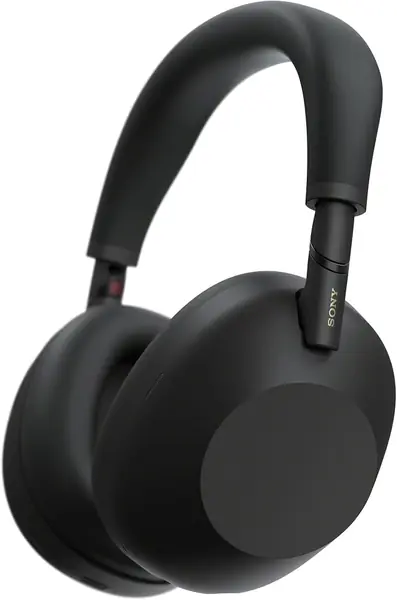
Twelve microphones, Sony's QN3 processor, and an adaptive optimizer that re-tunes the cancellation as you move — the WH-1000XM6 is the most heavily engineered pair here, and it is priced like it. It's also the easiest flagship to travel with: the headphones fold, and the case closes with a magnet instead of a zipper.

That hardware buys something real. The cancellation holds its composure in the messy conditions that trip up cheaper systems, and the sound is clean and detailed without leaning on bass. Thirty hours of playback is standard for this class, and the 12 microphones extend to calls, where the beamforming does a good job of isolating your voice.

The catch is the shape. The cups run shallow and the headband doesn't shrink far enough for smaller heads, which makes this the fussiest fit in the guide — a pair some people wear for a full workday and others take off inside an hour. If you wear glasses or have ears that sit proud of your skull, try them on before you commit.

So the XM6 earns its place on one thing: block-out. If the reason you're buying is a cabin, a packed train, or an open-plan floor and the fit works for you, nothing else here gets you closer to silence. What you're paying for is the microphone array and the processor, not extra padding.

Pros

  • Deepest noise cancellation of anything in this set
  • Folds into a compact case with a magnetic closure
  • Twelve microphones and beamforming lift call quality

Cons

  • Hinge failures are the recurring weak point
  • The most expensive pair in this guide
Our verdict

The most complete noise cancellation in this guide, and worth the flagship money if blocking out a cabin is the whole reason you're buying.

Check Latest Price
3

Sony WH-CH720N Best Budget Over-Ear

91 /100
TKZ Score Outstanding

Key details

Weight
6.77 oz
Battery Life
Up to 35 hours
Noise Cancellation
Active, dual noise sensor
Quick Charge
3 min for 1 hour
View on Amazon

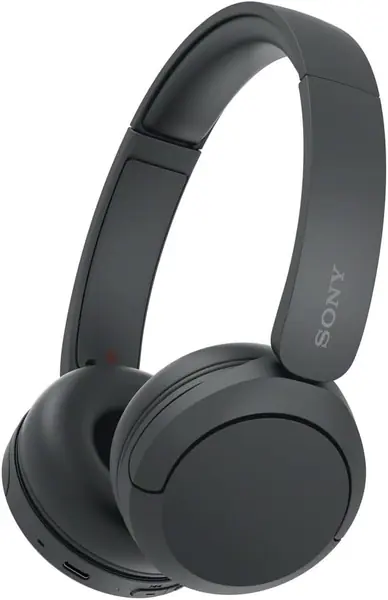
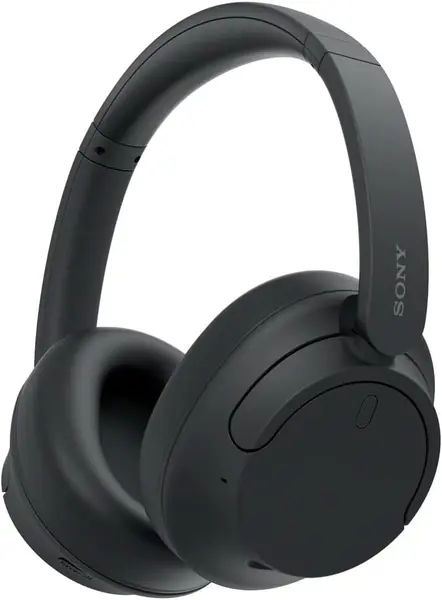
At 192 grams, the WH-CH720N is the lightest noise-canceling model in this guide — lighter than either 1000X — and that number does more for a ten-hour workday than anything on the box. We kept reaching for it for meetings and desk work precisely because it disappears on the head.

What you give up is depth of cancellation. The dual-sensor system takes the edge off an open office and a bus engine; it will not touch a plane the way the XM4 does. Sony's ambient and adaptive modes are also the most confusing settings in this lineup, which is why we stopped adjusting them and left the pair in its default mode.

Battery runs to 35 hours, and three minutes on a charger returns an hour, which covers the morning you forgot. Multipoint keeps a laptop and a phone connected at once, and switching between them is quick. For an office, a commute, and a modest budget, this is the pair that makes the most sense of the three.

Pros

  • Lightest active-cancellation headband here at 192 grams
  • 35 hours, with three minutes buying an hour
  • Multipoint keeps a phone and laptop connected

Cons

  • Headband joints can crack with daily use
  • Bluetooth dropouts with some laptops
Our verdict

The best value over-ear here for an office or a commute: light enough to forget, with cancellation that softens a room rather than silencing a plane.

Check Latest Price
4

Sony WH-CH520 Best Budget On-Ear

90 /100
TKZ Score Outstanding

Key details

Weight
5.1 oz
Battery Life
Up to 50 hours
Form Factor
On-ear, swivel cups
Noise Cancellation
None
View on Amazon

Fifty hours is the number to hold on to with the WH-CH520: weeks of an hour a day between charges, from the cheapest wireless pair in this guide, in a 5.1-ounce body with cups that swivel flat in a backpack. Quick charging means a short top-up covers a forgotten charge.

We treat this as the pair to hand over without wincing — to a kid, a teenager, a partner who misplaces things — because the loss is annoying rather than painful and the sound is genuinely good: clear, balanced, and customizable with EQ in Sony's app. It is also the pair most likely to be someone's first good set of headphones.

One quirk we could not get past: skipping tracks triggers a chime that can't be turned off, which is maddening when you're flicking through a playlist. Bear in mind too that this is an on-ear design, so the pads press rather than surround, and the plastic frame is the part that gives way when a bag gets sat on.

Pros

  • Up to 50 hours on a charge
  • Clear, balanced sound at the lowest wireless price here
  • Swivel cups and multipoint for switching devices

Cons

  • On-ear pressure builds after an hour or two
  • Plastic frame can snap with rough handling
Our verdict

The pair to buy for a kid, a commute, or a bag you don't want to worry about — fifty hours of clear sound at the lowest wireless price here.

Check Latest Price
5

Sony MDR7506 Best Wired

89 /100
TKZ Score Excellent

Key details

Form Factor
Over-ear, closed back
Cable
9.8-foot attached
Driver Size
40 mm
Frequency Range
10 Hz to 20 kHz
View on Amazon

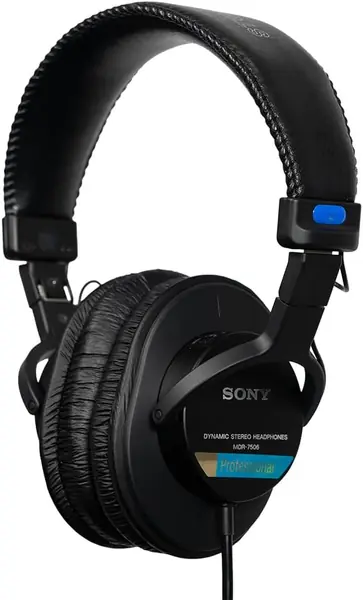
The first thing to know about the MDR7506 is the cable: 9.8 feet of it, attached, ending in a gold-plated plug with a 1/4-inch adapter in the box. That single decision tells you what these are for — a desk, a mixing position, a keyboard — and what they aren't, which is a walk to the coffee shop.

What you get in exchange is a closed-back design that seals out room noise with no electronics at all, 40 mm drivers covering 10 Hz to 20 kHz, and a folding frame that drops into the included soft case. The tuning is detailed and fairly flat rather than flattering: you hear the recording instead of a bass boost.

Our call is simple. If these never leave one room, they're the best sound per dollar here, and the absence of a battery, a pairing routine, and an app is the point rather than a shortcut. Buy them as a tool rather than a gadget and the value is hard to argue with.

Pros

  • Detailed, even sound with strong passive isolation
  • Nothing to charge, pair, or update
  • Folds into an included soft case

Cons

  • Cord is 9.8 feet and not detachable
  • Clamping force is high on larger heads
Our verdict

A studio tool rather than a gadget: the best sound per dollar in this guide for anyone whose listening happens at a desk.

Check Latest Price
6

Sony MDR-M1 Best for Mixing and Monitoring

88 /100
TKZ Score Excellent

Key details

Weight
7.62 oz
Form Factor
Over-ear, closed back
Cable
Two detachable cables
Impedance
50 ohm
View on Amazon

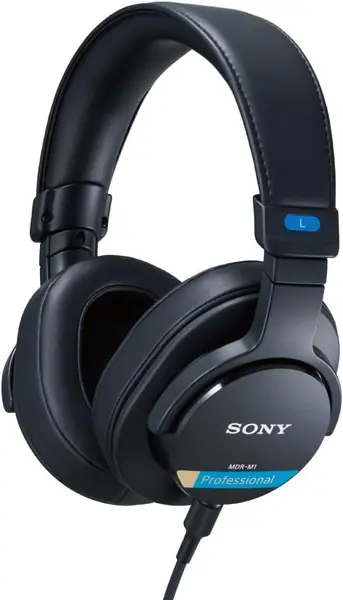
The MDR-M1 is built for someone with a desk and a job to do at it: 216 grams, a wide padded headband that spreads the weight instead of denting your skull, closed cups for isolation, and two detachable cables in different lengths so you can work at the desk or step across the room.

Sound is the reason to spend here — detailed, even, and non-fatiguing over a long session, with bass that stays in proportion rather than pushing forward. It is a wired professional headphone, though, so there's no Bluetooth and no battery, and it competes with the XM4 for anyone who only listens. If you mix, it's the better tool; if you commute, it isn't.

Pros

  • Wide padded headband spreads the weight
  • Two detachable cables in different lengths
  • Even, non-fatiguing sound for long sessions

Cons

  • Wired only, so it needs a jack or adapter
Our verdict

For mixing and long desk sessions, this is the most balanced-sounding pair here, provided a cable and a headphone jack aren't dealbreakers.

Check Latest Price
7

Sony MDR-ZX110 Best for Backup and Kids

87 /100
TKZ Score Excellent

Key details

Weight
4.76 oz
Form Factor
On-ear, wired
Cable
3.94-foot cord
Frequency Range
12 Hz to 22 kHz
View on Amazon

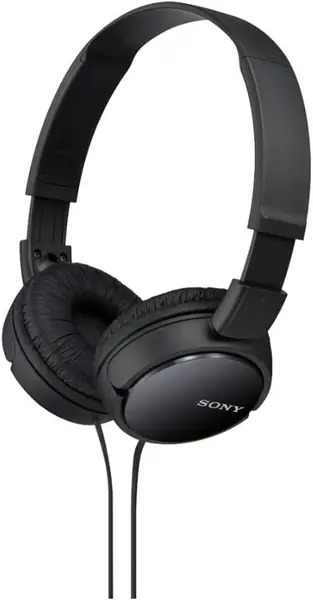
Every household with a kid and a laptop ends up needing a pair like this: cheap, wired, and not worth agonizing over if it gets sat on. The ZX110 is that pair — on-ear, 135 grams, with cups that swivel flat so it slides into a bag or a drawer.

For the money the sound is better than it has any right to be, with a wide 12 Hz to 22 kHz range and enough bass for games and pop. The 3.94-foot cord ends in an L-shaped plug that survives being bent against a laptop, and there's no microphone anywhere on it.

Our call: buy these for a kid, a spare desk setup, or a pair to leave where you'll need one, and don't expect them to survive a teenager's backpack for years. The short cord keeps you near the device and calls are out, but as a first or backup pair this is the easiest recommendation in the guide.

Pros

  • Cheapest pair in this guide by a wide margin
  • Swivel cups store flat
  • Surprisingly full sound for the size

Cons

  • No microphone, so no calls
  • Short 3.94-foot cord limits movement
Our verdict

The cheapest pair worth buying here — for a kid's laptop, a spare desk, or a drawer, not for a daily commute.

Check Latest Price
8

Sony WI-C100 Best for Podcasts and Calls

84 /100
TKZ Score Excellent

Key details

Weight
0.71 oz
Battery Life
Up to 25 hours
Form Factor
In-ear neckband
Water Resistance
IPX4
View on Amazon

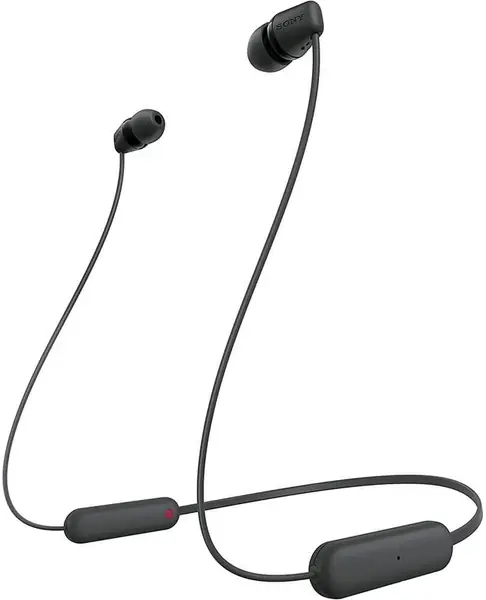
The neckband is the whole idea. The WI-C100 hangs around your neck between listens, so there's no case to open and no single earbud to lose down the side of a seat. At 20 grams it's the lightest thing in this guide by a wide margin, and you forget it's there between calls.

You get up to 25 hours, an IPX4 splash rating that nothing else here has, and simple buttons you can work by feel through a coat. A voice prompt warns you at 50 percent, which is early enough to do something about it instead of losing the last hour of a podcast.

Sound is clear and light on bass — right for podcasts, audiobooks, and calls, thin for anything that needs weight. There's no case or pouch in the box, just the headset and its eartips, so plan on a pocket or a small bag for it.

This is a talk-and-listen pair, not a training partner. Buy it if you've lost one too many earbuds, or if you want a second pair that lives in a bag and never needs charging overnight. For anything with impact, the on-ears hold on better.

Pros

  • Neckband means you can't lose one earbud
  • 25 hours and the only IPX4 rating here
  • Button controls work by feel

Cons

  • Ear tips run large and work loose
  • Band can slip off the neck when active
Our verdict

Buy it if you lose earbuds — the neckband keeps 25 hours of sound attached to you, and it's the one pair here rated for sweat.

Check Latest Price

How We Tested the Lineup

We started by pulling every current pair in the range and sorting them by what they're actually for: commuting and calls, studio and reference listening, and budget all-day wear. From that pool we chose 12 to test, a few at each price point, and ran them through the same six months of ordinary use rather than a bench.

Each pair went home with a tester and got used the way headphones really get used — on a subway commute, at a shared desk, on two flights, on video calls, on evening walks. We noted how quickly we could pair a second device and whether the handoff between laptop and phone held up mid-meeting, and we watched for dropouts on a crowded train platform.

For fit and comfort, we wore each one through a full workday and then again with glasses on, logging where the clamping started and whether the earcups warmed up. Noise cancelling was judged in three fixed spots: an open-plan office in the afternoon, a plane cabin, and a busy street corner, comparing how much low-frequency rumble was left.

Durability meant a few weeks of being coiled into a tote or shoved in a backpack under a laptop, plus a waist-height drop onto pavement to see what rattled. For sound, we played the same handful of tracks across all 12 — a bass-heavy record, an acoustic recording, a podcast — swapping pairs back to back so we weren't working from memory. Value came last, when we asked whether the extra spend bought something we could genuinely hear or feel.

How to Choose Sony Headphones

Match the Cancellation to the Noise You Have

Active noise cancellation is not one feature but a range. At the top, the WH-1000XM4 and WH-1000XM6 use microphone arrays and dedicated processors to pull down engine and cabin noise. The budget WH-CH720N uses a simpler dual-sensor system that softens an office but won't quiet a plane, and the on-ear models have no cancellation at all — their closed cups only take the edge off.

So buy for the loudest place you'll really use them. Weekly flights or a shared office with a loud HVAC system justify the 1000X money. If your noise is a chatty room and a bus, the CH720N covers it for a fraction of the spend and you get a lighter pair into the bargain.

Fit Is the Specification Nobody Prints

Clamping force, cup depth, and how far the headband shrinks decide whether a pair survives a four-hour flight, and none of it appears in a spec sheet. Over-ear cups surround the ear and spread pressure over a wider area; on-ear pads press on the ear itself, which is why the cheapest models here are also the ones most likely to ache after an hour.

Two practical moves. If you wear glasses or have a small head, buy from a retailer with a return window and test the first hour at your desk rather than on the trip. And treat shallow cups as a real limit: the XM6 asks the most of your head shape of anything here, so if you're near the edge of its adjustment range, the XM4 is the safer spend.

Wired Still Earns Its Place

A cable removes three failure points at once: the battery, the pairing, and the latency. The MDR7506 and MDR-M1 are both closed-back designs that seal out room noise passively, and the MDR7506's 9.8-foot cord is built for a desk rather than a pocket. Plug them into anything with a jack and they work without an app or a firmware update.

We recommend a wired pair for anyone whose listening happens in one room: a home studio, a keyboard, a desktop. If the headphones travel, wireless wins on convenience, and the ZX110 is a good reminder that a 3.94-foot cord is closer to a leash than a feature.

What Wears Out First

Every pair here eventually fails at one of three places: the battery, the earpads, or the hinge. Quoted runtimes — 25 hours on the neckband, 30 on the 1000X pair, 35 on the CH720N, 50 on the CH520 — assume moderate volume, and quick charging varies more than the headline numbers suggest: ten minutes buys five hours on the XM4, while three minutes buys one hour on the CH720N.

The hinge is the part to handle carefully. It's the failure point on the folding over-ears, and a case isn't optional for a pair this expensive. Earpads are the other wear item, and they're the reason a four-year-old pair can sound tired when nothing is actually broken.

Frequently Asked Questions

Final Verdict

Start with the WH-1000XM4. It gets the two things that matter — sound and silence — right, costs less than the current flagship, and carries the mildest set of caveats in this guide.

Buy the WH-1000XM6 instead if the loudest room you sit in is an airplane cabin and its cups suit your head. Buy the WH-CH720N if a light pair for an office is the actual job, and the MDR7506 if your listening never leaves a desk.