Best High-End Earbuds of 2026

The money in a high-end pair of earbuds doesn't go where you'd guess. A $60 set and a $250 set both play music; what separates them is whether the noise cancellation silences a subway car without leaving your ears feeling pressurized, and whether the person on the other end of a call can still hear you next to a coffee grinder. I've cycled through enough premium pairs to know a set can ace one of those and quietly flub the other. Over the past six months, my team and I lived with 12 pairs to find the ones that hold up across all of it.

Here's what surprises most first-time buyers: the seal matters more than the driver spec sheet. A tip that doesn't sit right drains your bass and your noise cancellation at the same time, which is why a pair that reviews brilliantly can sound thin in your own ears twenty minutes in. Spatial audio and hi-res codecs are worth having, but they're seasoning — not the meal.

What follows are the sets that survived months of commuting, calling, and sweating, grouped by what they're genuinely best at, from call-first models to open designs that let the world in on purpose.

The Best High-End Earbuds

1

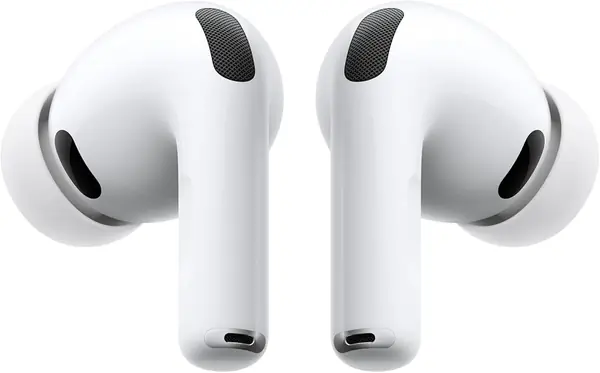
Apple AirPods Pro 3 Best Overall
89 /100
TKZ Score Excellent

Key details

Battery With ANC
Up to 8 hours
Noise Cancellation
Active, up to 2x AirPods Pro 2
Charging
USB-C
Heart Rate Sensing
Yes, 50 workout types
View on Amazon

Apple's third-generation Pro buds are the pair we hand to someone who wants one answer and no homework. They cost less than almost every other flagship in this guide and still compete at the top of the group on the two things that decide whether you're happy six months in: silencing the room and making music sound like music. Apple claims up to twice the noise reduction of the Pro 2, and the drop in low rumble on a train arrives fast enough that you stop noticing it, which is the point.

The tuning is fuller than earlier generations — real bass weight, cleaner detail up top, no glare on cymbals — and spatial audio earns its keep with films instead of smearing the stereo field. Then there's the feature list, which nothing else here matches: heart-rate sensing across 50 workout types, a hearing-aid mode, and Live Translation. We don't count features we'll never switch on, but these three are the sort you end up using by accident.

Where it stops is outright resolution. The Status Pro X pulls more texture out of a dense recording, and its LDAC support gives it more to work with on a compatible phone. The gap shows up in the last five percent of a well-recorded album and nowhere else, and we can live with it, because no rival here is this easy to live with day to day — case in a pocket, controls that don't misfire, nothing to think about.

Pros

  • Noise cancellation rivals anything in this group
  • Full, detailed sound with genuine bass
  • Heart rate, hearing aid and live translation
  • Undercuts most flagships on price

Cons

  • Headline features need an iPhone
  • Fit varies; some ears won't hold the tips
Our verdict

This is the pair we recommend first: top-tier noise cancellation, sound that holds up across genres, and a lower price than nearly every flagship in this guide.
Check Latest Price
2

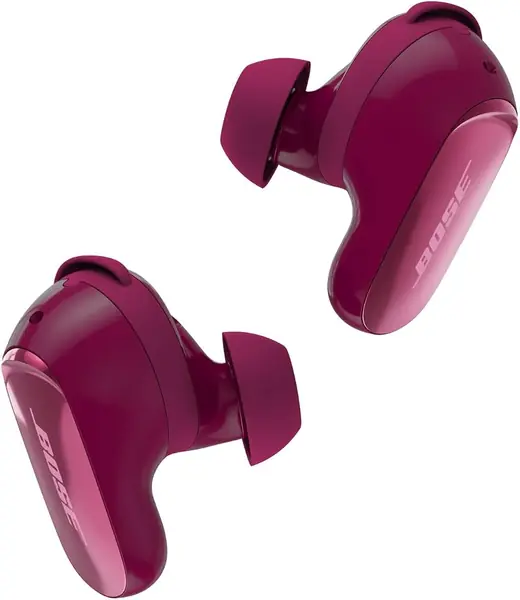
Bose QuietComfort Ultra Earbuds (2nd Gen) Best Noise Cancellation

87 /100
TKZ Score Excellent

Key details

Battery With ANC
Up to 6 hours
Noise Cancellation
Adaptive with ActiveSense
Water Resistance
IPX4
Fit Options
9 tip and band combinations
View on Amazon

Bose has been selling silence longer than anyone, and the second-generation QuietComfort Ultra is the pair we reach for when the noise itself is the problem — an engine, a ventilation system, the espresso machine two tables over. CustomTune measures your ear and reshapes both the cancellation and the EQ around it, which is why the effect lands harder here than on buds that ask you to pick a mode and hope for the best.

We think these earn their place on that one trick, and the comfort work is what makes it usable every day. Where they wobble is connection stability: dropouts that need a re-pair mid-session come up, and a pair that keeps doing it is a return rather than a project. Everywhere else the engineering shows — three tip sizes and three stability bands give nine combinations, and the umbrella-shaped tips seal without the pressurized feeling that makes some noise-cancelling buds exhausting after an hour.

Sound is warm and full rather than surgical, with enough detail to keep a complicated mix legible, and Immersive Audio is the party trick: head-tracked spatial that puts the band in front of you rather than inside your skull. The Deep Plum finish is the rare limited color that doesn't read as a novelty, which matters when you're spending flagship money on something you'll wear in public.

Pros

  • Cancellation built for engines and crowds
  • Nine tip and band combinations for a seal
  • Head-tracked Immersive Audio

Cons

  • Six hours per charge is the shortest here
Our verdict

If quiet is what you're shopping for, these are the most effective pair here — just plan on charging them more often than anything else in this guide.

Check Latest Price
3

Status Pro X Best Sound Quality

86 /100
TKZ Score Excellent

Key details

Battery With Case
Up to 32 hours
Noise Cancellation
Hybrid, 52 dB
Water Resistance
IP55
Driver Design
12mm dynamic plus dual balanced armature
View on Amazon

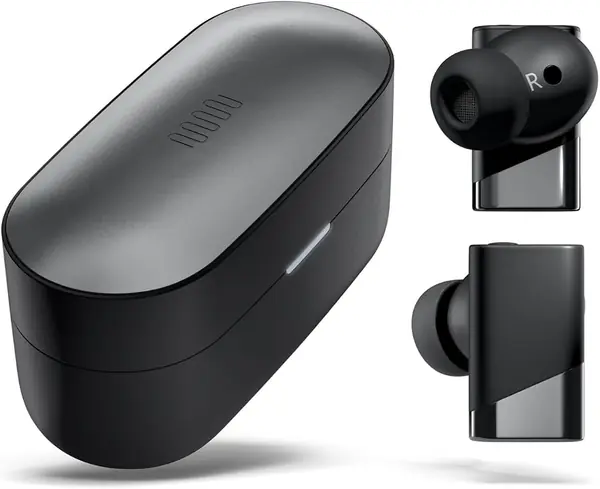
Three drivers in each earbud — a 12mm dynamic for the low end plus a pair of Knowles balanced armatures for the midrange and treble — is a wired monitor's approach to a wireless product, and it's why these are the most revealing pair in this guide. Dense recordings separate instead of smearing: you hear the room around a snare, the breath before a vocal line, the difference between a sampled kick and a played one. On a phone that supports LDAC, that detail survives the trip.

Cancellation is strong rather than class-leading. The 52dB figure on the box translates to a train carriage going quiet enough to work in, with a flight still audible at the edges. The rest of the spec sheet is unusually future-proof: multipoint, LE Audio, LC3, Auracast, Qi wireless charging and a locator in the app for the bud that inevitably goes under a couch.

What the app does well is the part most apps get wrong: the EQ is genuinely powerful, with enough range to take these from bright to warm, and the touch controls are remappable per side. What it won't change is the character. These are detail-first earbuds, and if you want warmth and thump, the Bose pair is the better match.

Pros

  • The most revealing sound in this group
  • LDAC, LE Audio, Auracast and multipoint
  • Deep EQ and remappable controls

Cons

  • Playtime falls well short of the rating with LDAC
  • Pairing can take a second attempt
Our verdict

Buy these if hearing more of the recording matters most to you — nothing else here separates a dense mix this cleanly, and you pay for it in playtime and pairing patience.

Check Latest Price
4

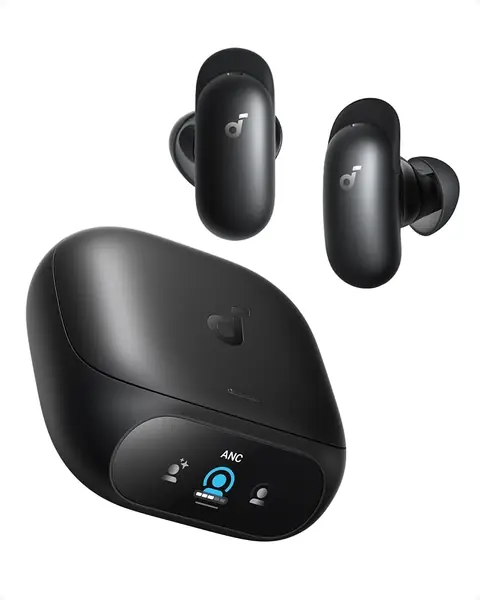
Soundcore Liberty 5 Pro Best for Calls

85 /100
TKZ Score Excellent

Key details

Battery With ANC
Up to 6.5 hours
Battery With Case
Up to 28 hours
Noise Cancellation
8-sensor adaptive ANC
Fit Options
5 ear tips, 3 fins
View on Amazon

The box claims a Guinness World Record for call quality, which sounds like marketing until you take a call with a range hood running. Six beamforming mics and Anker's Voiceloom processing did the work: the person on the other end got a voice, not a kitchen. If your day includes standing meetings from a shared office or a car, that's the feature worth paying for here.

The rest holds up better than the price suggests. An eight-sensor array driven by the company's Thus chip makes cancellation the surprise of this group — closer to the flagships than anything at this price has a right to be. Sound is customizable rather than opinionated: HearID builds an EQ around your hearing, and five ear-tip sizes plus three fins mean most ears can find a seal without aftermarket help.

So the case for these is narrower than the spec sheet suggests, and stronger for it. If your working day is calls, nothing else in this guide comes close for the money, and the sound and cancellation are good enough that you won't feel like you compromised. The buds are also small enough that a two-hour call doesn't leave your ears hot, which is not something we can say about every pair here.

Pros

  • Call clarity that holds up in noise
  • Cancellation punches above its price
  • Five tips and three fins for fit

Cons

  • Battery falls short of the rating with ANC on
  • Bluetooth dropouts interrupt playback
Our verdict

For anyone who lives on calls, these are the pair that keeps your voice clear in a noisy room while the sound and cancellation quietly overdeliver for the money.

Check Latest Price
5

Sennheiser Momentum True Wireless 5 Best for Long-Term Ownership

84 /100
TKZ Score Excellent

Key details

Battery With Case
Up to 40 hours
Water Resistance
IP54
Codecs
aptX Lossless, aptX Adaptive, AAC
Battery
User-replaceable
View on Amazon

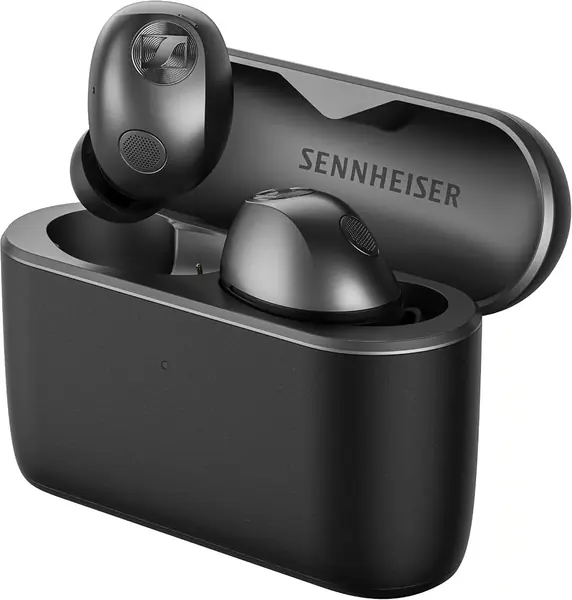
Sennheiser ships a small tool in the box, and it exists so you can open each earbud and swap the battery yourself. That single decision changes the ownership math: the part that ends most wireless earbuds' lives is the part you can replace here. Add up to 40 hours of charging in the case and you have the pair for someone who is tired of sealed-in obsolescence.

Sound is the other reason to look, with a caveat worth taking seriously. The 7mm TrueResponse driver has real resolution, and aptX Lossless on a supported phone gives it something to resolve, but the out-of-box tuning divides listeners: some hear a smooth, grown-up balance, others hear soft bass and forward treble. The in-app EQ closes most of that gap, and we think adjusting it is the first thing to do after pairing.

Fit runs snug, and smaller ears may find the medium tips too much — the four sizes in the box help, but these sit deeper than most. The touch panels want a deliberate tap rather than a brush of the finger. And aptX Lossless needs a supported Android phone; on an iPhone these fall back to AAC, which takes some of the shine off the headline codec.

Pros

  • User-replaceable battery extends the lifespan
  • Up to 40 hours with the case
  • aptX Lossless and aptX Adaptive support

Cons

  • Tuning needs EQ work on some ears
  • Touch controls need a firm, deliberate tap
Our verdict

These are for the buyer who keeps earbuds for years rather than seasons: a battery you can change yourself, 40 hours in the case, and sound that rewards five minutes in the EQ.

Check Latest Price
6

Samsung Galaxy Buds 4 Pro Best for Galaxy Phones

83 /100
TKZ Score Excellent

Key details

Battery With ANC
Up to 8 hours
Noise Cancellation
Active noise cancellation
Weight
5.5 g per earbud
Warranty
International model, no U.S. warranty
View on Amazon

If your phone has Samsung written on it, the math here is different from everyone else's. The Galaxy Buds 4 Pro pair instantly, hand off between Galaxy devices, and put every setting in a panel you already know. They also sound better than the price tag suggests: tight, punchy bass with clean highs, the kind of tuning that makes a commute feel shorter.

Cancellation is capable rather than transcendent, and battery is rated at 8 hours per charge — tied with the AirPods for the longest single-charge figure here. Fit is the variable. The stock tips don't suit every ear, and if the three sizes in the box won't seal, aftermarket tips are an extra purchase before these sound their best.

What we appreciate most is how little you have to think about them. Sound, controls, switching and charging all behave the way a Galaxy owner expects, and at 5.5 grams per bud a full shift passes without you noticing them. They're the least fussy pair in this guide, and for a lot of people that settles it.

Pros

  • Punchy, clean sound for pop and hip-hop
  • Eight hours on a single charge
  • Light 5.5 g buds for all-day wear

Cons

  • Sold as an international model with no U.S. warranty
Our verdict

Galaxy owners should start here: instant pairing, eight hours a charge and light buds, as long as you're comfortable buying an international model without U.S. warranty coverage.

Check Latest Price
7

Bose Ultra Open Earbuds (2nd Gen) Staying Aware

82 /100
TKZ Score Excellent

Key details

Battery With Case
Up to 28 hours
Design
Open-ear ear cuff
Spatial Audio
TrueSpatial with head tracking
Battery Per Charge
Up to 9 hours
View on Amazon

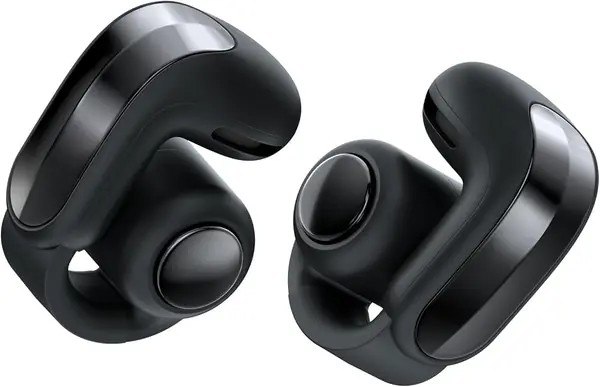
These don't go in your ear. The cuff clips around the outside of it, the driver fires toward the canal without sealing it, and the result is music with the room still in the mix. That's the design rather than a shortfall, and it changes what these are for.

The second-generation drivers have more low end than open designs usually manage, and TrueSpatial head tracking widens the image without hollowing it out. Comfort is the strongest in this guide by a distance — the flexible silicone joint rests against the ear rather than inside it, so nothing swells or aches after a long session — and the controls are physical buttons, which means you can find them without looking.

The trade is security. A cuff that rests against the ear will lose an argument with a hoodie, a helmet strap or a hard turn of the head, and losing one of these costs far more than losing a tip. Treat them as a two-handed product: back in the case whenever they come off, and not the pair for anything rougher than a walk.

Where they earn their keep is the long middle of the day — a shift at a desk, a walk to lunch, a call with a toddler in the next room — the situations where sealed earbuds make you feel deaf to your own life. Nine hours per charge and 28 with the case covers a working day, and the metallic finish and sturdier case mean you won't hide them when someone walks in.

Pros

  • Comfortable enough to forget you're wearing them
  • Keeps you aware of traffic and conversation
  • Head-tracked spatial audio

Cons

  • Cuffs can work loose during activity
  • No isolation in loud places
Our verdict

Buy these if you want music and the room at the same time — they're the most comfortable pair here and the only one built for awareness, but there's no silence on offer.

Check Latest Price
8

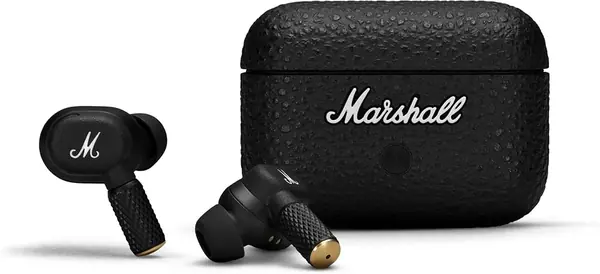
Marshall Motif II A.N.C. Standout Design

81 /100
TKZ Score Excellent

Key details

Battery With ANC
Up to 6 hours
Battery With Case
Up to 30 hours
Audio Codec
LE Audio ready
Case Material
70% post-consumer recycled plastic
View on Amazon

Marshall's earbuds don't look like anyone else's here: the stem shape, the script logo on the case, and a matte texture that reads as guitar amp rather than gadget. The buds and case are made from 70% post-consumer recycled plastic, including used electronics and water bottles, and in the hand the material doesn't feel like a compromise.

Sound is clear and balanced with a lift through the mids that flatters voices and guitars — a tuning with a point of view rather than a flat monitor. The rounded tips sit shallow rather than deep, which most ears tolerate well, and each bud weighs under four grams, so a long session doesn't turn into a jaw ache.

Cancellation is where these come back to earth. It takes the edge off an office and does very little for a train, which is the difference between paying for a feature and getting one. The rest of the sheet stays current: LE Audio ready, wireless charging, and 30 hours total with the case.

So the pitch is honest — buy them because you want a pair that looks and sounds like nothing else in this guide, and treat the noise cancellation as a bonus rather than the reason. What we didn't expect to enjoy as much is the restraint: the flat setting in the app is where the Marshall tuning makes its case, and the presets mostly get in the way of it.

Pros

  • Distinctive amp-inspired design
  • Clear, mid-forward tuning with character
  • LE Audio ready with wireless charging

Cons

  • Cancellation won't mask a train
  • Six hours per charge with ANC on
Our verdict

These are for the buyer who wants a distinctive pair with lively, mid-forward sound and doesn't need flagship silence — the look and materials carry the price.

Check Latest Price

How We Tested These High-End Earbuds

We started with the current flagship from every maker we've covered for years, then cut anything missing active noise cancellation, a companion app with EQ controls, or a stated water-resistance rating. From roughly 30 candidates that left 12 pairs, spanning clip-on open designs, triple-driver models, and the usual stem-and-bud shapes.

Each pair got a week of real life across six months: subway and bus commutes, a desk in an open-plan office, evening runs, a couple of flights, and a steady stream of video calls. We tried every ear tip in the box and wore each set in two-hour stretches to see where pressure built up, since a seal that fails after twenty minutes takes the bass and the noise cancellation with it.

For sound, we worked through the same playlist on every pair — bass-heavy hip-hop, acoustic singer-songwriter tracks, orchestral, and a podcast — and compared notes against a wired reference set. We listened with cancellation on and off, because the processing changes the tuning. For calls, we recorded voice memos beside a running faucet, a coffee grinder, and a busy street, then had a colleague on the other end rate how much they could actually understand.

Noise cancellation was judged on a subway platform and against a cabin-noise recording at my desk, including whether my ears felt pressurized afterward. We paired every set with both an iPhone and an Android phone, walked two rooms away to count dropouts, and ran the batteries flat at half volume with cancellation engaged. We also lived in the apps — building EQs, renaming buds, sitting through firmware updates — because that's where customizability either earns its place or turns into homework.

How to Choose High-End Earbuds

Decide What Kind of Quiet You Want

Cancellation in premium wireless earbuds is tuned for steady, low-frequency noise: engine drone, air conditioning, the hum of a train. It does less against sudden voices and clatter, and nothing at all against a bad seal. So treat a quoted depth figure as a starting point rather than a ranking — your ear canal is the last filter in the chain, and no tuning survives a gap.

If your noise is a busy office or a cafe, an adaptive mode that softens spikes matters more than raw depth; if it's a flight, prioritize the pair with the most stable cancellation at low frequencies. The Bose QuietComfort Ultra's ActiveSense is built for exactly that shifting environment.

Fit Is the Feature You Can't Return

Every premium pair ships with multiple tips, and some add fins or stability bands. That isn't padding: a shallow seal costs bass, cancellation and comfort at once, and no amount of processing fixes it. Test in the first week — play something bass-heavy, then talk, chew and walk. If the sound thins when your jaw moves, size up.

Buy where returns are easy, because the ear that fits ours may not be yours. The Bose QuietComfort Ultra's nine tip-and-band combinations are the most forgiving starting point here, while the Bose Ultra Open skips the canal entirely.

Codecs Only Pay Off With the Right Phone

Lossless audio needs three things in a row: a lossless source, a phone that supports the codec, and buds that accept it. iPhones top out at AAC, so the two headline codecs in this category — aptX Lossless and LDAC — are Android-only benefits. If you stream at standard bitrates, your money is better spent on fit and cancellation.

Where the chain does work, as with the Status Pro X and LDAC on a compatible handset, the gain is in fine detail and reverb tails rather than in volume or bass.

Battery Ratings and the Battery That Ages

"Up to" numbers assume modest volume and often no cancellation or spatial audio. Expect less with everything running. The figure that matters more is how the case fits your week: 28 to 32 hours of total charge covers a commute, while 40 hours is for people who forget to plug in.

The case is also the part that fails first, and the cell inside the buds is what eventually ends their life. The Sennheiser Momentum True Wireless 5 is the exception here, with a battery you can swap yourself using the tool in the box.

Ecosystem, Warranty and the Fine Print

Half the value of a flagship pair is software, and software follows the phone. Heart-rate sensing, Live Translation and the hearing-aid feature on the AirPods Pro 3 are iPhone features; the Galaxy Buds 4 Pro rewards a Samsung handset. Pair the wrong buds with your phone and you're paying for hardware you can't use.

Read the warranty line too. The Galaxy Buds 4 Pro in this guide is an international version sold without U.S. coverage, which changes what happens in month seven. Buy from a seller whose return policy covers that gap.

Frequently Asked Questions

Final Verdict

We recommend the AirPods Pro 3 to almost everyone shopping this category. They cancel noise at the top of this group, they sound good with anything you play, and they cost less than the flagships they compete with — the rare case where the default is also the sensible buy.

Two exceptions are worth naming. If silence is the whole point, the Bose QuietComfort Ultra Earbuds are built around cancellation first and comfort second. If you want the most detail out of a recording and you carry an Android phone that supports LDAC, the Status Pro X resolves more than anything else here.