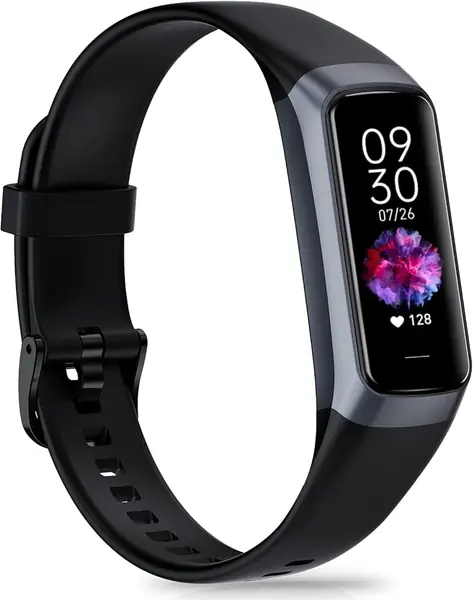
Best Fitness Trackers for Men of 2026

A fitness tracker earns its spot on your wrist by disappearing — you put it on, forget it, and the numbers show up when you want them. The trouble, I've found, is that the category pulls two ways: big-screen watches track almost everything and want charging daily, while slim bands last a week but ask you to give up GPS, calls, and a readable screen.

What I want is simple: readings I trust and a battery I don't think about. We've worn 12 trackers over the past eight months — through runs, gym sessions, swims, and every night in between — and that pairing is rarer than the listings suggest. A strap that shifts in your sleep hands you shakier sleep stages, so comfort matters as much as any spec, and a case that looks like a plastic brick stays in the drawer when you're dressing up.

The other divider is value: more money doesn't buy more sensors, it buys steadier ones, a better app, and hardware that survives a year of sweat. The picks below are the ones we kept wearing.

The Best Fitness Trackers for Men

1

Garmin vívoactive 5 Best Overall
90 /100
TKZ Score Outstanding

Key details

Battery Life
Up to 11 days
Display
AMOLED
Built-in GPS
Yes
Sports Apps
30+
View on Amazon

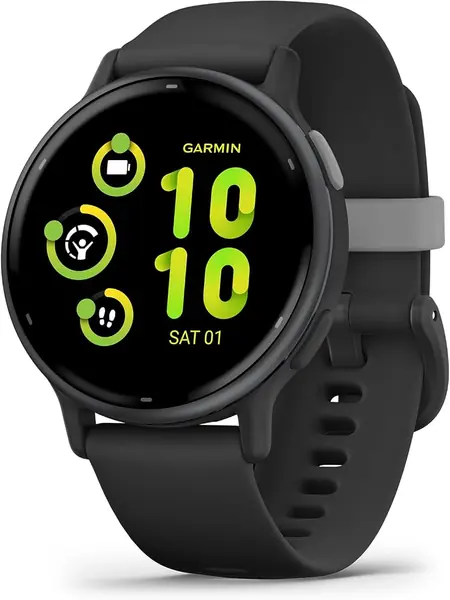
The 42mm vívoactive 5 is the fitness tracker we recommend first because it behaves like a training watch without feeling like one. The AMOLED display is bright, the case weighs 1.31 ounces, and the black finish slips under a work cuff. For a man who wants one watch for a run, a gym session, and a normal Tuesday, that balance is the strongest here.

The useful part is the range of data. Garmin includes more than 30 indoor and GPS sports apps, plus Body Battery, sleep coaching, HRV status, and a wheelchair mode that counts pushes instead of steps. We like that the recovery picture pulls from sleep, stress, and workouts rather than reducing health to a single step goal. Buttons supplement the touchscreen, so starting an interval does not depend on dry fingers.

The 11-day battery figure needs context. It assumes smartwatch mode, and GPS workouts or a bright always-on display pull it down; we treat a week of mixed use as the realistic target. A short charge before a long run covers most gaps, and that is still easier to live with than a nightly charging habit, especially if you wear it to bed for sleep coaching.

The 42mm case is the quiet advantage: big enough for glanceable data, small enough to sleep in. We also appreciate that the daily numbers sit on one scroll instead of being scattered across three apps. If you want a plain step counter, this is more watch than you need. If you want a training partner that still looks normal, it earns the top spot.

Pros

  • Balances GPS workouts with all-day wear
  • Body Battery and sleep coach add recovery context
  • Touchscreen plus physical buttons simplify workouts

Cons

  • Menu system takes time to learn
Our verdict

We recommend the vívoactive 5 for most men because it covers GPS workouts, sleep, and recovery in a light 42mm case that looks normal away from the gym.
Check Latest Price
2

Garmin Instinct E Best Rugged

89 /100
TKZ Score Excellent

Key details

Battery Life
Up to 16 days
Water Rating
10 ATM
Case Size
45mm
Built-in GPS
Yes
View on Amazon

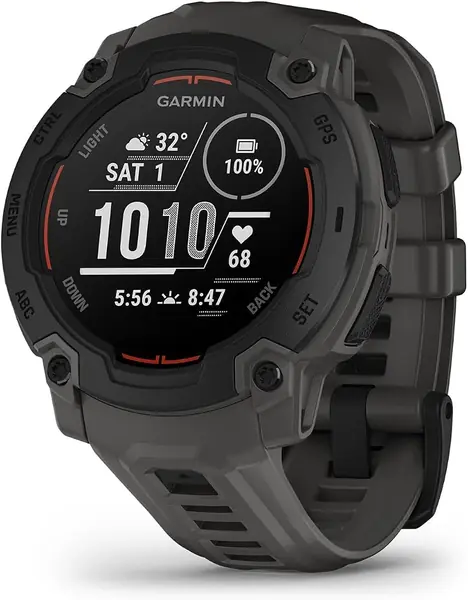
Built for the kind of day that ends with mud on your sleeves, the Instinct E is the toughest watch in this group. The 45mm case is fiber-reinforced polymer, the 10 ATM water rating covers open-water swims, and the watch is engineered to MIL-STD-810 for shock and temperature. At 48 grams it still feels like a watch rather than a wrist weight.

We like the button-only control scheme for the same reason we like the monochrome display: it works when your hands are wet, gloved, or both. You get built-in GPS, a 3-axis compass, a barometric altimeter, and multi-GNSS support, so navigation stays on your wrist rather than in your phone. That makes it the pick for hiking, trail runs, and anyone who has killed a touchscreen in cold rain. The 16-day battery is the other half of the argument.

The trade-off is visible before you open the app. A 0.9-inch monochrome screen is not the place for colorful watch faces or long messages, and the button-driven menus will feel like work if you are coming from an Apple Watch. We think that is the right compromise for a rugged tool, not a flaw to apologize for. The 16-day rating leaves room for GPS sessions, though heavy navigation still eats into it.

Pros

  • Survives rough treatment and open water
  • Built-in GPS, compass, and altimeter
  • Button controls work with gloves and wet hands

Cons

  • 45mm case sits large on narrow wrists
Our verdict

The Instinct E is our rugged pick: it brings 10 ATM protection, built-in navigation, and a two-week battery to hikes, trail runs, and wet weather.

Check Latest Price
3

Apple Watch Series 12 Best for iPhone

88 /100
TKZ Score Excellent

Key details

Case Size
46mm
GPS
Built-in
Safety
Fall and crash detection
Heart Health
HRV every 5 min
View on Amazon

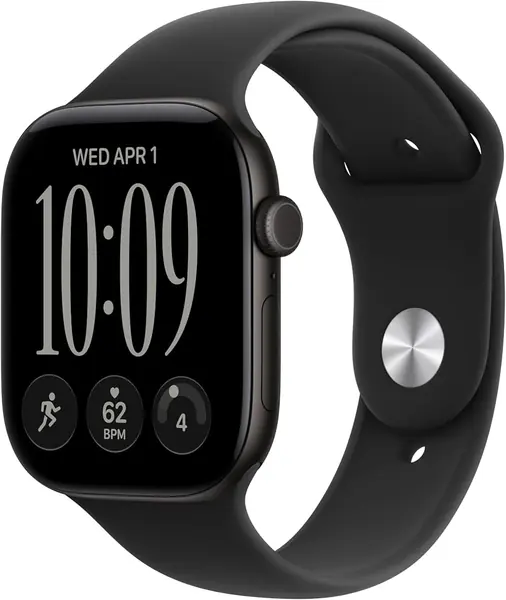
The Series 12 is the least specialized fitness tracker here, and that is its appeal. It is a full smartwatch with a 46mm aluminum case, a black sport band, and the polished app and safety ecosystem that make an iPhone more useful. We put it on expecting a smartwatch and came away treating it as a health companion.

The health case is stronger than a step count. Apple measures HRV as often as every five minutes, gives a daily sleep score and Vitals overview, and adds a readiness view that weighs training load and recovery. We found that combination more useful than a single workout summary, because it answers whether to push or back off. Fall and crash detection are the extras you hope never to use, but they are part of what the premium buys.

That makes it our pick for iPhone owners who want one device for training, sleep, and daily life. The workout tools include heart-rate zones, Pacer, and Workout Buddy, and the screen is the most polished in this group. The 46mm case is the caveat: it is a substantial watch, and if your wrist is narrow or your sleeve is slim, try it on before committing.

The band is another practical detail. The included sport band is fine for workouts, but it is the first thing we change on a watch this expensive; a nylon or leather strap makes it easier to wear outside the gym. That is a small cost next to the health and safety package, which no other pick here matches for an iPhone owner.

Pros

  • Frequent HRV and readiness insights
  • Polished screen and workout tools
  • Fall and crash detection add safety

Cons

  • Requires an iPhone
Our verdict

For iPhone owners, the Series 12 is the fitness tracker we recommend: it pairs deep health and safety features with the most polished smartwatch experience here.

Check Latest Price
4

Fitbit Air Best Screenless

87 /100
TKZ Score Excellent

Key details

Battery Life
Up to 7 days
Display
None
Weight
0.18 oz
Water Resistance
50 meters
View on Amazon

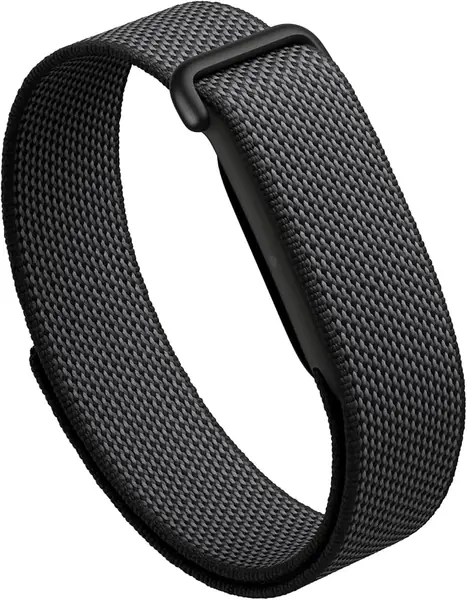
The Air has no screen, and that is not a compromise so much as a different brief. At just over five grams, it disappears on the wrist; the performance loop band adjusts from 130 to 210 millimeters, and there is nothing to light up your face at 2 a.m. We wore it to bed because the point of a sleep tracker is to forget it is there.

What it tracks is the useful part: heart rate, sleep stages, SpO2, skin temperature, steps, and workouts, all fed into the Google Health app. We like the sleep view because it is easy to read before coffee, and the readiness coaching gives the numbers a point. Accuracy is not perfect: step counts can drift and sleep staging is an estimate, so use the trends rather than treating any single night as a verdict.

The screenless design also changes how you use it. You cannot glance at pace mid-run, and every check means opening the app. A five-minute charge adds about a day, and the full battery is rated for up to a week, so the Air is easy to keep alive even if you forget it on the charger overnight.

For sleep tracking and all-day wear, the Air is the easiest recommendation here. It is the one we reach for when we want to forget the tracker is there, and the subscription coaching is a bonus rather than a requirement for the basics. If you need on-wrist GPS or a screen you can read during intervals, choose the Garmin vívoactive 5.

Pros

  • Featherweight enough to forget overnight
  • Up to a week of battery with five-minute top-ups
  • Sleep and recovery trends are easy to read

Cons

  • Sync can drop between tracker and app
Our verdict

We recommend the Fitbit Air for sleep and all-day wear: it is light enough to forget, and its week-long battery needs only short top-ups.

Check Latest Price
5

MorePro Air6 Best Budget

85 /100
TKZ Score Excellent

Key details

Water Rating
IP68
Sport Modes
120+
Screen Size
1.52 inches
Warranty
2 years
View on Amazon

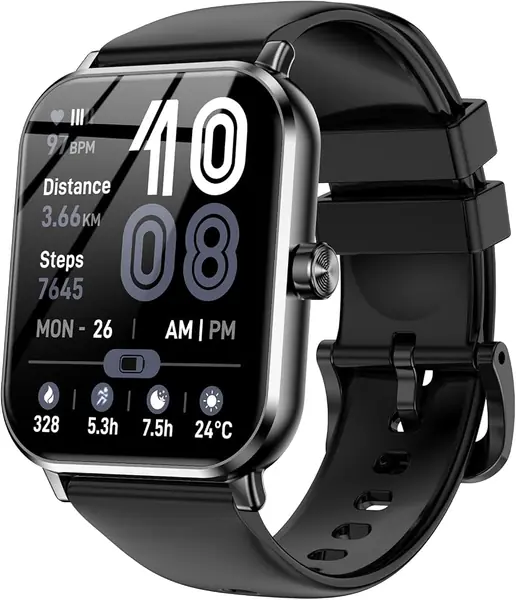
The Air6 is the budget pick we trust most, largely because MorePro backs it with a two-year warranty. For budget money it packs a 1.52-inch color screen, 120+ sport modes, round-the-clock heart rate, sleep tracking, and phone notifications. That warranty is the detail that separates it from the disposable no-name bands.

We did not expect the 230mAh battery to be a standout, but the low-power screen and simple app make it a several-day tracker rather than a nightly charge. The 20mm silicone band is comfortable, and the 1.12-ounce body disappears on a walk. The health menu includes blood pressure and SpO2, but we treat those as trend data, not medical readings; no wrist watch replaces a cuff.

The 120+ modes are mostly a menu to scroll past; the daily step, heart-rate, and sleep screens are where it earns its keep. Notifications and Bluetooth pairing were straightforward in our testing, and the display is easy to read without cranking the brightness. If you want a brighter screen for intervals, spend more. If you want the basics plus real warranty coverage, this is the value pick.

Pros

  • Two-year warranty stands out at this price
  • 120+ sports modes and daily health tracking
  • Comfortable 1.12-ounce body

Cons

  • No built-in GPS for phone-free runs
  • App can lag when loading sleep data
Our verdict

We recommend the Air6 as the budget pick: it covers steps, heart rate, sleep, and notifications, and backs that package with a two-year warranty.

Check Latest Price
6

Zeacool Fitness Tracker Best for Small Wrists, Swimming

84 /100
TKZ Score Excellent

Key details

Battery Life
12 days
Water Rating
5 ATM
Sport Modes
25
Screen Size
1.10 inches
View on Amazon

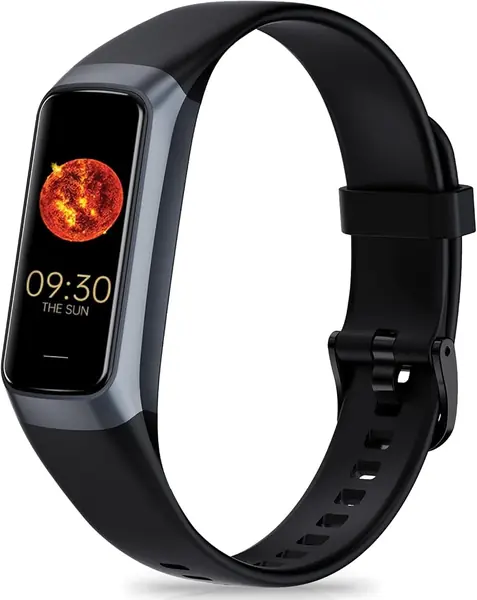
The Zeacool is the smallest tracker here, and that is the point. Its 1.10-inch AMOLED screen is sharp enough for a glance at steps or heart rate, while the band sits close to the wrist and stays out of the way under a sleeve. The 5 ATM rating is more meaningful than the usual IP68 claim: it is built for swimming and showering, not just splashes.

For a small tracker, the feature list is broad: 24/7 heart rate, SpO2, sleep, skin temperature, 25 sport modes, and a 12-day battery rating. We like that it does not force you into a bulky square case to get those numbers. The blood pressure feature is the one to treat carefully; it is trend information, not a diagnosis. That makes the Zeacool a good second tracker for sleep and swim days, or a compact everyday band for someone who does not want a smartwatch.

The limits are real: 25 modes is a short list next to the 120-mode watches, and the 12-day claim is a best case, not a promise under constant heart-rate monitoring. None of that matters if you want a light, swim-ready band that covers the basics without a nightly charge. It is the one we reach for when a full smartwatch feels like too much watch.

Pros

  • 5 ATM water resistance for swimming
  • Compact AMOLED screen is easy to read
  • 12-day battery rating

Cons

  • Small screen is not ideal for long messages
Our verdict

We recommend the Zeacool for swimmers and smaller wrists: it packs 5 ATM protection and a bright AMOLED screen into a band that stays out of the way.

Check Latest Price
7

Jacoosa TG38 Best for Big-Screen Calls

82 /100
TKZ Score Excellent

Key details

Battery Life
30 days
Water Rating
IP68
Sport Modes
140+
Screen Size
1.83 inches
View on Amazon

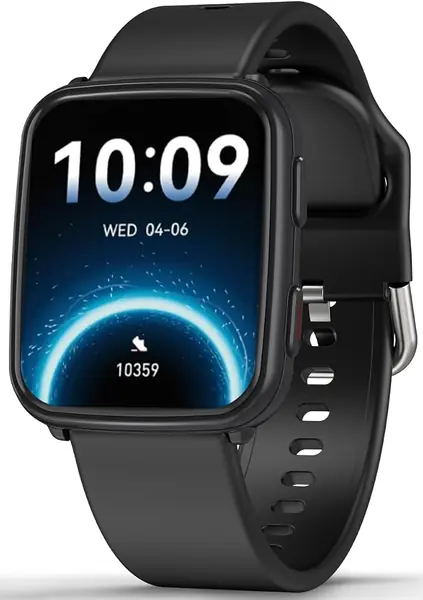
The Jacoosa TG38 takes the opposite approach to the Fitbit Air: it gives you a 1.83-inch screen and Bluetooth calling for budget money. For a man who wants a big, readable watch for notifications and workouts without paying smartwatch prices, that is the appeal.

The display is the best part. At 1.83 inches and 240 by 284 pixels, it is easy to read outdoors and large enough for a call notification without squinting. The 22mm band is a standard size, so swapping it for nylon or leather is simple. We also like that the 140 sport modes and IP68 rating cover the gym and a rainy walk without making the watch feel precious.

Calling and music controls work through Bluetooth, and setup with an iPhone or Android phone is straightforward. The battery is where the TG38 loses its polish: the 30-day claim is a best-case number with the screen and calls mostly idle. Heavy notification use and a bright screen pull it down to a few days, so plan on regular charging. We still think the trade is fair for a budget watch.

The result is a good-value big-screen watch for someone who wants calls and workout modes, not the most trustworthy training instrument. We like it as a second watch for weekends or as a first smartwatch for someone who wants calls without an Apple Watch. If you care about pace accuracy, the Garmin is worth the step up. If you want a readable wrist screen for steps and calls, the TG38 does the job.

Pros

  • Large 1.83-inch display
  • Bluetooth calling and music controls
  • Standard 22mm band is easy to swap

Cons

  • No built-in GPS for phone-free workouts
Our verdict

We recommend the TG38 for budget shoppers who want a big screen and Bluetooth calls, with a standard band that is easy to swap.

Check Latest Price
8

Bakoor Fitness Tracker Best for Simple Step Tracking

81 /100
TKZ Score Excellent

Key details

Water Rating
IP68
Sport Modes
25
Display
1.10-inch AMOLED
Warranty
None
View on Amazon

The Bakoor is the simplest tracker here: a 1.10-inch AMOLED band with 25 sport modes and IP68 protection, built for steps, sleep, and heart rate rather than notifications or GPS. It is small enough to sleep in and plain enough to wear with anything.

We like the way the app handles sleep: it shows light and deep stages and a simple duration summary, which is more than the tiny screen can display. The 25 modes are enough for walking, running, and gym sessions, and the IP68 rating covers sweat and splashes. Accuracy is the thing to watch: step counts and heart rate can drift, so use it as a nudge rather than a training log.

Battery life is the pleasant surprise. The small screen and modest feature set mean it can run for days rather than demanding a nightly charge, and the silicone band stays comfortable through the night. That makes it a reasonable second tracker for sleep or a first step counter for someone who does not want another app to manage.

For a cheap second tracker or a first step counter, the Bakoor is easy to live with. It is not the one to choose if you want reliable workout data or a screen you can read in the pool. The Bakoor is best treated as a simple step-and-sleep band that happens to look decent.

Pros

  • Compact AMOLED screen
  • Simple sleep and step tracking
  • Comfortable for all-day wear

Cons

  • No warranty
Our verdict

We recommend the Bakoor as a simple step-and-sleep band for anyone who wants basic tracking in a light, low-cost package.

Check Latest Price

How We Tested the Best Fitness Trackers for Men

We started by pulling every tracker we could find with a real heart rate sensor, a few days of claimed battery at minimum, and a companion app that runs on both iOS and Android, then narrowed to 12 that covered the price spread from simple bands to full smartwatches. I wore each one for at least a week straight, including overnight, and rotated them back in over eight months so nothing got judged on its first day.

Testing happened where trackers actually live: morning runs, weight-room sessions, a weekly swim, long desk days, and sleep. We hand-counted steps on a measured quarter-mile and compared, checked heart rate against a chest strap during intervals, and watched how quickly readings came back down. Battery life got logged rather than trusted, with notifications on and the screen at default brightness — charged when it died, and timed. We showered in them, sweated through spin classes, and noted which straps left marks and which cases snagged a shirt cuff.

Overnight, we recorded whether the band woke us up, how legible the sleep breakdown was in the morning, and whether the silent alarm actually fired. Every tracker was paired to both an iPhone and an Android phone to see how fast it reconnected after we left the room, and we counted the taps it took to reach last night's sleep. Blood pressure and blood oxygen readouts on the cheaper end were treated as trends, not measurements. Reliability was judged over months rather than days — which ones drifted, froze, or dropped a sync — and we finished by weighing what each tracker did against what it cost.

How to Choose a Fitness Tracker for Men

Decide which workout data you will actually use

Most trackers sell you a long list of sport modes; the useful question is which three you will open. If you run or ride outdoors, built-in GPS is worth paying for because it records distance and pace without your phone. If you mostly lift, walk, and sleep in it, heart rate, step counts, and recovery trends matter more than a 140-mode menu. We look for a watch that makes those daily numbers easy to reach, not one that buries them behind a novelty mode.

Choose a screen that fits your day

A bright AMOLED screen makes pace, notifications, and heart rate readable at a glance, but it costs battery and invites distraction at night. A screenless activity tracker such as the Fitbit Air disappears under a cuff and is easier to sleep in; a monochrome display such as the Instinct E is less pretty but stays legible in direct sun. If you want a watch you can read mid-run, choose a screen. If you want to forget the tracker until you open the app, choose less display.

Treat battery claims as a best case

Battery figures are usually quoted in smartwatch mode, with notifications on and GPS off. Add a daily run with GPS, a brighter screen, or an always-on display and the number drops. That is not a reason to avoid a watch, but it changes your charging routine: a week-plus rating means you can travel without a cable; a shorter one means a nightly ritual. We prioritize a week of real use from a fitness tracker, with a quick top-up before a long run.

Check fit, water resistance, and the return window

Case size and band material decide whether you keep wearing it. A 42mm watch is a safe everyday size for many men; a 45mm or 46mm case is more visible and can crowd a narrow wrist. For swimming, look for 5 ATM or 10 ATM rather than IP68 alone, and rinse the band after chlorine. Because comfort and phone pairing are personal, buy where you can return the tracker after trying it for a few days.

Frequently Asked Questions

Final Verdict

For most men, the Garmin vívoactive 5 is the fitness tracker we recommend. It covers GPS workouts, sleep, and recovery in a 42mm case that works for daily wear, and its 11-day battery claim gives you room to travel. If your training is rougher than your schedule, the Instinct E adds 10 ATM protection and a two-week battery. For iPhone owners who want a full smartwatch, the Apple Watch Series 12 is the better buy.