Best Bike Stem Phone Mounts of 2026

A phone mount has one job, and you find out whether it can do that job about six miles in, when the pavement gives way to washboard and your handlebars start chattering. I've watched a phone pop out of a flimsy clamp at speed, and I've spent just as many rides stopping to nudge a screen back upright after it slowly tilted itself flat. The right mount fixes both problems at once: your phone sits where you can actually glance at a map cue without covering the screen with your hand, and it stays there through the ugly parts of the road.

My team and I have spent the past six months riding with 12 different mounts, from stretchy silicone cradles to machined aluminum clamps and twist-lock puck systems, on weekday commutes, gravel loops, and a few genuinely rocky descents. What separates them isn't clamping force, which most shoppers fixate on. It's whether the thing holds its angle after a mile of vibration, whether you can get the phone on and off with one hand at a red light, and whether a case and a pop socket still fit.

The picks below cover commuters, mountain bikers, and the occasional stroller run. Every one of them earned its spot by surviving the same roads.

The Best Bike Stem Phone Mounts

1

BONE Bike Tie Pro 3 Best Overall
91 /100
TKZ Score Outstanding

Key details

Weight
2.29 oz
Attachment
Tool-free silicone strap
Phone Fit
5.8–7.2 in with case
Stem Fit
22–45 mm tubes
View on Amazon

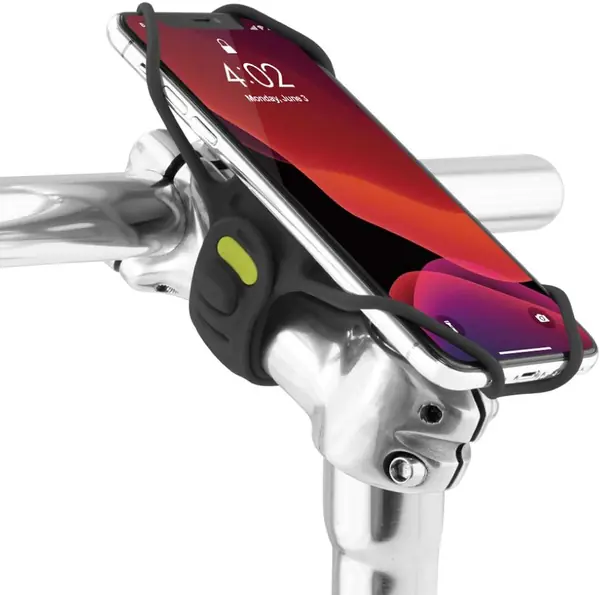
A 22–45 mm stem range and a 5.8–7.2-inch phone fit make the Bike Tie Pro 3 the easiest mount here to recommend to someone with a normal phone and a normal stem. Its silicone band stretches around the phone, case included, so there's no adapter to glue on and no proprietary case to buy. Installation is tool-free: stretch the band around the stem, seat the phone, and the screen stays readable for navigation or Face ID.

That universality is why it's our top pick. The elevated silicone base takes the edge off chip-seal vibration, and the strap holds the phone firmly enough for road and light gravel riding. We paid close attention to the corners, because that's where a stretchy mount either feels reassuring or feels like it's about to give. The Bike Tie Pro 3 feels reassuring when the phone is seated squarely, though the band can twist slightly on the stem if it isn't seated evenly, so we check it after the first few rides.

The caveat is the material itself. Silicone is not metal, and the mount is not the choice if you want a mechanical lock that never depends on tension. It's a budget-friendly way into a secure stem mount, but not the one to choose for aggressive trail riding.

Pros

  • Fits a wide range of stems and phones
  • Tool-free installation and removal
  • Shock-absorbing silicone base

Cons

  • Silicone corner bands can tear with repeated stretching
Our verdict

We recommend the Bike Tie Pro 3 as the default stem mount for most riders: it fits a wide range of phones and stems, installs without tools, and holds securely, provided you accept silicone as a wear item.
Check Latest Price
2

SP Connect Stem Mount Pro Best Premium

90 /100
TKZ Score Outstanding

Key details

Material
CNC-machined aluminum
Attachment
Twist-to-lock
Orientation
Portrait or landscape
Phone System
SPC+ case required
View on Amazon

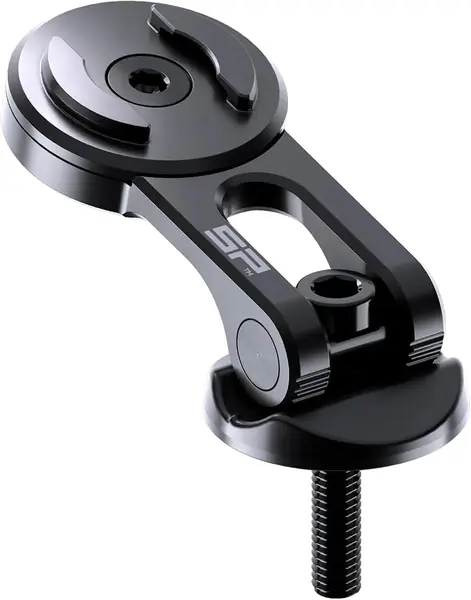
If you already run SP Connect's SPC+ case, the Stem Mount Pro is our premium pick. The mount is a CNC-machined aluminum block with stainless screws and a patented twist-to-lock interface. We like the mechanical certainty of that design: the phone clicks in, stays put, and comes off with a twist, with no stretching or gluing.

The body rotates between portrait and landscape, which is useful when you want a map in one orientation and a playlist in the other. We also appreciate the low-profile shape at the stem; it leaves the cockpit clean and doesn't put a big clamp in your line of sight. The metal construction is the most substantial hardware in this group, and the stainless screws are a sensible detail on a part that lives outdoors.

That twist-lock is the reason to choose it over a strap mount if you're already in the SPC+ system. The phone sits flat and centered, and the release is quick enough for a rest-stop check. For anyone outside the system, the universal mounts here are the simpler path, because this one's performance depends on using SP Connect's case every time you ride.

Pros

  • CNC-machined aluminum body
  • Twist-to-lock attachment
  • Portrait or landscape orientation

Cons

  • Requires an SPC+ phone case
Our verdict

We recommend the Stem Mount Pro for riders already using an SPC+ case who want a metal twist-lock stem mount; it feels the most secure here, but it is not a universal fit.

Check Latest Price
3

Nite Ize Wraptor Best for Commuting

89 /100
TKZ Score Excellent

Key details

Weight
1.8 oz
Phone Fit
Standard and plus phones
Mounting
Tool-free stem or bar
Rotation
360 degrees
View on Amazon

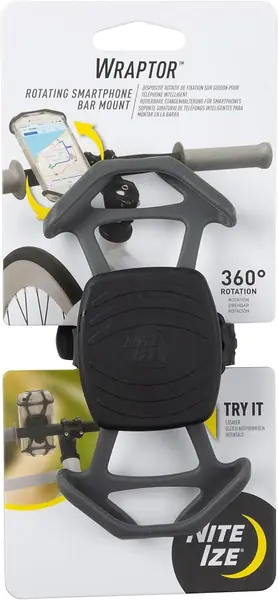
Moving one mount between a commuter, a stroller, and a cart is the Wraptor's party trick. Its silicone strap wraps around a stem or handlebar without tools, and the whole thing weighs 51 grams, so the swap takes seconds. We like that kind of portability: you can leave the mount on the bike you're riding and not buy one for every frame.

The 360-degree rotation is the other useful bit. You can spin the phone from portrait to landscape without unstrapping it, which makes it easy to check a route or skip a track at a stoplight. The strap holds a standard or plus-sized phone securely on pavement; we found the grip reassuring on choppy city streets, and the silicone has enough give to quiet small vibrations.

Rough terrain is where it gives ground. The strap can shift on the bar when the surface gets chunky, so this is a commuting and rail-trail mount rather than an aggressive trail choice. For moving between bikes and running errands, that's a fair trade; for mountain biking, choose a mechanical clamp instead.

Pros

  • Tool-free stem or bar mounting
  • 360-degree rotation
  • Light enough to move between bikes

Cons

  • Strap fit is tight for very large phones
Our verdict

We recommend the Wraptor for commuters and riders who move one mount between bikes; its tool-free strap, low weight, and 360-degree rotation make it the easiest mount here to live with.

Check Latest Price
4

sincetop Aluminum Stem Mount Best One-Hand Release

88 /100
TKZ Score Excellent

Key details

Material
Aluminum alloy
Orientation
Portrait or landscape
Release
One-hand quick release
Phone Attachment
3M adhesive adapter
View on Amazon

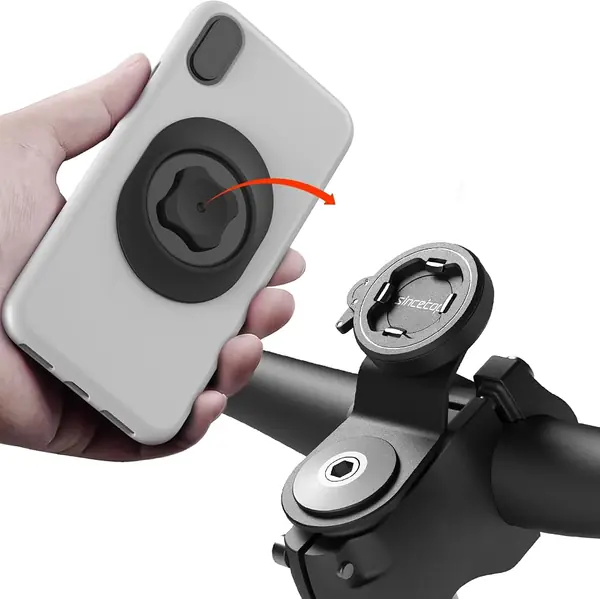
A one-hand release is the reason to look at the sincetop mount. A phone with the adhesive adapter clicks into the aluminum clamp, and a thumb press frees it. That's the detail that separates it from the strap mounts here: no stretching, no twisting, and no digging under a band at a stoplight.

The aluminum body gives it a firmer feel than the silicone mounts, and the four lock buckles keep the phone centered rather than letting it wobble side to side. The adapter uses 3M adhesive and comes with a screwdriver for installation. The low-profile look keeps the clamp out of the way of the stem cap.

We rate it as our one-hand pick because the release is faster than anything else in this group, and the metal clamp feels purposeful on a mountain bike. The phone sits close to the stem rather than perched above it, which keeps the weight centered. It is the mount for a rider who wants a mechanical click instead of a stretchy band.

Pros

  • One-hand quick release
  • Aluminum body with four lock buckles
  • Keeps the phone centered

Cons

  • Commits a case to the adhesive adapter
  • Swivel can shift under vibration
Our verdict

We recommend the sincetop mount for riders who want a one-hand click-in release and don't mind dedicating a case to the adhesive adapter; it feels more mechanical than the strap mounts here.

Check Latest Price
5

SP Connect Micro Stem Mount Best for Low-Profile Cockpits

87 /100
TKZ Score Excellent

Key details

Material
Aluminum
Phone System
SPC+ case required
Profile
Flat mounting
Mount Type
Stem-cap mount
View on Amazon

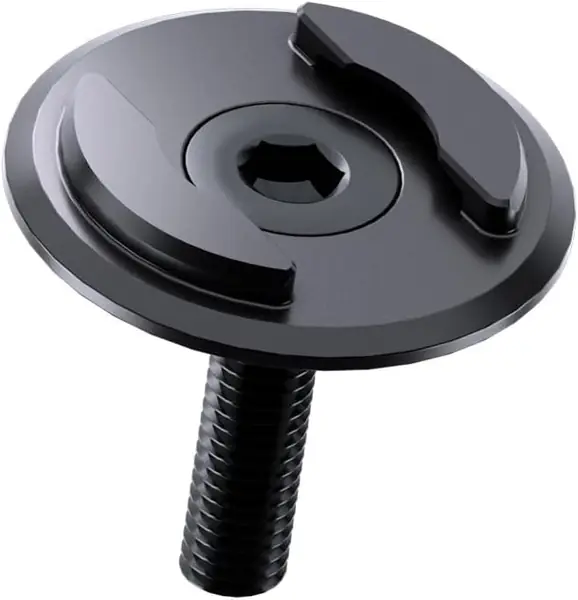
Low profile is the whole point of the Micro Stem Mount. It replaces the stem cap, so the SPC+ case sits nearly flush with the top of the steerer instead of standing on a clamp. The phone ends up centered over the steerer, not perched above it.

We like that for road bikes and clean cockpits: there's less to catch a knee, less to clutter the bars, and nothing wrapped around the stem. The aluminum body is light, and the mount includes its own stem cap screw, so the install is a straight swap rather than a clamp-on job. It's the least expensive route into the SPC+ system here, which makes it an easy add-on if you already own the case.

The system is the catch, not the mount. The SPC+ case is required, so this only makes sense if you're already in the ecosystem. If you are, it's a neat, low-profile solution; if not, the Stem Mount Pro clamps on without changing the headset.

Pros

  • Nearly flush stem-cap mounting
  • Light aluminum body
  • Simple stem-cap swap

Cons

  • Stem-cap fit is bike-specific
Our verdict

We recommend the Micro Stem Mount for SPC+ users who want the cleanest cockpit and can swap their stem cap; it is the lowest-profile option here, but the case requirement is real.

Check Latest Price

How We Tested Bike Stem Phone Mounts

We started by pulling every stem and handlebar mount we could find that listed support for phones in the 5.8- to 7.2-inch range, then whittled the field down by mounting style, phone-size compatibility, adjustability, and price so the final group spanned budget silicone straps through premium metal systems. Twelve mounts made the cut.

Each one was installed from scratch, first with a multitool and then, where the design allowed, bare-handed, and we timed how long it took to get the mount seated and the phone locked in. We checked whether the hardware pinched phone buttons, blocked the charging port, or pressed on the camera bump. Then we rode: weekday commutes, weekend gravel and singletrack, plus a stretch of chip-seal road we use specifically because it vibrates everything loose. One tester strapped hers to a stroller for the school run to see how the universal designs handled being moved between bikes and carts.

The measurements that mattered were mostly things we could see. We marked each mount's starting angle with tape, rode 20 minutes of rough ground, and checked whether the screen had drifted out of position. We swapped between a bare phone and one in a thick case to see how much grip was left over, and we deliberately used one hand to attach and detach at a standstill, the way you would at a stoplight. After a month, we reinspected every mount for stretched silicone, rounded bolt heads, loose pivots, and rust, and we left a few on bikes stored outdoors to see how the straps and clamps held up in sun and rain.

We also checked the phone itself after each ride, looking for scuffed corners and rubbed camera glass, and weighed whether each mount's price felt fair against how much hardware you actually got.

How to Choose a Bike Stem Phone Mount

Find Your Mounting Point First

Stem mounts come in two broad types. A clamp-style mount wraps around the stem tube, so it needs enough exposed tube to grip; the BONE Bike Tie Pro 3, for example, lists a 22–45 mm range. A stem-cap mount replaces the headset cap, which puts the phone lower and flatter but only works if your cap can be swapped.

Check which one your bike accepts before comparing phone features. If you have a short or oddly shaped stem, a cap mount may be the only clean option; if you want to move the mount between bikes, a clamp or strap is easier to move. The trap is assuming 'stem mount' means one thing: the two designs install in completely different places.

Match the Phone and Case

Measure the phone in the case you actually ride with, not the bare handset. Stretch bands cover a range—the Bike Tie Pro 3 lists 5.8 to 7.2 inches with a case—while clamp mounts may list a width range or require an adapter. A thick case can push a phone out of a snug fit even when the bare phone fits.

Then decide whether you want a universal cradle or a proprietary system. SP Connect's mounts here need an SPC+ case, which is secure and repeatable but adds a purchase and commits you to one case. We prioritize universal fit for most riders, and reserve the SPC+ route for people already using it.

Choose the Retention Mechanism for Your Riding

Strap mounts are the simplest: they stretch over the phone, need no adapter, and are easy to move. The trade-off is that silicone is a wear part, and it can let the phone shift on rough ground. Adhesive adapters give a mechanical click and a faster release, but they commit a phone or case to the mount.

For pavement, gravel, and commuting, a good strap mount is enough. For mountain biking, we lean toward a metal clamp or twist-lock that holds the phone mechanically. The question is not which mechanism sounds strongest; it is how often you remove the phone and how much vibration the mount will see.

Decide How Often You Move It

Portability is an underrated spec. A light strap mount can move between a commuter, a stroller, and a cart in seconds; a stem-cap or metal clamp is more likely to stay on one bike. If you have one bike and one phone, the mount can be more permanent. If you swap bikes or carry the phone into every stop, release speed matters more.

Think about the cockpit, too. A low-profile stem-cap mount keeps the bars clean, while a clamp or twist-lock sits higher and may crowd a bar bag or brake hoses. We check clearance around the stem before choosing a mount, because a secure mount that blocks your controls is the wrong trade.

Frequently Asked Questions

Final Verdict

If you want one mount that works with the phone and case you already own, start with the BONE Bike Tie Pro 3. It fits a broad range of stems and phones, installs without tools, and holds securely for road and light gravel riding; just treat the silicone as a wear item. Riders already using SP Connect's SPC+ case should choose the Stem Mount Pro for its metal twist-lock, and commuters who move one mount between bikes will get more use from the Wraptor.