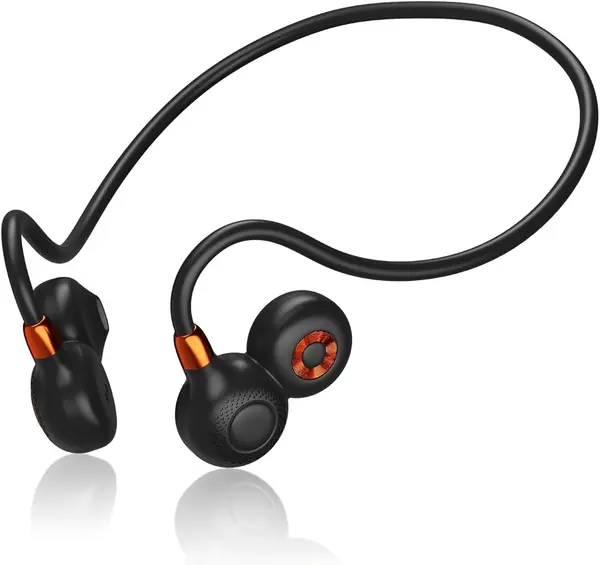
Best Wireless Headphones for Running of 2026

Running headphones carry a built-in tradeoff: the better a pair seals you off from the world, the less you know about the car turning behind you. I've bounced between the extremes for years — plush over-ears that turned swampy by mile four, and loose earbuds that popped out at the first sprint. A good pair stays locked in, shrugs off sweat, and still lets you hear traffic and your own breathing.

My team and I put 12 pairs through four months of treadmill intervals, rainy road loops, and long weekend runs, judging fit, sound, comfort, and how easy each was to live with. Sweat ruins more headphones than rain does, battery estimates are usually figured at low volume, and Bluetooth is the first thing to give out in a crowded gym. Open-ear and bone-conduction models have their own quirks, and their microphones matter as much as their sound if you take calls mid-run.

The picks below are the pairs that held up, sorted by what each one does best.

The Best Wireless Headphones for Running

1

Soundcore V20i Best Overall
90 /100
TKZ Score Outstanding

Key details

Water Resistance
IP55
Battery
8 hrs, 36 with case
Fit
Four-position adjustable hooks
Connectivity
Bluetooth 5.4, multipoint
View on Amazon

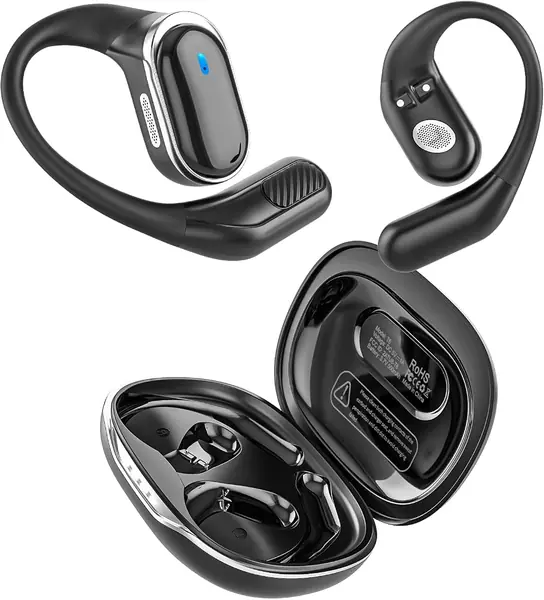
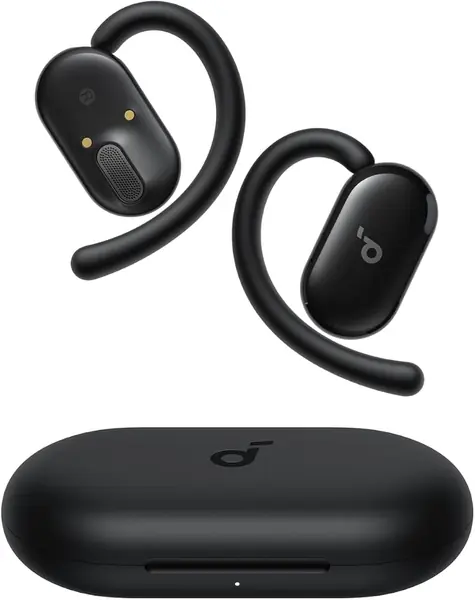
Four positions on a rotating hook sounds like a line from a spec sheet until you have ears that sit between sizes. On the V20i it is the reason this is our top pick: the hook swings the speaker closer to the ear canal or floats it further out, then stays where you put it. We set ours a notch looser than the default for longer runs, which takes pressure off the top of the ear without letting the speaker drift.

Open ear is the right call for anyone sharing a road with cars. You hear tires and footfalls, and the 16mm drivers still put weight behind a kick drum, which is not a given from a speaker that never enters the canal. IP55 covers sweat and a rainy run, though it is not a rating for rinsing them under a tap.

Fit is where open-ear sport earbuds usually fall apart, and these held through tempo work and hill repeats without needing to be re-seated. Battery runs eight hours on the buds and 36 with the case, and multipoint pairing keeps a phone and a watch connected at once. Small ears are the exception — the hook starts to press after an hour or two, so try the most forward position before you give up on them.

The touch panel is easy to catch while you are seating the hook, so set them in place before you start a track; after a few runs your thumb finds the sweet spot. The 18-month warranty is longer than most budget picks here carry, which counts for something on a pair that lives in a gym bag.

Pros

  • Four hook positions fix open-ear fit
  • Open design keeps traffic audible
  • Eight hours per charge, 36 with case
  • Eighteen-month warranty

Cons

  • One earbud can stop working
  • IP55 only, so no rinsing or downpours
Our verdict

We tell most runners to start here: the four-position hooks keep an open-ear fit locked in, and the price leaves room to upgrade later.
Check Latest Price
2

SHOKZ OpenRun Pro 2 Best for Long Runs

89 /100
TKZ Score Excellent

Key details

Water Resistance
IP55
Battery
12 hrs
Weight
1.07 oz
Type
Bone conduction, open ear
View on Amazon

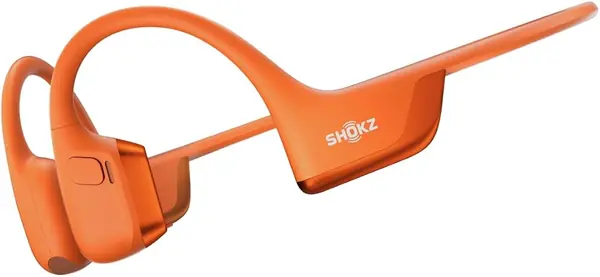
The limit of open-ear sound shows up on a windy stretch of road. There is only so much volume a driver sitting outside your ear canal can deliver, and at speed the music drops to background — the price of hearing the car behind you. That is the trade SHOKZ asks you to make at the top of this group's price range.

What the money buys is the most comfortable fit here. The memory-wire frame wraps without pinching, 30.3 grams is light enough to forget, and we stopped noticing them somewhere in the second hour of a long slow effort. Twelve hours a charge covers a full marathon block, and the dual-driver setup adds enough air-conduction bass that podcasts and drum-heavy tracks do not sound thin.

The rest is uneven in a way premium gear should not be. App EQ modes help the tone, but no setting makes them loud in traffic, and some units die around the one-year mark. The hard case and reflective stickers are genuinely thoughtful for a running product — put the stickers where a headlight will catch them if you run at dusk.

Pros

  • Most comfortable open-ear frame here
  • Twelve hours on a single charge
  • Dual drivers add usable bass
  • Two-year warranty

Cons

  • Not loud enough in wind or traffic
  • Some units die around a year
Our verdict

If comfort and battery matter more than volume, these are the long-run pair we reach for, with a premium to match.

Check Latest Price
3

HAOYUYAN BX17 Best Budget Pick

88 /100
TKZ Score Excellent

Key details

Water Resistance
IPX7
Fit
In-ear hooks, three tip sizes
Playtime
80 hrs
Driver
14.3 mm dynamic
View on Amazon

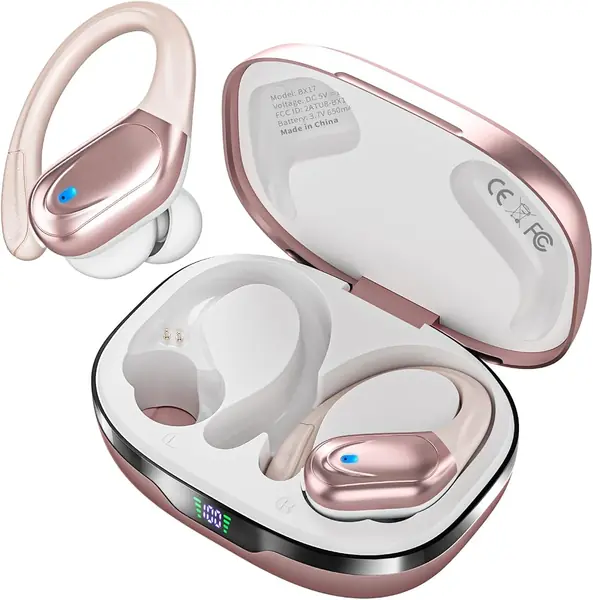
If the open-ear idea appeals but you want something sealed and inexpensive, this is our budget pick. The BX17 puts a 14.3mm driver behind an ear hook, seals the canal with silicone tips in three sizes, and hands you back the bass that open designs thin out.

The hook-and-tip combination is why it stays in. The hook takes the weight and the tip seals the canal, so sweat does not turn into a slip-and-catch mid-stride. IPX7 means sweat, rain, and a rinse under the tap are all fine — more protection than any of the open-ear picks offer — and the physical buttons are the quiet win: you can skip a track with a wet thumb, where a touch panel makes you guess.

Ignore the noise-cancelling wording in the name. There is no active circuitry here, just the passive seal of a silicone tip, which is enough on a quiet street and not much beside a highway. An 80-hour total with the case and a 1.5-hour USB-C top-up keep the case in a drawer most weeks, and the 90-day warranty is short, so buy from a seller with an easy return.

Pros

  • IPX7 sealing at a budget price
  • Hooks and tips hold through sweat
  • Physical buttons work with wet hands

Cons

  • No active noise cancellation
Our verdict

Our budget pick for a sealed, sweat-proof fit: hooks that hold, buttons that work wet, and no real noise cancelling.

Check Latest Price
4

TRAUSI T6 Best Open-Ear Battery Life

87 /100
TKZ Score Excellent

Key details

Water Resistance
IPX7
Fit
Open-ear hook
Playtime
80 hrs with case
Bluetooth
5.4
View on Amazon

Open-ear headphones have a price problem: the good ones are priced like training gear. The T6 is the answer for anyone who wants the format without the premium — a hook-and-speaker design, IPX7 sealing, and a case that goes a long time between charges.

Eighty hours of total playtime is the headline, and it is the kind of number that changes a routine: the case lives in a bag and charging stops being a weekly chore. Sound is clear and calls come through well on the ENC mic, though the open design means bass is more suggestion than thump. The hook sits over the ear rather than clamping behind it, and nothing pressed during a two-hour run.

The catch is ear size. These sit further from the canal than the V20i, so on small ears or under glasses the speaker ends up pointing at air and volume suffers — the same frame that feels weightless on one head feels thin on another. Everyone else gets the open-ear pair we leave in a bag all week, and the 90-day warranty is short enough that a generous return policy is worth having.

Pros

  • Eighty hours total with the case
  • IPX7 sealing on an open-ear design
  • Over-ear hook without pressure

Cons

  • Fit suffers on small ears and with glasses
Our verdict

We send open-ear shoppers with average or larger ears here when they want to stop thinking about charging.

Check Latest Price
5

JBL Endurance Race 2 Best for the Gym

86 /100
TKZ Score Excellent

Key details

Battery
12 hrs, 48 with case
Weight
1.9 oz
Noise Control
ANC with Smart Ambient
Water And Dust
IP68
View on Amazon

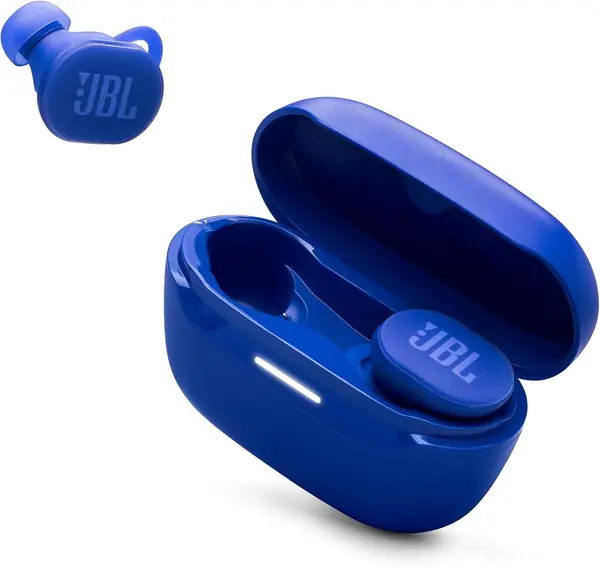
IP68 is the rating to notice: fully dustproof and waterproof enough to survive a dunking, which is more than the IP55 and IPX6 models here offer. For a pair that lives in a gym bag and gets handled with wet hands, that matters more than another hour of battery.

The wing enhancer twists into the bowl of the ear for a seal, and when it seats right the isolation is strong. Active noise cancelling plus Smart Ambient puts this on the short list for treadmill and weight-room work, where blocking the gym playlist is a feature rather than a hazard. Twelve hours on the buds, 48 with the case, and a ten-minute quick charge for the mornings you forgot.

Sound is loud and bass-forward, with app EQ to pull it back, and on medium ears the fit is genuinely good. The connection is the weak point. These drop from a phone or laptop for stretches at a time, and handing off between paired devices is not always clean — worth knowing if you leave the phone on a bench and walk the room.

So: the indoor pick. Sealed, dustproof, and noise-cancelling, it is built for a treadmill and a rack, and the app makes switching ambient modes easy mid-set. On open roads the awareness argument points you back to an open-ear design instead.

Pros

  • IP68 dust and water protection
  • Active noise cancelling with Smart Ambient
  • Twelve hours, 48 with the case

Cons

  • Bluetooth drops mid-session
  • Buds must be dried before charging
Our verdict

We keep these for indoors, where IP68 and genuine noise cancelling earn their keep, as long as you can live with the odd dropout.

Check Latest Price
6

MJOFFIN X19s Light Bone Conduction

85 /100
TKZ Score Excellent

Key details

Water Resistance
IP55
Battery
10 hrs
Weight
0.78 oz
Bluetooth
6.0
View on Amazon

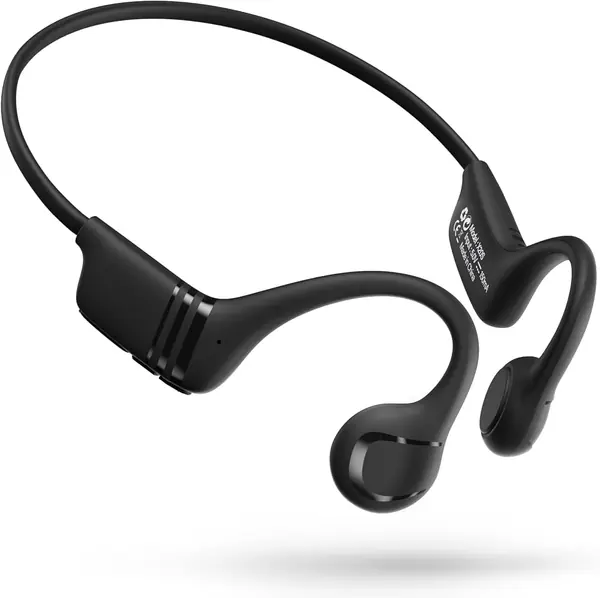
Twenty-two grams on a flexible titanium frame is the lightest thing on this list, and it is why the X19s beats the other bone-conduction pick on the thing that matters first: the frame flexes into place behind your head and then disappears.

Bone conduction sends sound through the cheekbone and leaves the canal open, so awareness is total — the wind, the trail, and the car all come through. Ten hours a charge is a real training-week number, and IP55 handles sweat and light rain. This is the least expensive way into the format and the lighter of the two bone-conduction models here.

Two things to plan around. IP55 is sweat and light rain, not a downpour. And bone conduction gives up bass by design, so hip-hop and action movies feel thin no matter the volume. Fit the silicone tension band before your first run — a loose bone-conduction frame loses volume fast, and that band is in the box for exactly this.

Pros

  • Twenty-two grams on a titanium frame
  • Ten hours per charge
  • Cheapest bone-conduction option here

Cons

  • IP55, so no heavy rain
Our verdict

For a first bone-conduction pair we like the X19s: 22 grams, ten hours a charge, and the lowest entry point into the format.

Check Latest Price
7

Otium U18 Best for Bud-Loss Worriers

84 /100
TKZ Score Excellent

Key details

Water Resistance
IPX7
Battery
10 hrs
Weight
0.64 oz
Fit
Neckband with ear hooks
View on Amazon

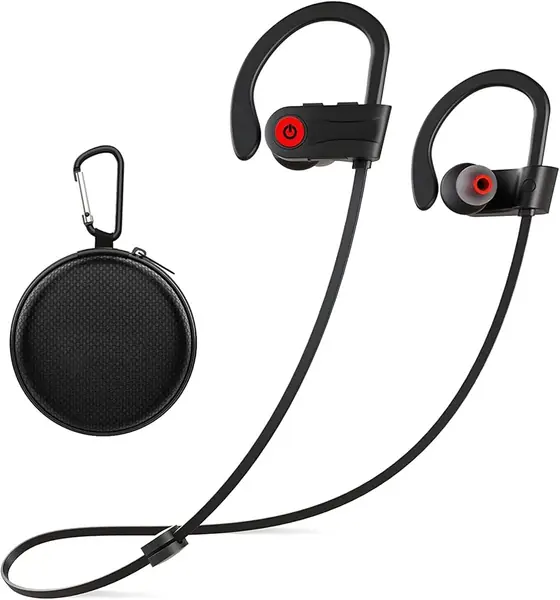
A wire between the buds is the whole idea. A neckband means a bud that pops out mid-stride hangs there instead of bouncing down the sidewalk, which is why some runners never went true wireless — and why this one still earns a place on the page.

The U18 is also the least expensive route to IPX7 sealing and hooks, and at 18 grams it disappears around the neck. Sound is decent and isolation comes from the tips rather than circuitry, which is fine on a quiet trail and not much beside a highway. Battery is rated at 10 hours, and the neckband has room for a bigger cell than a bud does.

Where it shows its age is everything else. Charging is micro-USB, so that is one more cable to keep track of, and the connection is not as steady as the Bluetooth 5.4 pairs here — a phone in a back pocket is enough to cause a stutter. If you want a wire as a safety net, both are easy to live with; if you want a modern pair, spend a little more.

Pros

  • Neckband keeps a dropped bud attached
  • IPX7 sealing for very little money
  • Long single-charge runtime

Cons

  • Micro-USB charging
  • Some units fail within months
Our verdict

We like the U18 for anyone who wants a tether between the buds and does not mind an older charging standard.

Check Latest Price
8

Ortizan i10 Minimal Open Ear

83 /100
TKZ Score Excellent

Key details

Water Resistance
IPX6
Battery
10 hrs
Weight
0.67 oz
Charging
Magnetic cable
View on Amazon

The charger is the first thing you notice: a magnetic puck on a short cable that snaps onto the headband. It is neat, it aligns easily in the dark, and it is not a USB-C cable you can borrow from anyone else at the gym.

At 19 grams the i10 is the lightest open-ear model here, and the speaker sits outside the canal instead of pressing on it — light enough that you stop noticing it, which is the entire point of the format. Sound is louder than the price suggests, and the open design keeps traffic audible.

IPX6 handles sweat and rain, and pairing has been steady across phones. There is no case in the box, just the headphones, two charging cables, and a manual, so plan on a pocket or a pouch.

Charging is what holds it back. The magnetic contacts are fussy about moisture, and a set that stops taking a charge is the failure to watch for — dry the pins after every sweaty run and keep the spare cable in your bag. If you want one case for everything, the V20i is the better buy; if light weight beats packaging, this is it.

Pros

  • Nineteen grams, lightest open ear here
  • Ten hours of playtime
  • Two charging cables included

Cons

  • Proprietary magnetic charging cable
  • No case in the box
Our verdict

We point open-ear shoppers at the i10 when weight matters most and a proprietary charger is acceptable.

Check Latest Price

How We Tested the Best Running Headphones

We started with research, scanning sport headphone listings across price bands and cutting anything that didn't name a real water-resistance rating, a fit mechanism (ear hook, wing, or open-ear band), or a believable battery claim. That left 12 pairs. We bought all of them at retail and ran in them for four months.

Every pair went on the same rotation: two treadmill interval sessions, a five-mile road loop, one long weekend run, and one wet morning, plus a few hour-long dog walks to see when comfort started to fray. Mid-run, I shook my head hard and noted which pairs stayed put, which needed a shove back into place, and which fought with sunglasses or a hat. I also adjusted volume and skipped tracks with sweaty fingers, since that's when controls stop cooperating.

Sound got the same three tracks every time — one bass-heavy, one acoustic, one podcast — and we noted which pairs turned the low end to mush or made voices sound thin. For calls, we recorded voice memos on a windy corner and listened back. For connectivity, we walked across the gym with the phone left in a locker. Battery claims got checked by charging to full and draining them on a timer at a realistic volume.

Durability meant sweat, rain, sunscreen, and a gym bag shared with keys and a water bottle; we wiped each pair down and watched for cracked housings or a charging case that stopped clicking shut. We checked leakage in a quiet room at a normal listening level, and judged value by what each pair did over four months against what it cost.

How to Choose Running Headphones

Decide on Awareness Before Anything Else

Open-ear and bone-conduction designs leave the canal clear, so traffic, cyclists, and your own footfalls stay audible. Sealed earbuds with active noise cancelling do the opposite, which is why we keep them for the treadmill and the weight room rather than the road. Openness has a sound cost: wind and passing trucks can swamp the music, and no EQ setting fixes that. Run mostly on quiet trails or indoors? A sealed pair with an ambient mode gives you better sound and the option to switch awareness back on.

Fit Comes Down to Hooks, Wings, and Ear Size

Every sport pair here holds on with one of three mechanisms: an over-ear hook, a wing that tucks into the bowl of the ear, or a neckband. Hooks survive sweat best but hold the speaker away from small ears; wings seal better but depend on matching your ear shape. Glasses, hats, and long hair all change the fit, so shake your head hard and bend over before you commit to a pair. Adjustable hooks, like the four-position design on the Soundcore V20i, are the most forgiving option for ears that sit between sizes.

Read the IP Rating Properly

The two digits do different jobs: the first is dust, the second is water. IPX7 means the pair can survive being submerged; IP55 means limited dust protection and low-pressure jets, which covers sweat and rain but not a swim. A higher number is not automatically better for running — salt from sweat corrodes charging pins faster than rain does, and the case contacts are the first thing to fail on a hard-used pair. Match the rating to what you'll actually do, then treat the pins gently.

Hours Per Charge Beat the Big Total

Total playtime with the case is the number on the box, and it is the least useful one for training. What matters is how long the buds run between charges: eight hours covers a marathon build, six covers a normal week of sessions, and anything under four will strand you on a long day. The case total tells you how often you need a cable, not how far you can go. Quick-charge figures are worth checking too — ten minutes in a case is the difference between a dead pair and a finished workout.

Controls, Cases, and Charging Cables

Touch panels look clean and behave badly with wet fingers or a bead of sweat running over the sensor; physical buttons are slower but dependable, and on the HAOYUYAN BX17 they are why you can skip a track mid-interval. Cases deserve a look as well: a proprietary or magnetic cable is one more thing to lose, and a case with no room for a cable is a case you'll leave open in a bag. Multipoint pairing is worth having if you carry a phone and run with a watch.

Frequently Asked Questions

Final Verdict

For most runners the Soundcore V20i is the pair to buy. The adjustable hooks solve the fit problem that sinks cheap open-ear designs, the open speaker keeps traffic audible, and eight hours a charge covers any training week — all at the bottom of this group's price range.

Pay for the SHOKZ OpenRun Pro 2 only if you are regularly out for two hours at a time and want the most comfortable frame here. If your miles happen indoors, take the JBL Endurance Race 2, where noise cancelling and IP68 dustproofing earn their keep.