Best Wired IEMs of 2026

A wired in-ear monitor is the least glamorous way to get better sound: you are paying for a driver, a shell, and a cable, and not much else — no battery, no Bluetooth chip, no app to update. That is precisely why a well-made pair can embarrass wireless earbuds that cost several times as much. The catch is that this category is crowded with spec sheets that read like a arms race, and most of those numbers tell you very little about how a pair will actually sound in your ears.

What separates a pair you keep from one that ends up in a drawer comes down to fit and build, not driver counts. I have a smallish ear canal and a bad habit of yanking cables out by the wire, so I noticed quickly which shells stayed put on a walk and which connectors started crackling within a few weeks. Over four months, my team and I listened through 14 pairs across the price spectrum, from plain single-driver sets to multi-driver hybrids, and the gap between the best and the worst had almost nothing to do with the marketing.

One thing worth knowing before you scroll: a detachable cable is the most useful feature in this category, full stop. Cables fail long before drivers do, and being able to swap one — or step up to a nicer cable later — is what keeps a good pair in service for years. The picks below were chosen with that in mind, along with comfort past the two-hour mark and isolation that genuinely holds on a loud commute.

The Best Wired IEMs

1

CCZ Yinyoo Melody Best Overall
90 /100
TKZ Score Outstanding

Key details

Driver
10 mm dynamic + 1 balanced armature
Impedance
16 ohm
Sensitivity
110 dB
Cable
Detachable 2-pin, 4N OFC
View on Amazon

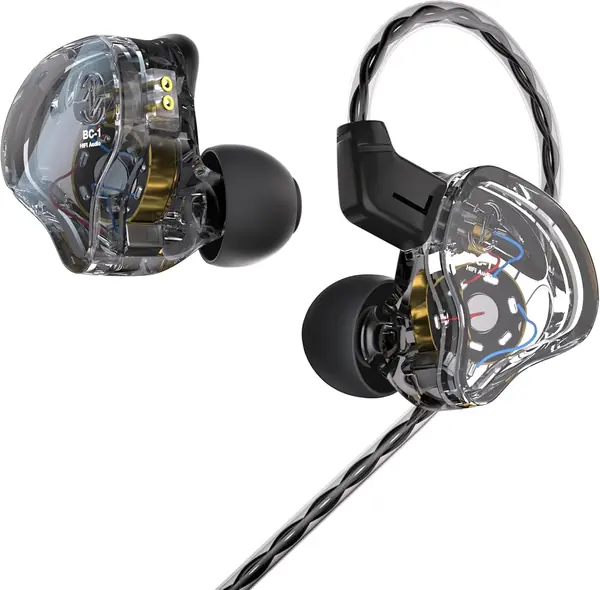
Cheap in-ear monitors usually fail the same way: fine on the first song, sliding out by the third. The Melody is the pair that fixed that for us. Soft ear fins tuck under the ridge of your ear and a memory wire hook carries the cable over the top, so the housing is not fighting the weight of the cord. Among the picks here it has the most secure fit of anything in the group, and that is why it sits at the top.

A 10 mm dynamic driver handles the low end and a balanced armature covers the upper range, which is why the tuning reads bright and clear without losing weight underneath. At 16 ohms and 110 dB it plays loud straight out of a phone, and the 3.5 mm plug works with a laptop, a console controller, or a stage pack. The 4N OFC cable unplugs from the shells, so the part that fails first is the part you can replace.

Two things to know. The fins press on some ears, and that pressure is what you trade for the security — if your ears are sensitive, try the smaller tips before blaming the fins. And as with most of this group, a channel can go quiet after months of hard use. Neither changes our recommendation at this price. Spend ten minutes swapping the three included tip sizes before anything else: the fins only do their job once the tip is sealing.

Pros

  • Ear fins and memory hook hold it in place
  • Detachable 4N OFC cable can be replaced
  • Easy to drive from a phone at 16 ohms

Cons

  • Fins press on sensitive ears
  • A channel can fail after months of hard use
Our verdict

We point most people to the Melody: it stays in your ears through real movement, the cable comes off when it wears out, and it sounds bigger than its price.
Check Latest Price
2

Shure SE215 Pro Best Noise Isolation

89 /100
TKZ Score Excellent

Key details

Driver
Single dynamic MicroDriver
Cable
Detachable MMCX, over-ear
Ear Tips
Three sizes, foam and flex
Noise Isolation
Up to 37 dB
View on Amazon

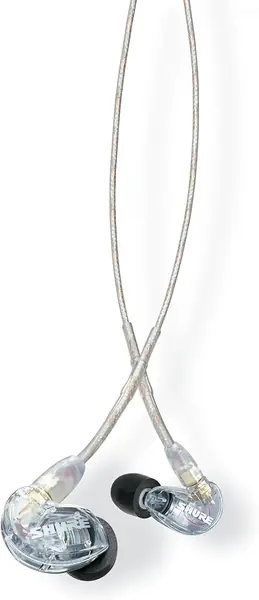
The cable is what kills wired earphones, and Shure built the SE215 around that fact. The wire runs up and over the back of your ear in a stiff memory jacket, so a snag pulls against your ear instead of the plug, and the MMCX joint rotates a full turn and unscrews when the cord finally gives out. It is the most overbuilt version of that idea in this group.

Shure rates the isolation at up to 37 dB, the highest figure here, and the fit kit is what makes the number reachable: three sizes of silicone sleeves plus three of foam, more than anyone else in this group ships. Foam is the one that gets you there on a plane. The shell is large, though, and small ears may not manage a seal however many tips they try — if the housing presses, the isolation figure stays theoretical.

Sound comes from a single dynamic MicroDriver at 10 ohms, weighted toward the low end with clear mids above it. Bass here is a matter of seal: seated properly there is plenty, and with a loose fit the low end vanishes. What you are paying for is the isolation and the replaceable cable, not the driver count.

It is not bulletproof. One side going quiet is the failure to watch for, which is a sour note at this price. This cable also has no mic or controls, so if you take calls, look at the variant that has them.

Pros

  • Best passive isolation in this set
  • MMCX cable swivels and replaces easily
  • Foam and silicone sleeves in three sizes

Cons

  • Large shells can defeat the seal in small ears
  • One channel can fail despite the professional billing
Our verdict

For drowning out a plane cabin or a drum kit, the SE215 earns its price: the isolation is the best here and the cable unscrews when it dies.

Check Latest Price
3

SIMGOT EW300 Best for Music and Gaming

88 /100
TKZ Score Excellent

Key details

Driver
1 dynamic + 1 planar + 1 PZT
Impedance
28 ohm
Sensitivity
121 dB
Nozzles
Two swappable tunings
View on Amazon

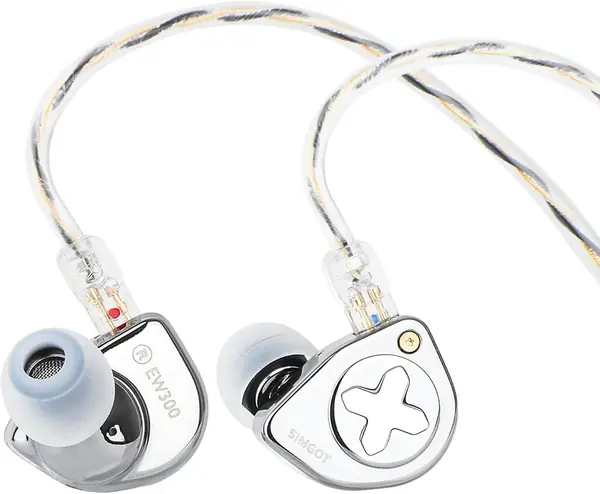
Two sets of nozzles ship in the box, and unscrewing one for the other changes how the EW300 sounds. The gold-copper pair with the purple ring is voiced for games, pushing the imaging and upper mids where footsteps sit; the alternate set is the more even, music-first tuning. Nothing else here lets you re-voice the same earphone, and that flexibility is the reason this one made the list.

Behind the nozzles is the most unusual driver stack in this group: a 10 mm dynamic driver, a planar driver, and a piezoelectric ceramic driver inside a CNC-machined alloy body. In practice the bass is what lands — it hits hard without smearing the vocal, and the treble stays clean rather than shrill. At 28 ohms and 121 dB it runs easily from a phone.

The fit runs tight, and the nozzle angle puts pressure on some ear canals; smaller tips help more than a smaller shell would. The bigger caution is the right channel going silent after several months, which is the failure worth knowing about before you buy. Even with the better hardware, that is why it sits behind the Melody for us.

Pros

  • Swappable nozzles give two tunings
  • Dynamic, planar, and piezo drivers in one shell
  • CNC alloy body feels solid day to day

Cons

  • Tight fit for average ear canals
  • Right channel can go silent after months
Our verdict

If one pair has to cover music and competitive games, the EW300 is our pick: two nozzle tunings, three driver types, and a metal body that takes daily handling.

Check Latest Price
4

KZ ZS10 Pro Best for Bass and Detail

87 /100
TKZ Score Excellent

Key details

Driver
4 balanced armature + 1 dynamic
Impedance
24 ohm
Sensitivity
111 dB
Frequency Range
7 Hz to 40 kHz
View on Amazon

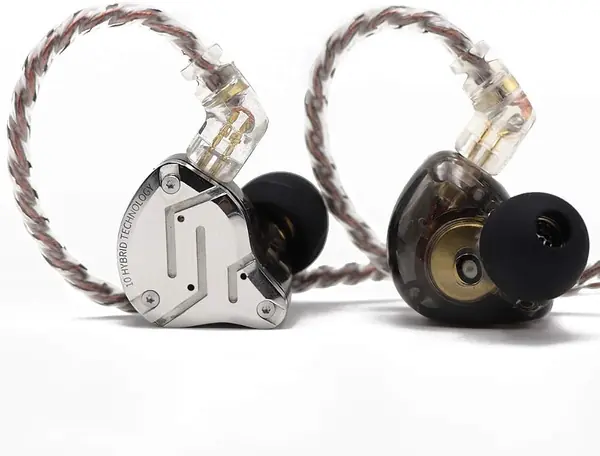
Four balanced armatures and a 10 mm dynamic driver is more hardware than anyone else in this group brings, and KZ hangs it behind a 304 stainless faceplate with a resin cavity. A small PCB splits the signal between the drivers so each covers the range it handles best, and the result is the kind of separation that makes a busy mix feel unpacked.

It is efficient, too: 24 ohms and 111 dB means a phone drives it to painful volume without help. That sensitivity cuts both ways. The same pair that plays loud off a laptop also pulls the hiss out of a noisy headphone jack, and a faint buzz between tracks turns up on some sources. From a dedicated player or a clean dongle, it disappears.

The weak point is longevity. A channel going quiet after months of use is the failure to plan for, and since 2021 KZ ships one of four cable styles at random, so the cord in the box may not match the photo. We still recommend it — five drivers for this money is a real bargain — but treat it as a pair you will eventually re-cable rather than an heirloom.

Pros

  • Five drivers deliver strong separation
  • Runs loud from a phone at 24 ohms
  • Stainless faceplate looks and feels premium

Cons

  • Channel failures show up after months of use
  • High sensitivity picks up hiss from noisy jacks
Our verdict

Five drivers and a steel faceplate make the ZS10 Pro the most hardware here for midrange money; for bass-heavy music and games, it is the fun pick.

Check Latest Price
5

Moondrop CHU III Best for Small Ears

86 /100
TKZ Score Excellent

Key details

Driver
10 mm Al-Mg dome dynamic
Impedance
16 ohm
Sensitivity
118 dB
Cable
Detachable 0.78 mm 2-pin
View on Amazon

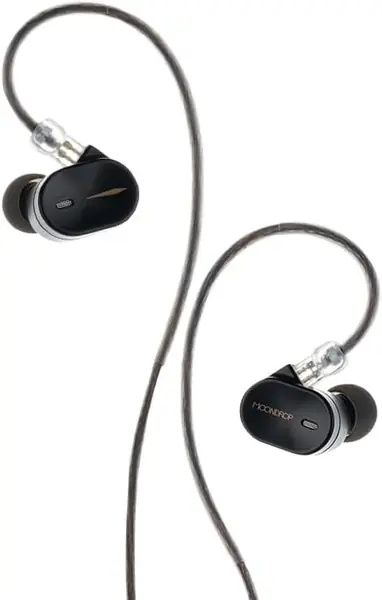
The CHU III is the smallest thing in this group: a bean of cast alloy with a brass nozzle, shaped to sit inside the curve of your ear rather than fill it. That sounds like a line from a spec sheet until you have tried to seat a big hybrid in a small ear. The metalwork cuts both ways — there is more mass against the cartilage, so it feels more present than a plastic shell even though its footprint is smaller.

Inside is a single 10 mm dynamic driver with an aluminum-magnesium dome, an N52 magnet, and a CCAW voice coil, tuned to Moondrop's pop-oriented target. You get sub-bass that actually arrives, a clean midrange, and treble that stays clear without turning piercing. At 16 ohms and 118 dB a phone is enough, and the 0.78 mm 2-pin cable detaches — the feature we care most about at this price.

The kit is thin, three sizes of tip and little else worth mentioning, and there is no water resistance, so sweat is a real risk. That makes it a desk, commute, and practice pair rather than a gym one. The shell itself stops announcing itself after ten minutes or so.

Pros

  • Tiny alloy shell fits narrow canals
  • Replaceable 0.78 mm 2-pin cable
  • Sub-bass and clean treble from one driver

Cons

  • Slim kit beyond three tip sizes
  • No water resistance for sweaty sessions
Our verdict

Narrow ear canals are the CHU III's whole argument: a tiny alloy shell, a brass nozzle, and a 2-pin cable you can replace when it wears through.

Check Latest Price
6

CCA CRA Best for Tight Budgets

85 /100
TKZ Score Excellent

Key details

Driver
10 mm dual-magnetic dynamic
Impedance
25 ohm
Sensitivity
105 dB
Diaphragm
3.8μ
View on Amazon

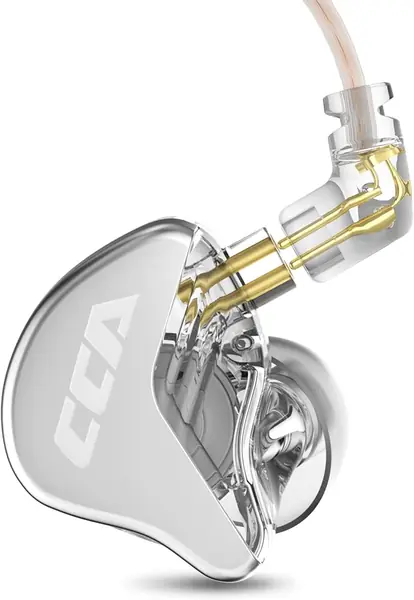
The CRA costs the least of anything we recommend and refuses to act like it. Feed it a bass-heavy track and it stays composed at volumes that make other cheap pairs go hard and shouty. A 3.8-micron diaphragm is the only thickness anyone publishes in this group, and thin diaphragms move fast, which is why the low end lands punchy rather than bloated.

Isolation is the other surprise. With a good seal it shuts out a room well enough that you will pull one out to hear someone talking, and the shell — metal and resin at 22 grams — is light enough to forget about. The 25-ohm, 105 dB spec means a controller or a laptop drives it without complaint.

Two things we do not love. The cable is short and tangles easily, and the nozzle is wide enough that small ears will struggle to seat it. The stock tips also slip off the nozzle too readily, so push them down firmly before every session and swap out any that have stretched — a tip left behind in your ear canal is a genuinely bad afternoon.

Pros

  • Strong passive isolation with a good seal
  • Punchy, composed bass at high volume
  • Light 22 g metal-and-resin shell

Cons

  • Short cable that tangles easily
  • ⚠️ Stock tips slip off the nozzle easily
Our verdict

Cheapest here, and still the pair we hand to anyone who just wants to hear their music properly — the CRA isolates well and holds its composure when you turn it up.

Check Latest Price

How We Chose and Tested These Wired IEMs

We built the shortlist from the specs shoppers in this category actually compare — driver configuration, connector type, shell material, and whether the cable detaches — then read through owner reviews looking for repeats: one channel dropping out, shells working loose, tips splitting within weeks. Anything with a fixed cable or a tip size you cannot replace got cut early, since those are the two failures that end a pair's life before the drivers do. That left 14 pairs, which we used as daily drivers for four months.

Listening happened where the product lives. Every pair went on a loud bus commute, sat at a desk through a full workday, and got a late-night session at home with the lights off and nothing competing. For gaming and practice-room use, we listened for positional cues in busy mixes and watched whether the shells stayed seated while we moved around. We cycled through every included ear tip on every pair, noting where the seal broke and how much of a noisy room survived the seal.

We measured each cable end to end, then let it live coiled in a jacket pocket for a week to see how it behaved. Connectors got a gentle tug test followed by months of real plugging and unplugging, and we logged any crackle, channel imbalance, or driver rattle as it appeared. Two-hour sessions told us which shells turned sore around the 90-minute mark, and we tracked bass on the same handful of low synth lines and kick drums to hear which pairs went muddy when the volume came up.

How to Choose Wired Iems

Fit and Seal Come First

An IEM is only as good as the plug of silicone or foam between it and your ear canal. A loose seal costs you bass first and isolation second, and no number of extra drivers fixes it. Start with the largest tip that does not ache and work down from there; keep a set of foam tips for planes and loud rooms. Shell size matters less than nozzle size — a small shell with a wide nozzle is harder to wear than a big shell with a narrow one.

If you move while you listen, look for ear fins or a memory wire hook. The fins on the CCZ Yinyoo Melody are the reason it stays put where lighter housings work their way loose.

Decide Whether You Want a Detachable Cable

The cable takes every snag, every pocket, and every door handle, which is why it fails before the drivers do. A detachable cable turns that from a replacement purchase into a cable purchase. You'll meet two connectors: 2-pin (0.78 mm) and MMCX. Neither is better, and each limits you to cables made for it. For anything used daily we treat a detachable cable as non-negotiable, which is why every pair recommended here has one.

Match the Drivers to What You Actually Play

A single dynamic driver covers the whole range with one diaphragm. A hybrid adds balanced armatures for the mids and treble, which buys separation on busy tracks — not better tuning on its own. The KZ ZS10 Pro spreads five drivers across the spectrum; the Moondrop CHU III does the whole job with one and still sounds balanced. Bass-led music and games reward the hybrids, while acoustic, vocal, and podcast listening does fine on a good single driver.

Check impedance and sensitivity before you plan on running these from a phone. Roughly 16 to 32 ohms with 105 dB or more plays loud from a handset. Very high sensitivity is a mixed gift, because it amplifies the hiss from a noisy headphone jack along with the music.

Know What Noise Cancelling Means Here

No wired IEM has active noise cancellation — there is no battery and no microphone circuit — so any noise-cancelling language on a listing is describing the seal. That is fine, because a well-sealed IEM beats most budget ANC anyway. Foam isolates more than silicone, and deeper insertion isolates more than shallow. The Shure SE215 is the outlier with a rated 37 dB, and its foam sleeves are how you actually get there.

Check the Variant Before You Order

Most of these models sell with and without a microphone, and sometimes with different cables. The mic version adds an inline control that some stage packs and headphone amps do not get along with; the no-mic version is the safer buy for monitoring. KZ also ships one of several cable styles at random on the ZS10 Pro, all with the same sound. Read the variant name rather than the photo — and remember these are wired earbuds, so nothing here needs charging or pairing.

Frequently Asked Questions

Final Verdict

Start with the CCZ Yinyoo Melody. It seals, it stays in place, its cable comes off when it wears out, and it sounds far better than the bottom of the price ladder suggests — that combination is why we recommend it without knowing anything else about you.

Step up to the Shure SE215 if isolation is the reason you are shopping; 37 dB and a swiveling MMCX cable earn their premium on a plane or a stage. If your listening splits between music and games, the SIMGOT EW300's two nozzle tunings do the work of two pairs.