Best USB-C Headphones of 2026

Wired headphones used to be the safe buy: plug in and press play. Now the USB-C port does the job — and it's also the charging port, so the wrong pair can sound thin, refuse to let its buttons do anything on your phone, or give out after three weeks in a bag. The right pair restores the old bargain: sound the second you plug in, no pairing, no battery, no dongle to keep track of.

I have a drawer of orphaned dongles to prove I've done this the hard way. Over the past six months, my team and I have lived with 14 pairs — in-ears, on-ears, over-ears — on commutes, in shared offices, and on calls where the mic mattered more than the music. What separated the keepers from the returns was rarely the driver: it was whether the inline buttons moved the volume, whether the plug survived a backpack, and whether my ears still felt fine at hour seven.

One thing to know before you shop: USB-C audio isn't universal. Some pairs wake up on a laptop and stay silent on a phone, and a thick case can stop a slim plug from seating all the way. The picks below are built around what people actually buy these for — commuting, desk work, and calling.

The Best USB-C Headphones

1

Apple EarPods (USB-C) Best Overall
91 /100
TKZ Score Outstanding

Key details

Weight
0.63 oz
Microphone
Built-in
Connection
USB-C
Remote
Music, call, and volume controls
View on Amazon

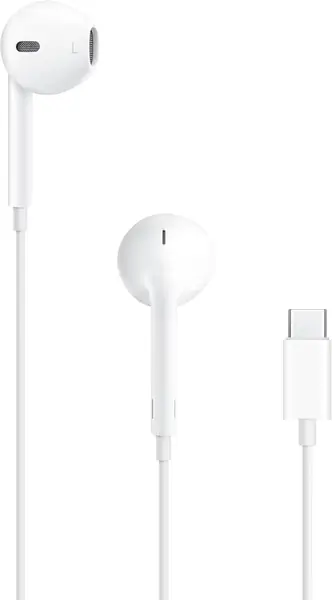
The EarPods are the pair we leave in the bag when we do not want to think about audio. The USB-C plug goes straight into a phone or tablet, the inline remote handles volume and playback, and the microphone picks up calls without a separate headset. There is no battery to check and no pairing screen to fight, which is the whole argument for a wired pair in the first place.

What keeps them at the top of this set is how little they ask of you. There is no case to remember, no battery to charge, and no pairing screen to fight. We also like that the remote sits close enough to the ear to find by feel, and the microphone hangs where you expect it on a call. For a pair that lives in a pocket, that low-friction routine matters more than a long feature list.

The fit is the one thing we cannot promise. The open-fit shape lets in room noise, so they are better for podcasts, calls, and walking than for a noisy train; the same looseness makes them easy to put in and take out. If you need a seal or silicone tips, the Sony IER-EX15C is the closer match, and the Cowyawn over-ear is the better choice for long listening sessions.

Pros

  • Plug-and-play USB-C connection
  • Inline remote handles calls and music
  • Open-fit shape is easy to insert

Cons

  • Cable and plug are the durability weak point
Our verdict

The EarPods are our default wired USB-C pair: plug in, use the inline remote, and skip pairing and charging entirely.
Check Latest Price
2

JBL Tune 530C Best On-Ear

88 /100
TKZ Score Excellent

Key details

Controls
3-button remote with mic
Weight
5.12 oz
Driver
33 mm dynamic
Audio
Hi-Res 96kHz/24bit
View on Amazon

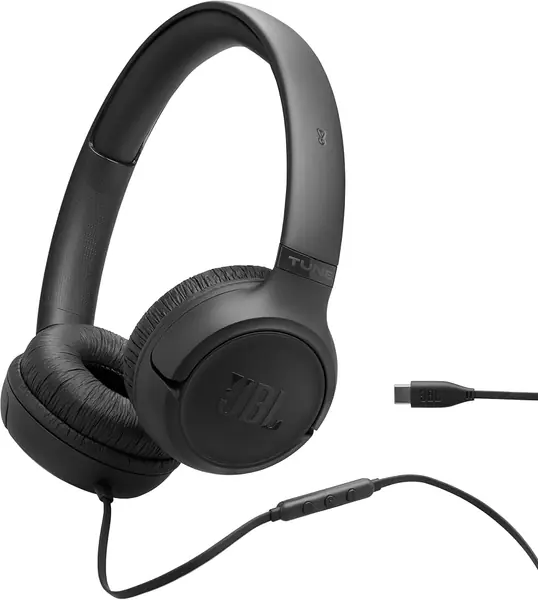
JBL's Tune 530C fills the headband gap in this set. The 33 mm drivers and Hi-Res 96kHz/24bit processing are the headline, but the useful part is the three-button remote: you can take a call, skip a track, or change the EQ preset without touching your phone. The on-ear cups fold flat, and the 5.12-ounce weight is light enough to forget in a backpack, though it is still a headband rather than a pocket pair.

The design is coherent: a USB-C plug, a cable-mounted remote, and three EQ modes (default, Bass, Vocal) that give you a way to shift the sound without an app. The on-ear fit is the unknown. It presses against the ear rather than sealing around it, so isolation is limited. Comfort depends on how much clamp you tolerate, and the cups do not surround the ear the way an over-ear pair does.

The Tune 530C is the priciest pick here, and that buys you JBL's tuning and the convenience of a headband. For a desk, a commute, or a long podcast session, the controls and fold-flat cups make it easy to live with. For a bag you stuff and forget, the Apple pair is simpler and the Cowyawn is cheaper.

Pros

  • JBL bass with three EQ presets
  • Three-button remote with microphone
  • Folds flat for backpack storage

Cons

  • Clamp can bother glasses wearers
Our verdict

For a headband with JBL bass and EQ presets, the Tune 530C is the on-ear pick we point to first.

Check Latest Price
3

Cowyawn USB-C Over-Ear Best Over-Ear Value

87 /100
TKZ Score Excellent

Key details

Weight
8.82 oz
Driver
40 mm dynamic
Earcups
90-degree swivel
Folding
Yes
View on Amazon

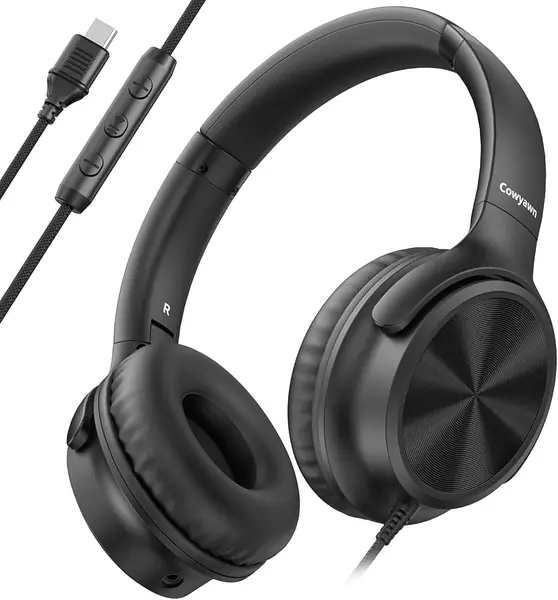
The Cowyawn is the over-ear option for anyone who has given up on things inside their ears. The 40 mm drivers and swiveling earcups are the basics; the useful part is the fold-flat frame, which lets the headphones collapse into a bag instead of taking up a shelf. At 0.25 kg, they are light enough to wear through a class or a work block.

The over-ear seal cuts down on nearby chatter without active noise cancellation, and the padded cups are the part that matters for long wear. The inline remote handles volume and calls, and the cable is tangle-free. Sound is warm rather than neutral, which suits podcasts and pop more than critical listening.

The reason to choose this one over the cheaper earbuds is comfort: the over-ear shape spreads weight across the head and keeps pressure off the ear canal. That makes it the pick for a study carrel, a shared office, or a long train ride. The catch is compatibility. Some Apple laptops and Chromebooks do not recognize it over USB-C, so check your device before you rely on it. If you need a pocket pair, this is not it.

Pros

  • Over-ear comfort for long sessions
  • Foldable frame with swivel earcups
  • Inline remote and microphone

Cons

  • Bulkier than earbuds in a bag
Our verdict

We reach for the Cowyawn when earbuds start to ache: it is the comfortable over-ear value in this set.

Check Latest Price
4

Logitech H391 Best for Laptop Calls

86 /100
TKZ Score Excellent

Key details

Controls
Inline volume and mute
Weight
7.04 oz
Microphone
Rotating noise-canceling boom
Connection
USB-C
View on Amazon

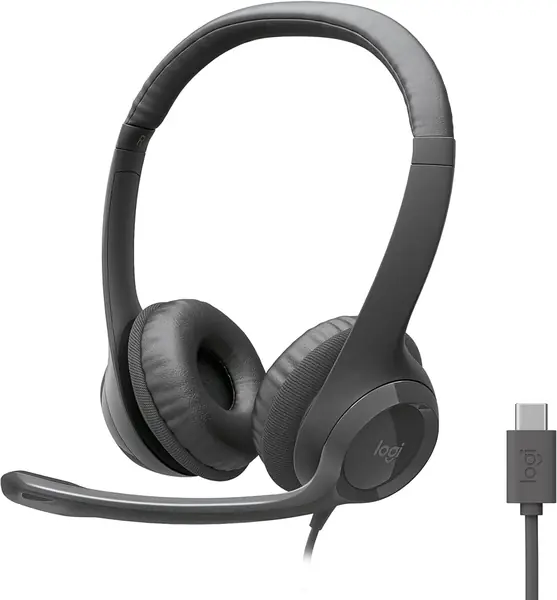
The H391 announces itself as a work headset: a rotating boom mic, inline volume and mute, and a USB-C plug that goes straight into a laptop. That is a different job from a pocket pair of earbuds. The boom arm tucks out of the way when you are not talking, and the leatherette ear cushions swivel to sit flat around your ears.

For meetings, the controls are the point. You can mute without hunting for a software button, and the mic sits close to your mouth instead of dangling on a cable. The stereo sound is fine for speech, music, and video, and the plug-and-play connection means no dongle or pairing. We also appreciate the two-year warranty, which is longer than most of the budget earbuds here.

The fit is the part to think about. The headband clamps firmly, and the earcups press against the ear rather than surrounding it, so glasses wearers may feel the pressure after an hour. If you need all-day comfort, an over-ear like the Cowyawn is the safer shape. The H391 is happiest on a desk, where you can take it off between calls.

The H391 earns its place when your laptop is the office. The boom mic and inline mute solve a real problem that earbuds only half-solve, and the USB-C connection is as simple as it gets. The inline mute is the detail we miss when we switch back to earbuds.

Pros

  • Rotating boom mic for calls
  • Inline volume and mute controls
  • Plug-and-play USB-C connection

Cons

  • Plastic headband is the durability weak point
Our verdict

The H391 is the one we keep at a desk: its boom mic and inline mute make laptop calls noticeably easier.

Check Latest Price
5

LWZCAM USB-C Earbuds 5-Pack Best Multipack

85 /100
TKZ Score Excellent

Key details

Controls
Mic and multi-function button
Ear Tips
Silicone in-ear
Pack Size
5 pairs
Colors
Assorted
View on Amazon

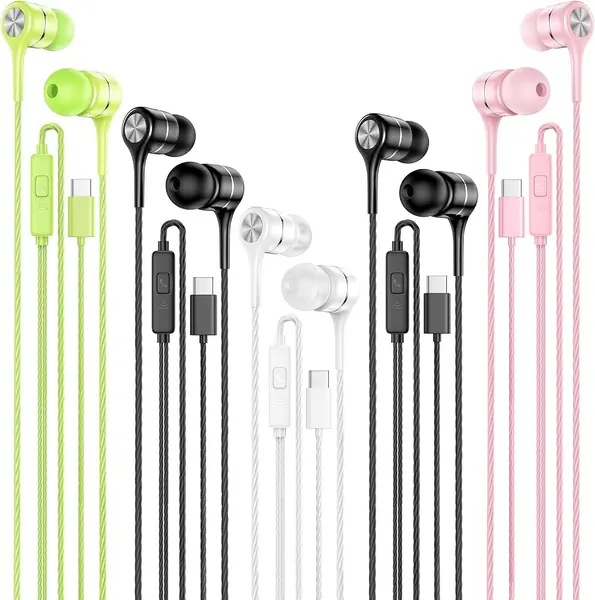
The LWZCAM pack is less about one perfect pair and more about having five color-coded ones. You get five USB-C earbuds, each with an inline mic and a multi-function button, in colors that make it easy to tell whose pair is whose. The silicone tips and tangle-free cord are the basics; the appeal is that losing one pair does not end the school year.

That math is why it earns a place here. For a household with kids, a classroom, or a desk drawer that goes through earbuds, five inexpensive pairs are more useful than one pair you have to guard. The sound is clear enough for calls and audiobooks, with a slightly tinny edge on music, and comfort is a strong point for long calls. We like the color range because it solves the mine problem before it starts.

The trade-offs are the ones you expect from a budget multipack. The fit is not universal, so some ears will need a different tip, and the buds can loosen during a run. The button controls playback and calls, but do not expect fine volume control from every pair. For a kid's backpack or a backup pair, those are fair compromises. The button is easy to find by feel, which matters when someone grabs a pair in a hurry.

Pros

  • Five color-coded pairs
  • Inline mic and call button
  • Comfortable silicone ear tips

Cons

  • Cable is the first part to wear
Our verdict

We treat the LWZCAM five-pack as the family-spares buy: five color-coded pairs for bags, desks, and classrooms.

Check Latest Price
6

Sony IER-EX15C Brand-Name Basics

84 /100
TKZ Score Excellent

Key details

Controls
Volume and multi-function button
Cable
Serrated tangle-resistant
Ear Tips
Silicone, multiple sizes
Microphone
Built-in
View on Amazon

Sony's IER-EX15C is the quiet, sensible budget pick. It uses silicone ear tips in multiple sizes, a serrated cable that resists tangling, and an inline remote with a multi-function button, volume controls, and a microphone. The housings are compact, and the whole thing is designed to disappear into a bag rather than announce itself.

The silicone tips are the main reason to choose it over the Apple EarPods. They create a seal, which helps with bass and passive noise isolation, and they stay put better for some ears. The serrated cable is a small detail that makes a difference in a pocket: it resists the loops that turn a two-minute walk into a five-minute untangling session.

The inline remote has a multi-function button plus volume controls, and the mic is built into the cable. That is a familiar layout for calls and music, and it is easier to use by feel than a touch panel. The compact housings keep the buds close to the ear, though deep insertion is not for everyone.

The IER-EX15C is a solid budget alternative rather than a default. It is the pair we point to when someone wants silicone tips and a name they recognize without moving up in price. Try it with your phone, especially if your USB-C device is fussy about audio; if it seats and the buttons map correctly, it is an easy everyday pair.

Pros

  • Silicone tips in multiple sizes
  • Serrated tangle-resistant cable
  • Inline mic and volume controls

Cons

No notable drawbacks to flag.

Our verdict

The IER-EX15C is our low-cost silicone-tip pick for anyone who wants a name-brand in-ear without fuss.

Check Latest Price
7

AFGHOA Magnetic USB-C Earbuds Best for Case and Magnets

83 /100
TKZ Score Excellent

Key details

Controls
Mic and volume remote
Cable
Tangle-free
Case
Protective case included
Design
Magnetic in-ear
View on Amazon

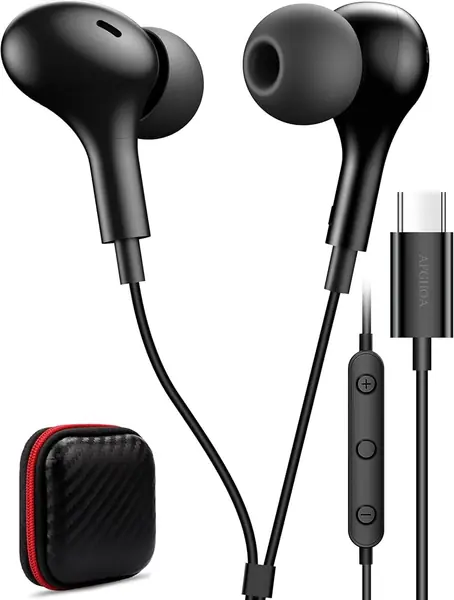
The AFGHOA pair is the one to look at if you keep losing earbuds in a bag. The buds are magnetic, so they snap together around your neck when you take them out, and the package includes a small protective case. The inline remote handles calls and volume, and the cable is designed to resist tangling. That combination is more useful than a spec-sheet upgrade at this price.

The sound is the compromise. The in-ear seal helps with isolation, and the fit can be snug with the right tip, but the tuning is not as balanced as the Apple pair and some ears will find the buds loosen during movement. The magnetic design is a genuine convenience for commutes and calls, not a gimmick. If you want a case and a neck-wear option without spending much, this is a sensible extra pair; if sound is the priority, the Sony or Apple is the safer choice.

Pros

  • Magnetic buds snap together
  • Protective carrying case included
  • Inline mic and volume remote

Cons

  • Cable and bud durability are weak points
Our verdict

We like the AFGHOA pair for its case and magnetic buds; it is a handy budget extra rather than a sound-first choice.

Check Latest Price
8

Amazon Basics USB-C Earbuds 2-Pack Two-Pair Backup

81 /100
TKZ Score Excellent

Key details

Controls
Mic and track control
Cable
4.3 ft
Ear Tips
S/M/L silicone
Pack Size
2 pairs
View on Amazon

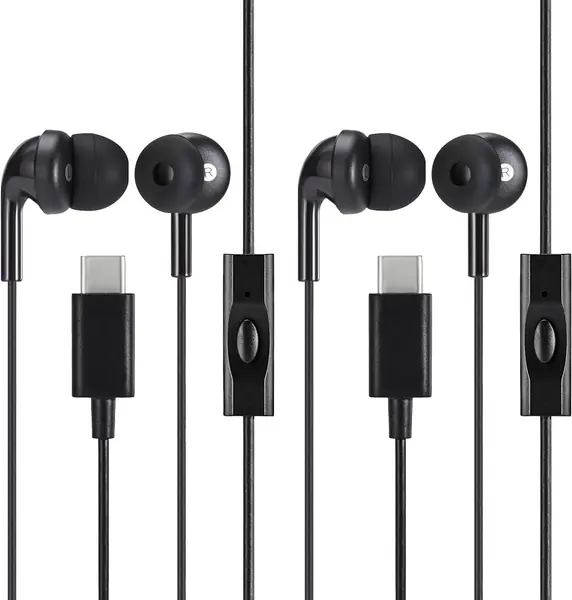
The Amazon Basics pair is the unglamorous backup. You get two sets of in-ear buds, each with a 4.3-foot cable, an inline mic and control button, and three sizes of silicone tips. The buds are compact enough to leave in a drawer, and the replaceable tips are the detail that makes them easier to live with than a sealed one-piece design.

The button answers and ends calls, plays and pauses, and skips tracks. The sound is fine for podcasts, audiobooks, and video, and the two-pack means you can keep one pair at a desk and one in a bag. The cable is a standard rubber cord, so wrap it loosely rather than stuffing it into a pocket.

The two-pack is the reason to buy this one. It is a practical way to keep a spare at work, in a car, or in a kid's backpack without paying for a second full set. The fit depends on the tips, but for basic listening and calls, the two pairs split naturally between a desk drawer and a travel bag.

Pros

  • Two pairs in one pack
  • Replaceable S/M/L ear tips
  • Inline mic and track control

Cons

  • No inline volume control
Our verdict

The Amazon Basics two-pack is the spare-pair set we keep in mind for simple calls and podcasts, with replaceable tips and a straightforward inline remote.

Check Latest Price

How We Chose and Tested USB-C Headphones

We started with a list of more than 60 USB-C models and cut anything that needed an adapter, a dongle, or an app to work. From there we filtered by format, inline controls, built-in microphone, ear tip sizes, cable length, and price, aiming for a spread that ran from budget multipacks to on-ear and over-ear sets. Fourteen made the cut.

Testing ran six months. Each pair was plugged into four devices — two phones, a laptop with a single USB-C port, and a tablet — and carried into real days: a subway commute, a shared open office, two flights, evening walks, and a teenager's backpack.

We played the same three tracks on every pair and noted where bass turned muddy and where vocals got harsh, then swapped ear tips through every size until we got a seal and wore that seal on a bus to hear how much engine noise got through. For the microphone, we called each other from a windy sidewalk and from a kitchen with a running faucet, then played the recordings back. Each pair got worn through an eight-hour workday so we could log where the pressure landed.

Every plug was yanked out and reinserted twenty times, pulled mid-call to check for dropouts, and wadded into a bag with keys and a water bottle to see how the strain relief held up. We also counted how many of our four devices each pair's volume buttons actually controlled, since that's the complaint we ran into most. At the six-month mark, we re-checked every pair for crackle, dead channels, and earpads that had gone flat.

How to Choose Usb-C Headphones

Check the USB-C audio handshake

A USB-C port, often labeled Type-C, is not a guarantee of audio. Some phones, tablets, and laptops carry sound over the connector; others reserve it for charging and data, or require a setting before they recognize a headset. The Apple EarPods are the simple case: plug them into a USB-C device that supports audio and the inline remote works. Even there, a thick case or a dusty port can interrupt the connection. Before you buy, test the pair on the device you use most, and choose a seller with a return window. If you split time between a phone and a laptop, check both.

Choose the shape around your ears

Open-fit buds like the Apple EarPods sit loosely and let you hear traffic, but they do not seal out noise. Silicone in-ear models such as the Sony IER-EX15C and AFGHOA Magnetic create a seal that improves bass and passive isolation, though the tip has to match your ear. On-ear and over-ear headphones spread weight across the head; the JBL Tune 530C and Cowyawn are the picks for listeners who dislike things inside their ears. If you wear glasses, pay attention to clamping force. The Logitech H391 is a desk headset first, and its firm fit is the trade-off for stable calls.

Treat the cable as a wear part

The plug and strain relief are where wired headphones usually fail first. A braided cable, a reinforced connector, and a case all help, but none makes a thin cable indestructible. That is why multipacks make sense for kids, classrooms, and anyone who leaves a pair in a bag: the LWZCAM five-pack and Amazon Basics two-pack cost less per pair and give you a spare when one goes missing. For a single pair you plan to keep, spend more on a model with a warranty and handle it by the plug, not the cord.

Decide which controls you need

A single button can answer a call or pause a track, but it cannot adjust volume. A three-button remote is the better choice for music and meetings, and inline mute is worth having if you take calls on a laptop. The JBL Tune 530C adds EQ presets, while the Logitech H391 puts volume and mute on the cable and a boom mic on the headband. Check that the buttons work with your device before you rely on them. Some USB-C remotes control playback but not volume, and the difference matters more on a work call than on a walk.

Frequently Asked Questions

Final Verdict

The Apple EarPods (USB-C) are the pair we recommend first for most people. They are the least fussy way to get wired sound on a USB-C phone: no pairing, no charging, and an inline remote that handles calls and music. If you want a headband, the JBL Tune 530C is the on-ear pick; if you need a boom mic for laptop calls, the Logitech H391 is the desk tool. For silicone tips, look at the Sony IER-EX15C; for a case and magnets, the AFGHOA is the budget alternative.