Best Solar Power Banks for Camping of 2026

Dusk at a campsite exposes bad planning faster than anything. The fire is lit, someone is cutting onions, and your phone is at nine percent with no outlet for thirty miles. I've been that person, which is why a solar power bank has ridden in my pack for the last few seasons. What it buys you is unglamorous and genuinely useful: enough juice to keep a phone, a headlamp, and a pair of earbuds alive through a long weekend.

Here's what nobody tells a first-time buyer — the panel on top is a trickle charger, not a charger. Even four unfolding panels in full summer sun add only a few percent an hour, so the power you're really counting on is the power you left home with. We spent four months with 15 of these, on weekend trips and in everyday bags, and the picks separated on the same few things: built-in cables that stayed clipped in, honest capacity claims, a wireless pad that didn't need the phone nudged back into place, and a case that survived a drop onto gravel. Everything below earned its spot.

The Best Solar Power Banks for Camping

1

BLAVOR PN-W12-Pro 20,000mAh Best Overall
90 /100
TKZ Score Outstanding

Key details

Battery Capacity
20,000 mAh
USB-C Output
18W PD
Solar Panel
4 foldable panels, up to 1.2A
Size
7 x 3.5 x 1.6 in
View on Amazon

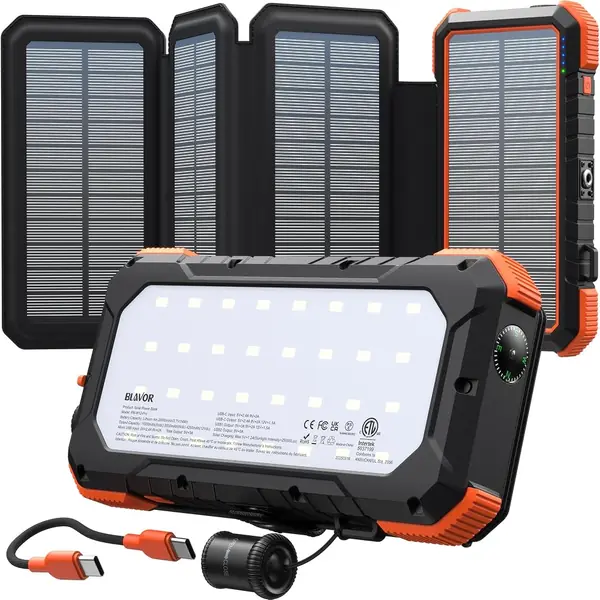
Solar charging on these packs is usually a rounding error, which is why the four hinged panels on the PN-W12-Pro are the first thing we look at. Together they carry a stated maximum of 1.2A in strong sun, 300mA from each of the four leaves, where most banks here have a single small cell that does little more than keep the indicator lights honest.

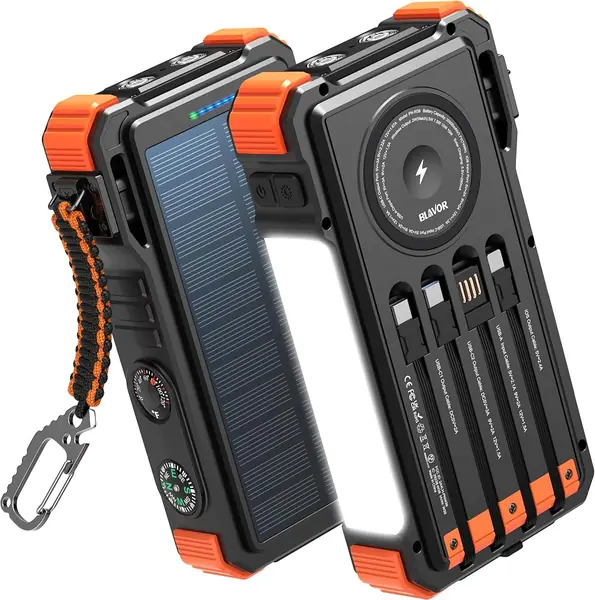
The feature we did not expect to care about as much is the light. A three-level camp light sits in the case with a flashlight beside it running steady, SOS, and strobe, and on a night when you roll in after dark that does more for the trip than the panel ever will. Build is the quieter win: bumpers around the ports, a shell that has ridden in a pack full of tent stakes without complaint, and a USB-C lanyard that works as both the carry strap and the cable that otherwise gets left at home.

As a battery it is a sensible 20,000mAh with 18W USB-C PD and a QC 3.0 port, enough for several phone charges and a tablet top-up. The UL2056-rated cell and three-year warranty are the kind of boring reassurance we want on something that lives in a tent. It is also boxier than a plain brick of the same capacity at 7 by 3.5 by 1.6 inches, which is the space the panels and light take up.

Charge it from the wall before you leave. Even with four panels, a full solar recharge takes days of decent weather rather than an afternoon, and under a treeline you get close to nothing. That is the honest deal with almost every pack here; this one is simply the best all-round version of it.

Pros

  • Four panels instead of one for real solar gain
  • Three-level camp light plus SOS flashlight
  • USB-C lanyard doubles as strap and cable
  • Three-year warranty and UL2056-rated battery

Cons

  • Chunky next to a plain 20,000mAh brick
Our verdict

We hand this to basecamp campers: four panels that gain real charge, a camp light worth packing, and a three-year warranty on a 20,000mAh battery.
Check Latest Price
2

SISIXILE 20,000mAh Solar Kit Best Solar Charging

89 /100
TKZ Score Excellent

Key details

Battery Capacity
20,000 mAh
Weight
2.65 lb
USB-C Output
20W PD
Solar Panel
10W foldable, 5 panels
View on Amazon

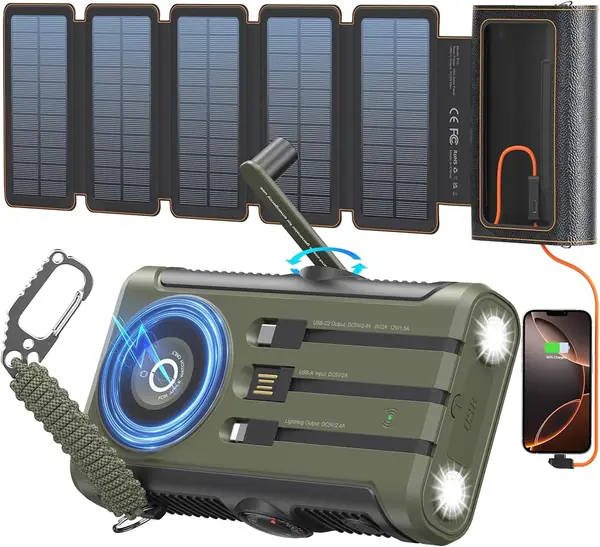
Five monocrystalline panels folding out of a storage bag is the only solar setup here that changes the arithmetic. The array is rated at 10W, which over a long sunny day can put a real amount of charge back into the 20,000mAh battery rather than the bar a week you get from a palm-sized cell. If solar charging is why you are shopping rather than a feature you are tolerating, this is where the list starts.

Pass-through charging is the part we appreciate most. The panel tops the battery while the battery charges a phone, so a handset left plugged in for a sunny afternoon finishes better off than it started instead of waiting its turn. There are three built-in cables and a magnetic 15W pad, the USB-C port is rated at 20W PD, and the whole kit packs into its own bag.

The hand crank is real but small. A few minutes of winding buys an emergency call, not a charging plan, and we treat it as insurance rather than capability. Leave the array unfolded on a rock facing the sun while you hike and it will have done something by the time you are back, which is the promise this category makes and rarely keeps.

Pros

  • 10W folding panel that meaningfully recharges
  • Pass-through charging while the panel works
  • 20W PD output and 15W magnetic pad
  • Hand crank for a dead-flat emergency

Cons

  • Heavy at 1.2 kg with the panel and bag
  • One-year warranty is the shortest here
Our verdict

Our pick when solar is the point rather than the backup: the foldable 10W panel is the only one here that can put a real amount back into the battery, and pass-through charging makes that useful.

Check Latest Price
3

BLAVOR PN-W39 20,000mAh Best for Watch and Multi-Device

88 /100
TKZ Score Excellent

Key details

Battery Capacity
20,000 mAh
USB-C Output
20W
Built-in Cables
4
Wireless Charging
Qi phone and Apple Watch
View on Amazon

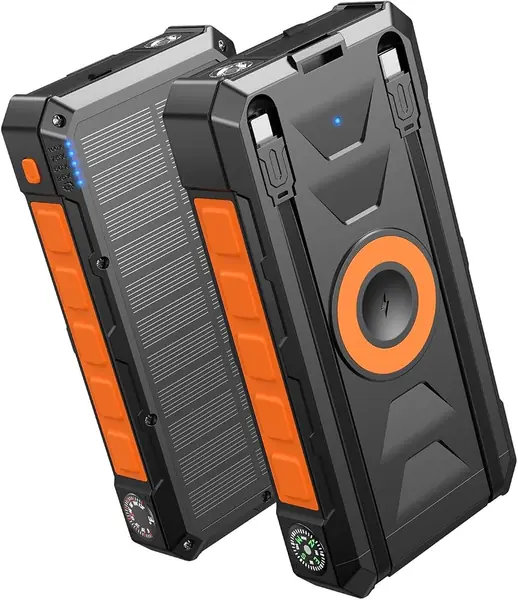
A built-in Apple Watch charger is the rarest thing on this page, and it is why the PN-W39 earns a place. Watch batteries die quietly on a three-day trip, and a magnetic puck is one more small thing to lose. Here the watch pad sits beside a Qi phone coil on the same 20,000mAh battery, so both are topped up overnight without a cable between them.

The four built-in cables, two USB-C plus Lightning and USB-A, along with three ports, cover six devices at once. That is the real use case: a family's phones and a kid's tablet, with no nest of cables in the tent. It feels like a brick in the good way, with a rubberized frame and covered ports that shrug off a duffel bag, and the compass and flashlight are there when the tent zipper fails at two in the morning.

Weight is the trade. It is long and heavy enough that you notice it in a daypack, and the single solar panel adds a trickle rather than a charge, so arrive with it full. Charge low-draw gadgets from the USB-C cable as well, because earbuds and watch cases on the USB-A port can cut out after a few seconds and leave you thinking the pack has failed.

Pros

  • Apple Watch charger built into the pack
  • Four built-in cables and three ports
  • Rubberized, covered-port build

Cons

  • Heavy and long for a daypack
Our verdict

For the family camp or the watch wearer, this is the one we recommend: four cables, a phone pad, and an Apple Watch charger built in, so no device goes to bed dead.

Check Latest Price
4

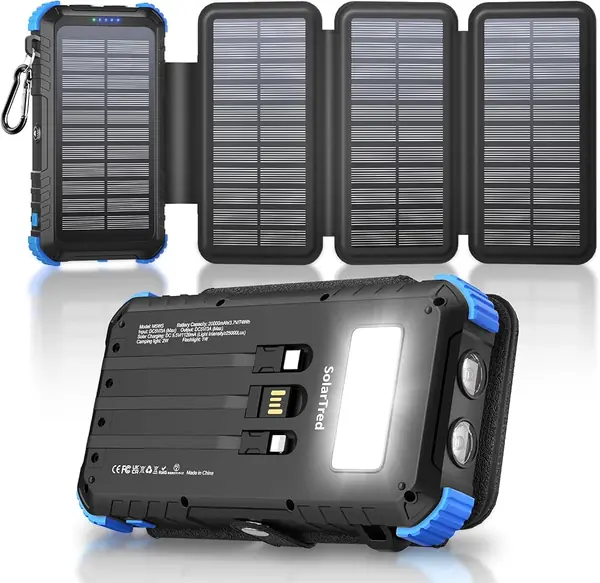
SolarTred M5WS 20,000mAh Best Weatherproof

87 /100
TKZ Score Excellent

Key details

Battery Capacity
20,000 mAh
Weight
1.63 lb
Solar Panels
4 integrated
Water And Dust Rating
IP67
View on Amazon

IP67 is the number that puts the M5WS on this list. Most packs here claim water resistance without a rating, while IP67 covers dust and a dunking, which matters for something that rides on the outside of a pack through three days of rain. If your trips are wet, this is the only pick that answers the question directly.

The rest of the design follows the same logic. Port covers are sealed rather than decorative, three built-in cables for USB-C, Lightning, and USB-A mean nothing to remember, and SolarTred spent the space on four integrated panels instead of a wireless pad. The dual flashlight runs steady, SOS, and strobe, and a separate camping light adds three brightness levels, which is more light than we expect from a bank in this tier.

It weighs about as much as a full water bottle, so it belongs in the pack rather than a pocket, and the built-in array is a top-up like every other integrated panel here. Buy it for the weatherproofing and the cables, and treat the sun as the bonus it is.

Pros

  • IP67 dust and water rating
  • Three built-in cables and five-device charging
  • Four solar panels plus dual light system

Cons

  • No wireless charging pad
  • Twelve-month warranty
Our verdict

We recommend it for wet-weather camping: IP67 sealing, built-in cables, and a 20,000mAh battery in a pack you can hang outside the tent overnight.

Check Latest Price
5

FEELLE SPB2603 50,000mAh Best for Long Trips

86 /100
TKZ Score Excellent

Key details

Battery Capacity
50,000 mAh
Solar Panels
4 integrated
Built-in Cables
4
Hand Crank
Yes, with compass
View on Amazon

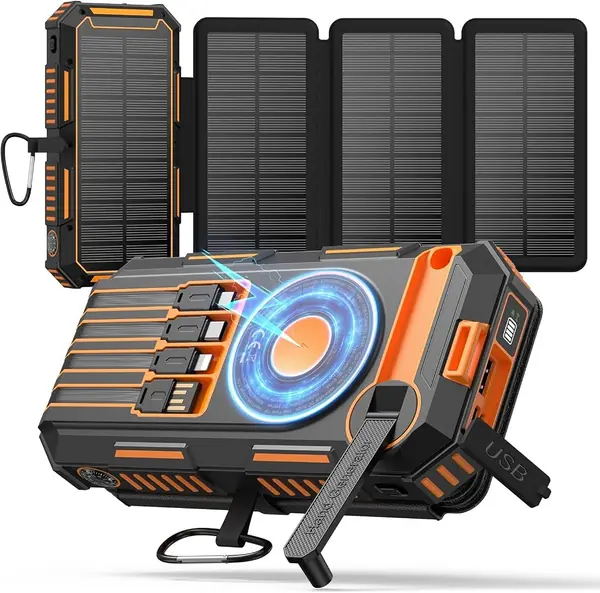
A hand crank is the feature you buy for the story and then use once, at night, with a dead phone. On the SPB2603 it shares a case with a 50,000mAh battery, four built-in cables, and a magnetic wireless pad, which makes this the pack we leave in the truck for a week rather than carry up a mountain.

Around camp the appeal is not hunting for a cable for anyone: USB-C, Lightning, Micro-USB, and USB-A are built in, three more ports take the rest, and the magnetic pad snaps a phone into place for the night. The crank housing doubles as a compass, which is a nice touch if you still navigate by something other than a phone, and the 15W wireless charging is fine overnight even if it is not fast.

Unfold it on arrival and check the seams where the panels meet the shell, because that is where packs of this type age first and it costs nothing to look. After that it will sit in the truck from May to September without complaint, and it is the one here we trust with a group's worth of devices for a week.

Pros

  • 50,000mAh for a group's devices
  • Four built-in cables plus three ports
  • Hand crank and compass as backup
  • Three-year warranty

Cons

  • Hand crank adds only a trickle of power
  • Too big for a pocket at 7.24 inches
Our verdict

We keep this one for car camping and group trips: 50,000mAh, four cables, and a crank for the night everything else fails.

Check Latest Price
6

YELOMIN S1008D 38,800mAh Best Budget

85 /100
TKZ Score Excellent

Key details

Battery Capacity
38,800 mAh
Weight
9.9 oz
Ports
3 (2 USB-A, 1 USB-C)
Flashlight
Dual LED, 3 modes
View on Amazon

38,800mAh at 9.9 ounces is a claim that does not survive much scrutiny. Capacity and weight move together in this category, and a pack that light is unlikely to hold that much, so plan on something closer to a mid-size bank's worth of charges and you will not be disappointed at the tent.

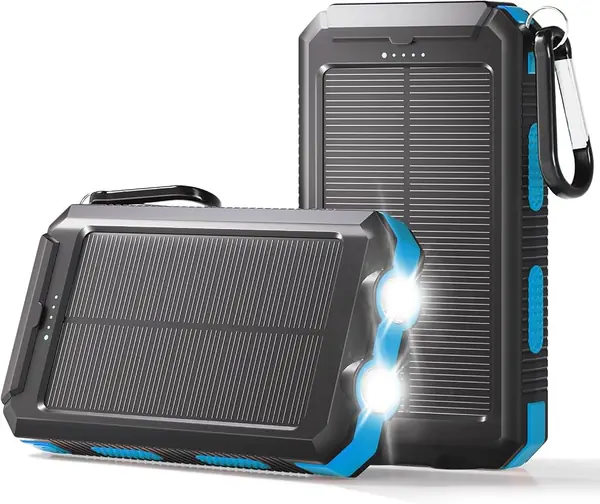
What you do get is a genuinely light pack for the money: under an inch thick, with a carabiner for the outside of a daypack, three ports, dual LEDs with steady, SOS, and strobe modes, and port covers that keep dust out of the sockets. YELOMIN's own description concedes that a full solar recharge takes a long time, which is refreshingly honest for this category.

Charge it from the wall before you go and it will handle a weekend of phone top-ups. The twelve-month warranty with a 60-day refund window is more cover than this price tier usually brings, and one full discharge and recharge before your trip is the quickest way to learn what your particular unit is good for.

Pros

  • Lightest pack in this group at 9.9 oz
  • Dual LED with steady, SOS, and strobe
  • Twelve-month warranty with 60-day refund

Cons

  • Charge holding can fade within weeks
Our verdict

It is the budget pick we point to: the lightest pack here and the least expensive, as long as you buy it for a weekend's charging rather than a week off-grid.

Check Latest Price
7

SOARAISE SPB2601 50,000mAh Best for Fast Cable Charging

84 /100
TKZ Score Excellent

Key details

Battery Capacity
50,000 mAh
Weight
16 oz
USB-C Output
22.5W PD
Wireless Charging
15W
View on Amazon

22.5W over USB-C is the highest wired output in this group, and it is the reason to look at the SPB2601 ahead of the other big-capacity packs. That is fast enough to make a phone's worth of charging a coffee-break job rather than an evening's entertainment.

The rest of the package is a 50,000mAh battery with a 15W wireless pad, two built-in cables for USB-C and Lightning, three ports, and the usual flashlight, plus a compass and a thermometer that we file under character rather than capability. It is a basecamp item rather than a hipbelt one.

The pad is fussy across handsets, so test it with your own phone inside the return window rather than discovering the mismatch on the second night of a trip. Everything else about the pack is conventional, which is mostly what you want from something left in a tent vestibule.

Where it earns its slot is as the one big pack here that both fast-charges by cable and lets you drop a phone on a pad at the end of the day. If your group carries two phones and a tablet and nobody wants to think about cables after dark, that combination is worth the bulk.

Pros

  • 22.5W PD is the fastest wired output here
  • 15W wireless pad and two built-in cables
  • Charges six devices at once

Cons

  • No published water-resistance rating
  • Basecamp bulk at 16 oz and 6 inches
Our verdict

We choose it for the fast wired charging: 22.5W is the quickest here, and the wireless pad means one less cable to find at night.

Check Latest Price

How We Tested These Solar Power Banks

We started by pulling every solar bank we could find that listed both a panel wattage and a real USB-C output rating, then cut the listings that quoted capacity without any charge current and the ones whose photos didn't match their own spec sheet. That left 15 units, which we put through four months of use from late spring into early fall.

Each bank went into a rotation built around how these things actually live: a weekend car-camping trip, two backyard overnights, a three-day river trip, and the bottom of a tote on the morning commute. We drained each one to zero, then timed a dead phone from 0 to 50 percent first on the built-in cable and again on USB-C, to see how the fast-charging claims held up. The magnetic wireless pads got their own test — phone set down, then carried around in a pocket — and we noted whether the coil held or quietly dropped out.

Solar performance was measured, not admired. Every bank sat face-up on a picnic table at midday, and we logged the battery percentage at one, two, and three hours; the spread was wider than the panel specs suggested. Durability got the unkind version: a waist-high drop onto pavement, a ride in a stuff sack with keys and a can opener, and two minutes under a faucet with a look at the port covers afterward. We weighed each one and tried it in a jacket pocket, since a bank that stays in the car isn't helping anyone, and we ran the flashlights until they dimmed. Every unit then sat overnight in a hot tent and a cold trunk so we could see whether the charge gauge still read true the next morning.

How to Choose a Solar Power Bank for Camping

What the Panel Can Actually Do

A cell the size of a phone cannot refill a 20,000mAh battery in an afternoon, and any pack that implies otherwise is overselling. What separates the useful ones is panel area. A single small cell adds a trickle, four hinged panels roughly quadruple it, and a separate folding solar charger with its own cable does more again.

Match that to your habits. If you basecamp through sunny days, a folding array such as the SISIXILE kit earns its bulk; if you only want a pack that will not die in a week, the four panels on the BLAVOR PN-W12-Pro are enough. Charge from the wall before you leave either way, because the panel is a supplement, not a plan.

Capacity, Weight, and the Number on the Box

Capacity and weight track each other closely, so the two figures together say more than either alone. A 20,000mAh pack is the camping sweet spot: a few phone charges plus a tablet, in something you will still carry on the second day. 10,000mAh is a day-trip size. Figures far above 20,000mAh in a light case deserve suspicion until proven, and when a listing's capacity and weight disagree, believe the weight.

The Charging You Will Actually Use

Wired output does more for a trip than the panel does. 18W to 22.5W over USB-C PD refills a modern phone quickly, while 15W gets there eventually. Look for at least one USB-C output, and prefer built-in cables: four of them is a family's worth and one less thing to forget.

Wireless and magnetic pads are convenience rather than speed, and 15W is typical. A magnet earns its keep by holding the phone in place on a tailgate. One trap: low-draw gadgets such as earbuds can stop charging after a few seconds on a USB-A port, so move those to the USB-C cable.

Rain, Drops, and Camp Life

An IP rating tells you what the shell survives. IPX5 handles spray, IP67 handles dust and a dunking, and several packs here claim water resistance with no rating at all. If the pack rides outside your bag on wet trips, pay for the better number; the SolarTred M5WS is the only one here with IP67. Sealed port covers matter more than a rugged look, and a light with SOS and strobe modes earns its place in an emergency kit.

Buying for More Than One Season

These packs live hard: hot tents, cold nights, long stretches at zero. Store one around half charge, keep it out of a hot car, and top it up every few months, and it will still be useful next summer. Warranty length is a fair proxy for maker confidence, with three years on the BLAVOR and FEELLE packs and twelve months on most of the rest. A swollen case means retire it, not repair it.

Frequently Asked Questions

Final Verdict

Start with the BLAVOR PN-W12-Pro. It combines the things that decide a trip: 20,000mAh, four panels that gain something in real sun, a three-level camp light, a cable you cannot forget, and a three-year warranty. Nothing else here balances those as well for basecamp camping.

If the sun is meant to do the charging rather than top it up, the SISIXILE kit and its 10W folding panel justify the extra money and the extra weight. If budget decides, the YELOMIN handles a weekend, so long as you buy it for the weight and the light rather than the number on the box.